






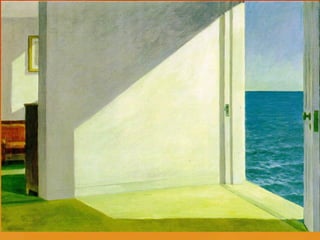
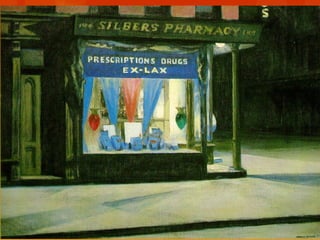
American
Painters
-Thomas Cole
- Winslow Homer
- J ackson Pollock
- Geor gia O’Keef ee
- Edwar d Hopper
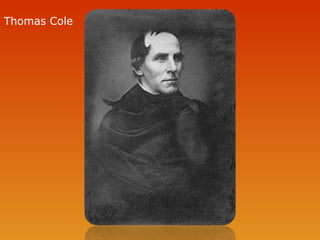
Thomas Cole
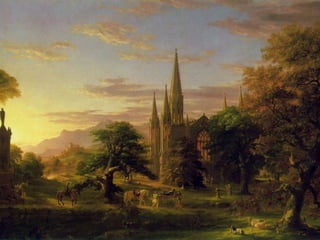
Thomas Cole (1801 – 1848) was an
 English-born American artist. He is
 regarded as the founder of the Hudson
 River School, an American art
 movement that flourished in the mid-
 19th century. Cole's Hudson River
 School, as well as his own work, was
 known for its realistic and detailed
 portrayal of American landscape and
 wilderness, which feature themes of
 romanticism and naturalism.
 He was born in Bolton, Lancashire,
  England in 1801. In 1818 his family
  emigrated to the United States,
  settling in Steubenville, Ohio, where
  Cole learned the rudiments of his
  profession from a wandering portrait
  painter named Stein. However, he
  had little success painting portraits,
  and his interest shifted to
  landscape.
Painting
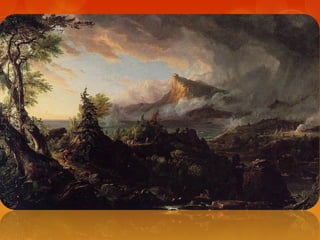
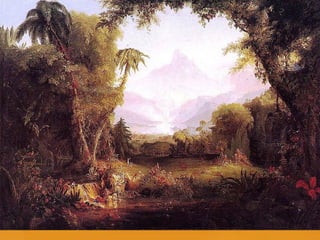
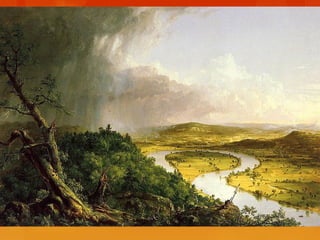
Cole was primarily a painter of landscapes,
 but he also painted allegorical works. The
 most famous of these are the five-part
 series, The Course of Empire, which depict
 the same landscape over generations—from
 a near state of nature to consummation of
 empire, and then decline and desolution—
 now in the collection of the New York
 Historical Society and the four-part The
 Voyage of Life.
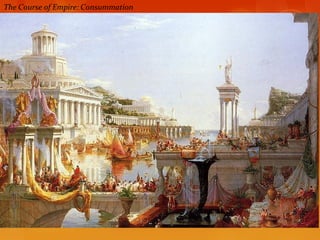
The Course of Empire: Consummation
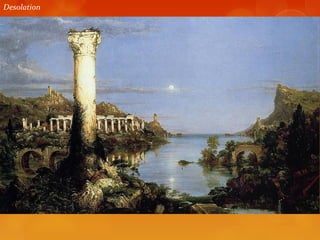
Desolation
Personal life
After 1827 Cole maintained a studio at the farm
 called Cedar Grove in the town of Catskill, New
 York. He painted a significant portion of his work
 in this studio. In 1836 he married Maria Bartow
 of Catskill, a niece of the owner, and became a
 year-round resident. Thomas and Maria had five
 children.
 Thomas Cole died at Catskill on February 11,
 1848. The fourth highest peak in the Catskills is
 named Thomas Cole Mountain in his honor.
 Cedar Grove, also known as the Thomas Cole
 House, was declared a National Historic Site in
 1999 and is now open to the public.
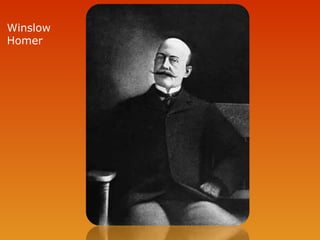
Winslow
Homer
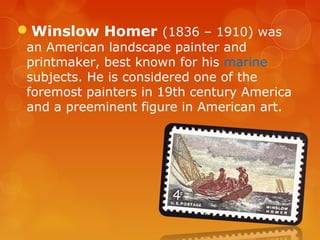
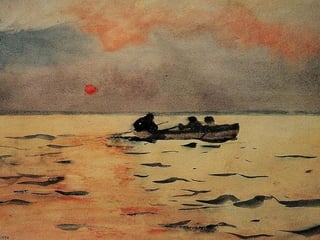
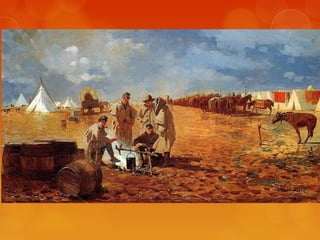
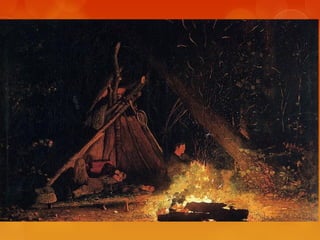
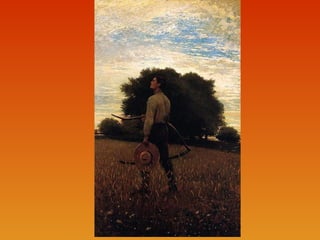
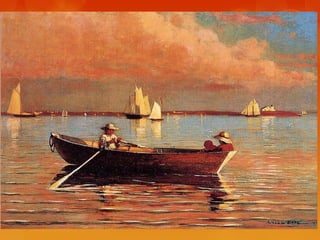
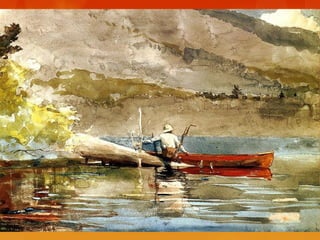
Winslow Homer (1836 – 1910) was
 an American landscape painter and
 printmaker, best known for his marine
 subjects. He is considered one of the
 foremost painters in 19th century America
 and a preeminent figure in American art.
Born in Boston, Massachusetts in 1836, Homer was the
 second of three sons
 His mother was a gifted amateur watercolorist and
 Homer’s first teacher, and she and her son had a close
 relationship throughout their lives. Homer took on
 many of her traits, including her quiet, strong-willed,
 sociable nature, her dry sense of humor and her artistic
 talent. Homer had a happy childhood, growing up
 mostly in then rural Cambridge, Massachusetts. He was
 an average student, but his art talent was evident in
 his early years.
His early works, mostly commercial
 engravings of urban and country social
 scenes, are characterized by clean outlines,
 simplified forms, dramatic contrast of light
 and dark, and lively figure groupings —
 qualities that remained important throughout
 his career. His quick success was mostly due
 to this strong understanding of graphic design
 and also to the adaptability of his designs to
 wood engraving.
Paul
Jackson
Pollock
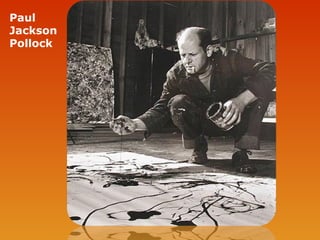
Paul Jackson Pollock (January 28, 1912 –
 August 11, 1956), known as Jackson Pollock,
 was an influential American painter and a
 major figure in the abstract expressionist
 movement. During his lifetime, Pollock
 enjoyed considerable fame and notoriety. He
 was regarded as a mostly reclusive artist. He
 had a volatile personality, and struggled with
 alcoholism for most of his life. In 1945, he
 married the artist Lee Krasner, who became
 an important influence on his career and on
 his legacy.
Pollock died at the age of 44 in an alcohol-
 related car accident. In December 1956, he
 was given a memorial retrospective exhibition
 at the Museum of Modern Art (MoMA) in
 New York City, and a larger more
 comprehensive exhibition there in 1967. More
 recently, in 1998 and 1999, his work was
 honored with large-scale retrospective
 exhibitions at MoMA and at The Tate in
 London.
In 2000, Pollock was the subject of an
 Academy Award–winning film Pollock directed
 by and starring Ed Harris.
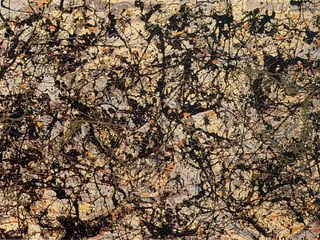
In November 2006, Pollock's No. 5, 1948
 became the world's most expensive painting,
 when it was sold privately to an undisclosed
 buyer for the sum of $140,000,000. The
 previous owner was film and music-producer
 David Geffen. It is rumored that the current
 owner is a German businessman and art
 collector.
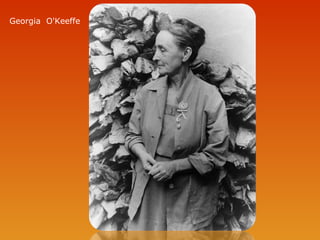
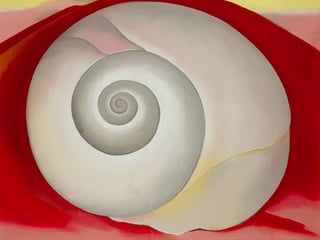
Georgia O'Keeffe
Georgia Totto O'Keeffe (1887 – 1986) was an
 American artist. O'Keeffe was a major figure in
 American art from the 1920s.
She received widespread recognition for her
 technical contributions, as well as for
 challenging the boundaries of modern American
 artistic style. She is chiefly known for paintings
 of flowers, rocks, shells, animal bones, and
 landscapes in which she synthesized abstraction
 and representation.
 Her paintings present crisply contoured forms
  that are replete with subtle tonal transitions of
  varying colors. She often transformed her subject
  matter into powerful abstract images
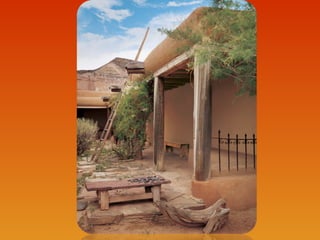
 Importantly, O'Keeffe played a central
 role in bringing an American art style to
 Europe at a time when the majority of
 influence flowed in the opposite direction.
 This feat enhanced her art-historical
 importance given that she was one of few
 women to have gained entry to this level
 of professional influence. She found
 artistic inspiration, particularly in New
 Mexico, where she settled late in life.
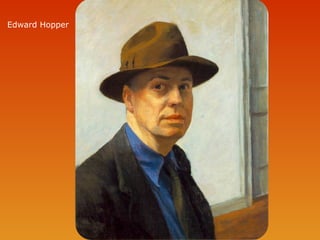
Edward Hopper
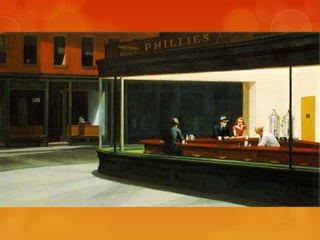
    Edward Hopper (1882 – 1967) was a
    prominent American realist painter and
    printmaker. While most popularly known
    for his oil paintings, he was equally
    proficient as a watercolorist . In both his
    urban and rural scenes, his spare and
    finely calculated renderings reflected his
    personal vision of modern American life
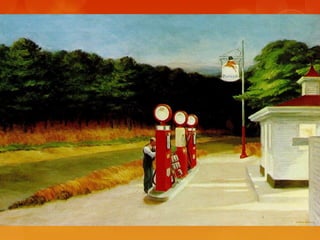
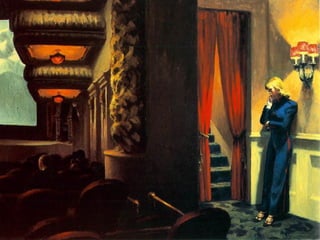
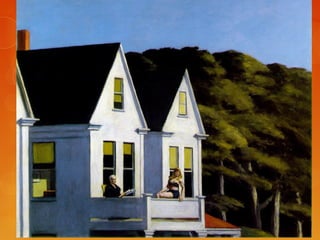
 With his paintings, Hopper paid particular
  attention to geometrical design and the
  careful placement of human figures in proper
  balance with their environment. He was a
  slow and methodical artist; as he wrote, “It
  takes a long time for an idea to strike. Then I
  have to think about it for a long time. I don’t
  start painting until I have it all worked out in
  my mind. I’m all right when I get to the easel
  (мольберт)"
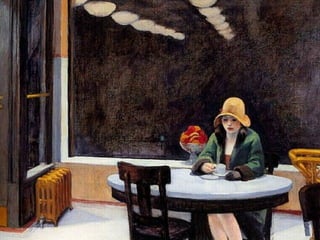
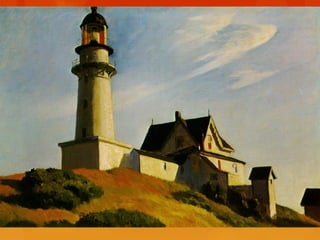
 His paintings combine apparently
  incompatible qualities. Modern in
  their bleakness and simplicity, they
  are also full of nostalgia for the
  puritan virtues of the American past
  - the kind of quirky nineteenth-
  century architecture Hopper liked to
  paint, for instance, could not have
  been more out of fashion than it was
  in the mid 1920s, when he first
  began to look at it seriously.
 In 1929, he was included in the Museum of
  Modern Art's second exhibition, Paintings by
  Nineteen Living Americans, and in 1930 The
  House by the Railroad entered the museum's
  permanent collection. In the same year, the
  Whitney Museum bought Hopper's Early
  Sunday Morning it's most expensive purchase
  up to that time. In 1933 Hopper was given a
  retrospective exhibition at the Museum of
  Modern Art. This was followed, in 1950, by a
  fuller retrospective show at the Whitney.
Americans
Americans
Americans

Americans

  • 1.
    American Painters -Thomas Cole - WinslowHomer - J ackson Pollock - Geor gia O’Keef ee - Edwar d Hopper
  • 2.
  • 3.
    Thomas Cole (1801– 1848) was an English-born American artist. He is regarded as the founder of the Hudson River School, an American art movement that flourished in the mid- 19th century. Cole's Hudson River School, as well as his own work, was known for its realistic and detailed portrayal of American landscape and wilderness, which feature themes of romanticism and naturalism.
  • 5.
     He wasborn in Bolton, Lancashire, England in 1801. In 1818 his family emigrated to the United States, settling in Steubenville, Ohio, where Cole learned the rudiments of his profession from a wandering portrait painter named Stein. However, he had little success painting portraits, and his interest shifted to landscape.
  • 7.
    Painting Cole was primarilya painter of landscapes, but he also painted allegorical works. The most famous of these are the five-part series, The Course of Empire, which depict the same landscape over generations—from a near state of nature to consummation of empire, and then decline and desolution— now in the collection of the New York Historical Society and the four-part The Voyage of Life.
  • 8.
    The Course ofEmpire: Consummation
  • 9.
  • 10.
    Personal life After 1827Cole maintained a studio at the farm called Cedar Grove in the town of Catskill, New York. He painted a significant portion of his work in this studio. In 1836 he married Maria Bartow of Catskill, a niece of the owner, and became a year-round resident. Thomas and Maria had five children.  Thomas Cole died at Catskill on February 11, 1848. The fourth highest peak in the Catskills is named Thomas Cole Mountain in his honor. Cedar Grove, also known as the Thomas Cole House, was declared a National Historic Site in 1999 and is now open to the public.
  • 13.
  • 14.
    Winslow Homer (1836– 1910) was an American landscape painter and printmaker, best known for his marine subjects. He is considered one of the foremost painters in 19th century America and a preeminent figure in American art.
  • 16.
    Born in Boston,Massachusetts in 1836, Homer was the second of three sons  His mother was a gifted amateur watercolorist and Homer’s first teacher, and she and her son had a close relationship throughout their lives. Homer took on many of her traits, including her quiet, strong-willed, sociable nature, her dry sense of humor and her artistic talent. Homer had a happy childhood, growing up mostly in then rural Cambridge, Massachusetts. He was an average student, but his art talent was evident in his early years.
  • 18.
    His early works,mostly commercial engravings of urban and country social scenes, are characterized by clean outlines, simplified forms, dramatic contrast of light and dark, and lively figure groupings — qualities that remained important throughout his career. His quick success was mostly due to this strong understanding of graphic design and also to the adaptability of his designs to wood engraving.
  • 23.
  • 24.
    Paul Jackson Pollock(January 28, 1912 – August 11, 1956), known as Jackson Pollock, was an influential American painter and a major figure in the abstract expressionist movement. During his lifetime, Pollock enjoyed considerable fame and notoriety. He was regarded as a mostly reclusive artist. He had a volatile personality, and struggled with alcoholism for most of his life. In 1945, he married the artist Lee Krasner, who became an important influence on his career and on his legacy.
  • 27.
    Pollock died atthe age of 44 in an alcohol- related car accident. In December 1956, he was given a memorial retrospective exhibition at the Museum of Modern Art (MoMA) in New York City, and a larger more comprehensive exhibition there in 1967. More recently, in 1998 and 1999, his work was honored with large-scale retrospective exhibitions at MoMA and at The Tate in London. In 2000, Pollock was the subject of an Academy Award–winning film Pollock directed by and starring Ed Harris.
  • 30.
    In November 2006,Pollock's No. 5, 1948 became the world's most expensive painting, when it was sold privately to an undisclosed buyer for the sum of $140,000,000. The previous owner was film and music-producer David Geffen. It is rumored that the current owner is a German businessman and art collector.
  • 32.
  • 34.
    Georgia Totto O'Keeffe(1887 – 1986) was an American artist. O'Keeffe was a major figure in American art from the 1920s. She received widespread recognition for her technical contributions, as well as for challenging the boundaries of modern American artistic style. She is chiefly known for paintings of flowers, rocks, shells, animal bones, and landscapes in which she synthesized abstraction and representation.
  • 35.
     Her paintingspresent crisply contoured forms that are replete with subtle tonal transitions of varying colors. She often transformed her subject matter into powerful abstract images
  • 37.
     Importantly, O'Keeffeplayed a central role in bringing an American art style to Europe at a time when the majority of influence flowed in the opposite direction. This feat enhanced her art-historical importance given that she was one of few women to have gained entry to this level of professional influence. She found artistic inspiration, particularly in New Mexico, where she settled late in life.
  • 40.
  • 41.
    Edward Hopper (1882 – 1967) was a prominent American realist painter and printmaker. While most popularly known for his oil paintings, he was equally proficient as a watercolorist . In both his urban and rural scenes, his spare and finely calculated renderings reflected his personal vision of modern American life
  • 44.
     With hispaintings, Hopper paid particular attention to geometrical design and the careful placement of human figures in proper balance with their environment. He was a slow and methodical artist; as he wrote, “It takes a long time for an idea to strike. Then I have to think about it for a long time. I don’t start painting until I have it all worked out in my mind. I’m all right when I get to the easel (мольберт)"
  • 47.
     His paintingscombine apparently incompatible qualities. Modern in their bleakness and simplicity, they are also full of nostalgia for the puritan virtues of the American past - the kind of quirky nineteenth- century architecture Hopper liked to paint, for instance, could not have been more out of fashion than it was in the mid 1920s, when he first began to look at it seriously.
  • 49.
     In 1929,he was included in the Museum of Modern Art's second exhibition, Paintings by Nineteen Living Americans, and in 1930 The House by the Railroad entered the museum's permanent collection. In the same year, the Whitney Museum bought Hopper's Early Sunday Morning it's most expensive purchase up to that time. In 1933 Hopper was given a retrospective exhibition at the Museum of Modern Art. This was followed, in 1950, by a fuller retrospective show at the Whitney.