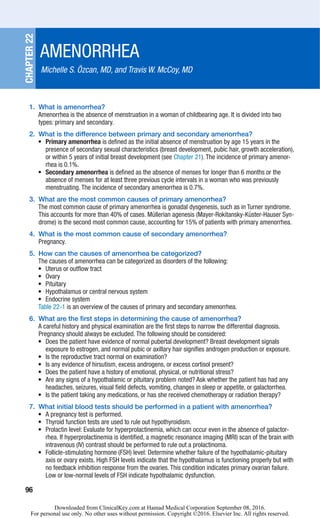
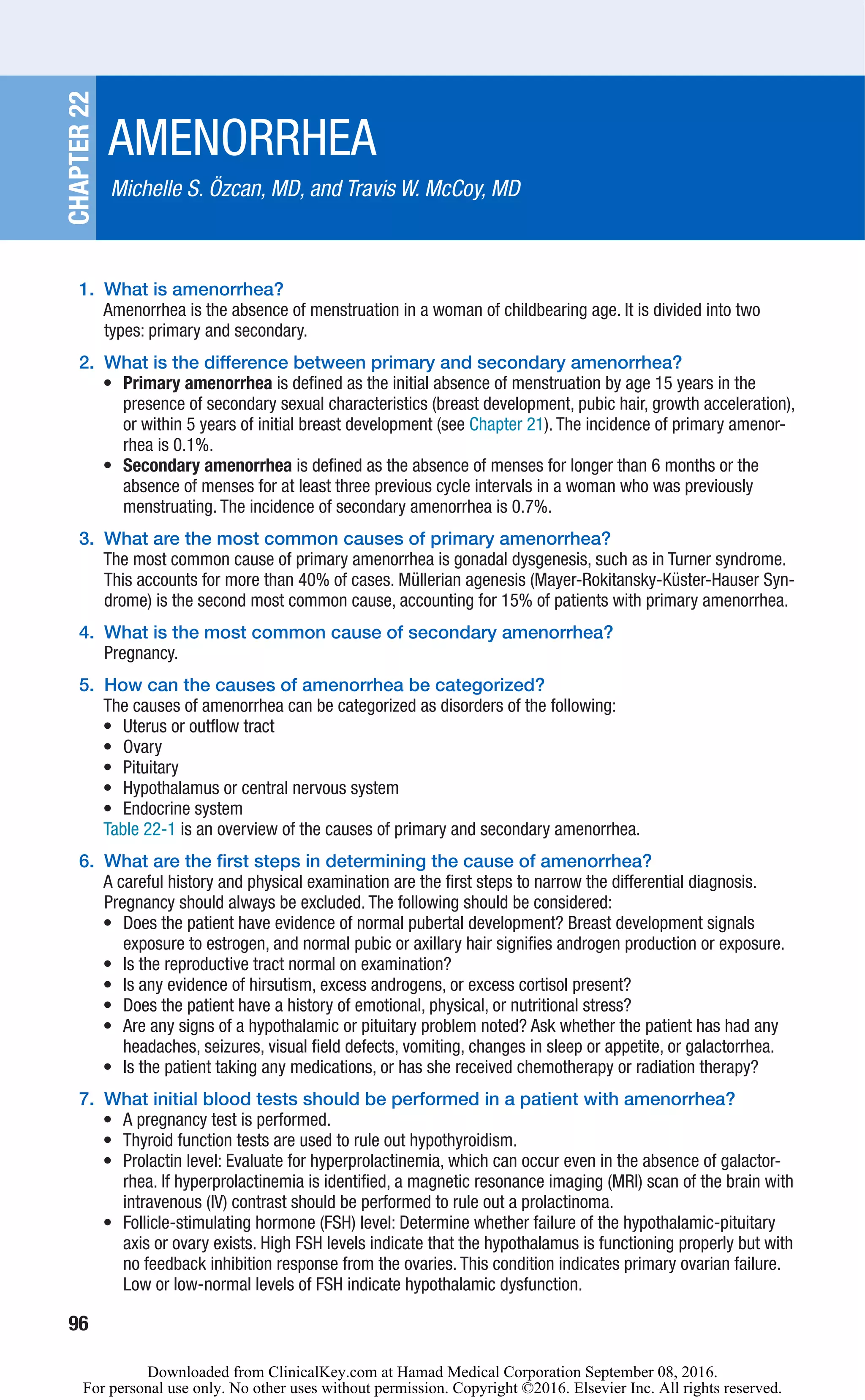
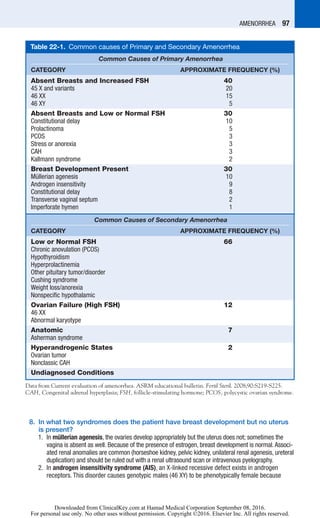
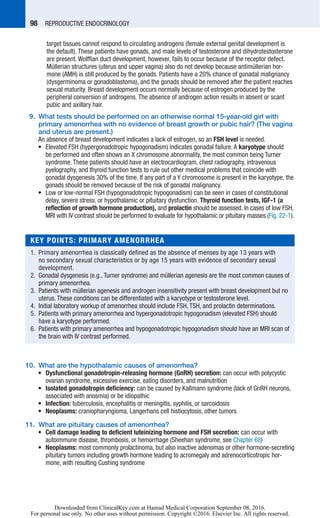
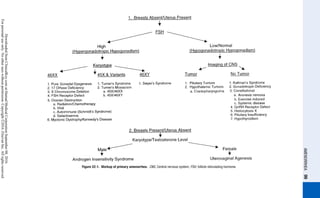
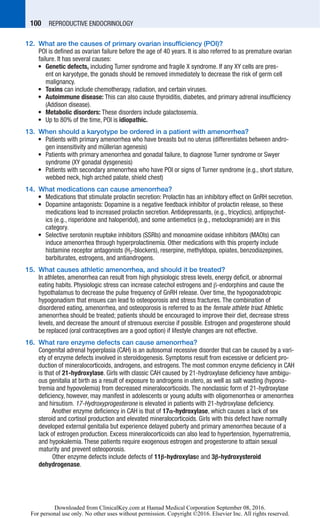
Amenorrhea is the absence of menstruation and can be primary or secondary. Primary amenorrhea refers to the absence of menstruation by age 15 in the presence of secondary sexual characteristics or by age 13 without characteristics. Secondary amenorrhea is the absence of menses for longer than 6 months in a previously menstruating woman. Common causes include pregnancy, polycystic ovarian syndrome, thyroid issues, and prolactinomas. An evaluation involves assessing sexual development, examining the reproductive tract, and obtaining levels of FSH, TSH, and prolactin to help determine the cause. Further tests like an MRI or karyotype may then be needed.


![Primary Amenorrhoea in Gynecologyamenorrhea[1].ppt](https://cdn.slidesharecdn.com/ss_thumbnails/amenorrhea1-250624124653-9447ebcf-thumbnail.jpg?width=640&height=640&fit=bounds)


![CASE_PRESENTATION_ON_subdural_hematoma(SDH)[1 FINAL PPT]-1.pptx](https://cdn.slidesharecdn.com/ss_thumbnails/casepresentationonsubduralhematomasdh1finalppt-1-260129172522-d405d375-thumbnail.jpg?width=640&height=640&fit=bounds)


