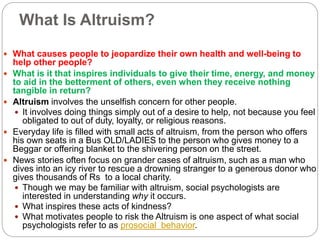
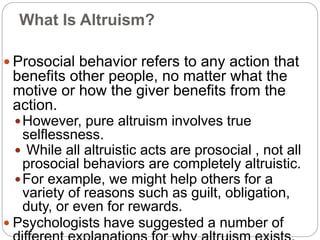
Altruism involves unselfish concern for others and helping without expectation of reward. Psychologists have proposed biological, neurological, social, and cognitive explanations for altruism. Biologically, kin selection may explain why we help relatives to increase genetic transmission. Neurologically, altruism activates reward centers in the brain. Socially, norms of reciprocity and obligation can motivate helping. Cognitively, empathy and relieving distress by helping others may drive altruism, though true selflessness is debated.