1
INTEGRATED
METABOLISM
EVY YULIANTI
evy_yulianti@uny.ac.id
Getting Energy From Food 2
Getting Energy From Food
Not responsible
for:
Enzyme names and
molecular structures,
(unless discussed
specifically in class
Details of metabolic
pathways
Getting Energy From Food 3
What are the major pathways of
metabolism of our principal
energy sources?
Carbohydrates
Fats
Protein
What are the end-products?
What are the waste products?
Getting Energy From Food 4
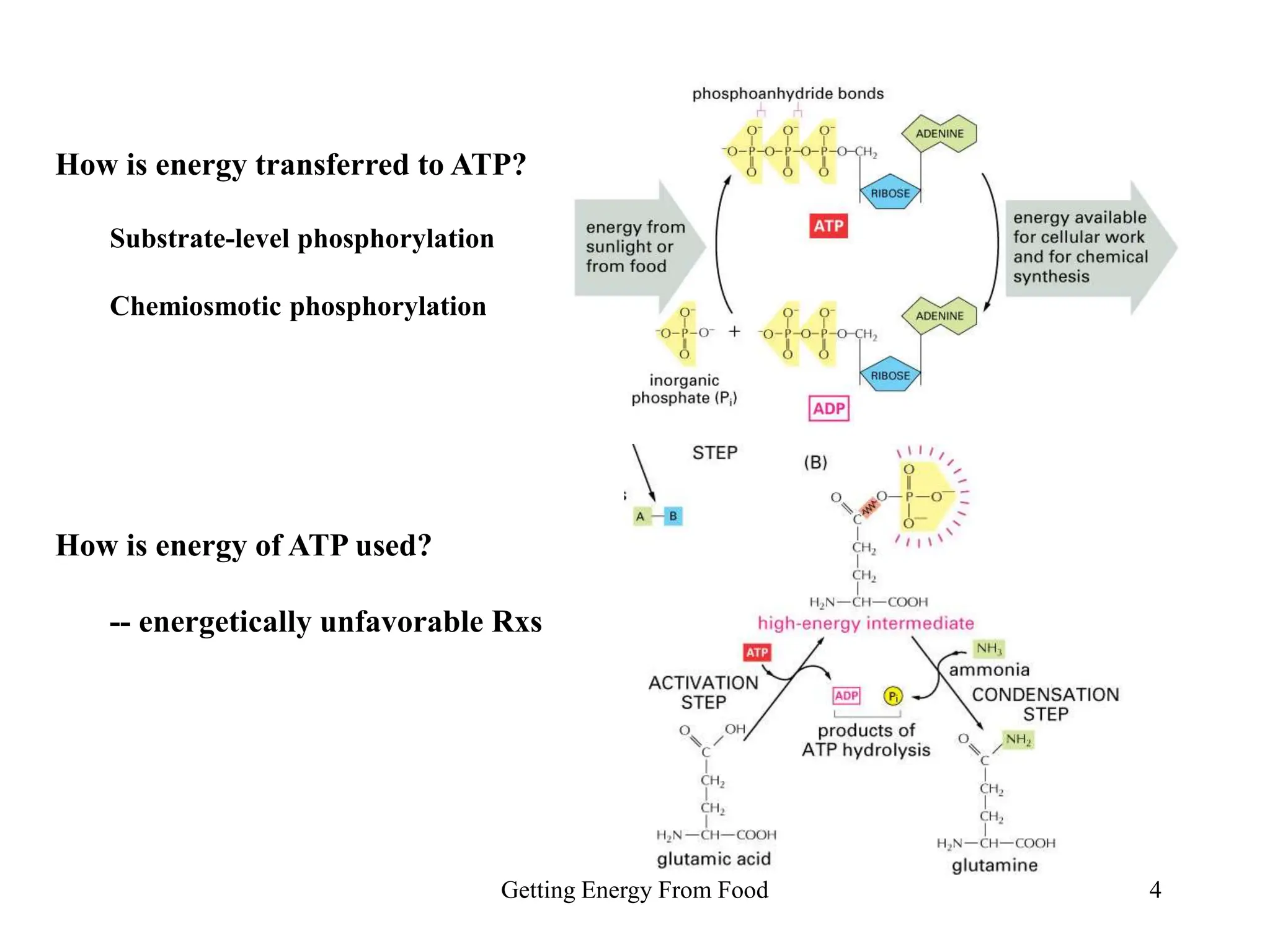
Figure 3-33
How is energy transferred to ATP?
Substrate-level phosphorylation
Chemiosmotic phosphorylation
How is energy of ATP used?
-- energetically unfavorable Rxs
Getting Energy From Food 5
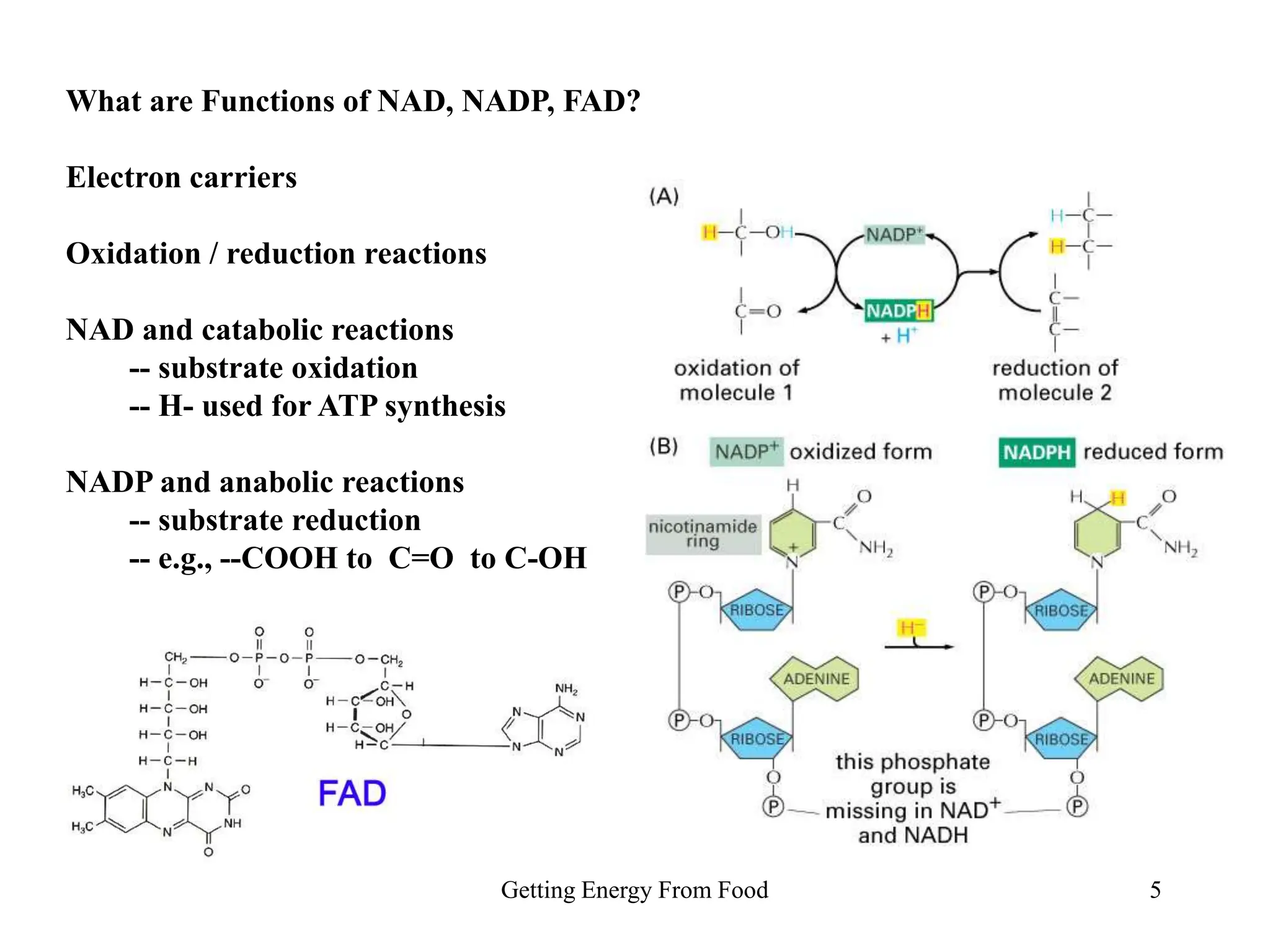
What are Functions of NAD, NADP, FAD?
Electron carriers
Oxidation / reduction reactions
NAD and catabolic reactions
-- substrate oxidation
-- H- used for ATP synthesis
NADP and anabolic reactions
-- substrate reduction
-- e.g., --COOH to C=O to C-OH
Getting Energy From Food 6
Overview of Carbohydrate Catabolism
You are expected to be familiar with the:
• functions and metabolic relationships between:
Glycolysis
Fermentation
Transition reaction
Krebs (TCA) cycle
Electron transport
• and their cellular locations
• roles/requirements for O2 and CO2 in these processes
Getting Energy From Food 7
Overview of Glycolysis
Substrate-level phosphorylation
vs
Chemiosmotic phosphoryltion
Getting Energy From Food
8
How does fermentation allow cells to
produce ATP in the absence of
oxygen?
-- detoxifying of pyruvate
-- regeneration of NAD
How long can this go on…?
What happens to the lactate?
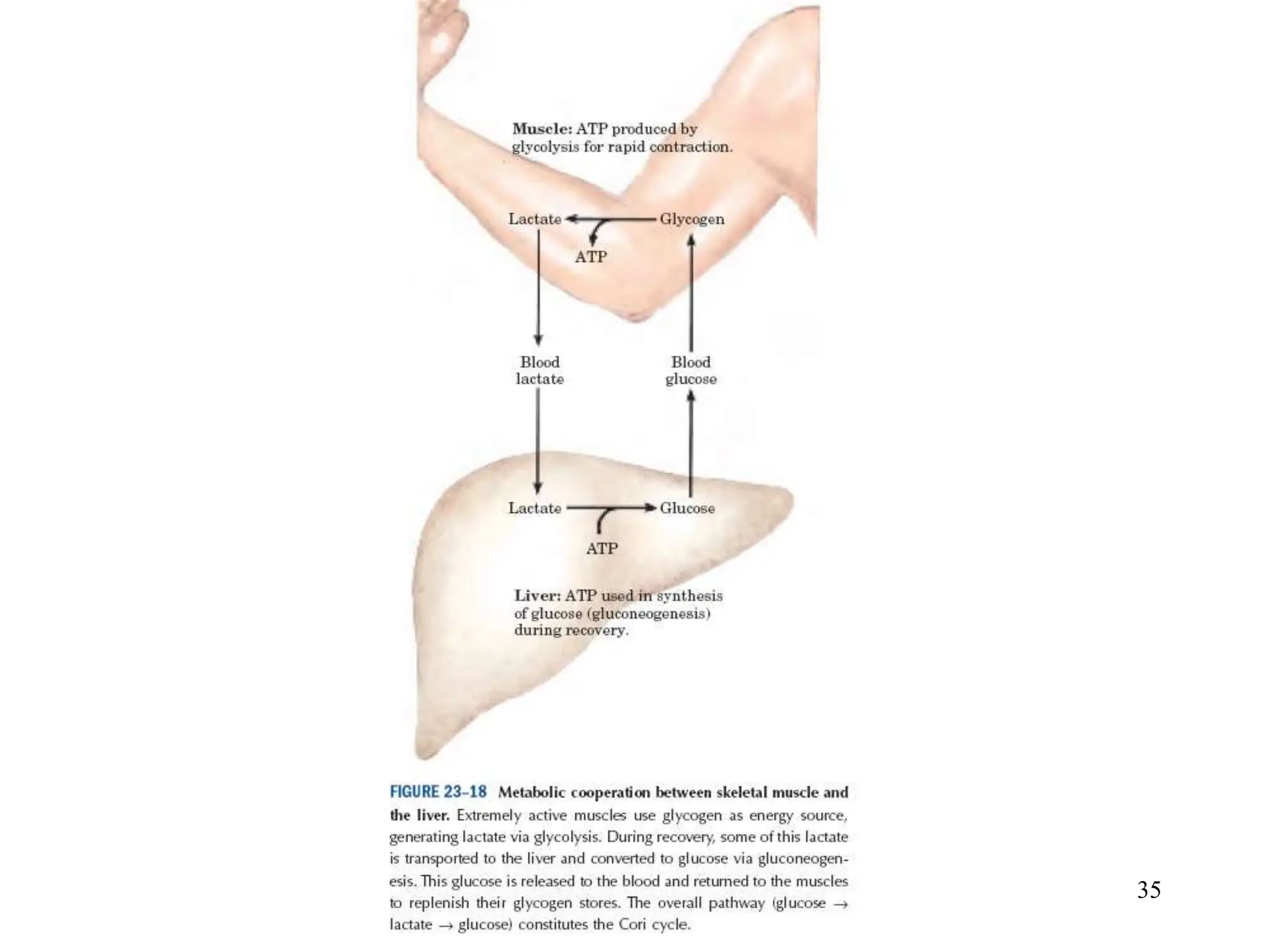
Cori-cycle (a little physiology)
Lactic Acidosis
Getting Energy From Food 9
Oxidation of Pyruvate to Acetyl-CoA
The Pyruvate Dehydrogenase Complex
-- huge
-- highly regulated
Activators:
ADP, NAD, CoA
Inhibitors:
ATP, NADH, acCoA
Getting Energy From Food 10
How are triglycerides oxidized?
Fatty acids and glycerol
Beta-oxidation
1 FADH & 1 NADH / acCoA
How many FADH and NADH
would be produced from a 16
carbon FA?
Getting Energy From Food 11
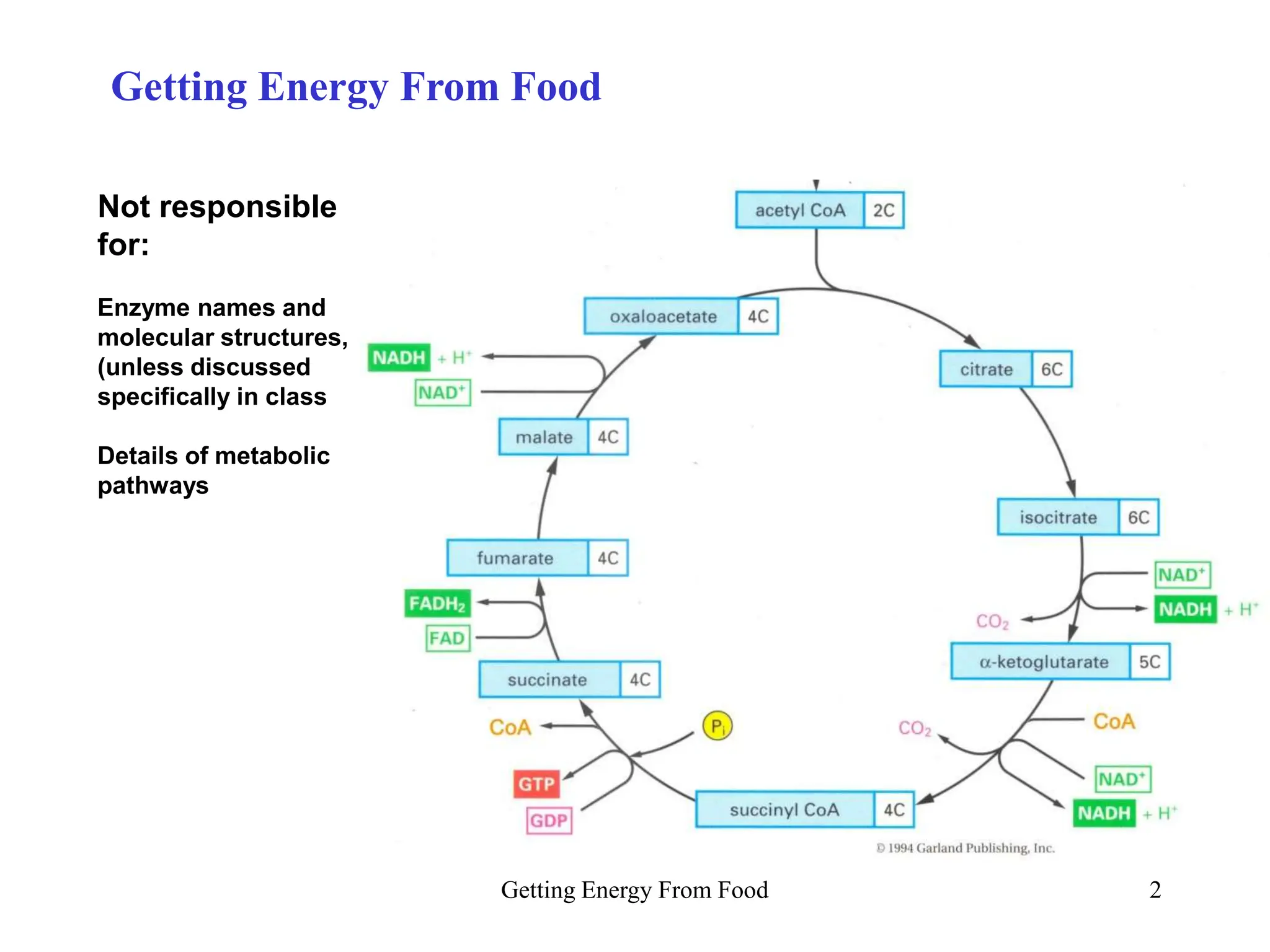
Krebs Cycle
Getting Energy From Food 12
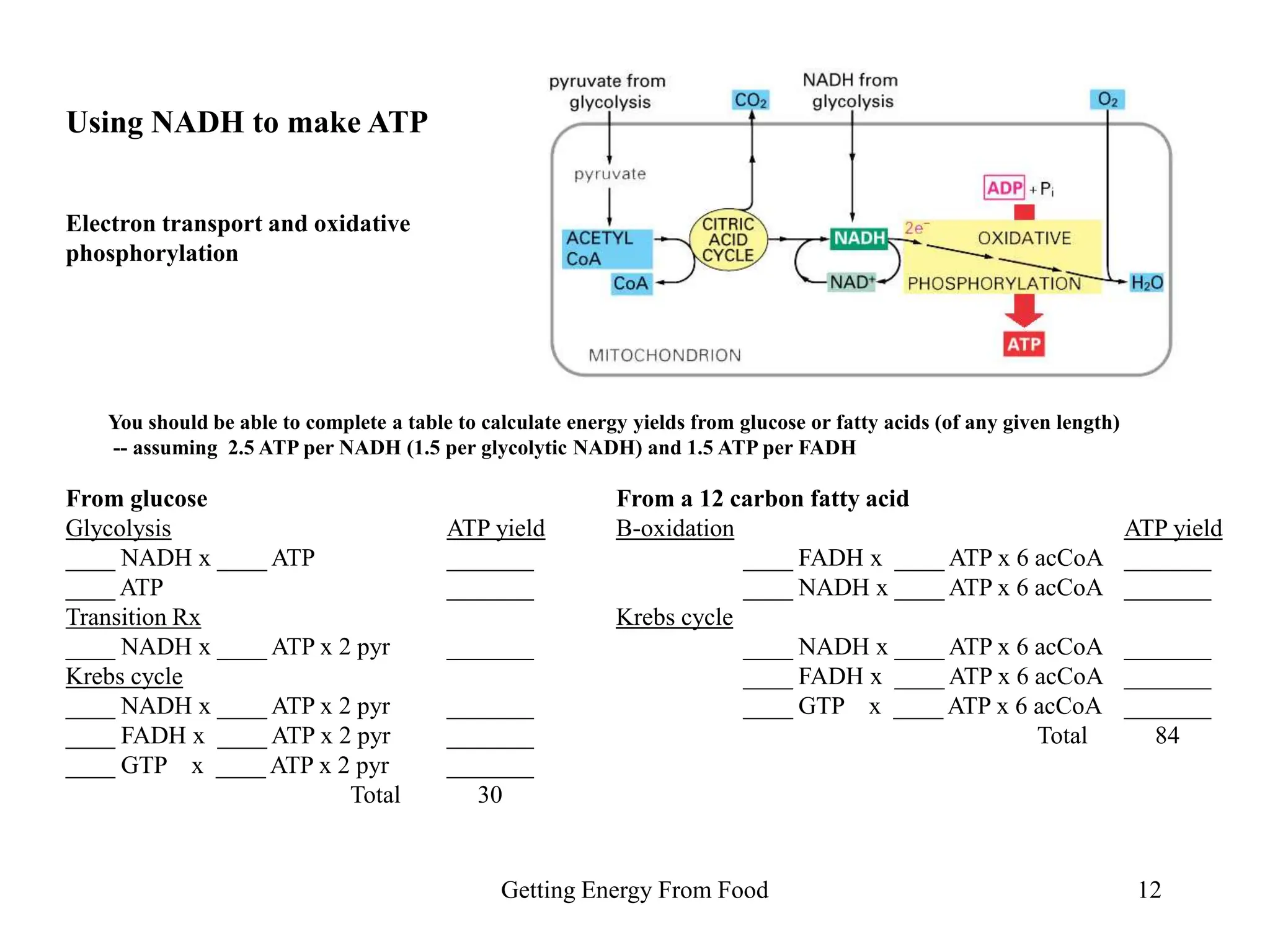
Using NADH to make ATP
Electron transport and oxidative
phosphorylation
From glucose
Glycolysis ATP yield
____ NADH x ____ ATP _______
____ ATP _______
Transition Rx
____ NADH x ____ ATP x 2 pyr _______
Krebs cycle
____ NADH x ____ ATP x 2 pyr _______
____ FADH x ____ ATP x 2 pyr _______
____ GTP x ____ ATP x 2 pyr _______
Total 30
From a 12 carbon fatty acid
B-oxidation ATP yield
____ FADH x ____ ATP x 6 acCoA _______
____ NADH x ____ ATP x 6 acCoA _______
Krebs cycle
____ NADH x ____ ATP x 6 acCoA _______
____ FADH x ____ ATP x 6 acCoA _______
____ GTP x ____ ATP x 6 acCoA _______
Total 84
You should be able to complete a table to calculate energy yields from glucose or fatty acids (of any given length)
-- assuming 2.5 ATP per NADH (1.5 per glycolytic NADH) and 1.5 ATP per FADH
Getting Energy From Food 13
What are the
biosynthetic roles
Of these pathways?
Getting Energy From Food 14
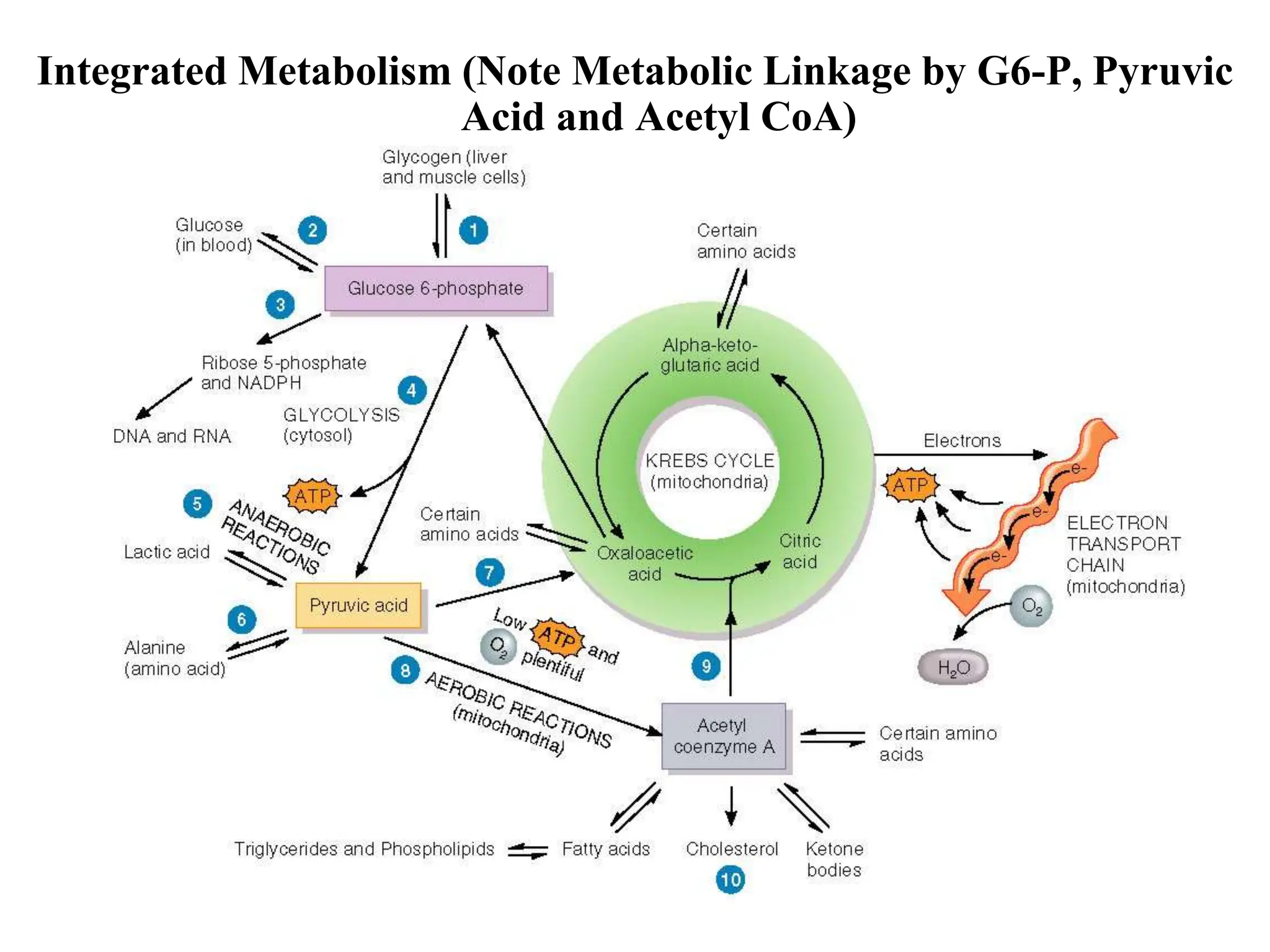
Integrated Metabolism (Note Metabolic Linkage by G6-P, Pyruvic
Acid and Acetyl CoA)
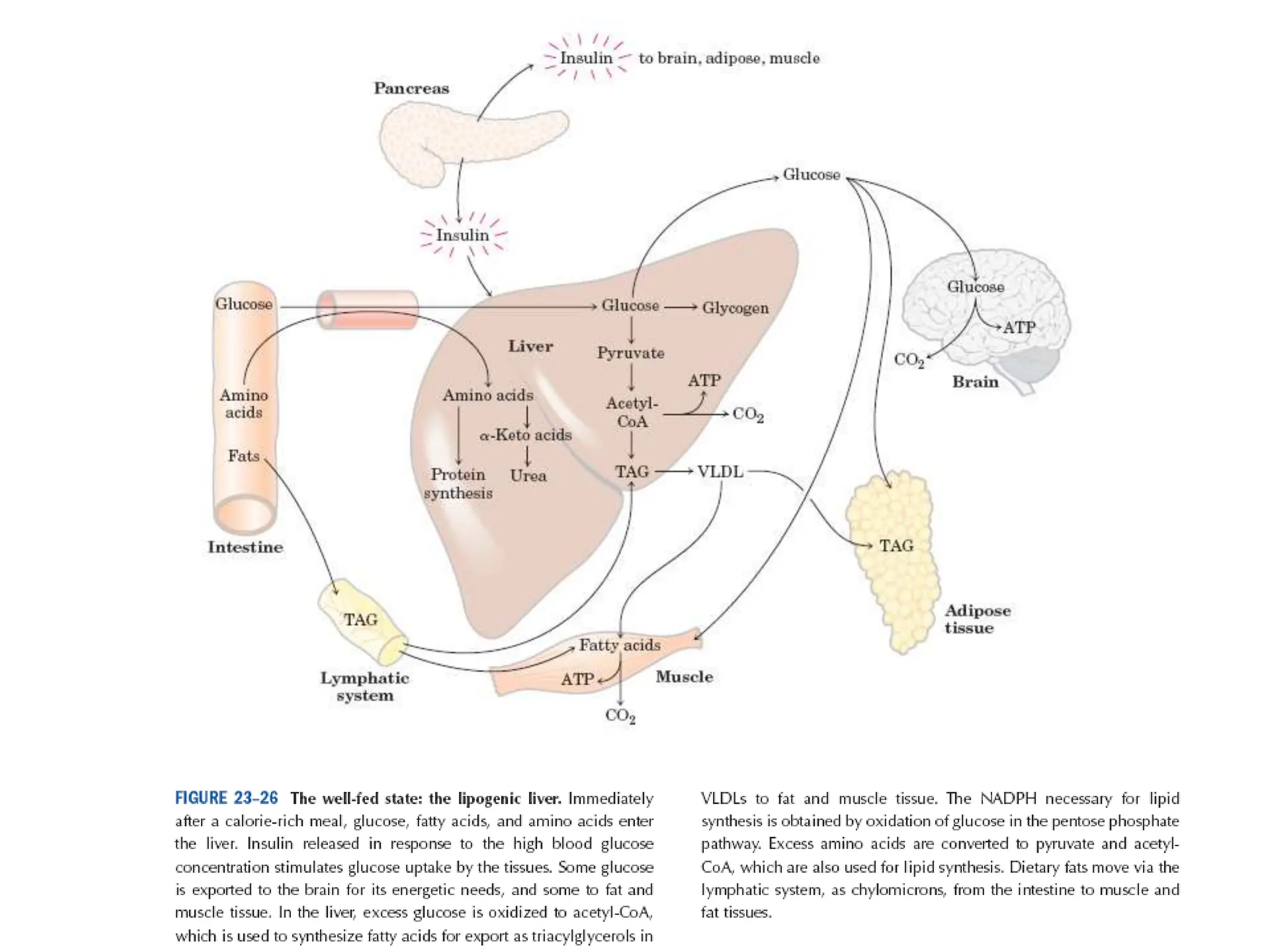
Dominant Absorptive
Reactions:
Most cells oxidize
glucose to ATP, CO2
and H2O
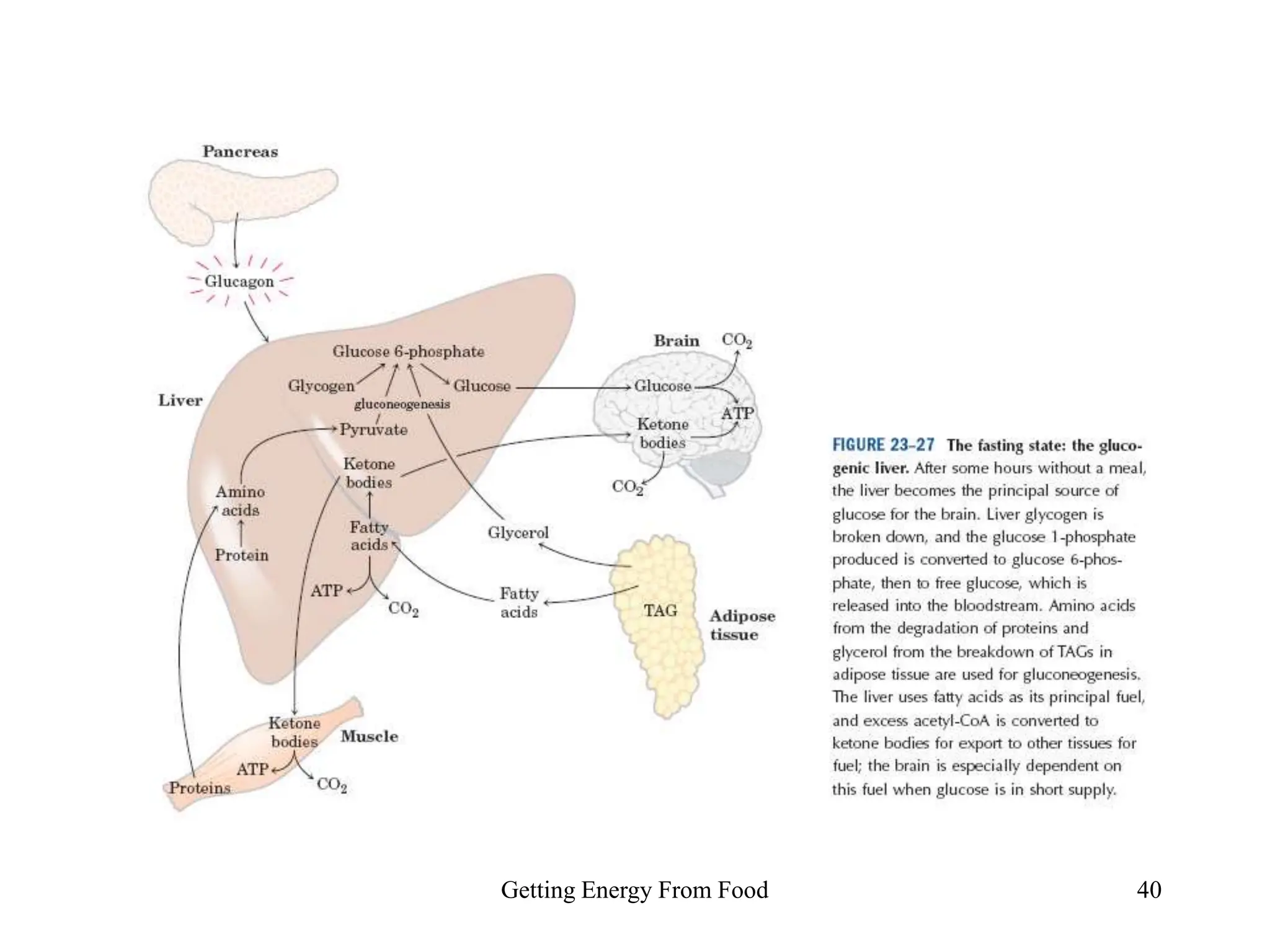
Postabsorptive State Reactions
Getting Energy From Food 18
Getting Energy From Food 19
Getting Energy From Food 20
Getting Energy From Food 21
Getting Energy From Food 22
Getting Energy From Food 23
Getting Energy From Food 24
Getting Energy From Food 25
Getting Energy From Food 26
Getting Energy From Food 27
Getting Energy From Food 28
Getting Energy From Food 29
Getting Energy From Food 30
Getting Energy From Food 31
Getting Energy From Food 32
Getting Energy From Food 33
Getting Energy From Food 34
Getting Energy From Food 35
Getting Energy From Food 36
Getting Energy From Food 37
Getting Energy From Food 38
Getting Energy From Food 39
Getting Energy From Food 40
Getting Energy From Food 41
Getting Energy From Food 42

(All types of) integrated-metabolism.ppt