INDUSTRIAL
BIOTECHNOLOGY:
PRODUCTION OF
ALCOHOLIC BEVERAGES
Gunjit Setia
BEVERAGES
Beverages are a diverse group of essential
drinks (fermented and nonfermented) which are
liquids made for consumption.
Beverage industries are focusing on modern
biotechnological processes for the production
and processing of beverages including:
• Improvement of quality,
• Nutritional and functional attributes
• Value addition
• Aseptic or sterile packaging
• Shelf-life extension of the products
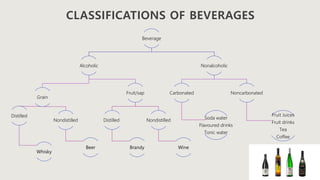
Beverage
Alcoholic
Grain
Distilled
Whisky
Nondistilled
Beer
Fruit/sap
Distilled
Brandy
Nondistilled
Wine
Nonalcoholic
Carbonated
Soda water
Flavoured drinks
Tonic water
Noncarbonated
Fruit Juices
Fruit drinks
Tea
Coffee
CLASSIFICATIONS OF BEVERAGES
ALCOHOLIC
BEVERAGES
• Produced by the fermentation and distillation
process.
• Raw materials which contained sugars are
converted into alcohol (ethanol) and carbon
dioxide by microorganisms, which also impart
characteristic flavors and aromas to the
beverage.
• Contain 0.5 or more amount of ethanol or ethyl
alcohol termed as Alcoholic Beverages.
BIOTECHNOLOGICAL APPLICATIONS IN
BEVERAGE PRODUCTION
• Fermentation
• Starter cultures technology
• Recombinant enzymes
• Biosensors
• Diagnostic tests for food safety
• Probiotics, prebiotics
• Genetically modified foods
• Bio-preservation of beverage
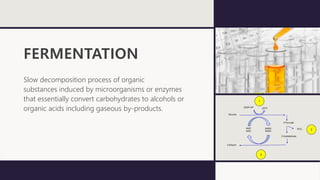
FERMENTATION
Slow decomposition process of organic
substances induced by microorganisms or enzymes
that essentially convert carbohydrates to alcohols or
organic acids including gaseous by-products.
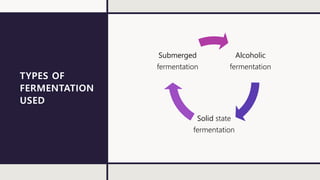
TYPES OF
FERMENTATION
USED
Alcoholic
fermentation
Solid state
fermentation
Submerged
fermentation
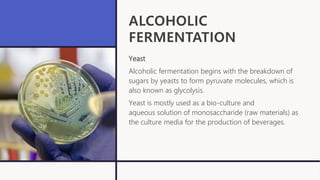
ALCOHOLIC
FERMENTATION
Yeast
Alcoholic fermentation begins with the breakdown of
sugars by yeasts to form pyruvate molecules, which is
also known as glycolysis.
Yeast is mostly used as a bio-culture and
aqueous solution of monosaccharide (raw materials) as
the culture media for the production of beverages.
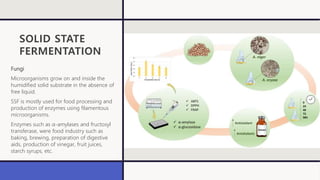
SOLID STATE
FERMENTATION
Fungi
Microorganisms grow on and inside the
humidified solid substrate in the absence of
free liquid.
SSF is mostly used for food processing and
production of enzymes using filamentous
microorganisms.
Enzymes such as α-amylases and fructosyl
transferase, were food industry such as
baking, brewing, preparation of digestive
aids, production of vinegar, fruit juices,
starch syrups, etc.
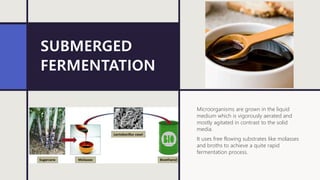
SUBMERGED
FERMENTATION
Microorganisms are grown in the liquid
medium which is vigorously aerated and
mostly agitated in contrast to the solid
media.
It uses free flowing substrates like molasses
and broths to achieve a quite rapid
fermentation process.
STARTER CULTURE TECHNOLOGY
Starter cultures are preparations of live microorganisms
which influence the processing of beverages through
biotechnological approaches containing large numbers of specific
or variable microorganisms, which may be added to facilitate
control over the initial phase of a fermentation process.
Defined starter cultures consist of single or mixed strains of pure
microorganisms for use in the production of dairy and other food
products such as kefir, yogurt, dahi, cheeses, alcoholic beverages,
etc.
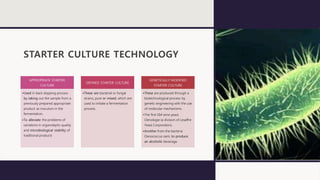
STARTER CULTURE TECHNOLOGY
APPROPRIATE STARTER
CULTURE
•Used in back slopping process
by taking out the sample from a
previously prepared appropriate
product as inoculum in the
fermentation.
•To alleviate the problems of
variations in organoleptic quality
and microbiological stability of
traditional products
DEFINED STARTER CULTURE
•These are bacterial or fungal
strains, pure or mixed, which are
used to initiate a fermentation
process.
GENETICALLY MODIFIED
STARTER CULTURE
•These are produced through a
biotechnological process by
genetic engineering with the use
of molecular mechanisms.
•The first GM wine yeast,
Oenologie (a division of Lesaffre
Yeast Corporation).
•Another from the bacteria
Oenococcus oeni, to produce
an alcoholic beverage.
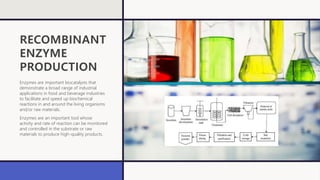
RECOMBINANT
ENZYME
PRODUCTION
Enzymes are important biocatalysts that
demonstrate a broad range of industrial
applications in food and beverage industries
to facilitate and speed up biochemical
reactions in and around the living organisms
and/or raw materials.
Enzymes are an important tool whose
activity and rate of reaction can be monitored
and controlled in the substrate or raw
materials to produce high-quality products.
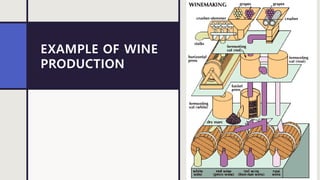
ENZYMES USED IN PRODUCTION OF ALCOHOLIC BEVERAGES
ENZYME BEVERAGE APPLICATION
Lichenase Beer Hydrolysis of lichenan
Acetolactate decarboxylase Beer Decomposition of acetolactate
Rectinase Wine Improvement of aromatic profile
Beta-Glucanase Wine Influence on the autolysis of yeast
Pectinases Distilled spirit Hydrolysis of bound monterpenes
Amylases Beer/spirits Starch breakdown
Glucose oxidase Beer Oxygen scavenger in bottled beverages
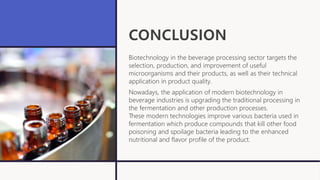
EXAMPLE OF WINE
PRODUCTION
CONCLUSION
Biotechnology in the beverage processing sector targets the
selection, production, and improvement of useful
microorganisms and their products, as well as their technical
application in product quality.
Nowadays, the application of modern biotechnology in
beverage industries is upgrading the traditional processing in
the fermentation and other production processes.
These modern technologies improve various bacteria used in
fermentation which produce compounds that kill other food
poisoning and spoilage bacteria leading to the enhanced
nutritional and flavor profile of the product.
REFERENCES
Tamang, J.P., Watanabe, K., Holzapfel, W.H., 2016. Diversity of microorganisms in
global fermented foods and beverages. Front. Microbiol. 8, 7–16.
Balarabe, M.M., Mohammed, S.S.D., Idris, S., 2017. The role of biotechnology in food production
and processing. Ind. Eng. 1, 24–35.
Paul, S.K., Dutta, H., Mahanta, C.L., Prasanna, K.G.V., 2014. Process standardisation and storage
study of sweet potato (Ipomoea batatas) wine. Int. Food Res. J. 21 (3), 1149–1156.
FAO, 2010. Current status and options for biotechnologies in food processing and in food safety
in developing countries. In: FAO International Conference, Guadalajara, Mexico.
Srabhakar, A., Krishnaiah, K., Janaun, J., Bono, A., 2005. An overview of engineering aspects
of solid state fermentation. Malaysian J. Microbiol. 1, 10–16.

Alcoholic Beverges Production Gunjit Setia.pptx

  • 1.
  • 2.
    BEVERAGES Beverages are adiverse group of essential drinks (fermented and nonfermented) which are liquids made for consumption. Beverage industries are focusing on modern biotechnological processes for the production and processing of beverages including: • Improvement of quality, • Nutritional and functional attributes • Value addition • Aseptic or sterile packaging • Shelf-life extension of the products
  • 3.
  • 4.
    ALCOHOLIC BEVERAGES • Produced bythe fermentation and distillation process. • Raw materials which contained sugars are converted into alcohol (ethanol) and carbon dioxide by microorganisms, which also impart characteristic flavors and aromas to the beverage. • Contain 0.5 or more amount of ethanol or ethyl alcohol termed as Alcoholic Beverages.
  • 5.
    BIOTECHNOLOGICAL APPLICATIONS IN BEVERAGEPRODUCTION • Fermentation • Starter cultures technology • Recombinant enzymes • Biosensors • Diagnostic tests for food safety • Probiotics, prebiotics • Genetically modified foods • Bio-preservation of beverage
  • 6.
    FERMENTATION Slow decomposition processof organic substances induced by microorganisms or enzymes that essentially convert carbohydrates to alcohols or organic acids including gaseous by-products.
  • 7.
  • 8.
    ALCOHOLIC FERMENTATION Yeast Alcoholic fermentation beginswith the breakdown of sugars by yeasts to form pyruvate molecules, which is also known as glycolysis. Yeast is mostly used as a bio-culture and aqueous solution of monosaccharide (raw materials) as the culture media for the production of beverages.
  • 9.
    SOLID STATE FERMENTATION Fungi Microorganisms growon and inside the humidified solid substrate in the absence of free liquid. SSF is mostly used for food processing and production of enzymes using filamentous microorganisms. Enzymes such as α-amylases and fructosyl transferase, were food industry such as baking, brewing, preparation of digestive aids, production of vinegar, fruit juices, starch syrups, etc.
  • 10.
    SUBMERGED FERMENTATION Microorganisms are grownin the liquid medium which is vigorously aerated and mostly agitated in contrast to the solid media. It uses free flowing substrates like molasses and broths to achieve a quite rapid fermentation process.
  • 11.
    STARTER CULTURE TECHNOLOGY Startercultures are preparations of live microorganisms which influence the processing of beverages through biotechnological approaches containing large numbers of specific or variable microorganisms, which may be added to facilitate control over the initial phase of a fermentation process. Defined starter cultures consist of single or mixed strains of pure microorganisms for use in the production of dairy and other food products such as kefir, yogurt, dahi, cheeses, alcoholic beverages, etc.
  • 12.
    STARTER CULTURE TECHNOLOGY APPROPRIATESTARTER CULTURE •Used in back slopping process by taking out the sample from a previously prepared appropriate product as inoculum in the fermentation. •To alleviate the problems of variations in organoleptic quality and microbiological stability of traditional products DEFINED STARTER CULTURE •These are bacterial or fungal strains, pure or mixed, which are used to initiate a fermentation process. GENETICALLY MODIFIED STARTER CULTURE •These are produced through a biotechnological process by genetic engineering with the use of molecular mechanisms. •The first GM wine yeast, Oenologie (a division of Lesaffre Yeast Corporation). •Another from the bacteria Oenococcus oeni, to produce an alcoholic beverage.
  • 13.
    RECOMBINANT ENZYME PRODUCTION Enzymes are importantbiocatalysts that demonstrate a broad range of industrial applications in food and beverage industries to facilitate and speed up biochemical reactions in and around the living organisms and/or raw materials. Enzymes are an important tool whose activity and rate of reaction can be monitored and controlled in the substrate or raw materials to produce high-quality products.
  • 14.
    ENZYMES USED INPRODUCTION OF ALCOHOLIC BEVERAGES ENZYME BEVERAGE APPLICATION Lichenase Beer Hydrolysis of lichenan Acetolactate decarboxylase Beer Decomposition of acetolactate Rectinase Wine Improvement of aromatic profile Beta-Glucanase Wine Influence on the autolysis of yeast Pectinases Distilled spirit Hydrolysis of bound monterpenes Amylases Beer/spirits Starch breakdown Glucose oxidase Beer Oxygen scavenger in bottled beverages
  • 15.
  • 16.
    CONCLUSION Biotechnology in thebeverage processing sector targets the selection, production, and improvement of useful microorganisms and their products, as well as their technical application in product quality. Nowadays, the application of modern biotechnology in beverage industries is upgrading the traditional processing in the fermentation and other production processes. These modern technologies improve various bacteria used in fermentation which produce compounds that kill other food poisoning and spoilage bacteria leading to the enhanced nutritional and flavor profile of the product.
  • 17.
    REFERENCES Tamang, J.P., Watanabe,K., Holzapfel, W.H., 2016. Diversity of microorganisms in global fermented foods and beverages. Front. Microbiol. 8, 7–16. Balarabe, M.M., Mohammed, S.S.D., Idris, S., 2017. The role of biotechnology in food production and processing. Ind. Eng. 1, 24–35. Paul, S.K., Dutta, H., Mahanta, C.L., Prasanna, K.G.V., 2014. Process standardisation and storage study of sweet potato (Ipomoea batatas) wine. Int. Food Res. J. 21 (3), 1149–1156. FAO, 2010. Current status and options for biotechnologies in food processing and in food safety in developing countries. In: FAO International Conference, Guadalajara, Mexico. Srabhakar, A., Krishnaiah, K., Janaun, J., Bono, A., 2005. An overview of engineering aspects of solid state fermentation. Malaysian J. Microbiol. 1, 10–16.