1
The Common Good
Digital Framework
Rebecca Leeper
Bsc Computer Engineer | AIWS Practitioner
BGF | AIWS
Rebecca Leeper
BSc Computer Engineering
AIWS Practitioner
Privacy Driven Interdisciplinary
Software Engineer
2
“ There’s no shortage of headlines highlighting tales of failed machine
learning systems that amplify, rather than rectify, sexist hiring
practices, racist criminal justice procedures, predatory advertising,
and the spread of false information. Though these research findings
can be discouraging, at least we’re paying attention now.
- Joy Buolamwini
Everything we love about civilization is a product of intelligence, so
amplifying our human intelligence with artificial intelligence has the
potential of helping civilization flourish like never before – as long as
we manage to keep the technology beneficial. - Max Tegmark
3
4
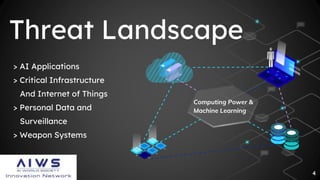
Threat Landscape
> AI Applications
> Critical Infrastructure
And Internet of Things
> Personal Data and
Surveillance
> Weapon Systems
Computing Power &
Machine Learning
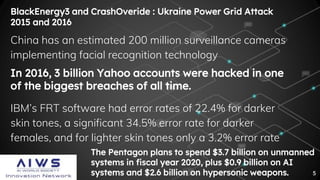
BlackEnergy3 and CrashOveride : Ukraine Power Grid Attack
2015 and 2016
China has an estimated 200 million surveillance cameras
implementing facial recognition technology
The Pentagon plans to spend $3.7 billion on unmanned
systems in fiscal year 2020, plus $0.9 billion on AI
systems and $2.6 billion on hypersonic weapons.
In 2016, 3 billion Yahoo accounts were hacked in one
of the biggest breaches of all time.
IBM’s FRT software had error rates of 22.4% for darker
skin tones, a significant 34.5% error rate for darker
females, and for lighter skin tones only a 3.2% error rate
5
1.
Common Good
Digital Framework
Purpose
The platform will monitor and alert
against the misuse of Artificial
Intelligence (AI), personal data, and
neglect of cyber security. The objectives
of the campaign are to create a working
group of leaders who can provide
counsel and consultation; stimulate and
galvanize civil society towards the need
to create new norms and regulations;
and therein influence AI and cyber
policy.
> Bring authoritative
knowledge
> Raise awareness about
violations of ethical
values and standards by
governments and large
organizations
> Generate an Ethics and
Practice Index designed
for policy makers
7
Monitoring Method
⬡ Open source resources
∙ Newspapers, magazines, journals and reports of
authoritative institutions, and news media
⬡ Participate in key policy meetings, global summits, and
international panels
⬡ Interview public and private sector leaders
8
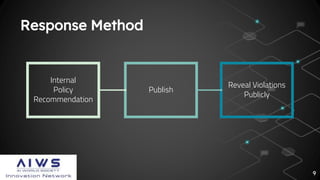
Response Method
Internal
Policy
Recommendation
Reveal Violations
Publicly
Publish
9
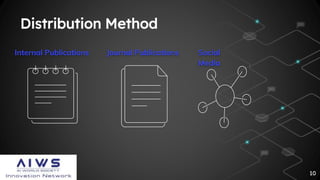
Distribution Method
Internal Publications Journal Publications Social
Media
10
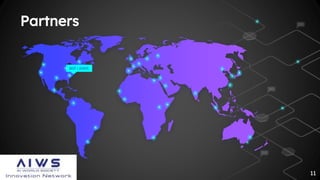
Partners
BGF / AIWS
11
12
Action Plan
1. Identify and assign enthusiastic community leaders for
communications on social media for CGDF
2. Identify and assign enthusiastic leaders for outreach to
connect young people to join and contribute to CGDF
3. Identify and seek out local and international NGOs to join
CGDF network
4. Identify and seek out relevant scholarly leaders to join CGDF
network
Action Plan
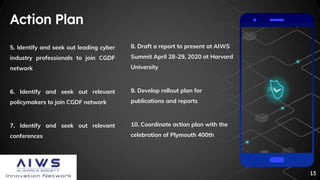
13
5. Identify and seek out leading cyber
industry professionals to join CGDF
network
6. Identify and seek out relevant
policymakers to join CGDF network
7. Identify and seek out relevant
conferences
8. Draft a report to present at AIWS
Summit April 28-29, 2020 at Harvard
University
9. Develop rollout plan for
publications and reports
10. Coordinate action plan with the
celebration of Plymouth 400th
14
Thanks!
Any questions?
You can contact me at:
leeper.rebecca@gmail.com
www.linkedin.com/in/rebecca-leeper

Aiws presentation leeper rebecca

  • 1.
    1 The Common Good DigitalFramework Rebecca Leeper Bsc Computer Engineer | AIWS Practitioner BGF | AIWS
  • 2.
    Rebecca Leeper BSc ComputerEngineering AIWS Practitioner Privacy Driven Interdisciplinary Software Engineer 2
  • 3.
    “ There’s noshortage of headlines highlighting tales of failed machine learning systems that amplify, rather than rectify, sexist hiring practices, racist criminal justice procedures, predatory advertising, and the spread of false information. Though these research findings can be discouraging, at least we’re paying attention now. - Joy Buolamwini Everything we love about civilization is a product of intelligence, so amplifying our human intelligence with artificial intelligence has the potential of helping civilization flourish like never before – as long as we manage to keep the technology beneficial. - Max Tegmark 3
  • 4.
    4 Threat Landscape > AIApplications > Critical Infrastructure And Internet of Things > Personal Data and Surveillance > Weapon Systems Computing Power & Machine Learning
  • 5.
    BlackEnergy3 and CrashOveride: Ukraine Power Grid Attack 2015 and 2016 China has an estimated 200 million surveillance cameras implementing facial recognition technology The Pentagon plans to spend $3.7 billion on unmanned systems in fiscal year 2020, plus $0.9 billion on AI systems and $2.6 billion on hypersonic weapons. In 2016, 3 billion Yahoo accounts were hacked in one of the biggest breaches of all time. IBM’s FRT software had error rates of 22.4% for darker skin tones, a significant 34.5% error rate for darker females, and for lighter skin tones only a 3.2% error rate 5
  • 6.
  • 7.
    Purpose The platform willmonitor and alert against the misuse of Artificial Intelligence (AI), personal data, and neglect of cyber security. The objectives of the campaign are to create a working group of leaders who can provide counsel and consultation; stimulate and galvanize civil society towards the need to create new norms and regulations; and therein influence AI and cyber policy. > Bring authoritative knowledge > Raise awareness about violations of ethical values and standards by governments and large organizations > Generate an Ethics and Practice Index designed for policy makers 7
  • 8.
    Monitoring Method ⬡ Opensource resources ∙ Newspapers, magazines, journals and reports of authoritative institutions, and news media ⬡ Participate in key policy meetings, global summits, and international panels ⬡ Interview public and private sector leaders 8
  • 9.
  • 10.
    Distribution Method Internal PublicationsJournal Publications Social Media 10
  • 11.
  • 12.
    12 Action Plan 1. Identifyand assign enthusiastic community leaders for communications on social media for CGDF 2. Identify and assign enthusiastic leaders for outreach to connect young people to join and contribute to CGDF 3. Identify and seek out local and international NGOs to join CGDF network 4. Identify and seek out relevant scholarly leaders to join CGDF network
  • 13.
    Action Plan 13 5. Identifyand seek out leading cyber industry professionals to join CGDF network 6. Identify and seek out relevant policymakers to join CGDF network 7. Identify and seek out relevant conferences 8. Draft a report to present at AIWS Summit April 28-29, 2020 at Harvard University 9. Develop rollout plan for publications and reports 10. Coordinate action plan with the celebration of Plymouth 400th
  • 14.
    14 Thanks! Any questions? You cancontact me at: leeper.rebecca@gmail.com www.linkedin.com/in/rebecca-leeper

Editor's Notes

  • #2 Thank you very much for that kind introduction. And thank you to all of the speakers that have already presented and the work you have done in this space to ensure the ethical development and deployment of Artificial Intelligence and cyber security.. So with that, I will introduce myself, share a little bit of my story and what I hope to accomplish being a part of AIWS with the launch of The Common Good Digital Framework.
  • #3 My background is in computer engineering and international security studies. I sought my degree in Computer engineering because I really believe that cyber security is national, and consequently international security, and coupling that degree with the political science minor gives me greater insight in understanding the convergence of threats by emerging technology. In 2017, after working on an autonomous weapon at Textron Weapon and Sensor systems, I pursued research into cyber security and AI in autonomous weapons at the United Nations office in Geneva Switzerland, where I met and discussed with ambassadors, NGO leaders, security experts and advocates on these topics. When I returned to Boston, I conducted research right here at the Belfer Center on a cyber security, specifically the information sharing project.
  • #4 And then I returned to Geneva for the AI For Good Conference in 2018 and this is really where my inspiration and motivation to be an ethical AI and cyber security advocate stems from. It was at this conference that I explored what AI and good data processing can do in healthcare and in migration and refugee scenarios, and in preventing and responding to violence and natural disasters, and connecting the world while at the same time recognizing the threat it poses to society in terms of exploiting individual’s right to privacy, exacerbating existing bias, infiltrating our critical infrastructure, as we individually and our governments have become more and more dependent on the cloud, internet, and interconnected networks, and eroding IHL and IHRL when our weapon systems act without human oversight or accountability. So this is when I decided to take a deep technical dive into how these systems work, studying machine learning, and I also pursued research at Northeastern’s Global Resilience Institute on the Critical Infrastructure Network project. Through this work and these experiences, and my own experience of being hacked and my sensitive personal and financial data being leaked, I found my passion for privacy, computer networks and ethical Artificial Intelligence and I now work as a Developer at Data Ductus - a software consulting firm in the network and cloud space - working with major service providers to help them automate and migrate to the cloud. Here I launched the diversity and inclusion campaign to both educate and create a platform for our engineers to share about mindful developing, making sure our work is not only accessible to all, but also - you know we are dealing with people’s data as we are providing services to telecommunication businesses, and thus security has to come first and that’s another pillar of this campaign, that we are ensuring that what we develop and who we develop for does not have unforeseen consequences for the secure passage of information. And all of this has brought me to the Boston Global Forum and specifically the AIWS Innovation Network, and I am incredibly humbled and grateful for the opportunity to present to you today about an initiative I am launching with the BGF and AIWS. So thank you Tuan and Gov. Dukakis for all of your support in this endeavor.
  • #5 As an engineer I see first hand how computing power and machine learning is rapidly advancing, which of course has great benefits for society, I am by no means against the development of such technology, but also as we have today we can identify the existing and emerging threat it poses if left unregulated and if there is not mindful development. Specifically I am most concerned with the following, all interconnected and interwoven concepts: The advancement and integration of AI into our systems, particularly our governance systems poses a significant threat to exacerbating existing bias and violating our human rights. We have seen how when AI algorithms are used to determine prison sentences there is a disproportionate incarceration rate for blacks than whites, for example. The expanding critical infrastructure and number of devices connected to the internet expands the threat landscape making our states more vulnerable to attacks. The private and public sectors are rapidly adapting to the cloud and cloud computing environment for information storage, the internet is being used to manage electric power generation, and the water levels in dams remotely by use of what is known as the Supervisory Control and Data Acquisition (SCADA) systems, and distribution networks for food, water, energy, transportation, healthcare, and financial services also depend heavily on the internet and information technology (IT). Cisco, estimates that there will be more than 50 billion connected devices by the year 2020. And like was said smart refrigerators are now the back door into the energy grid and . The Mirai botnet for example, which reached more than 160 countries and nearly took down the internet in the eastern part of the US in October 2016, and it was amassed by exploiting vulnerabilities in closed circuit television cameras and routers that were connected to the internet. Greatly linked to this is the ever increasing amount of personal data that we are giving up to private corporations without knowing how this data is being shared, protected, as well as the increasing ways governments can surveill us. Lastly, of course, LEthal autonomous weapons of course are a great concern.
  • #6  These things are happening right now… So we must act.
  • #7 And that is where the Common Good Digital Framework For these reasons and all the reasons others have talked about today, the Common Good Digital Framework will identify both good and poor digital practices to advocate for ethical guidelines, frameworks, and policy. This will create new norms, raising the sector ethos, and benefitting the common good. With this, security and trust can be increased for all of humanity.
  • #8 Cyber literacy
  • #10 In response to identified violations, lack of regulatory frameworks, and the detrimental absence of commonly agreed norms and policies to the public well- being, the CGDF will generate a course of action and a policy recommendation by first reaching out to the relevant stakeholders. The policy recommendation will be circulated to all stakeholders and the CGDF network first for feedback and secondly to encourage corrective action by the offender. It is important to handle this internally first, as trust needs to be developed in the industry to foster relationships and partnerships and establish authority and integrity. Following the internal disbursement, the CGDF will publicly publish the recommendation without disclosing the names of the violators. The purpose of this publication will be to draw public attention to the type of violations already occurring. Finally in a later stage, if no corrective action was pursued, the CGDF will reveal the names of the perpetrators publicly, to be amplified by the CGDF network and its partners.
  • #12  Partners in CGDF will be expected to contribute data and evidence when governments and/or companies violate norms as well as identify good cyber security practices. In response to violations, partners will join together their voices, resources, and platform, serving as change agents and advocates, contributing solutions and recommendations. It is critical to create a network that spans the world and the disciplines, engaging advocates at every level of their career, every level of government, in the academic world, and particularly in the private sector. Only then can the CGDF develop comprehensive solutions and truly effect change. The CGDF will also seek to connect other young AIWS leaders and cyber advocates in the world.