INTRODUCTION TO
HUMAN BODY
By MR. SACHIN S. PARSEKAR
INTRODUCTION
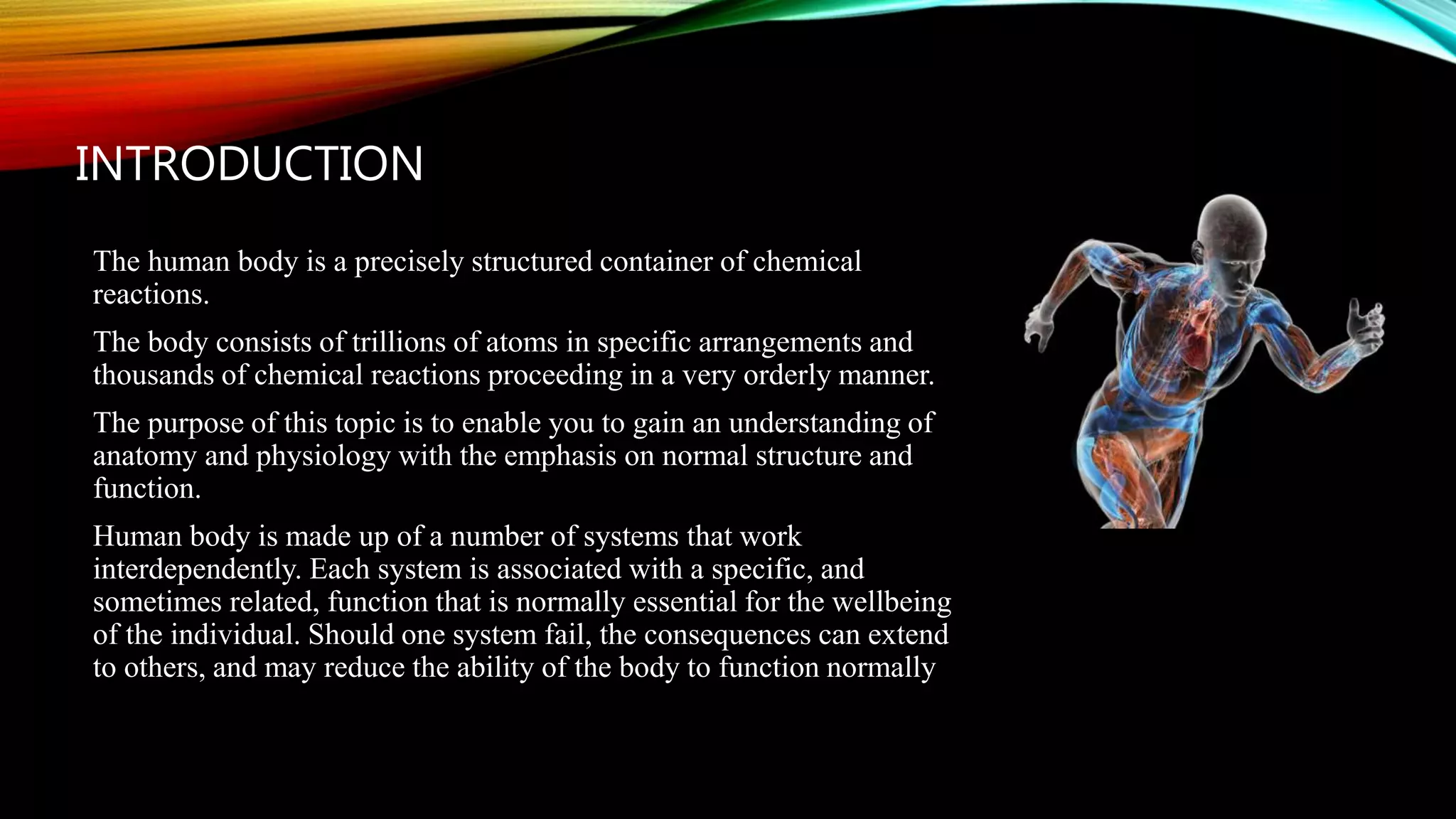
The human body is a precisely structured container of chemical
reactions.
The body consists of trillions of atoms in specific arrangements and
thousands of chemical reactions proceeding in a very orderly manner.
The purpose of this topic is to enable you to gain an understanding of
anatomy and physiology with the emphasis on normal structure and
function.
Human body is made up of a number of systems that work
interdependently. Each system is associated with a specific, and
sometimes related, function that is normally essential for the wellbeing
of the individual. Should one system fail, the consequences can extend
to others, and may reduce the ability of the body to function normally
ANATOMY AND PHYSIOLOGY
Anatomy
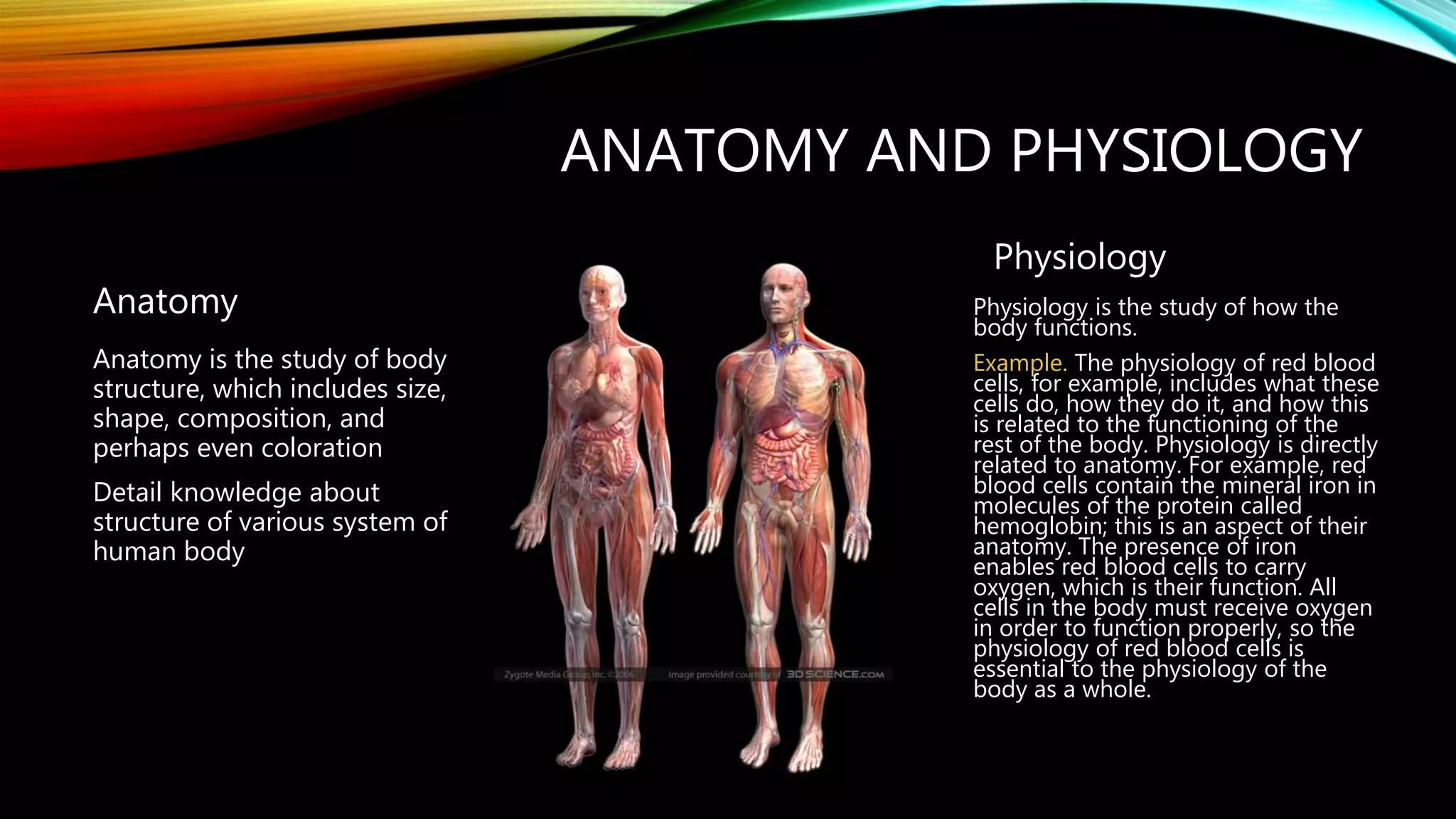
Anatomy is the study of body
structure, which includes size,
shape, composition, and
perhaps even coloration
Detail knowledge about
structure of various system of
human body
Physiology
Physiology is the study of how the
body functions.
Example. The physiology of red blood
cells, for example, includes what these
cells do, how they do it, and how this
is related to the functioning of the
rest of the body. Physiology is directly
related to anatomy. For example, red
blood cells contain the mineral iron in
molecules of the protein called
hemoglobin; this is an aspect of their
anatomy. The presence of iron
enables red blood cells to carry
oxygen, which is their function. All
cells in the body must receive oxygen
in order to function properly, so the
physiology of red blood cells is
essential to the physiology of the
body as a whole.
• Pathophysiology is the study of disorders of functioning, and a knowledge of
normal physiology makes such disorders easier to understand.
• Pathophysiology relationship of disease to normal physiology and to describe some
of the procedures used in the diagnosis of disease.
• Obesity, diabetes pathophysiology,
• It is diagnose and treatment.
SCOPE, AREAS, SUBDIVISION
Gross anatomy:
study of body parts which can see with
naked eyes
Microscopic anatomy
Anatomical study means of modern
microscope include study of cell
(cytology) and tissues (histology)
Pathoanatomic
Study of disease and body structure
Bone is smaller or bigger than normal
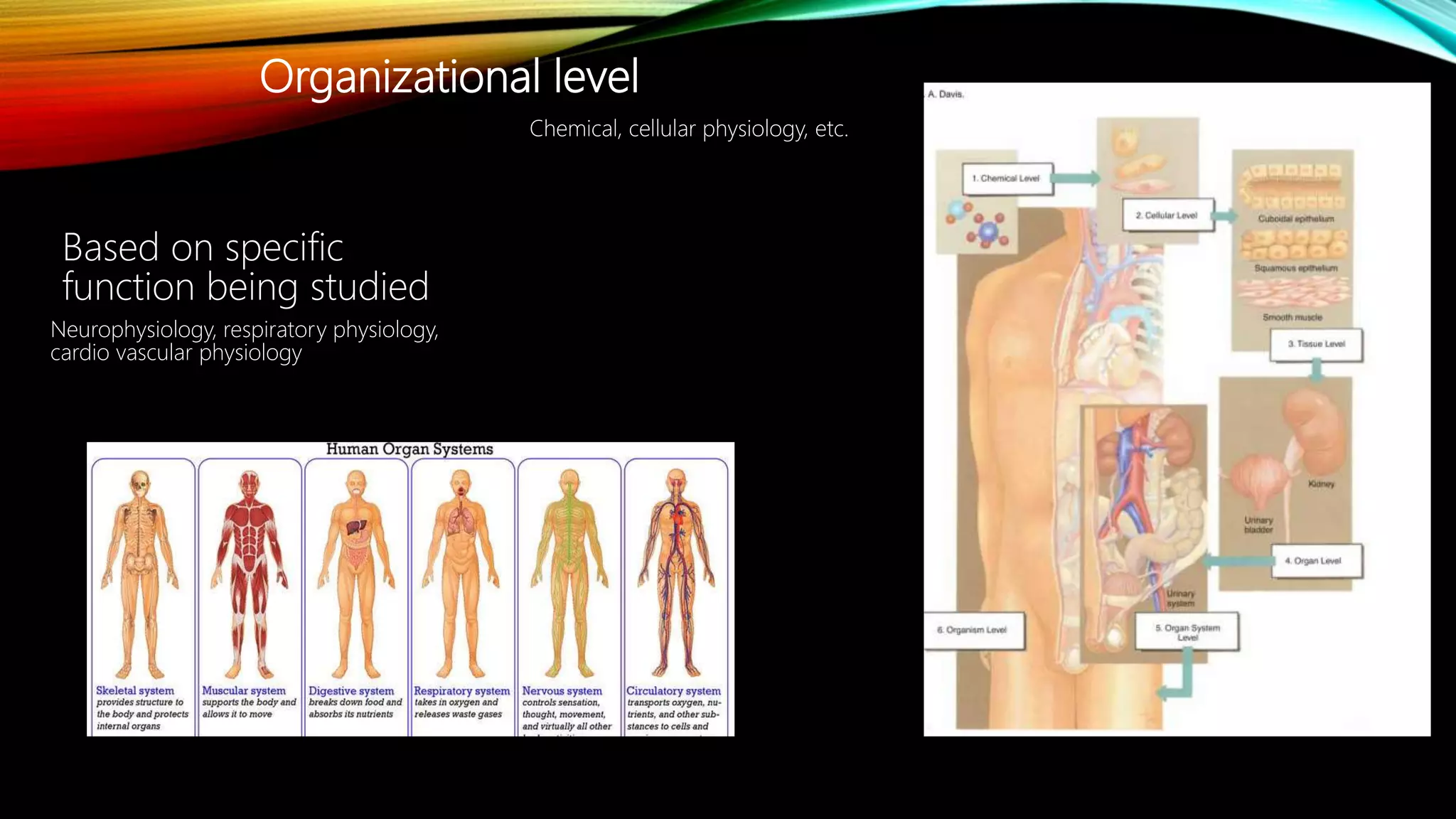
Systemic anatomy
Study of body by system(system is group of
organs that have common functions e.g.
Skeletal system, muscular system
Organizational level
Chemical, cellular physiology, etc.
Based on specific
function being studied
Neurophysiology, respiratory physiology,
cardio vascular physiology
IMPORTANCE OF ANATOMY AND
PHYSIOLOGY
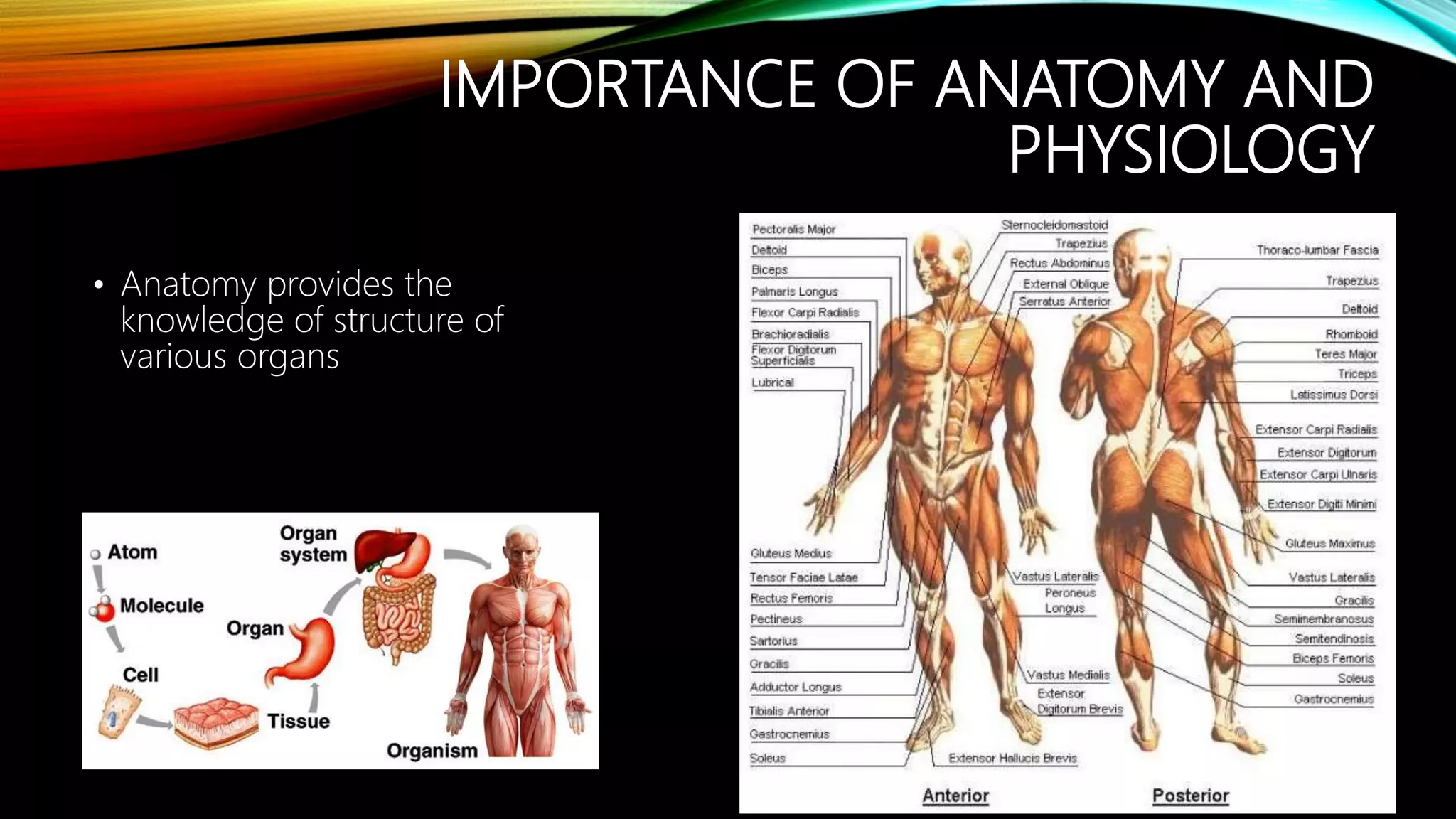
• Anatomy provides the
knowledge of structure of
various organs
• Physiology provides the knowledge about the functions of various organs
• It helps in providing first aid to sports persons: providing PRICE
• It Help in preventing of sports injuries nutrition, warm-up &cooling down,
equipment's, techniques
• It Help in the process of rehabilitation: exercise and treatment to recover faster
• It Help in selection of sports: body type, performance, genetic.
• It Give proper knowledge about sports massage: massage to athletes to relax
muscles
• It will give brief knowledge of environmental effects on sports person: types of
training in in different climatic conditions.
• It Help in preparing training programme: gender, age, level.
• It Help to know about chemical changes during exercise. Transport of Oxygen and
carrying carbon dioxide, red blood cells
• It help to know about anatomical and physiological differences among male &
females: anatomical and physiological differences in human
• It will help in improving physical fitness:
THANK YOU

A)introduction to human body

  • 1.
    INTRODUCTION TO HUMAN BODY ByMR. SACHIN S. PARSEKAR
  • 2.
    INTRODUCTION The human bodyis a precisely structured container of chemical reactions. The body consists of trillions of atoms in specific arrangements and thousands of chemical reactions proceeding in a very orderly manner. The purpose of this topic is to enable you to gain an understanding of anatomy and physiology with the emphasis on normal structure and function. Human body is made up of a number of systems that work interdependently. Each system is associated with a specific, and sometimes related, function that is normally essential for the wellbeing of the individual. Should one system fail, the consequences can extend to others, and may reduce the ability of the body to function normally
  • 3.
    ANATOMY AND PHYSIOLOGY Anatomy Anatomyis the study of body structure, which includes size, shape, composition, and perhaps even coloration Detail knowledge about structure of various system of human body Physiology Physiology is the study of how the body functions. Example. The physiology of red blood cells, for example, includes what these cells do, how they do it, and how this is related to the functioning of the rest of the body. Physiology is directly related to anatomy. For example, red blood cells contain the mineral iron in molecules of the protein called hemoglobin; this is an aspect of their anatomy. The presence of iron enables red blood cells to carry oxygen, which is their function. All cells in the body must receive oxygen in order to function properly, so the physiology of red blood cells is essential to the physiology of the body as a whole.
  • 4.
    • Pathophysiology isthe study of disorders of functioning, and a knowledge of normal physiology makes such disorders easier to understand. • Pathophysiology relationship of disease to normal physiology and to describe some of the procedures used in the diagnosis of disease. • Obesity, diabetes pathophysiology, • It is diagnose and treatment.
  • 5.
    SCOPE, AREAS, SUBDIVISION Grossanatomy: study of body parts which can see with naked eyes Microscopic anatomy Anatomical study means of modern microscope include study of cell (cytology) and tissues (histology) Pathoanatomic Study of disease and body structure Bone is smaller or bigger than normal
  • 6.
    Systemic anatomy Study ofbody by system(system is group of organs that have common functions e.g. Skeletal system, muscular system
  • 7.
    Organizational level Chemical, cellularphysiology, etc. Based on specific function being studied Neurophysiology, respiratory physiology, cardio vascular physiology
  • 8.
    IMPORTANCE OF ANATOMYAND PHYSIOLOGY • Anatomy provides the knowledge of structure of various organs
  • 9.
    • Physiology providesthe knowledge about the functions of various organs
  • 10.
    • It helpsin providing first aid to sports persons: providing PRICE • It Help in preventing of sports injuries nutrition, warm-up &cooling down, equipment's, techniques
  • 11.
    • It Helpin the process of rehabilitation: exercise and treatment to recover faster • It Help in selection of sports: body type, performance, genetic.
  • 12.
    • It Giveproper knowledge about sports massage: massage to athletes to relax muscles • It will give brief knowledge of environmental effects on sports person: types of training in in different climatic conditions.
  • 13.
    • It Helpin preparing training programme: gender, age, level. • It Help to know about chemical changes during exercise. Transport of Oxygen and carrying carbon dioxide, red blood cells
  • 14.
    • It helpto know about anatomical and physiological differences among male & females: anatomical and physiological differences in human • It will help in improving physical fitness:
  • 15.