Ancient Roman &
Etruscan Art
Map of Italy showing key sites (Source)
Ancient Etruscan Art
Apollo, from Veii, Italy, c. 510–500 BCE, painted terracotta, 5’11”. (Source).
Model of an Etruscan temple, c. sixth century BCE, as described by Vitruvius,
Istituto di Etruscologia e di Antichità Italiche, Università di Roma, Rome. (Source)
Sarcophagus with Reclining Couple,
Cerveteri, Italy, 520 BCE. (Source)
Cerveteri Necropolis, Italy,
ninth–third centuries BCE. (Source)
Ancient Rome
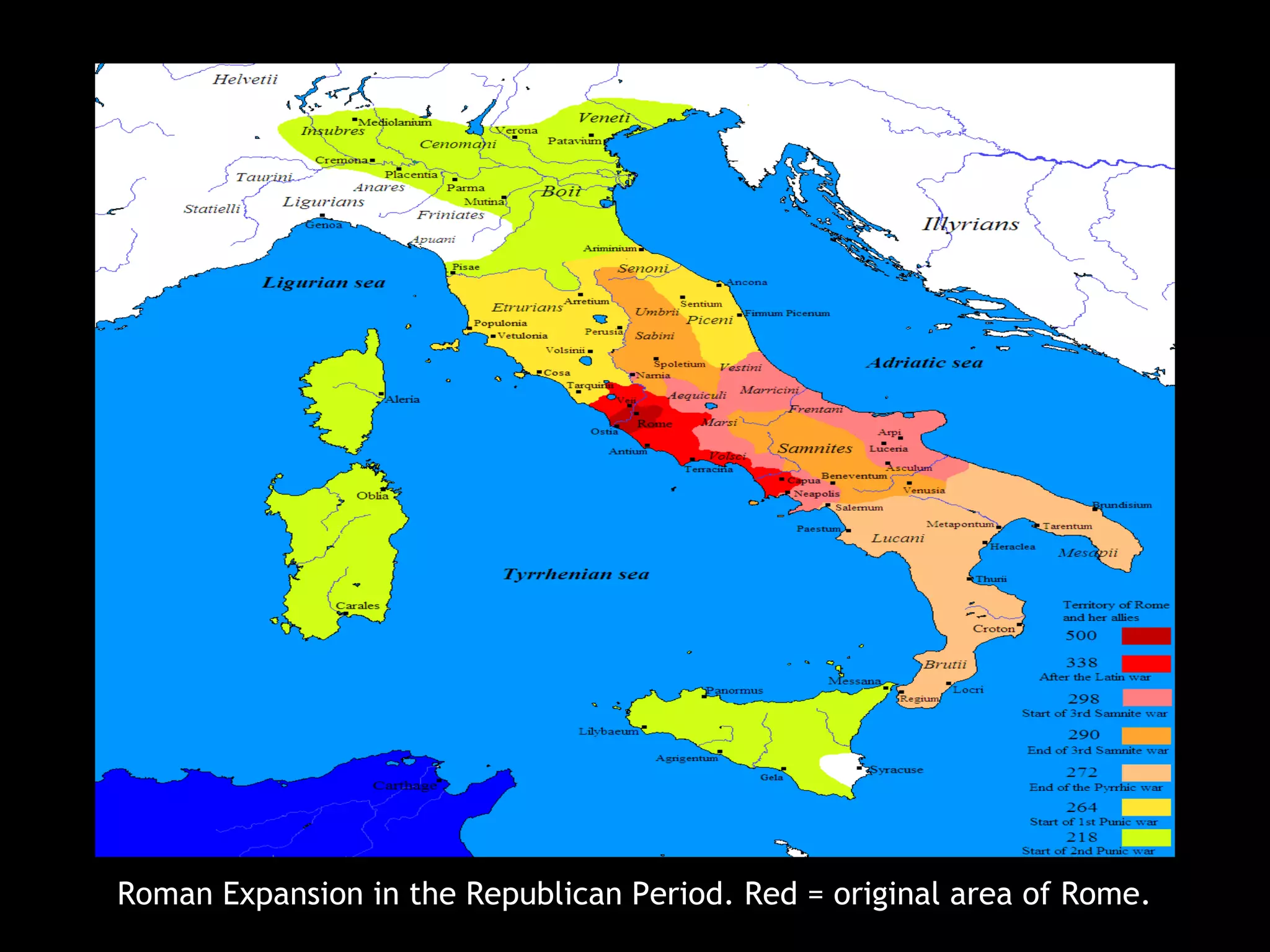
• 753 BCE Founding of Rome
• 509 BCE Period of kings comes to and end; Rome becomes a
Republic
• 275 BCE Rome controls all of the Italian Peninsula
• 150 BCE Rome controls Greece
• 31 BCE Rome controls Gaul and Egypt
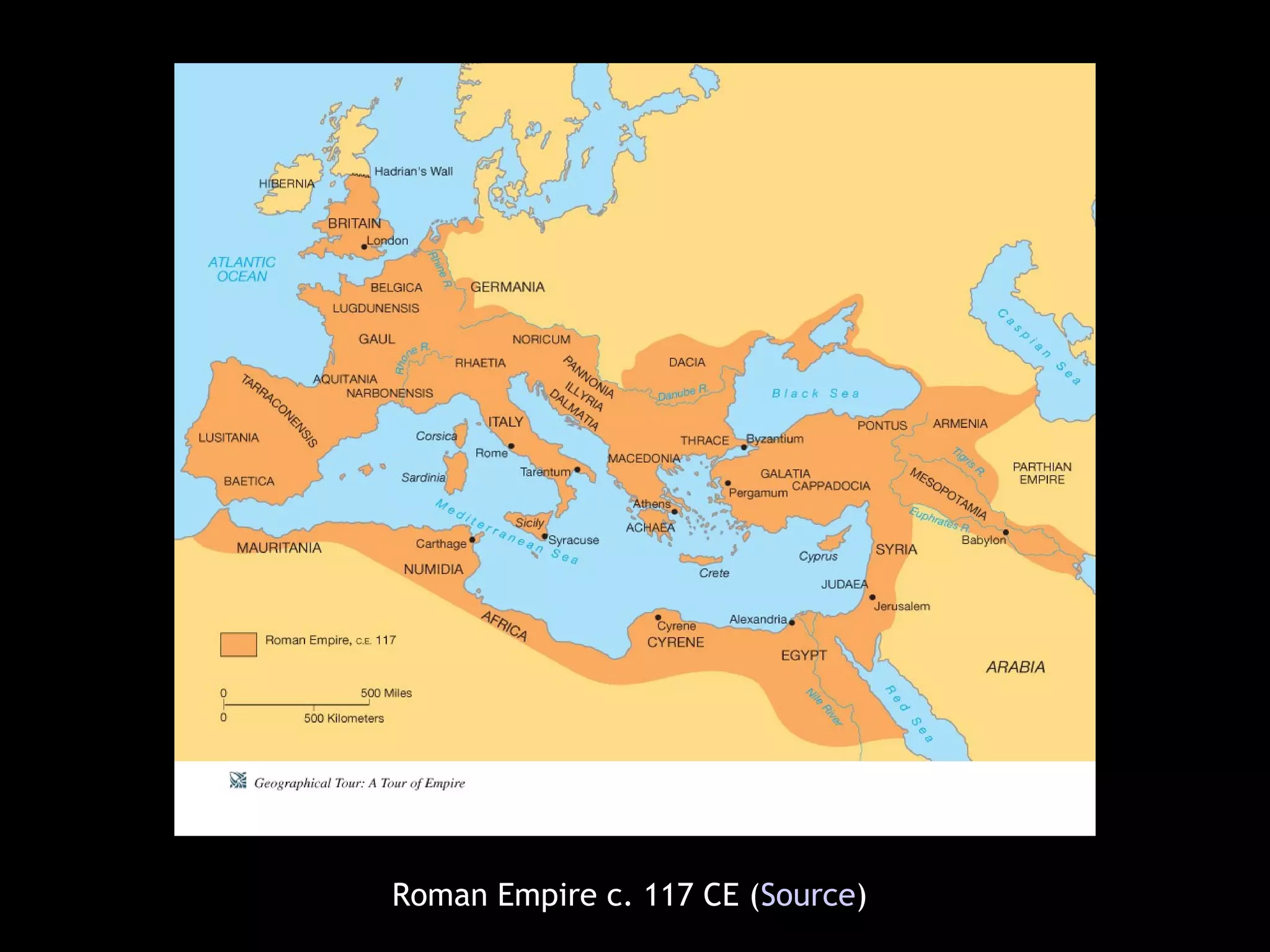
• 27 BCE Imperial Period begins with Augustus
• 313 CE Emperor Constantine ends the persecution of Christians
• 330 CE Constantine moves the capital of the Roman Empire to
Constantinople (Byzantium), initiating the Byzantine Era
Roman Expansion in the Republican Period. Red = original area of Rome.
Roman Empire c. 117 CE (Source)
Realism and Portraiture
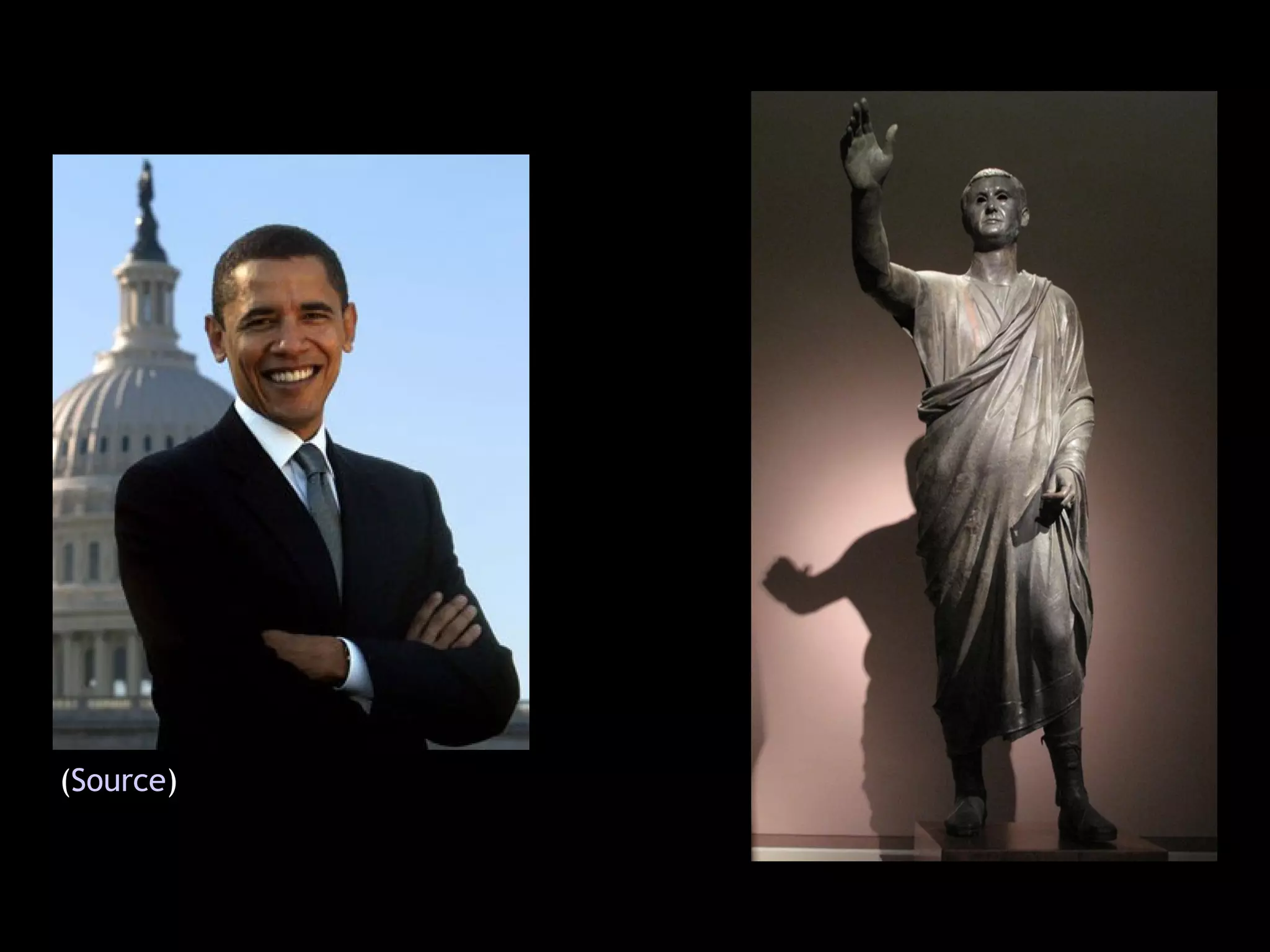
Aulus Metellus, c. 100 BCE, bronze, 5’11”. (Source)
Detail of inscription on toga (Source)
(Source)
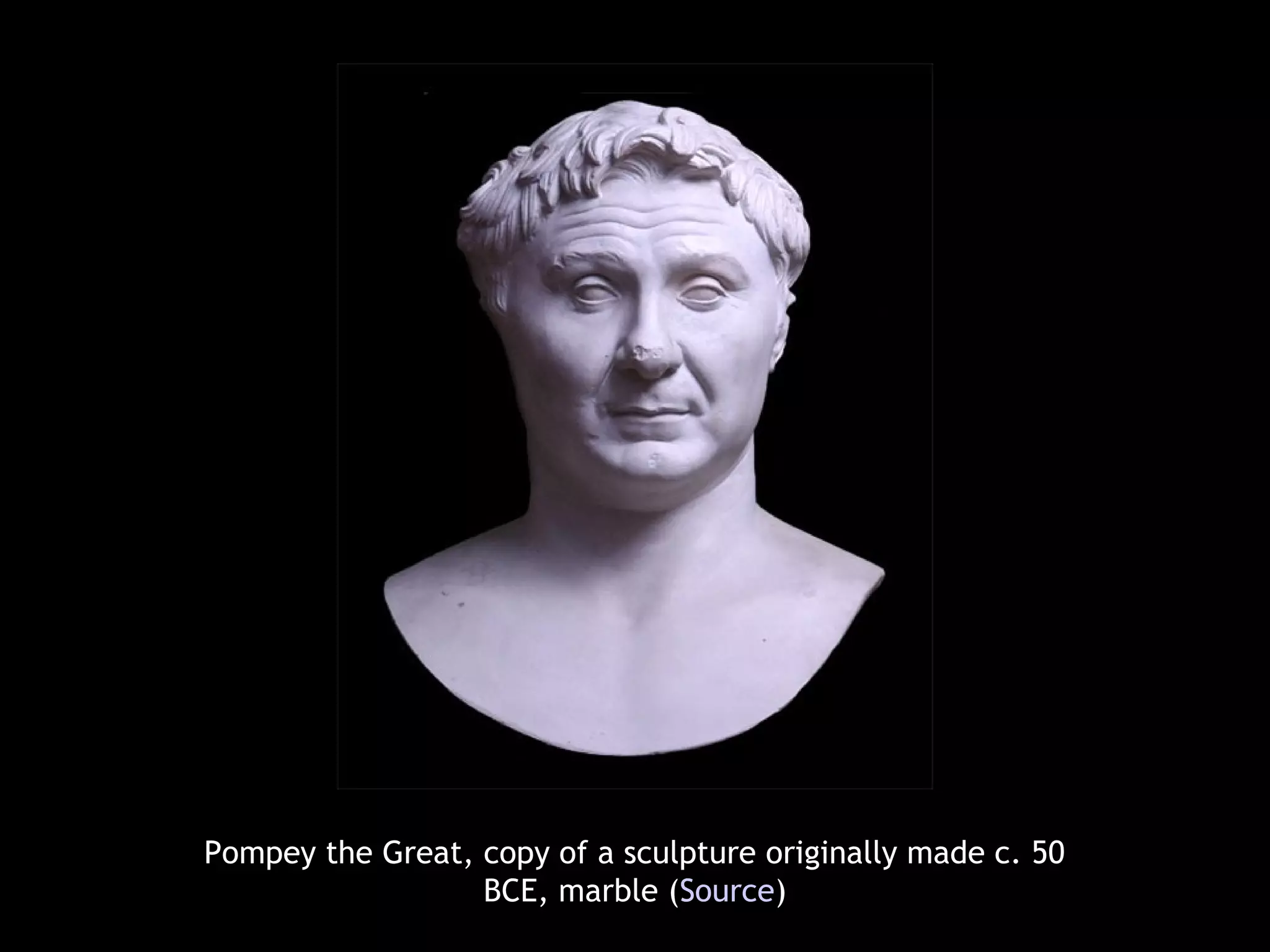
Pompey the Great, copy of a sculpture originally made c. 50
BCE, marble (Source)
Augustus of Primaporta, 63 BCE–14 CE, marble,
Vatican Museum, Rome. (Source)
Polykleitos, Doryphoros, Roman
copy of Greek original. (Source)
Augustus of Primaporta, 63 BCE–14 CE,
marble, Vatican Museum, Rome. (Source)
Aulus MetellusAugustus of Primaporta, 63 BCE–14 CE,
marble, Vatican Museum, Rome. (Source)
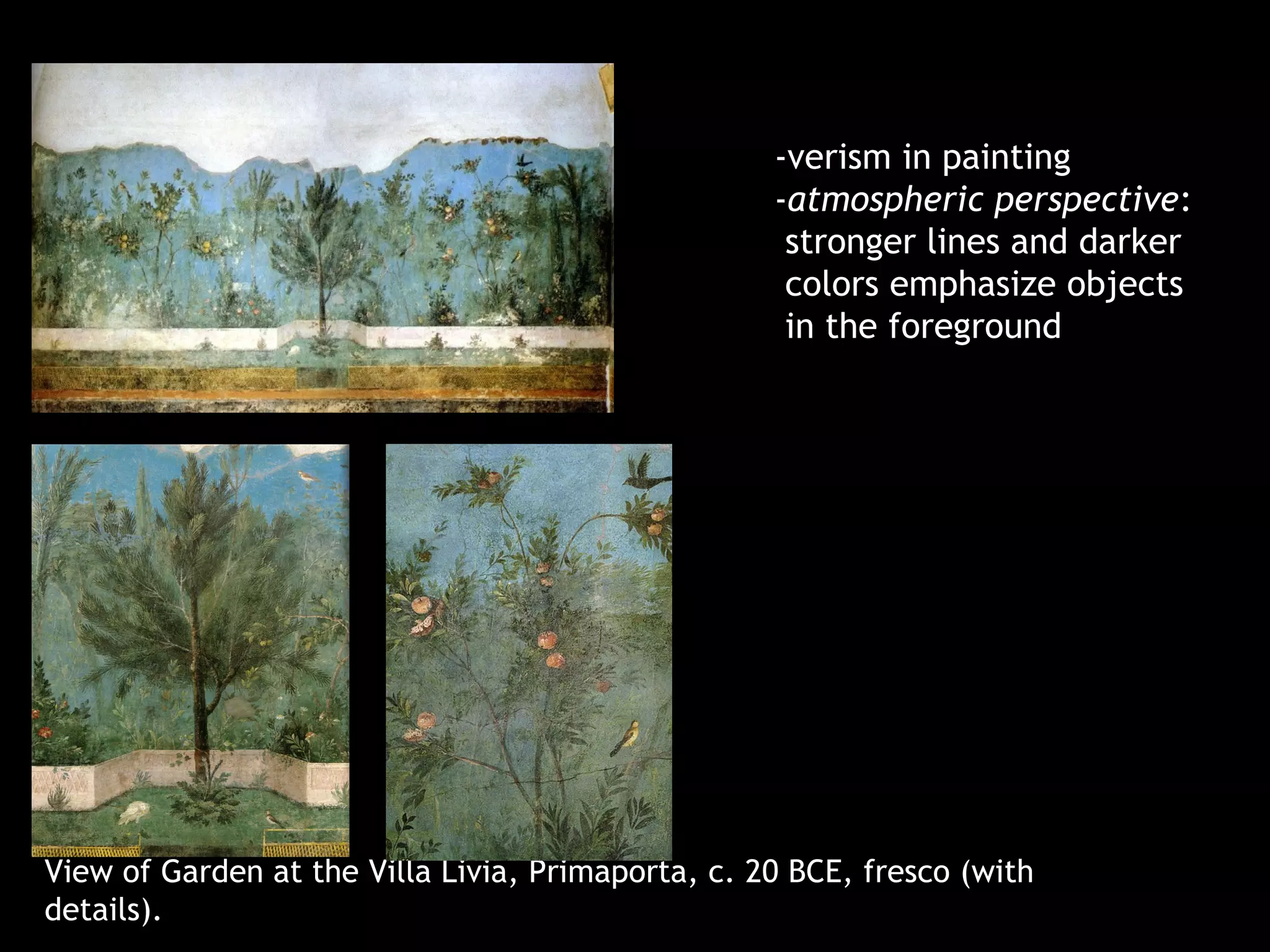
View of Garden at the Villa Livia, Primaporta, c. 20 BCE, fresco. (Source)
View of Garden at the Villa Livia, Primaporta, c. 20 BCE, fresco.
View of Garden at the Villa Livia, Primaporta, c. 20 BCE, fresco (with
details).
-verism in painting
-atmospheric perspective:
stronger lines and darker
colors emphasize objects
in the foreground
Interior from the Villa of Publius Fannius Synistor, Boscoreale,
c. 50-40 BCE, fresco, height 11'2”. (Source)
-attempted linear
perspective
-trompe l’oeil (“fool
the eye”) painted
architecture
Details from Interior of Villa of Publius Fannius
Architecture
Civic Building Projects
Pont du Gard, Nimes, France, first century CE, height 161'. (Source)
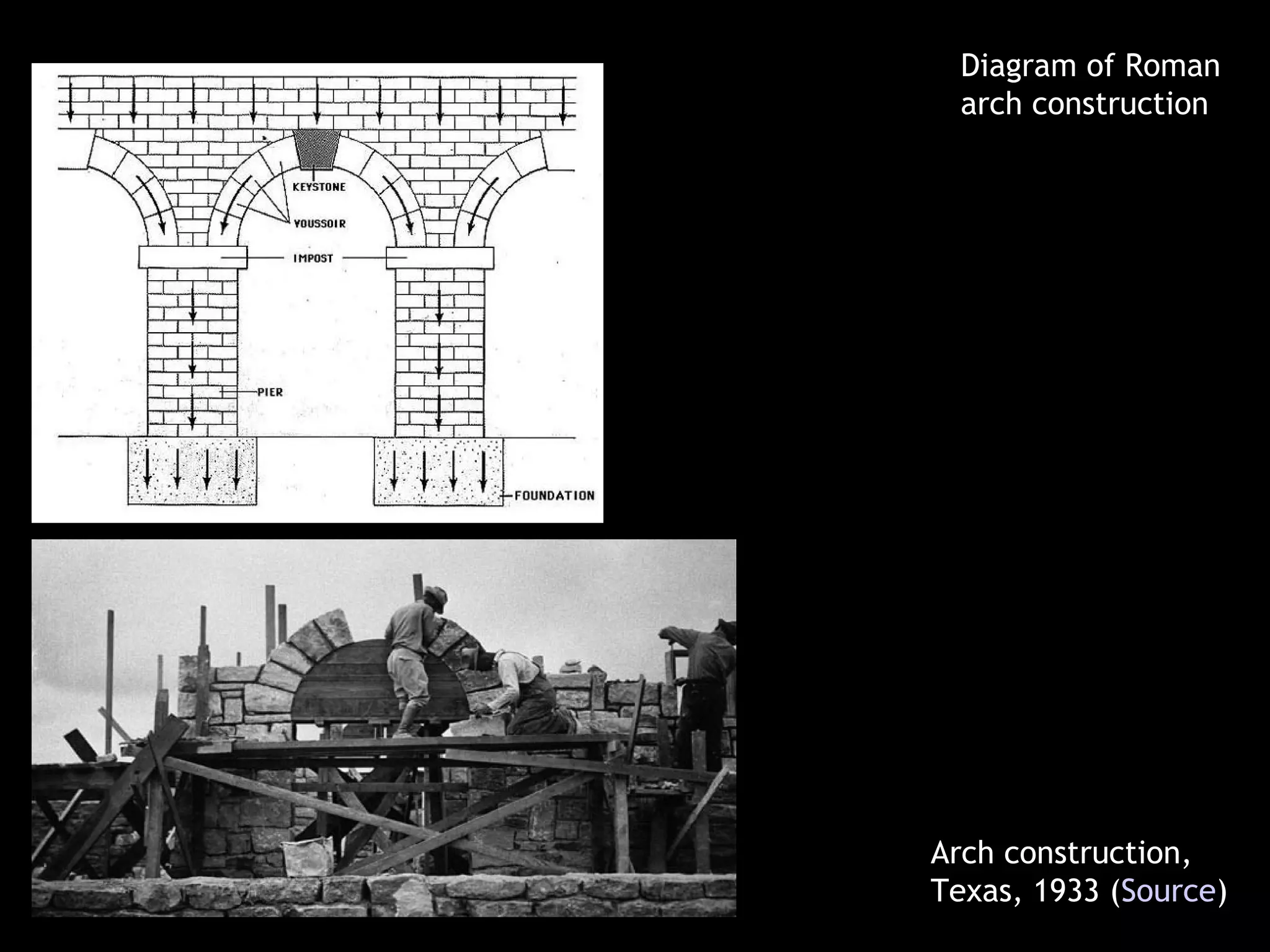
Diagram of Roman
arch construction
Arch construction,
Texas, 1933 (Source)
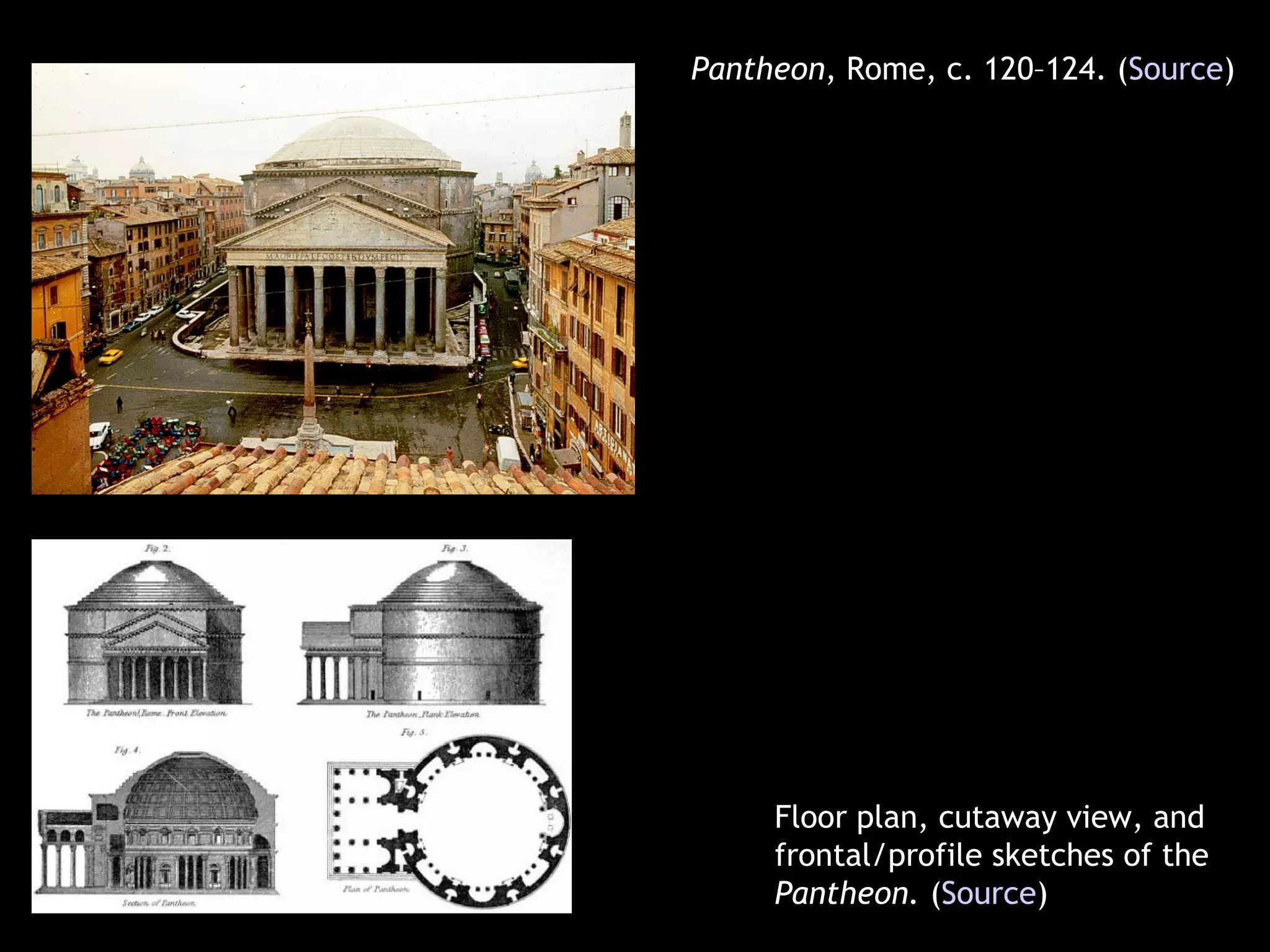
Pantheon, Rome, c. 120–124. (Source)
Floor plan, cutaway view, and
frontal/profile sketches of the
Pantheon. (Source)
Interior views of the Pantheon. (Source)
sold at auction in 2007
for $1,049,000
Thomas Struth, Pergamon III, 2001,
photographic print. (Source)
Thomas Struth, Pantheon, 1990,
photographic print. (Source)
Arch of Titus, Rome, c. 79-81 CE. (Source)
(detail) “The Siege of
Jerusalem”. (Source)
Interior view of the Arch of Titus.
Soldiers’ and Sailors’ Arch, Grand Army Plaza, Brooklyn, NY, 1889-92. (Source
)
Source
Fragments of the Colossus of
Constantine, c. 312 CE, marble,
Palatine Museum, Rome. (Source)

AHTR Roman and Etruscan Art

  • 1.
  • 2.
    Map of Italyshowing key sites (Source)
  • 3.
  • 4.
    Apollo, from Veii,Italy, c. 510–500 BCE, painted terracotta, 5’11”. (Source).
  • 5.
    Model of anEtruscan temple, c. sixth century BCE, as described by Vitruvius, Istituto di Etruscologia e di Antichità Italiche, Università di Roma, Rome. (Source)
  • 6.
    Sarcophagus with RecliningCouple, Cerveteri, Italy, 520 BCE. (Source) Cerveteri Necropolis, Italy, ninth–third centuries BCE. (Source)
  • 7.
    Ancient Rome • 753BCE Founding of Rome • 509 BCE Period of kings comes to and end; Rome becomes a Republic • 275 BCE Rome controls all of the Italian Peninsula • 150 BCE Rome controls Greece • 31 BCE Rome controls Gaul and Egypt • 27 BCE Imperial Period begins with Augustus • 313 CE Emperor Constantine ends the persecution of Christians • 330 CE Constantine moves the capital of the Roman Empire to Constantinople (Byzantium), initiating the Byzantine Era
  • 8.
    Roman Expansion inthe Republican Period. Red = original area of Rome.
  • 9.
    Roman Empire c.117 CE (Source)
  • 10.
  • 11.
    Aulus Metellus, c.100 BCE, bronze, 5’11”. (Source) Detail of inscription on toga (Source)
  • 12.
  • 13.
    Pompey the Great,copy of a sculpture originally made c. 50 BCE, marble (Source)
  • 14.
    Augustus of Primaporta,63 BCE–14 CE, marble, Vatican Museum, Rome. (Source)
  • 15.
    Polykleitos, Doryphoros, Roman copyof Greek original. (Source) Augustus of Primaporta, 63 BCE–14 CE, marble, Vatican Museum, Rome. (Source)
  • 16.
    Aulus MetellusAugustus ofPrimaporta, 63 BCE–14 CE, marble, Vatican Museum, Rome. (Source)
  • 17.
    View of Gardenat the Villa Livia, Primaporta, c. 20 BCE, fresco. (Source)
  • 18.
    View of Gardenat the Villa Livia, Primaporta, c. 20 BCE, fresco.
  • 19.
    View of Gardenat the Villa Livia, Primaporta, c. 20 BCE, fresco (with details). -verism in painting -atmospheric perspective: stronger lines and darker colors emphasize objects in the foreground
  • 20.
    Interior from theVilla of Publius Fannius Synistor, Boscoreale, c. 50-40 BCE, fresco, height 11'2”. (Source) -attempted linear perspective -trompe l’oeil (“fool the eye”) painted architecture
  • 21.
    Details from Interiorof Villa of Publius Fannius
  • 22.
  • 23.
    Civic Building Projects Pontdu Gard, Nimes, France, first century CE, height 161'. (Source)
  • 24.
    Diagram of Roman archconstruction Arch construction, Texas, 1933 (Source)
  • 25.
    Pantheon, Rome, c.120–124. (Source)
  • 26.
    Pantheon, Rome, c.120–124. (Source) Floor plan, cutaway view, and frontal/profile sketches of the Pantheon. (Source)
  • 27.
    Interior views ofthe Pantheon. (Source)
  • 28.
    sold at auctionin 2007 for $1,049,000 Thomas Struth, Pergamon III, 2001, photographic print. (Source) Thomas Struth, Pantheon, 1990, photographic print. (Source)
  • 29.
    Arch of Titus,Rome, c. 79-81 CE. (Source)
  • 30.
    (detail) “The Siegeof Jerusalem”. (Source) Interior view of the Arch of Titus.
  • 31.
    Soldiers’ and Sailors’Arch, Grand Army Plaza, Brooklyn, NY, 1889-92. (Source )
  • 32.
    Source Fragments of theColossus of Constantine, c. 312 CE, marble, Palatine Museum, Rome. (Source)