Ancient Egyptian Art
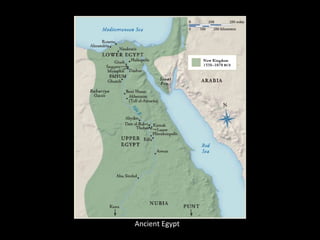
Ancient Egypt
Egypt under the Pharoahs 
Predynastic and Early Dynastic Periods (ca. 3500-2575 BCE) 
Old Kingdom (ca. 2575-2134 BCE) 
the “age of pyramids” 
Middle Kingdom (ca. 2040-1640 BCE) 
New Kingdom (ca. 1550-1070)
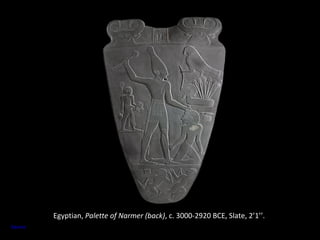
Egyptian, Palette of Narmer (back), c. 3000-2920 BCE, Slate, 2’1’’. 
Source
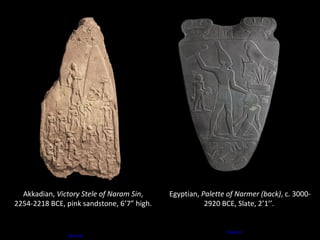
Akkadian, Victory Stele of Naram Sin, 
2254-2218 BCE, pink sandstone, 6’7” high. 
Source 
Source 
Egyptian, Palette of Narmer (back), c. 3000- 
2920 BCE, Slate, 2’1’’.
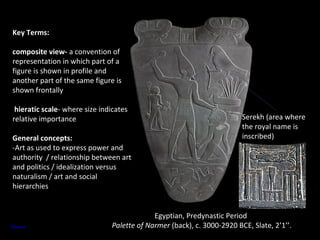
Egyptian, Predynastic Period 
Palette of Narmer (back), c. 3000-2920 BCE, Slate, 2’1’’. 
Key Terms: 
composite view- a convention of 
representation in which part of a 
figure is shown in profile and 
another part of the same figure is 
shown frontally 
hieratic scale- where size indicates 
relative importance 
General concepts: 
-Art as used to express power and 
authority / relationship between art 
and politics / idealization versus 
naturalism / art and social 
hierarchies 
Source 
Serekh (area where 
the royal name is 
inscribed)
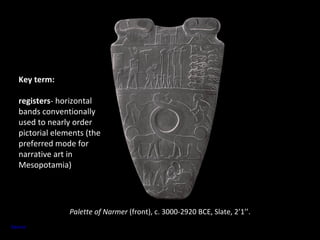
Palette of Narmer (front), c. 3000-2920 BCE, Slate, 2’1’’. 
Key term: 
registers- horizontal 
bands conventionally 
used to nearly order 
pictorial elements (the 
preferred mode for 
narrative art in 
Mesopotamia) 
Source
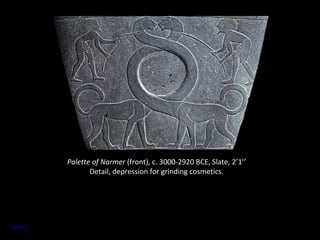
Palette of Narmer (front), c. 3000-2920 BCE, Slate, 2’1’’ 
Detail, depression for grinding cosmetics. 
Source
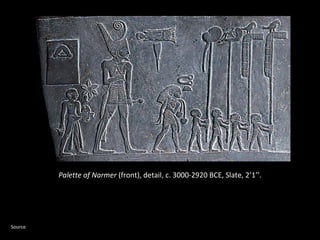
Palette of Narmer (front), detail, c. 3000-2920 BCE, Slate, 2’1’’. 
Source
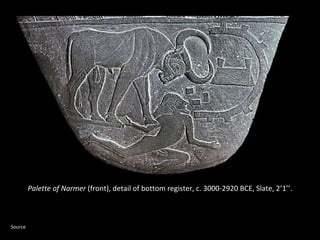
Palette of Narmer (front), detail of bottom register, c. 3000-2920 BCE, Slate, 2’1’’. 
Source
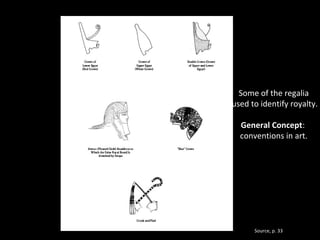
Some of the regalia 
used to identify royalty. 
General Concept: 
conventions in art. 
Source, p. 33
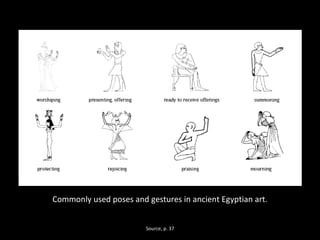
Commonly used poses and gestures in ancient Egyptian art. 
Source, p. 37
Source 
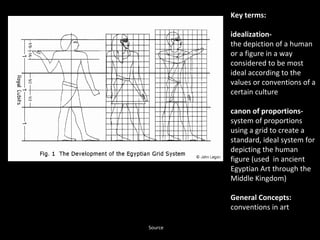
Key terms: 
idealization-the 
depiction of a human 
or a figure in a way 
considered to be most 
ideal according to the 
values or conventions of a 
certain culture 
canon of proportions-system 
of proportions 
using a grid to create a 
standard, ideal system for 
depicting the human 
figure (used in ancient 
Egyptian Art through the 
Middle Kingdom) 
General Concepts: 
conventions in art
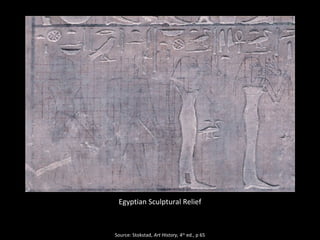
Egyptian Sculptural Relief 
Source: Stokstad, Art History, 4th ed., p 65
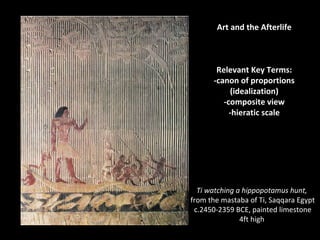
Art and the Afterlife 
Relevant Key Terms: 
-canon of proportions 
(idealization) 
-composite view 
-hieratic scale 
Ti watching a hippopotamus hunt, 
from the mastaba of Ti, Saqqara Egypt 
c.2450-2359 BCE, painted limestone 
4ft high
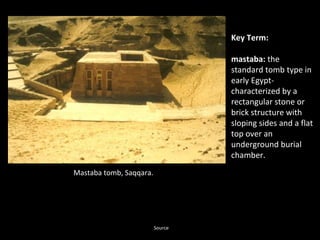
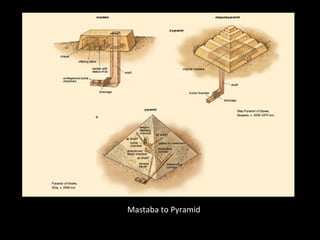
Mastaba tomb, Saqqara. 
Key Term: 
mastaba: the 
standard tomb type in 
early Egypt-characterized 
by a 
rectangular stone or 
brick structure with 
sloping sides and a flat 
top over an 
underground burial 
chamber. 
Source
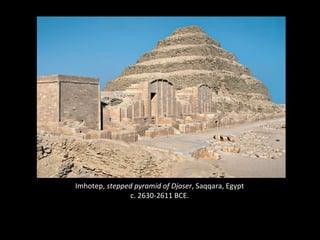
Imhotep, stepped pyramid of Djoser, Saqqara, Egypt 
c. 2630-2611 BCE.
Mastaba to Pyramid
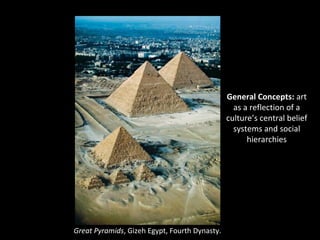
General Concepts: art 
as a reflection of a 
culture’s central belief 
systems and social 
hierarchies 
Great Pyramids, Gizeh Egypt, Fourth Dynasty.
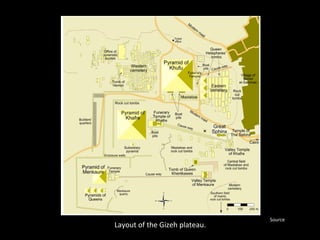
Layout of the Gizeh plateau. 
Source
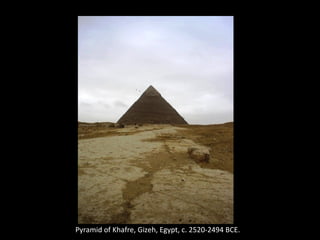
Pyramid of Khafre, Gizeh, Egypt, c. 2520-2494 BCE.
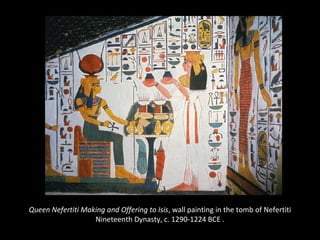
Queen Nefertiti Making and Offering to Isis, wall painting in the tomb of Nefertiti 
Nineteenth Dynasty, c. 1290-1224 BCE .
Innermost coffin of Tutankhamen, from his tomb at Thebes, Egypt 
Post-Amarna Period, c. 1323 BCE. 
6’1” long, gold with inlay [Egyptian Museum, Cairo].
Innermost coffin of Tutankhamen, from his tomb at Thebes, Egypt 
New Kingdom, c. 1323 BCE. 
6’1” long, gold with inlay [Egyptian Museum, Cairo].
Video: How to Make a Mummy. 
http://www.history.com/topics/ancient-egypt/videos#how-to-make-a-mummy
General concepts: idealization 
versus naturalism / art and social 
hierarchies / conventions in art 
Menkaure and his wife, from Gizeh, Egypt, Fourth Dynasty, 2490-2472 BCE. 
4’6” high [MFA, Boston].
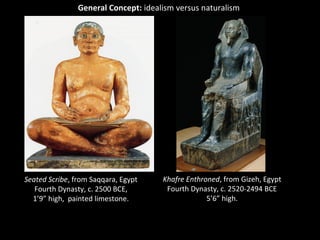
General Concept: idealism versus naturalism 
Seated Scribe, from Saqqara, Egypt 
Fourth Dynasty, c. 2500 BCE, 
1’9” high, painted limestone. 
Khafre Enthroned, from Gizeh, Egypt 
Fourth Dynasty, c. 2520-2494 BCE 
5’6” high.
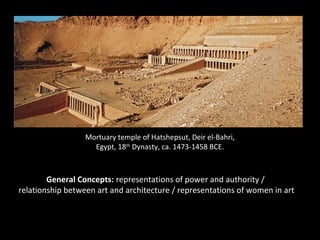
Mortuary temple of Hatshepsut, Deir el-Bahri, 
Egypt, 18th Dynasty, ca. 1473-1458 BCE. 
General Concepts: representations of power and authority / 
relationship between art and architecture / representations of women in art
General Concepts: representations of 
power and authority / relationship 
between architecture and artworks / 
representations of women in art / 
conventions in art 
Hatshepsut with offering jars, from the upper court 
of her mortuary temple, Deir el-Bahri, Egypt, 
18th Dynasty, ca. 1473-1458 
Red granite, 8’ 6” high. 
[MET Museum, NY; reconstructed].
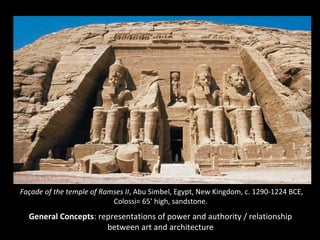
Façade of the temple of Ramses II, Abu Simbel, Egypt, New Kingdom, c. 1290-1224 BCE, 
Colossi= 65’ high, sandstone. 
General Concepts: representations of power and authority / relationship 
between art and architecture
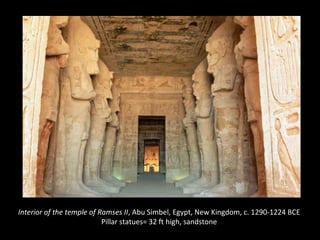
Interior of the temple of Ramses II, Abu Simbel, Egypt, New Kingdom, c. 1290-1224 BCE 
Pillar statues= 32 ft high, sandstone
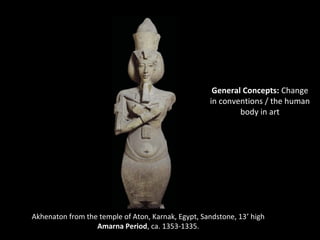
General Concepts: Change 
in conventions / the human 
body in art 
Akhenaton from the temple of Aton, Karnak, Egypt, Sandstone, 13’ high 
Amarna Period, ca. 1353-1335.
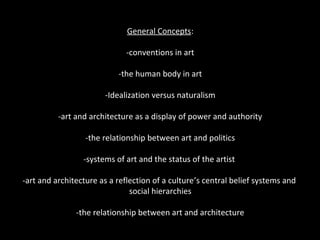
General Concepts: 
-conventions in art 
-the human body in art 
-Idealization versus naturalism 
-art and architecture as a display of power and authority 
-the relationship between art and politics 
-systems of art and the status of the artist 
-art and architecture as a reflection of a culture’s central belief systems and 
social hierarchies 
-the relationship between art and architecture

Ancient egypt ppt

  • 1.
  • 2.
  • 3.
    Egypt under thePharoahs Predynastic and Early Dynastic Periods (ca. 3500-2575 BCE) Old Kingdom (ca. 2575-2134 BCE) the “age of pyramids” Middle Kingdom (ca. 2040-1640 BCE) New Kingdom (ca. 1550-1070)
  • 4.
    Egyptian, Palette ofNarmer (back), c. 3000-2920 BCE, Slate, 2’1’’. Source
  • 5.
    Akkadian, Victory Steleof Naram Sin, 2254-2218 BCE, pink sandstone, 6’7” high. Source Source Egyptian, Palette of Narmer (back), c. 3000- 2920 BCE, Slate, 2’1’’.
  • 6.
    Egyptian, Predynastic Period Palette of Narmer (back), c. 3000-2920 BCE, Slate, 2’1’’. Key Terms: composite view- a convention of representation in which part of a figure is shown in profile and another part of the same figure is shown frontally hieratic scale- where size indicates relative importance General concepts: -Art as used to express power and authority / relationship between art and politics / idealization versus naturalism / art and social hierarchies Source Serekh (area where the royal name is inscribed)
  • 7.
    Palette of Narmer(front), c. 3000-2920 BCE, Slate, 2’1’’. Key term: registers- horizontal bands conventionally used to nearly order pictorial elements (the preferred mode for narrative art in Mesopotamia) Source
  • 8.
    Palette of Narmer(front), c. 3000-2920 BCE, Slate, 2’1’’ Detail, depression for grinding cosmetics. Source
  • 9.
    Palette of Narmer(front), detail, c. 3000-2920 BCE, Slate, 2’1’’. Source
  • 10.
    Palette of Narmer(front), detail of bottom register, c. 3000-2920 BCE, Slate, 2’1’’. Source
  • 11.
    Some of theregalia used to identify royalty. General Concept: conventions in art. Source, p. 33
  • 12.
    Commonly used posesand gestures in ancient Egyptian art. Source, p. 37
  • 13.
    Source Key terms: idealization-the depiction of a human or a figure in a way considered to be most ideal according to the values or conventions of a certain culture canon of proportions-system of proportions using a grid to create a standard, ideal system for depicting the human figure (used in ancient Egyptian Art through the Middle Kingdom) General Concepts: conventions in art
  • 14.
    Egyptian Sculptural Relief Source: Stokstad, Art History, 4th ed., p 65
  • 15.
    Art and theAfterlife Relevant Key Terms: -canon of proportions (idealization) -composite view -hieratic scale Ti watching a hippopotamus hunt, from the mastaba of Ti, Saqqara Egypt c.2450-2359 BCE, painted limestone 4ft high
  • 16.
    Mastaba tomb, Saqqara. Key Term: mastaba: the standard tomb type in early Egypt-characterized by a rectangular stone or brick structure with sloping sides and a flat top over an underground burial chamber. Source
  • 17.
    Imhotep, stepped pyramidof Djoser, Saqqara, Egypt c. 2630-2611 BCE.
  • 18.
  • 19.
    General Concepts: art as a reflection of a culture’s central belief systems and social hierarchies Great Pyramids, Gizeh Egypt, Fourth Dynasty.
  • 20.
    Layout of theGizeh plateau. Source
  • 21.
    Pyramid of Khafre,Gizeh, Egypt, c. 2520-2494 BCE.
  • 22.
    Queen Nefertiti Makingand Offering to Isis, wall painting in the tomb of Nefertiti Nineteenth Dynasty, c. 1290-1224 BCE .
  • 23.
    Innermost coffin ofTutankhamen, from his tomb at Thebes, Egypt Post-Amarna Period, c. 1323 BCE. 6’1” long, gold with inlay [Egyptian Museum, Cairo].
  • 24.
    Innermost coffin ofTutankhamen, from his tomb at Thebes, Egypt New Kingdom, c. 1323 BCE. 6’1” long, gold with inlay [Egyptian Museum, Cairo].
  • 25.
    Video: How toMake a Mummy. http://www.history.com/topics/ancient-egypt/videos#how-to-make-a-mummy
  • 26.
    General concepts: idealization versus naturalism / art and social hierarchies / conventions in art Menkaure and his wife, from Gizeh, Egypt, Fourth Dynasty, 2490-2472 BCE. 4’6” high [MFA, Boston].
  • 27.
    General Concept: idealismversus naturalism Seated Scribe, from Saqqara, Egypt Fourth Dynasty, c. 2500 BCE, 1’9” high, painted limestone. Khafre Enthroned, from Gizeh, Egypt Fourth Dynasty, c. 2520-2494 BCE 5’6” high.
  • 28.
    Mortuary temple ofHatshepsut, Deir el-Bahri, Egypt, 18th Dynasty, ca. 1473-1458 BCE. General Concepts: representations of power and authority / relationship between art and architecture / representations of women in art
  • 29.
    General Concepts: representationsof power and authority / relationship between architecture and artworks / representations of women in art / conventions in art Hatshepsut with offering jars, from the upper court of her mortuary temple, Deir el-Bahri, Egypt, 18th Dynasty, ca. 1473-1458 Red granite, 8’ 6” high. [MET Museum, NY; reconstructed].
  • 30.
    Façade of thetemple of Ramses II, Abu Simbel, Egypt, New Kingdom, c. 1290-1224 BCE, Colossi= 65’ high, sandstone. General Concepts: representations of power and authority / relationship between art and architecture
  • 31.
    Interior of thetemple of Ramses II, Abu Simbel, Egypt, New Kingdom, c. 1290-1224 BCE Pillar statues= 32 ft high, sandstone
  • 32.
    General Concepts: Change in conventions / the human body in art Akhenaton from the temple of Aton, Karnak, Egypt, Sandstone, 13’ high Amarna Period, ca. 1353-1335.
  • 33.
    General Concepts: -conventionsin art -the human body in art -Idealization versus naturalism -art and architecture as a display of power and authority -the relationship between art and politics -systems of art and the status of the artist -art and architecture as a reflection of a culture’s central belief systems and social hierarchies -the relationship between art and architecture

Editor's Notes

  • #3 Source: Kleiner, Gardner’s Art Through the Ages, 14th ed., p 56
  • #16 Source: Kleiner, Gardner’s Art Through the Ages, 14th ed., p 66
  • #18 Source: Stokstad, Art History, 4th ed., p 54
  • #19 Source: Stokstad, Art History, 4th ed., p 55
  • #20 Source: Kleiner, Gardner’s Art Through the Ages, 14th ed., p 60
  • #22 Source: Stokstad, Art History, 4th ed., p 54
  • #23 Source: Stokstad, Art History, 4th ed., p 76
  • #24 Source: Stokstad, Art History, 4th ed., p 73
  • #25 Source: Kleiner, Gardner’s Art Through the Ages, 14th ed., p 79
  • #27 Source: Kleiner, Gardner’s Art Through the Ages, 14th ed., p 65
  • #28 Source: Kleiner, Gardner’s Art Through the Ages, 14th ed., p 64-5
  • #29 Source: Kleiner, Gardner’s Art Through the Ages, 14th ed., p 69
  • #30 Source: Kleiner, Gardner’s Art Through the Ages, 14th ed., p 70
  • #31 Source: Kleiner, Gardner’s Art Through the Ages, 14th ed., p71
  • #32 Source: Kleiner, Gardner’s Art Through the Ages, 14th ed., p 71
  • #33 Source: Kleiner, Gardner’s Art Through the Ages, 14th ed., p 76