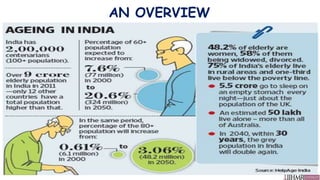
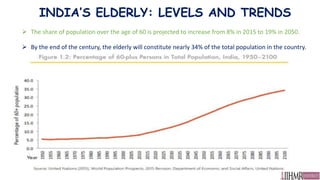
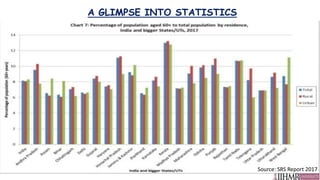
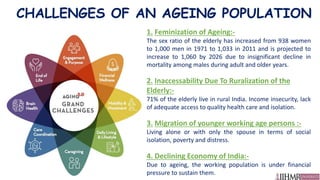
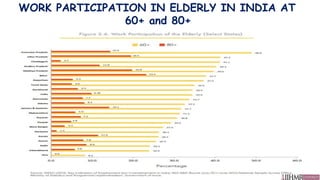
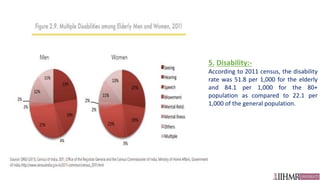
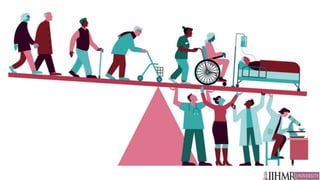
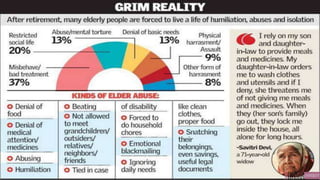
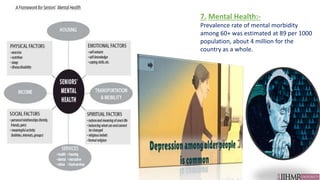
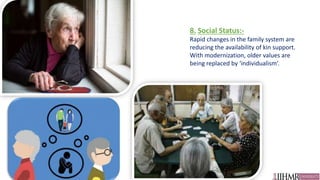
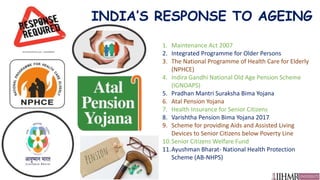
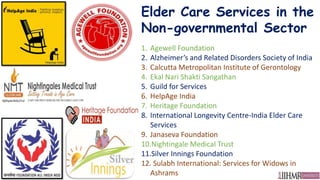
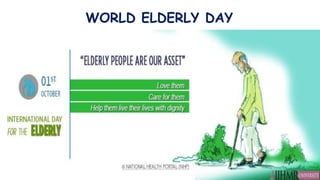
India's elderly population is growing rapidly and is projected to increase from 8% of the total population in 2015 to 19% by 2050. This aging population presents several challenges, including the feminization of aging as life expectancy increases more for women, ruralization as 71% of elderly live in rural areas with less access to healthcare and support, increased risk of poverty and isolation as adult children migrate for work, increased burden on the economy, and greater prevalence of disability and mental health issues among the elderly. In response, India has implemented several policy initiatives and programs to support the elderly, including social pensions, health insurance schemes, assistance for living devices, funds for welfare, and elder care services provided by NGOs.



![Hypothalamus short notes on location, function and disorders by Dr. Neha [PT]...](https://cdn.slidesharecdn.com/ss_thumbnails/hypothalamusbydr-260124142231-2b48143d-thumbnail.jpg?width=640&height=640&fit=bounds)


![Cells and Organs of immune system [Autosaved].pptx](https://cdn.slidesharecdn.com/ss_thumbnails/cellsandorgansofimmunesystemautosaved-260123152717-ea0cb261-thumbnail.jpg?width=640&height=640&fit=bounds)


