Age and Identity
By Eleanor, Leah, Mary, Harriet and Rebecca
• (Vincent 1995)“States the point that there are a variety of
ways of being old, concepts of age are not biologically
fixed but instead are social constructions.”
• Basically you may be biologically 50 years of age but
dress and act like a 35 year old, due to use of aging
creams, general exercise and pride in appearence, these
social constructions build a persons age identity.

Vincent (1995)
• It is important to understand that age is valued in different
ways by different cultures.
• In many cultures, elderly people are respected and valued

Age in Different Cultures:
Categories of Age
• Many sociologists state youth is associated with 12 to 25 year
olds. The concept of youth assumes people can be identified
with a distinctive way of life, growing up, rebelling, fun and
excitement. Youths differ based on class, gender and ethnicity.
• Clarke states “ Youth are being based on rebellion and
resistance. Youths are often associated with popular culture
and the creation of new fashion and styles.
• Popular Culture: is the shared enjoyment of media, music and
artistic appreciation over a wide range of people, in this case
the youths.
• Youths are known for being creative and risky, experimenting
with fashion and identity.

Youth
• Being “Middle Age” is a widely used between young
adulthood and old age.
• Sociologist Victor states “ That old ages occurs in the forties
and fifties.”
• We did some primary research, asking 20 students how old
they believe middle age is, and 80% stated they believe middle
age began at 40 years of age, with 20% ranging from 35 to 55.
• There are no boundaries or legal definitions to being middle
age and so it causes great confusion within society.

Middle Age:
• Old age is a socially constructed term, old age could begin with
retirement but Mckingsley argues that 85+ age group is fastest
growing in the UK, the oldest old is increasing. This could create a
new category of health called the “Young Elders.”
• Old age has been stereotyped as involving
• Loneliness
• Being unable to learn
• Having Poor Health
• And Being Dependent on Others
• Clarke and Warren found that the majority of respondents in their
study or 23 people used the concept of active ageing and saw old age
as a time for reflection and hope and of experiencing future
collaborative events with family members.

Old Age
Young middle aged or old?
What age do you think is young?
What age do you think is middle aged?
What age do you think is old?

Young, middle aged or old?
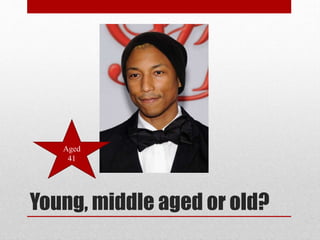
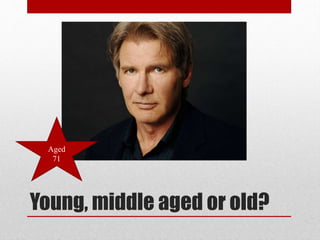
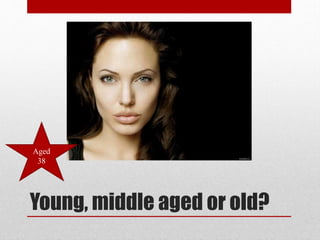
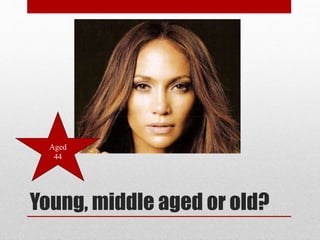
In this game, you will be shown a number of images, your
job is to tell us whether you think they are young, middle
aged or old.
Good luck 

Young middle aged or old?
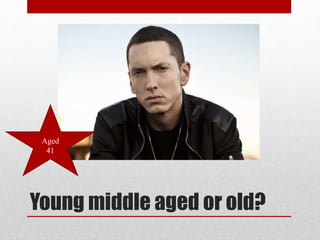
Aged
41

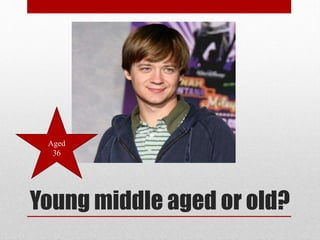
Young middle aged or old?
Aged
36

Young middle aged or old?
Aged
41

Young, middle aged or old?
Aged
71

Young, middle aged or old?
Aged
38

Young, middle aged or old?
Aged
44

Young, middle aged or old?

Age and identity sociology

  • 1.
    Age and Identity ByEleanor, Leah, Mary, Harriet and Rebecca
  • 2.
    • (Vincent 1995)“Statesthe point that there are a variety of ways of being old, concepts of age are not biologically fixed but instead are social constructions.” • Basically you may be biologically 50 years of age but dress and act like a 35 year old, due to use of aging creams, general exercise and pride in appearence, these social constructions build a persons age identity. Vincent (1995)
  • 3.
    • It isimportant to understand that age is valued in different ways by different cultures. • In many cultures, elderly people are respected and valued Age in Different Cultures:
  • 4.
  • 5.
    • Many sociologistsstate youth is associated with 12 to 25 year olds. The concept of youth assumes people can be identified with a distinctive way of life, growing up, rebelling, fun and excitement. Youths differ based on class, gender and ethnicity. • Clarke states “ Youth are being based on rebellion and resistance. Youths are often associated with popular culture and the creation of new fashion and styles. • Popular Culture: is the shared enjoyment of media, music and artistic appreciation over a wide range of people, in this case the youths. • Youths are known for being creative and risky, experimenting with fashion and identity. Youth
  • 6.
    • Being “MiddleAge” is a widely used between young adulthood and old age. • Sociologist Victor states “ That old ages occurs in the forties and fifties.” • We did some primary research, asking 20 students how old they believe middle age is, and 80% stated they believe middle age began at 40 years of age, with 20% ranging from 35 to 55. • There are no boundaries or legal definitions to being middle age and so it causes great confusion within society. Middle Age:
  • 7.
    • Old ageis a socially constructed term, old age could begin with retirement but Mckingsley argues that 85+ age group is fastest growing in the UK, the oldest old is increasing. This could create a new category of health called the “Young Elders.” • Old age has been stereotyped as involving • Loneliness • Being unable to learn • Having Poor Health • And Being Dependent on Others • Clarke and Warren found that the majority of respondents in their study or 23 people used the concept of active ageing and saw old age as a time for reflection and hope and of experiencing future collaborative events with family members. Old Age
  • 8.
  • 9.
    What age doyou think is young? What age do you think is middle aged? What age do you think is old? Young, middle aged or old?
  • 10.
    In this game,you will be shown a number of images, your job is to tell us whether you think they are young, middle aged or old. Good luck  Young middle aged or old?
  • 11.
  • 12.
  • 13.
  • 14.
  • 15.
  • 16.