Symbolic interactionCommunication through symbols; people talking to each other.
3 Core Principles of SIMEANING: construction of social realityWe assign meaning to people or things. LANGUAGE: the source of meaningMeaning is developed through the use of language with each other. THOUGHT: the process of taking the role of the other. Interpretation of symbols is modified by his or her own thought processes. MINDING	An inner dialogue used to test alternatives, rehearse actions, and anticipate reactions before responding; self-talkTaking the role of the otherThe process of mentally imagining that you are someone else who is viewing you.
Looking-glass self		The mental self-image that results from taking the role of the other; the objective self; me.
IThe spontaneous driving force that fosters all that is novel, unpredictable, and unorganized in the self.
MeThe objective self; the image of self seen when one takes the role of the other
Generalized otherThe composite mental image a person has of his or her self based on community expectations and responses.
Participant observationA method of adopting the stance of an ignorant yet interested visitor who carefully notes what people say and do in order to discover how they interpret their world.
Self-fulfilling prophecyThe tendency for our expectations to evoke responses that confirm what we originally anticipated. Ex: If a person believed that when ever she feels horrible, something bad is going to happen…. And something bad does happen, this confirms in their mind that when they feel horrible, something horrible will happen.
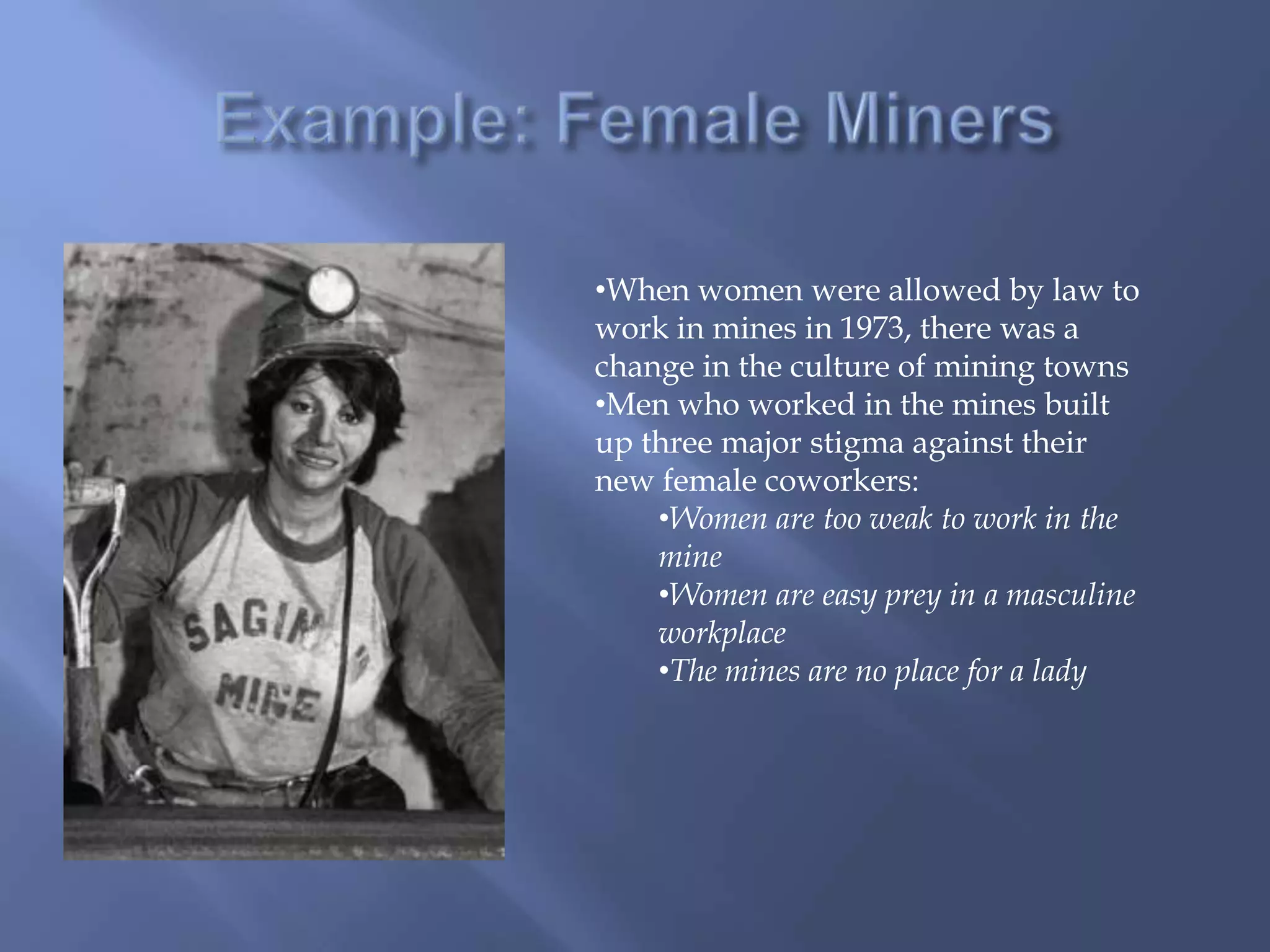
Example: Female MinersWhen women were allowed by law to work in mines in 1973, there was a change in the culture of mining towns
Men who worked in the mines built up three major stigma against their new female coworkers:
Women are too weak to work in the mine
Women are easy prey in a masculine workplace
The mines are no place for a ladyFemale MinersIn response to the image, or looking glass-self created by women working in a blue-collar field, women formed counter images of “self” to cope with the stigma:I can be one of the guysI’m not like other womenI can be feminine too

Symbolic interaction theory

  • 1.
    Symbolic interactionCommunication throughsymbols; people talking to each other.
  • 2.
    3 Core Principlesof SIMEANING: construction of social realityWe assign meaning to people or things. LANGUAGE: the source of meaningMeaning is developed through the use of language with each other. THOUGHT: the process of taking the role of the other. Interpretation of symbols is modified by his or her own thought processes. MINDING An inner dialogue used to test alternatives, rehearse actions, and anticipate reactions before responding; self-talkTaking the role of the otherThe process of mentally imagining that you are someone else who is viewing you.
  • 3.
    Looking-glass self The mentalself-image that results from taking the role of the other; the objective self; me.
  • 4.
    IThe spontaneous drivingforce that fosters all that is novel, unpredictable, and unorganized in the self.
  • 5.
    MeThe objective self;the image of self seen when one takes the role of the other
  • 6.
    Generalized otherThe compositemental image a person has of his or her self based on community expectations and responses.
  • 7.
    Participant observationA methodof adopting the stance of an ignorant yet interested visitor who carefully notes what people say and do in order to discover how they interpret their world.
  • 8.
    Self-fulfilling prophecyThe tendencyfor our expectations to evoke responses that confirm what we originally anticipated. Ex: If a person believed that when ever she feels horrible, something bad is going to happen…. And something bad does happen, this confirms in their mind that when they feel horrible, something horrible will happen.
  • 9.
    Example: Female MinersWhenwomen were allowed by law to work in mines in 1973, there was a change in the culture of mining towns
  • 10.
    Men who workedin the mines built up three major stigma against their new female coworkers:
  • 11.
    Women are tooweak to work in the mine
  • 12.
    Women are easyprey in a masculine workplace
  • 13.
    The mines areno place for a ladyFemale MinersIn response to the image, or looking glass-self created by women working in a blue-collar field, women formed counter images of “self” to cope with the stigma:I can be one of the guysI’m not like other womenI can be feminine too
  • 14.
    ExampleThe female minersare an example of building meaning of something based on interactions with others and social context. It might be helpful for you to read the article I did for my report for more detail on the subject.“Creating and Responding to the Gen(d)eralized Other: Women Miners’ Community-Constructed Identities” by Kristen Lucas and Sarah Steimel.