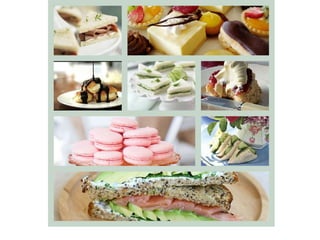
Afternoon tea and High tea
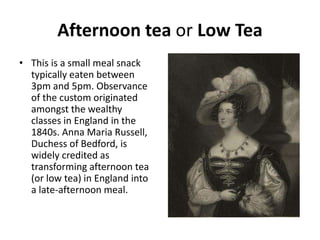
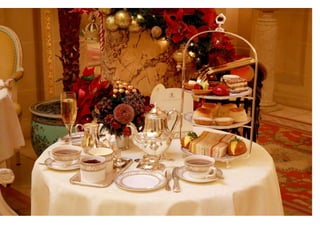
Afternoon tea or Low Tea 
• This is a small meal snack 
typically eaten between 
3pm and 5pm. Observance 
of the custom originated 
amongst the wealthy 
classes in England in the 
1840s. Anna Maria Russell, 
Duchess of Bedford, is 
widely credited as 
transforming afternoon tea 
(or low tea) in England into 
a late-afternoon meal.
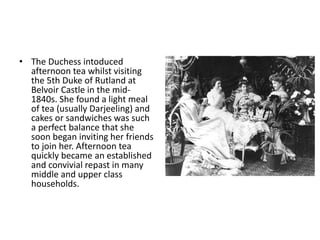
• The Duchess intoduced 
afternoon tea whilst visiting 
the 5th Duke of Rutland at 
Belvoir Castle in the mid- 
1840s. She found a light meal 
of tea (usually Darjeeling) and 
cakes or sandwiches was such 
a perfect balance that she 
soon began inviting her friends 
to join her. Afternoon tea 
quickly became an established 
and convivial repast in many 
middle and upper class 
households.
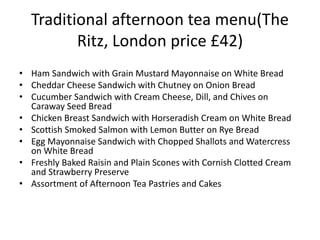
Traditional afternoon tea menu(The 
Ritz, London price £42) 
• Ham Sandwich with Grain Mustard Mayonnaise on White Bread 
• Cheddar Cheese Sandwich with Chutney on Onion Bread 
• Cucumber Sandwich with Cream Cheese, Dill, and Chives on 
Caraway Seed Bread 
• Chicken Breast Sandwich with Horseradish Cream on White Bread 
• Scottish Smoked Salmon with Lemon Butter on Rye Bread 
• Egg Mayonnaise Sandwich with Chopped Shallots and Watercress 
on White Bread 
• Freshly Baked Raisin and Plain Scones with Cornish Clotted Cream 
and Strawberry Preserve 
• Assortment of Afternoon Tea Pastries and Cakes
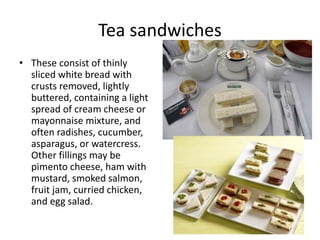
Tea sandwiches 
• These consist of thinly 
sliced white bread with 
crusts removed, lightly 
buttered, containing a light 
spread of cream cheese or 
mayonnaise mixture, and 
often radishes, cucumber, 
asparagus, or watercress. 
Other fillings may be 
pimento cheese, ham with 
mustard, smoked salmon, 
fruit jam, curried chicken, 
and egg salad.
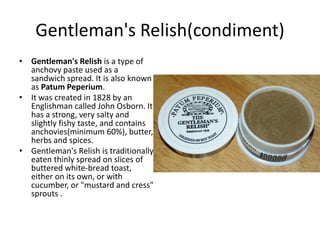
Gentleman's Relish(condiment) 
• Gentleman's Relish is a type of 
anchovy paste used as a 
sandwich spread. It is also known 
as Patum Peperium. 
• It was created in 1828 by an 
Englishman called John Osborn. It 
has a strong, very salty and 
slightly fishy taste, and contains 
anchovies(minimum 60%), butter, 
herbs and spices. 
• Gentleman's Relish is traditionally 
eaten thinly spread on slices of 
buttered white-bread toast, 
either on its own, or with 
cucumber, or "mustard and cress" 
sprouts .
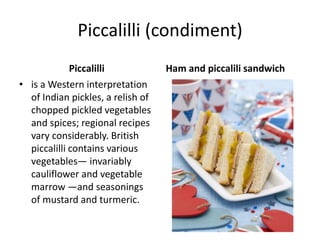
Piccalilli (condiment) 
Piccalilli 
• is a Western interpretation 
of Indian pickles, a relish of 
chopped pickled vegetables 
and spices; regional recipes 
vary considerably. British 
piccalilli contains various 
vegetables— invariably 
cauliflower and vegetable 
marrow —and seasonings 
of mustard and turmeric. 
Ham and piccalili sandwich
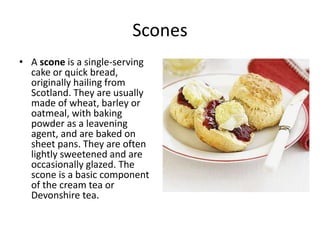
Scones 
• A scone is a single-serving 
cake or quick bread, 
originally hailing from 
Scotland. They are usually 
made of wheat, barley or 
oatmeal, with baking 
powder as a leavening 
agent, and are baked on 
sheet pans. They are often 
lightly sweetened and are 
occasionally glazed. The 
scone is a basic component 
of the cream tea or 
Devonshire tea.
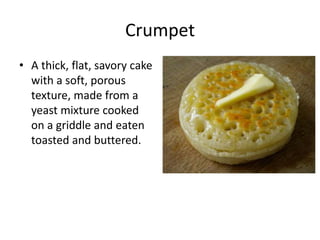
Crumpet 
• A thick, flat, savory cake 
with a soft, porous 
texture, made from a 
yeast mixture cooked 
on a griddle and eaten 
toasted and buttered.
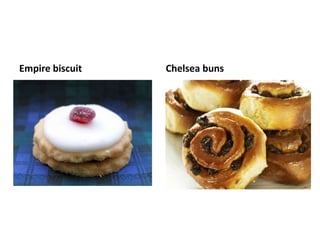
Empire biscuit Chelsea buns
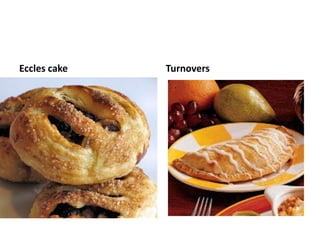
Eccles cake Turnovers
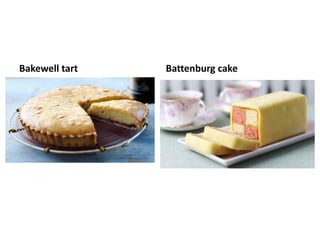
Bakewell tart Battenburg cake
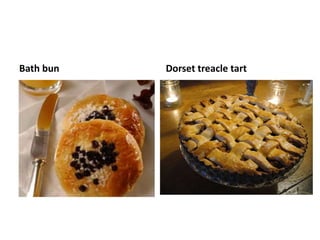
Bath bun Dorset treacle tart
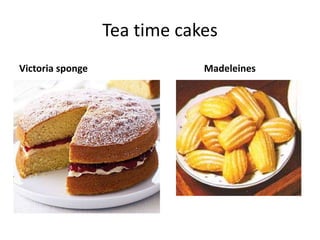
Tea time cakes 
Victoria sponge Madeleines
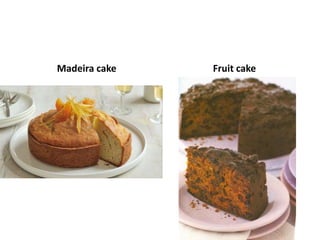
Madeira cake Fruit cake
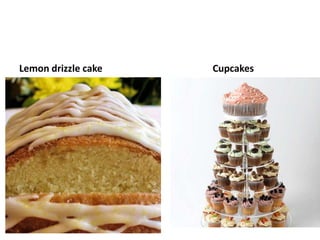
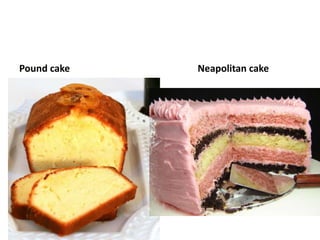
Lemon drizzle cake Cupcakes
Pound cake Neapolitan cake
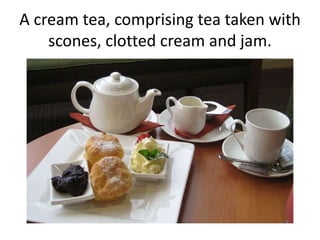
A cream tea, comprising tea taken with 
scones, clotted cream and jam.
What types of tea are served? 
• Assam 
• A strong full-bodied tea from India, which has a distinctive, ‘malty' 
flavour. 
• Darjeeling 
• An aromatic and astringent tea from India, with a hint of almonds 
and wildflowers. 
• Earl Grey 
• A blend of black teas scented with oil of bergamot named after 
Charles, 2nd Earl Grey, who was Prime Minister from 1830 to 1834. 
• Lapsang Souchong 
• A Chinese tea fired over smoking pine needles, which produces a 
striking smoky odour and flavour.
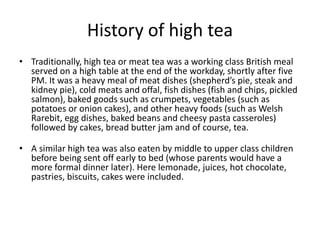
History of high tea 
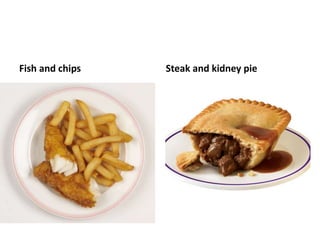
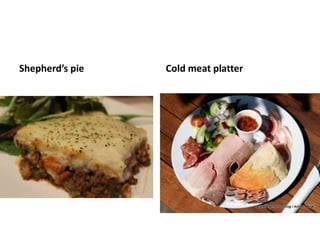
• Traditionally, high tea or meat tea was a working class British meal 
served on a high table at the end of the workday, shortly after five 
PM. It was a heavy meal of meat dishes (shepherd’s pie, steak and 
kidney pie), cold meats and offal, fish dishes (fish and chips, pickled 
salmon), baked goods such as crumpets, vegetables (such as 
potatoes or onion cakes), and other heavy foods (such as Welsh 
Rarebit, egg dishes, baked beans and cheesy pasta casseroles) 
followed by cakes, bread butter jam and of course, tea. 
• A similar high tea was also eaten by middle to upper class children 
before being sent off early to bed (whose parents would have a 
more formal dinner later). Here lemonade, juices, hot chocolate, 
pastries, biscuits, cakes were included.
Fish and chips Steak and kidney pie
Shepherd’s pie Cold meat platter

Afternoon tea and high tea

  • 1.
  • 2.
    Afternoon tea orLow Tea • This is a small meal snack typically eaten between 3pm and 5pm. Observance of the custom originated amongst the wealthy classes in England in the 1840s. Anna Maria Russell, Duchess of Bedford, is widely credited as transforming afternoon tea (or low tea) in England into a late-afternoon meal.
  • 3.
    • The Duchessintoduced afternoon tea whilst visiting the 5th Duke of Rutland at Belvoir Castle in the mid- 1840s. She found a light meal of tea (usually Darjeeling) and cakes or sandwiches was such a perfect balance that she soon began inviting her friends to join her. Afternoon tea quickly became an established and convivial repast in many middle and upper class households.
  • 7.
    Traditional afternoon teamenu(The Ritz, London price £42) • Ham Sandwich with Grain Mustard Mayonnaise on White Bread • Cheddar Cheese Sandwich with Chutney on Onion Bread • Cucumber Sandwich with Cream Cheese, Dill, and Chives on Caraway Seed Bread • Chicken Breast Sandwich with Horseradish Cream on White Bread • Scottish Smoked Salmon with Lemon Butter on Rye Bread • Egg Mayonnaise Sandwich with Chopped Shallots and Watercress on White Bread • Freshly Baked Raisin and Plain Scones with Cornish Clotted Cream and Strawberry Preserve • Assortment of Afternoon Tea Pastries and Cakes
  • 9.
    Tea sandwiches •These consist of thinly sliced white bread with crusts removed, lightly buttered, containing a light spread of cream cheese or mayonnaise mixture, and often radishes, cucumber, asparagus, or watercress. Other fillings may be pimento cheese, ham with mustard, smoked salmon, fruit jam, curried chicken, and egg salad.
  • 10.
    Gentleman's Relish(condiment) •Gentleman's Relish is a type of anchovy paste used as a sandwich spread. It is also known as Patum Peperium. • It was created in 1828 by an Englishman called John Osborn. It has a strong, very salty and slightly fishy taste, and contains anchovies(minimum 60%), butter, herbs and spices. • Gentleman's Relish is traditionally eaten thinly spread on slices of buttered white-bread toast, either on its own, or with cucumber, or "mustard and cress" sprouts .
  • 11.
    Piccalilli (condiment) Piccalilli • is a Western interpretation of Indian pickles, a relish of chopped pickled vegetables and spices; regional recipes vary considerably. British piccalilli contains various vegetables— invariably cauliflower and vegetable marrow —and seasonings of mustard and turmeric. Ham and piccalili sandwich
  • 12.
    Scones • Ascone is a single-serving cake or quick bread, originally hailing from Scotland. They are usually made of wheat, barley or oatmeal, with baking powder as a leavening agent, and are baked on sheet pans. They are often lightly sweetened and are occasionally glazed. The scone is a basic component of the cream tea or Devonshire tea.
  • 13.
    Crumpet • Athick, flat, savory cake with a soft, porous texture, made from a yeast mixture cooked on a griddle and eaten toasted and buttered.
  • 14.
  • 15.
  • 16.
  • 17.
    Bath bun Dorsettreacle tart
  • 18.
    Tea time cakes Victoria sponge Madeleines
  • 19.
  • 20.
  • 21.
  • 22.
    A cream tea,comprising tea taken with scones, clotted cream and jam.
  • 23.
    What types oftea are served? • Assam • A strong full-bodied tea from India, which has a distinctive, ‘malty' flavour. • Darjeeling • An aromatic and astringent tea from India, with a hint of almonds and wildflowers. • Earl Grey • A blend of black teas scented with oil of bergamot named after Charles, 2nd Earl Grey, who was Prime Minister from 1830 to 1834. • Lapsang Souchong • A Chinese tea fired over smoking pine needles, which produces a striking smoky odour and flavour.
  • 24.
    History of hightea • Traditionally, high tea or meat tea was a working class British meal served on a high table at the end of the workday, shortly after five PM. It was a heavy meal of meat dishes (shepherd’s pie, steak and kidney pie), cold meats and offal, fish dishes (fish and chips, pickled salmon), baked goods such as crumpets, vegetables (such as potatoes or onion cakes), and other heavy foods (such as Welsh Rarebit, egg dishes, baked beans and cheesy pasta casseroles) followed by cakes, bread butter jam and of course, tea. • A similar high tea was also eaten by middle to upper class children before being sent off early to bed (whose parents would have a more formal dinner later). Here lemonade, juices, hot chocolate, pastries, biscuits, cakes were included.
  • 30.
    Fish and chipsSteak and kidney pie
  • 31.