   Conflict
    -Internal &
    External

   Mood

   Foreshadow
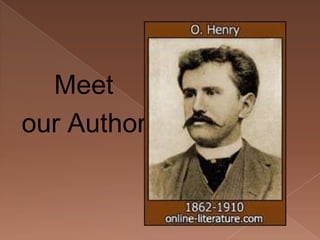
Meet
our Author
     He moved to Houston, where he had a
    number of jobs, including that of bank clerk.
    After moving to Austin, Texas, in 1882, he
    married. In 1897 he was convicted of
    embezzling money, although there has been
    much debate over his actual guilt. In 1898 he
    entered a penitentiary at Columbus, Ohio.

     While in prison O. Henry
started to write short stories to
earn money to support his
Daughter, Margaret. After doing
Three years of the five years
sentence, Porter emerged from
the prison in 1901 and changed
his name to O. Henry. O. Henry died
of cirrhosis of the liver on June 5,
1910, in New York.
   The 1920s era went by such names as
    the Jazz Age, the Age of Intolerance,
    and the Age of Wonderful Nonsense.

   Amendment 18 to the Constitution
    (1919) had prohibited the
    manufacture, transport and sale of
    intoxicating liquor. Prohibitionists
    anticipated that Prohibition would
    alleviate social problems and bolster
    the economy.

   However, many people disliked the
    law and imbibed in unlawful
    nightclubs called speakeasies.
    Gangsters took control of bootlegging
    (illegal distribution of liquor) and
    violent lawlessness erupted. Lacking
    public support, the federal
    government was virtually unable to
    enforce Prohibition.
   Youthful "Flapper" women
    provoked older people with
    brief skirts, bobbed hair, and
    cavalier use of makeup and
    cigarettes.
   Crazes included such
    dances as the Charleston,
    dance marathons, flagpole
    sitting and flying stunts.
    Baseball`s Babe Ruth and
    other sports figures became
    heroes.
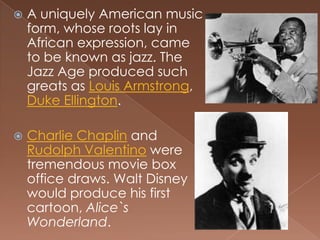
   A uniquely American music
    form, whose roots lay in
    African expression, came
    to be known as jazz. The
    Jazz Age produced such
    greats as Louis Armstrong,
    Duke Ellington.

   Charlie Chaplin and
    Rudolph Valentino were
    tremendous movie box
    office draws. Walt Disney
    would produce his first
    cartoon, Alice`s
    Wonderland.
   It was the time of the $5
    workday, good worker pay for
    those days. People spent
    money for better roads,
    tourism, and holiday resorts.
    Real estate booms, most
    notably in Florida, sent land
    prices soaring.


  The radio found its way
into virtually every home
in America.

 The year 1922 introduced
the first movie made with
sound.
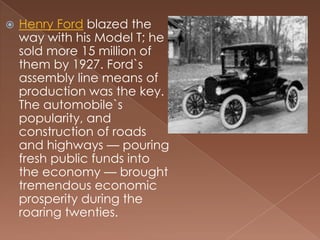
   Henry Ford blazed the
    way with his Model T; he
    sold more 15 million of
    them by 1927. Ford`s
    assembly line means of
    production was the key.
    The automobile`s
    popularity, and
    construction of roads
    and highways — pouring
    fresh public funds into
    the economy — brought
    tremendous economic
    prosperity during the
    roaring twenties.
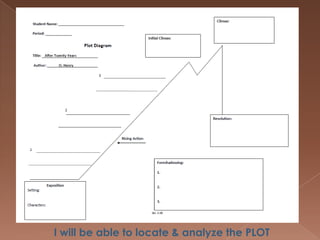
I will be able to locate & analyze the PLOT
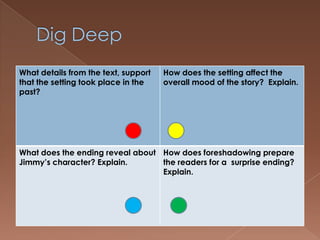
What details from the text, support   How does the setting affect the
that the setting took place in the    overall mood of the story? Explain.
past?


What does the ending reveal about How does foreshadowing prepare
Jimmy’s character? Explain.       the readers for a surprise ending?
                                  Explain.

After twenty years

  • 2.
    Conflict -Internal & External  Mood  Foreshadow
  • 3.
  • 5.
    He moved to Houston, where he had a number of jobs, including that of bank clerk. After moving to Austin, Texas, in 1882, he married. In 1897 he was convicted of embezzling money, although there has been much debate over his actual guilt. In 1898 he entered a penitentiary at Columbus, Ohio.  While in prison O. Henry started to write short stories to earn money to support his Daughter, Margaret. After doing Three years of the five years sentence, Porter emerged from the prison in 1901 and changed his name to O. Henry. O. Henry died of cirrhosis of the liver on June 5, 1910, in New York.
  • 6.
    The 1920s era went by such names as the Jazz Age, the Age of Intolerance, and the Age of Wonderful Nonsense.  Amendment 18 to the Constitution (1919) had prohibited the manufacture, transport and sale of intoxicating liquor. Prohibitionists anticipated that Prohibition would alleviate social problems and bolster the economy.  However, many people disliked the law and imbibed in unlawful nightclubs called speakeasies. Gangsters took control of bootlegging (illegal distribution of liquor) and violent lawlessness erupted. Lacking public support, the federal government was virtually unable to enforce Prohibition.
  • 7.
    Youthful "Flapper" women provoked older people with brief skirts, bobbed hair, and cavalier use of makeup and cigarettes.  Crazes included such dances as the Charleston, dance marathons, flagpole sitting and flying stunts. Baseball`s Babe Ruth and other sports figures became heroes.
  • 8.
    A uniquely American music form, whose roots lay in African expression, came to be known as jazz. The Jazz Age produced such greats as Louis Armstrong, Duke Ellington.  Charlie Chaplin and Rudolph Valentino were tremendous movie box office draws. Walt Disney would produce his first cartoon, Alice`s Wonderland.
  • 9.
    It was the time of the $5 workday, good worker pay for those days. People spent money for better roads, tourism, and holiday resorts. Real estate booms, most notably in Florida, sent land prices soaring.  The radio found its way into virtually every home in America.  The year 1922 introduced the first movie made with sound.
  • 10.
    Henry Ford blazed the way with his Model T; he sold more 15 million of them by 1927. Ford`s assembly line means of production was the key. The automobile`s popularity, and construction of roads and highways — pouring fresh public funds into the economy — brought tremendous economic prosperity during the roaring twenties.
  • 13.
    I will beable to locate & analyze the PLOT
  • 14.
    What details fromthe text, support How does the setting affect the that the setting took place in the overall mood of the story? Explain. past? What does the ending reveal about How does foreshadowing prepare Jimmy’s character? Explain. the readers for a surprise ending? Explain.

Editor's Notes

  • #3 Show YouTube video various examples of foreshadowing