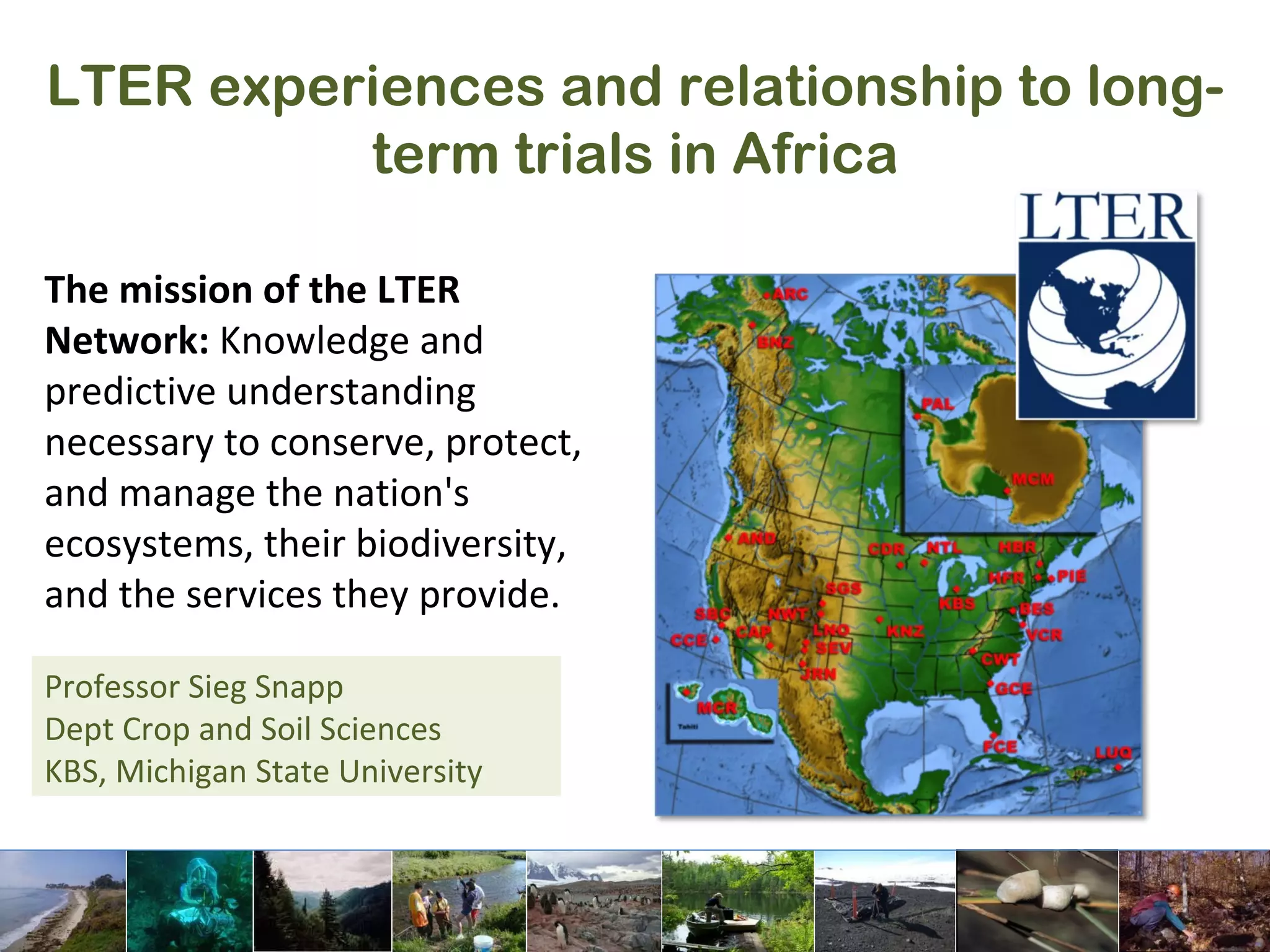
LTER experiences and relationship to long-term trials in Africa Professor Sieg Snapp Dept Crop and Soil Sciences KBS, Michigan State University The mission of the LTER Network:  Knowledge and predictive understanding necessary to conserve, protect, and manage the nation's ecosystems, their biodiversity, and the services they provide.
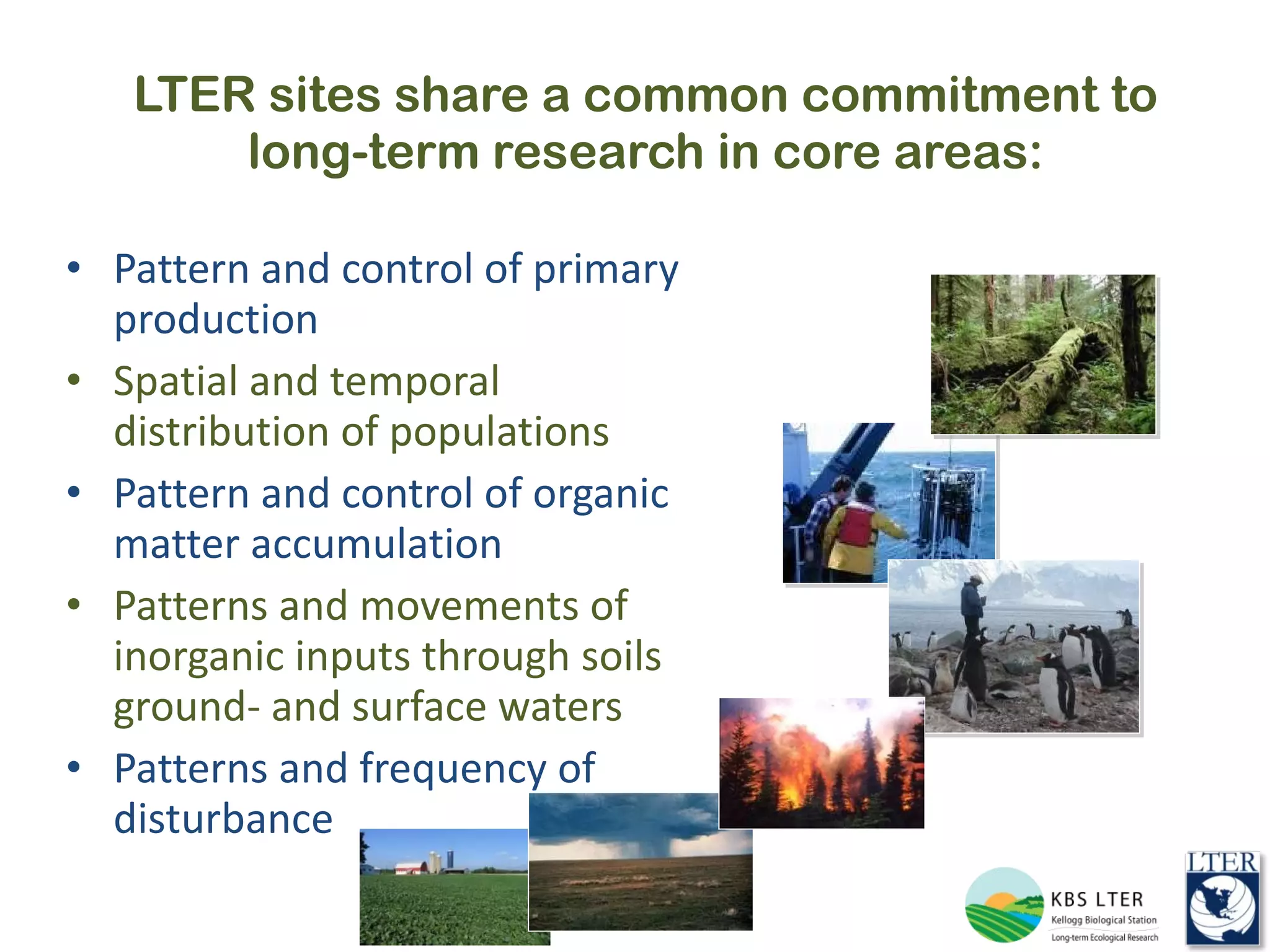
LTER sites share a common commitment to long-term research in core areas: Pattern and control of primary production Spatial and temporal distribution of populations Pattern and control of organic matter accumulation  Patterns and movements of inorganic inputs through soils ground- and surface waters Patterns and frequency of disturbance
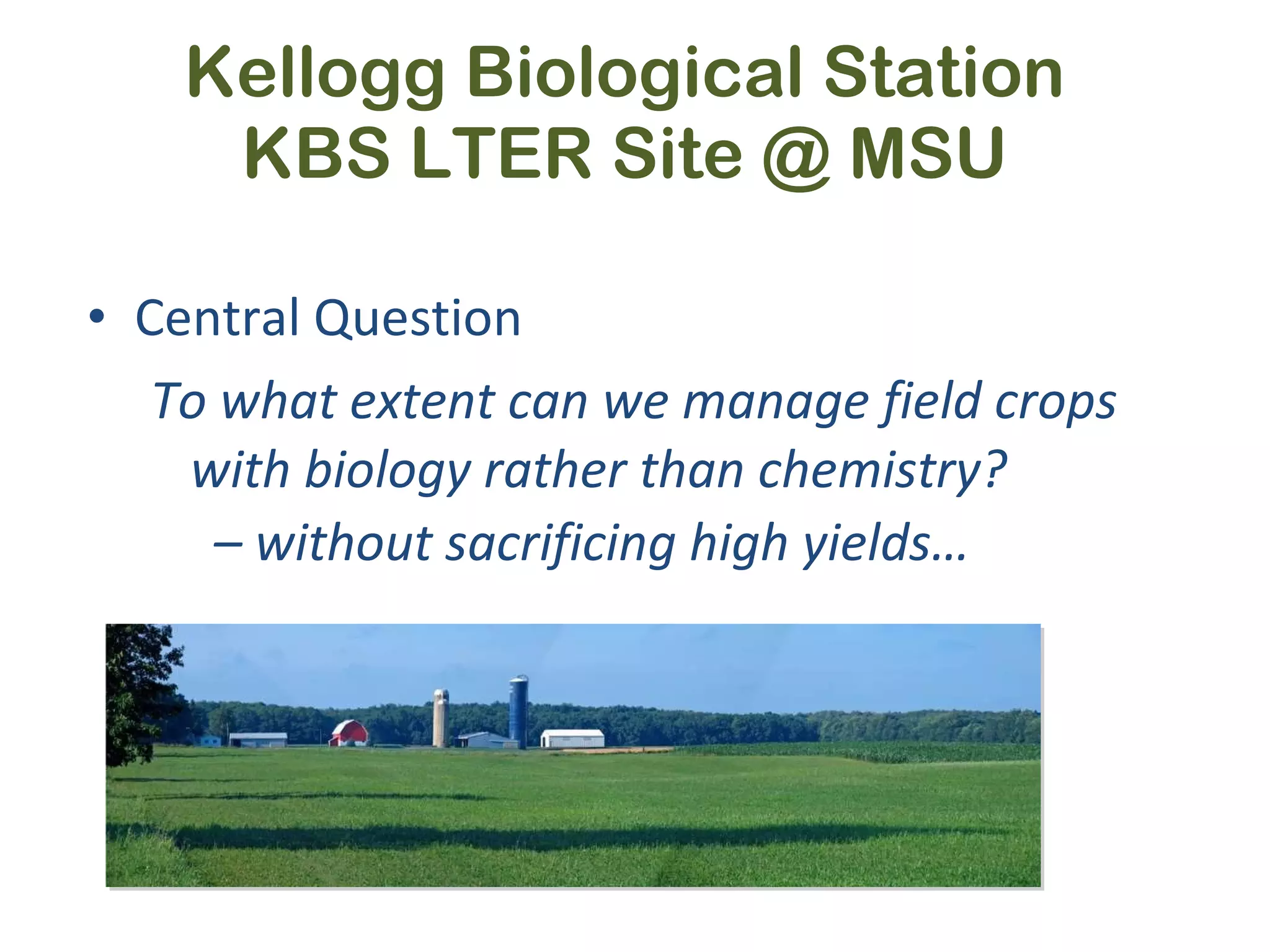
Kellogg Biological Station KBS LTER Site @ MSU Central Question To what extent can we manage field crops with biology rather than chemistry? –  without sacrificing high yields…
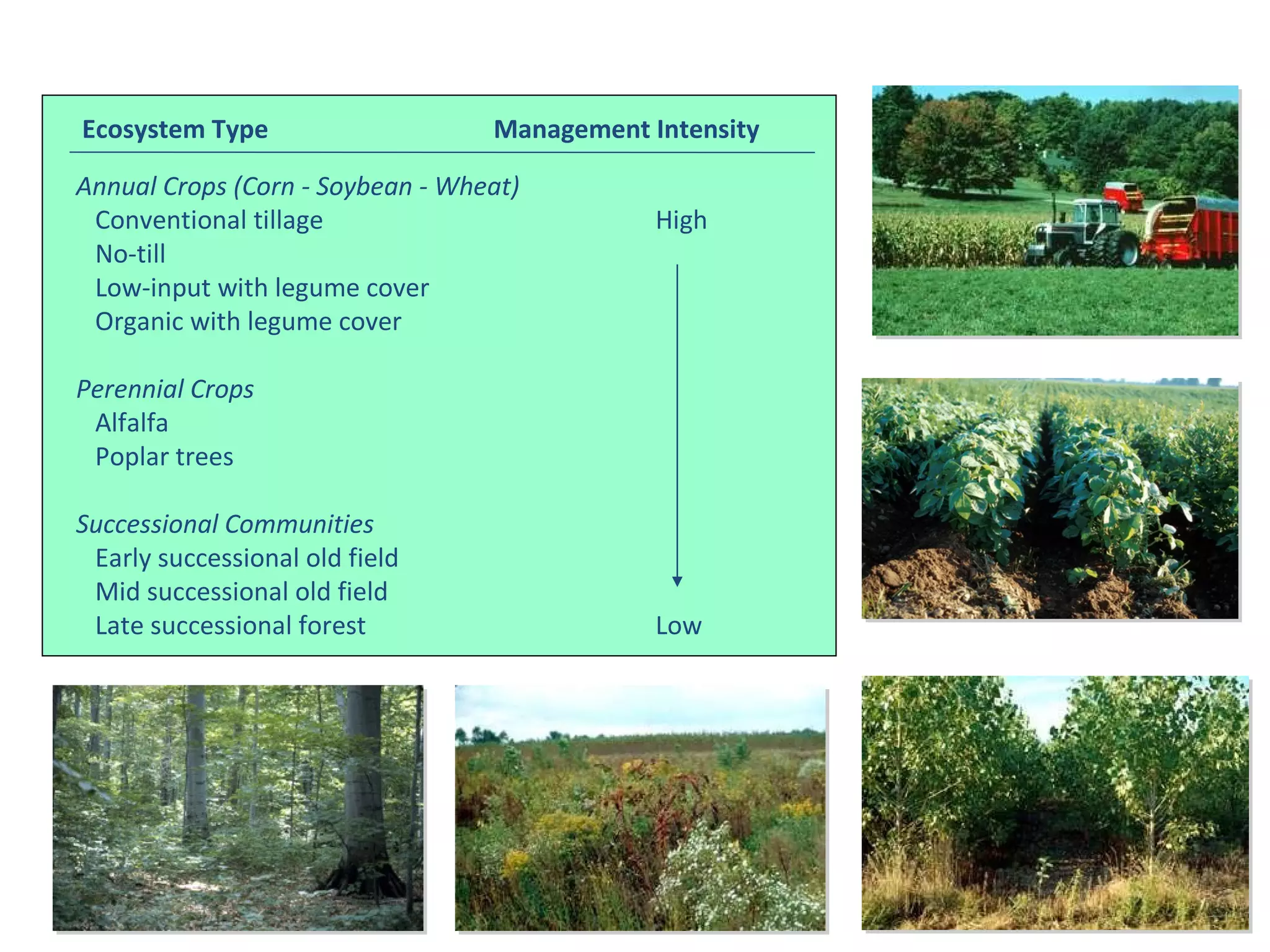
KBS Long-Term Ecological Research (LTER) Site Annual Crops (Corn - Soybean - Wheat)   Conventional tillage High   No-till   Low-input with legume cover   Organic with legume cover Perennial Crops   Alfalfa   Poplar trees Successional Communities   Early successional old field   Mid successional old field   Late successional forest Low Ecosystem Type Management Intensity
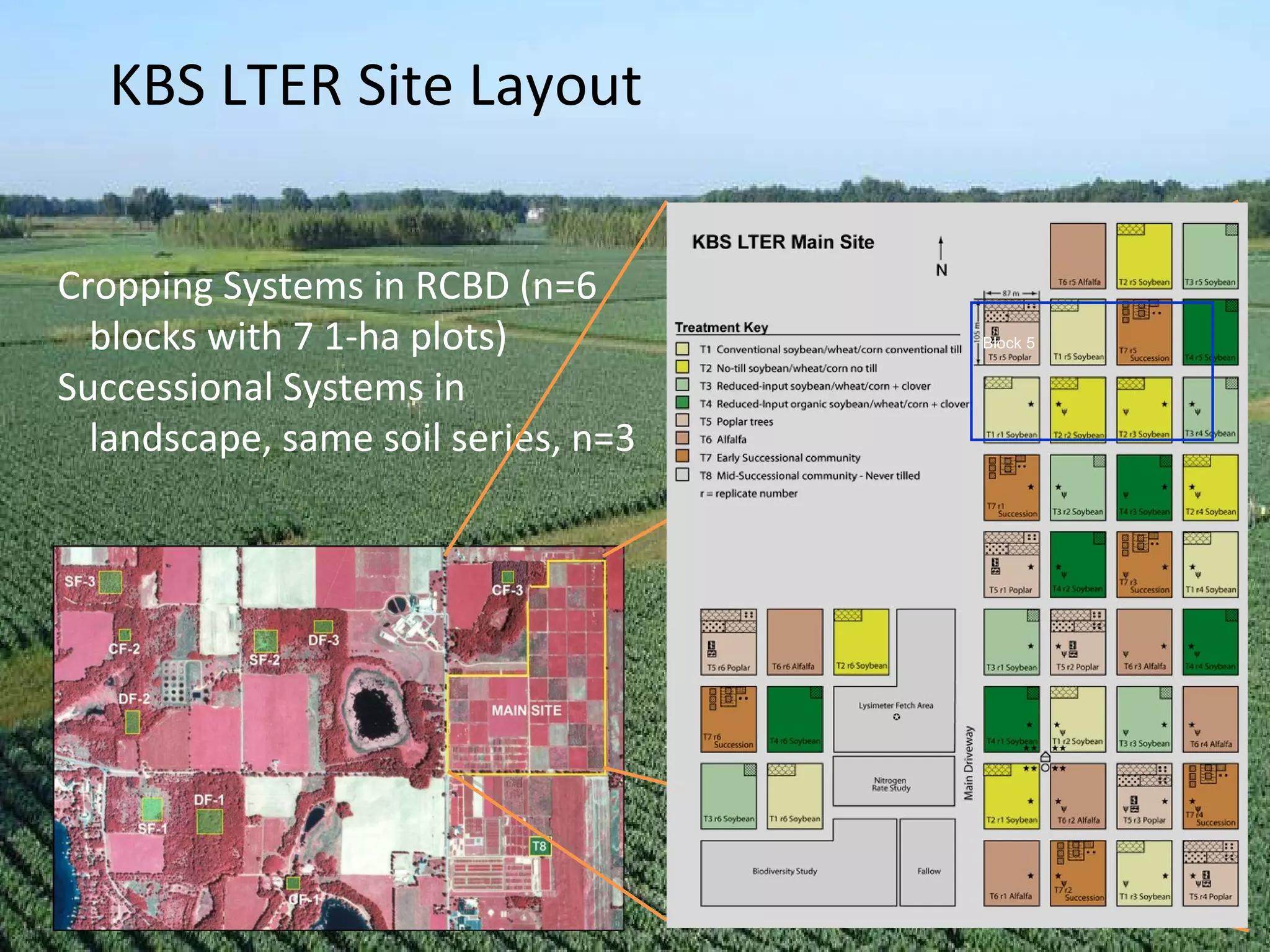
KBS LTER Site Layout Cropping Systems in RCBD (n=6 blocks with 7 1-ha plots) Successional Systems in  landscape, same soil series, n=3 Block 5
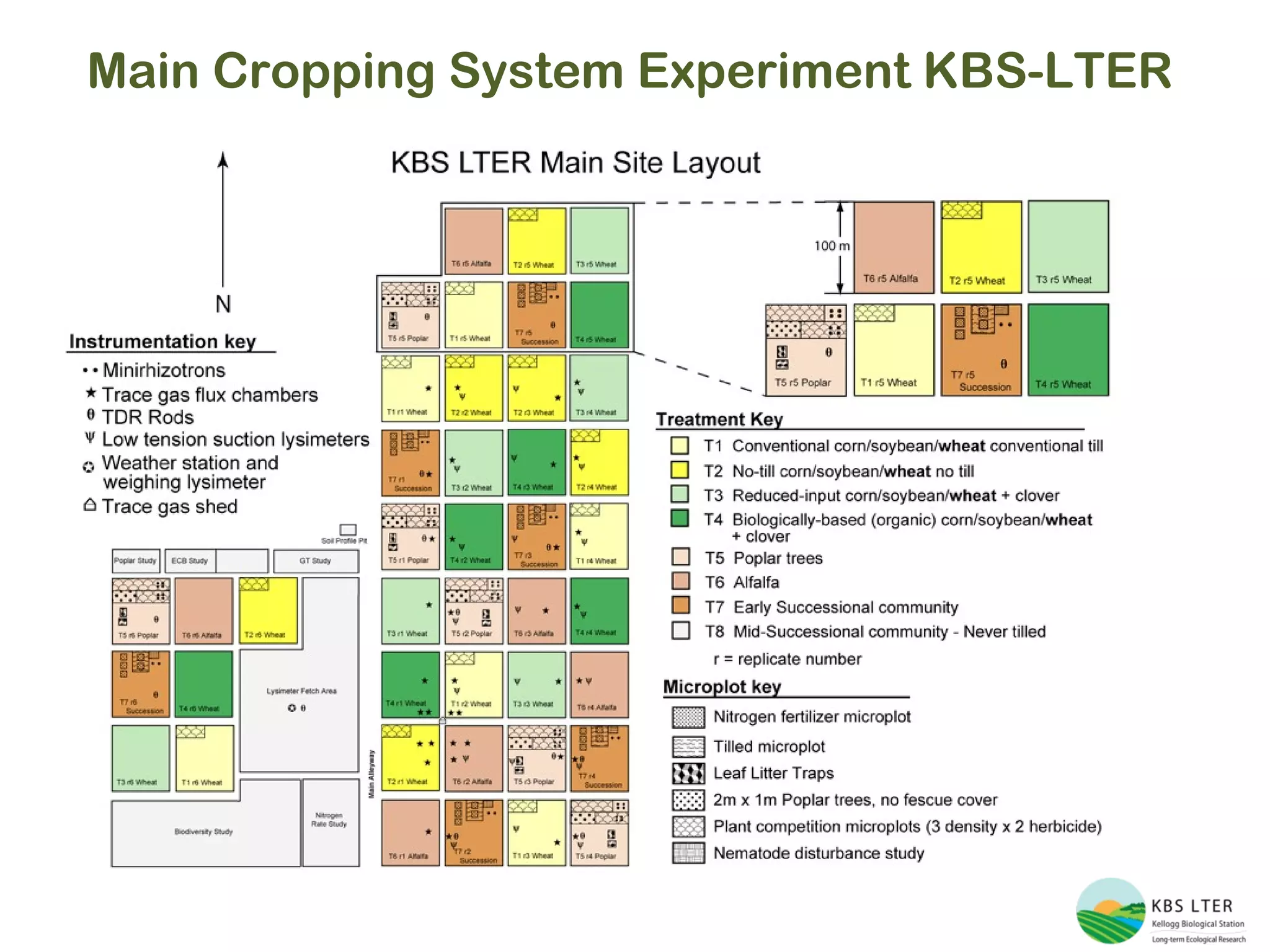
Main Cropping System Experiment KBS-LTER
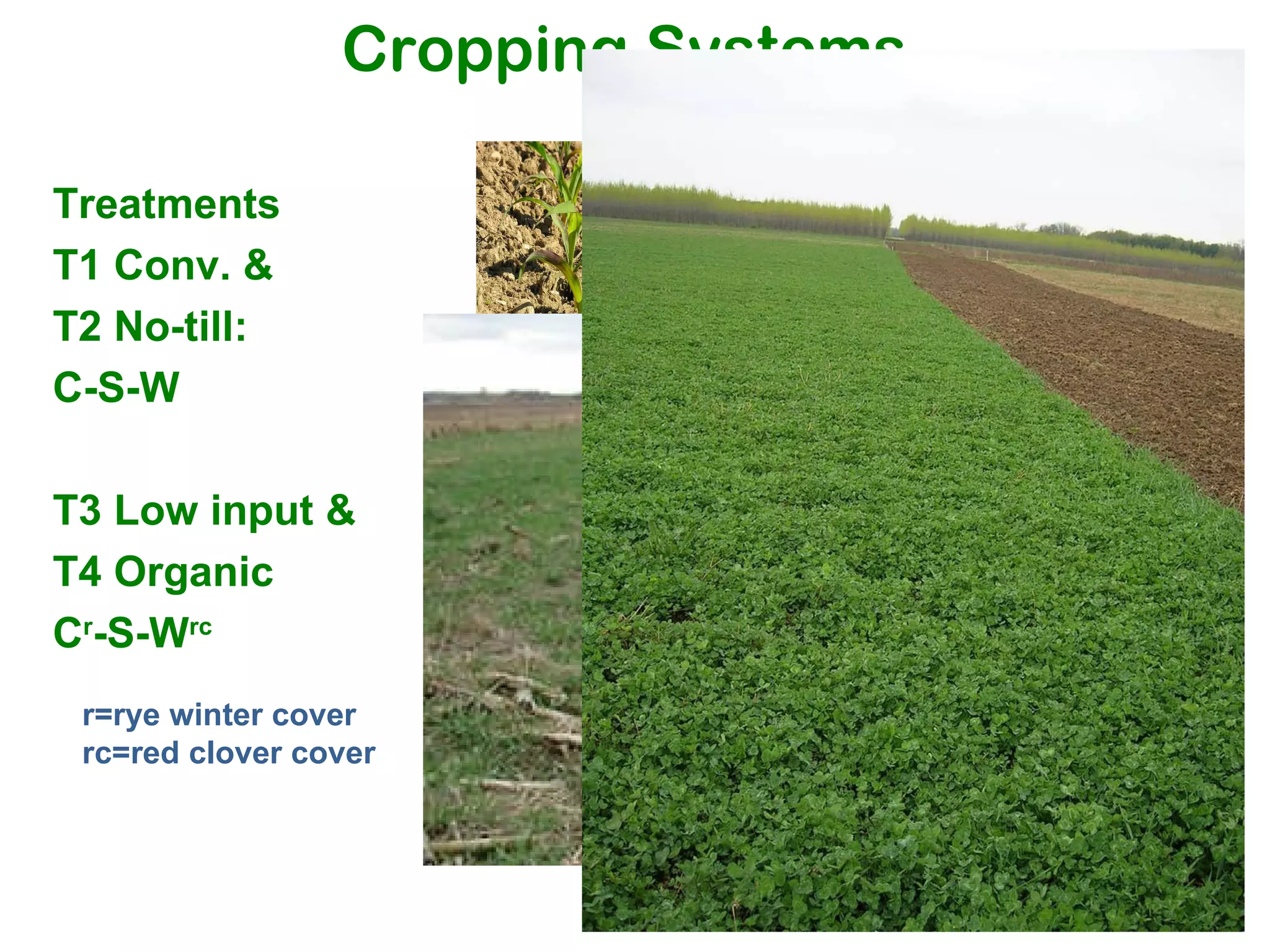
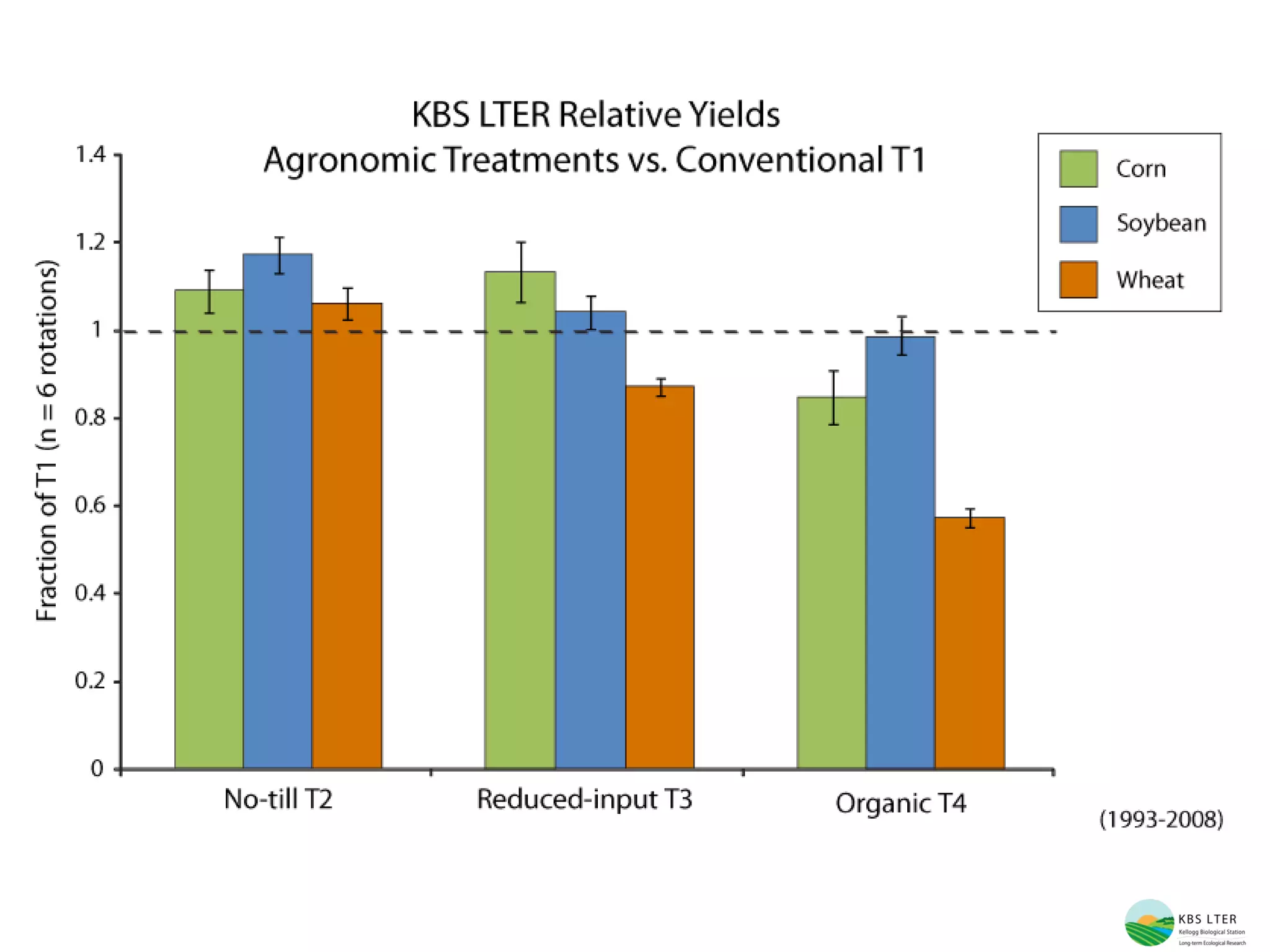
Cropping Systems Treatments T1 Conv. & T2 No-till: C-S-W T3 Low input & T4 Organic C r -S-W rc r=rye winter cover rc=red clover cover
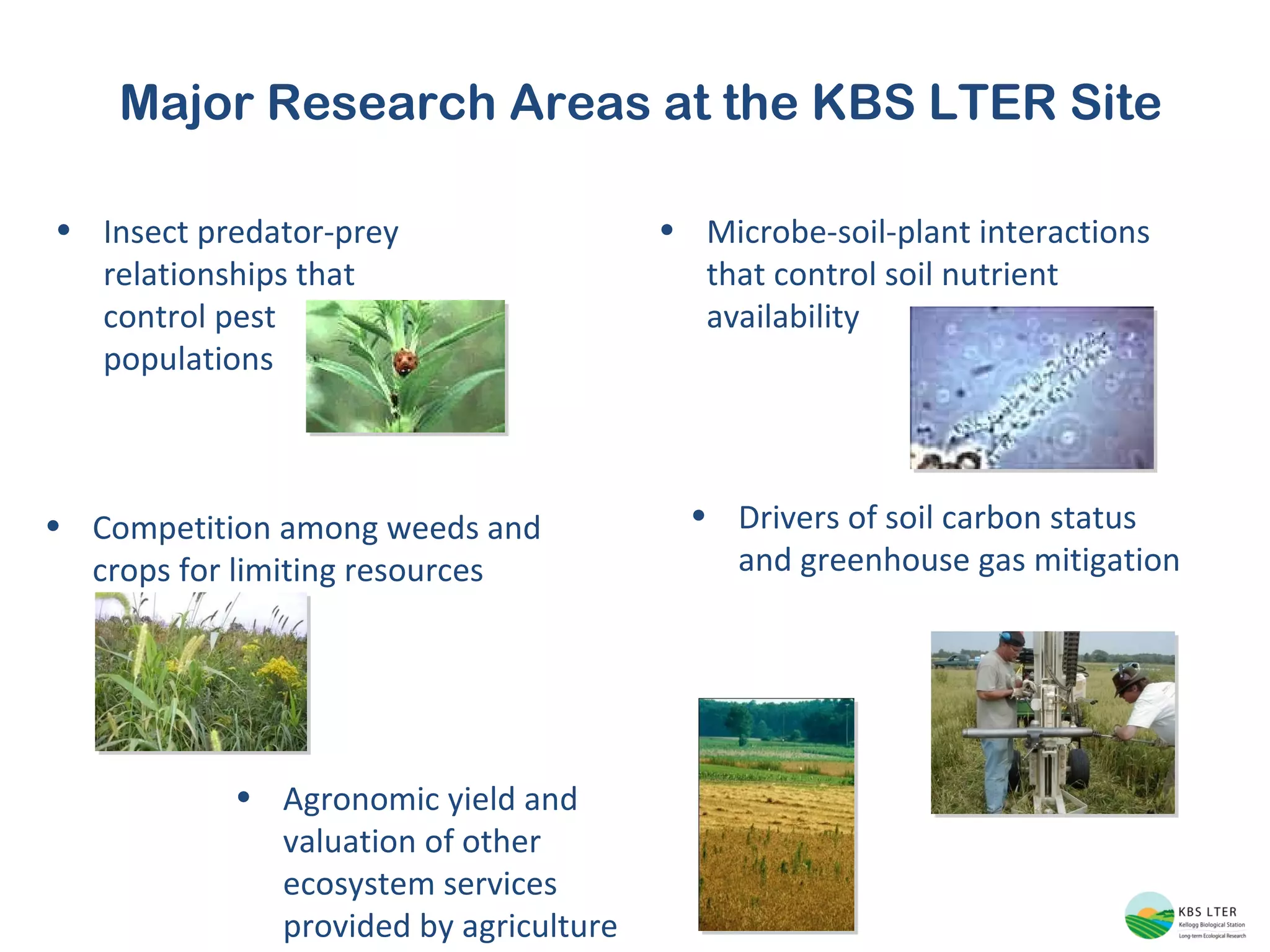
Major Research Areas at the KBS LTER Site Microbe-soil-plant interactions that control soil nutrient availability Insect predator-prey relationships that control pest populations Competition among weeds and crops for limiting resources Drivers of soil carbon status and greenhouse gas mitigation Agronomic yield and valuation of other  ecosystem services provided by agriculture
Methodology Management: LTER executive committee (Robertson chair + 6 co-PI scientists) Agronomic committee (Snapp chair + scientists, extension and farmers) manage cropping systems by protocols updated each season Measurements:  - Developed LTER-cross site synthesis on measurements in the late 1980s LTER book publication (Robertson et al., 1998)  LTER-KBS website under review process, 2011 - Document consistent approaches to monitor soil and plant primary productivity (aboveground), soil nutrient cycling (nitrogen), moisture dynamics, soil C, GWP  New management approach 2011:  Manage by objective, prevailing farming norms for T1 conventional and no-till, and biology to replace chemical inputs for T3 & T4.
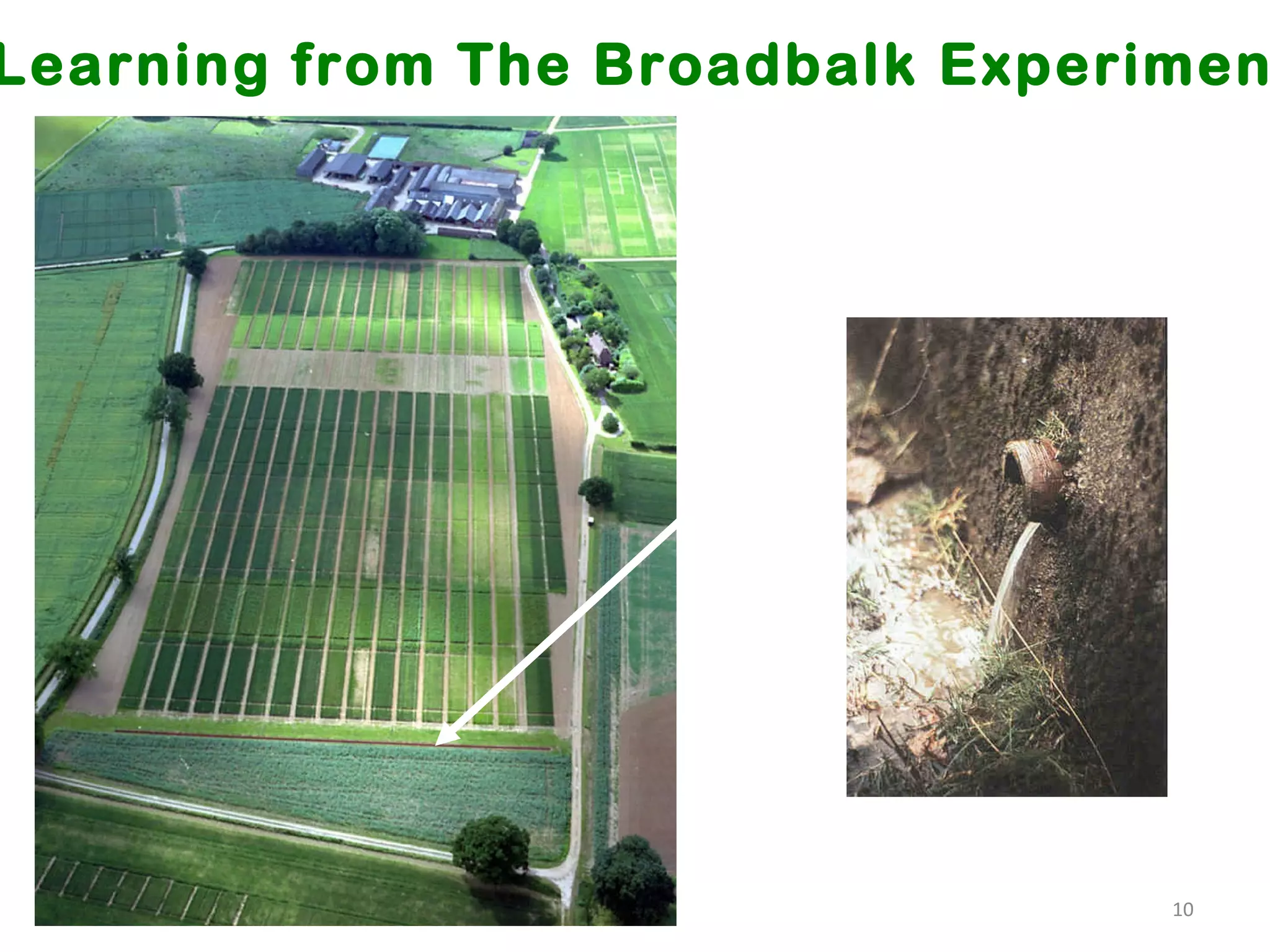
Drains on Broadbalk Learning from The Broadbalk Experiment
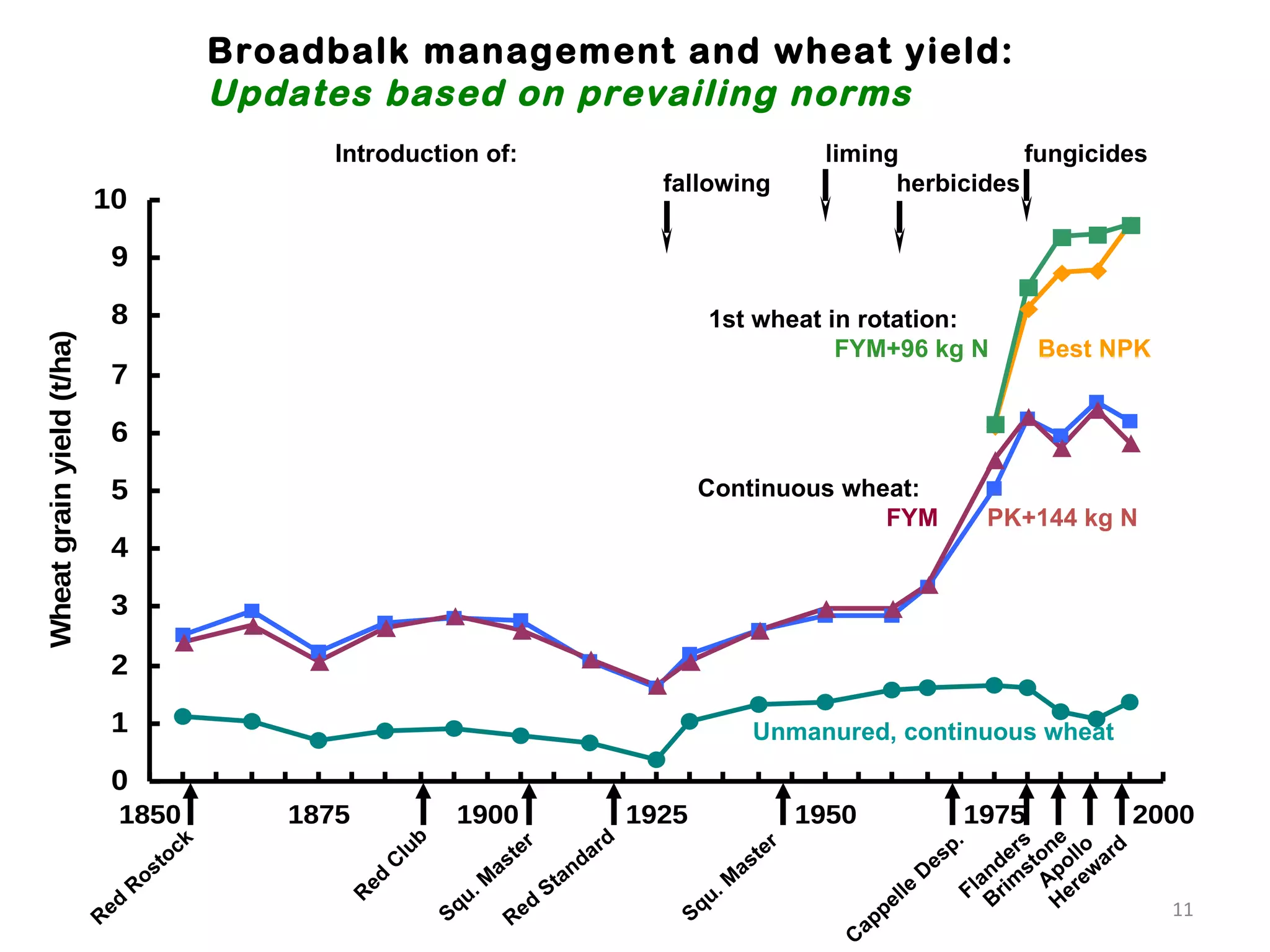
Unmanured, continuous wheat Continuous wheat: FYM   PK+144 kg N 1st wheat in rotation: FYM+96 kg N   Best NPK Red Rostock Broadbalk management and wheat yield:  Updates based on prevailing norms Red Club Squ. Master Red Standard Squ. Master Cappelle Desp. Flanders Brimstone Apollo Hereward Introduction of:  liming  fungicides fallowing  herbicides
 
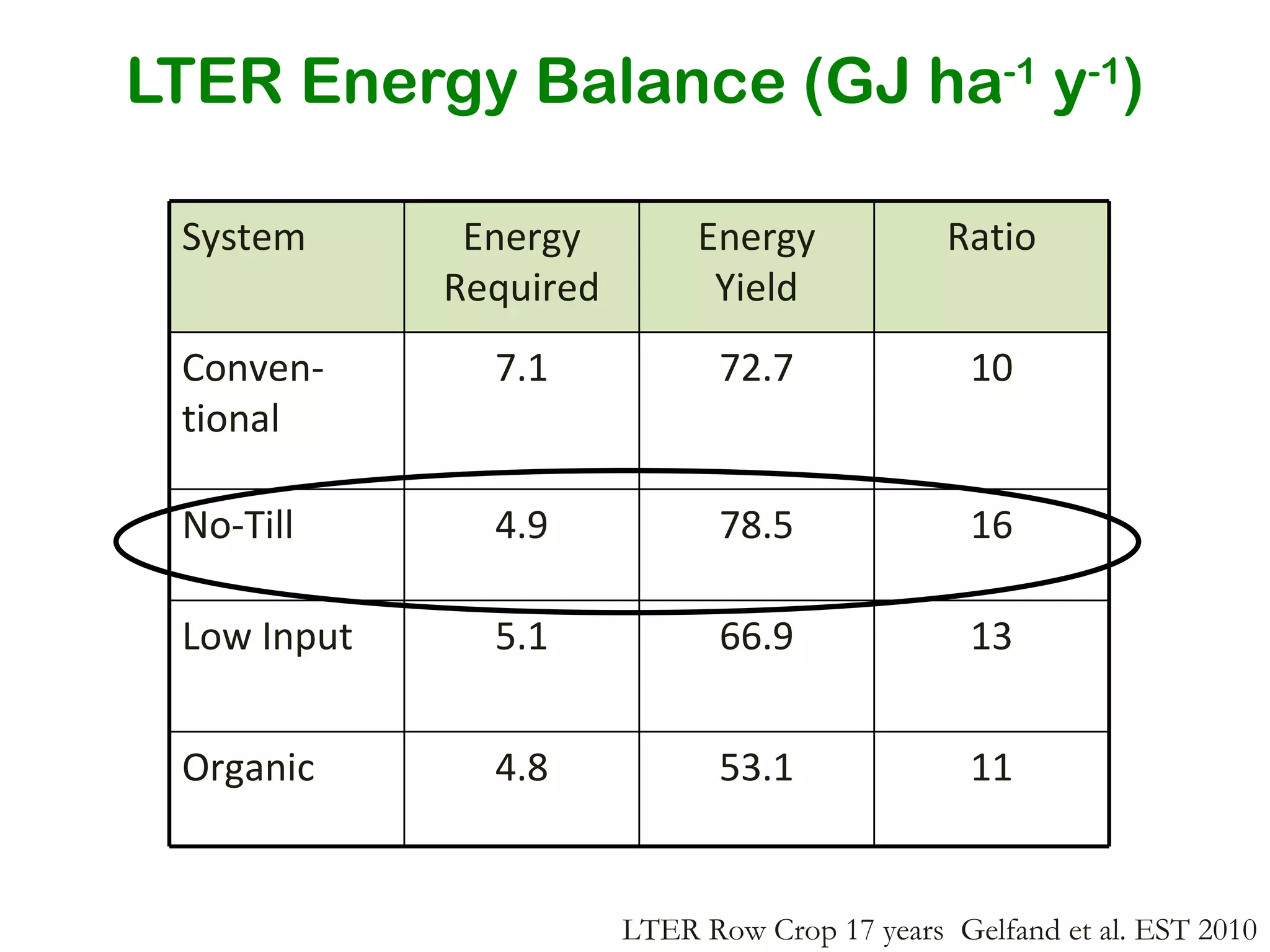
LTER Energy Balance (GJ ha -1  y -1 ) LTER Row Crop 17 years  Gelfand et al. EST 2010 System Energy Required Energy Yield Ratio Conven-tional 7.1 72.7 10 No-Till 4.9 78.5 16 Low Input 5.1 66.9 13 Organic 4.8 53.1 11
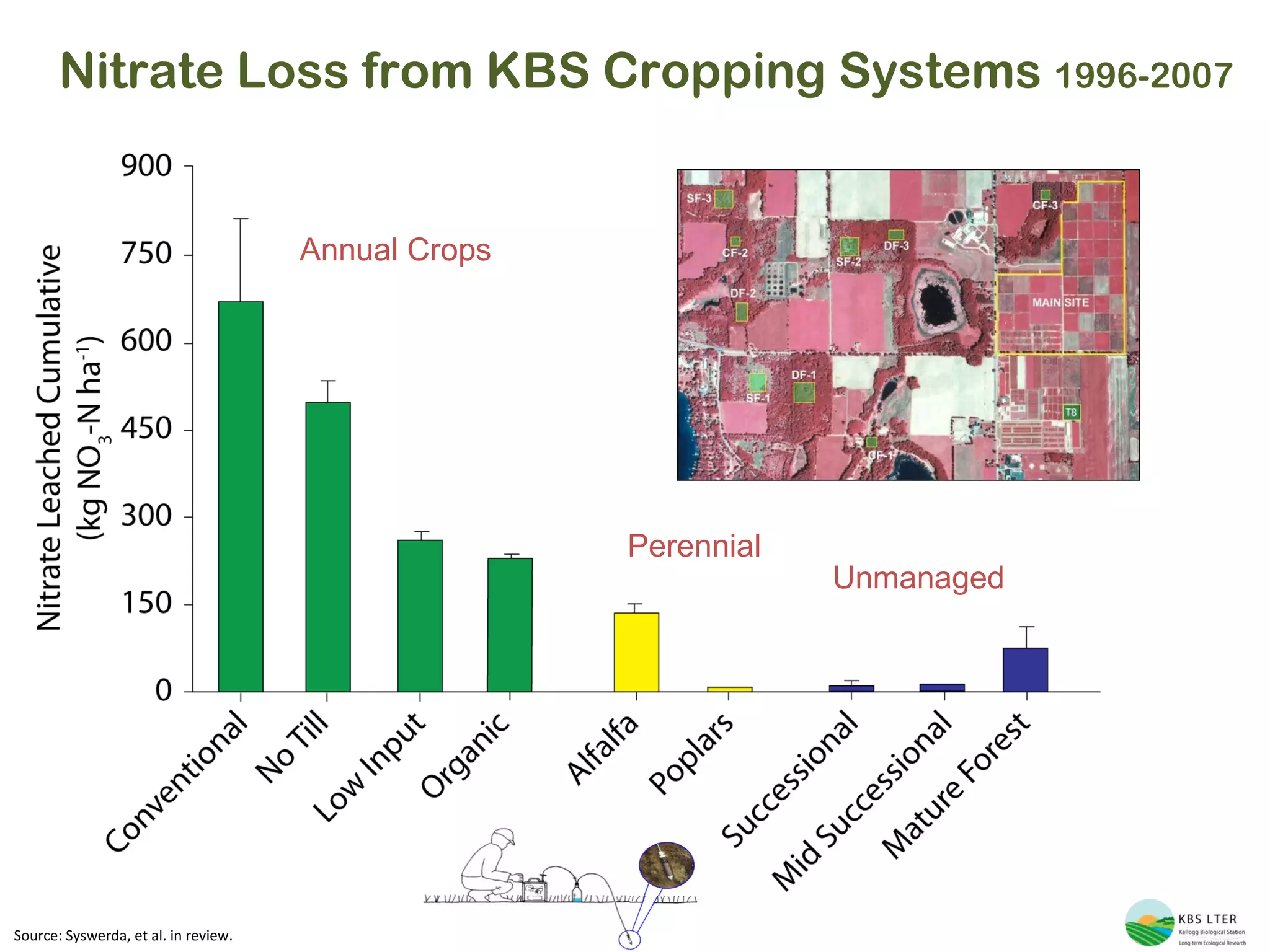
Source: Syswerda, et al. in review. Nitrate Loss from KBS Cropping Systems  1996-2007 Annual Crops Perennial Unmanaged
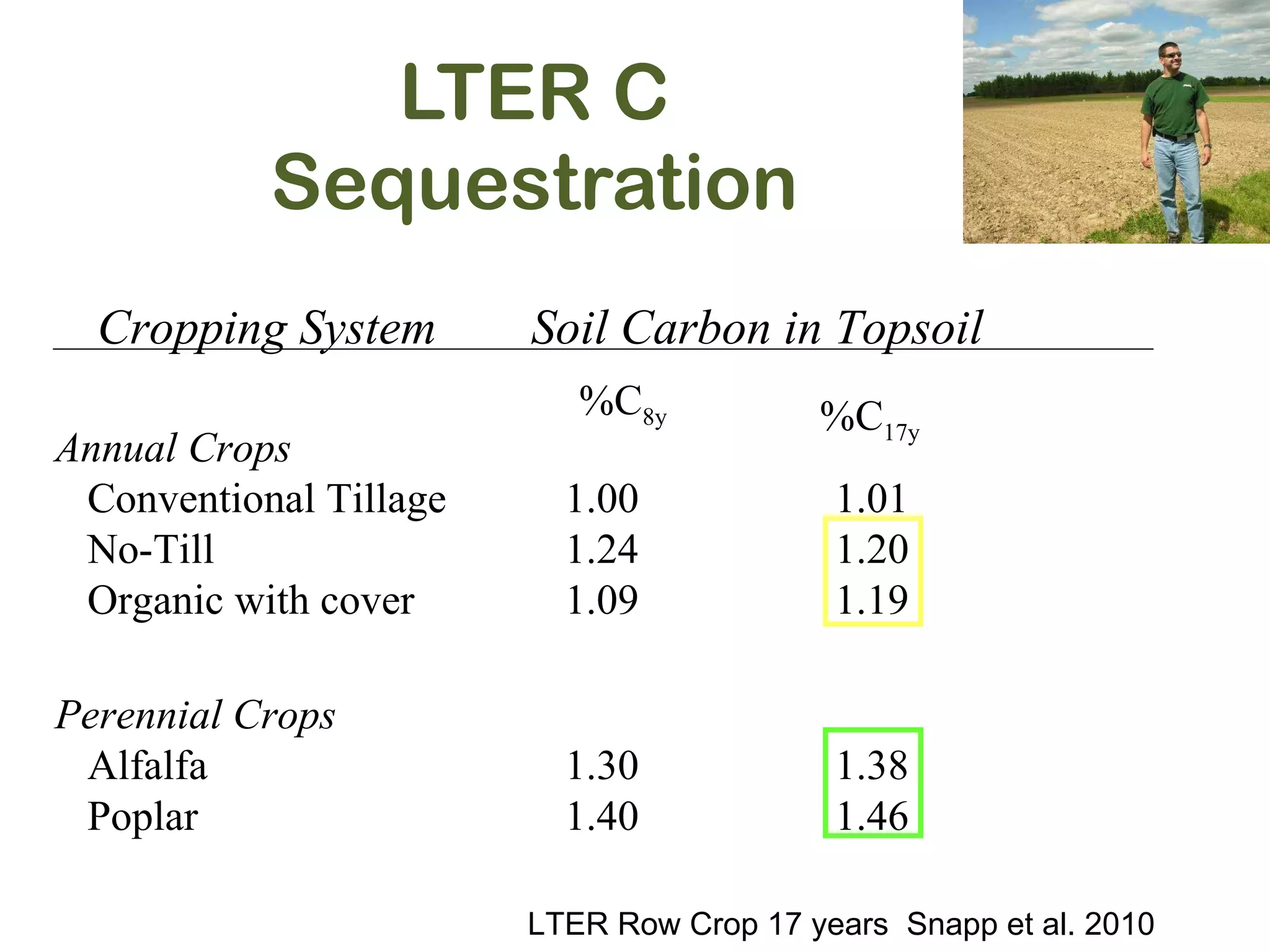
LTER C Sequestration Annual Crops Conventional Tillage 1.00  1.01 No-Till 1.24  1.20  Organic with cover  1.09  1.19  Cropping System Soil Carbon in Topsoil %C 8y Perennial Crops Alfalfa 1.30  1.38  Poplar 1.40  1.46  %C 17y LTER Row Crop 17 years  Snapp et al. 2010
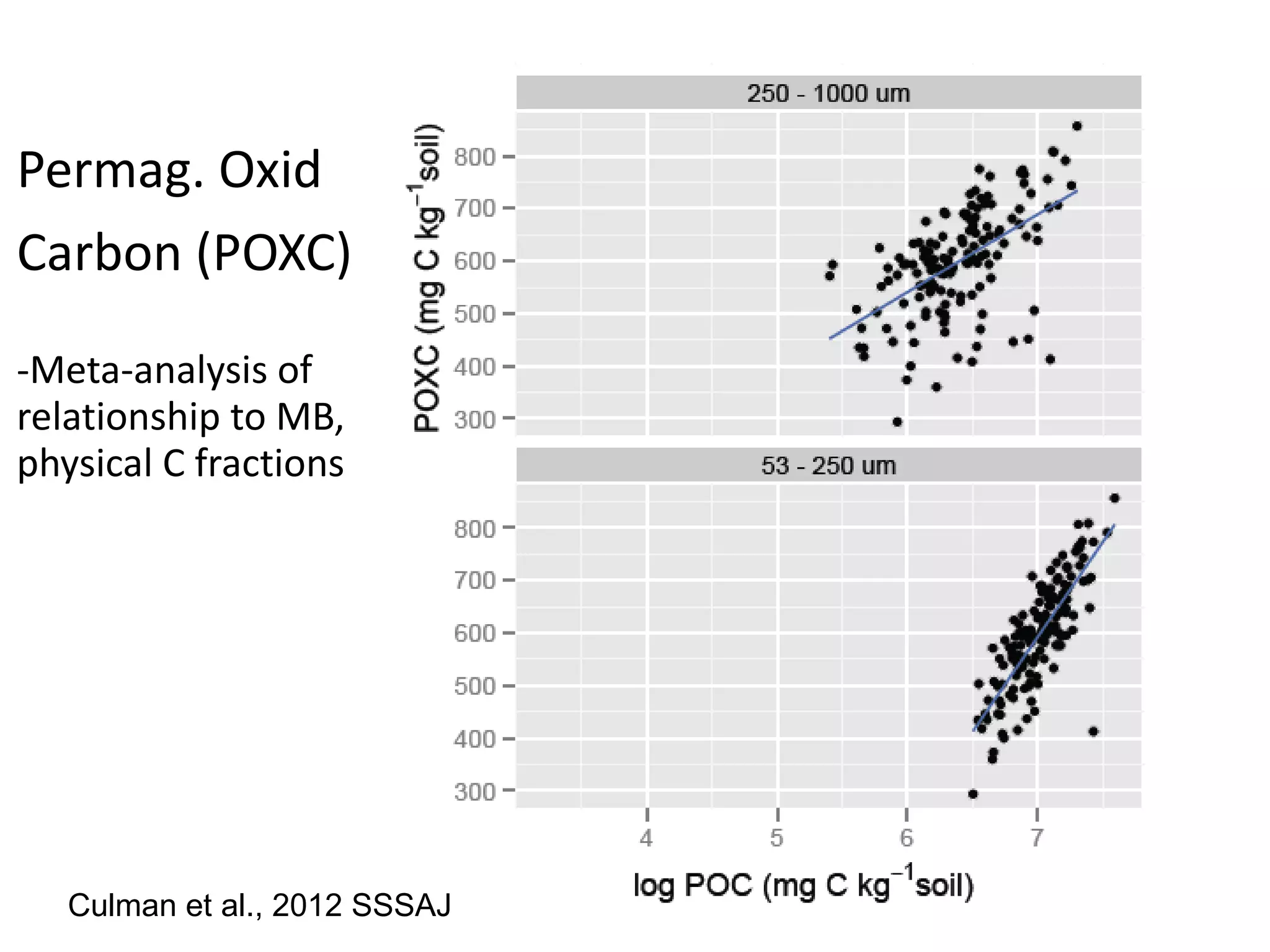
Permag. Oxid Carbon (POXC) Meta-analysis of relationship to MB, physical C fractions Culman et al., 2012 SSSAJ
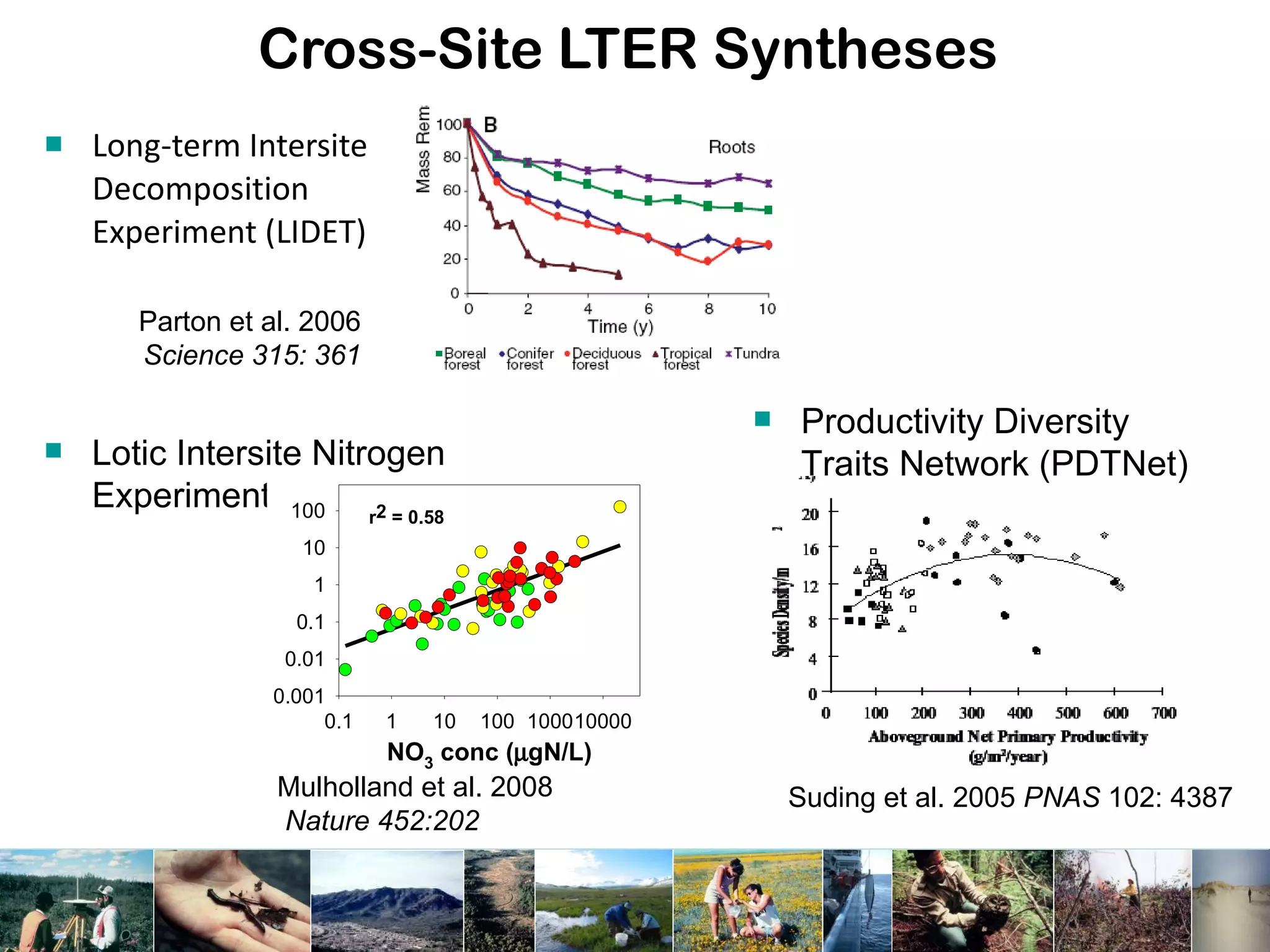
Cross-Site LTER Syntheses  Long-term Intersite Decomposition Experiment (LIDET) Parton et al. 2006  Science 315: 361 Lotic Intersite Nitrogen Experiment (LINX) Mulholland et al. 2008   Nature 452:202 Suding et al. 2005  PNAS  102: 4387 Productivity Diversity Traits Network (PDTNet)
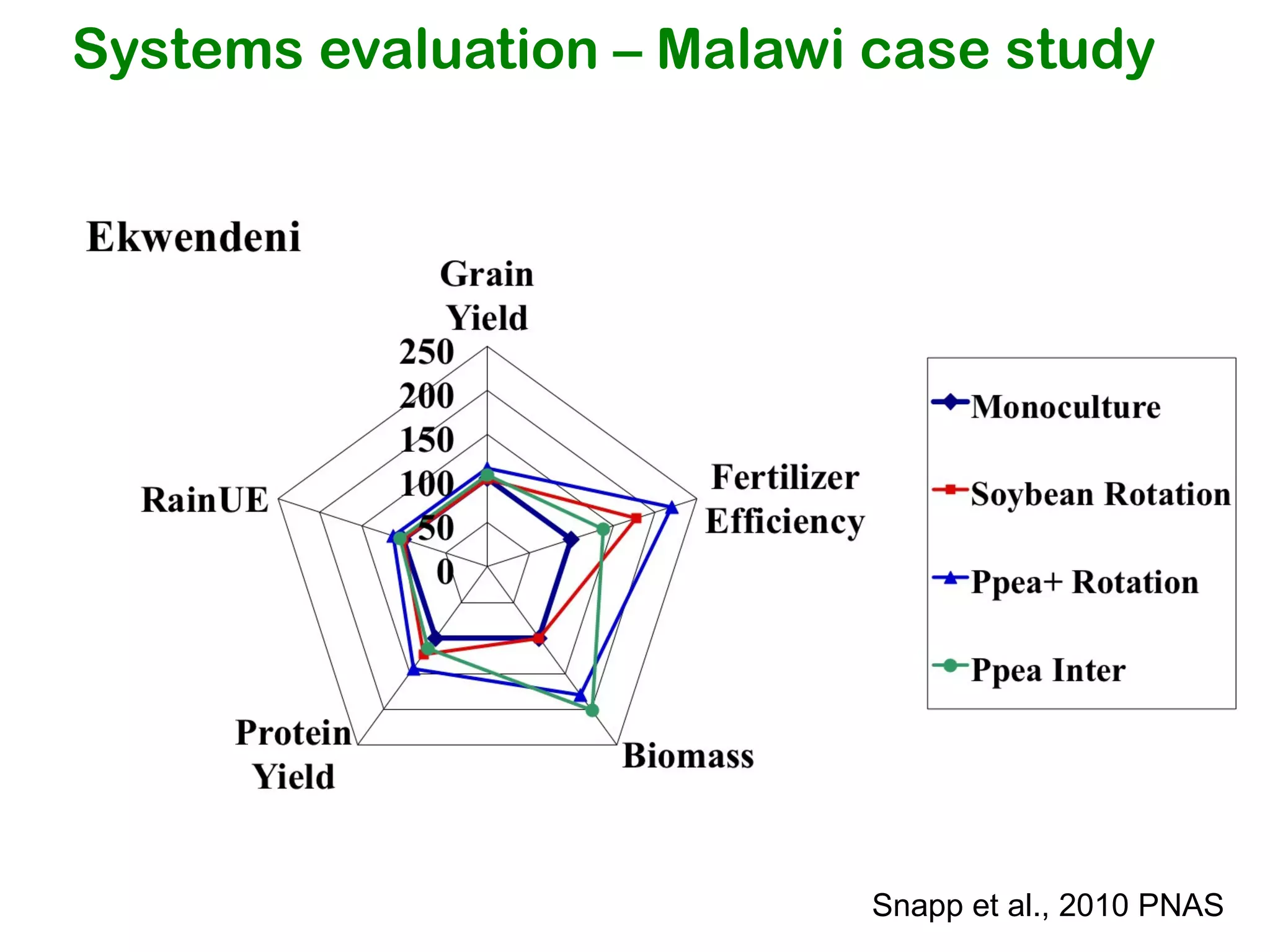
Systems evaluation – Malawi case study Snapp et al., 2010 PNAS
Maize vs Maize-Glir Intercrop N fert. Southern Malawi ICRAF Beedy et al., 2009 AEE
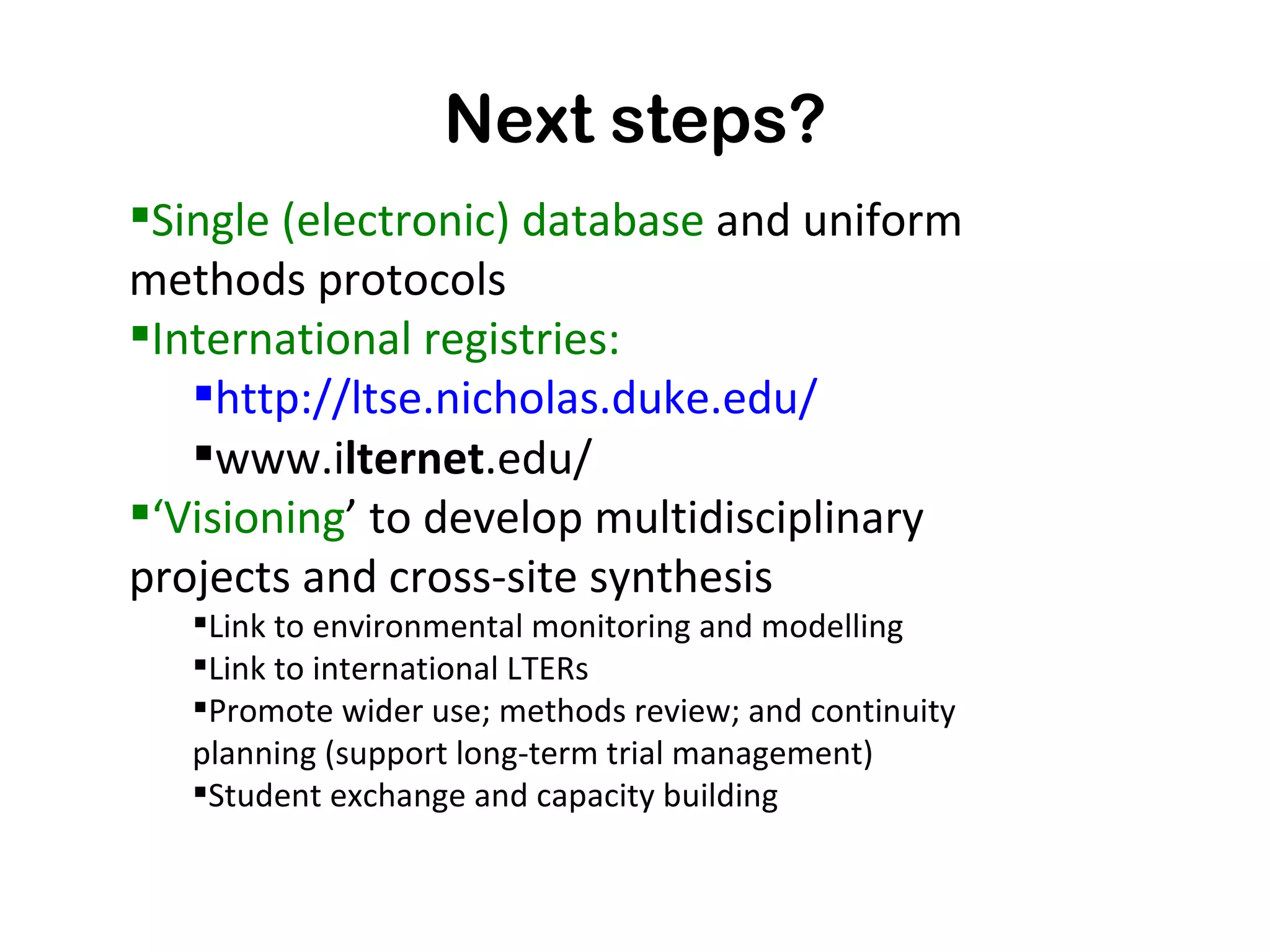
Next steps? Single (electronic) database  and uniform methods protocols International registries: http://ltse.nicholas.duke.edu/ www.i lternet .edu/  ‘ Visioning ’  to develop multidisciplinary projects  and cross-site synthesis Link to environmental monitoring and modelling Link to international LTERs Promote wider use; methods review; and continuity planning (support long-term trial management) Student exchange and capacity building
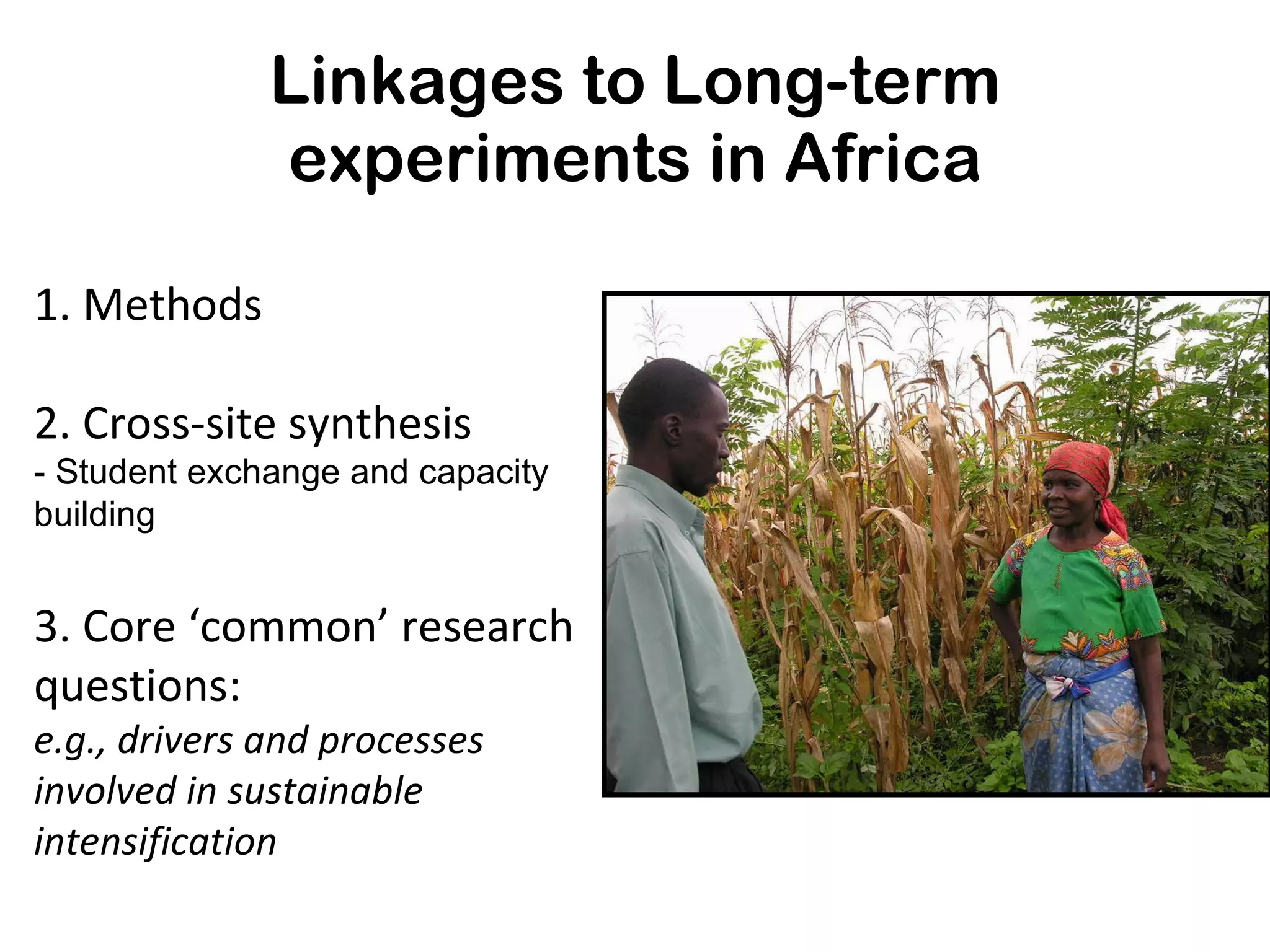
Linkages to Long-term experiments in Africa 1. Methods  2. Cross-site synthesis -  Student exchange and capacity building 3. Core ‘common’ research questions: e.g., drivers and processes involved in sustainable intensification

Africalterover snapp

  • 1.
    LTER experiences andrelationship to long-term trials in Africa Professor Sieg Snapp Dept Crop and Soil Sciences KBS, Michigan State University The mission of the LTER Network: Knowledge and predictive understanding necessary to conserve, protect, and manage the nation's ecosystems, their biodiversity, and the services they provide.
  • 2.
    LTER sites sharea common commitment to long-term research in core areas: Pattern and control of primary production Spatial and temporal distribution of populations Pattern and control of organic matter accumulation Patterns and movements of inorganic inputs through soils ground- and surface waters Patterns and frequency of disturbance
  • 3.
    Kellogg Biological StationKBS LTER Site @ MSU Central Question To what extent can we manage field crops with biology rather than chemistry? – without sacrificing high yields…
  • 4.
    KBS Long-Term EcologicalResearch (LTER) Site Annual Crops (Corn - Soybean - Wheat) Conventional tillage High No-till Low-input with legume cover Organic with legume cover Perennial Crops Alfalfa Poplar trees Successional Communities Early successional old field Mid successional old field Late successional forest Low Ecosystem Type Management Intensity
  • 5.
    KBS LTER SiteLayout Cropping Systems in RCBD (n=6 blocks with 7 1-ha plots) Successional Systems in landscape, same soil series, n=3 Block 5
  • 6.
    Main Cropping SystemExperiment KBS-LTER
  • 7.
    Cropping Systems TreatmentsT1 Conv. & T2 No-till: C-S-W T3 Low input & T4 Organic C r -S-W rc r=rye winter cover rc=red clover cover
  • 8.
    Major Research Areasat the KBS LTER Site Microbe-soil-plant interactions that control soil nutrient availability Insect predator-prey relationships that control pest populations Competition among weeds and crops for limiting resources Drivers of soil carbon status and greenhouse gas mitigation Agronomic yield and valuation of other ecosystem services provided by agriculture
  • 9.
    Methodology Management: LTERexecutive committee (Robertson chair + 6 co-PI scientists) Agronomic committee (Snapp chair + scientists, extension and farmers) manage cropping systems by protocols updated each season Measurements: - Developed LTER-cross site synthesis on measurements in the late 1980s LTER book publication (Robertson et al., 1998) LTER-KBS website under review process, 2011 - Document consistent approaches to monitor soil and plant primary productivity (aboveground), soil nutrient cycling (nitrogen), moisture dynamics, soil C, GWP New management approach 2011: Manage by objective, prevailing farming norms for T1 conventional and no-till, and biology to replace chemical inputs for T3 & T4.
  • 10.
    Drains on BroadbalkLearning from The Broadbalk Experiment
  • 11.
    Unmanured, continuous wheatContinuous wheat: FYM PK+144 kg N 1st wheat in rotation: FYM+96 kg N Best NPK Red Rostock Broadbalk management and wheat yield: Updates based on prevailing norms Red Club Squ. Master Red Standard Squ. Master Cappelle Desp. Flanders Brimstone Apollo Hereward Introduction of: liming fungicides fallowing herbicides
  • 12.
  • 13.
    LTER Energy Balance(GJ ha -1 y -1 ) LTER Row Crop 17 years Gelfand et al. EST 2010 System Energy Required Energy Yield Ratio Conven-tional 7.1 72.7 10 No-Till 4.9 78.5 16 Low Input 5.1 66.9 13 Organic 4.8 53.1 11
  • 14.
    Source: Syswerda, etal. in review. Nitrate Loss from KBS Cropping Systems 1996-2007 Annual Crops Perennial Unmanaged
  • 15.
    LTER C SequestrationAnnual Crops Conventional Tillage 1.00 1.01 No-Till 1.24 1.20 Organic with cover 1.09 1.19 Cropping System Soil Carbon in Topsoil %C 8y Perennial Crops Alfalfa 1.30 1.38 Poplar 1.40 1.46 %C 17y LTER Row Crop 17 years Snapp et al. 2010
  • 16.
    Permag. Oxid Carbon(POXC) Meta-analysis of relationship to MB, physical C fractions Culman et al., 2012 SSSAJ
  • 17.
    Cross-Site LTER Syntheses Long-term Intersite Decomposition Experiment (LIDET) Parton et al. 2006 Science 315: 361 Lotic Intersite Nitrogen Experiment (LINX) Mulholland et al. 2008 Nature 452:202 Suding et al. 2005 PNAS 102: 4387 Productivity Diversity Traits Network (PDTNet)
  • 18.
    Systems evaluation –Malawi case study Snapp et al., 2010 PNAS
  • 19.
    Maize vs Maize-GlirIntercrop N fert. Southern Malawi ICRAF Beedy et al., 2009 AEE
  • 20.
    Next steps? Single(electronic) database and uniform methods protocols International registries: http://ltse.nicholas.duke.edu/ www.i lternet .edu/  ‘ Visioning ’ to develop multidisciplinary projects and cross-site synthesis Link to environmental monitoring and modelling Link to international LTERs Promote wider use; methods review; and continuity planning (support long-term trial management) Student exchange and capacity building
  • 21.
    Linkages to Long-termexperiments in Africa 1. Methods 2. Cross-site synthesis - Student exchange and capacity building 3. Core ‘common’ research questions: e.g., drivers and processes involved in sustainable intensification