



Rhizosphere by design: breeding to
select root traits that physically
manipulate soil
Project PIs
Paul Hallett, Aberdeen
Tiina Roose and Ian Sinclair, Southampton
Glyn Bengough, Dundee
Tim George, James Hutton Institute (sub-
contract)
Team Members
Muhammad Naveed and Annette Raffan,
Aberdeen
Laura Cooper, Nico Koebernick, Keith Daley and
Sam Keyes, Southampton
Technician TBD, Dundee
Lawrie Brown, James Hutton Institute
Plant Science Soil Science
Scientists have only interpreted the world in various
ways, but the real task is to alter it.
J.R Philip’s re-phrasing of a famous quote from Karl Marx
Philip, J.R. 1991. Soil Science, 151, 91-98.
Rhizosphere by design: Aims
This project will develop our understanding of the basic processes that
drive rhizosphere formation and function.
We aim to develop novel numerical models that identify and describe
how root trait ideotypes manipulate the physical properties of the soil,
and the implications for improving resource capture in the field.
Root traits including exudation, production of root hair zones and ageing
of roots will be explored to interpret processes from the root-soil
interface to the field.
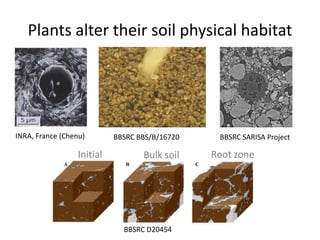
Plants alter their soil physical habitat
INRA, France (Chenu) BBSRC SARISA ProjectBBSRC BBS/B/16720
BBSRC D20454
Initial Bulk soil Root zone
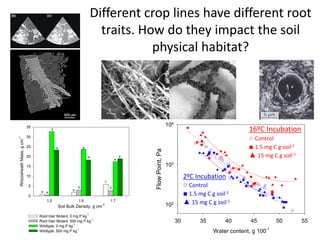
Different crop lines have different root
traits. How do they impact the soil
physical habitat?
Soil Bulk Density, g cm
-3
1.2 1.6 1.7
RhizosheathMass,gcm
-1
0
5
10
15
20
25
30
35
Root Hair Mutant, 0 mg P kg
-1
Root Hair Mutant, 500 mg P kg-1
Wildtype, 0 mg P kg
-1
Wildtype, 500 mg P kg
-1
a b
c
d
e
a
b b
e
e
e e
Water content, g 100-1
30 35 40 45 50 55
FlowPoint,Pa
102
103
104
2ºC Incubation
○ Control
■ 1.5 mg C g soil-1
▲ 15 mg C g soil-1
16ºC Incubation
○ Control
■ 1.5 mg C g soil-1
▲ 15 mg C g soil-1
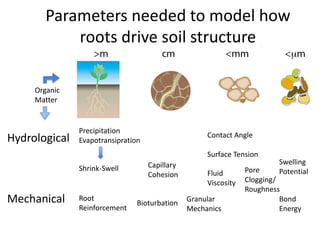
Parameters needed to model how
roots drive soil structure
Hydrological
Mechanical
Precipitation
Evapotransipration
Shrink-Swell Capillary
Cohesion
Root
Reinforcement
Fluid
Viscosity
Surface Tension
Contact Angle
Bond
Energy
Swelling
Potential
Granular
Mechanics
Organic
Matter
Pore
Clogging/
Roughness
Bioturbation
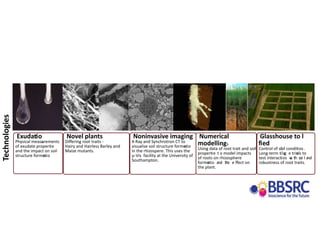
Novel plants
Differing root traits -
Hairy and Hairless Barley and
Maize mutants.
Exudation
Physical measurements
of exudate propertie
s
and the impact on soil
structure formation
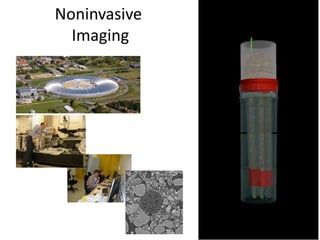
Noninvasive imaging
X-Ray and Synchrotron CT to
visualise soil structure formation
in the rhizospere. This uses the
-Vis facility at the University of
Southampton.
Numerical
modelling
Using data of root trait and soil
propertie
s
t o model impacts
of roots on rhizosphere
formation and the e ffect on
the plant.
Glasshouse to
fie
l
d
Control of soil condition s.
Long-term til
l
ag e trials to
test interactio
n
s wi th soi l and
robustness of root traits.
Technologies
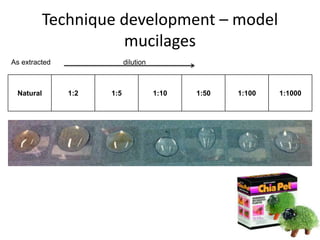
Technique development – model
mucilages
9
Natural 1:2 1:5 1:10 1:50 1:100 1:1000
As extracted dilution
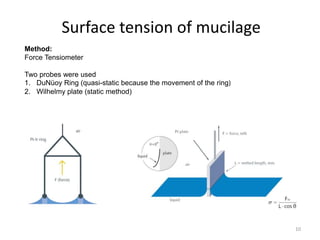
Surface tension of mucilage
Method:
Force Tensiometer
Two probes were used
1. DuNüoy Ring (quasi-static because the movement of the ring)
2. Wilhelmy plate (static method)
10
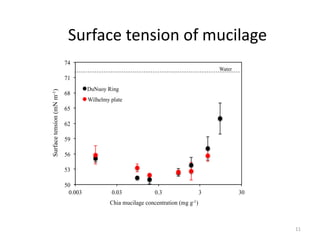
Surface tension of mucilage
Water
11
50
53
56
59
62
65
68
71
74
0.003 0.03 0.3 3 30
Surfacetension(mNm-1)
Chia mucilage concentration (mg g-1)
DuNuoy Ring
Wilhelmy plate
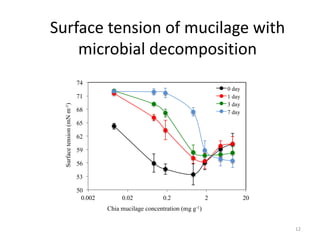
12
50
53
56
59
62
65
68
71
74
0.002 0.02 0.2 2 20
Surfacetension(mNm-1)
Chia mucilage concentration (mg g-1)
0 day
1 day
3 day
7 day
Surface tension of mucilage with
microbial decomposition
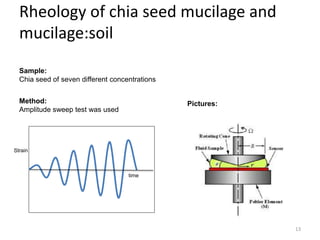
Rheology of chia seed mucilage and
mucilage:soil
Sample:
Chia seed of seven different concentrations
Method:
Amplitude sweep test was used
Strain
time
Pictures:
13
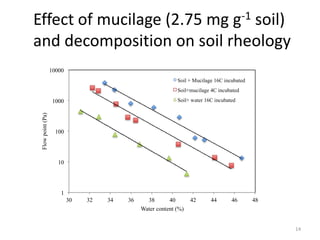
Effect of mucilage (2.75 mg g-1 soil)
and decomposition on soil rheology
14
1
10
100
1000
10000
30 32 34 36 38 40 42 44 46 48
Flowpoint(Pa)
Water content (%)
Soil + Mucilage 16C incubated
Soil+mucilage 4C incubated
Soil+ water 16C incubated
Noninvasive
Imaging
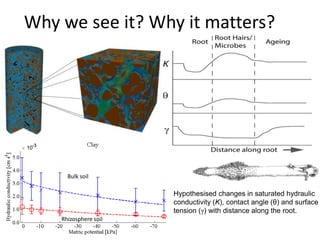
Hypothesised changes in saturated hydraulic
conductivity (K), contact angle (θ) and surface
tension (γ) with distance along the root.
Why we see it? Why it matters?
Rhizosphere soil
Bulk soil
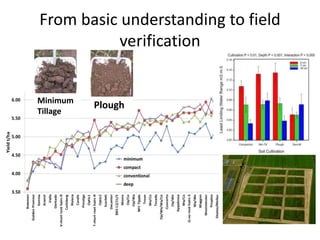
From basic understanding to field
verification
Minimum
Tillage
Plough
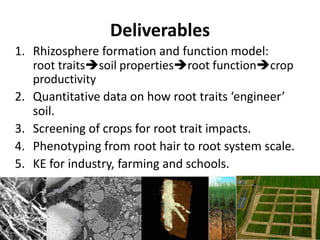
Deliverables
1. Rhizosphere formation and function model:
root traitssoil propertiesroot functioncrop
productivity
2. Quantitative data on how root traits ‘engineer’
soil.
3. Screening of crops for root trait impacts.
4. Phenotyping from root hair to root system scale.
5. KE for industry, farming and schools.
Pathways to Impact
Pathways to Impact
Pathways to Impact - Coming Up
Education resources
and outreach
Stakeholder engagement
ISMC –
Austin, TX
Our project team
Paul Hallett, Lead, Soil Biophysics
Muhammad Naveed, PDRA Experimental
Annette Raffan, Technical Support
Glyn Bengough, PI and Root Biophysics
Technical Support
Tim George, Root Biology
Lawrie Brown, Root Biology
Tiina Roose, PI and Modelling Lead
Laura Cooper & Keith Daly, Modelling
Ian Sinclair, Imaging
Nico Koebernick, Ian Sinclair (CoI) &
Sam Keyes, Imaging

Rhizosphere by Design

  • 1.
    Rhizosphere by design:breeding to select root traits that physically manipulate soil Project PIs Paul Hallett, Aberdeen Tiina Roose and Ian Sinclair, Southampton Glyn Bengough, Dundee Tim George, James Hutton Institute (sub- contract) Team Members Muhammad Naveed and Annette Raffan, Aberdeen Laura Cooper, Nico Koebernick, Keith Daley and Sam Keyes, Southampton Technician TBD, Dundee Lawrie Brown, James Hutton Institute
  • 2.
    Plant Science SoilScience Scientists have only interpreted the world in various ways, but the real task is to alter it. J.R Philip’s re-phrasing of a famous quote from Karl Marx Philip, J.R. 1991. Soil Science, 151, 91-98.
  • 3.
    Rhizosphere by design:Aims This project will develop our understanding of the basic processes that drive rhizosphere formation and function. We aim to develop novel numerical models that identify and describe how root trait ideotypes manipulate the physical properties of the soil, and the implications for improving resource capture in the field. Root traits including exudation, production of root hair zones and ageing of roots will be explored to interpret processes from the root-soil interface to the field.
  • 4.
    Plants alter theirsoil physical habitat INRA, France (Chenu) BBSRC SARISA ProjectBBSRC BBS/B/16720 BBSRC D20454 Initial Bulk soil Root zone
  • 5.
    Different crop lineshave different root traits. How do they impact the soil physical habitat? Soil Bulk Density, g cm -3 1.2 1.6 1.7 RhizosheathMass,gcm -1 0 5 10 15 20 25 30 35 Root Hair Mutant, 0 mg P kg -1 Root Hair Mutant, 500 mg P kg-1 Wildtype, 0 mg P kg -1 Wildtype, 500 mg P kg -1 a b c d e a b b e e e e Water content, g 100-1 30 35 40 45 50 55 FlowPoint,Pa 102 103 104 2ºC Incubation ○ Control ■ 1.5 mg C g soil-1 ▲ 15 mg C g soil-1 16ºC Incubation ○ Control ■ 1.5 mg C g soil-1 ▲ 15 mg C g soil-1
  • 6.
    Parameters needed tomodel how roots drive soil structure Hydrological Mechanical Precipitation Evapotransipration Shrink-Swell Capillary Cohesion Root Reinforcement Fluid Viscosity Surface Tension Contact Angle Bond Energy Swelling Potential Granular Mechanics Organic Matter Pore Clogging/ Roughness Bioturbation
  • 7.
    Novel plants Differing roottraits - Hairy and Hairless Barley and Maize mutants. Exudation Physical measurements of exudate propertie s and the impact on soil structure formation Noninvasive imaging X-Ray and Synchrotron CT to visualise soil structure formation in the rhizospere. This uses the -Vis facility at the University of Southampton. Numerical modelling Using data of root trait and soil propertie s t o model impacts of roots on rhizosphere formation and the e ffect on the plant. Glasshouse to fie l d Control of soil condition s. Long-term til l ag e trials to test interactio n s wi th soi l and robustness of root traits. Technologies
  • 8.
    Technique development –model mucilages 9 Natural 1:2 1:5 1:10 1:50 1:100 1:1000 As extracted dilution
  • 9.
    Surface tension ofmucilage Method: Force Tensiometer Two probes were used 1. DuNüoy Ring (quasi-static because the movement of the ring) 2. Wilhelmy plate (static method) 10
  • 10.
    Surface tension ofmucilage Water 11 50 53 56 59 62 65 68 71 74 0.003 0.03 0.3 3 30 Surfacetension(mNm-1) Chia mucilage concentration (mg g-1) DuNuoy Ring Wilhelmy plate
  • 11.
    12 50 53 56 59 62 65 68 71 74 0.002 0.02 0.22 20 Surfacetension(mNm-1) Chia mucilage concentration (mg g-1) 0 day 1 day 3 day 7 day Surface tension of mucilage with microbial decomposition
  • 12.
    Rheology of chiaseed mucilage and mucilage:soil Sample: Chia seed of seven different concentrations Method: Amplitude sweep test was used Strain time Pictures: 13
  • 13.
    Effect of mucilage(2.75 mg g-1 soil) and decomposition on soil rheology 14 1 10 100 1000 10000 30 32 34 36 38 40 42 44 46 48 Flowpoint(Pa) Water content (%) Soil + Mucilage 16C incubated Soil+mucilage 4C incubated Soil+ water 16C incubated
  • 14.
  • 15.
    Hypothesised changes insaturated hydraulic conductivity (K), contact angle (θ) and surface tension (γ) with distance along the root. Why we see it? Why it matters? Rhizosphere soil Bulk soil
  • 16.
    From basic understandingto field verification Minimum Tillage Plough
  • 17.
    Deliverables 1. Rhizosphere formationand function model: root traitssoil propertiesroot functioncrop productivity 2. Quantitative data on how root traits ‘engineer’ soil. 3. Screening of crops for root trait impacts. 4. Phenotyping from root hair to root system scale. 5. KE for industry, farming and schools.
  • 18.
  • 19.
  • 20.
    Pathways to Impact- Coming Up Education resources and outreach Stakeholder engagement ISMC – Austin, TX
  • 21.
    Our project team PaulHallett, Lead, Soil Biophysics Muhammad Naveed, PDRA Experimental Annette Raffan, Technical Support Glyn Bengough, PI and Root Biophysics Technical Support Tim George, Root Biology Lawrie Brown, Root Biology Tiina Roose, PI and Modelling Lead Laura Cooper & Keith Daly, Modelling Ian Sinclair, Imaging Nico Koebernick, Ian Sinclair (CoI) & Sam Keyes, Imaging