Affinity Chromatography
Concept
Design
DIY
Application
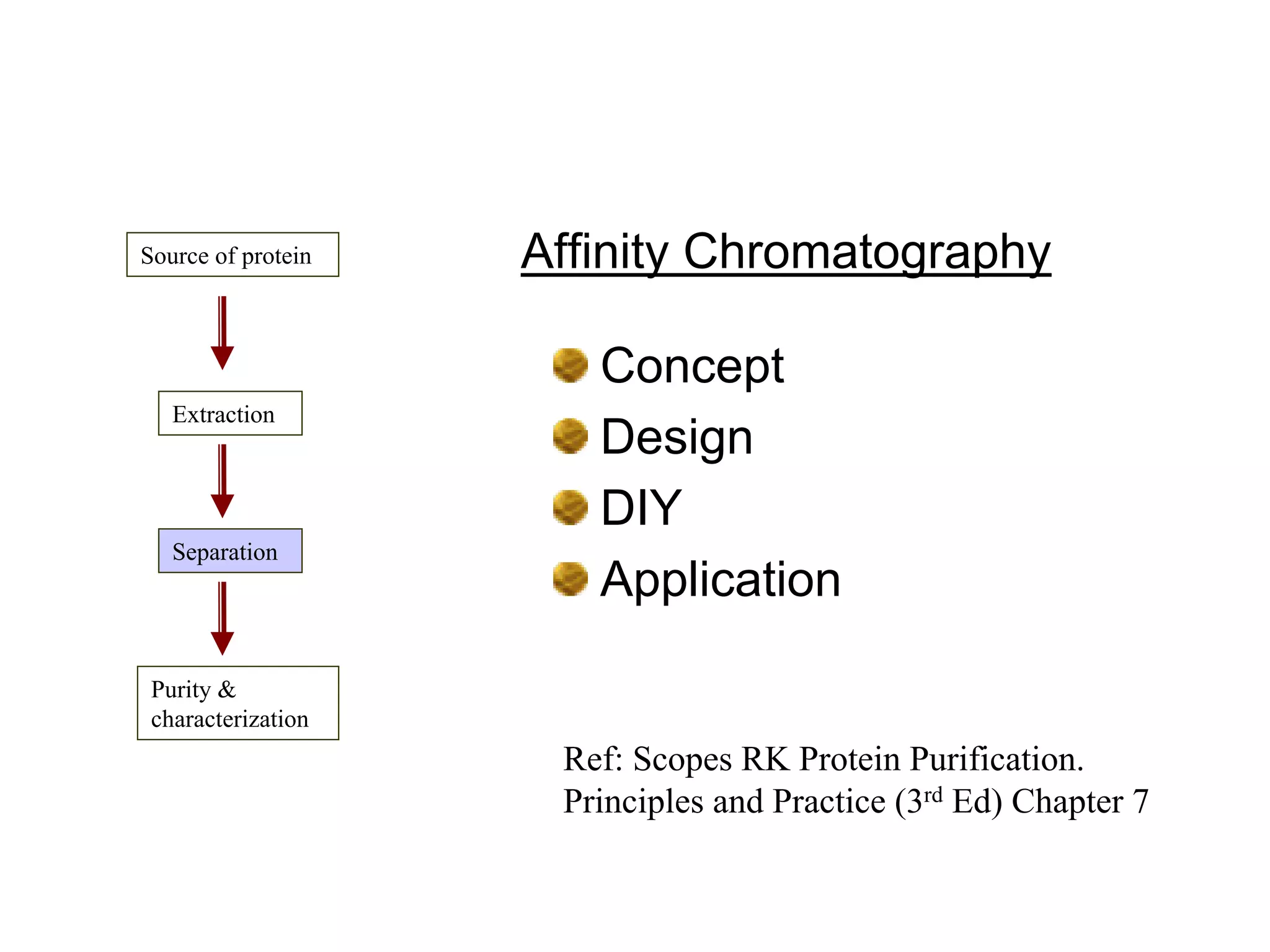
Source of protein
Extraction
Separation
Purity &
characterization
Ref: Scopes RK Protein Purification.
Principles and Practice (3rd Ed) Chapter 7
Affinity Chromatography
Concept
Adsorption chromatography
Adsorption is highly specific
to binding substance (ligand)
Process is reversible
Binding substance is
immobilised to an insoluble
support (matrix)
Source of protein
Extraction
Separation
Purity &
characterization
sample
ligand
reversible
Specific
binding
Type of binding specificity
Design
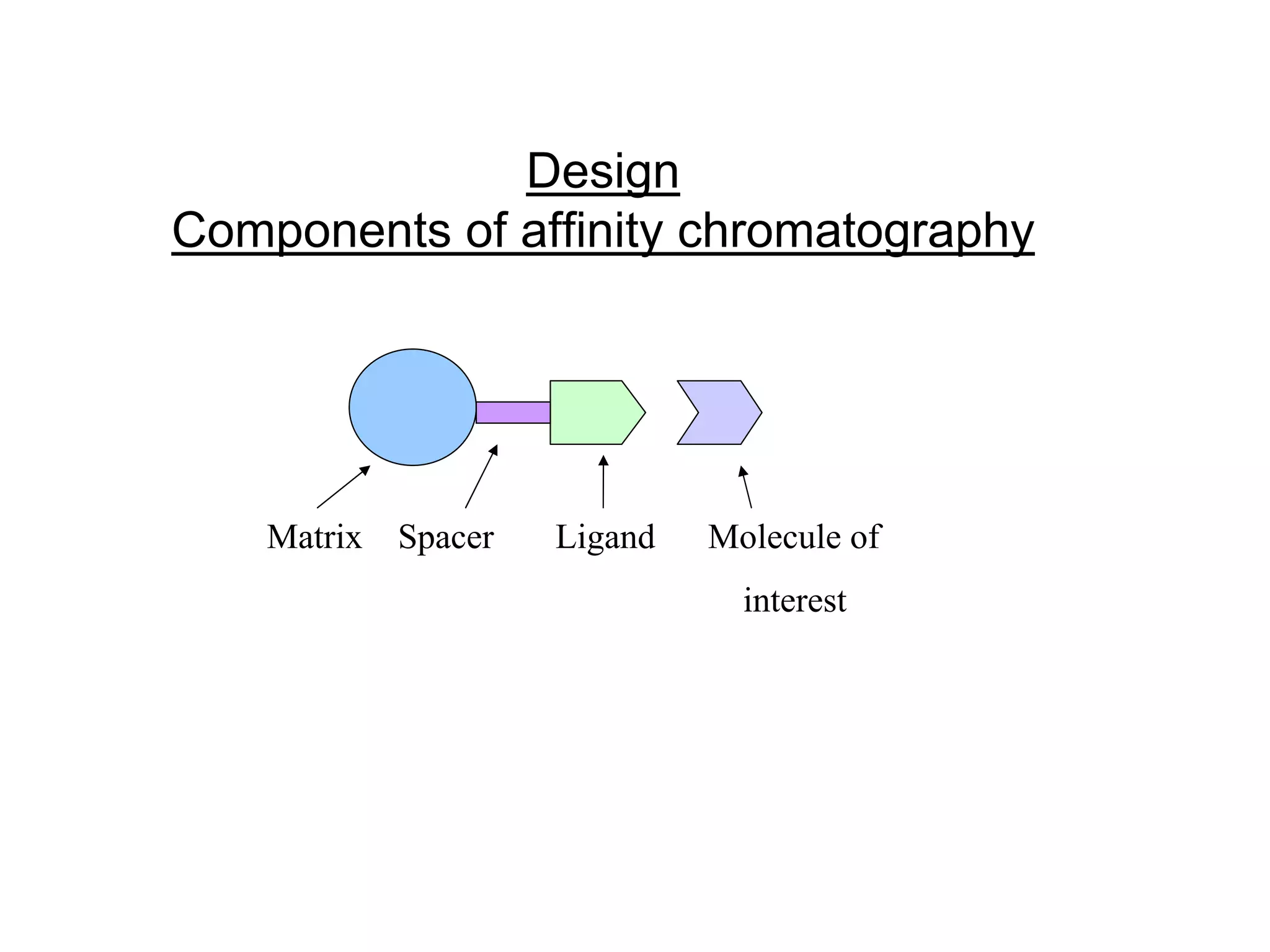
Components of affinity chromatography
Matrix Spacer Ligand Molecule of
interest
Commercially available affinity absorbents
Properties of matrix
Quality: Important if you are developing your own
affinity absorbents
insoluble
with suitable chemical group for ligand attachment
must be stable during binding of sample
be chemically inert towards sample
have uniform structure for good flow rate
Types available
cellulose
agarose, cross-linked agarose
polyacrylamide
porous glass/ceramics
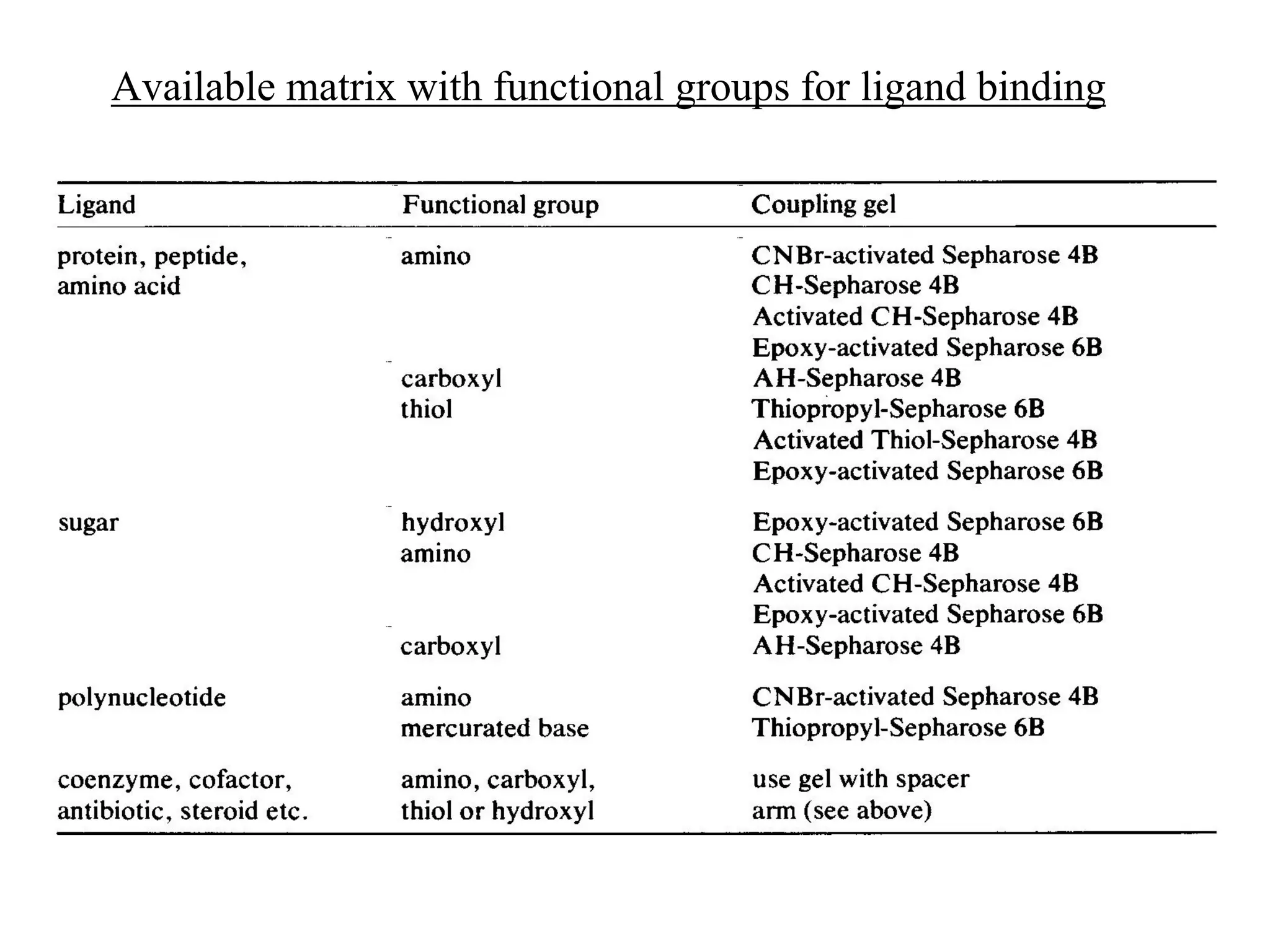
Available matrix with functional groups for ligand binding
Is spacer needed? Yes and No, depending on
situation
Sephacryl S200
chromatography
Con A affinity
chromatography
Elute with methyl α-
D mannoside
DIY
Affinity gel for isolating Rubisco
Agarose CNBr antibody Rubisco
CNBr activation is widely used for attachment of
proteins through ε-lysine group. Cyanogen bromide
activated agarose is available commercially.
Rubisco affinity gel
What you need to do
Raise antibodies
Isolation and
purification
Binding of antibodies
to matrix
Develop a protocol for
binding and elution
Considerations
Antibodies
Amount of antibodies
Choice of animal systems
Protocol to raise antibodies
If hapten is required
Preparing the gel
Which reagent to use for
binding of ligand to matrix
Is spacer arm needed?
Stages in antibody production
Antigen +
adjuvent
emulsifer
Animal
system
eg rabbit
~ 10 days, IgM
Repeat
injection of
same antigen
~ 3 days, gM and
IgG
Intial dosage
Measure titre
Purify IgG
Isolation of Rubisco by affinity chromatography
Source: Yeoh HH, Stone NE and Watson L (1981) Biochem Syst Ecol 9, 307-312
Summary
Affinity Chromatography
Understand the principle behind affinity
chromatography
Appreciate the concept
Know the components of affinity gel
Know how to design own affinity gel
Able to interpret published information on affinity
gel
Crude enzyme extract
Salt precipitation
Gel filtration Ion exchange
Dialysis step
Chromatofocusing
Hydrophobic
Interaction
Chromatography
Affinity
Chromatography

affinity chromatography.pdf

  • 1.
    Affinity Chromatography Concept Design DIY Application Source ofprotein Extraction Separation Purity & characterization Ref: Scopes RK Protein Purification. Principles and Practice (3rd Ed) Chapter 7
  • 2.
    Affinity Chromatography Concept Adsorption chromatography Adsorptionis highly specific to binding substance (ligand) Process is reversible Binding substance is immobilised to an insoluble support (matrix) Source of protein Extraction Separation Purity & characterization
  • 3.
  • 4.
    Type of bindingspecificity
  • 5.
    Design Components of affinitychromatography Matrix Spacer Ligand Molecule of interest
  • 6.
  • 7.
    Properties of matrix Quality:Important if you are developing your own affinity absorbents insoluble with suitable chemical group for ligand attachment must be stable during binding of sample be chemically inert towards sample have uniform structure for good flow rate Types available cellulose agarose, cross-linked agarose polyacrylamide porous glass/ceramics
  • 8.
    Available matrix withfunctional groups for ligand binding
  • 10.
    Is spacer needed?Yes and No, depending on situation
  • 11.
    Sephacryl S200 chromatography Con Aaffinity chromatography Elute with methyl α- D mannoside
  • 13.
    DIY Affinity gel forisolating Rubisco Agarose CNBr antibody Rubisco CNBr activation is widely used for attachment of proteins through ε-lysine group. Cyanogen bromide activated agarose is available commercially.
  • 14.
    Rubisco affinity gel Whatyou need to do Raise antibodies Isolation and purification Binding of antibodies to matrix Develop a protocol for binding and elution Considerations Antibodies Amount of antibodies Choice of animal systems Protocol to raise antibodies If hapten is required Preparing the gel Which reagent to use for binding of ligand to matrix Is spacer arm needed?
  • 15.
    Stages in antibodyproduction Antigen + adjuvent emulsifer Animal system eg rabbit ~ 10 days, IgM Repeat injection of same antigen ~ 3 days, gM and IgG Intial dosage Measure titre Purify IgG
  • 16.
    Isolation of Rubiscoby affinity chromatography Source: Yeoh HH, Stone NE and Watson L (1981) Biochem Syst Ecol 9, 307-312
  • 17.
    Summary Affinity Chromatography Understand theprinciple behind affinity chromatography Appreciate the concept Know the components of affinity gel Know how to design own affinity gel Able to interpret published information on affinity gel
  • 18.
    Crude enzyme extract Saltprecipitation Gel filtration Ion exchange Dialysis step Chromatofocusing Hydrophobic Interaction Chromatography Affinity Chromatography