MOTIVATING LEARNERS: MAKING
  LANGUAGE LEARNING MORE
   AFFECTIVE AND EFFECTIVE
          ECIS, Lisbon

         November2011


         Jane Arnold
         arnold@us.es
Affect refers to a wide range of
 phenomena that have to do with
 emotions, moods, dispositions
 and preferences.

           (Oatley and Jenkins)
The attitudinal climate of the classroom is a major
    factor in promoting or inhibiting learning.

In classes where the affective, attitudinal aspects
  are taken into consideration, students:
  miss fewer days of class
  have a higher self-concept
  achieve more academically
  cause fewer discipline problems
  use more higher order thinking
             (Aspy and Roebuck)
The mind without affect
 isn’t really mind at all.


                 (Joseph LeDoux)
The dinosaurs of the future will be
 those who try to live and work only
 from the head.
              Dr. Robert K. Cooper
TEACHING:


The art of changing the brain.

                       (Zull)
Success in learning depends less on
  materials and tecniques and more on
  what goes on inside and between the
 people in the classroom. (Earl Stevick)


Success in learning depends less on
things –and more on people – and the
affective side of learning
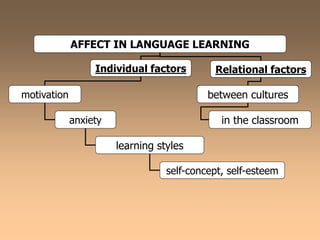
AFFECT IN LANGUAGE LEARNING

                  Individual factors        Relational factors

motivation                                 between cultures

             anxiety                          in the classroom

                       learning styles

                                  self-concept, self-esteem
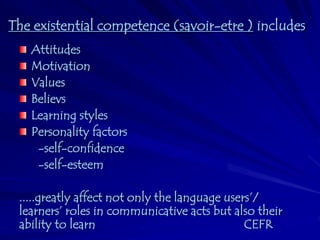
The existential competence (savoir-etre ) includes
   Attitudes
   Motivation
   Values
   Believs
   Learning styles
   Personality factors
    -self-confidence
    -self-esteem

 .....greatly affect not only the language users’/
 learners’ roles in communicative acts but also their
 ability to learn                              CEFR
Technique is what the teacher
 uses….
    until the real teacher is there.
                        (Parker Palmer)


                   *****
“To know” and “to do” is part of being a
  good teacher….
            but above all “to be”.
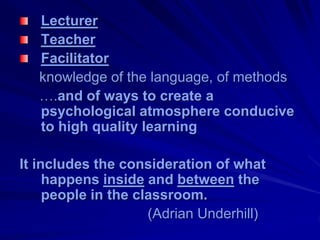
Lecturer
   Teacher
   Facilitator
   knowledge of the language, of methods
   ….and of ways to create a
   psychological atmosphere conducive
   to high quality learning

It includes the consideration of what
     happens inside and between the
     people in the classroom.
                     (Adrian Underhill)
Between the people
Learning is first intermental – between
minds that interact – and only later does
it become intramental. (Vygotsky)
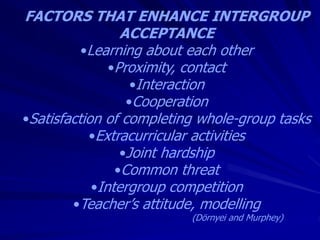
FACTORS THAT ENHANCE INTERGROUP
                 ACCEPTANCE
          •Learning about each other
               •Proximity, contact
                   •Interaction
                  •Cooperation
•Satisfaction of completing whole-group tasks
           •Extracurricular activities
                 •Joint hardship
                •Common threat
            •Intergroup competition
        •Teacher’s attitude, modelling
                          (Dörnyei and Murphey)
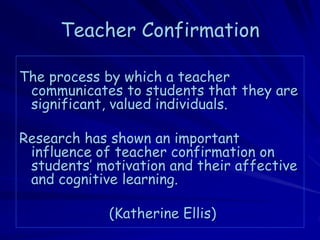
Teacher Confirmation

The process by which a teacher
 communicates to students that they are
 significant, valued individuals.

Research has shown an important
 influence of teacher confirmation on
 students’ motivation and their affective
 and cognitive learning.

             (Katherine Ellis)
Teacher confirmation and identity

Students are often striving to find out who
  they are, where they fit in, whether they
  can succeed…

The role of confirmation is to help individuals
 discover and establish their identities and
 personal significance as human beings.
                          (K. Ellis)
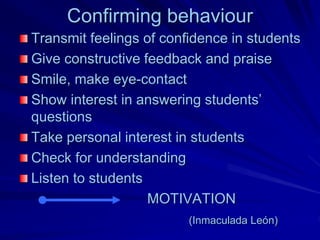
Confirming behaviour
Transmit feelings of confidence in students
Give constructive feedback and praise
Smile, make eye-contact
Show interest in answering students’
questions
Take personal interest in students
Check for understanding
Listen to students
                   MOTIVATION
                         (Inmaculada León)
Inside the person
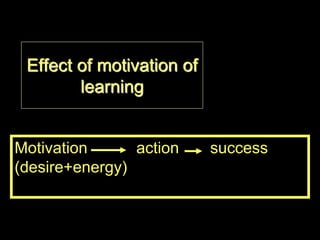
Effect of motivation of
        learning


Motivation      action     success
(desire+energy)
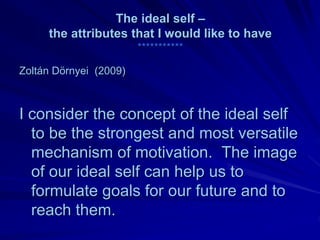
The ideal self –
     the attributes that I would like to have
                        ***********

Zoltán Dörnyei (2009)


I consider the concept of the ideal self
  to be the strongest and most versatile
  mechanism of motivation. The image
  of our ideal self can help us to
  formulate goals for our future and to
  reach them.
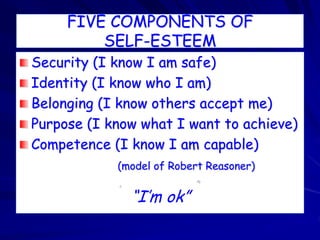
FIVE COMPONENTS OF
         SELF-ESTEEM
Security (I know I am safe)
Identity (I know who I am)
Belonging (I know others accept me)
Purpose (I know what I want to achieve)
Competence (I know I am capable)
            (model of Robert Reasoner)


              “I’m ok”
Language anxiety:
A feeling of tension and apprehension specifically
  associated with second language contexts,
  including speaking, listening and learning.


A good deal of research has suggested that
  anxiety causes cognitive interference in
  performing specific language learning tasks.

                         (MacIntyre and Gardner)
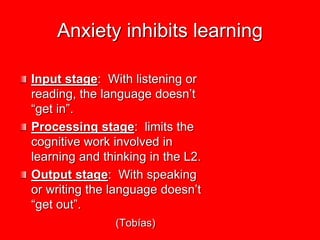
Anxiety inhibits learning

Input stage: With listening or
reading, the language doesn’t
“get in”.
Processing stage: limits the
cognitive work involved in
learning and thinking in the L2.
Output stage: With speaking
or writing the language doesn’t
“get out”.
               (Tobías)
Using only the textbook greatly limits
 your capacity to participate in
 innovative and creative teaching.
                    Leo Van Lier
Students appreciate teachers who prepare
  their classes and the use of your own
  materials shows clear and tangible
  evidence of preparation.
                     (David Block)
Multiple Intelligences.
Multiple ways to learn.
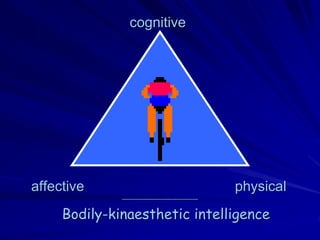
cognitive


affective                                                   physical
              -------------------------------------------


     Bodily-kinaesthetic intelligence
Learning is also in the body
Physical movement and engagement of
the body and senses are essential for
learning.              (Caine and Caine)


The human brain and the rest of the body
constitute an unseparable organism… The
whole organism interacts with the
environment as one unit: the interaction is
neither of the body alone nor of the brain
alone.
                        (Antonio Damasio)
I consider images
  the basis of
  mind.

Antonio Damasio
( Prince of Asturias
   Prize for science,
   2005)
The image is the great instrument of
instruction… what learners get out of any
subject is merely the images they
themselves form in regard to it.
                  John Dewey (1897)
In language learning
  work with mental imagery can:
Increase learner’s attention, cognitive skills and
creativity
Enable them to remember what they learn
Enhance their motivation
Strengthen their self-concept
Improve their reading and listening comprehension
Provide things they want to say when they speak or
write
Paivio’s Dual Coding Theory and
     second language learning
It is especially important to learn the
  second language in association with
  appropriate nonverbal referents –either
  visible or in imagery - which represent
  the knowledge of the world.
  (Alan Paivio)
If students don’t see mental images of
  what they read, it will be difficult
  for them to get a full understanding
  of the text and their experience of it
  will be fragmented and superficial.
                    (Brian Tomlinson)
If teachers are motivated to teach,
  there is a good chance that their
  students will be motivated to learn.
      (Dörnyei y Ushioda)

Affect lisboa quotes

  • 1.
    MOTIVATING LEARNERS: MAKING LANGUAGE LEARNING MORE AFFECTIVE AND EFFECTIVE ECIS, Lisbon November2011 Jane Arnold arnold@us.es
  • 2.
    Affect refers toa wide range of phenomena that have to do with emotions, moods, dispositions and preferences. (Oatley and Jenkins)
  • 3.
    The attitudinal climateof the classroom is a major factor in promoting or inhibiting learning. In classes where the affective, attitudinal aspects are taken into consideration, students: miss fewer days of class have a higher self-concept achieve more academically cause fewer discipline problems use more higher order thinking (Aspy and Roebuck)
  • 4.
    The mind withoutaffect isn’t really mind at all. (Joseph LeDoux)
  • 5.
    The dinosaurs ofthe future will be those who try to live and work only from the head. Dr. Robert K. Cooper
  • 6.
    TEACHING: The art ofchanging the brain. (Zull)
  • 7.
    Success in learningdepends less on materials and tecniques and more on what goes on inside and between the people in the classroom. (Earl Stevick) Success in learning depends less on things –and more on people – and the affective side of learning
  • 8.
    AFFECT IN LANGUAGELEARNING Individual factors Relational factors motivation between cultures anxiety in the classroom learning styles self-concept, self-esteem
  • 10.
    The existential competence(savoir-etre ) includes Attitudes Motivation Values Believs Learning styles Personality factors -self-confidence -self-esteem .....greatly affect not only the language users’/ learners’ roles in communicative acts but also their ability to learn CEFR
  • 11.
    Technique is whatthe teacher uses…. until the real teacher is there. (Parker Palmer) ***** “To know” and “to do” is part of being a good teacher…. but above all “to be”.
  • 12.
    Lecturer Teacher Facilitator knowledge of the language, of methods ….and of ways to create a psychological atmosphere conducive to high quality learning It includes the consideration of what happens inside and between the people in the classroom. (Adrian Underhill)
  • 13.
  • 14.
    Learning is firstintermental – between minds that interact – and only later does it become intramental. (Vygotsky)
  • 15.
    FACTORS THAT ENHANCEINTERGROUP ACCEPTANCE •Learning about each other •Proximity, contact •Interaction •Cooperation •Satisfaction of completing whole-group tasks •Extracurricular activities •Joint hardship •Common threat •Intergroup competition •Teacher’s attitude, modelling (Dörnyei and Murphey)
  • 16.
    Teacher Confirmation The processby which a teacher communicates to students that they are significant, valued individuals. Research has shown an important influence of teacher confirmation on students’ motivation and their affective and cognitive learning. (Katherine Ellis)
  • 17.
    Teacher confirmation andidentity Students are often striving to find out who they are, where they fit in, whether they can succeed… The role of confirmation is to help individuals discover and establish their identities and personal significance as human beings. (K. Ellis)
  • 18.
    Confirming behaviour Transmit feelingsof confidence in students Give constructive feedback and praise Smile, make eye-contact Show interest in answering students’ questions Take personal interest in students Check for understanding Listen to students MOTIVATION (Inmaculada León)
  • 19.
  • 20.
    Effect of motivationof learning Motivation action success (desire+energy)
  • 21.
    The ideal self– the attributes that I would like to have *********** Zoltán Dörnyei (2009) I consider the concept of the ideal self to be the strongest and most versatile mechanism of motivation. The image of our ideal self can help us to formulate goals for our future and to reach them.
  • 22.
    FIVE COMPONENTS OF SELF-ESTEEM Security (I know I am safe) Identity (I know who I am) Belonging (I know others accept me) Purpose (I know what I want to achieve) Competence (I know I am capable) (model of Robert Reasoner) “I’m ok”
  • 24.
    Language anxiety: A feelingof tension and apprehension specifically associated with second language contexts, including speaking, listening and learning. A good deal of research has suggested that anxiety causes cognitive interference in performing specific language learning tasks. (MacIntyre and Gardner)
  • 25.
    Anxiety inhibits learning Inputstage: With listening or reading, the language doesn’t “get in”. Processing stage: limits the cognitive work involved in learning and thinking in the L2. Output stage: With speaking or writing the language doesn’t “get out”. (Tobías)
  • 26.
    Using only thetextbook greatly limits your capacity to participate in innovative and creative teaching. Leo Van Lier
  • 27.
    Students appreciate teacherswho prepare their classes and the use of your own materials shows clear and tangible evidence of preparation. (David Block)
  • 28.
  • 30.
    cognitive affective physical ------------------------------------------- Bodily-kinaesthetic intelligence
  • 31.
    Learning is alsoin the body Physical movement and engagement of the body and senses are essential for learning. (Caine and Caine) The human brain and the rest of the body constitute an unseparable organism… The whole organism interacts with the environment as one unit: the interaction is neither of the body alone nor of the brain alone. (Antonio Damasio)
  • 32.
    I consider images the basis of mind. Antonio Damasio ( Prince of Asturias Prize for science, 2005)
  • 33.
    The image isthe great instrument of instruction… what learners get out of any subject is merely the images they themselves form in regard to it. John Dewey (1897)
  • 34.
    In language learning work with mental imagery can: Increase learner’s attention, cognitive skills and creativity Enable them to remember what they learn Enhance their motivation Strengthen their self-concept Improve their reading and listening comprehension Provide things they want to say when they speak or write
  • 35.
    Paivio’s Dual CodingTheory and second language learning It is especially important to learn the second language in association with appropriate nonverbal referents –either visible or in imagery - which represent the knowledge of the world. (Alan Paivio)
  • 36.
    If students don’tsee mental images of what they read, it will be difficult for them to get a full understanding of the text and their experience of it will be fragmented and superficial. (Brian Tomlinson)
  • 37.
    If teachers aremotivated to teach, there is a good chance that their students will be motivated to learn. (Dörnyei y Ushioda)