S T R A T E G I S I N G A D V O C A C Y F O R E F F E C T I V E
I M P L E M E N T A T I O N O F W O M E N F R I E N D L Y L A W S
5 - 7 T H A U G U S T
A A S H A R A M E S H
G E N D E R & D E V E L O P M E N T C O N S U L T A N T
B A N G A L O R E
Advocacy at different levels
Definition of Advocacy
Advocacy is a set of democratic social
actions that seeks to bring about
change.
It is ‘a set of organized actions to
change public policies in a way that will
empower the marginalized.’
What is Advocacy ?
Advocacy is:
 A value driven political process
 To effectively influence public policies
and get them implemented
 To advance Social Justice and Human
Rights
 To make the governance accountable and
transparent
( NCAS)
Advocacy at different levels
 Local or grassroots level advocacy
 State level advocacy
 National Level advocacy
 International or Global level advocacy
The different types of Advocacy
 People-centered advocacy
 Policy advocacy
 Legislative advocacy
 Media advocacy
 Issue-based advocacy
Advocacy Strategies
 Organised action-rallies, protests, sit in
etc
 Campaigning using different tools-
signature campaign, pamphlet
 Building alliances and coalitions and
collectively submitting petitions
 Conducting evidence based research
Need based Rights Based
 Non-justiciable (cannot
be claimed legally)
 Gives more immediate
help/support to
immediately felt needs
 Justiciable (can be
claimed legally)
 Requires ‘staying power’
as the benefits take time
to be realised
Advocating for what
Need Based Rights Based
 Eventually non-
sustainable
 Fulfilled based on the
goodness of various
outsiders’ (e.g. state,
society to ensure NGOs
philanthropic groups
etc.)
 Eventually sustainable
 Responsibility of state
and civil
Need Based Right Based
 Allows the ‘outsider’ to
select the beneficiaries
 The beneficiaries
remain dependent on
the outsiders
 Non-discriminatory,
except positive
discrimination
 The marginalised are
empowered to claim
their own rights
Need Based Rights Based
 Attacks the outward
effects, and is a
symptomatic approach
 Can more easily get
funding for such
activities from donors
 Attacks the root causes
 Getting funds is more
difficult, as the donor may
get into trouble with
licensing/state authorities
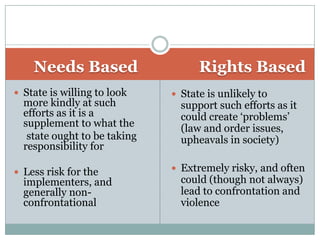
Needs Based Rights Based
 State is willing to look
more kindly at such
efforts as it is a
supplement to what the
state ought to be taking
responsibility for
 Less risk for the
implementers, and
generally non-
confrontational
 State is unlikely to
support such efforts as it
could create ‘problems’
(law and order issues,
upheavals in society)
 Extremely risky, and often
could (though not always)
lead to confrontation and
violence
Advocacy with whom?
 Those in power who can be influenced to
bring about change in the following;
1. Better implementation of existing
schemes/programmes/laws
2. Bring in policy change
3. Make legal amendments and new laws
4. Introduce proactive mechanisms
Your Constituency to Advocate with?
 Building alliances with like minded civil
society organisations /individuals
 Identify and make allies in the executive,
judiciary and legislative
 Make allies in the media
 Engage with UN and International agencies
for support and cooperation
The key to success in advocacy
 Developing a body of evidence on the issue for
which advocacy is being done
 Preparing briefs with authentic information for
dissemination among the different advocacy
partners
 Adopting a combination of advocating techniques
such as people-led advocacy, media advocacy,
policy advocacy and legislative advocacy and
building synergies between them to achieve the
needed advocacy response.
ADVOCACY
 Advocacy involves movement from different stages
 PERSONAL
 PUBLIC
 POLITICAL
THANK YOU

Advocacy Process

  • 1.
    S T RA T E G I S I N G A D V O C A C Y F O R E F F E C T I V E I M P L E M E N T A T I O N O F W O M E N F R I E N D L Y L A W S 5 - 7 T H A U G U S T A A S H A R A M E S H G E N D E R & D E V E L O P M E N T C O N S U L T A N T B A N G A L O R E Advocacy at different levels
  • 2.
    Definition of Advocacy Advocacyis a set of democratic social actions that seeks to bring about change. It is ‘a set of organized actions to change public policies in a way that will empower the marginalized.’
  • 3.
    What is Advocacy? Advocacy is:  A value driven political process  To effectively influence public policies and get them implemented  To advance Social Justice and Human Rights  To make the governance accountable and transparent ( NCAS)
  • 4.
    Advocacy at differentlevels  Local or grassroots level advocacy  State level advocacy  National Level advocacy  International or Global level advocacy
  • 5.
    The different typesof Advocacy  People-centered advocacy  Policy advocacy  Legislative advocacy  Media advocacy  Issue-based advocacy
  • 6.
    Advocacy Strategies  Organisedaction-rallies, protests, sit in etc  Campaigning using different tools- signature campaign, pamphlet  Building alliances and coalitions and collectively submitting petitions  Conducting evidence based research
  • 7.
    Need based RightsBased  Non-justiciable (cannot be claimed legally)  Gives more immediate help/support to immediately felt needs  Justiciable (can be claimed legally)  Requires ‘staying power’ as the benefits take time to be realised Advocating for what
  • 8.
    Need Based RightsBased  Eventually non- sustainable  Fulfilled based on the goodness of various outsiders’ (e.g. state, society to ensure NGOs philanthropic groups etc.)  Eventually sustainable  Responsibility of state and civil
  • 9.
    Need Based RightBased  Allows the ‘outsider’ to select the beneficiaries  The beneficiaries remain dependent on the outsiders  Non-discriminatory, except positive discrimination  The marginalised are empowered to claim their own rights
  • 10.
    Need Based RightsBased  Attacks the outward effects, and is a symptomatic approach  Can more easily get funding for such activities from donors  Attacks the root causes  Getting funds is more difficult, as the donor may get into trouble with licensing/state authorities
  • 11.
    Needs Based RightsBased  State is willing to look more kindly at such efforts as it is a supplement to what the state ought to be taking responsibility for  Less risk for the implementers, and generally non- confrontational  State is unlikely to support such efforts as it could create ‘problems’ (law and order issues, upheavals in society)  Extremely risky, and often could (though not always) lead to confrontation and violence
  • 12.
    Advocacy with whom? Those in power who can be influenced to bring about change in the following; 1. Better implementation of existing schemes/programmes/laws 2. Bring in policy change 3. Make legal amendments and new laws 4. Introduce proactive mechanisms
  • 13.
    Your Constituency toAdvocate with?  Building alliances with like minded civil society organisations /individuals  Identify and make allies in the executive, judiciary and legislative  Make allies in the media  Engage with UN and International agencies for support and cooperation
  • 14.
    The key tosuccess in advocacy  Developing a body of evidence on the issue for which advocacy is being done  Preparing briefs with authentic information for dissemination among the different advocacy partners  Adopting a combination of advocating techniques such as people-led advocacy, media advocacy, policy advocacy and legislative advocacy and building synergies between them to achieve the needed advocacy response.
  • 15.
    ADVOCACY  Advocacy involvesmovement from different stages  PERSONAL  PUBLIC  POLITICAL
  • 16.