VISUAL COMMUNICATION AND ADVERTISING
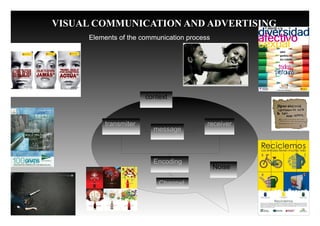
     Elements of the communication process


                      context


         transmiter                      receiver
                        message


                        Encoding
                                             Noise

                          Channel
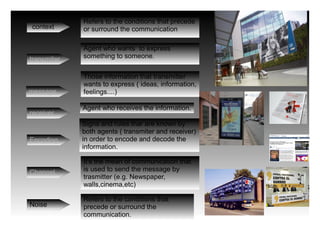
Refers to the conditions that precede
context      or surround the communication

             Agent who wants to express
transmiter   something to someone.

             Those information that transmitter
             wants to express ( ideas, information,
message      feelings....)

             Agent who receives the information.
receiver
             Signs and rules thar are known by
             both agents ( transmiter and receiver)
Encoding     in order to encode and decode the
             information.

             It's the mean of communication that
Channel      is used to send the message by
             trasmitter (e.g. Newspaper,
             walls,cinema,etc)

             Refers to the conditions that
Noise        precede or surround the
             communication.
VISUAL COMMUNICATION
                               Text + image
There are different fields on visual advertising, so depending on wich
channel is used by designers there are advertisements, advert or
only ad, on paper with still images (magazines, papers, posters, etc)
and commercials on audiovisual media (TV, video, etc).
              ADVERTISING

                     ADVERTISEMENT
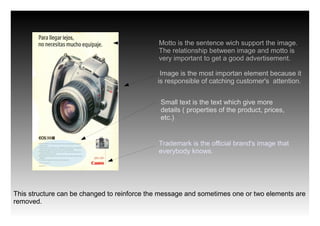
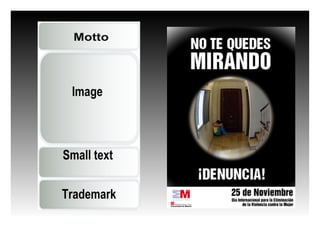
                     An advertisement has a basic
                     structure:
                         Image
                           +
                             Motto
                               +
                              small text
                                 +
                             trademark or logo
Motto is the sentence wich support the image.
                                             The relationship between image and motto is
                                             very important to get a good advertisement.

                                              Image is the most importan element because it
                                             is responsible of catching customer's attention.


                                              Small text is the text which give more
                                              details ( properties of the product, prices,
                                              etc.)


                                             Trademark is the official brand's image that
                                             everybody knows.


This structure can be changed to reinforce the message and sometimes one or two elements are
removed.
Advertising Strategy
     There are many strategies to develop an advert but basically
     they are: Objective, comparative, aesthetic and spectacular

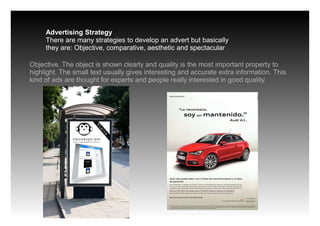
Objective. The object is shown clearly and quality is the most important property to
highlight. The small text usually gives interesting and accurate extra information. This
kind of ads are thought for experts and people really interested in good quality.
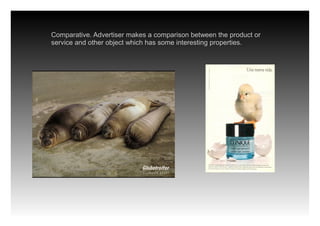
Comparative. Advertiser makes a comparison between the product or
service and other object which has some interesting properties.
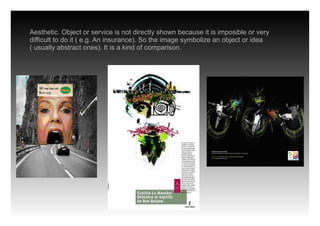
Aesthetic. Object or service is not directly shown because it is imposible or very
difficult to do it ( e.g. An insurance). So the image symbolize an object or idea
( usually abstract ones). It is a kind of comparison.
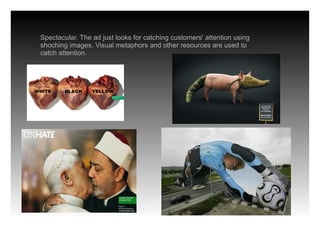
Spectacular. The ad just looks for catching customers' attention using
shoching images. Visual metaphors and other resources are used to
catch attention.
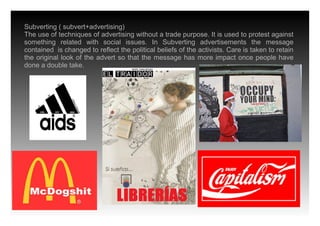
Subverting ( subvert+advertising)
The use of techniques of advertising without a trade purpose. It is used to protest against
something related with social issues. In Subverting advertisements the message
contained is changed to reflect the political beliefs of the activists. Care is taken to retain
the original look of the advert so that the message has more impact once people have
done a double take.
Advertising

Advertising

  • 1.
    VISUAL COMMUNICATION ANDADVERTISING Elements of the communication process context transmiter receiver message Encoding Noise Channel
  • 2.
    Refers to theconditions that precede context or surround the communication Agent who wants to express transmiter something to someone. Those information that transmitter wants to express ( ideas, information, message feelings....) Agent who receives the information. receiver Signs and rules thar are known by both agents ( transmiter and receiver) Encoding in order to encode and decode the information. It's the mean of communication that Channel is used to send the message by trasmitter (e.g. Newspaper, walls,cinema,etc) Refers to the conditions that Noise precede or surround the communication.
  • 3.
    VISUAL COMMUNICATION Text + image There are different fields on visual advertising, so depending on wich channel is used by designers there are advertisements, advert or only ad, on paper with still images (magazines, papers, posters, etc) and commercials on audiovisual media (TV, video, etc). ADVERTISING ADVERTISEMENT An advertisement has a basic structure: Image + Motto + small text + trademark or logo
  • 4.
    Motto is thesentence wich support the image. The relationship between image and motto is very important to get a good advertisement. Image is the most importan element because it is responsible of catching customer's attention. Small text is the text which give more details ( properties of the product, prices, etc.) Trademark is the official brand's image that everybody knows. This structure can be changed to reinforce the message and sometimes one or two elements are removed.
  • 5.
    Advertising Strategy There are many strategies to develop an advert but basically they are: Objective, comparative, aesthetic and spectacular Objective. The object is shown clearly and quality is the most important property to highlight. The small text usually gives interesting and accurate extra information. This kind of ads are thought for experts and people really interested in good quality.
  • 6.
    Comparative. Advertiser makesa comparison between the product or service and other object which has some interesting properties.
  • 7.
    Aesthetic. Object orservice is not directly shown because it is imposible or very difficult to do it ( e.g. An insurance). So the image symbolize an object or idea ( usually abstract ones). It is a kind of comparison.
  • 8.
    Spectacular. The adjust looks for catching customers' attention using shoching images. Visual metaphors and other resources are used to catch attention.
  • 9.
    Subverting ( subvert+advertising) Theuse of techniques of advertising without a trade purpose. It is used to protest against something related with social issues. In Subverting advertisements the message contained is changed to reflect the political beliefs of the activists. Care is taken to retain the original look of the advert so that the message has more impact once people have done a double take.