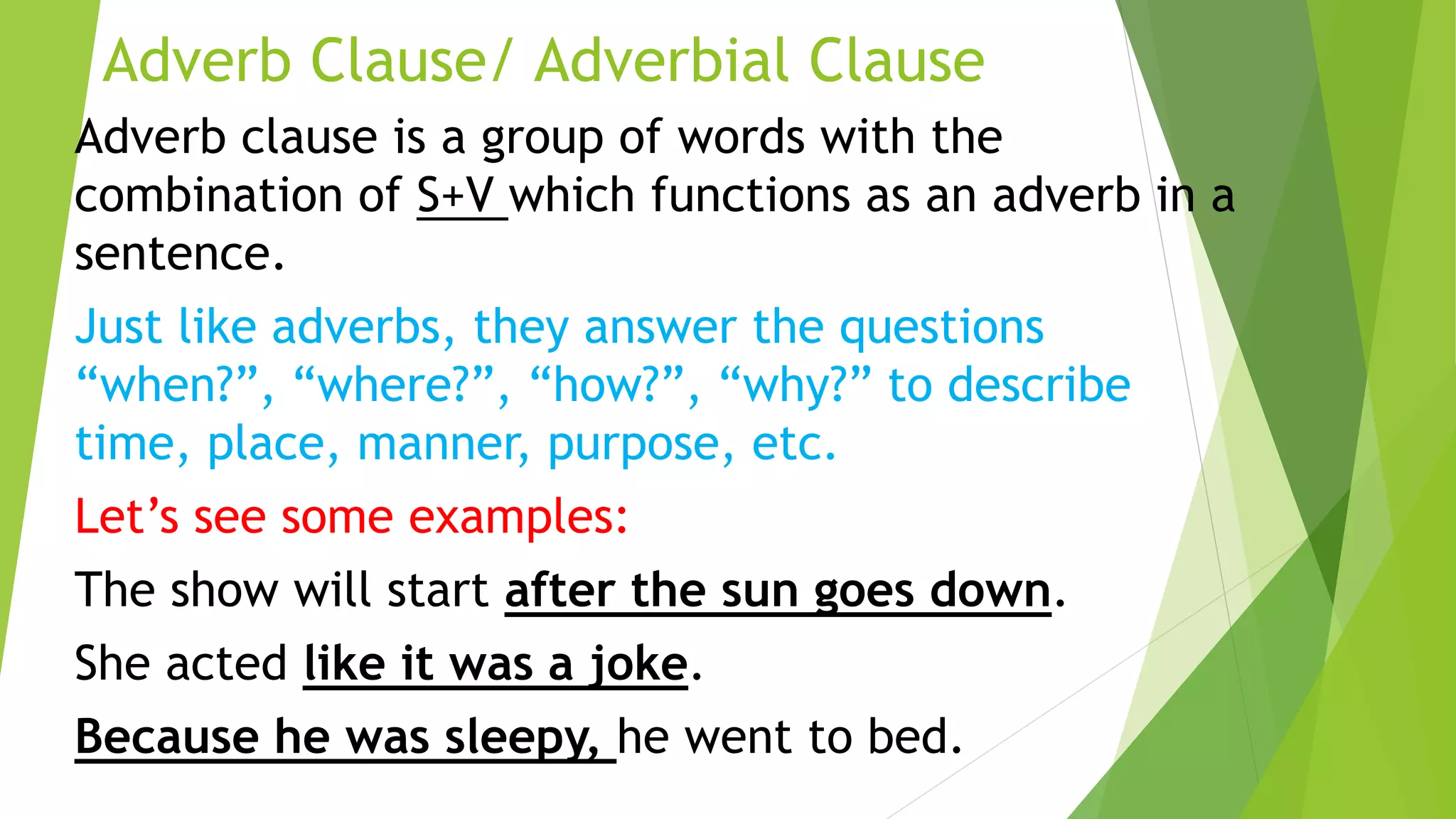
Adverb Clause/ Adverbial Clause
Adverb clause is a group of words with the
combination of S+V which functions as an adverb in a
sentence.
Just like adverbs, they answer the questions
“when?”, “where?”, “how?”, “why?” to describe
time, place, manner, purpose, etc.
Let’s see some examples:
The show will start after the sun goes down.
She acted like it was a joke.
Because he was sleepy, he went to bed.
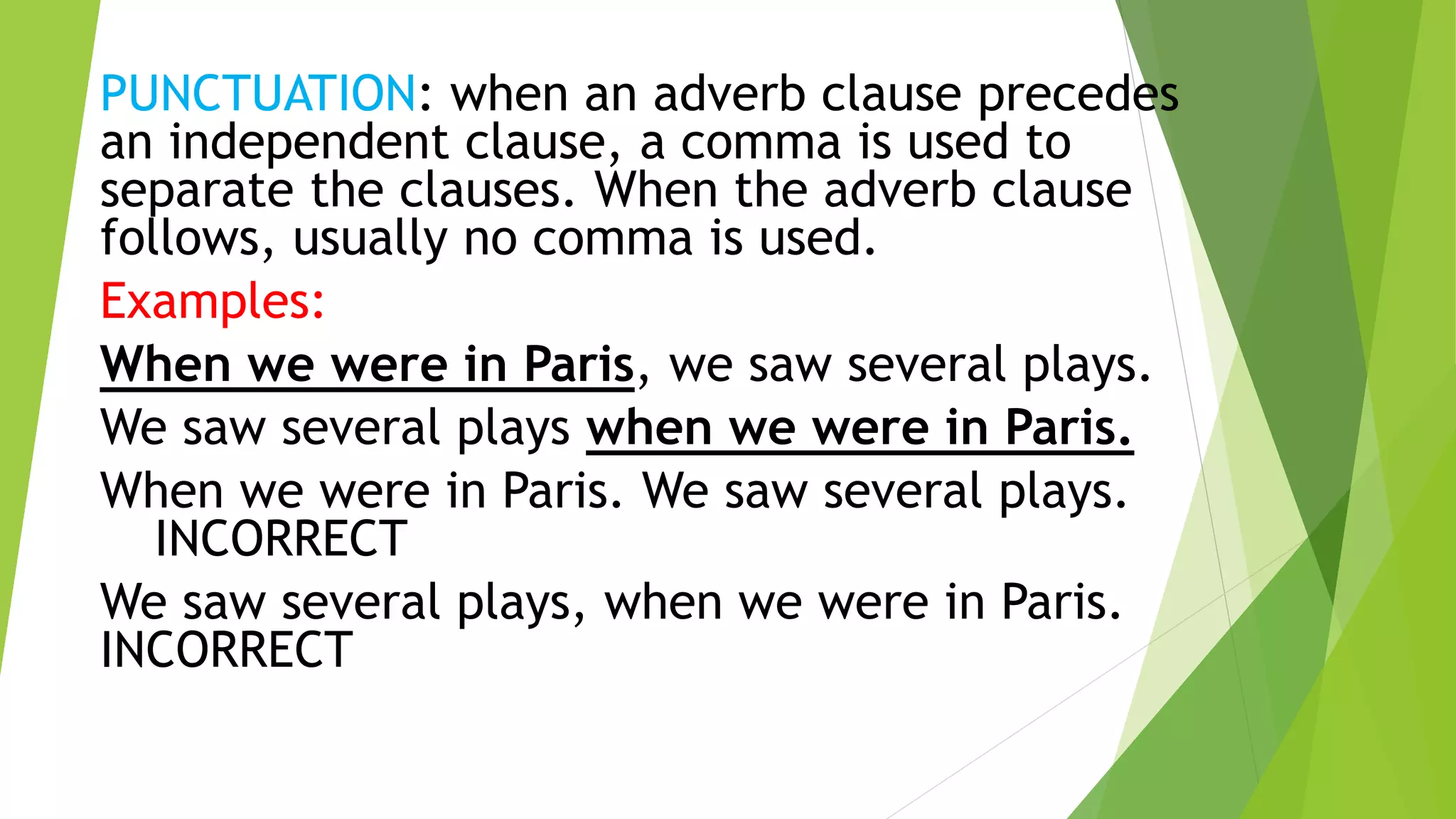
PUNCTUATION: when an adverb clause precedes
an independent clause, a comma is used to
separate the clauses. When the adverb clause
follows, usually no comma is used.
Examples:
When we were in Paris, we saw several plays.
We saw several plays when we were in Paris.
When we were in Paris. We saw several plays.
INCORRECT
We saw several plays, when we were in Paris.
INCORRECT
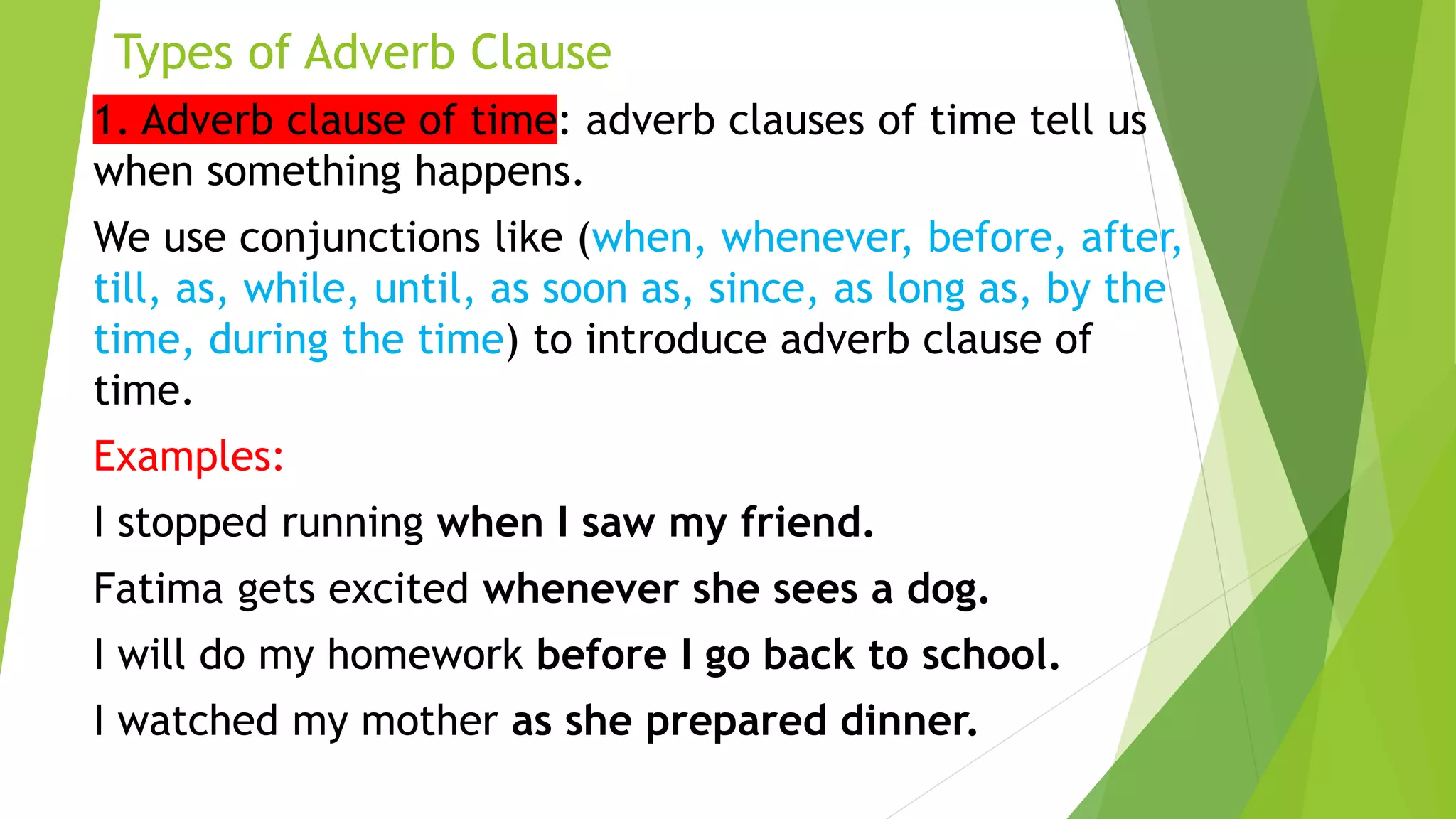
Types of Adverb Clause
1. Adverb clause of time: adverb clauses of time tell us
when something happens.
We use conjunctions like (when, whenever, before, after,
till, as, while, until, as soon as, since, as long as, by the
time, during the time) to introduce adverb clause of
time.
Examples:
I stopped running when I saw my friend.
Fatima gets excited whenever she sees a dog.
I will do my homework before I go back to school.
I watched my mother as she prepared dinner.
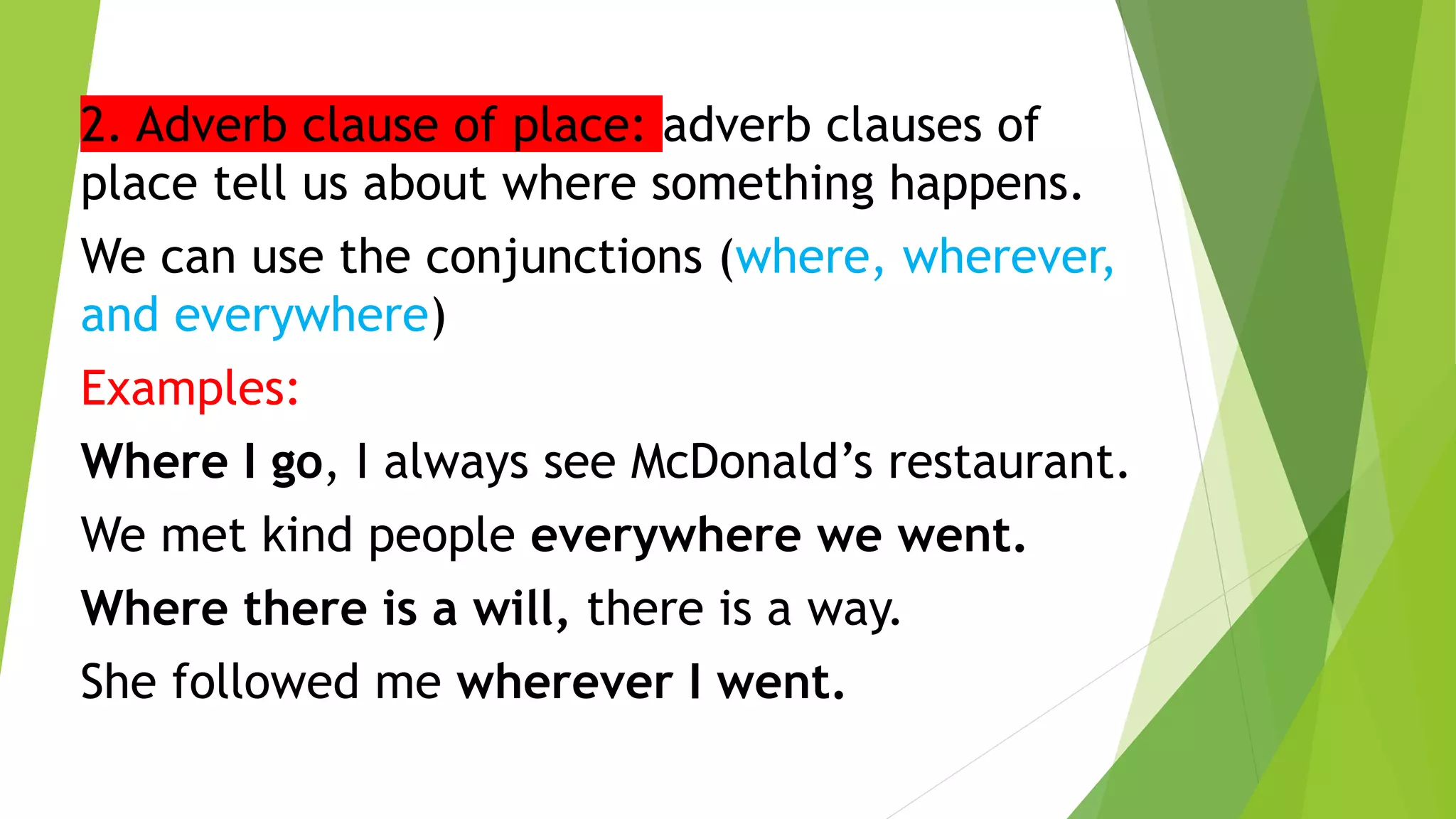
2. Adverb clause of place: adverb clauses of
place tell us about where something happens.
We can use the conjunctions (where, wherever,
and everywhere)
Examples:
Where I go, I always see McDonald’s restaurant.
We met kind people everywhere we went.
Where there is a will, there is a way.
She followed me wherever I went.
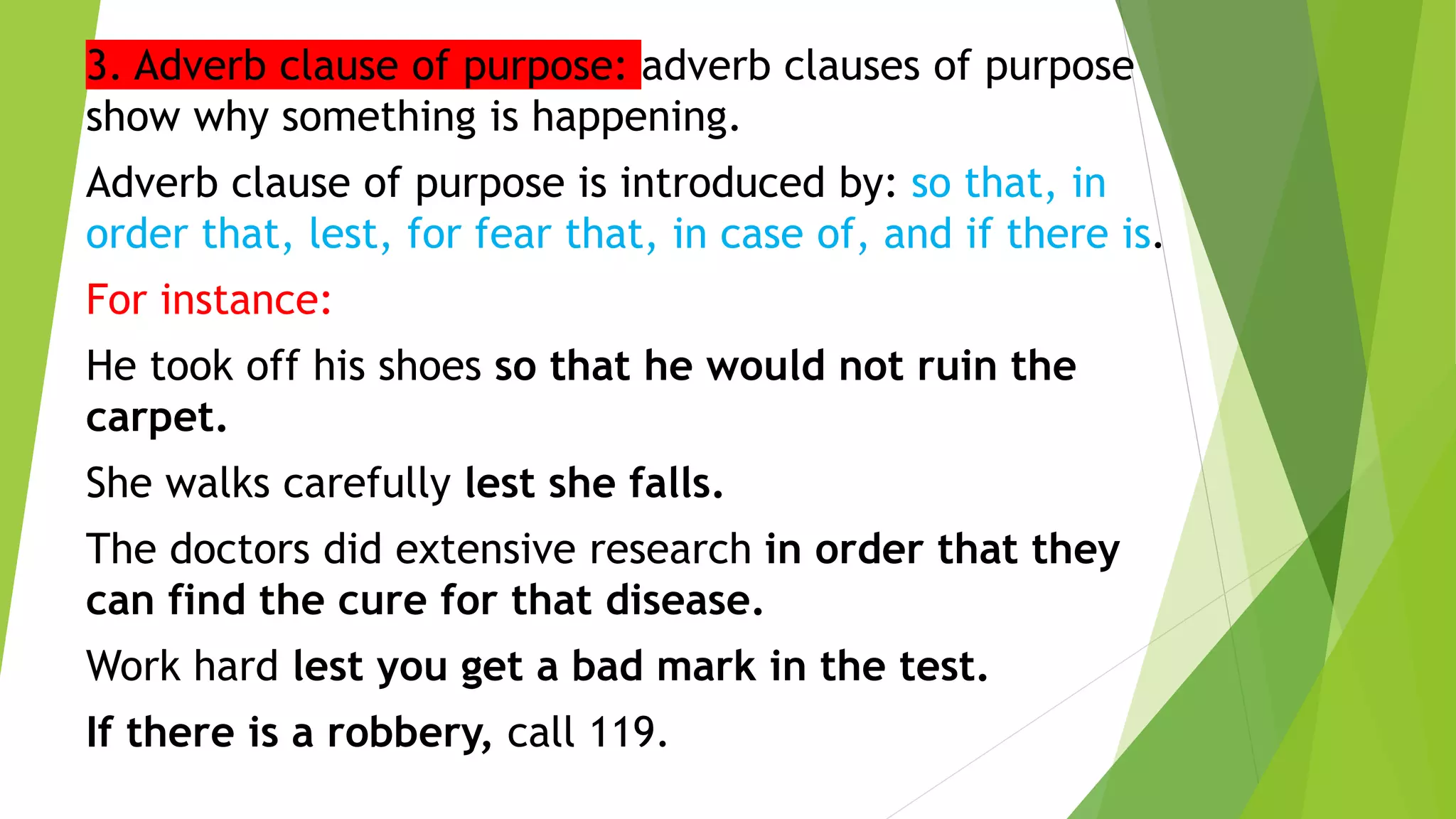
3. Adverb clause of purpose: adverb clauses of purpose
show why something is happening.
Adverb clause of purpose is introduced by: so that, in
order that, lest, for fear that, in case of, and if there is.
For instance:
He took off his shoes so that he would not ruin the
carpet.
She walks carefully lest she falls.
The doctors did extensive research in order that they
can find the cure for that disease.
Work hard lest you get a bad mark in the test.
If there is a robbery, call 119.
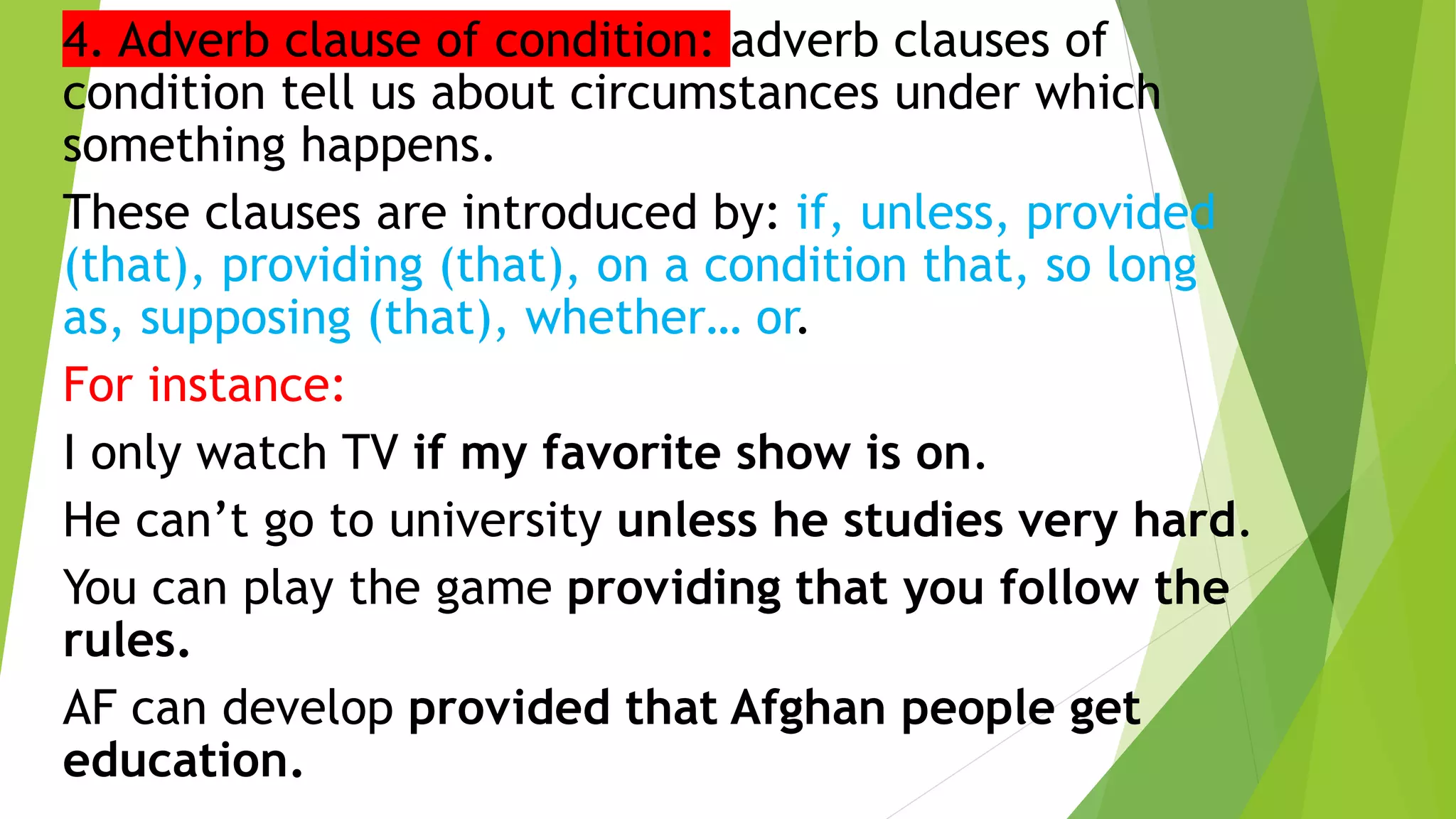
4. Adverb clause of condition: adverb clauses of
condition tell us about circumstances under which
something happens.
These clauses are introduced by: if, unless, provided
(that), providing (that), on a condition that, so long
as, supposing (that), whether… or.
For instance:
I only watch TV if my favorite show is on.
He can’t go to university unless he studies very hard.
You can play the game providing that you follow the
rules.
AF can develop provided that Afghan people get
education.

Adverb Clause.pptx

  • 1.
    Adverb Clause/ AdverbialClause Adverb clause is a group of words with the combination of S+V which functions as an adverb in a sentence. Just like adverbs, they answer the questions “when?”, “where?”, “how?”, “why?” to describe time, place, manner, purpose, etc. Let’s see some examples: The show will start after the sun goes down. She acted like it was a joke. Because he was sleepy, he went to bed.
  • 2.
    PUNCTUATION: when anadverb clause precedes an independent clause, a comma is used to separate the clauses. When the adverb clause follows, usually no comma is used. Examples: When we were in Paris, we saw several plays. We saw several plays when we were in Paris. When we were in Paris. We saw several plays. INCORRECT We saw several plays, when we were in Paris. INCORRECT
  • 3.
    Types of AdverbClause 1. Adverb clause of time: adverb clauses of time tell us when something happens. We use conjunctions like (when, whenever, before, after, till, as, while, until, as soon as, since, as long as, by the time, during the time) to introduce adverb clause of time. Examples: I stopped running when I saw my friend. Fatima gets excited whenever she sees a dog. I will do my homework before I go back to school. I watched my mother as she prepared dinner.
  • 4.
    2. Adverb clauseof place: adverb clauses of place tell us about where something happens. We can use the conjunctions (where, wherever, and everywhere) Examples: Where I go, I always see McDonald’s restaurant. We met kind people everywhere we went. Where there is a will, there is a way. She followed me wherever I went.
  • 5.
    3. Adverb clauseof purpose: adverb clauses of purpose show why something is happening. Adverb clause of purpose is introduced by: so that, in order that, lest, for fear that, in case of, and if there is. For instance: He took off his shoes so that he would not ruin the carpet. She walks carefully lest she falls. The doctors did extensive research in order that they can find the cure for that disease. Work hard lest you get a bad mark in the test. If there is a robbery, call 119.
  • 6.
    4. Adverb clauseof condition: adverb clauses of condition tell us about circumstances under which something happens. These clauses are introduced by: if, unless, provided (that), providing (that), on a condition that, so long as, supposing (that), whether… or. For instance: I only watch TV if my favorite show is on. He can’t go to university unless he studies very hard. You can play the game providing that you follow the rules. AF can develop provided that Afghan people get education.