MODIFIERS
(Adjectives and Adverbs)
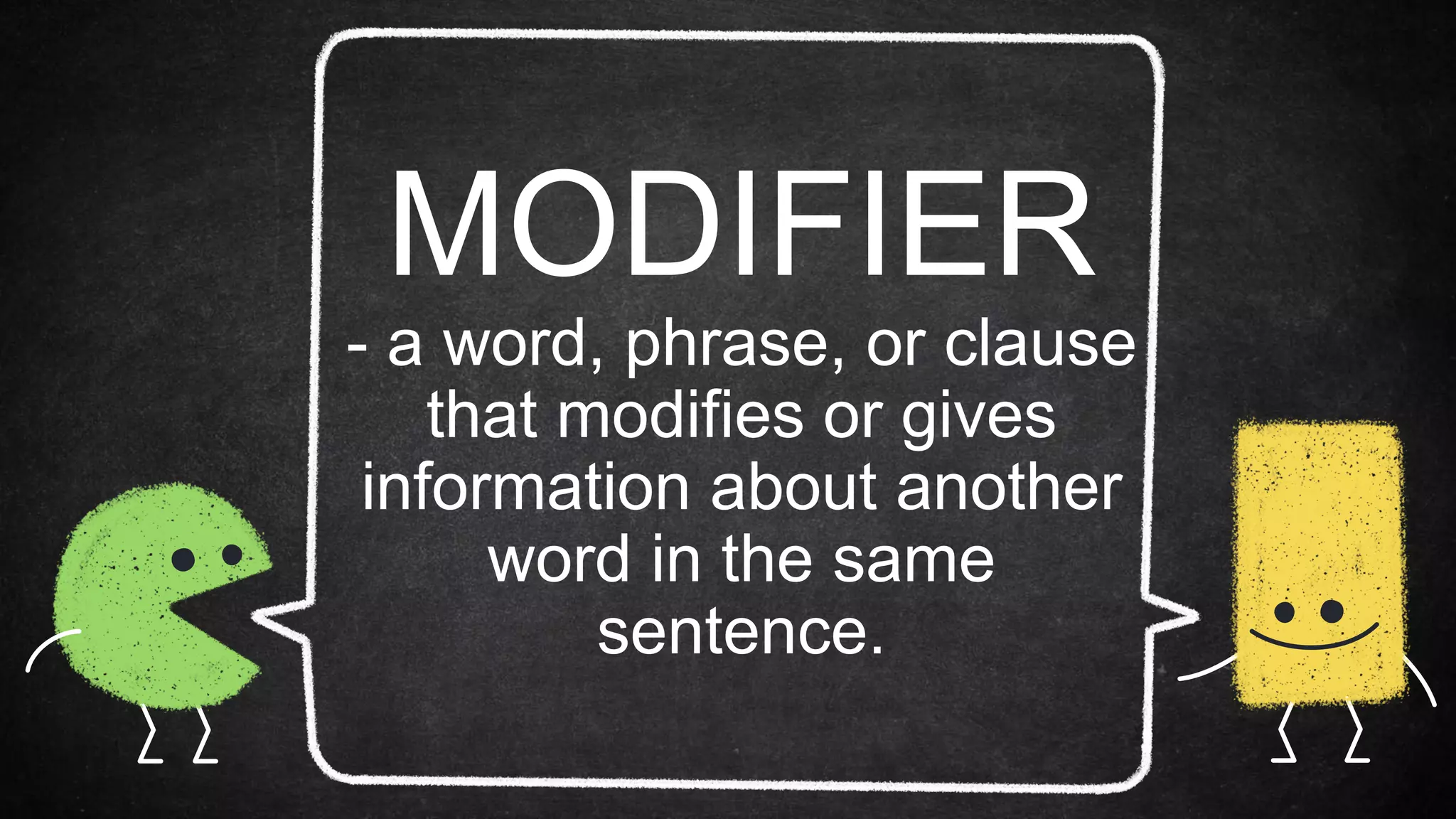
MODIFIER
- a word, phrase, or clause
that modifies or gives
information about another
word in the same
sentence.
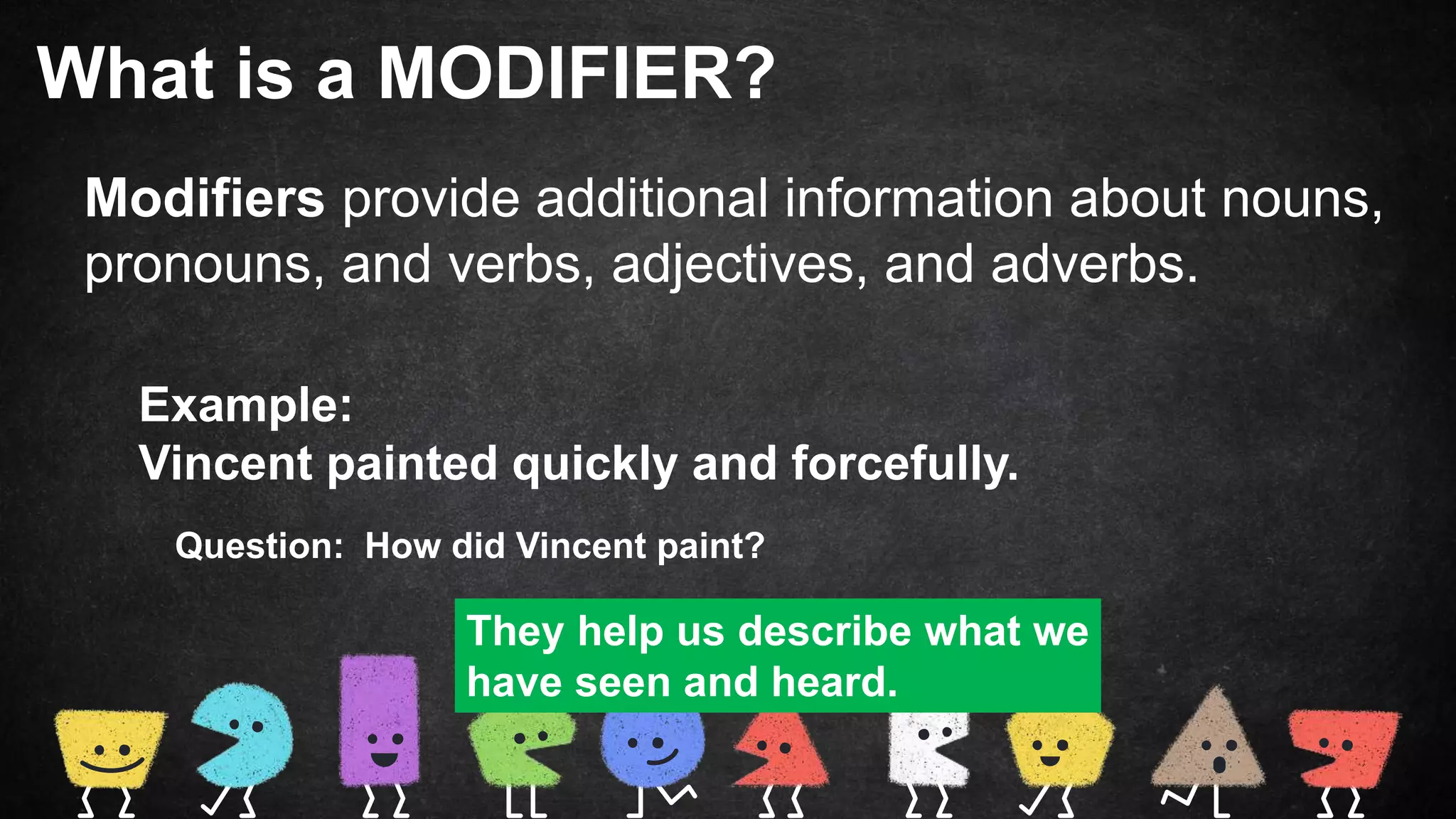
Modifiers provide additional information about nouns,
pronouns, and verbs, adjectives, and adverbs.
They help us describe what we
have seen and heard.
Example:
Vincent painted quickly and forcefully.
Question: How did Vincent paint?
What is a MODIFIER?
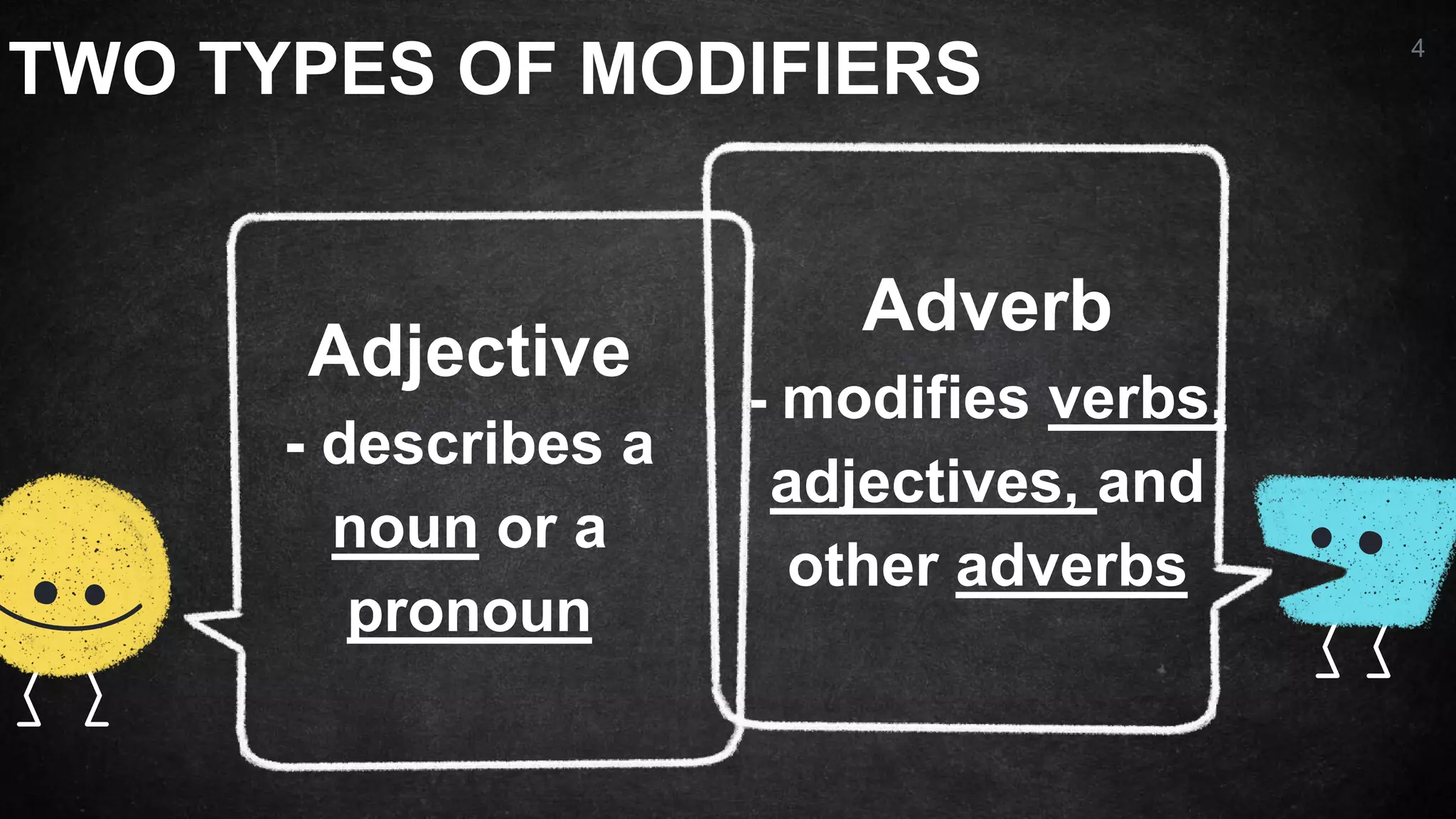
TWO TYPES OF MODIFIERS
Adverb
- modifies verbs,
adjectives, and
other adverbs
Adjective
- describes a
noun or a
pronoun
4
ADJECTIVES
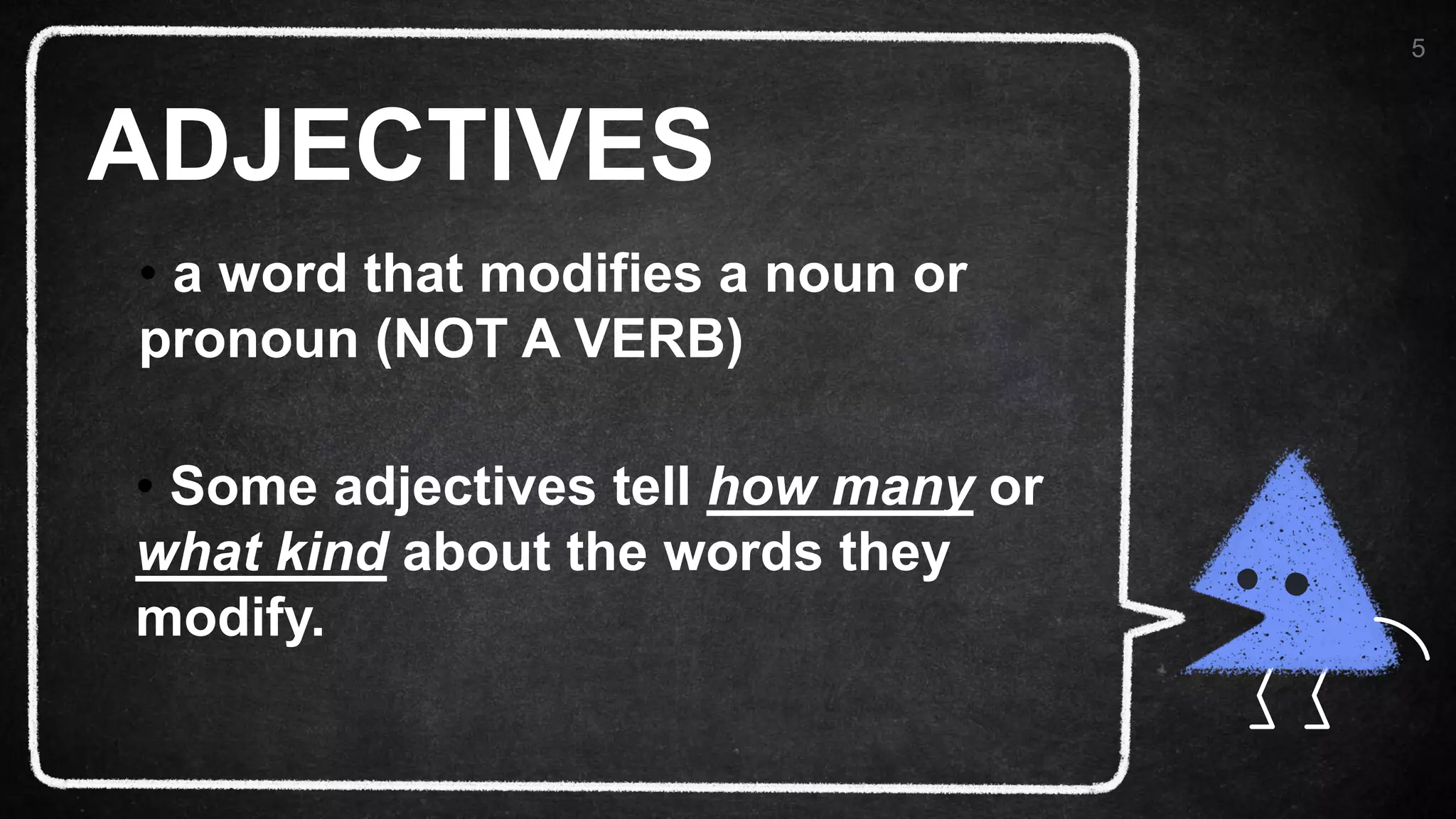
5
• a word that modifies a noun or
pronoun (NOT A VERB)
• Some adjectives tell how many or
what kind about the words they
modify.
ADJECTIVES
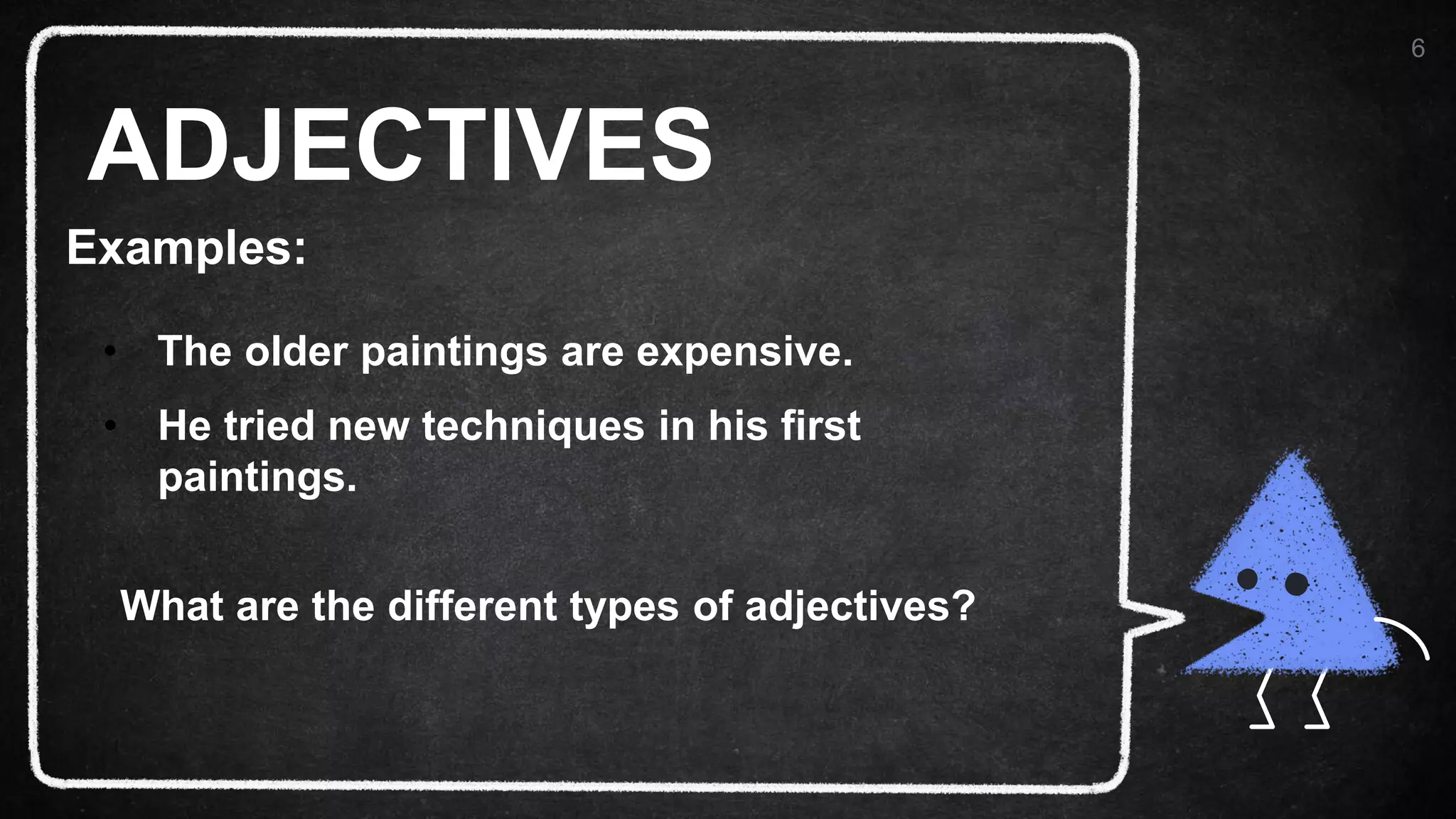
6
• He tried new techniques in his first
paintings.
What are the different types of adjectives?
Examples:
• The older paintings are expensive.
TWO TYPES OF
ADJECTIVES
 the blue sea  the sea is blue
 the old man  the man is old
 happy children  the children are happy
Most adjectives can occur both before and after a
noun/pronoun.
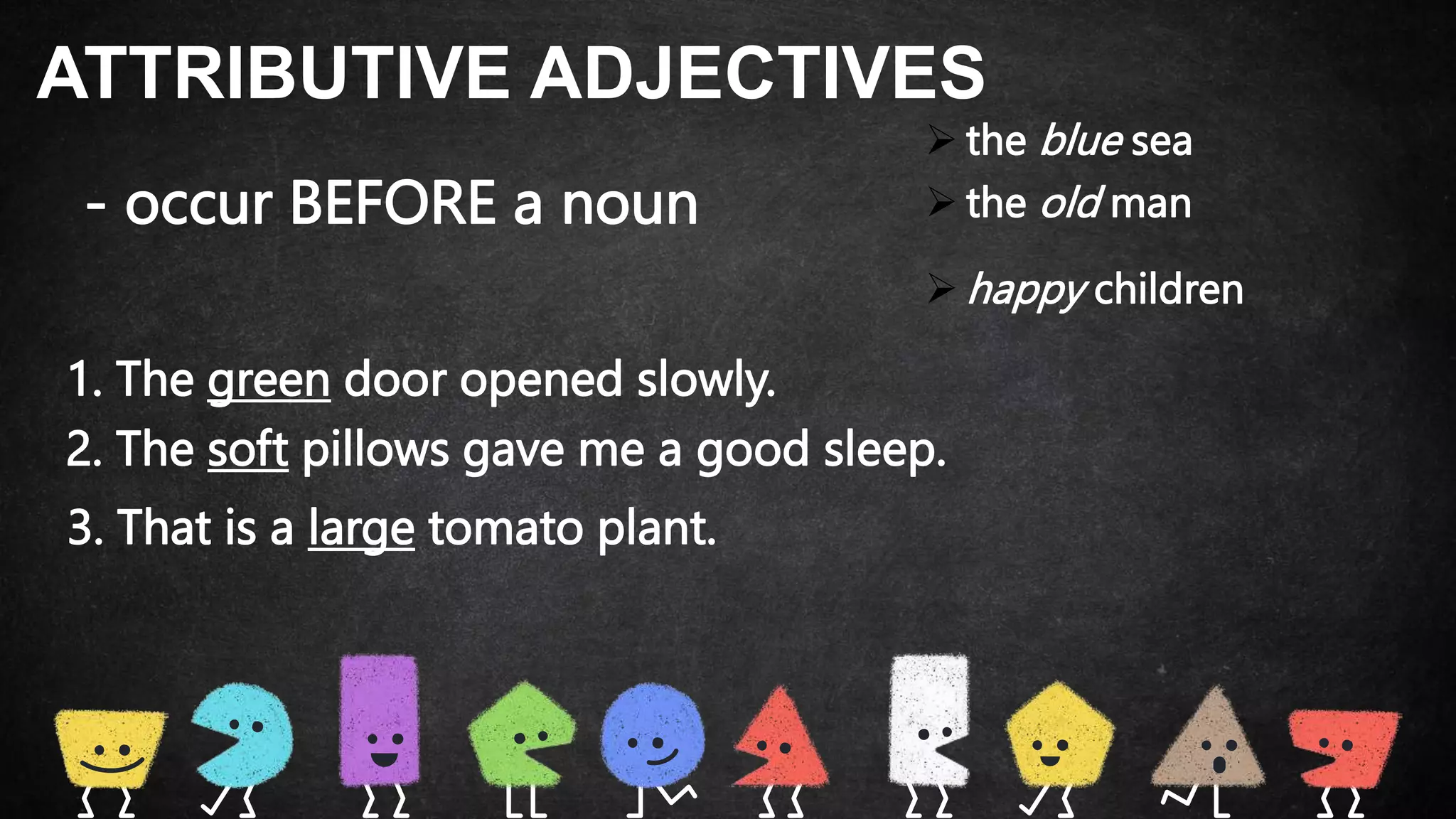
ATTRIBUTIVE ADJECTIVES
 the blue sea
 the old man
 happy children
- occur BEFORE a noun
1. The green door opened slowly.
2. The soft pillows gave me a good sleep.
3. That is a large tomato plant.
PREDICATIVE ADJECTIVES
- occur AFTER a noun
- appear after a linking verb
1. This stretch of water is dangerous.
2. The soup tastes bad.
3. John is great in painting.
 the sea is blue
 the man is old
 the children
are happy
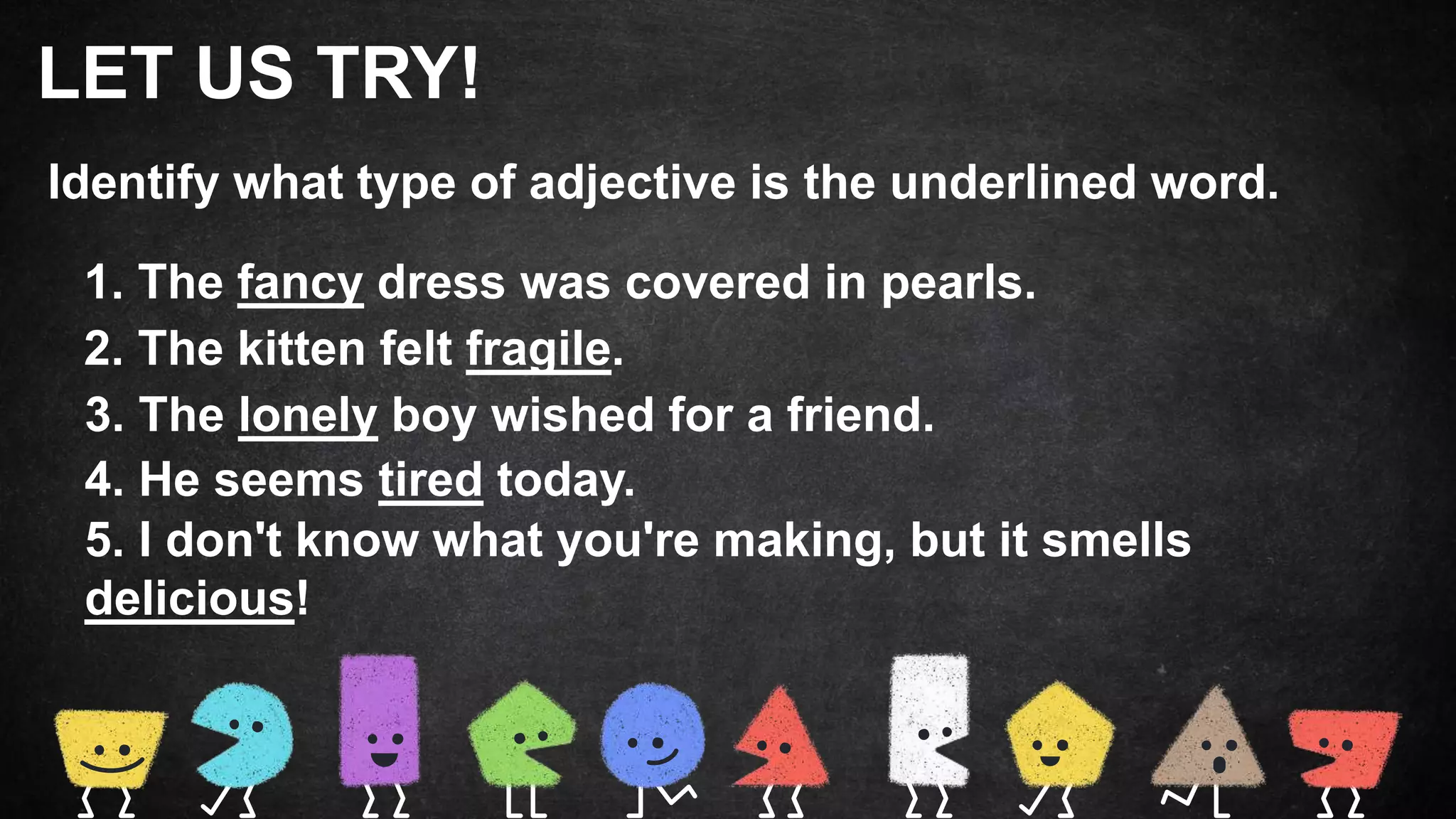
LET US TRY!
Identify what type of adjective is the underlined word.
1. The fancy dress was covered in pearls.
2. The kitten felt fragile.
3. The lonely boy wished for a friend.
4. He seems tired today.
5. I don't know what you're making, but it smells
delicious!
11
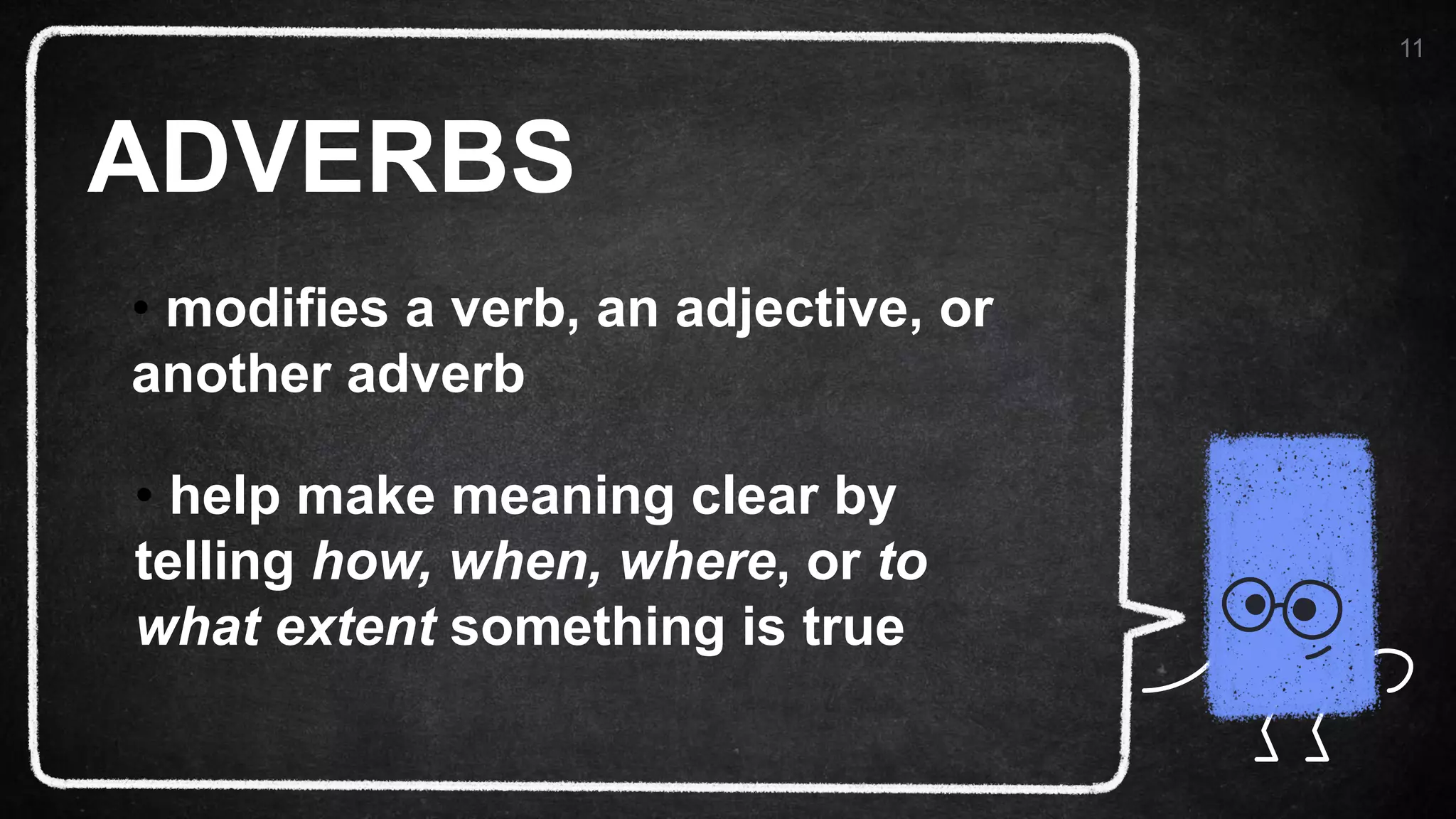
ADVERBS
• modifies a verb, an adjective, or
another adverb
• help make meaning clear by
telling how, when, where, or to
what extent something is true
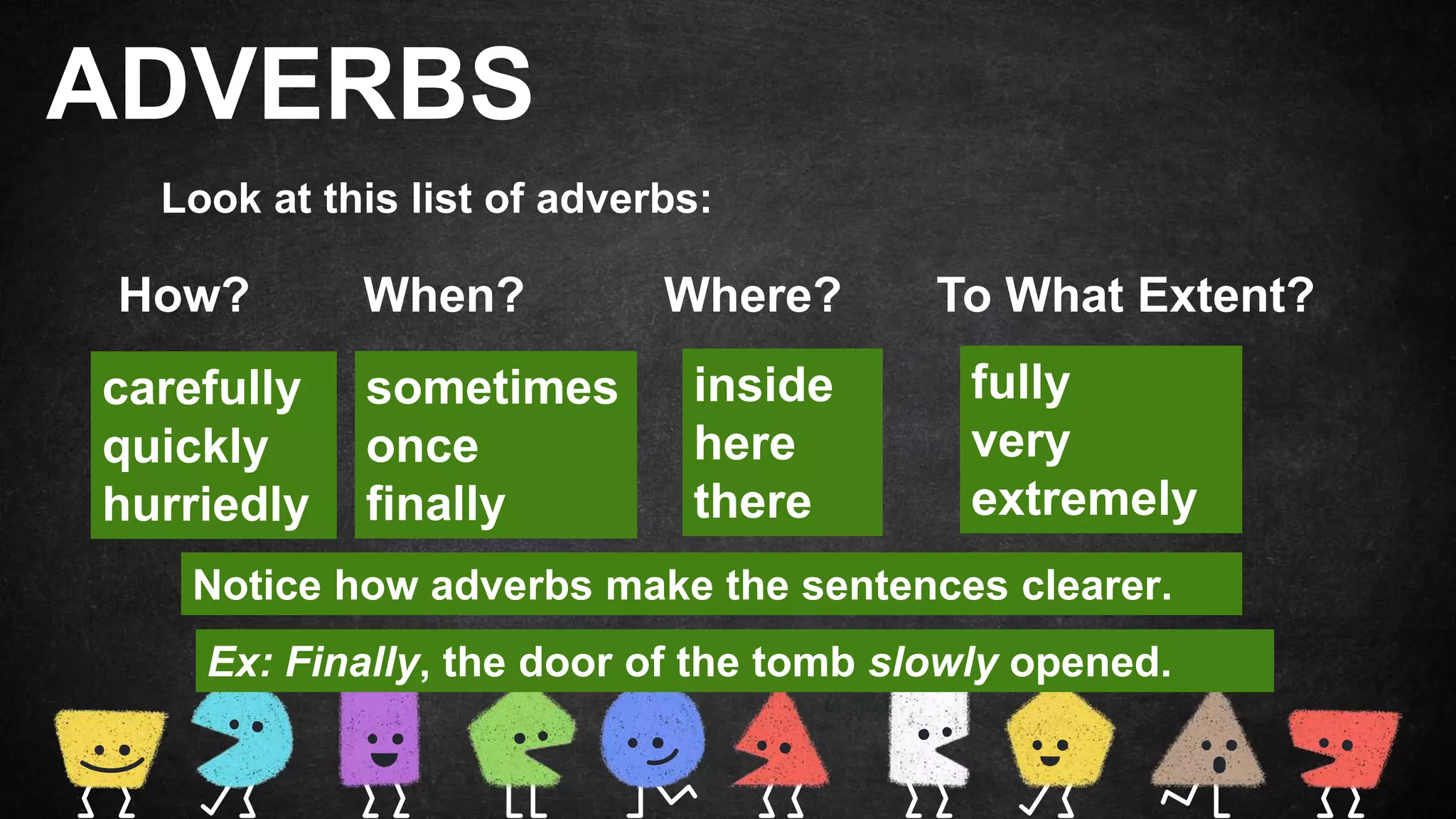
Look at this list of adverbs:
How? When? Where? To What Extent?
carefully
quickly
hurriedly
sometimes
once
finally
inside
here
there
fully
very
extremely
Notice how adverbs make the sentences clearer.
Ex: Finally, the door of the tomb slowly opened.
ADVERBS
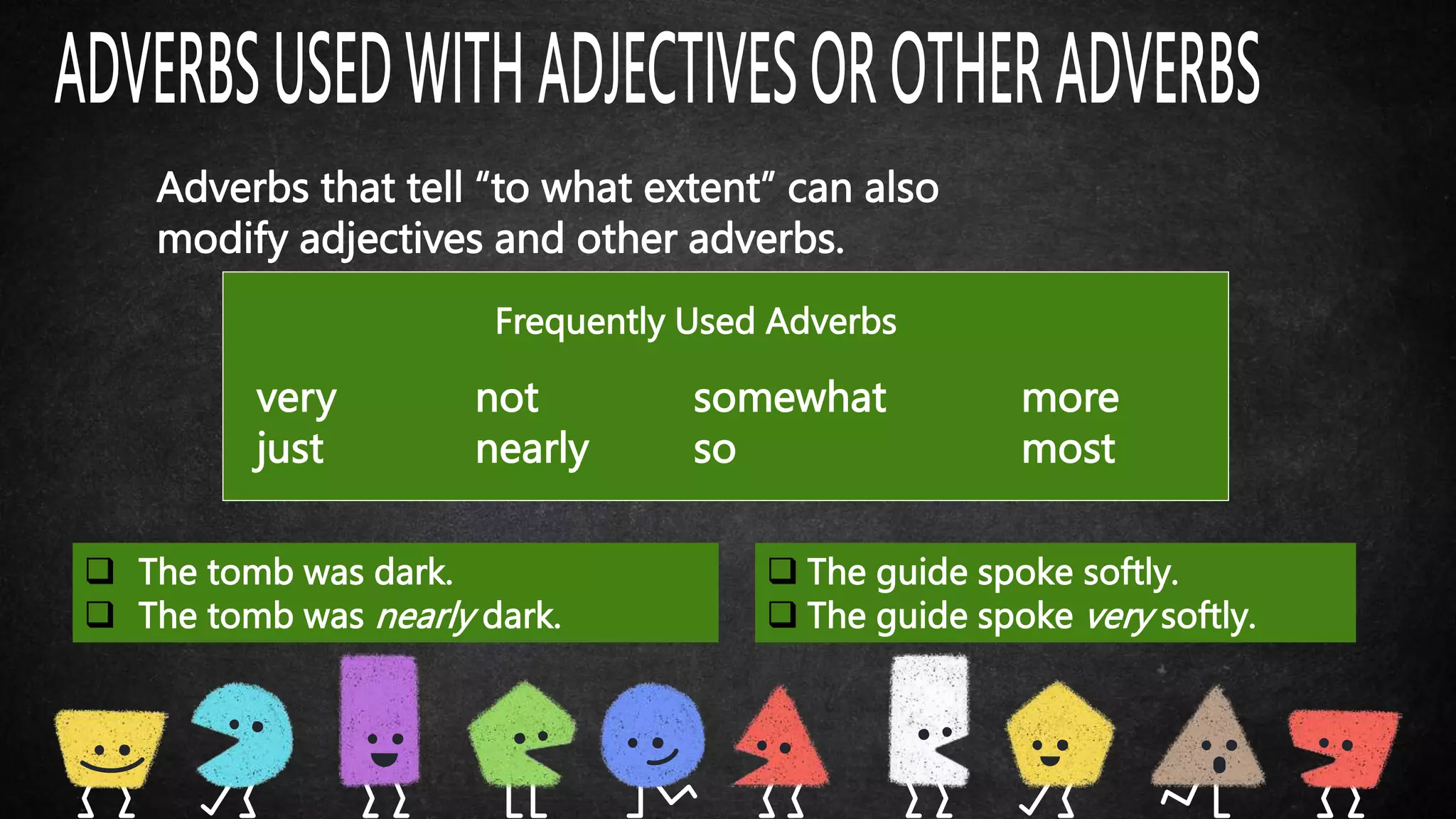
Adverbs that tell “to what extent” can also
modify adjectives and other adverbs.
Frequently Used Adverbs
very not somewhat more
just nearly so most
 The tomb was dark.
 The tomb was nearly dark.
 The guide spoke softly.
 The guide spoke very softly.
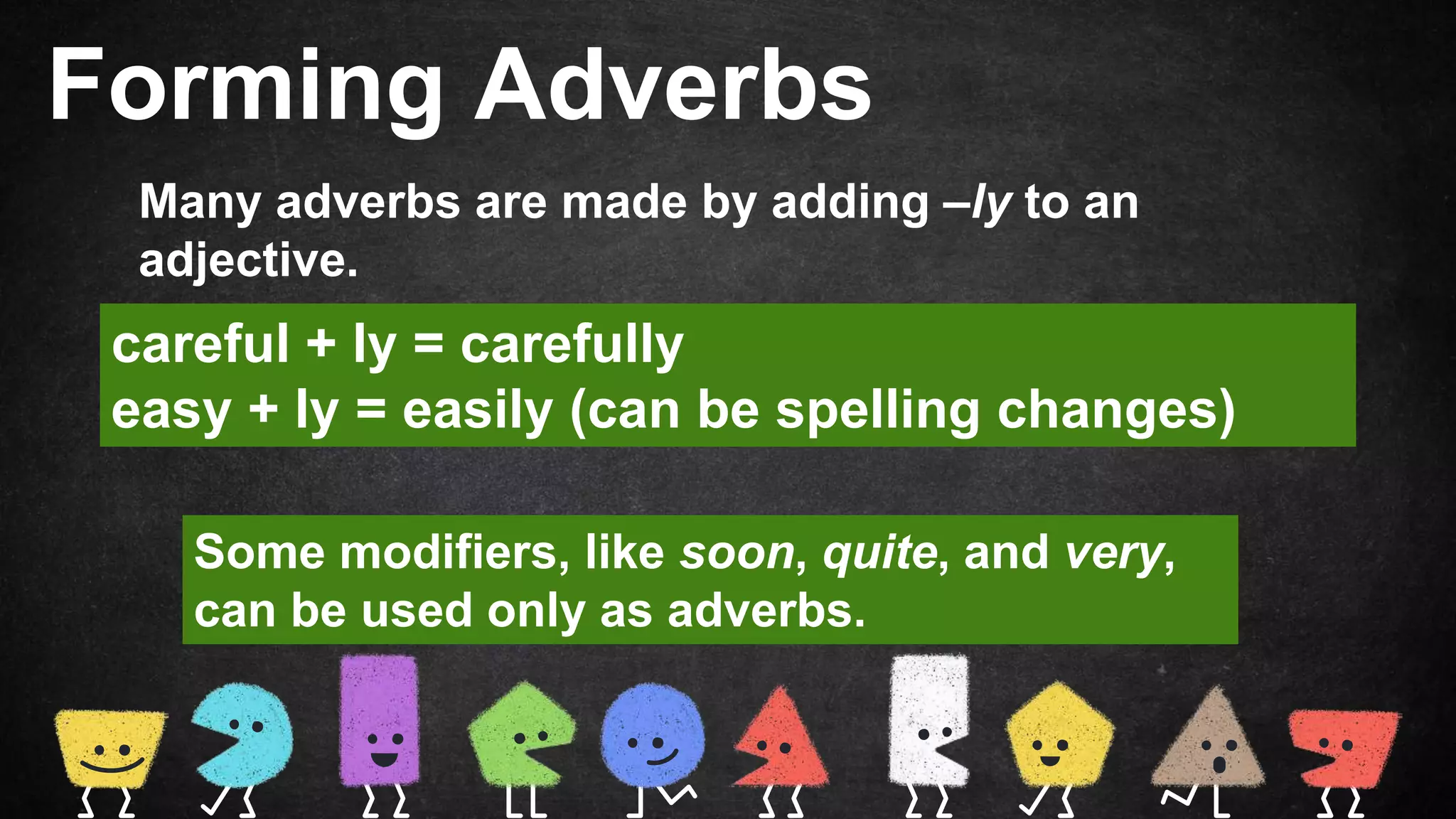
Many adverbs are made by adding –ly to an
adjective.
careful + ly = carefully
easy + ly = easily (can be spelling changes)
Some modifiers, like soon, quite, and very,
can be used only as adverbs.
Forming Adverbs
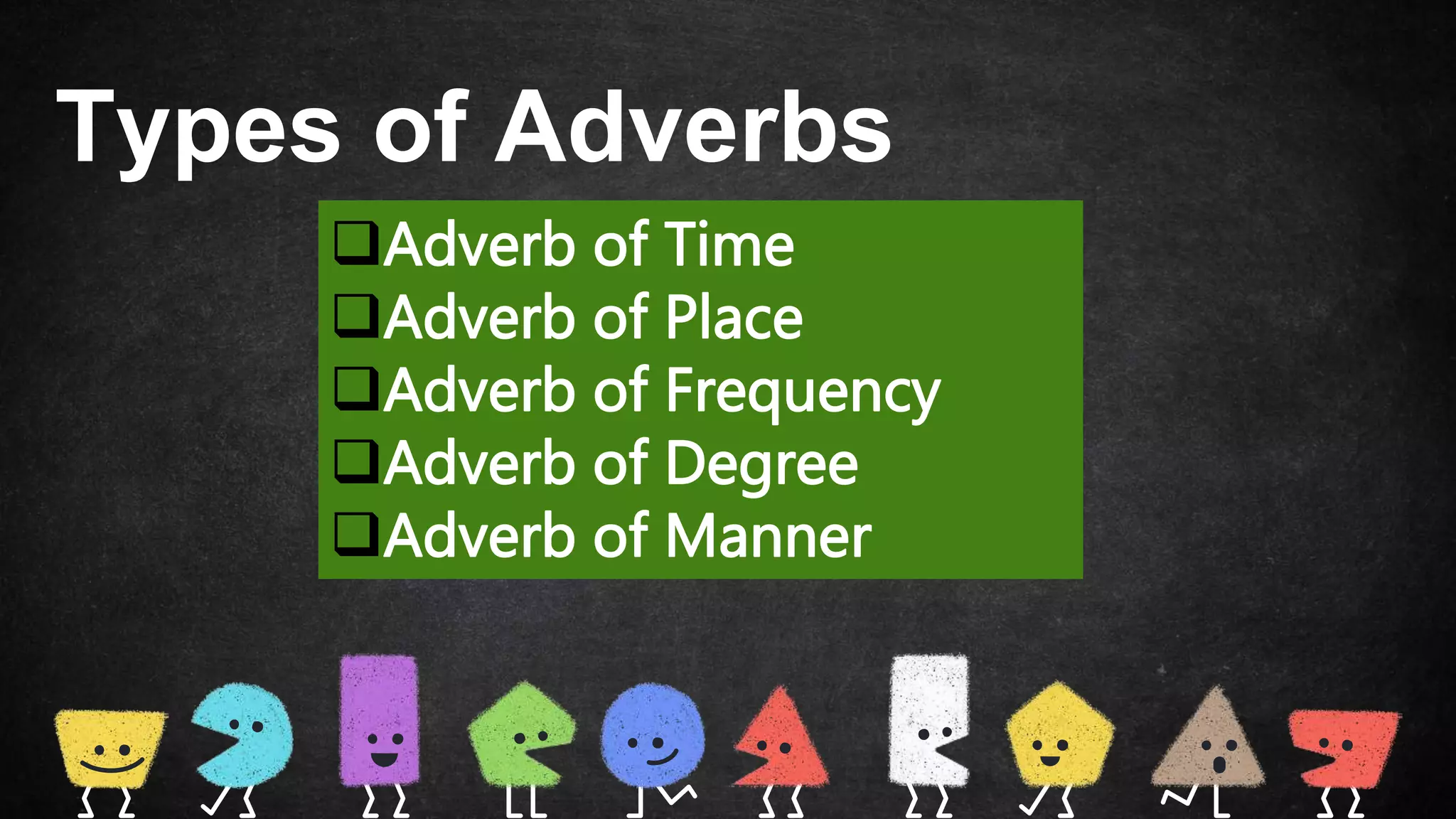
Types of Adverbs
Adverb of Time
Adverb of Place
Adverb of Frequency
Adverb of Degree
Adverb of Manner
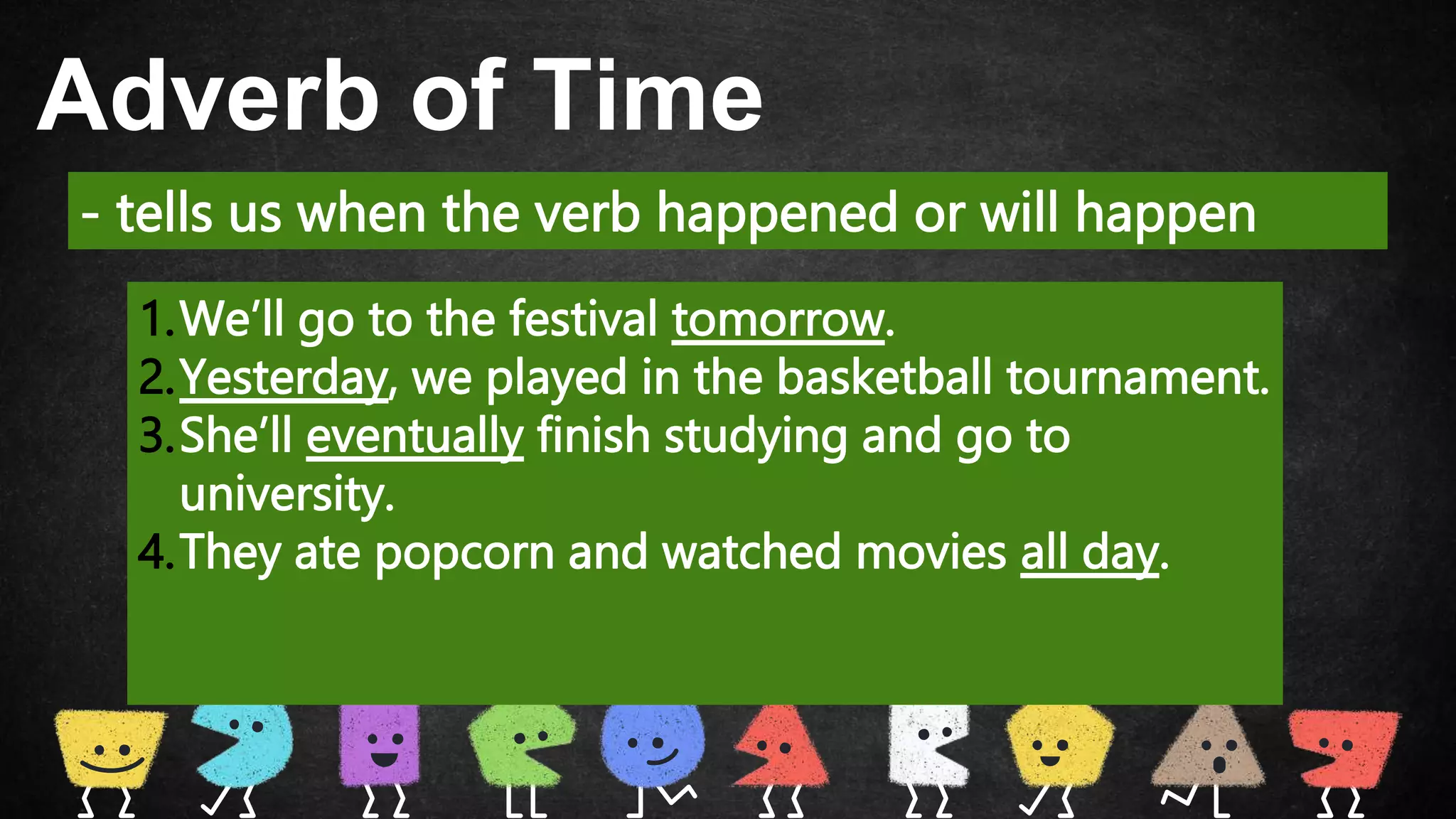
Adverb of Time
- tells us when the verb happened or will happen
1.We’ll go to the festival tomorrow.
2.Yesterday, we played in the basketball tournament.
3.She’ll eventually finish studying and go to
university.
4.They ate popcorn and watched movies all day.
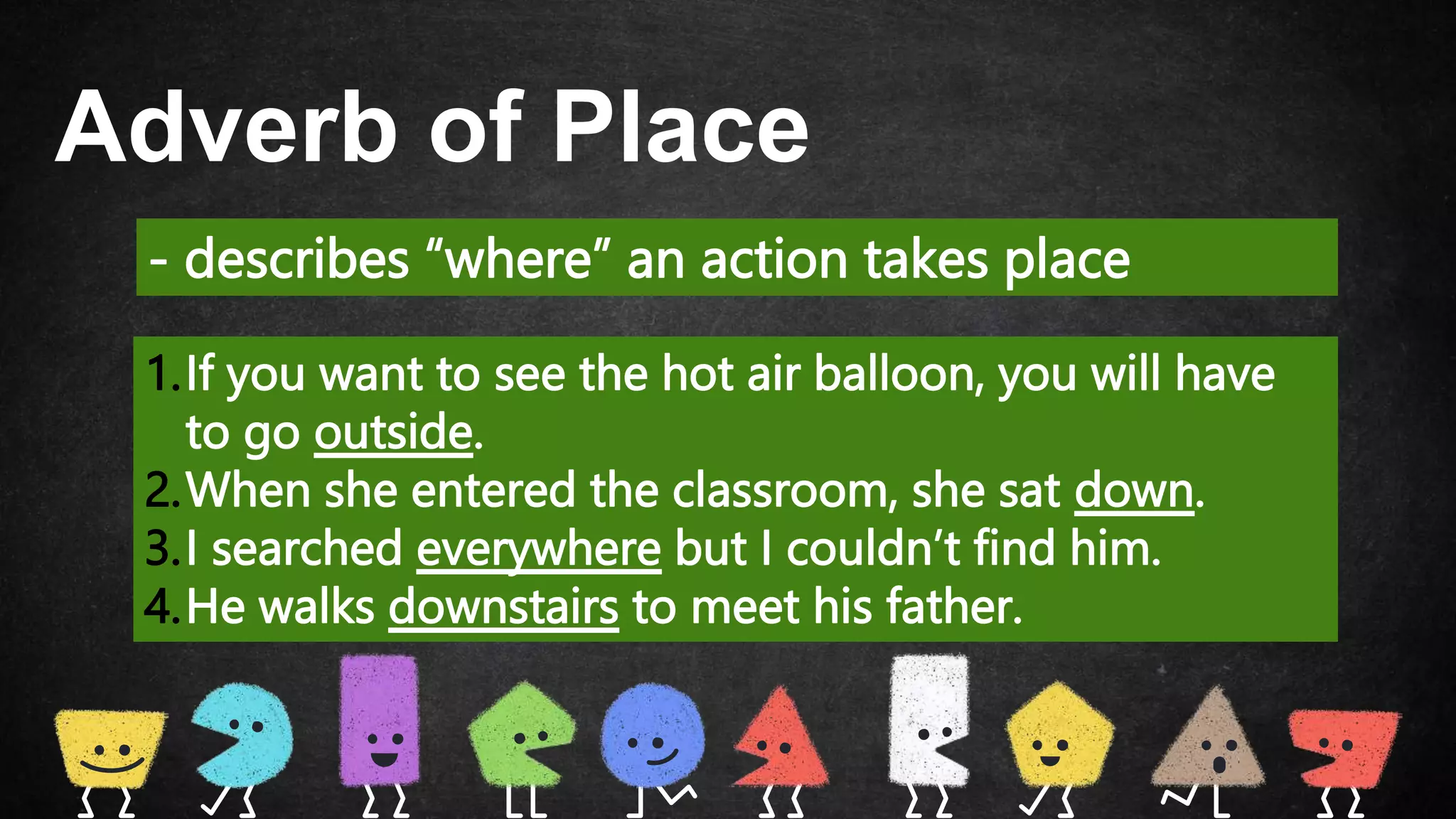
Adverb of Place
- describes “where” an action takes place
1.If you want to see the hot air balloon, you will have
to go outside.
2.When she entered the classroom, she sat down.
3.I searched everywhere but I couldn’t find him.
4.He walks downstairs to meet his father.
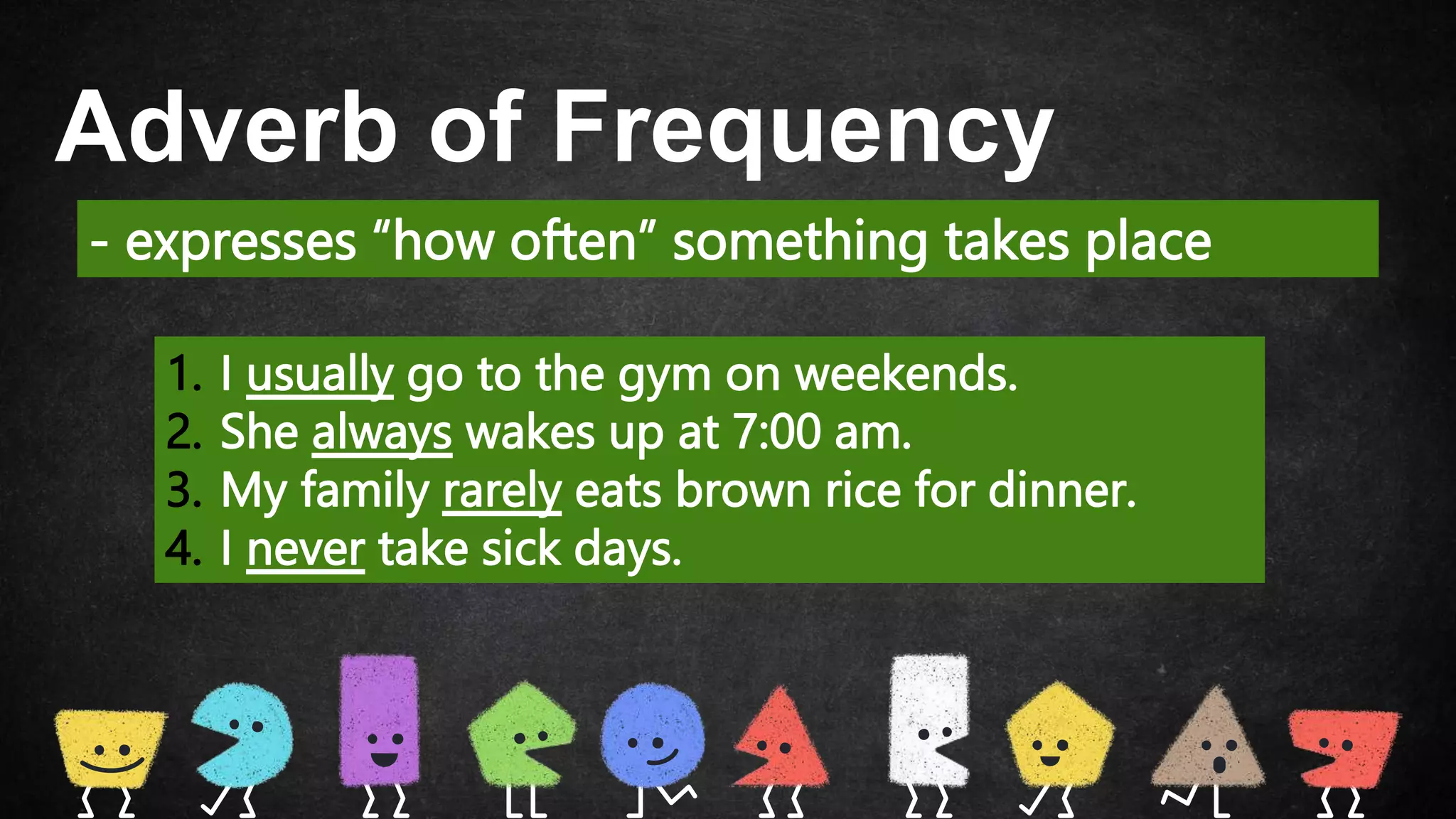
Adverb of Frequency
- expresses “how often” something takes place
1. I usually go to the gym on weekends.
2. She always wakes up at 7:00 am.
3. My family rarely eats brown rice for dinner.
4. I never take sick days.
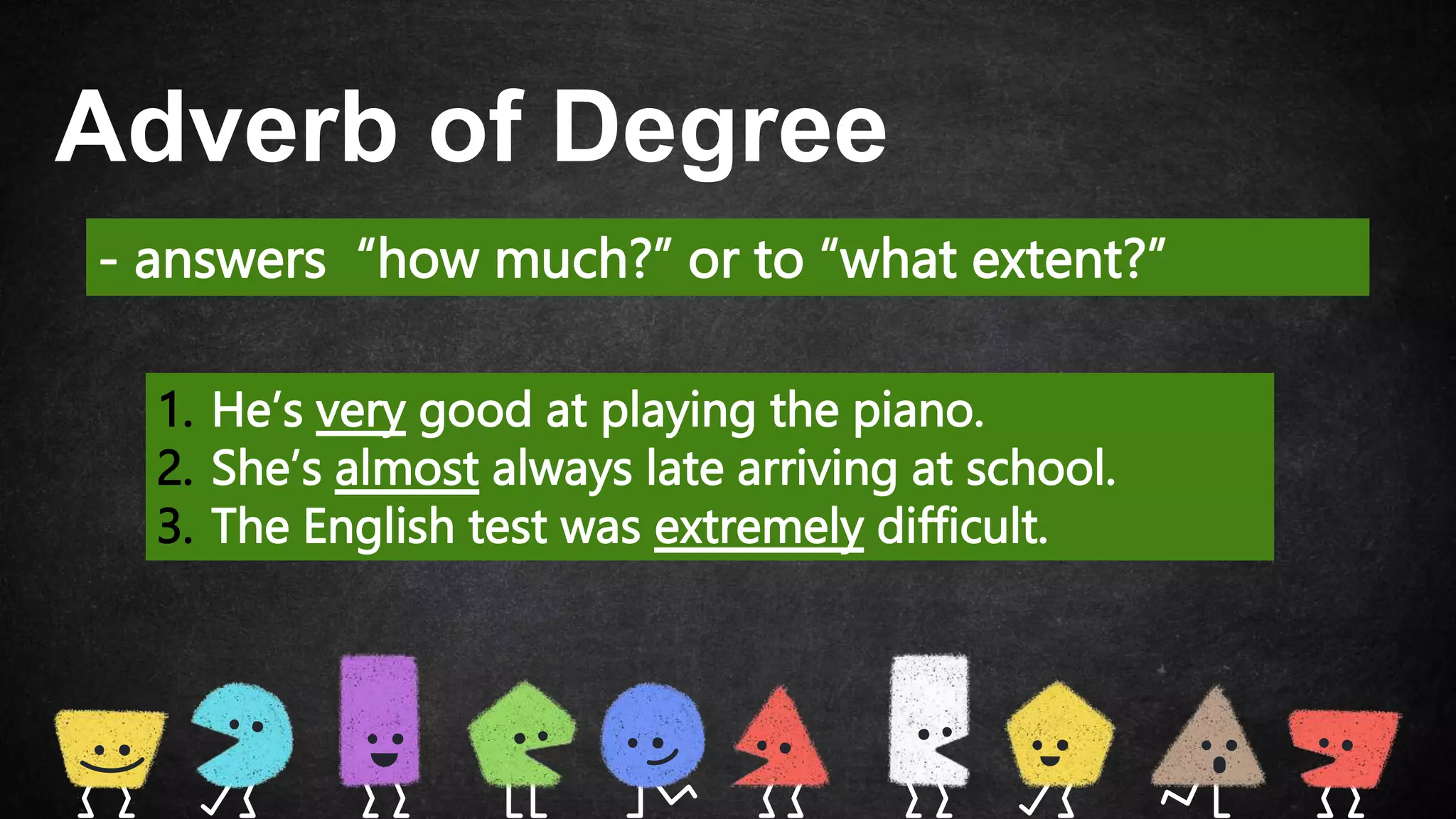
Adverb of Degree
- answers “how much?” or to “what extent?”
1. He’s very good at playing the piano.
2. She’s almost always late arriving at school.
3. The English test was extremely difficult.
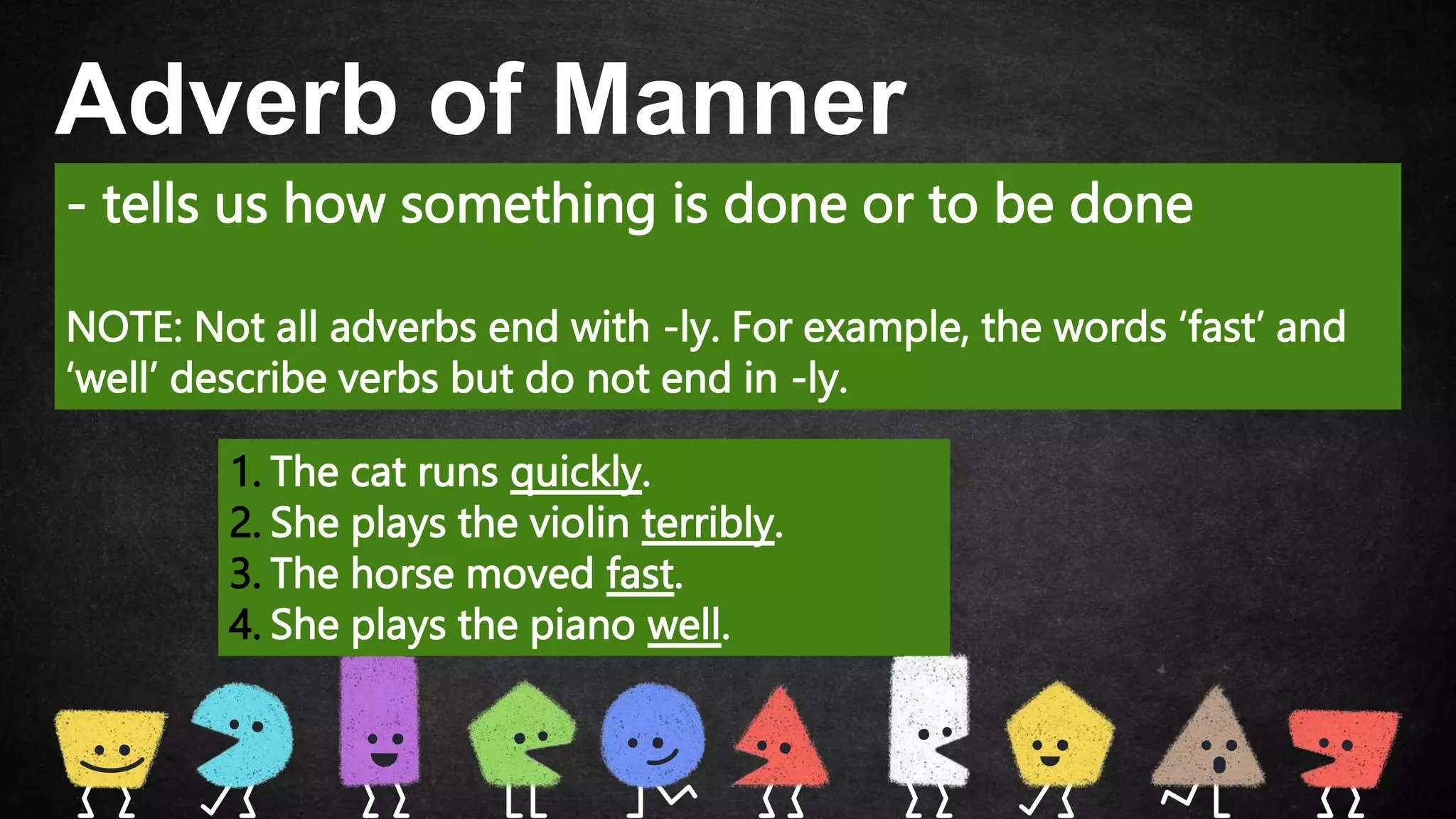
Adverb of Manner
- tells us how something is done or to be done
NOTE: Not all adverbs end with -ly. For example, the words ‘fast’ and
‘well’ describe verbs but do not end in -ly.
1. The cat runs quickly.
2. She plays the violin terribly.
3. The horse moved fast.
4. She plays the piano well.
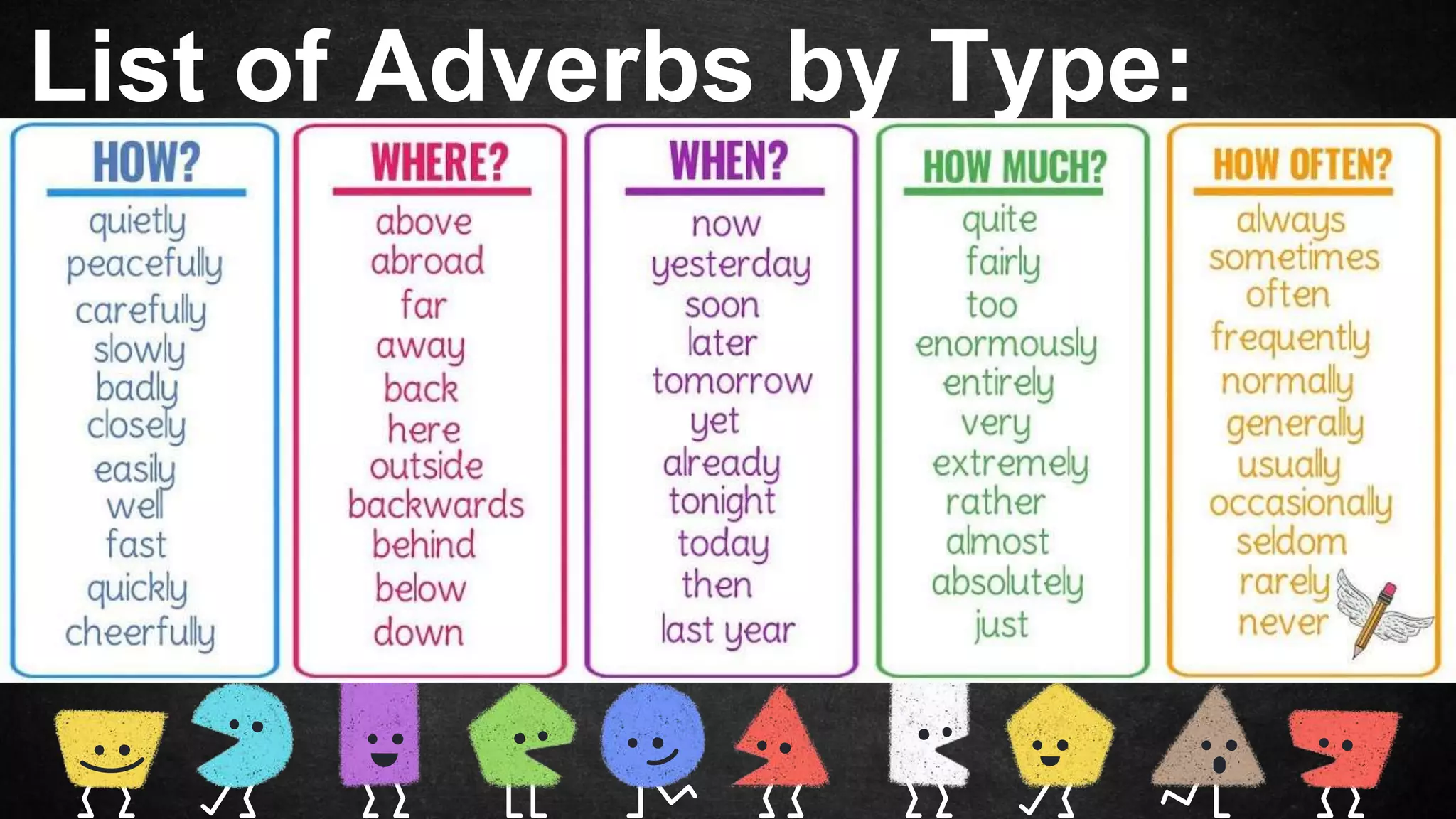
List of Adverbs by Type:
LET US TRY!
Identify what type of adverb is the underlined word.
1. The girl sang sweetly.
2. What is he doing outside?
3. He practices cricket every day.
4. I look forward to hearing from you soon.
5. The old woman was walking slowly.
6. The kittens are playing there.
7. Children usually rush about.
8. The girls danced gracefully.
9. She has travelled everywhere.
LET US TRY!
Identify what type of adverb is the underlined word.
1. The girl sang sweetly.
2. What is he doing outside?
3. He practices cricket every day.
4. I look forward to hearing from you soon.
5. The old woman was walking slowly.
6. The kittens are playing there.
7. Children usually rush about.
8. The girls danced gracefully.
9. She has travelled everywhere.

Modifiers (Adjectives, Adverbs).ppt

  • 1.
  • 2.
    MODIFIER - a word,phrase, or clause that modifies or gives information about another word in the same sentence.
  • 3.
    Modifiers provide additionalinformation about nouns, pronouns, and verbs, adjectives, and adverbs. They help us describe what we have seen and heard. Example: Vincent painted quickly and forcefully. Question: How did Vincent paint? What is a MODIFIER?
  • 4.
    TWO TYPES OFMODIFIERS Adverb - modifies verbs, adjectives, and other adverbs Adjective - describes a noun or a pronoun 4
  • 5.
    ADJECTIVES 5 • a wordthat modifies a noun or pronoun (NOT A VERB) • Some adjectives tell how many or what kind about the words they modify.
  • 6.
    ADJECTIVES 6 • He triednew techniques in his first paintings. What are the different types of adjectives? Examples: • The older paintings are expensive.
  • 7.
    TWO TYPES OF ADJECTIVES the blue sea  the sea is blue  the old man  the man is old  happy children  the children are happy Most adjectives can occur both before and after a noun/pronoun.
  • 8.
    ATTRIBUTIVE ADJECTIVES  theblue sea  the old man  happy children - occur BEFORE a noun 1. The green door opened slowly. 2. The soft pillows gave me a good sleep. 3. That is a large tomato plant.
  • 9.
    PREDICATIVE ADJECTIVES - occurAFTER a noun - appear after a linking verb 1. This stretch of water is dangerous. 2. The soup tastes bad. 3. John is great in painting.  the sea is blue  the man is old  the children are happy
  • 10.
    LET US TRY! Identifywhat type of adjective is the underlined word. 1. The fancy dress was covered in pearls. 2. The kitten felt fragile. 3. The lonely boy wished for a friend. 4. He seems tired today. 5. I don't know what you're making, but it smells delicious!
  • 11.
    11 ADVERBS • modifies averb, an adjective, or another adverb • help make meaning clear by telling how, when, where, or to what extent something is true
  • 12.
    Look at thislist of adverbs: How? When? Where? To What Extent? carefully quickly hurriedly sometimes once finally inside here there fully very extremely Notice how adverbs make the sentences clearer. Ex: Finally, the door of the tomb slowly opened. ADVERBS
  • 13.
    Adverbs that tell“to what extent” can also modify adjectives and other adverbs. Frequently Used Adverbs very not somewhat more just nearly so most  The tomb was dark.  The tomb was nearly dark.  The guide spoke softly.  The guide spoke very softly.
  • 14.
    Many adverbs aremade by adding –ly to an adjective. careful + ly = carefully easy + ly = easily (can be spelling changes) Some modifiers, like soon, quite, and very, can be used only as adverbs. Forming Adverbs
  • 15.
    Types of Adverbs Adverbof Time Adverb of Place Adverb of Frequency Adverb of Degree Adverb of Manner
  • 16.
    Adverb of Time -tells us when the verb happened or will happen 1.We’ll go to the festival tomorrow. 2.Yesterday, we played in the basketball tournament. 3.She’ll eventually finish studying and go to university. 4.They ate popcorn and watched movies all day.
  • 17.
    Adverb of Place -describes “where” an action takes place 1.If you want to see the hot air balloon, you will have to go outside. 2.When she entered the classroom, she sat down. 3.I searched everywhere but I couldn’t find him. 4.He walks downstairs to meet his father.
  • 18.
    Adverb of Frequency -expresses “how often” something takes place 1. I usually go to the gym on weekends. 2. She always wakes up at 7:00 am. 3. My family rarely eats brown rice for dinner. 4. I never take sick days.
  • 19.
    Adverb of Degree -answers “how much?” or to “what extent?” 1. He’s very good at playing the piano. 2. She’s almost always late arriving at school. 3. The English test was extremely difficult.
  • 20.
    Adverb of Manner -tells us how something is done or to be done NOTE: Not all adverbs end with -ly. For example, the words ‘fast’ and ‘well’ describe verbs but do not end in -ly. 1. The cat runs quickly. 2. She plays the violin terribly. 3. The horse moved fast. 4. She plays the piano well.
  • 21.
  • 22.
    LET US TRY! Identifywhat type of adverb is the underlined word. 1. The girl sang sweetly. 2. What is he doing outside? 3. He practices cricket every day. 4. I look forward to hearing from you soon. 5. The old woman was walking slowly. 6. The kittens are playing there. 7. Children usually rush about. 8. The girls danced gracefully. 9. She has travelled everywhere.
  • 23.
    LET US TRY! Identifywhat type of adverb is the underlined word. 1. The girl sang sweetly. 2. What is he doing outside? 3. He practices cricket every day. 4. I look forward to hearing from you soon. 5. The old woman was walking slowly. 6. The kittens are playing there. 7. Children usually rush about. 8. The girls danced gracefully. 9. She has travelled everywhere.