Maria Bethsy Ersalina
ADVERB OF MANNER
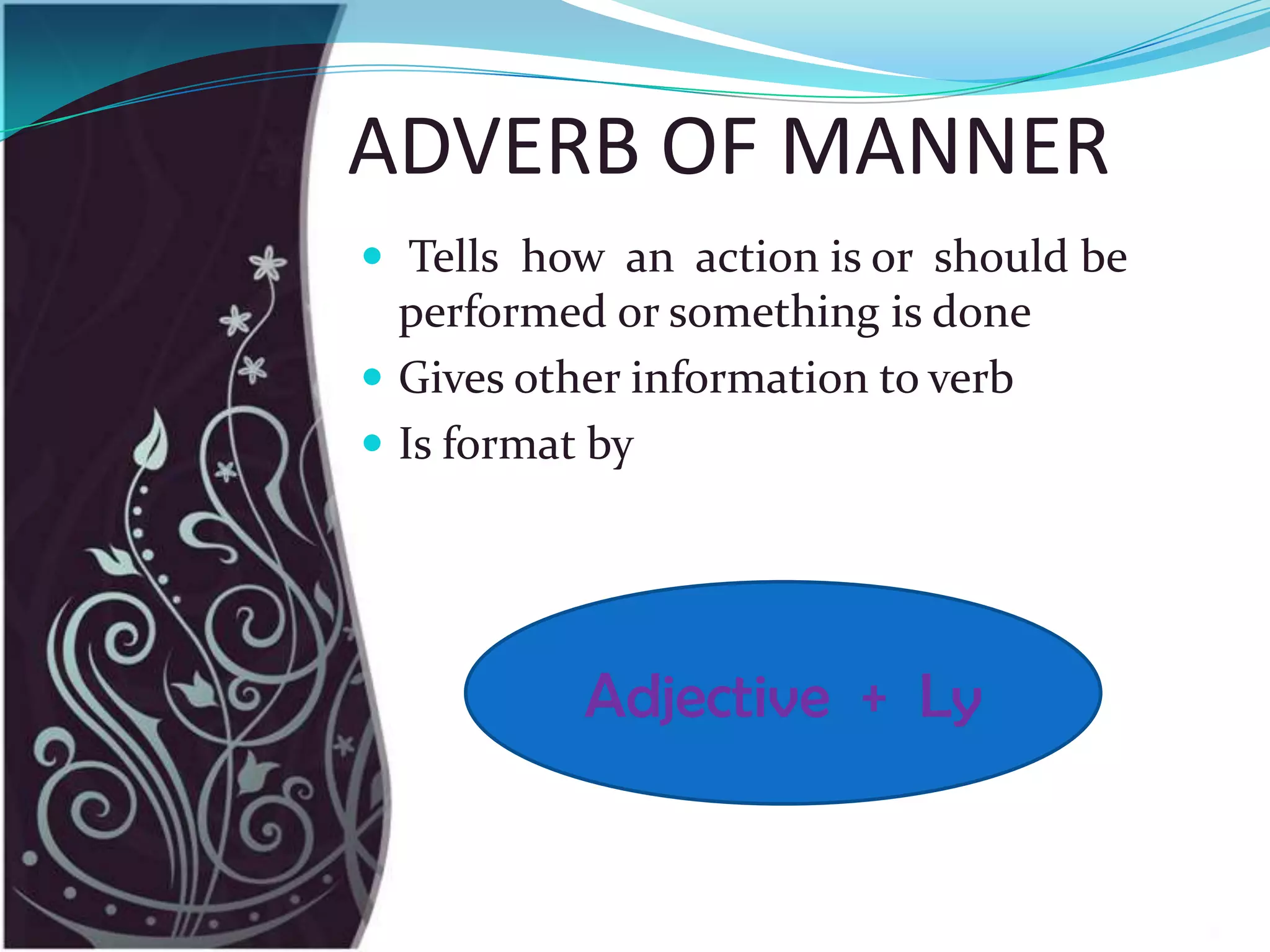
 Tells how an action is or should be
  performed or something is done
 Gives other information to verb
 Is format by


           Adjective + Ly
Adverb of Manner
 Most adverb of manner are formed by andding –ly to an
    adjective,but sometimes other spelling changes are needed.
   We can ’t form adverbs from adjectives that end in –ly
   Some adverbs have the same form as adjectives
   We don’t use adverbs after link verbs,you use adjectives
   Adverbials of manner are sometimes prepositional phrases
    or noun group
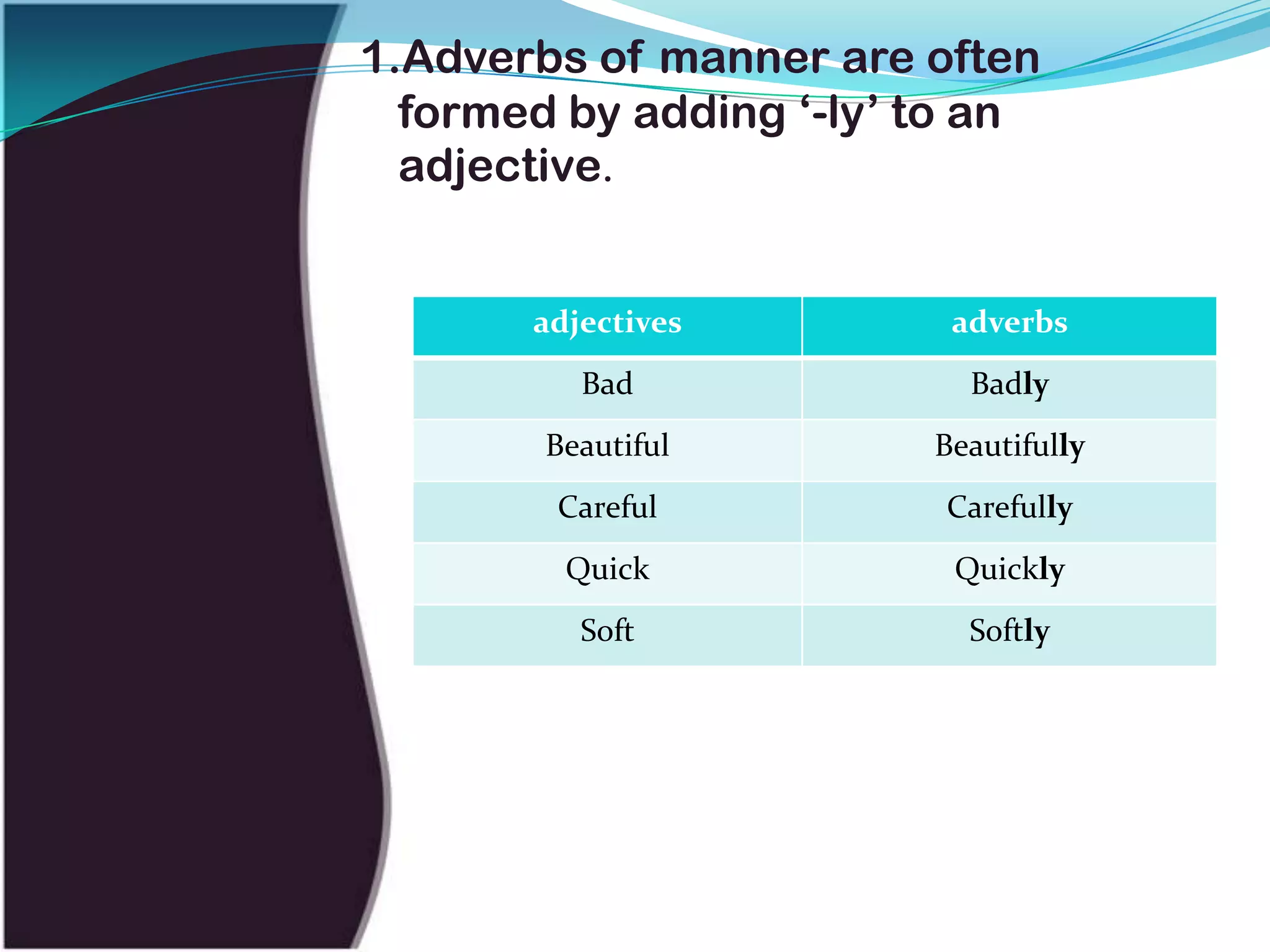
1.Adverbs of manner are often
  formed by adding ‘-ly’ to an
  adjective.


       adjectives         adverbs
          Bad              Badly
        Beautiful        Beautifully
        Careful          Carefully
         Quick            Quickly
          Soft             Softly
2. Adverbs formed in this way usually have a similar
  meaning to the adjective.
 She is as clever as she is beautiful.
 He talked so politely and danced so beautifully.
 ‘We must not talk. We must be quiet,’ said Sita.
 She wanted to sit quietly, to relax.
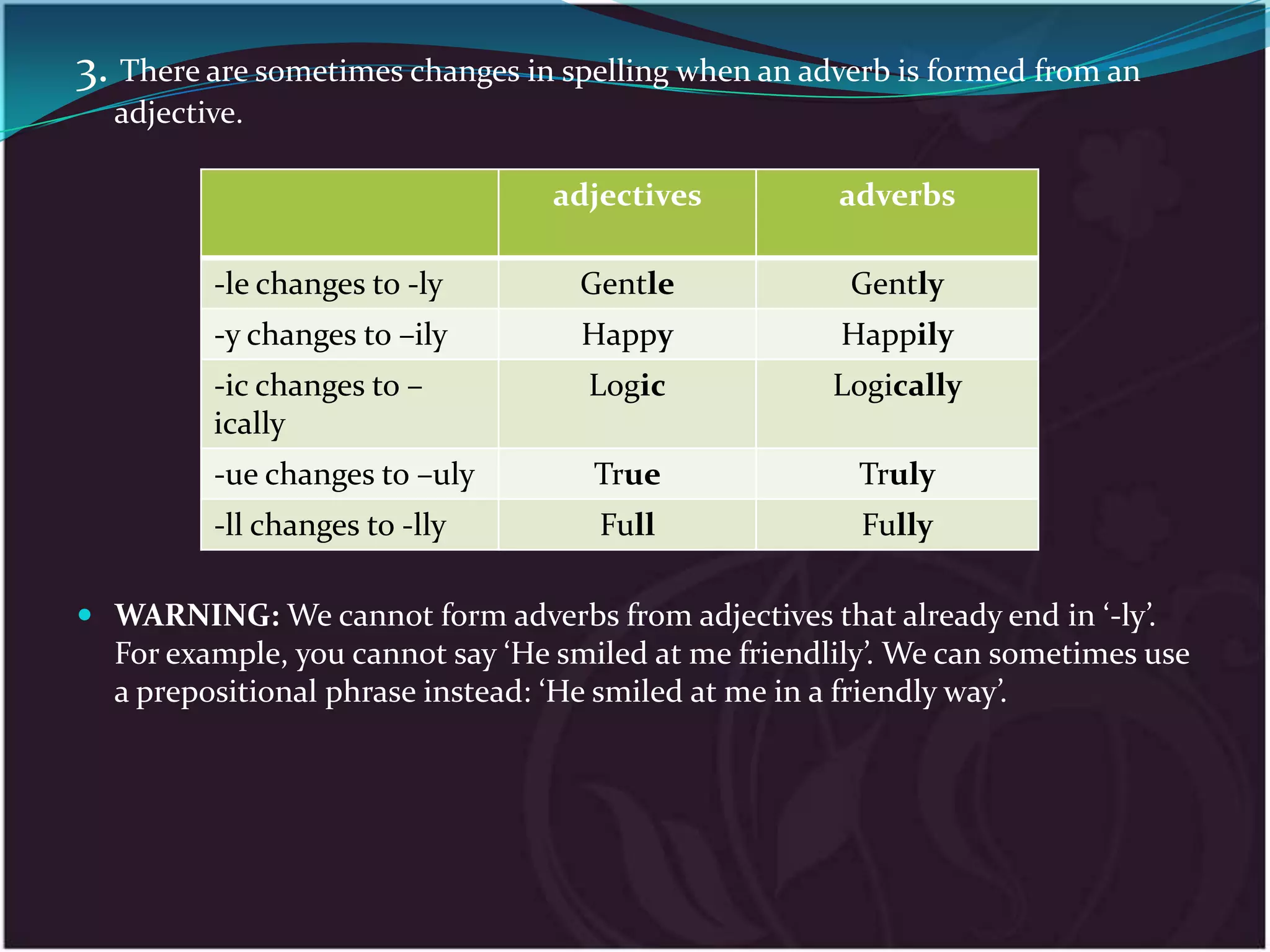
3. There are sometimes changes in spelling when an adverb is formed from an
  adjective.

                                  adjectives          adverbs

         -le changes to -ly         Gentle             Gently
         -y changes to –ily         Happy             Happily
         -ic changes to –           Logic             Logically
         ically
         -ue changes to –uly         True               Truly
         -ll changes to -lly         Full               Fully

 WARNING: We cannot form adverbs from adjectives that already end in ‘-ly’.
  For example, you cannot say ‘He smiled at me friendlily’. We can sometimes use
  a prepositional phrase instead: ‘He smiled at me in a friendly way’.
4. Some adverbs of manner have the same form as
  adjectives and have similar meanings, for example
  ‘fast’, ‘hard’, and ‘late’.
 I've always been interested in fast cars. (adjective)
 The driver was driving too fast. (adverb)
Note that ‘hardly’ and ‘lately’ are not adverbs of
  manner and have different meanings from the
  adjectives ‘hard’ and ‘late’.
 It was a hard decision to make.
 I hardly had any time to talk to her.
 The train was late as usual.
 Have you seen John lately
5. The adverb of manner related to the adjective ‘good’ is
  ‘well’.
 He is a good dancer.
 He dances well.
>>Note that ‘well’ can sometimes be an adjective when it
  refers to someone's health.
 ‘How are you?’- ‘I am very well, thank you.’
6. We do not use adverbs after Iink verbs such as ‘be’,
  ‘become’, ‘feel’, ‘get’, ‘look’, and ‘seem’. You use an
  adjective after these verbs.

  For example, you do not say ‘Sue felt happily’. You say
  ‘Sue felt happy’.
7. We do not often use prepositional phrases or noun
  groups as adverbials of manner. However, we occasionally
  need to use them, for example when there is no adverb
  form available. The prepositional phrases and noun
  groups usually include a noun such as ‘way’, ‘fashion’, or
  ‘manner’, or a noun that refers to someone's voice.
 She asked me in such a nice manner that I couldn't refuse..
 He did it the right way..
 They spoke in angry tones.
Prepositional phrases with ‘like’ are also used as adverbials of
  manner.
 I slept like a baby..
 He drove like a madman.

Adverb of manner

  • 1.
  • 2.
    ADVERB OF MANNER Tells how an action is or should be performed or something is done  Gives other information to verb  Is format by Adjective + Ly
  • 3.
    Adverb of Manner Most adverb of manner are formed by andding –ly to an adjective,but sometimes other spelling changes are needed.  We can ’t form adverbs from adjectives that end in –ly  Some adverbs have the same form as adjectives  We don’t use adverbs after link verbs,you use adjectives  Adverbials of manner are sometimes prepositional phrases or noun group
  • 4.
    1.Adverbs of mannerare often formed by adding ‘-ly’ to an adjective. adjectives adverbs Bad Badly Beautiful Beautifully Careful Carefully Quick Quickly Soft Softly
  • 5.
    2. Adverbs formedin this way usually have a similar meaning to the adjective.  She is as clever as she is beautiful.  He talked so politely and danced so beautifully.  ‘We must not talk. We must be quiet,’ said Sita.  She wanted to sit quietly, to relax.
  • 6.
    3. There aresometimes changes in spelling when an adverb is formed from an adjective. adjectives adverbs -le changes to -ly Gentle Gently -y changes to –ily Happy Happily -ic changes to – Logic Logically ically -ue changes to –uly True Truly -ll changes to -lly Full Fully  WARNING: We cannot form adverbs from adjectives that already end in ‘-ly’. For example, you cannot say ‘He smiled at me friendlily’. We can sometimes use a prepositional phrase instead: ‘He smiled at me in a friendly way’.
  • 7.
    4. Some adverbsof manner have the same form as adjectives and have similar meanings, for example ‘fast’, ‘hard’, and ‘late’.  I've always been interested in fast cars. (adjective)  The driver was driving too fast. (adverb) Note that ‘hardly’ and ‘lately’ are not adverbs of manner and have different meanings from the adjectives ‘hard’ and ‘late’.  It was a hard decision to make.  I hardly had any time to talk to her.  The train was late as usual.  Have you seen John lately
  • 8.
    5. The adverbof manner related to the adjective ‘good’ is ‘well’.  He is a good dancer.  He dances well. >>Note that ‘well’ can sometimes be an adjective when it refers to someone's health.  ‘How are you?’- ‘I am very well, thank you.’
  • 9.
    6. We donot use adverbs after Iink verbs such as ‘be’, ‘become’, ‘feel’, ‘get’, ‘look’, and ‘seem’. You use an adjective after these verbs. For example, you do not say ‘Sue felt happily’. You say ‘Sue felt happy’.
  • 10.
    7. We donot often use prepositional phrases or noun groups as adverbials of manner. However, we occasionally need to use them, for example when there is no adverb form available. The prepositional phrases and noun groups usually include a noun such as ‘way’, ‘fashion’, or ‘manner’, or a noun that refers to someone's voice.  She asked me in such a nice manner that I couldn't refuse..  He did it the right way..  They spoke in angry tones. Prepositional phrases with ‘like’ are also used as adverbials of manner.  I slept like a baby..  He drove like a madman.