Embed presentation


This document discusses various English adverbs of time and provides examples of how they are used in sentences. It defines adverbs like early, late, earlier, later, then, before, after, afterwards, now, today, tomorrow, and yesterday and shows how they indicate when actions occur relative to other points in time.
Introduction to adverbs of time, which indicate when an action occurs, focusing on the most useful ones.
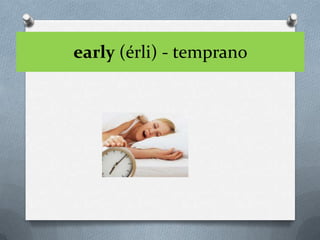
Examples of 'early' with usage in a sentence: Karla wakes up early every morning.
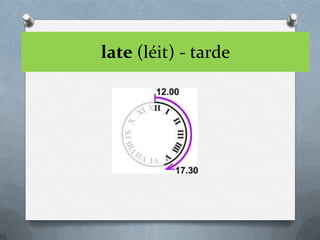
Examples of 'late' with usage in a sentence: Joe and Pam arrived late last night.
Examples of 'earlier' with usage in a sentence: Must leave earlier to catch the bus.
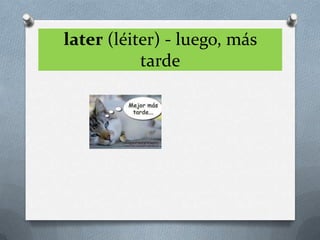
Examples of 'later' with usage in a sentence: Please call me back later.
Examples of 'then' used to indicate time: We'll see you then.
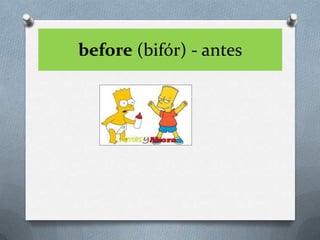
Examples of 'before' with usage in a sentence: I'm sure I've seen you before.
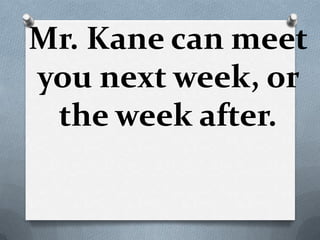
Examples of 'after' with usage in a sentence: Mr. Kane can meet you next week or the week after.
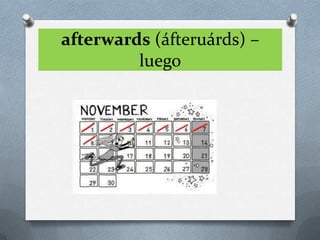
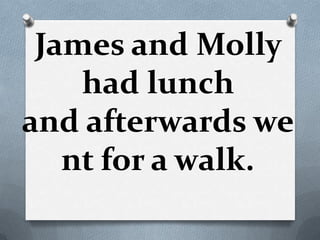
Usage of 'afterwards' indicating sequence: We had lunch and afterwards went for a walk.
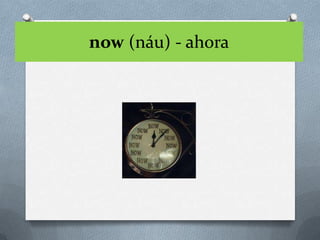
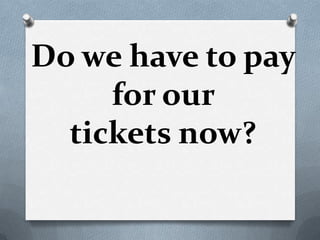
Examples of 'now' with a question: Do we have to pay for our tickets now?
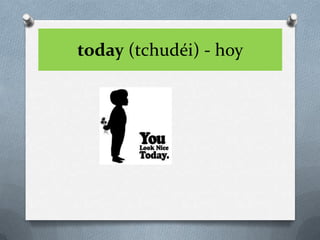
Introduction to 'today' as a time reference.
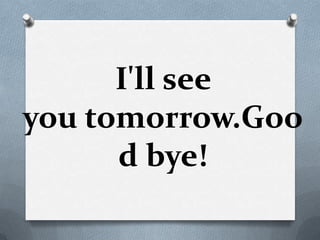
Examples of 'tomorrow' with usage in a sentence: I’ll see you tomorrow. Goodbye!
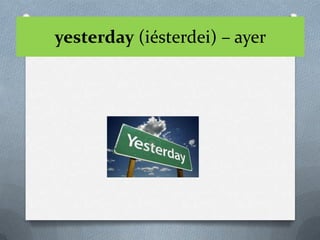
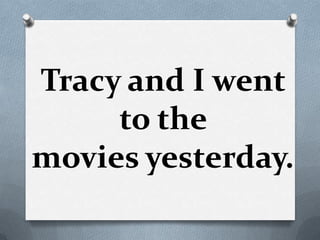
Usage of 'yesterday' in a sentence: Tracy and I went to the movies yesterday.
Thank you for your attention, closing the presentation.