Advanced Operating Systems
I MCA- II SEMESTER
SUBJECT CODE : P22MCACC22
UNIT – V
Mobile Operating System & ARM
Presented By
S.Vijaya Lakshmi B.E(CSE)
Assistant Professor,
Department of Computer Science,
Sri Sarada Niketan College for Women,Karur.
Mobile Operating System
• A mobile operating system is an operating
system that helps to run other application
software on mobile devices.
• It is the same kind of software as the famous
computer operating systems like Linux and
Windows, but now they are light and simple
to some extent.
Features of mobile OS
• Compatibility With Different Hardware.
• Stable Performance on Various Devices.
• Absence of Bugs.
• Flexibility and Adaptability.
• Possibilities for Personalization.
• Support of Cutting-Edge Technologies.
• Handy Software Installed From the Get-Go.
Advantages
• User-Friendly Interface.
• Source of computing.
• Sharing Resources.
• Data Protection.
• Uninvolvement of Coding Lines.
• Multitasking.
• Updated software.
• System Error.
Arm and intel architecture
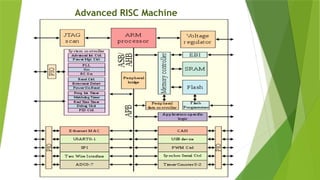
• ARM stands for Advanced RISC Machine.
• The Arm architecture is a family of reduced
instruction set computing (RISC) architectures for
computer processors.
• The term Intel® architecture encompasses a
combination of microprocessors and supporting
hardware that creates the building blocks for a
variety of computing systems.
Advanced RISC Machine
Mobile OS architecture
• A mobile operating system (OS)
is software that allows smartphones,
tablets and other devices to run
applications and programs.
• A mobile OS provides an interface
between the device's hardware
components and its software functions.
Intel processors
 Intel processors (commonly referred to as X86 in correlation
with Windows 32-bit programs) use Complex Instruction Set
Computing (CISC), while ARM uses Reduced Instruction Set
Computing (RISC).
 While both perform commands rather quickly in 2021, thanks
to multiple cores, CISC uses a slightly more complex instruction
set, which requires several cycles to perform tasks.
 The main idea is complex hardware and simple software. In
this case, it means more basic assembly language functionality.
Power Management In Os
• Power management systems help ensure the
safe, reliable, efficient, and compliant operation
of your electrical distribution systems, including
the assets connected to it.
• They can help you: Avoid electrical fires and
prevent shock. Recover from outages more
quickly and safely.
Methods of power management
Power Management software enables two ways of
reducing power consumption:
 Device power management and
 Suspend-Resume.
Phases of Architecture
• Schematic Design,
• Design Development,
• Contract Documents,
• Bidding,
• Contract Administration.
Popular platforms of the Mobile OS
1. Android OS
 The Android operating system is the most
popular operating system today. It is a mobile OS based on
the Linux Kernel and open-source software.
 The android operating system was developed by Google.
The first Android device was launched in 2008.
2. Bada (Samsung Electronics)
Bada is a Samsung mobile operating system that
was launched in 2010.
The Samsung wave was the first mobile to use the
bada operating system.
The bada operating system offers many mobile
features, such as 3-D graphics, application
installation, and multipoint-touch.
3. BlackBerry OS
The BlackBerry operating system is a mobile operating system
developed by Research In Motion (RIM).
 This operating system was designed specifically for BlackBerry
handheld devices.
 This operating system is beneficial for the corporate users
because it provides synchronization with Microsoft Exchange,
Novell GroupWise email, Lotus Domino, and other business
software when used with the BlackBerry Enterprise Server.
4. iPhone OS / iOS
 The iOS was developed by the Apple inc for the
use on its device. The iOS operating system is the
most popular operating system today.
 It is a very secure operating system.
 The iOS operating system is not available for any
other mobiles.
5. Symbian OS
 Symbian operating system is a mobile operating system
that provides a high-level of integration with
communication.
 The Symbian operating system is based on the java
language. It combines middleware of wireless
communications and personal information management
(PIM) functionality.
 The Symbian operating system was developed by Symbian
Ltd in 1998 for the use of mobile phones. Nokia was the
first company to release Symbian OS on its mobile phone
at that time.
6. Windows Mobile OS: It is a mobile operating
system that was developed by Microsoft. It was
designed for the pocket PCs and smart mobiles.
7. Harmony OS: It is the latest mobile operating
system that was developed by Huawei for the use
of its devices. It is designed primarily for IOT
devices.
Thank You

Advanced Operating Systems- Mobile OS and ARM

  • 1.
    Advanced Operating Systems IMCA- II SEMESTER SUBJECT CODE : P22MCACC22 UNIT – V Mobile Operating System & ARM Presented By S.Vijaya Lakshmi B.E(CSE) Assistant Professor, Department of Computer Science, Sri Sarada Niketan College for Women,Karur.
  • 2.
    Mobile Operating System •A mobile operating system is an operating system that helps to run other application software on mobile devices. • It is the same kind of software as the famous computer operating systems like Linux and Windows, but now they are light and simple to some extent.
  • 3.
    Features of mobileOS • Compatibility With Different Hardware. • Stable Performance on Various Devices. • Absence of Bugs. • Flexibility and Adaptability. • Possibilities for Personalization. • Support of Cutting-Edge Technologies. • Handy Software Installed From the Get-Go.
  • 4.
    Advantages • User-Friendly Interface. •Source of computing. • Sharing Resources. • Data Protection. • Uninvolvement of Coding Lines. • Multitasking. • Updated software. • System Error.
  • 5.
    Arm and intelarchitecture • ARM stands for Advanced RISC Machine. • The Arm architecture is a family of reduced instruction set computing (RISC) architectures for computer processors. • The term Intel® architecture encompasses a combination of microprocessors and supporting hardware that creates the building blocks for a variety of computing systems.
  • 6.
  • 7.
    Mobile OS architecture •A mobile operating system (OS) is software that allows smartphones, tablets and other devices to run applications and programs. • A mobile OS provides an interface between the device's hardware components and its software functions.
  • 8.
    Intel processors  Intelprocessors (commonly referred to as X86 in correlation with Windows 32-bit programs) use Complex Instruction Set Computing (CISC), while ARM uses Reduced Instruction Set Computing (RISC).  While both perform commands rather quickly in 2021, thanks to multiple cores, CISC uses a slightly more complex instruction set, which requires several cycles to perform tasks.  The main idea is complex hardware and simple software. In this case, it means more basic assembly language functionality.
  • 9.
    Power Management InOs • Power management systems help ensure the safe, reliable, efficient, and compliant operation of your electrical distribution systems, including the assets connected to it. • They can help you: Avoid electrical fires and prevent shock. Recover from outages more quickly and safely.
  • 10.
    Methods of powermanagement Power Management software enables two ways of reducing power consumption:  Device power management and  Suspend-Resume.
  • 11.
    Phases of Architecture •Schematic Design, • Design Development, • Contract Documents, • Bidding, • Contract Administration.
  • 12.
    Popular platforms ofthe Mobile OS 1. Android OS  The Android operating system is the most popular operating system today. It is a mobile OS based on the Linux Kernel and open-source software.  The android operating system was developed by Google. The first Android device was launched in 2008.
  • 13.
    2. Bada (SamsungElectronics) Bada is a Samsung mobile operating system that was launched in 2010. The Samsung wave was the first mobile to use the bada operating system. The bada operating system offers many mobile features, such as 3-D graphics, application installation, and multipoint-touch.
  • 14.
    3. BlackBerry OS TheBlackBerry operating system is a mobile operating system developed by Research In Motion (RIM).  This operating system was designed specifically for BlackBerry handheld devices.  This operating system is beneficial for the corporate users because it provides synchronization with Microsoft Exchange, Novell GroupWise email, Lotus Domino, and other business software when used with the BlackBerry Enterprise Server.
  • 15.
    4. iPhone OS/ iOS  The iOS was developed by the Apple inc for the use on its device. The iOS operating system is the most popular operating system today.  It is a very secure operating system.  The iOS operating system is not available for any other mobiles.
  • 16.
    5. Symbian OS Symbian operating system is a mobile operating system that provides a high-level of integration with communication.  The Symbian operating system is based on the java language. It combines middleware of wireless communications and personal information management (PIM) functionality.  The Symbian operating system was developed by Symbian Ltd in 1998 for the use of mobile phones. Nokia was the first company to release Symbian OS on its mobile phone at that time.
  • 17.
    6. Windows MobileOS: It is a mobile operating system that was developed by Microsoft. It was designed for the pocket PCs and smart mobiles. 7. Harmony OS: It is the latest mobile operating system that was developed by Huawei for the use of its devices. It is designed primarily for IOT devices.
  • 18.