Advanced data science algorithms
applied to scalable stream processing
David Piris Valenzuela
Nacho García Fernández
Ignacio.g.Fernandez@treelogic.com
@0xNacho
david.piris@treelogic.com
@davidpiris
3
About Treelogic
 R&D intensive company with the mission of adapting technological knowledge to
improve quality standards in our daily life
 8 ongoing H2020 projects (coordinating 3 of them)
 8 ongoing FP7 projects (coordinating 5 of them)
 Focused on providing Big Data Analytics in all the world
 Internal organization
Research lines
 Big Data
 Computer vision
 Data science
 Social Media Analysis
 Security
ICT solutions
 Security & Safety
 Justice
 Health
 Transport
 Financial Services
 ICT tailored solutions
CONTENTS
1. WHY WE NEED BIG DATA
2. BIG DATA: SOLUTIONS
3. BIG DATA: REAL-TIME PROCESSING
4. INCREMENTAL ALGORITHMS
5. WHAT WE WANT
6. WHAT WE NEED
1. A stream processing engine
2. Online incremental algorithms
3. A distributed data storage system
4. A use case
5. A visualization layer
CONTENTS
1. WHY WE NEED BIG DATA
2. BIG DATA: SOLUTIONS
3. BIG DATA: REAL-TIME PROCESSING
4. INCREMENTAL ALGORITHMS
5. WHAT WE WANT
6. WHAT WE NEED
1. A stream processing engine
2. Online incremental algorithms
3. A distributed data storage system
4. A use case
5. A visualization layer
6
Why we need Big Data
7
Why we need Big Data
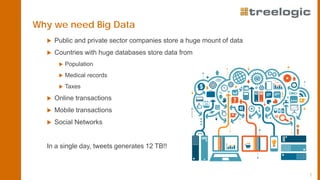
 Public and private sector companies store a huge mount of data
 Countries with huge databases store data from
 Population
 Medical records
 Taxes
 Online transactions
 Mobile transactions
 Social Networks
In a single day, tweets generates 12 TB!!
8
Why we need Big Data
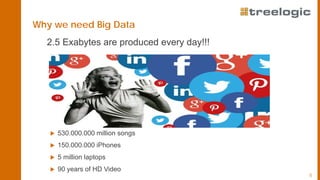
2.5 Exabytes are produced every day!!!
 530.000.000 million songs
 150.000.000 iPhones
 5 million laptops
 90 years of HD Video
9
Why we need Big Data
How can we manage all data?
CONTENTS
1. WHY WE NEED BIG DATA
2. BIG DATA: SOLUTIONS
3. BIG DATA: REAL-TIME PROCESSING
4. INCREMENTAL ALGORITHMS
5. WHAT WE WANT
6. WHAT WE NEED
1. A stream processing engine
2. Online incremental algorithms
3. A distributed data storage system
4. A use case
5. A visualization layer
11
Big Data: Solutions
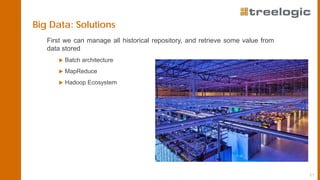
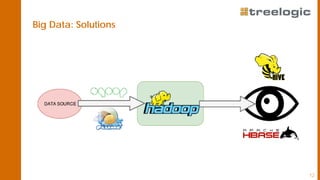
First we can manage all historical repository, and retrieve some value from
data stored
 Batch architecture
 MapReduce
 Hadoop Ecosystem
12
Big Data: Solutions
13
Big Data: Solutions
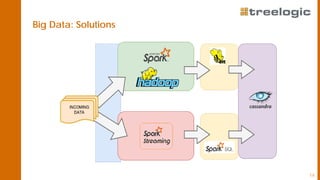
Batch processing with Hadoop takes a lot of time and the need to process
ingested data and display results in a shortest way possible brings new
architecture and tools
 Lambda architecture
 Spark (memory vs disk)
14
Big Data: Solutions
CONTENTS
1. WHY WE NEED BIG DATA
2. BIG DATA: SOLUTIONS
3. BIG DATA: REAL-TIME PROCESSING
4. INCREMENTAL ALGORITHMS
5. WHAT WE WANT
6. WHAT WE NEED
1. A stream processing engine
2. Online incremental algorithms
3. A distributed data storage system
4. A use case
5. A visualization layer
16
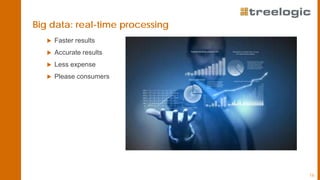
Big data: real-time processing
 Faster results
 Accurate results
 Less expense
 Please consumers
17
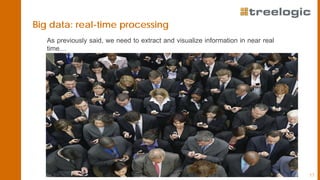
Big data: real-time processing
As previously said, we need to extract and visualize information in near real
time…
18
Big data: real-time processing
 Flink as engine process
 Stream processing
 Windowing with events time semantics
 Streaming and batch processing
19
Big data: real-time processing
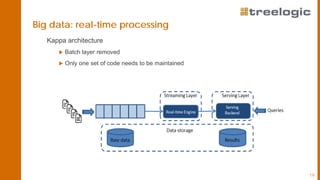
Kappa architecture
 Batch layer removed
 Only one set of code needs to be maintained
20
Big data: real-time processing
 No need to use batch layer
 Avoid use disk in engine process (latency)
CONTENTS
1. WHY WE NEED BIG DATA
2. BIG DATA: SOLUTIONS
3. BIG DATA: REAL-TIME PROCESSING
4. INCREMENTAL ALGORITHMS
5. WHAT WE WANT
6. WHAT WE NEED
1. A stream processing engine
2. Online incremental algorithms
3. A distributed data storage system
4. A use case
5. A visualization layer
22
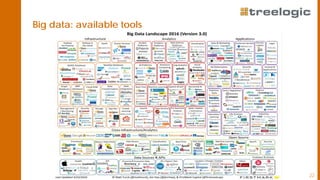
Big data: available tools
23
Incremental algorithms
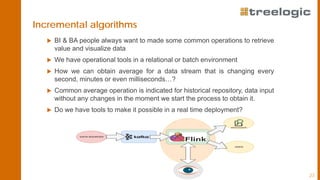
 BI & BA people always want to made some common operations to retrieve
value and visualize data
 We have operational tools in a relational or batch environment
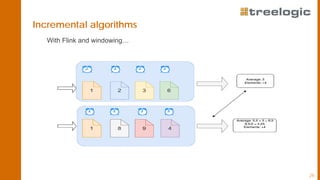
 How we can obtain average for a data stream that is changing every
second, minutes or even milliseconds…?
 Common average operation is indicated for historical repository, data input
without any changes in the moment we start the process to obtain it.
 Do we have tools to make it possible in a real time deployment?
24
Incremental algorithms
Answer is NO!
25
Incremental algorithms
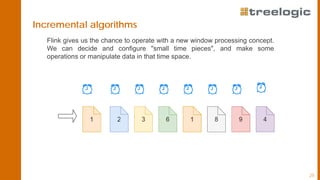
Flink gives us the chance to operate with a new window processing concept.
We can decide and configure "small time pieces", and make some
operations or manipulate data in that time space.
26
Incremental algorithms
With Flink and windowing…
27
Incremental algorithms
 These algorithms consume streams of data and are able to update their
results in a parallel manner without the need of saving the processed data
 Using checkpoints in windowing, allows us to store result from previous
window process
28
Incremental algorithms
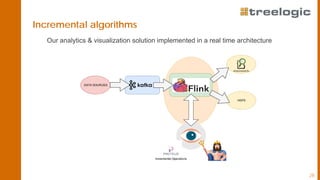
Our analytics & visualization solution implemented in a real time architecture
29
Incremental algorithms
If you are a BI or BA professional...we care about you!
30
Incremental algorithms
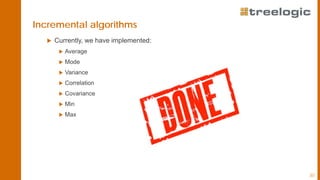
 Currently, we have implemented:
 Average
 Mode
 Variance
 Correlation
 Covariance
 Min
 Max
31
Incremental algorithms
 Currently we are working on:
 Median
32
Incremental algorithms
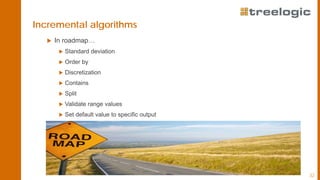
 In roadmap…
 Standard deviation
 Order by
 Discretization
 Contains
 Split
 Validate range values
 Set default value to specific output
CONTENTS
1. WHY WE NEED BIG DATA
2. BIG DATA: SOLUTIONS
3. BIG DATA: REAL-TIME PROCESSING
4. INCREMENTAL ALGORITHMS
5. WHAT WE NEED
1. A stream processing engine
2. Online incremental algorithms
3. A distributed data storage system
4. A use case
5. A visualization layer
34
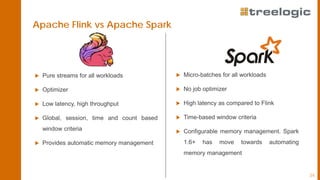
Apache Flink vs Apache Spark
 Pure streams for all workloads
 Optimizer
 Low latency, high throughput
 Global, session, time and count based
window criteria
 Provides automatic memory management
 Micro-batches for all workloads
 No job optimizer
 High latency as compared to Flink
 Time-based window criteria
 Configurable memory management. Spark
1.6+ has move towards automating
memory management
35
CONTENTS
1. WHY WE NEED BIG DATA
2. BIG DATA: SOLUTIONS
3. BIG DATA: REAL-TIME PROCESSING
4. INCREMENTAL ALGORITHMS
5. WHAT WE NEED
1. A stream processing engine
2. Online incremental algorithms
3. A distributed data storage system
4. A use case
5. A visualization layer
37
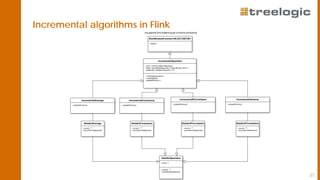
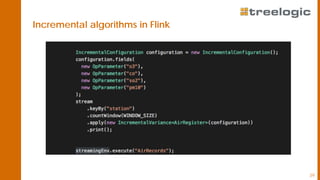
Incremental algorithms in Flink
38
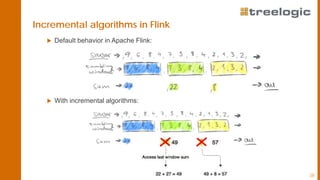
Incremental algorithms in Flink
 Default behavior in Apache Flink:
 With incremental algorithms:
39
Incremental algorithms in Flink
CONTENTS
1. WHY WE NEED BIG DATA
2. BIG DATA: SOLUTIONS
3. BIG DATA: REAL-TIME PROCESSING
4. INCREMENTAL ALGORITHMS
5. WHAT WE NEED
1. A stream processing engine
2. Online incremental algorithms
3. A distributed data storage system
4. A use case
5. A visualization layer
41
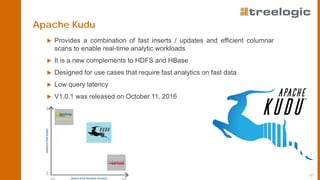
Apache Kudu
 Provides a combination of fast inserts / updates and efficient columnar
scans to enable real-time analytic workloads
 It is a new complements to HDFS and HBase
 Designed for use cases that require fast analytics on fast data
 Low query latency
 V1.0.1 was released on October 11, 2016
CONTENTS
1. WHY WE NEED BIG DATA
2. BIG DATA: SOLUTIONS
3. BIG DATA: REAL-TIME PROCESSING
4. INCREMENTAL ALGORITHMS
5. WHAT WE NEED
1. A stream processing engine
2. Online incremental algorithms
3. A distributed data storage system
4. A use case
5. A visualization layer
43
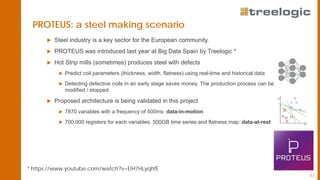
PROTEUS: a steel making scenario
 Steel industry is a key sector for the European community.
 PROTEUS was introduced last year at Big Data Spain by Treelogic *
 Hot Strip mills (sometimes) produces steel with defects
 Predict coil parameters (thickness, width, flatness) using real-time and historical data
 Detecting defective coils in an early stage saves money. The production process can be
modified / stopped.
 Proposed architecture is being validated in this project
 7870 variables with a frequency of 500ms: data-in-motion
 700.000 registers for each variables. 500GB time series and flatness map: data-at-rest
* https://www.youtube.com/watch?v=EIH7HLyqhfE
44
PROTEUS: a steel-making scenario
 Steel industry is a key sector for the European community.
 PROTEUS was introduced last year at Big Data Spain by Treelogic *
 Hot Strip mills (sometimes) produces steel with defects
 Predict coil parameters (thickness, width, flatness) using real-time and historical data
 Detecting defective coils in an early stage saves money. The production process can be
modified / stopped.
 Proposed architecture is being validated in this project
 7870 variables with a frequency of 500ms: data-in-motion
 700.000 registers for each variables. 500GB time series and flatness map: data-at-rest
* https://www.youtube.com/watch?v=EIH7HLyqhfE
CONTENTS
1. WHY WE NEED BIG DATA
2. BIG DATA: SOLUTIONS
3. BIG DATA: REAL-TIME PROCESSING
4. INCREMENTAL ALGORITHMS
5. WHAT WE NEED
1. A stream processing engine
2. Online incremental algorithms
3. A distributed data storage system
4. A use case
5. A visualization layer
46
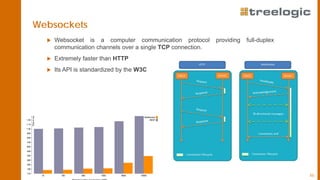
Websockets
 Websocket is a computer communication protocol providing full-duplex
communication channels over a single TCP connection.
 Extremely faster than HTTP
 Its API is standardized by the W3C
47
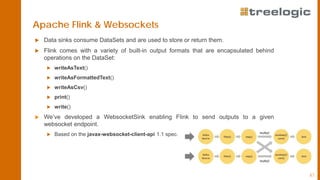
Apache Flink & Websockets
 Data sinks consume DataSets and are used to store or return them.
 Flink comes with a variety of built-in output formats that are encapsulated behind
operations on the DataSet:
 writeAsText()
 writeAsFormattedText()
 writeAsCsv()
 print()
 write()
 We’ve developed a WebsocketSink enabling Flink to send outputs to a given
websocket endpoint.
 Based on the javax-websocket-client-api 1.1 spec.
48
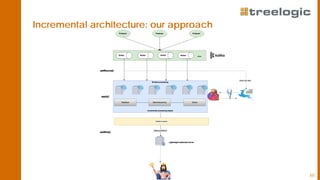
Incremental architecture: our approach
49
50
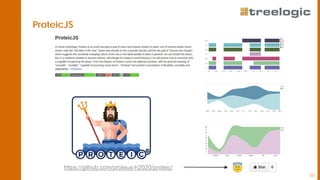
ProteicJS
https://github.com/proteus-h2020/proteic/
51
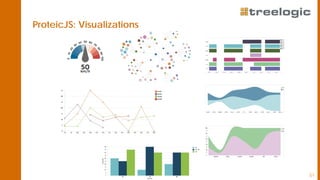
ProteicJS: Visualizations
52
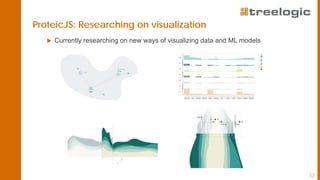
ProteicJS: Researching on visualization
 Currently researching on new ways of visualizing data and ML models
53
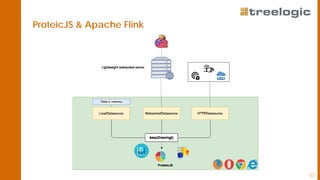
ProteicJS & Apache Flink
54
How to get it all
https://github.com/proteus-h2020/proteus-docker
Advanced data science algorithms
applied to scalable stream processing
David Piris Valenzuela
Nacho García Fernández
Ignacio.g.Fernandez@treelogic.com
@0xNacho
david.piris@treelogic.com
@davidpiris

Advanced data science algorithms applied to scalable stream processing by David Piris and Ignacio García

  • 2.
    Advanced data sciencealgorithms applied to scalable stream processing David Piris Valenzuela Nacho García Fernández Ignacio.g.Fernandez@treelogic.com @0xNacho david.piris@treelogic.com @davidpiris
  • 3.
    3 About Treelogic  R&Dintensive company with the mission of adapting technological knowledge to improve quality standards in our daily life  8 ongoing H2020 projects (coordinating 3 of them)  8 ongoing FP7 projects (coordinating 5 of them)  Focused on providing Big Data Analytics in all the world  Internal organization Research lines  Big Data  Computer vision  Data science  Social Media Analysis  Security ICT solutions  Security & Safety  Justice  Health  Transport  Financial Services  ICT tailored solutions
  • 4.
    CONTENTS 1. WHY WENEED BIG DATA 2. BIG DATA: SOLUTIONS 3. BIG DATA: REAL-TIME PROCESSING 4. INCREMENTAL ALGORITHMS 5. WHAT WE WANT 6. WHAT WE NEED 1. A stream processing engine 2. Online incremental algorithms 3. A distributed data storage system 4. A use case 5. A visualization layer
  • 5.
    CONTENTS 1. WHY WENEED BIG DATA 2. BIG DATA: SOLUTIONS 3. BIG DATA: REAL-TIME PROCESSING 4. INCREMENTAL ALGORITHMS 5. WHAT WE WANT 6. WHAT WE NEED 1. A stream processing engine 2. Online incremental algorithms 3. A distributed data storage system 4. A use case 5. A visualization layer
  • 6.
    6 Why we needBig Data
  • 7.
    7 Why we needBig Data  Public and private sector companies store a huge mount of data  Countries with huge databases store data from  Population  Medical records  Taxes  Online transactions  Mobile transactions  Social Networks In a single day, tweets generates 12 TB!!
  • 8.
    8 Why we needBig Data 2.5 Exabytes are produced every day!!!  530.000.000 million songs  150.000.000 iPhones  5 million laptops  90 years of HD Video
  • 9.
    9 Why we needBig Data How can we manage all data?
  • 10.
    CONTENTS 1. WHY WENEED BIG DATA 2. BIG DATA: SOLUTIONS 3. BIG DATA: REAL-TIME PROCESSING 4. INCREMENTAL ALGORITHMS 5. WHAT WE WANT 6. WHAT WE NEED 1. A stream processing engine 2. Online incremental algorithms 3. A distributed data storage system 4. A use case 5. A visualization layer
  • 11.
    11 Big Data: Solutions Firstwe can manage all historical repository, and retrieve some value from data stored  Batch architecture  MapReduce  Hadoop Ecosystem
  • 12.
  • 13.
    13 Big Data: Solutions Batchprocessing with Hadoop takes a lot of time and the need to process ingested data and display results in a shortest way possible brings new architecture and tools  Lambda architecture  Spark (memory vs disk)
  • 14.
  • 15.
    CONTENTS 1. WHY WENEED BIG DATA 2. BIG DATA: SOLUTIONS 3. BIG DATA: REAL-TIME PROCESSING 4. INCREMENTAL ALGORITHMS 5. WHAT WE WANT 6. WHAT WE NEED 1. A stream processing engine 2. Online incremental algorithms 3. A distributed data storage system 4. A use case 5. A visualization layer
  • 16.
    16 Big data: real-timeprocessing  Faster results  Accurate results  Less expense  Please consumers
  • 17.
    17 Big data: real-timeprocessing As previously said, we need to extract and visualize information in near real time…
  • 18.
    18 Big data: real-timeprocessing  Flink as engine process  Stream processing  Windowing with events time semantics  Streaming and batch processing
  • 19.
    19 Big data: real-timeprocessing Kappa architecture  Batch layer removed  Only one set of code needs to be maintained
  • 20.
    20 Big data: real-timeprocessing  No need to use batch layer  Avoid use disk in engine process (latency)
  • 21.
    CONTENTS 1. WHY WENEED BIG DATA 2. BIG DATA: SOLUTIONS 3. BIG DATA: REAL-TIME PROCESSING 4. INCREMENTAL ALGORITHMS 5. WHAT WE WANT 6. WHAT WE NEED 1. A stream processing engine 2. Online incremental algorithms 3. A distributed data storage system 4. A use case 5. A visualization layer
  • 22.
  • 23.
    23 Incremental algorithms  BI& BA people always want to made some common operations to retrieve value and visualize data  We have operational tools in a relational or batch environment  How we can obtain average for a data stream that is changing every second, minutes or even milliseconds…?  Common average operation is indicated for historical repository, data input without any changes in the moment we start the process to obtain it.  Do we have tools to make it possible in a real time deployment?
  • 24.
  • 25.
    25 Incremental algorithms Flink givesus the chance to operate with a new window processing concept. We can decide and configure "small time pieces", and make some operations or manipulate data in that time space.
  • 26.
  • 27.
    27 Incremental algorithms  Thesealgorithms consume streams of data and are able to update their results in a parallel manner without the need of saving the processed data  Using checkpoints in windowing, allows us to store result from previous window process
  • 28.
    28 Incremental algorithms Our analytics& visualization solution implemented in a real time architecture
  • 29.
    29 Incremental algorithms If youare a BI or BA professional...we care about you!
  • 30.
    30 Incremental algorithms  Currently,we have implemented:  Average  Mode  Variance  Correlation  Covariance  Min  Max
  • 31.
    31 Incremental algorithms  Currentlywe are working on:  Median
  • 32.
    32 Incremental algorithms  Inroadmap…  Standard deviation  Order by  Discretization  Contains  Split  Validate range values  Set default value to specific output
  • 33.
    CONTENTS 1. WHY WENEED BIG DATA 2. BIG DATA: SOLUTIONS 3. BIG DATA: REAL-TIME PROCESSING 4. INCREMENTAL ALGORITHMS 5. WHAT WE NEED 1. A stream processing engine 2. Online incremental algorithms 3. A distributed data storage system 4. A use case 5. A visualization layer
  • 34.
    34 Apache Flink vsApache Spark  Pure streams for all workloads  Optimizer  Low latency, high throughput  Global, session, time and count based window criteria  Provides automatic memory management  Micro-batches for all workloads  No job optimizer  High latency as compared to Flink  Time-based window criteria  Configurable memory management. Spark 1.6+ has move towards automating memory management
  • 35.
  • 36.
    CONTENTS 1. WHY WENEED BIG DATA 2. BIG DATA: SOLUTIONS 3. BIG DATA: REAL-TIME PROCESSING 4. INCREMENTAL ALGORITHMS 5. WHAT WE NEED 1. A stream processing engine 2. Online incremental algorithms 3. A distributed data storage system 4. A use case 5. A visualization layer
  • 37.
  • 38.
    38 Incremental algorithms inFlink  Default behavior in Apache Flink:  With incremental algorithms:
  • 39.
  • 40.
    CONTENTS 1. WHY WENEED BIG DATA 2. BIG DATA: SOLUTIONS 3. BIG DATA: REAL-TIME PROCESSING 4. INCREMENTAL ALGORITHMS 5. WHAT WE NEED 1. A stream processing engine 2. Online incremental algorithms 3. A distributed data storage system 4. A use case 5. A visualization layer
  • 41.
    41 Apache Kudu  Providesa combination of fast inserts / updates and efficient columnar scans to enable real-time analytic workloads  It is a new complements to HDFS and HBase  Designed for use cases that require fast analytics on fast data  Low query latency  V1.0.1 was released on October 11, 2016
  • 42.
    CONTENTS 1. WHY WENEED BIG DATA 2. BIG DATA: SOLUTIONS 3. BIG DATA: REAL-TIME PROCESSING 4. INCREMENTAL ALGORITHMS 5. WHAT WE NEED 1. A stream processing engine 2. Online incremental algorithms 3. A distributed data storage system 4. A use case 5. A visualization layer
  • 43.
    43 PROTEUS: a steelmaking scenario  Steel industry is a key sector for the European community.  PROTEUS was introduced last year at Big Data Spain by Treelogic *  Hot Strip mills (sometimes) produces steel with defects  Predict coil parameters (thickness, width, flatness) using real-time and historical data  Detecting defective coils in an early stage saves money. The production process can be modified / stopped.  Proposed architecture is being validated in this project  7870 variables with a frequency of 500ms: data-in-motion  700.000 registers for each variables. 500GB time series and flatness map: data-at-rest * https://www.youtube.com/watch?v=EIH7HLyqhfE
  • 44.
    44 PROTEUS: a steel-makingscenario  Steel industry is a key sector for the European community.  PROTEUS was introduced last year at Big Data Spain by Treelogic *  Hot Strip mills (sometimes) produces steel with defects  Predict coil parameters (thickness, width, flatness) using real-time and historical data  Detecting defective coils in an early stage saves money. The production process can be modified / stopped.  Proposed architecture is being validated in this project  7870 variables with a frequency of 500ms: data-in-motion  700.000 registers for each variables. 500GB time series and flatness map: data-at-rest * https://www.youtube.com/watch?v=EIH7HLyqhfE
  • 45.
    CONTENTS 1. WHY WENEED BIG DATA 2. BIG DATA: SOLUTIONS 3. BIG DATA: REAL-TIME PROCESSING 4. INCREMENTAL ALGORITHMS 5. WHAT WE NEED 1. A stream processing engine 2. Online incremental algorithms 3. A distributed data storage system 4. A use case 5. A visualization layer
  • 46.
    46 Websockets  Websocket isa computer communication protocol providing full-duplex communication channels over a single TCP connection.  Extremely faster than HTTP  Its API is standardized by the W3C
  • 47.
    47 Apache Flink &Websockets  Data sinks consume DataSets and are used to store or return them.  Flink comes with a variety of built-in output formats that are encapsulated behind operations on the DataSet:  writeAsText()  writeAsFormattedText()  writeAsCsv()  print()  write()  We’ve developed a WebsocketSink enabling Flink to send outputs to a given websocket endpoint.  Based on the javax-websocket-client-api 1.1 spec.
  • 48.
  • 49.
  • 50.
  • 51.
  • 52.
    52 ProteicJS: Researching onvisualization  Currently researching on new ways of visualizing data and ML models
  • 53.
  • 54.
    54 How to getit all https://github.com/proteus-h2020/proteus-docker
  • 55.
    Advanced data sciencealgorithms applied to scalable stream processing David Piris Valenzuela Nacho García Fernández Ignacio.g.Fernandez@treelogic.com @0xNacho david.piris@treelogic.com @davidpiris