TOPIC:
What is ADHD?
Attention deficit hyperactivity disorder (ADHD)
is a mental disorder that causes above-normal
levels of hyperactive and disruptive
behaviour’s. ADHD is often characterized by
impulsive or hyperactive behaviour. People
with ADHD may have difficulties focusing their
attention on a single task. They may also have
a hard time sitting still for long periods.
What are the symptoms of
ADHD?
People with ADHD may:
 have difficulty focusing or concentrating on
tasks
 be forgetful about completing tasks
 be easily distracted by environmental sounds
 have difficulty sitting still
 interrupt people while they’re talking
What causes ADHD?
• Researchers are still working to determine what
causes ADHD. It is believed to have neurological
origins rather than environmental causes. Genetics
may also play a role in whether a person has ADHD.
• In the past, people thought that problems with a
chemical balance in the brain may be the cause.
People also thought it occurred due to a malfunction
of the neurotransmitters that help regulate impulses
and behaviour.
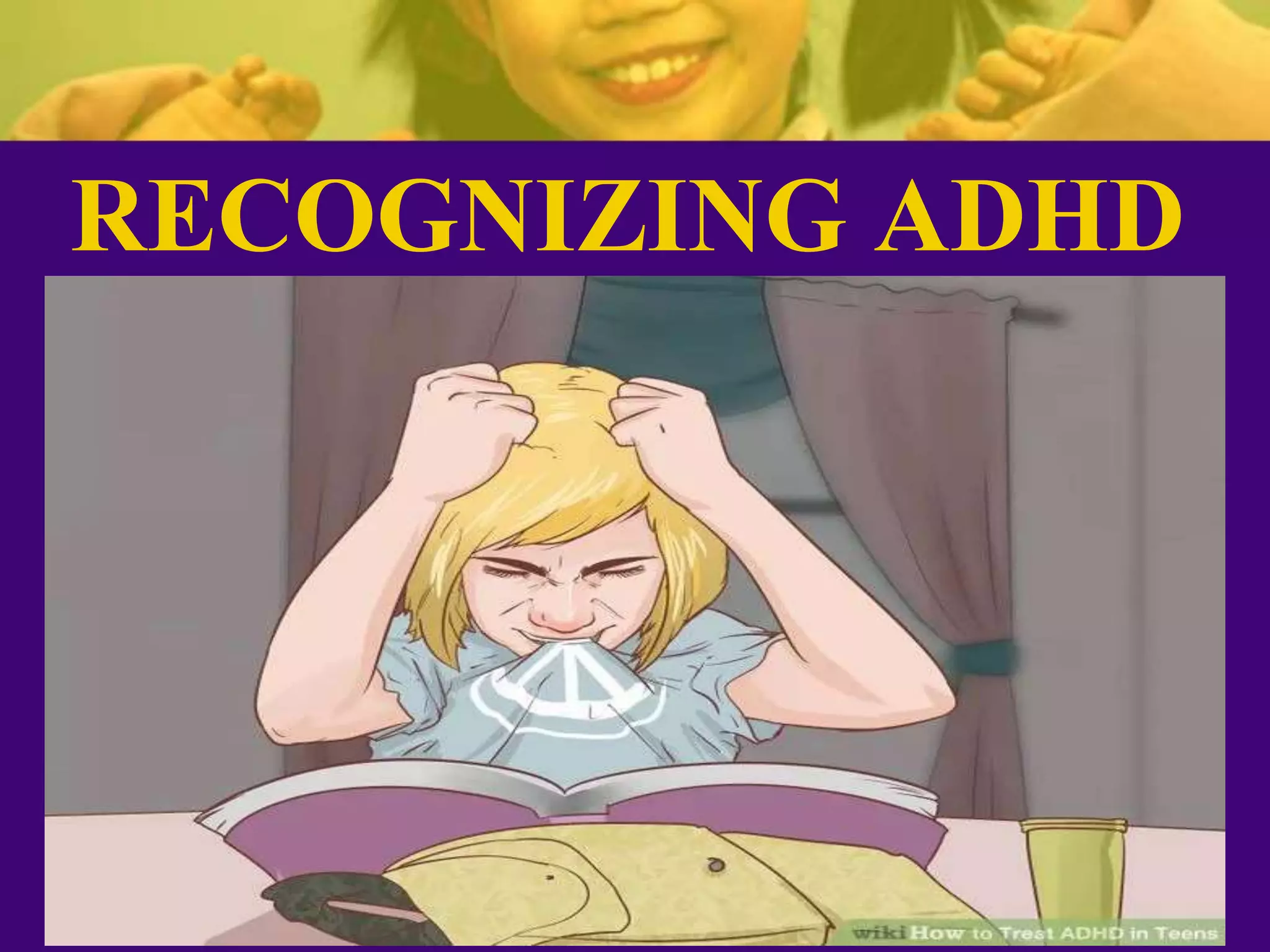
RECOGNIZING ADHD
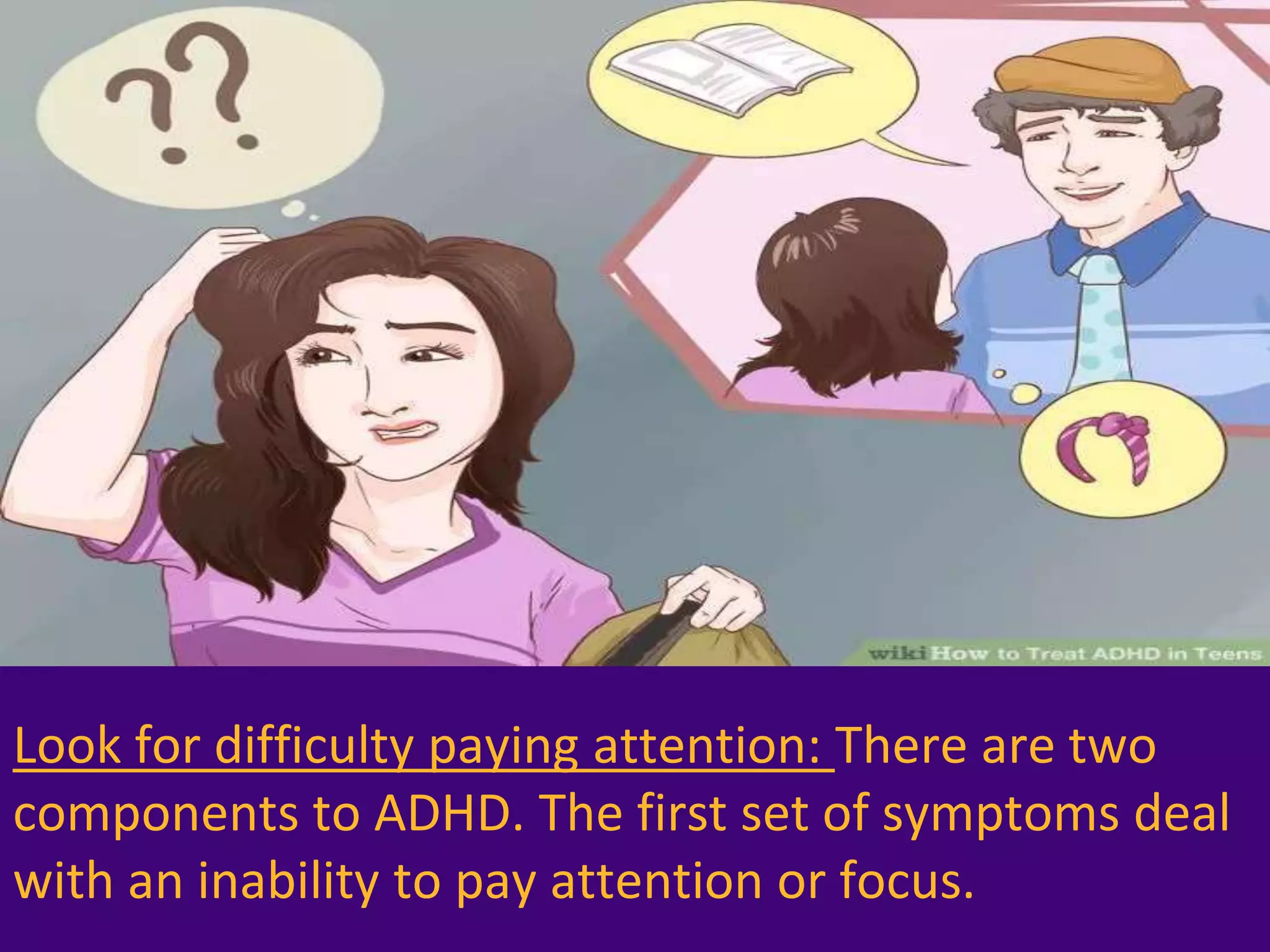
Look for difficulty paying attention: There are two
components to ADHD. The first set of symptoms deal
with an inability to pay attention or focus.
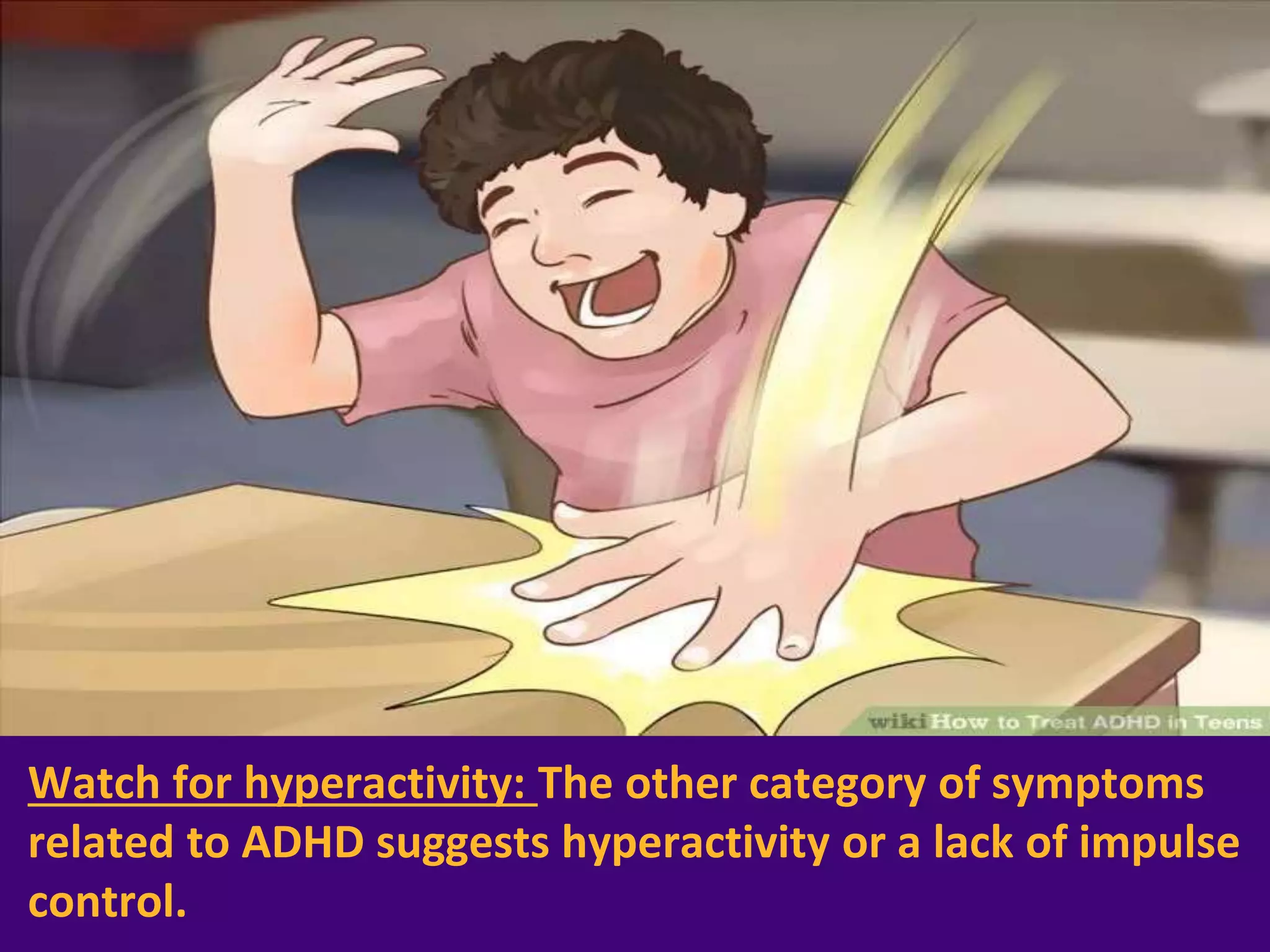
Watch for hyperactivity: The other category of symptoms
related to ADHD suggests hyperactivity or a lack of impulse
control.
Get a diagnosis: If your teen displays many of these traits,
you should see a doctor to get a professional opinion.
Knowing whether ADHD might be the cause of the
challenges your teen faces will make it easier to move
forward.
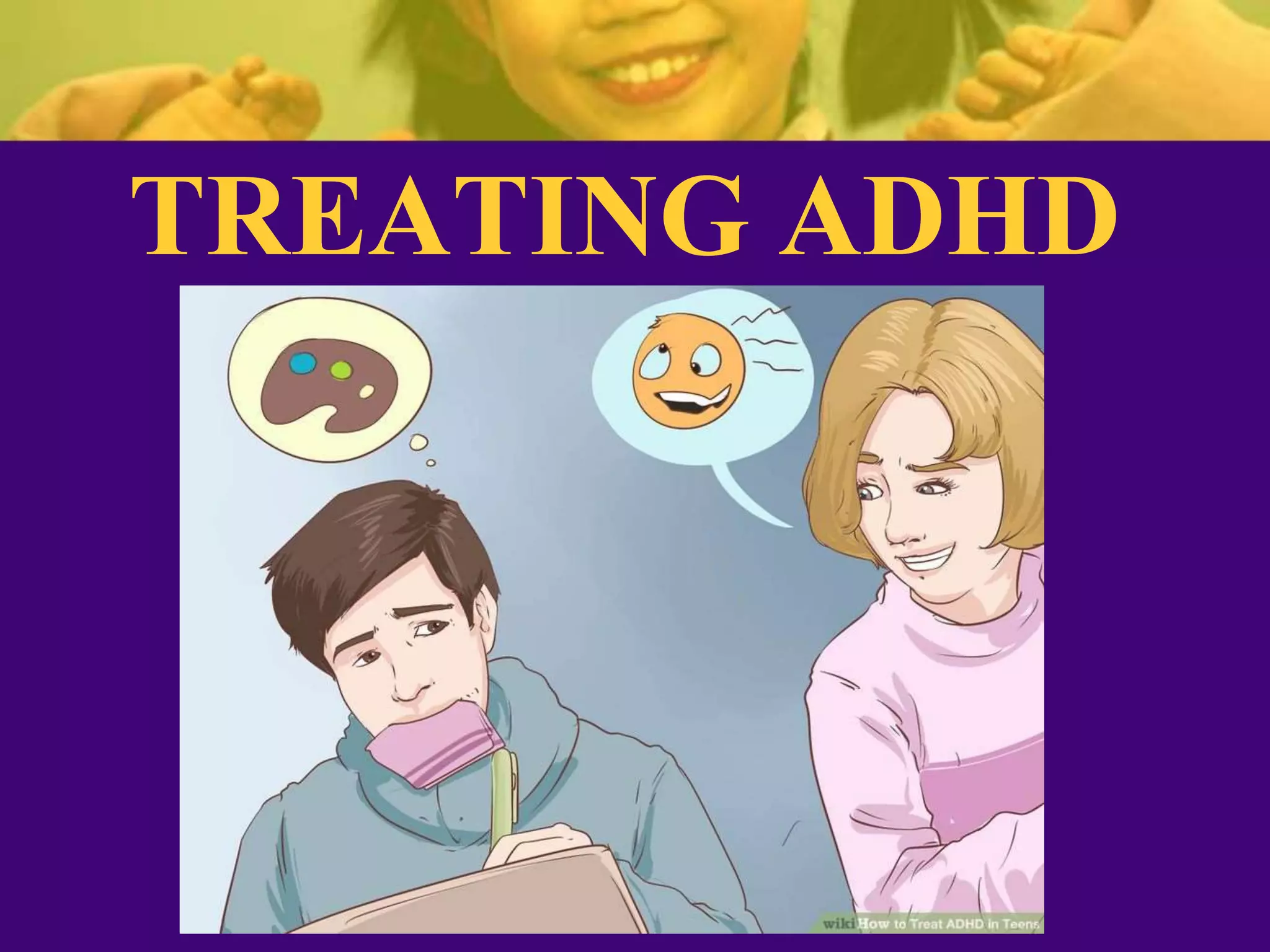
TREATING ADHD
• Feed your teen foods that help control
ADHD:
• A change in diet can diminish the effects of the
hormonal deficiencies your teen may be experiencing.
Feeding him or her the right foods can make the
conditions less severe. A diet high complex
carbohydrates can boost serotonin for improved mood,
sleep, and appetite. choose complex carbohydrates
such as whole grains, green vegetables, starchy
vegetables, and beans, all of which act as an energy
“time-release.”
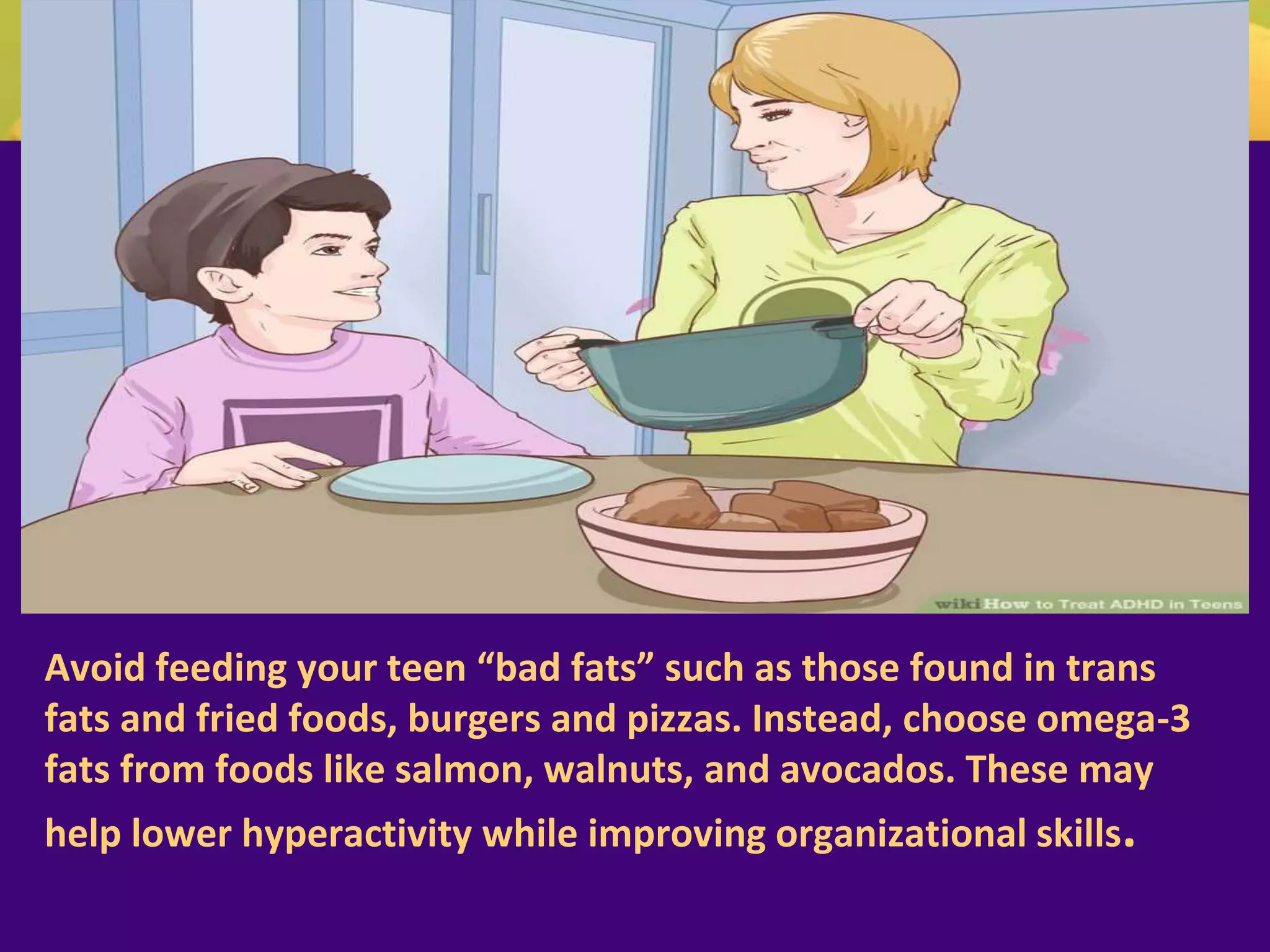
Avoid feeding your teen “bad fats” such as those found in trans
fats and fried foods, burgers and pizzas. Instead, choose omega-3
fats from foods like salmon, walnuts, and avocados. These may
help lower hyperactivity while improving organizational skills.
Try to prevent your teen from eating harmful
foods: Just as some foods can help with ADHD, other foods
may make the effects more pronounced. For example: Avoid
feeding your teen food with dyes, and red dye in particular. Some
studies suggest there may be link between food dyes and ADHD
symptoms.
Eliminating wheat and dairy, as well as processed foods, sugars,
additives, and dyes may also have a positive impact.
Find therapy for ADHD:
A good therapist can often help you and your teen manage the
challenges created by ADHD.Therapy typically begins with an analysis
and restructuring of a family’s structure. The goal is to create an
environment that fits the way the child’s brain functions so the child
can succeed.
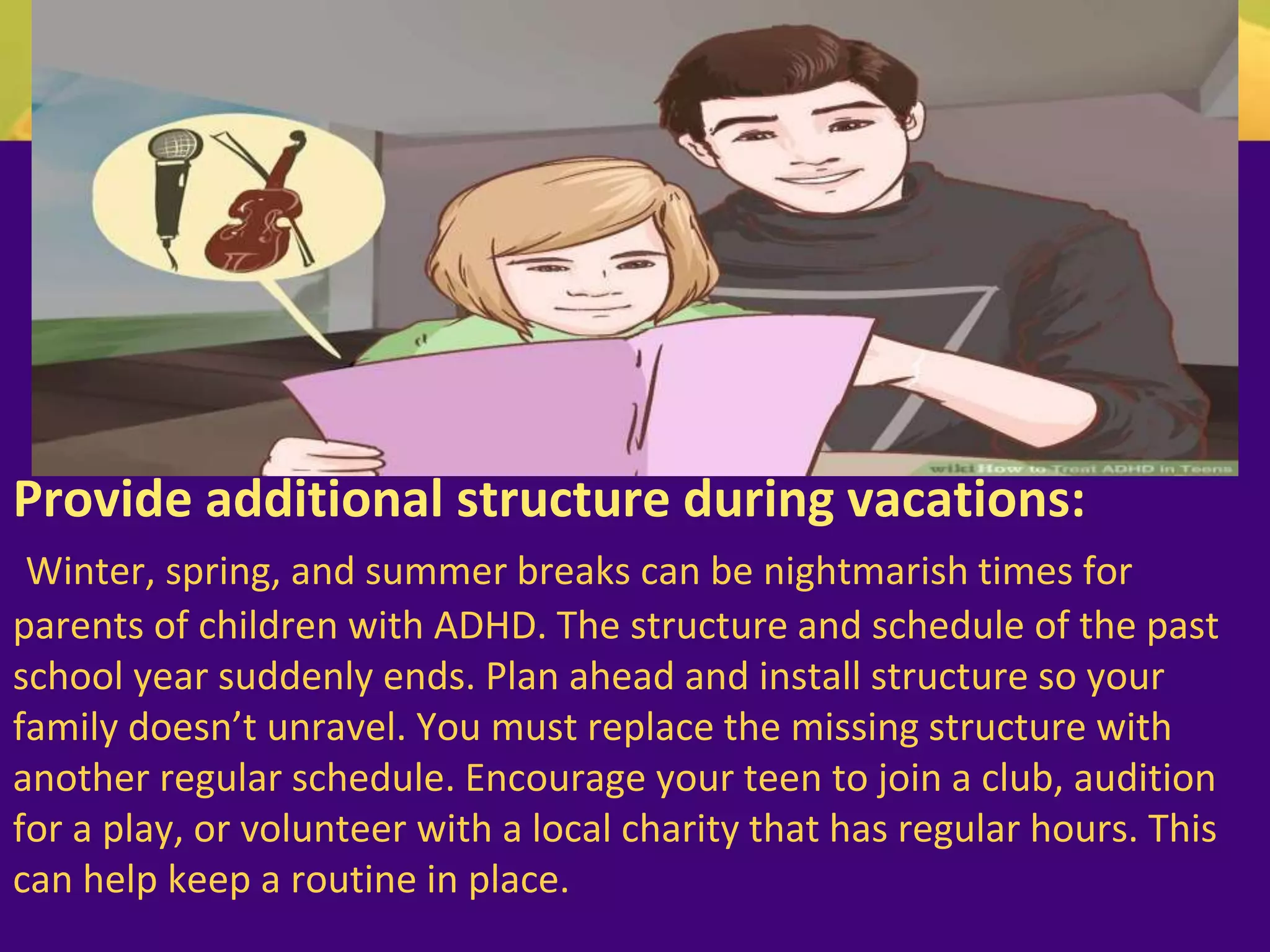
Provide additional structure during vacations:
Winter, spring, and summer breaks can be nightmarish times for
parents of children with ADHD. The structure and schedule of the past
school year suddenly ends. Plan ahead and install structure so your
family doesn’t unravel. You must replace the missing structure with
another regular schedule. Encourage your teen to join a club, audition
for a play, or volunteer with a local charity that has regular hours. This
can help keep a routine in place.
• Stay calm: Administer discipline in a way that suggests
you are rational and in control of the situation. Your anger or
raised voice may cause anxiety or send a message that your
child can control you by getting you angry. Remaining calm and
loving will convey the message you want.
Communicate with teachers: Teens with ADHD
often struggle in school. Parents often complain that schools
and teachers fail to treat children with ADHD as children with
disabilities. Teachers may view them as willful, disobedient,
and not trying hard enough. Thus, it is important to
communicate with your teen's teachers to make sure they
understand the true nature of the problem.
There are ADHD children
everywhere,identifing them and treating
with human touch is the need of hour.

ADHD(ATTENTION DEFICITE HYPERACTIVITY DISORDER)-E.HARSHITHA

  • 3.
  • 7.
    What is ADHD? Attentiondeficit hyperactivity disorder (ADHD) is a mental disorder that causes above-normal levels of hyperactive and disruptive behaviour’s. ADHD is often characterized by impulsive or hyperactive behaviour. People with ADHD may have difficulties focusing their attention on a single task. They may also have a hard time sitting still for long periods.
  • 10.
    What are thesymptoms of ADHD? People with ADHD may:  have difficulty focusing or concentrating on tasks  be forgetful about completing tasks  be easily distracted by environmental sounds  have difficulty sitting still  interrupt people while they’re talking
  • 12.
    What causes ADHD? •Researchers are still working to determine what causes ADHD. It is believed to have neurological origins rather than environmental causes. Genetics may also play a role in whether a person has ADHD. • In the past, people thought that problems with a chemical balance in the brain may be the cause. People also thought it occurred due to a malfunction of the neurotransmitters that help regulate impulses and behaviour.
  • 13.
  • 14.
    Look for difficultypaying attention: There are two components to ADHD. The first set of symptoms deal with an inability to pay attention or focus.
  • 15.
    Watch for hyperactivity:The other category of symptoms related to ADHD suggests hyperactivity or a lack of impulse control.
  • 16.
    Get a diagnosis:If your teen displays many of these traits, you should see a doctor to get a professional opinion. Knowing whether ADHD might be the cause of the challenges your teen faces will make it easier to move forward.
  • 17.
  • 18.
    • Feed yourteen foods that help control ADHD: • A change in diet can diminish the effects of the hormonal deficiencies your teen may be experiencing. Feeding him or her the right foods can make the conditions less severe. A diet high complex carbohydrates can boost serotonin for improved mood, sleep, and appetite. choose complex carbohydrates such as whole grains, green vegetables, starchy vegetables, and beans, all of which act as an energy “time-release.”
  • 19.
    Avoid feeding yourteen “bad fats” such as those found in trans fats and fried foods, burgers and pizzas. Instead, choose omega-3 fats from foods like salmon, walnuts, and avocados. These may help lower hyperactivity while improving organizational skills.
  • 20.
    Try to preventyour teen from eating harmful foods: Just as some foods can help with ADHD, other foods may make the effects more pronounced. For example: Avoid feeding your teen food with dyes, and red dye in particular. Some studies suggest there may be link between food dyes and ADHD symptoms. Eliminating wheat and dairy, as well as processed foods, sugars, additives, and dyes may also have a positive impact.
  • 21.
    Find therapy forADHD: A good therapist can often help you and your teen manage the challenges created by ADHD.Therapy typically begins with an analysis and restructuring of a family’s structure. The goal is to create an environment that fits the way the child’s brain functions so the child can succeed.
  • 22.
    Provide additional structureduring vacations: Winter, spring, and summer breaks can be nightmarish times for parents of children with ADHD. The structure and schedule of the past school year suddenly ends. Plan ahead and install structure so your family doesn’t unravel. You must replace the missing structure with another regular schedule. Encourage your teen to join a club, audition for a play, or volunteer with a local charity that has regular hours. This can help keep a routine in place.
  • 23.
    • Stay calm:Administer discipline in a way that suggests you are rational and in control of the situation. Your anger or raised voice may cause anxiety or send a message that your child can control you by getting you angry. Remaining calm and loving will convey the message you want.
  • 24.
    Communicate with teachers:Teens with ADHD often struggle in school. Parents often complain that schools and teachers fail to treat children with ADHD as children with disabilities. Teachers may view them as willful, disobedient, and not trying hard enough. Thus, it is important to communicate with your teen's teachers to make sure they understand the true nature of the problem.
  • 25.
    There are ADHDchildren everywhere,identifing them and treating with human touch is the need of hour.