Activity Types
HARRIS AND HOFER

Harris, J., & Hofer, M. (2009). Instructional planning activity types as vehicles for curriculum-based TPACK development. In C. D. Maddux, (Ed.). Research
highlights in technology and teacher education 2009 (pp. 99-108). Chesapeake, VA: Society for Information Technology in Teacher Education (SITE).
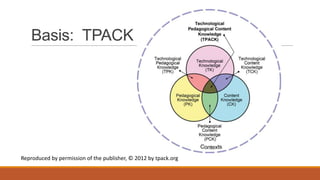
Basis: TPACK

Reproduced by permission of the publisher, © 2012 by tpack.org
Focus: Teacher Planning

Harris, J., & Hofer, M. (2009). Instructional planning activity types as vehicles for curriculum-based TPACK development. In C. D. Maddux, (Ed.). Research
highlights in technology and teacher education 2009 (pp. 99-108). Chesapeake, VA: Society for Information Technology in Teacher Education (SITE).
Planning: Learning Events
1. Choose learning goals
2. Making practical pedagogical decisions about the nature of the learning
experience
3. Selecting and sequencing appropriate activity types to combine to form the
learning experience
4. Selecting formative and summative assessment strategies that will reveal
what and how well students are learning
5. Selecting tools and resources that will best help students to benefit from the
learning experience being planned
Harris, J., & Hofer, M. (2009). Instructional planning activity types as vehicles for curriculum-based TPACK development. In C. D. Maddux, (Ed.). Research
highlights in technology and teacher education 2009 (pp. 99-108). Chesapeake, VA: Society for Information Technology in Teacher Education (SITE).
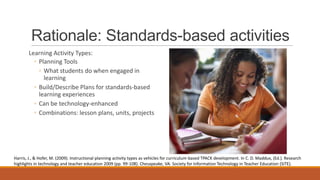
Rationale: Standards-based activities
Learning Activity Types:
◦ Planning Tools
◦ What students do when engaged in
learning
◦ Build/Describe Plans for standards-based
learning experiences
◦ Can be technology-enhanced
◦ Combinations: lesson plans, units, projects

Harris, J., & Hofer, M. (2009). Instructional planning activity types as vehicles for curriculum-based TPACK development. In C. D. Maddux, (Ed.). Research
highlights in technology and teacher education 2009 (pp. 99-108). Chesapeake, VA: Society for Information Technology in Teacher Education (SITE).
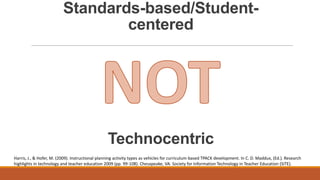
Standards-based/Studentcentered

Technocentric
Harris, J., & Hofer, M. (2009). Instructional planning activity types as vehicles for curriculum-based TPACK development. In C. D. Maddux, (Ed.). Research
highlights in technology and teacher education 2009 (pp. 99-108). Chesapeake, VA: Society for Information Technology in Teacher Education (SITE).
"Unfortunately, many teachers wishing to incorporate educational
technologies into curriculum-based learning and teaching begin with selecting
the digital tools and resources that will be used. When instruction is planned
in this way, it becomes what Seymour Papert (1987) calls “technocentric”–
focused upon the technologies being used, more than the students who are
trying to use them to learn. Technocentric learning experiences rarely help
students to meet curriculum-based content standards, because those
standards did not serve as a primary planning focus. Accompanying
pedagogical decisions (including the design of the learning experience) often
focus more upon use of the selected technologies than what is most
appropriate for a particular group of students within a particular educational
context."

Harris, J., & Hofer, M. (2009). Instructional planning activity types as vehicles for curriculum-based TPACK development. In C. D. Maddux, (Ed.). Research
highlights in technology and teacher education 2009 (pp. 99-108). Chesapeake, VA: Society for Information Technology in Teacher Education (SITE).

Activity types

  • 1.
    Activity Types HARRIS ANDHOFER Harris, J., & Hofer, M. (2009). Instructional planning activity types as vehicles for curriculum-based TPACK development. In C. D. Maddux, (Ed.). Research highlights in technology and teacher education 2009 (pp. 99-108). Chesapeake, VA: Society for Information Technology in Teacher Education (SITE).
  • 2.
    Basis: TPACK Reproduced bypermission of the publisher, © 2012 by tpack.org
  • 3.
    Focus: Teacher Planning Harris,J., & Hofer, M. (2009). Instructional planning activity types as vehicles for curriculum-based TPACK development. In C. D. Maddux, (Ed.). Research highlights in technology and teacher education 2009 (pp. 99-108). Chesapeake, VA: Society for Information Technology in Teacher Education (SITE).
  • 4.
    Planning: Learning Events 1.Choose learning goals 2. Making practical pedagogical decisions about the nature of the learning experience 3. Selecting and sequencing appropriate activity types to combine to form the learning experience 4. Selecting formative and summative assessment strategies that will reveal what and how well students are learning 5. Selecting tools and resources that will best help students to benefit from the learning experience being planned Harris, J., & Hofer, M. (2009). Instructional planning activity types as vehicles for curriculum-based TPACK development. In C. D. Maddux, (Ed.). Research highlights in technology and teacher education 2009 (pp. 99-108). Chesapeake, VA: Society for Information Technology in Teacher Education (SITE).
  • 5.
    Rationale: Standards-based activities LearningActivity Types: ◦ Planning Tools ◦ What students do when engaged in learning ◦ Build/Describe Plans for standards-based learning experiences ◦ Can be technology-enhanced ◦ Combinations: lesson plans, units, projects Harris, J., & Hofer, M. (2009). Instructional planning activity types as vehicles for curriculum-based TPACK development. In C. D. Maddux, (Ed.). Research highlights in technology and teacher education 2009 (pp. 99-108). Chesapeake, VA: Society for Information Technology in Teacher Education (SITE).
  • 6.
    Standards-based/Studentcentered Technocentric Harris, J., &Hofer, M. (2009). Instructional planning activity types as vehicles for curriculum-based TPACK development. In C. D. Maddux, (Ed.). Research highlights in technology and teacher education 2009 (pp. 99-108). Chesapeake, VA: Society for Information Technology in Teacher Education (SITE).
  • 7.
    "Unfortunately, many teacherswishing to incorporate educational technologies into curriculum-based learning and teaching begin with selecting the digital tools and resources that will be used. When instruction is planned in this way, it becomes what Seymour Papert (1987) calls “technocentric”– focused upon the technologies being used, more than the students who are trying to use them to learn. Technocentric learning experiences rarely help students to meet curriculum-based content standards, because those standards did not serve as a primary planning focus. Accompanying pedagogical decisions (including the design of the learning experience) often focus more upon use of the selected technologies than what is most appropriate for a particular group of students within a particular educational context." Harris, J., & Hofer, M. (2009). Instructional planning activity types as vehicles for curriculum-based TPACK development. In C. D. Maddux, (Ed.). Research highlights in technology and teacher education 2009 (pp. 99-108). Chesapeake, VA: Society for Information Technology in Teacher Education (SITE).