ACTIVITY BASED
   COSTING
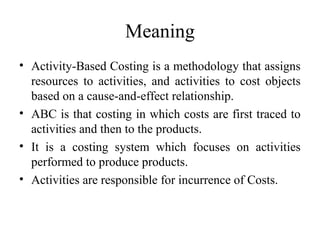
Meaning
• Activity-Based Costing is a methodology that assigns
  resources to activities, and activities to cost objects
  based on a cause-and-effect relationship.
• ABC is that costing in which costs are first traced to
  activities and then to the products.
• It is a costing system which focuses on activities
  performed to produce products.
• Activities are responsible for incurrence of Costs.
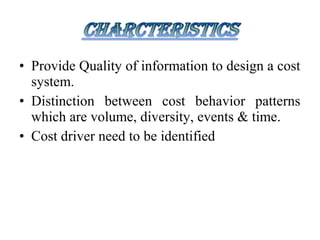
• Provide Quality of information to design a cost
  system.
• Distinction between cost behavior patterns
  which are volume, diversity, events & time.
• Cost driver need to be identified
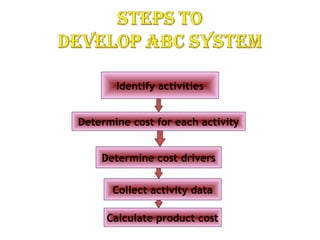
Identify activities


Determine cost for each activity


    Determine cost drivers


      Collect activity data

     Calculate product cost
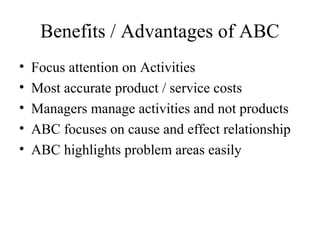
Benefits / Advantages of ABC
•   Focus attention on Activities
•   Most accurate product / service costs
•   Managers manage activities and not products
•   ABC focuses on cause and effect relationship
•   ABC highlights problem areas easily
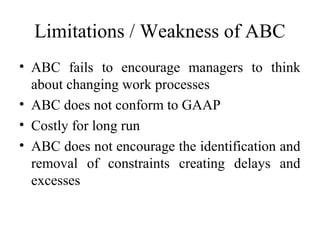
Limitations / Weakness of ABC
• ABC fails to encourage managers to think
  about changing work processes
• ABC does not conform to GAAP
• Costly for long run
• ABC does not encourage the identification and
  removal of constraints creating delays and
  excesses
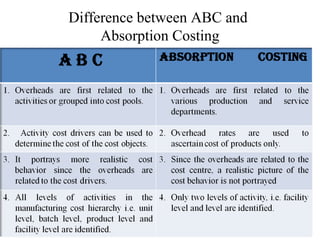
Difference between ABC and
     Absorption Costing
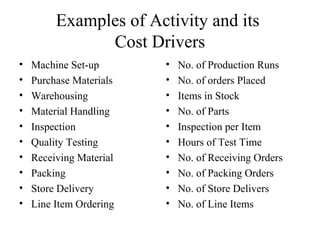
Examples of Activity and its
               Cost Drivers
•   Machine Set-up       •   No. of Production Runs
•   Purchase Materials   •   No. of orders Placed
•   Warehousing          •   Items in Stock
•   Material Handling    •   No. of Parts
•   Inspection           •   Inspection per Item
•   Quality Testing      •   Hours of Test Time
•   Receiving Material   •   No. of Receiving Orders
•   Packing              •   No. of Packing Orders
•   Store Delivery       •   No. of Store Delivers
•   Line Item Ordering   •   No. of Line Items

Activity based costing

  • 1.
  • 2.
    Meaning • Activity-Based Costingis a methodology that assigns resources to activities, and activities to cost objects based on a cause-and-effect relationship. • ABC is that costing in which costs are first traced to activities and then to the products. • It is a costing system which focuses on activities performed to produce products. • Activities are responsible for incurrence of Costs.
  • 3.
    • Provide Qualityof information to design a cost system. • Distinction between cost behavior patterns which are volume, diversity, events & time. • Cost driver need to be identified
  • 4.
    Identify activities Determine costfor each activity Determine cost drivers Collect activity data Calculate product cost
  • 5.
    Benefits / Advantagesof ABC • Focus attention on Activities • Most accurate product / service costs • Managers manage activities and not products • ABC focuses on cause and effect relationship • ABC highlights problem areas easily
  • 6.
    Limitations / Weaknessof ABC • ABC fails to encourage managers to think about changing work processes • ABC does not conform to GAAP • Costly for long run • ABC does not encourage the identification and removal of constraints creating delays and excesses
  • 7.
    Difference between ABCand Absorption Costing
  • 8.
    Examples of Activityand its Cost Drivers • Machine Set-up • No. of Production Runs • Purchase Materials • No. of orders Placed • Warehousing • Items in Stock • Material Handling • No. of Parts • Inspection • Inspection per Item • Quality Testing • Hours of Test Time • Receiving Material • No. of Receiving Orders • Packing • No. of Packing Orders • Store Delivery • No. of Store Delivers • Line Item Ordering • No. of Line Items