




ACS & AMI Update
WIN Program - SCAI 2010


Kimberly A. Skelding MD FSCAI FACC FAHA
    Associate Interventional Cardiology
          Geisinger Health System
           Danville, Pennsylvania
Disclosure Information

     ACS & AMI Update
  WIN Program - SCAI 2010
Kimberly A. Skelding. MD, FSCAI, FAHA, FACC


              Nothing to Disclose
Gender Differences in Treatment
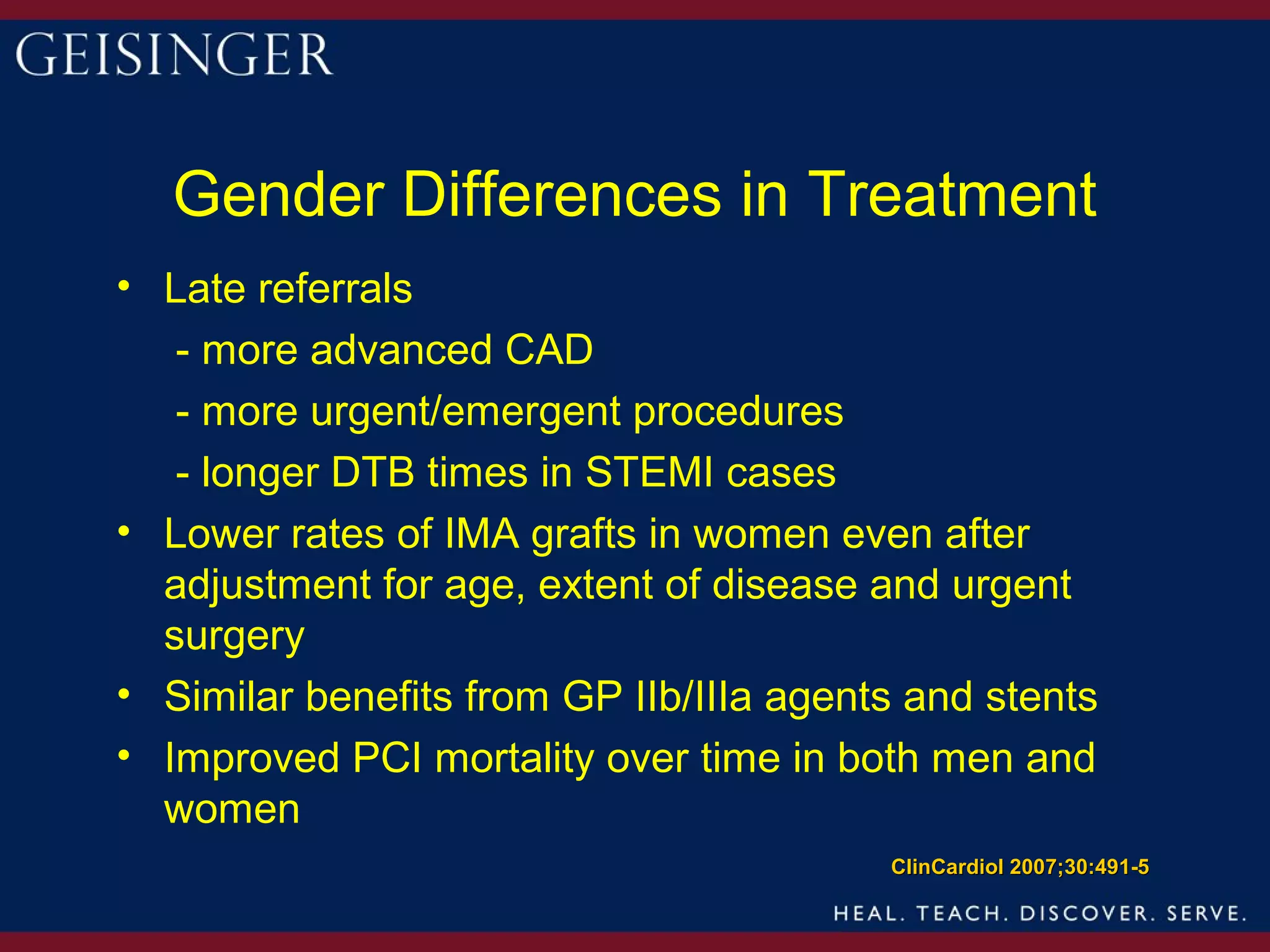
• Late referrals
   - more advanced CAD
   - more urgent/emergent procedures
   - longer DTB times in STEMI cases
• Lower rates of IMA grafts in women even after
  adjustment for age, extent of disease and urgent
  surgery
• Similar benefits from GP IIb/IIIa agents and stents
• Improved PCI mortality over time in both men and
  women
                                         ClinCardiol 2007;30:491-5
Percutaneous Coronary Intervention
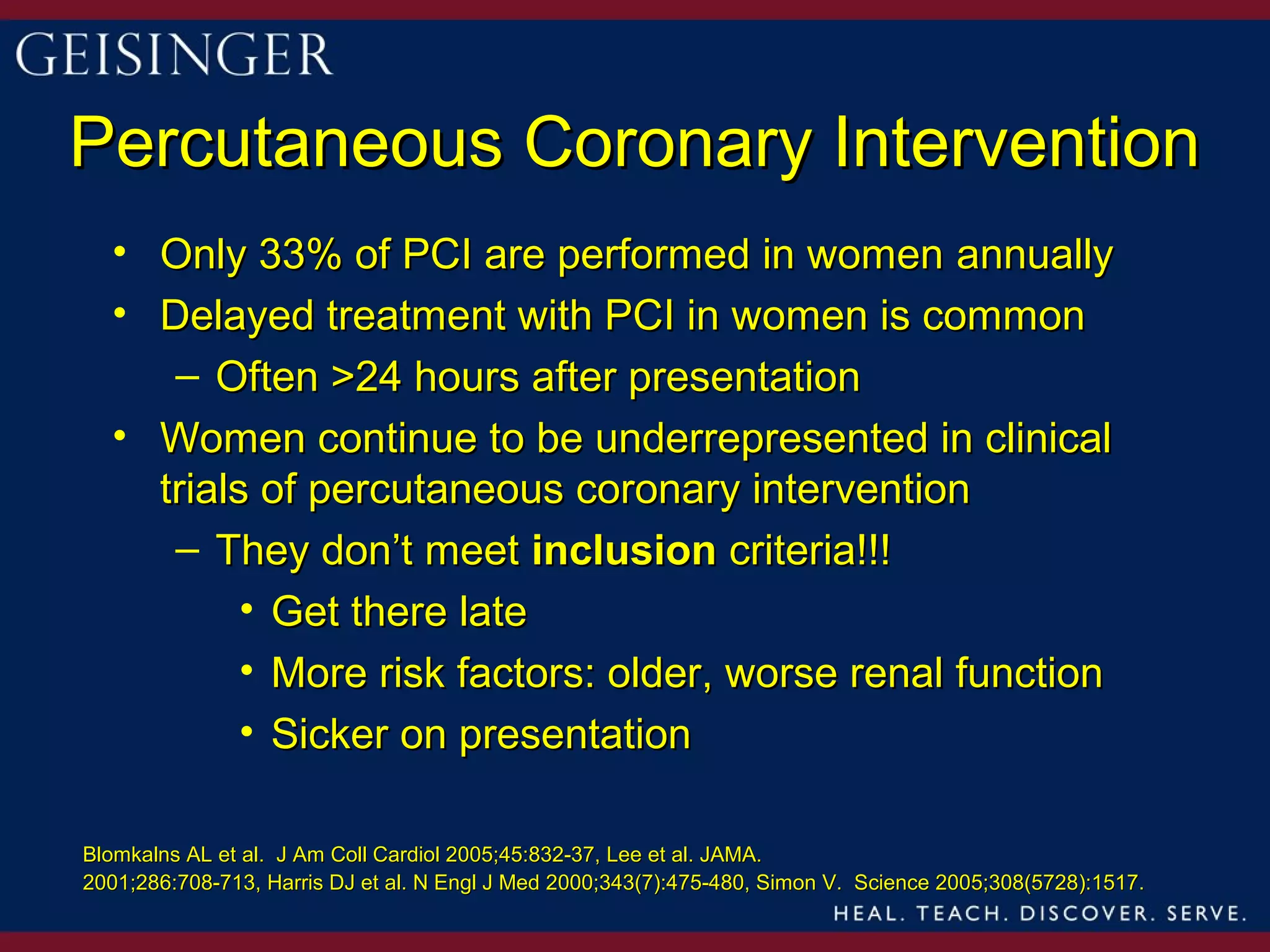
  • Only 33% of PCI are performed in women annually
  • Delayed treatment with PCI in women is common
     – Often >24 hours after presentation
  • Women continue to be underrepresented in clinical
    trials of percutaneous coronary intervention
     – They don’t meet inclusion criteria!!!
          • Get there late
          • More risk factors: older, worse renal function
          • Sicker on presentation

Blomkalns AL et al. J Am Coll Cardiol 2005;45:832-37, Lee et al. JAMA.
2001;286:708-713, Harris DJ et al. N Engl J Med 2000;343(7):475-480, Simon V. Science 2005;308(5728):1517.
Outcomes following PCI
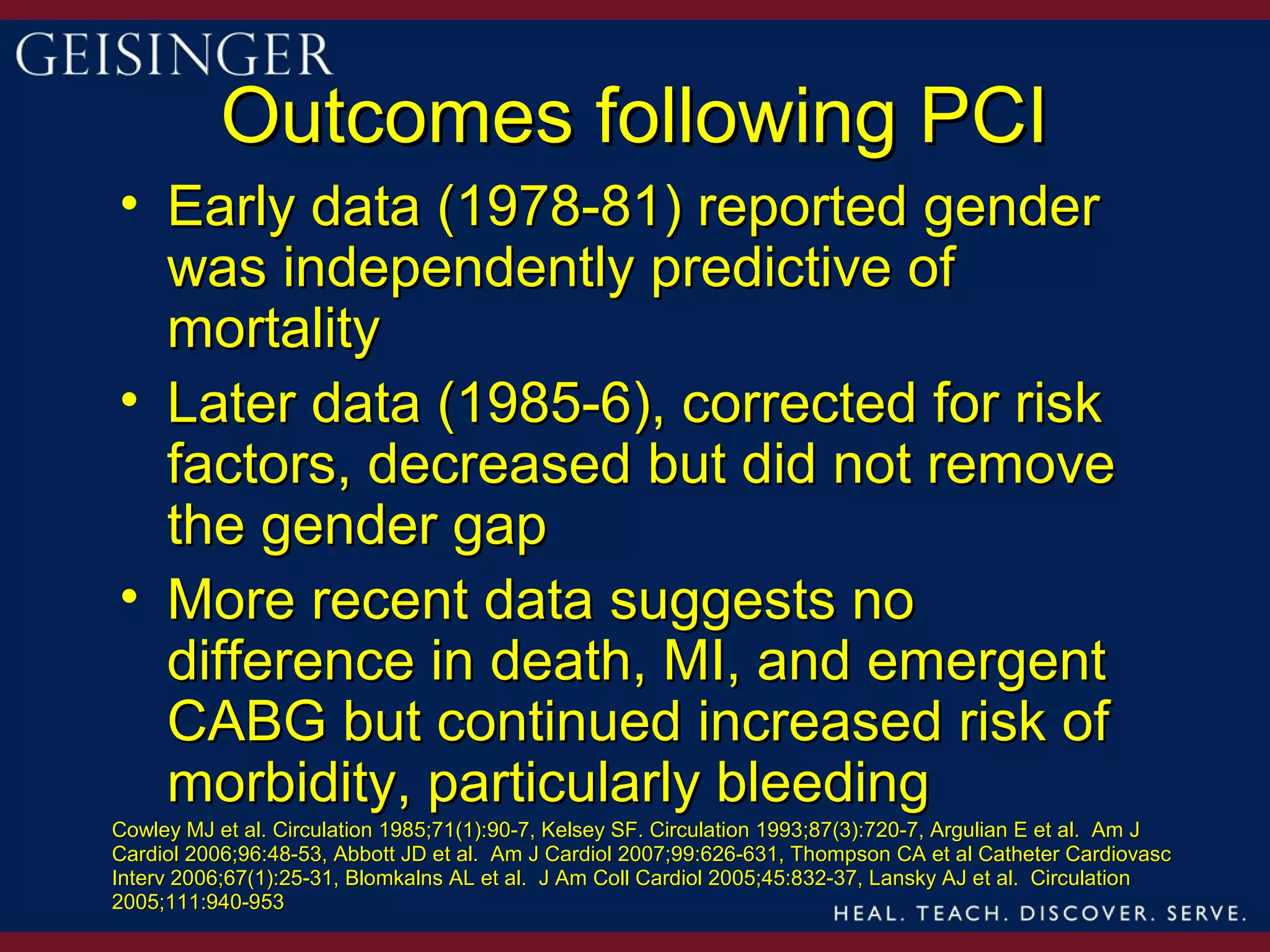
• Early data (1978-81) reported gender
  was independently predictive of
  mortality
• Later data (1985-6), corrected for risk
  factors, decreased but did not remove
  the gender gap
• More recent data suggests no
  difference in death, MI, and emergent
  CABG but continued increased risk of
  morbidity, particularly bleeding
Cowley MJ et al. Circulation 1985;71(1):90-7, Kelsey SF. Circulation 1993;87(3):720-7, Argulian E et al. Am J
Cardiol 2006;96:48-53, Abbott JD et al. Am J Cardiol 2007;99:626-631, Thompson CA et al Catheter Cardiovasc
Interv 2006;67(1):25-31, Blomkalns AL et al. J Am Coll Cardiol 2005;45:832-37, Lansky AJ et al. Circulation
2005;111:940-953
Outcomes following PCI
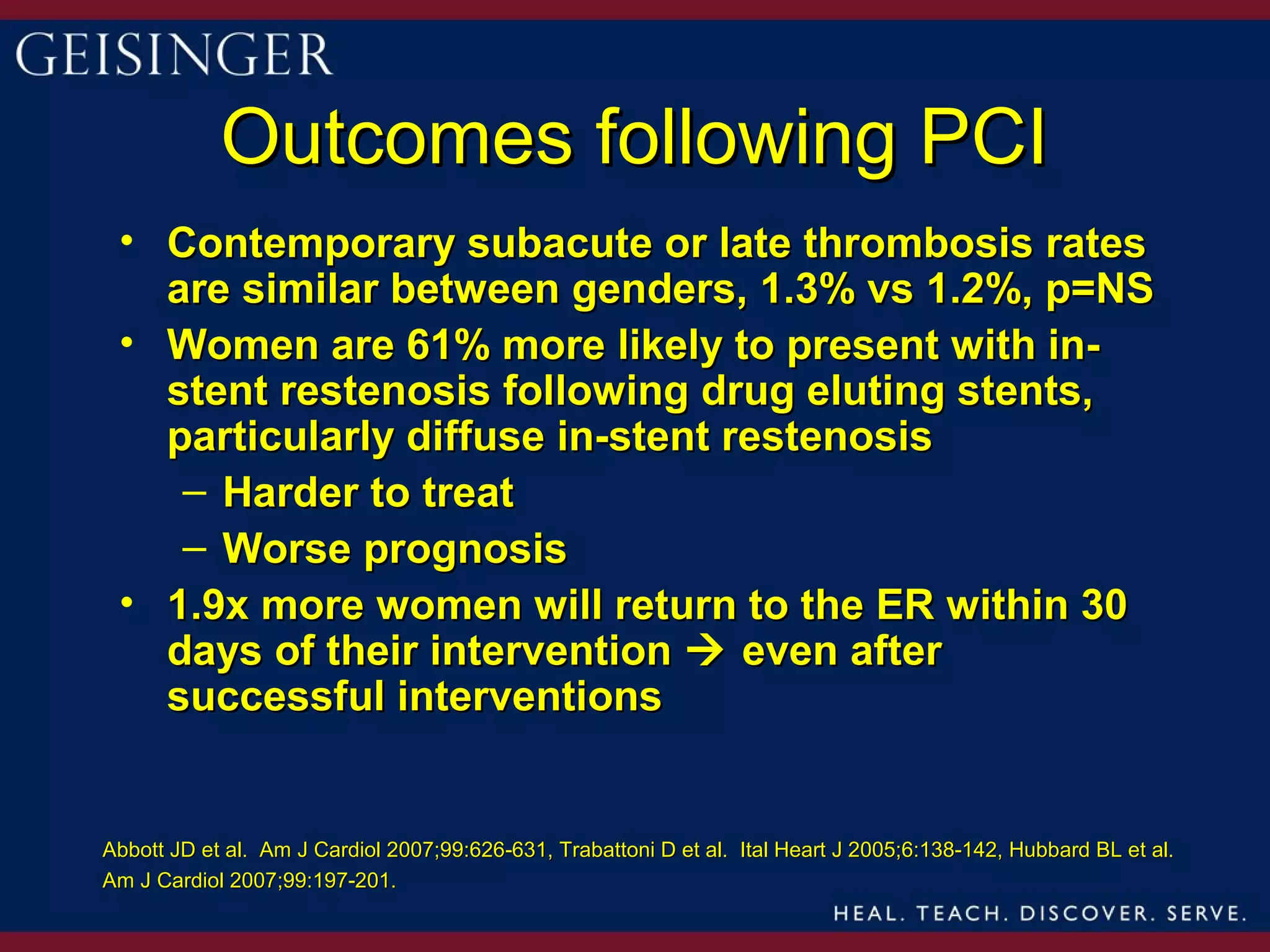
 • Contemporary subacute or late thrombosis rates
   are similar between genders, 1.3% vs 1.2%, p=NS
 • Women are 61% more likely to present with in-
   stent restenosis following drug eluting stents,
   particularly diffuse in-stent restenosis
    – Harder to treat
    – Worse prognosis
 • 1.9x more women will return to the ER within 30
   days of their intervention  even after
   successful interventions


Abbott JD et al. Am J Cardiol 2007;99:626-631, Trabattoni D et al. Ital Heart J 2005;6:138-142, Hubbard BL et al.
Am J Cardiol 2007;99:197-201.
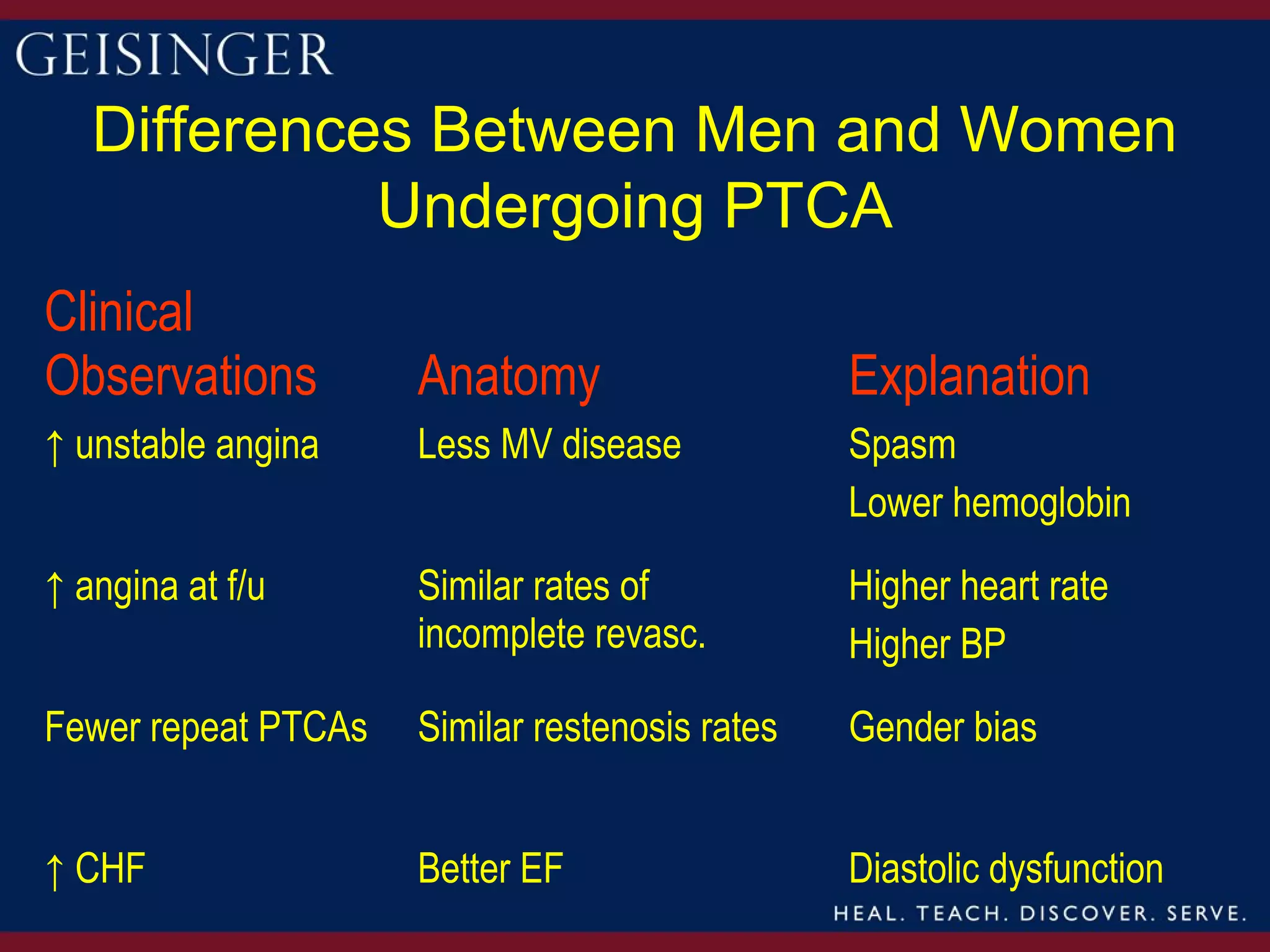
Differences Between Men and Women
             Undergoing PTCA
Clinical
Observations         Anatomy                    Explanation
↑ unstable angina    Less MV disease            Spasm
                                                Lower hemoglobin
↑ angina at f/u      Similar rates of           Higher heart rate
                     incomplete revasc.         Higher BP
Fewer repeat PTCAs   Similar restenosis rates   Gender bias


↑ CHF                Better EF                  Diastolic dysfunction
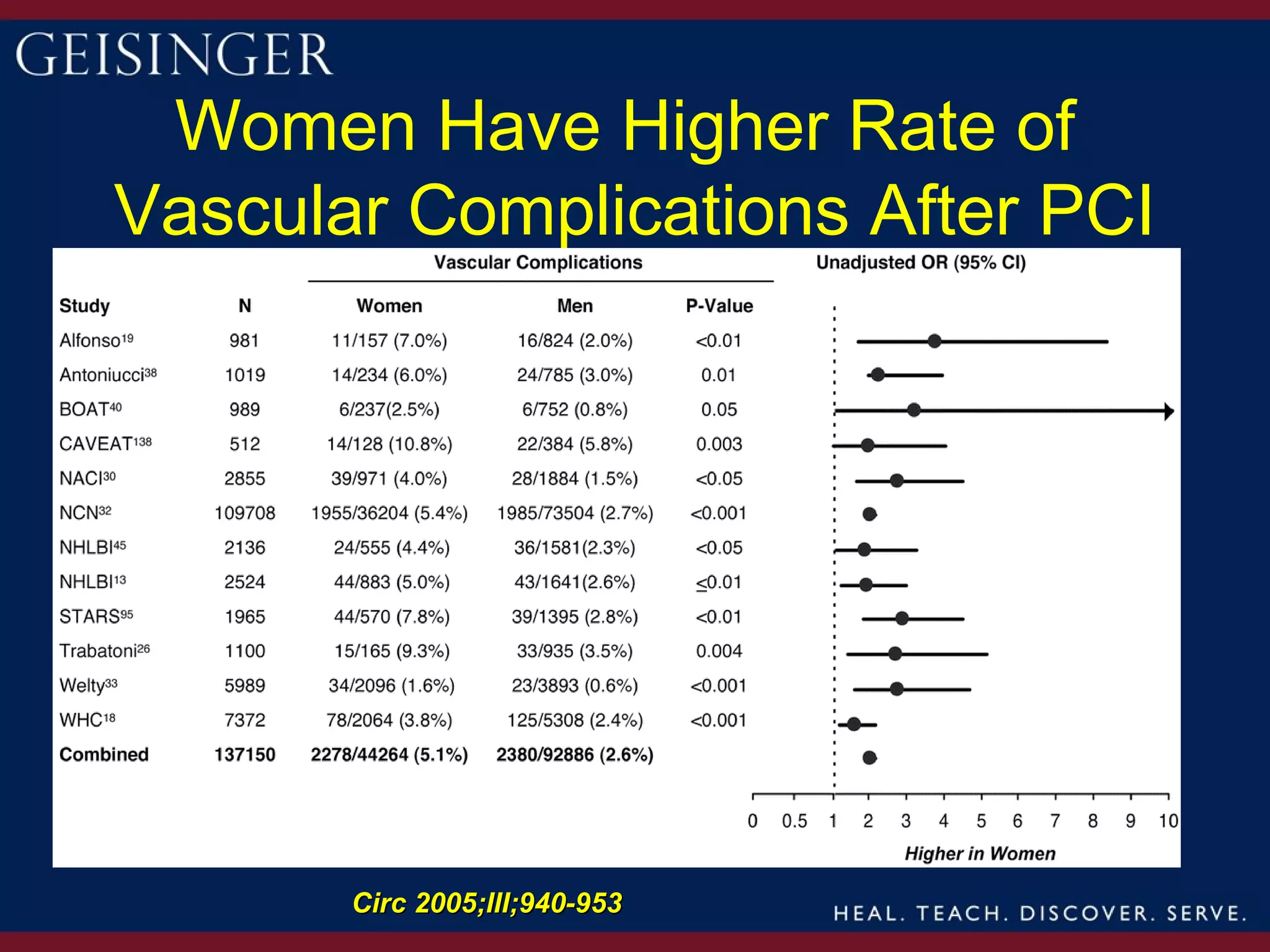
Women Have Higher Rate of
Vascular Complications After PCI


       Circ 2005;III;940-953
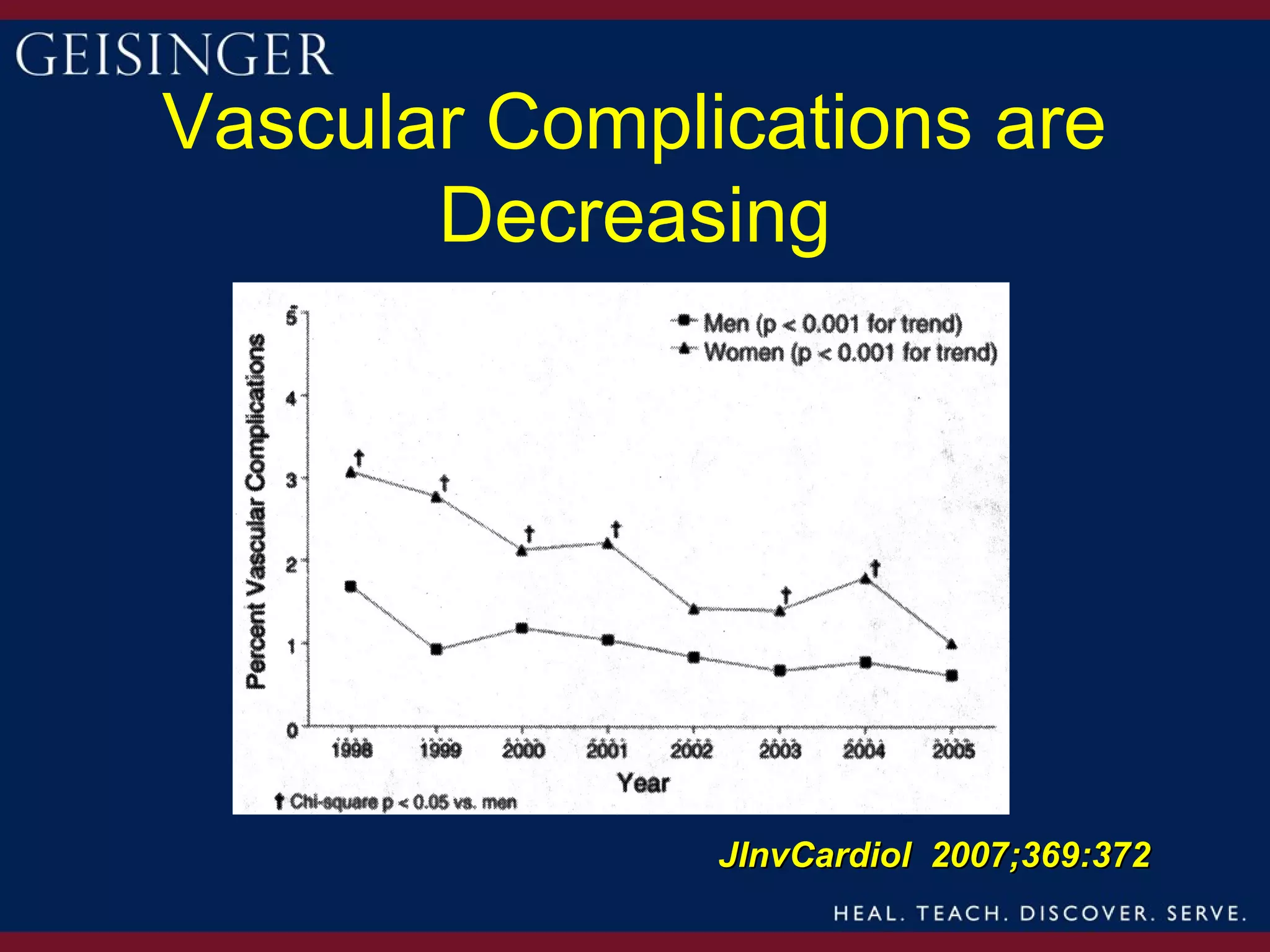
Vascular Complications are
       Decreasing


               JInvCardiol 2007;369:372
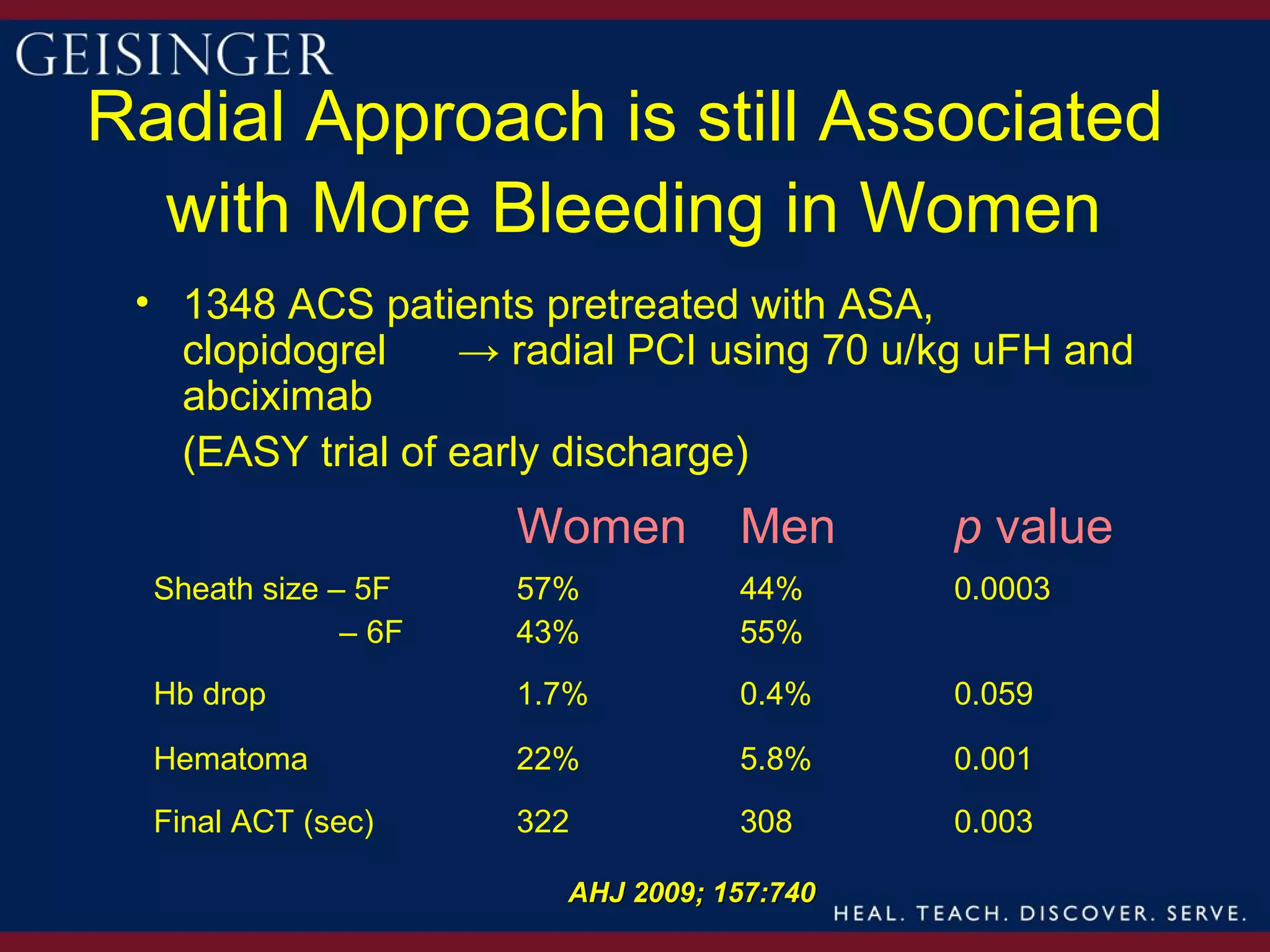
Radial Approach is still Associated
  with More Bleeding in Women
 • 1348 ACS patients pretreated with ASA,
   clopidogrel    → radial PCI using 70 u/kg uFH and
   abciximab
   (EASY trial of early discharge)
                      Women        Men      p value
  Sheath size – 5F    57%          44%      0.0003
               – 6F   43%          55%
  Hb drop             1.7%         0.4%     0.059

  Hematoma            22%          5.8%     0.001
  Final ACT (sec)     322          308      0.003

                        AHJ 2009; 157:740
Gender Differences in Response
        to Anticoagulants
• Among drug applications submitted to FDA
  between 1994 and 2000, 20% had gender
  differences in pharmacokinetics
  - gender differences in gastric emptying
  - more hepatic cytochrome CYP3A in women
  - more dietary supplements taken by women
  - more accumulation in fat
  - less renal excretion
• Nine fold increase in HIT in women compared
  to men (Blood 2006;108:2937-410)
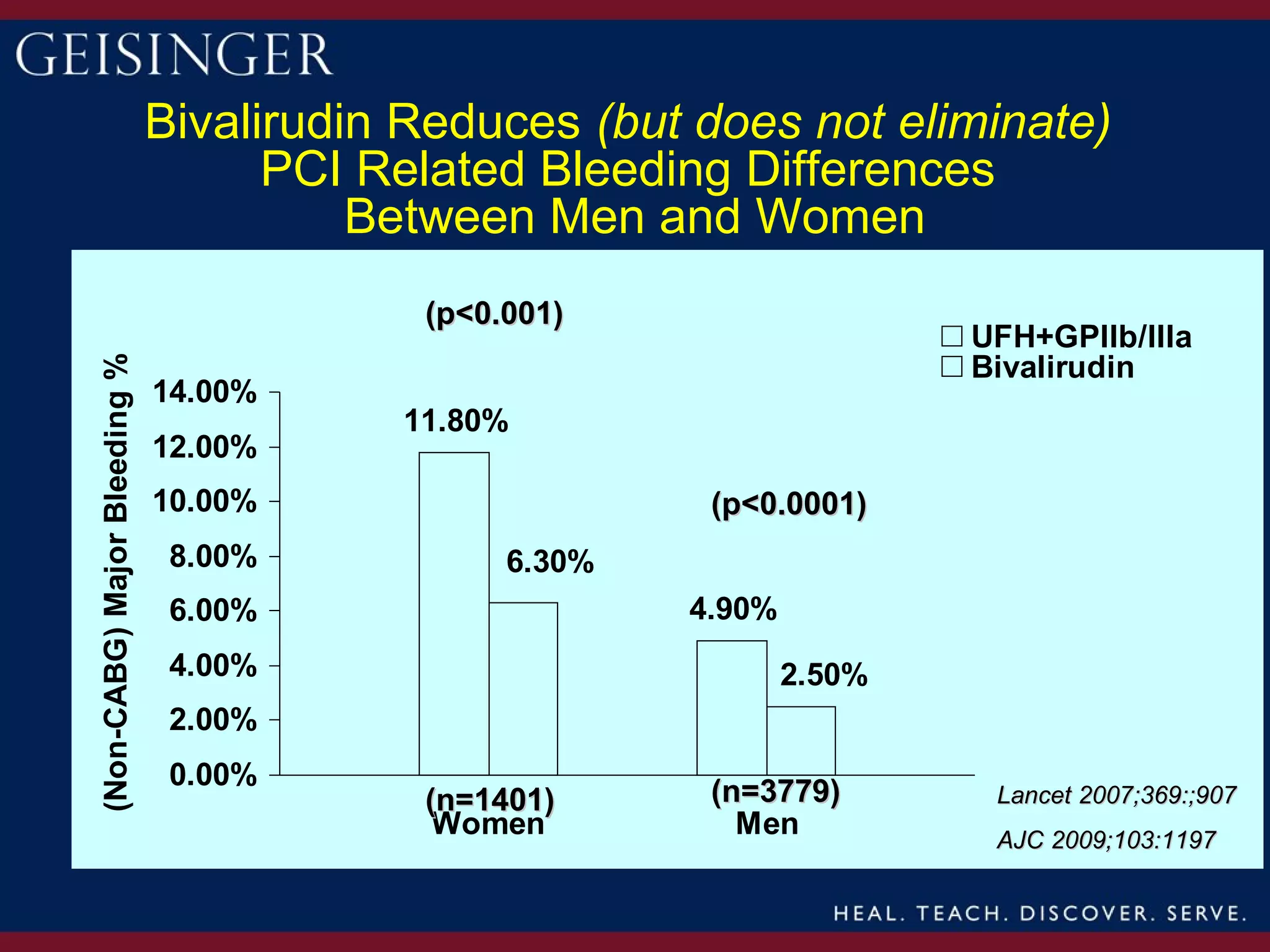
Bivalirudin Reduces (but does not eliminate)
                                    PCI Related Bleeding Differences
                                        Between Men and Women
                                          (p<0.001)
                                                                       UFH+GPIIb/IIIa
                                                                       Bivalirudin
(Non-CABG) Major Bleeding %


                              14.00%
                                         11.80%
                              12.00%
                              10.00%                    (p<0.0001)
                               8.00%           6.30%
                               6.00%                   4.90%
                               4.00%                           2.50%
                               2.00%
                               0.00%
                                          (n=1401)      (n=3779)        Lancet 2007;369:;907
                                           Women          Men           AJC 2009;103:1197
Are we still
discriminating against
  women, or are we
 using good clinical
      judgment?
Dilemma
• Women have atypical symptoms → physicians need high
  level of suspicion and aggressive diagnostic testing,
  however . . . . .

• Women have higher rates of normal coronaries at the time
  of cath

• How can one avoid overutilization of cath, but at the same
  time avoid misdiagnosis in women?
   – Noninvasive testing
   – Determine pre-test probability of CAD
   – CT angiography (avoid radiation exposure in younger
     women)
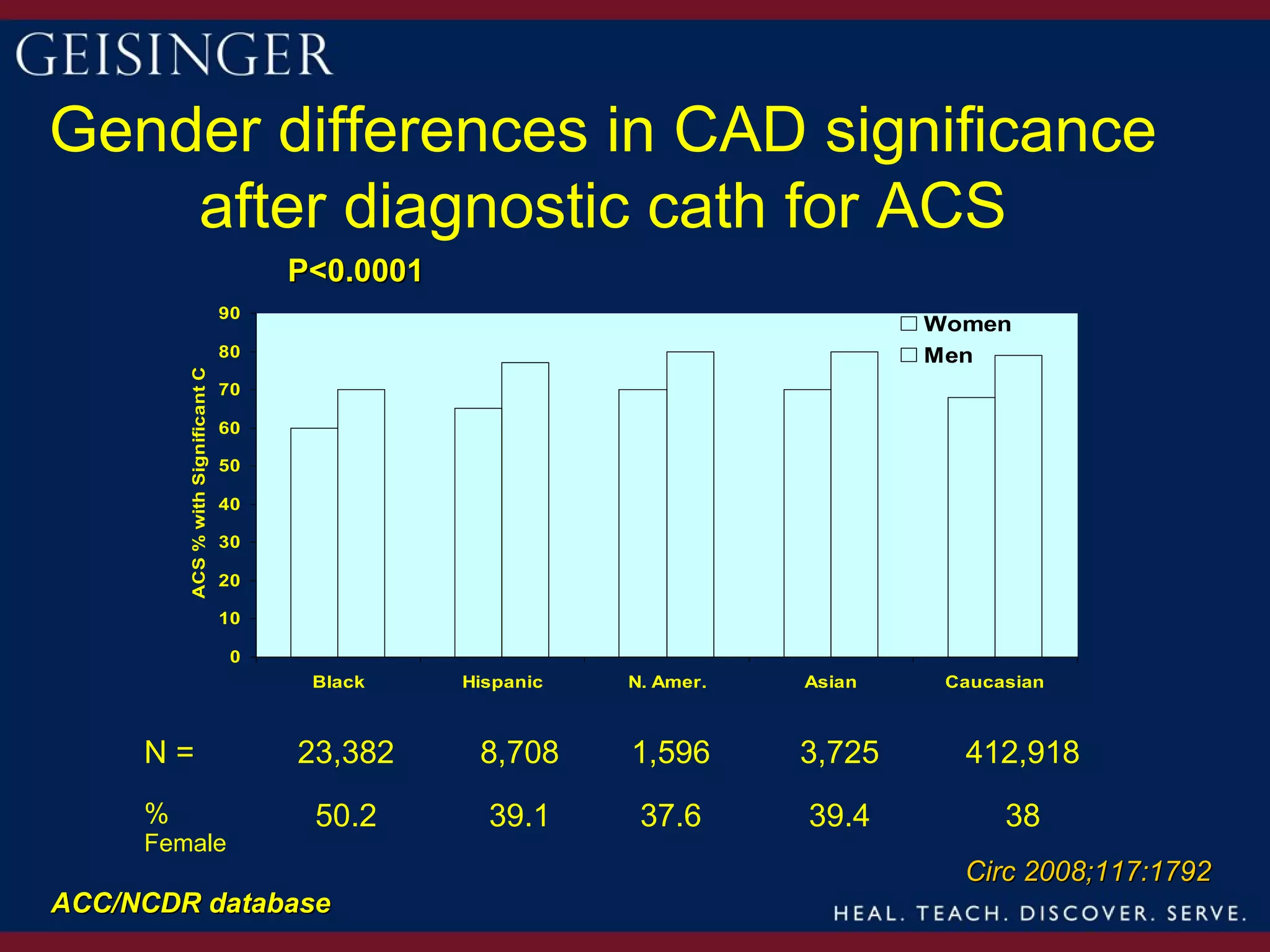
Gender differences in CAD significance
    after diagnostic cath for ACS
                                           P<0.0001
                                      90
                                                                                    Women
         ACS % with Significant CAD


                                      80                                            Men
                                      70

                                      60

                                      50

                                      40

                                      30

                                      20

                                      10

                                       0
                                            Black     Hispanic   N. Amer.   Asian    Caucasian


     N=                                    23,382      8,708     1,596      3,725     412,918
     %                                      50.2        39.1      37.6      39.4          38
     Female
                                                                                      Circ 2008;117:1792
ACC/NCDR database
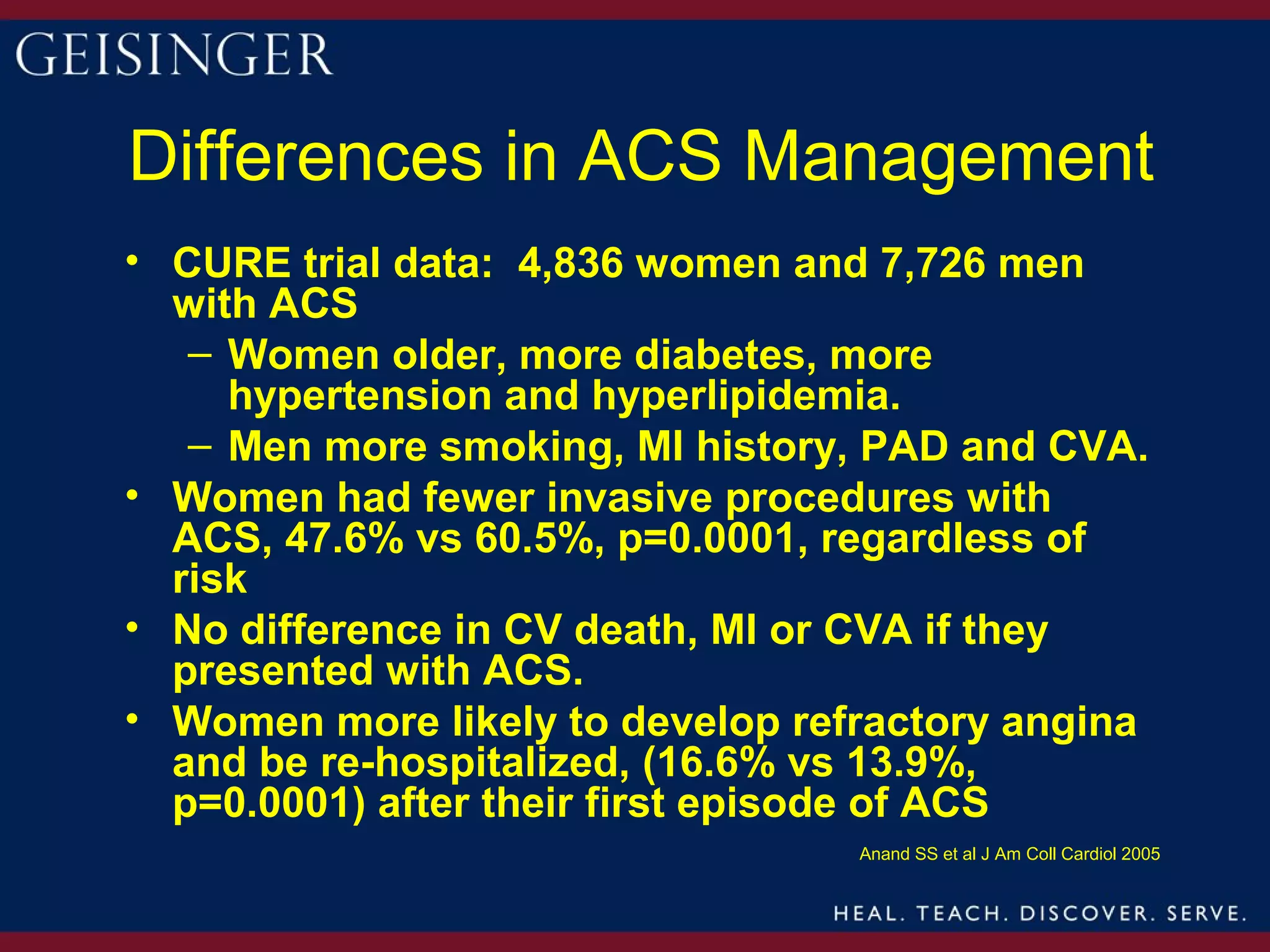
Differences in ACS Management
• CURE trial data: 4,836 women and 7,726 men
  with ACS
   – Women older, more diabetes, more
     hypertension and hyperlipidemia.
   – Men more smoking, MI history, PAD and CVA.
• Women had fewer invasive procedures with
  ACS, 47.6% vs 60.5%, p=0.0001, regardless of
  risk
• No difference in CV death, MI or CVA if they
  presented with ACS.
• Women more likely to develop refractory angina
  and be re-hospitalized, (16.6% vs 13.9%,
  p=0.0001) after their first episode of ACS
                                  Anand SS et al J Am Coll Cardiol 2005
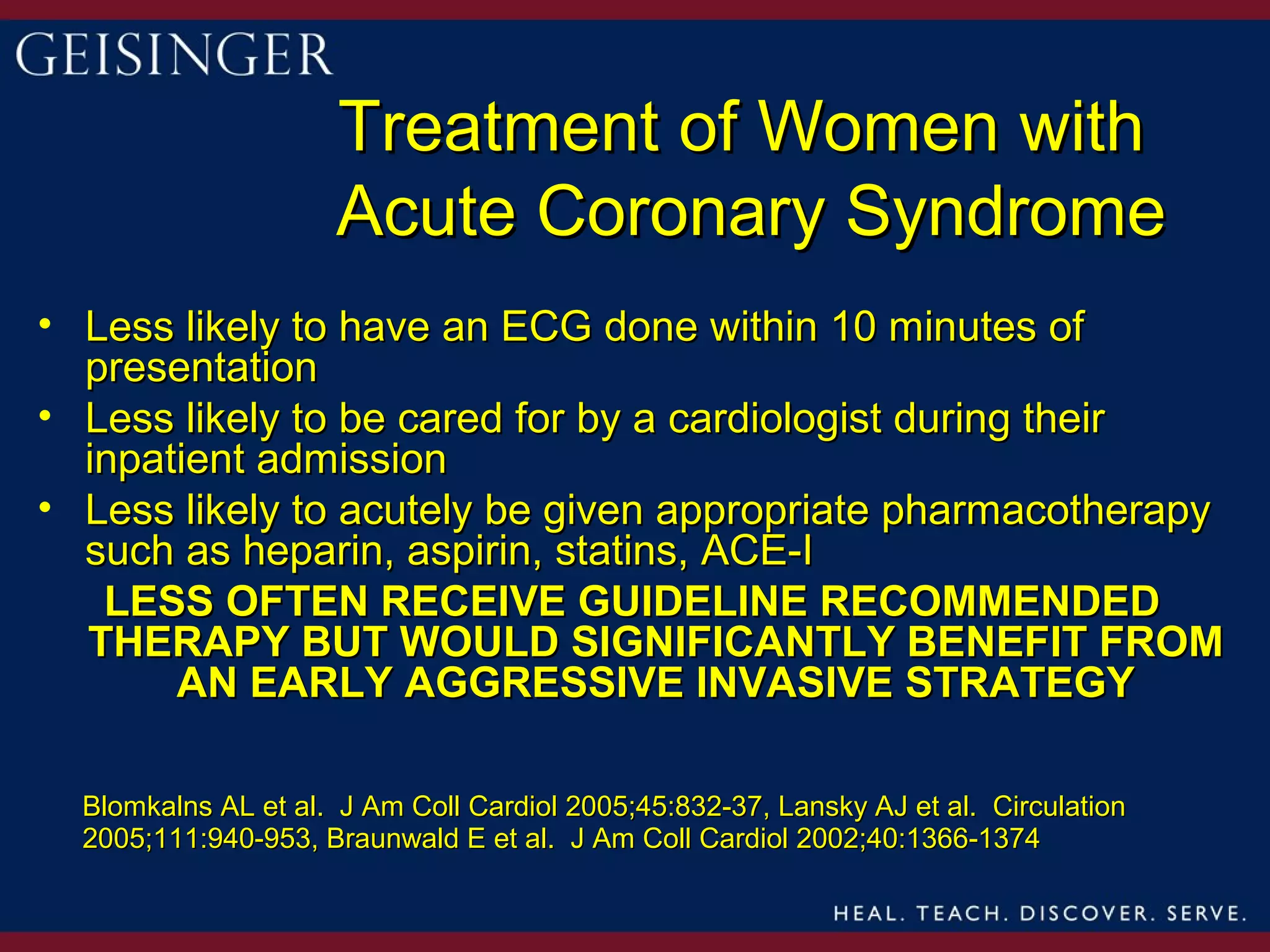
Treatment of Women with
                     Acute Coronary Syndrome
• Less likely to have an ECG done within 10 minutes of
  presentation
• Less likely to be cared for by a cardiologist during their
  inpatient admission
• Less likely to acutely be given appropriate pharmacotherapy
  such as heparin, aspirin, statins, ACE-I
   LESS OFTEN RECEIVE GUIDELINE RECOMMENDED
  THERAPY BUT WOULD SIGNIFICANTLY BENEFIT FROM
       AN EARLY AGGRESSIVE INVASIVE STRATEGY

  Blomkalns AL et al. J Am Coll Cardiol 2005;45:832-37, Lansky AJ et al. Circulation
  2005;111:940-953, Braunwald E et al. J Am Coll Cardiol 2002;40:1366-1374
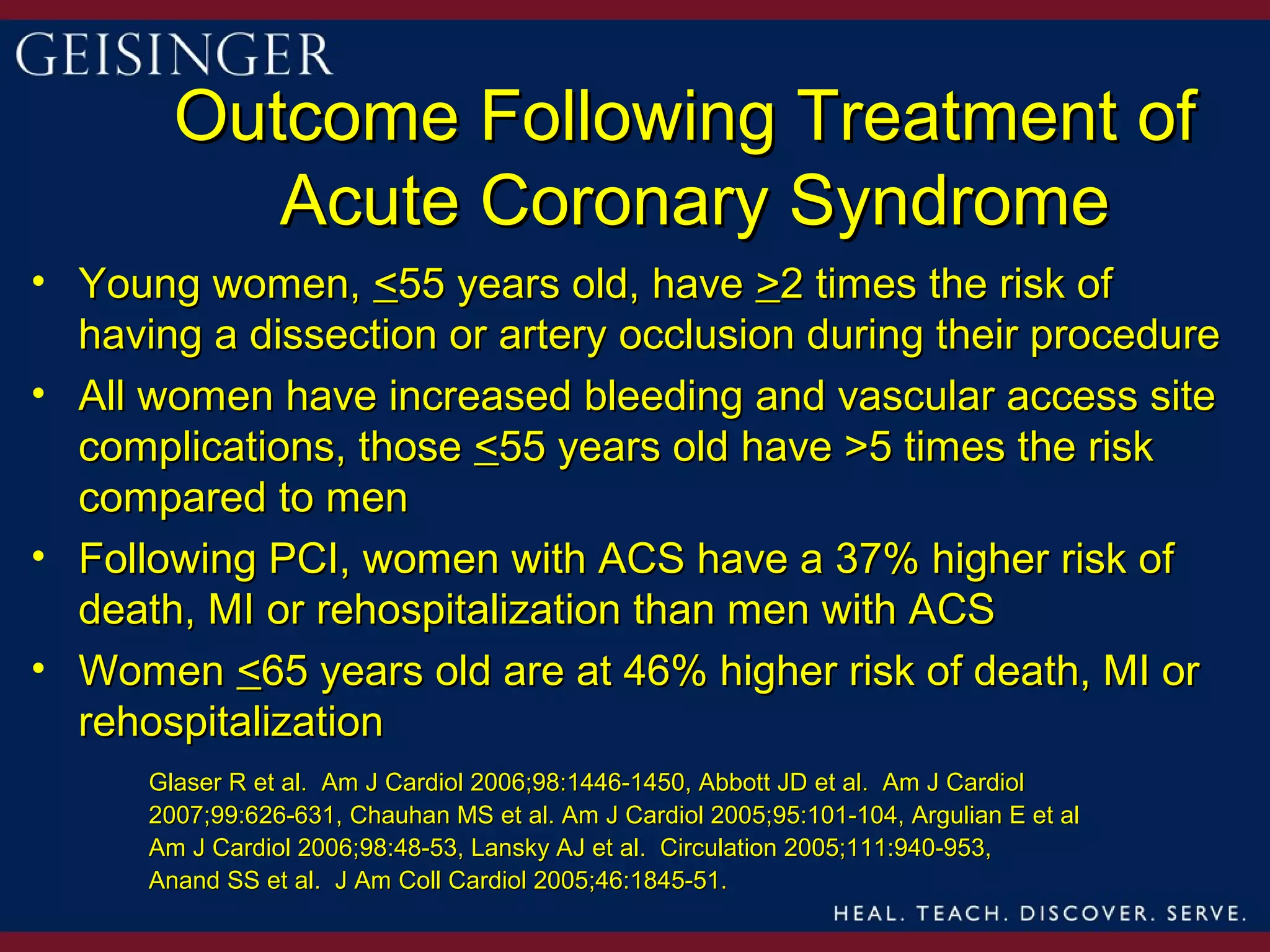
Outcome Following Treatment of
           Acute Coronary Syndrome
• Young women, <55 years old, have >2 times the risk of
  having a dissection or artery occlusion during their procedure
• All women have increased bleeding and vascular access site
  complications, those <55 years old have >5 times the risk
  compared to men
• Following PCI, women with ACS have a 37% higher risk of
  death, MI or rehospitalization than men with ACS
• Women <65 years old are at 46% higher risk of death, MI or
  rehospitalization
      Glaser R et al. Am J Cardiol 2006;98:1446-1450, Abbott JD et al. Am J Cardiol
      2007;99:626-631, Chauhan MS et al. Am J Cardiol 2005;95:101-104, Argulian E et al
      Am J Cardiol 2006;98:48-53, Lansky AJ et al. Circulation 2005;111:940-953,
      Anand SS et al. J Am Coll Cardiol 2005;46:1845-51.
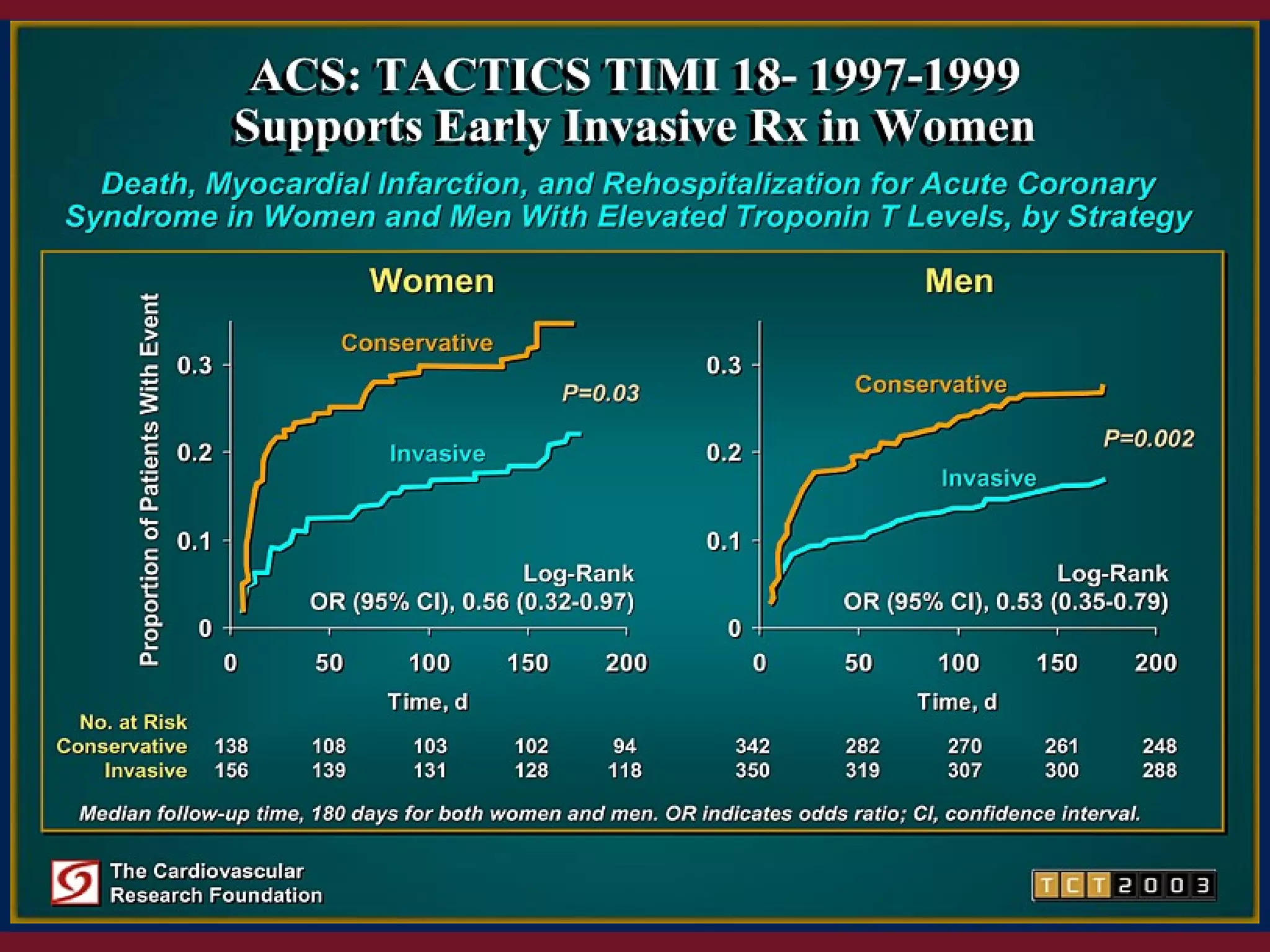
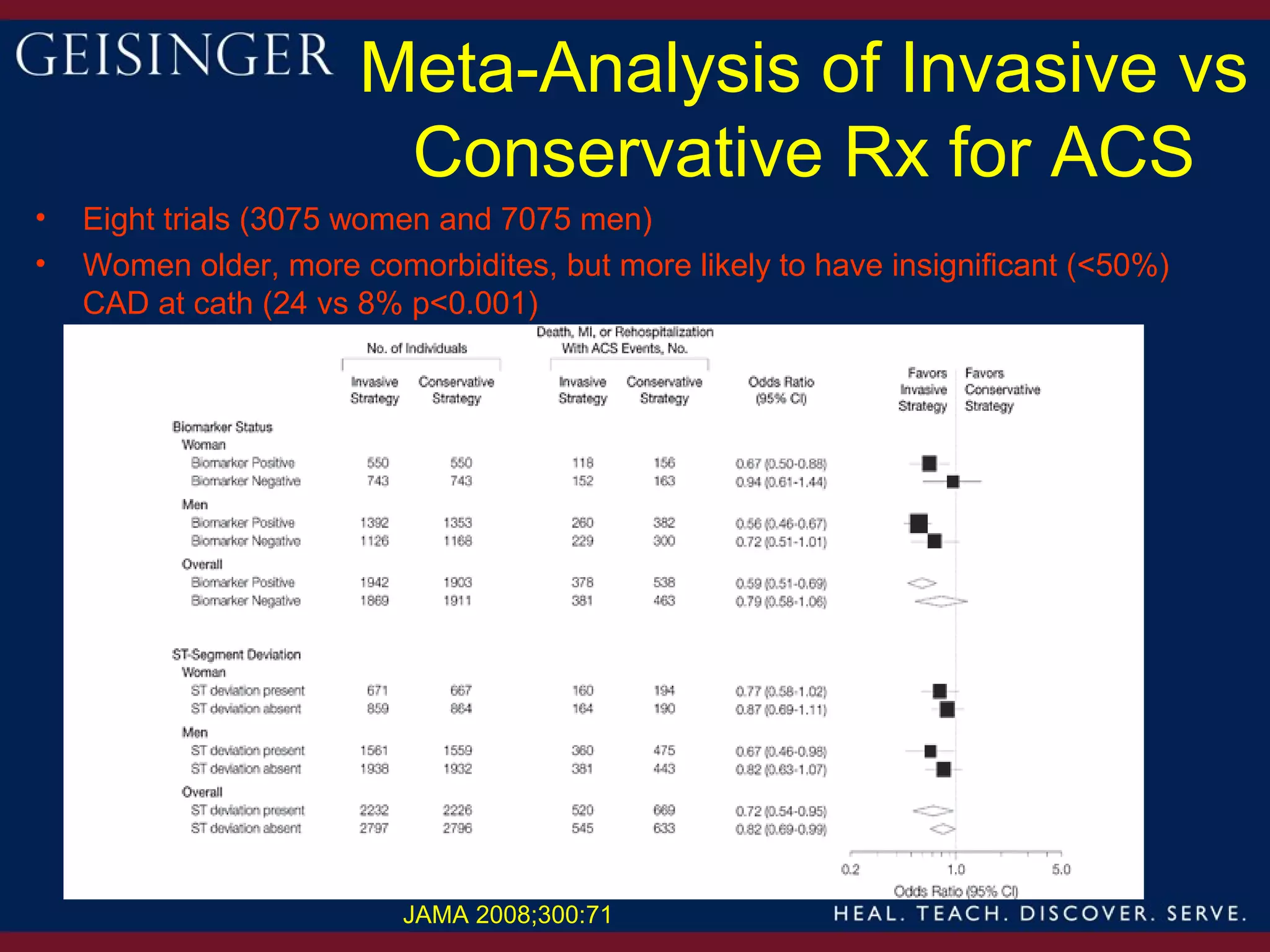
Meta-Analysis of Invasive vs
                        Conservative Rx for ACS
•   Eight trials (3075 women and 7075 men)
•   Women older, more comorbidites, but more likely to have insignificant (<50%)
    CAD at cath (24 vs 8% p<0.001)


                          JAMA 2008;300:71
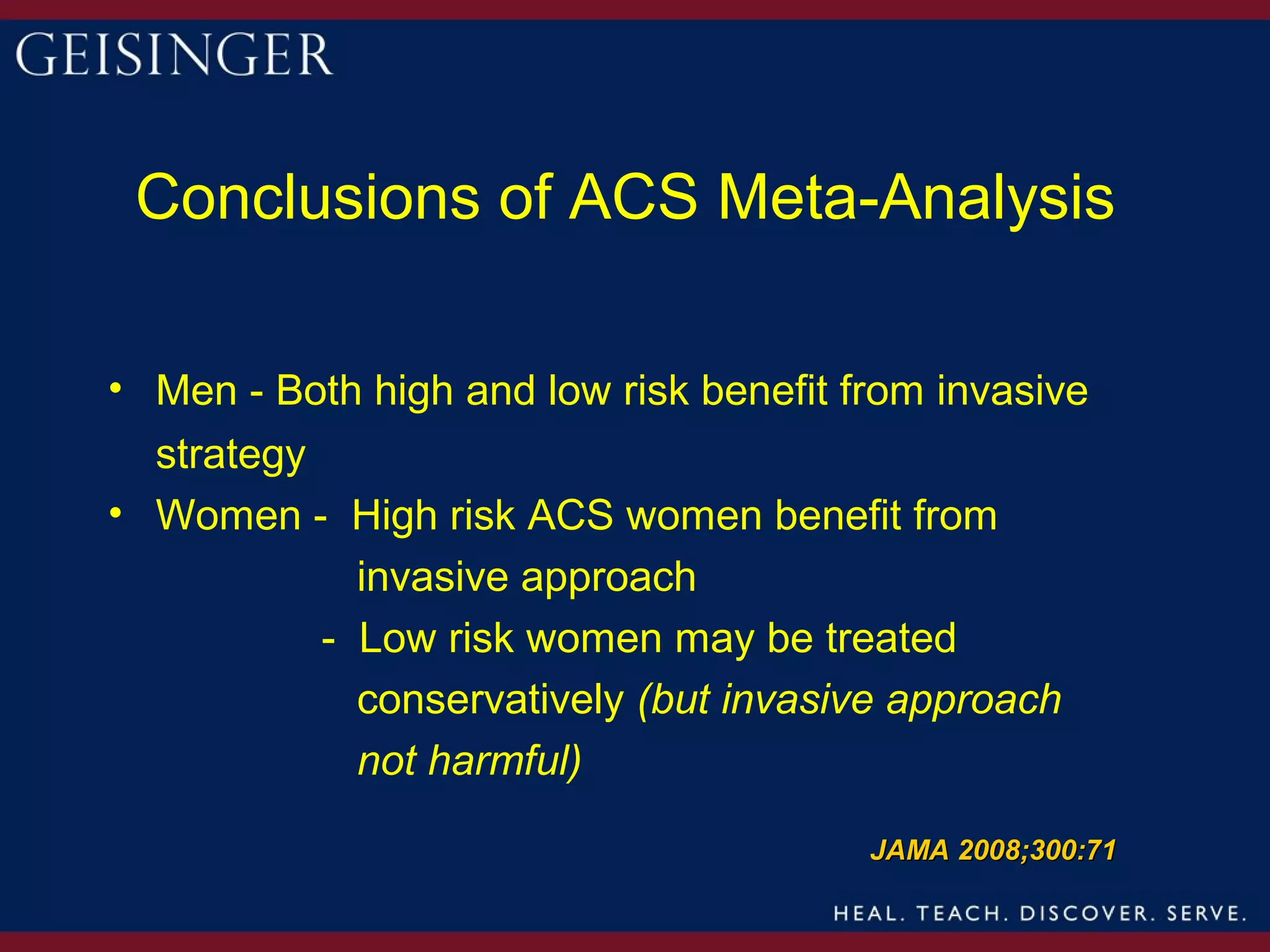
Conclusions of ACS Meta-Analysis

• Men - Both high and low risk benefit from invasive
  strategy
• Women - High risk ACS women benefit from
             invasive approach
           - Low risk women may be treated
             conservatively (but invasive approach
             not harmful)

                                        JAMA 2008;300:71
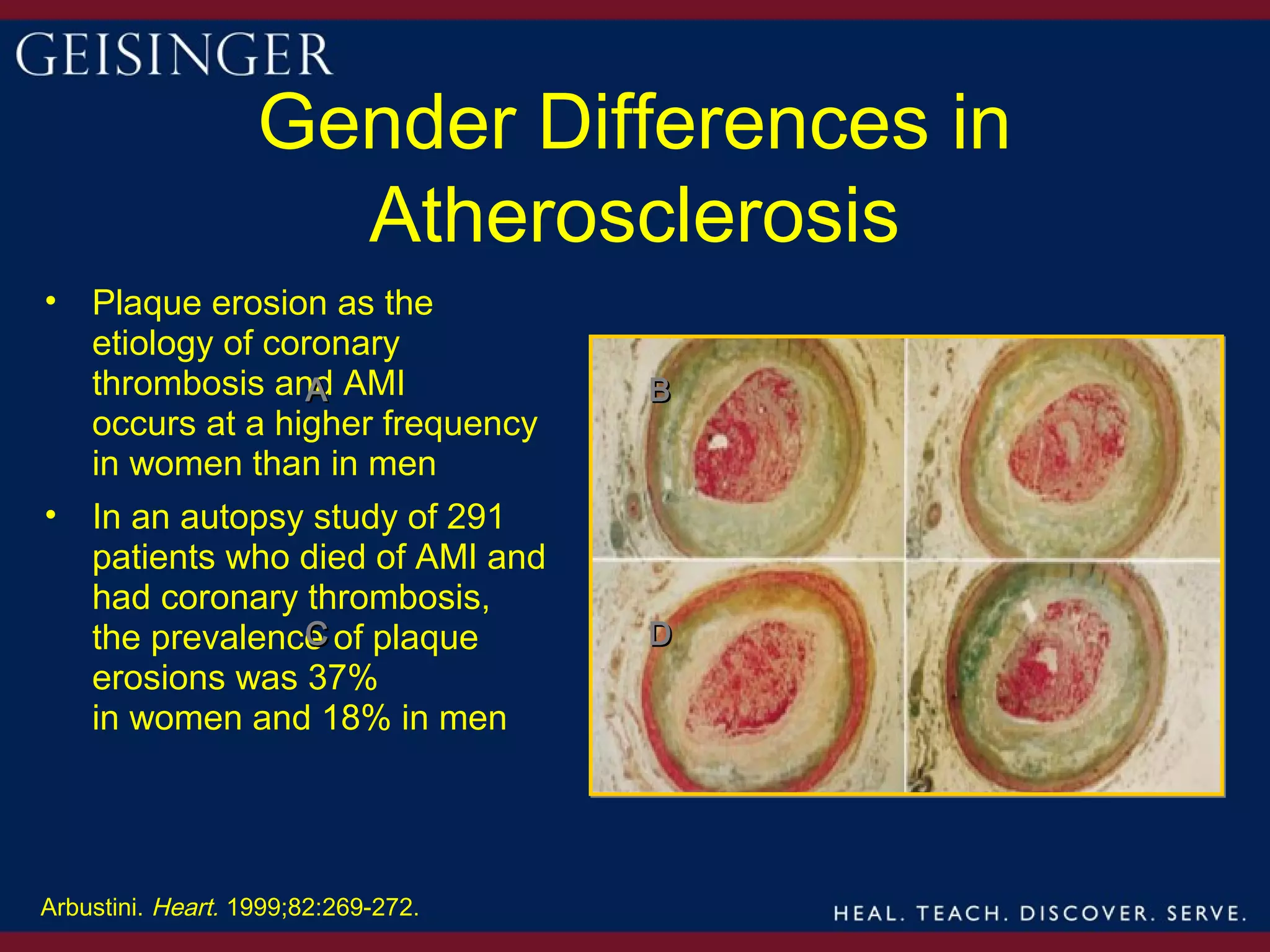
Gender Differences in
                     Atherosclerosis
•   Plaque erosion as the
    etiology of coronary
    thrombosis and AMI
                   A                 B
    occurs at a higher frequency
    in women than in men
•   In an autopsy study of 291
    patients who died of AMI and
    had coronary thrombosis,
                 C
    the prevalence of plaque         D
    erosions was 37%
    in women and 18% in men


Arbustini. Heart. 1999;82:269-272.
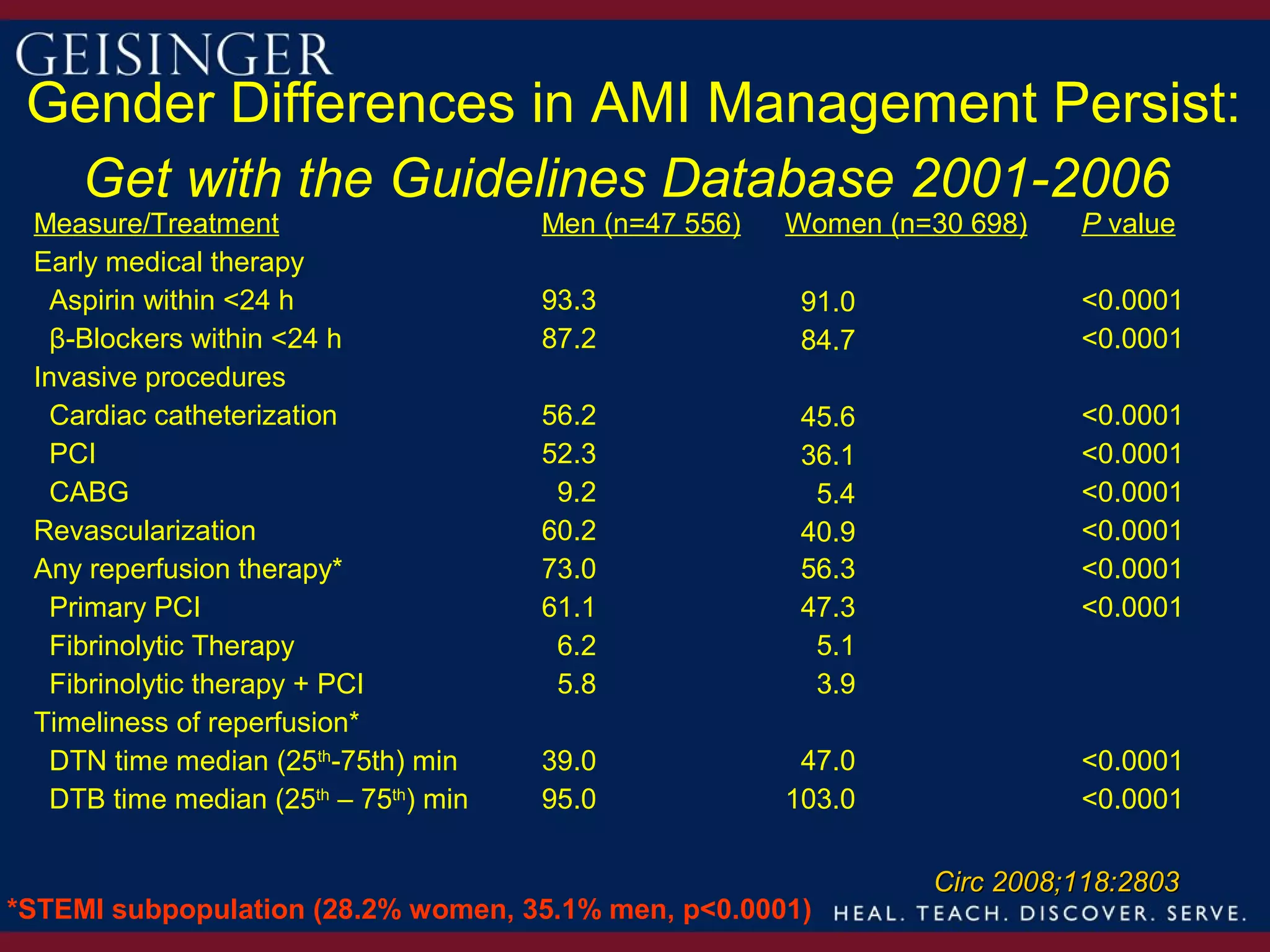
Gender Differences in AMI Management Persist:
  Get with the Guidelines Database 2001-2006
 Measure/Treatment                    Men (n=47 556)   Women (n=30 698)   P value
 Early medical therapy
  Aspirin within <24 h                93.3              91.0              <0.0001
  β-Blockers within <24 h             87.2              84.7              <0.0001
 Invasive procedures
  Cardiac catheterization             56.2              45.6              <0.0001
  PCI                                 52.3              36.1              <0.0001
  CABG                                 9.2               5.4              <0.0001
 Revascularization                    60.2              40.9              <0.0001
 Any reperfusion therapy*             73.0              56.3              <0.0001
  Primary PCI                         61.1              47.3              <0.0001
  Fibrinolytic Therapy                 6.2               5.1
  Fibrinolytic therapy + PCI           5.8               3.9
 Timeliness of reperfusion*
  DTN time median (25th-75th) min     39.0              47.0              <0.0001
  DTB time median (25th – 75th) min   95.0             103.0              <0.0001

                                                                Circ 2008;118:2803
*STEMI subpopulation (28.2% women, 35.1% men, p<0.0001)
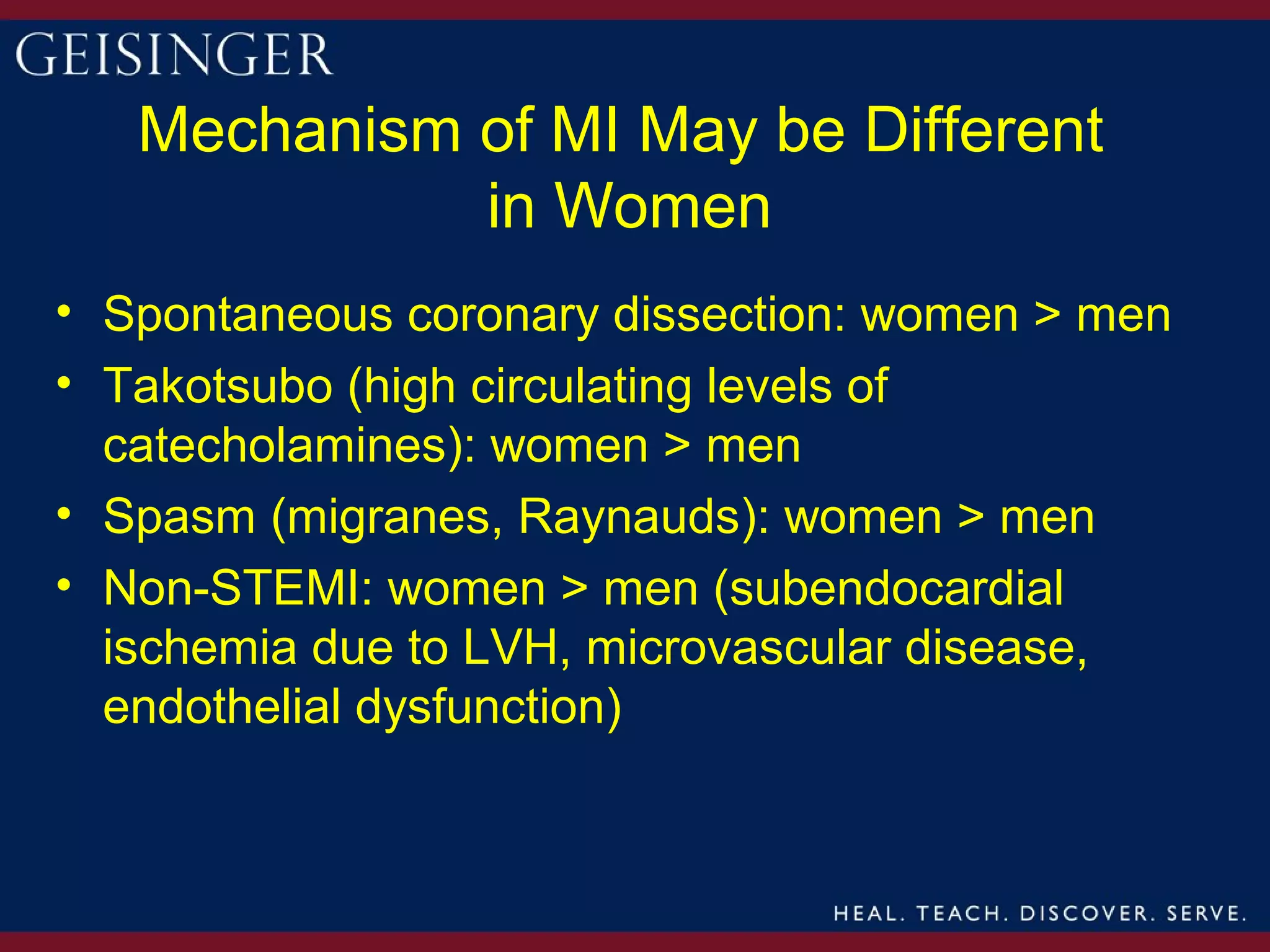
Mechanism of MI May be Different
             in Women
• Spontaneous coronary dissection: women > men
• Takotsubo (high circulating levels of
  catecholamines): women > men
• Spasm (migranes, Raynauds): women > men
• Non-STEMI: women > men (subendocardial
  ischemia due to LVH, microvascular disease,
  endothelial dysfunction)
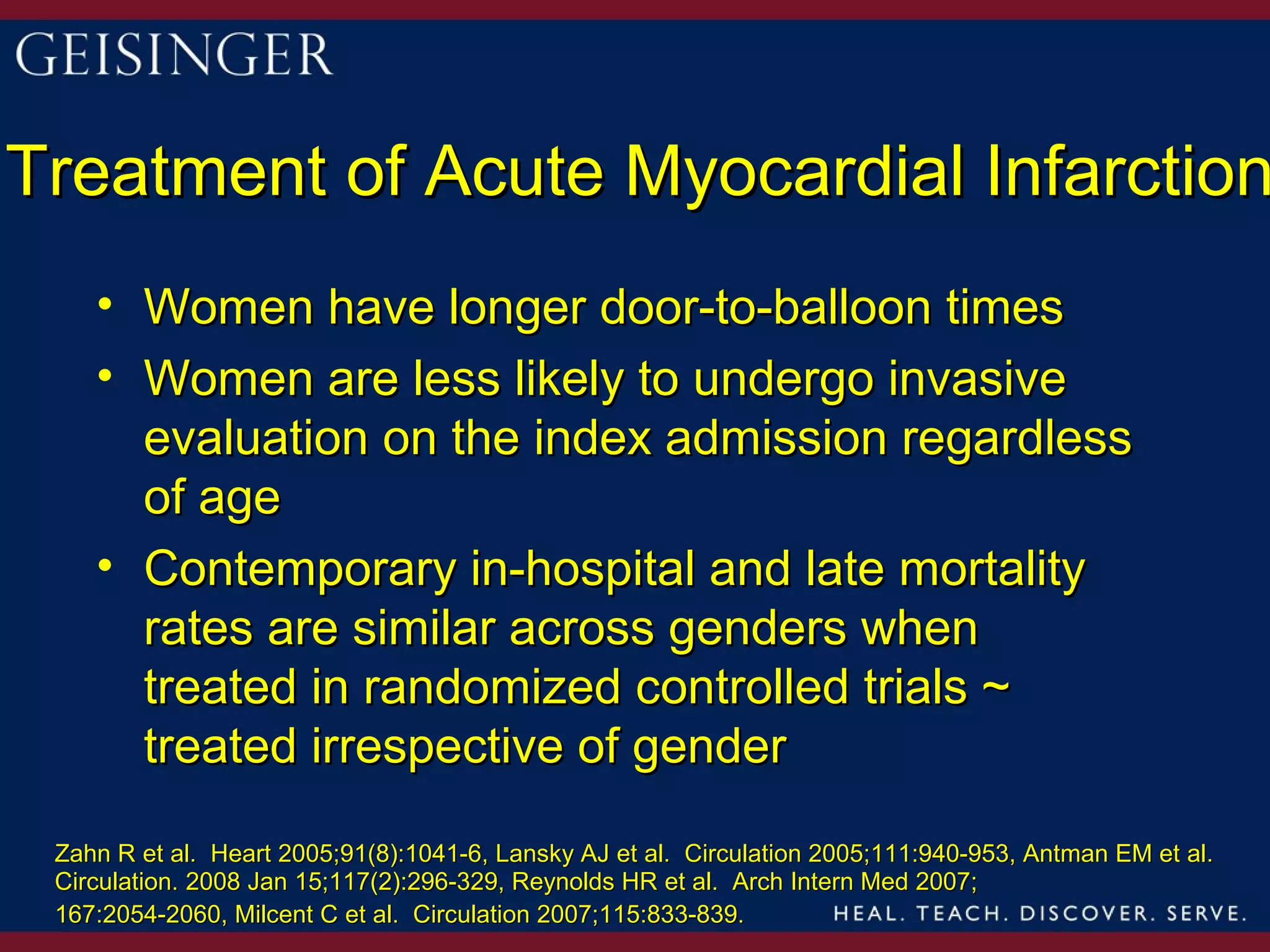
Treatment of Acute Myocardial Infarction
    • Women have longer door-to-balloon times
    • Women are less likely to undergo invasive
      evaluation on the index admission regardless
      of age
    • Contemporary in-hospital and late mortality
      rates are similar across genders when
      treated in randomized controlled trials ~
      treated irrespective of gender

 Zahn R et al. Heart 2005;91(8):1041-6, Lansky AJ et al. Circulation 2005;111:940-953, Antman EM et al.
 Circulation. 2008 Jan 15;117(2):296-329, Reynolds HR et al. Arch Intern Med 2007;
 167:2054-2060, Milcent C et al. Circulation 2007;115:833-839.
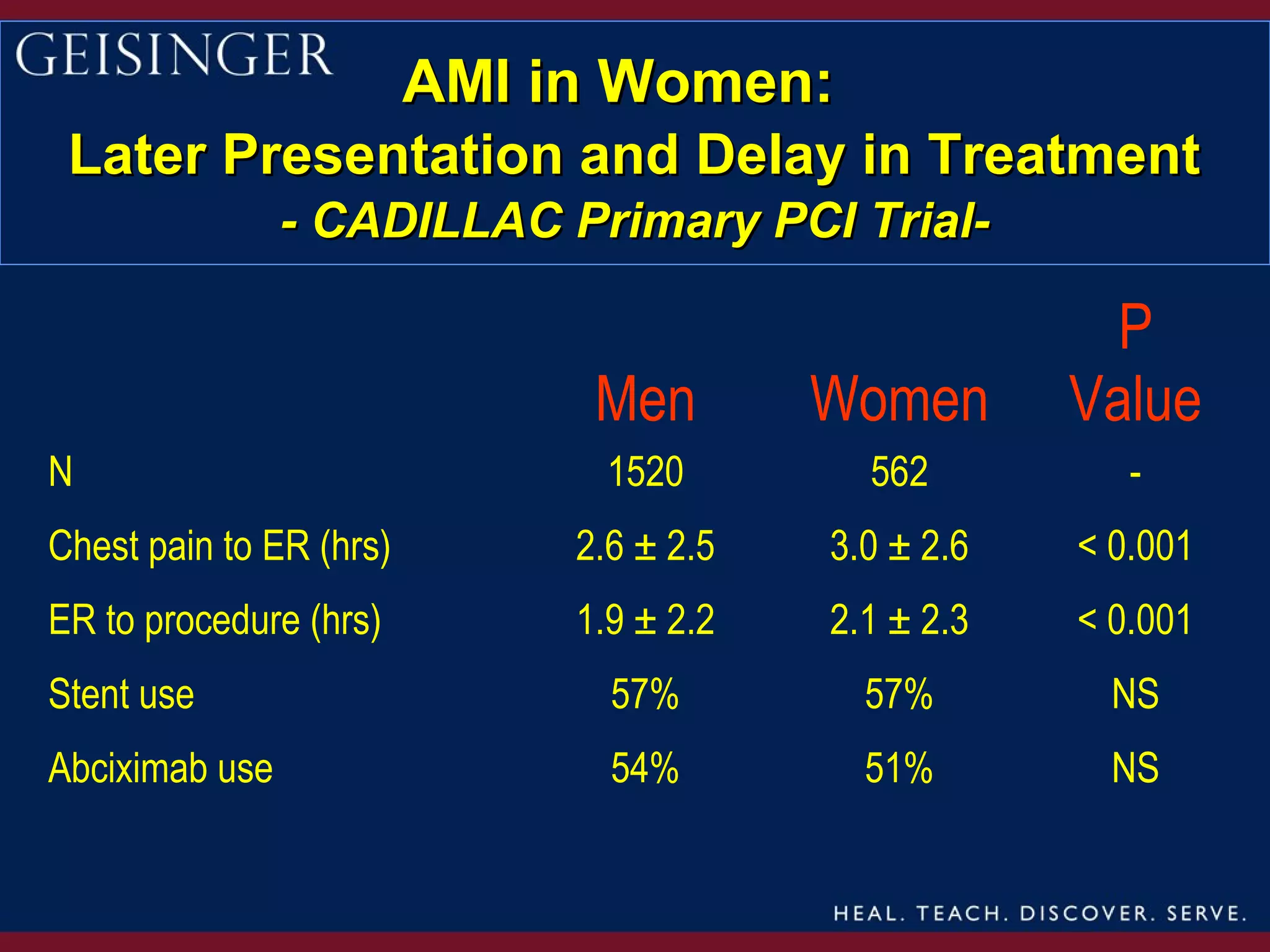
AMI in Women:
 Later Presentation and Delay in Treatment
                - CADILLAC Primary PCI Trial-

                                                        P
                               Men        Women       Value
N                               1520        562          -
Chest pain to ER (hrs)        2.6 ± 2.5   3.0 ± 2.6   < 0.001
ER to procedure (hrs)         1.9 ± 2.2   2.1 ± 2.3   < 0.001
Stent use                       57%         57%         NS
Abciximab use                   54%         51%         NS
Outcomes Following 1st Myocardial
           Infarction
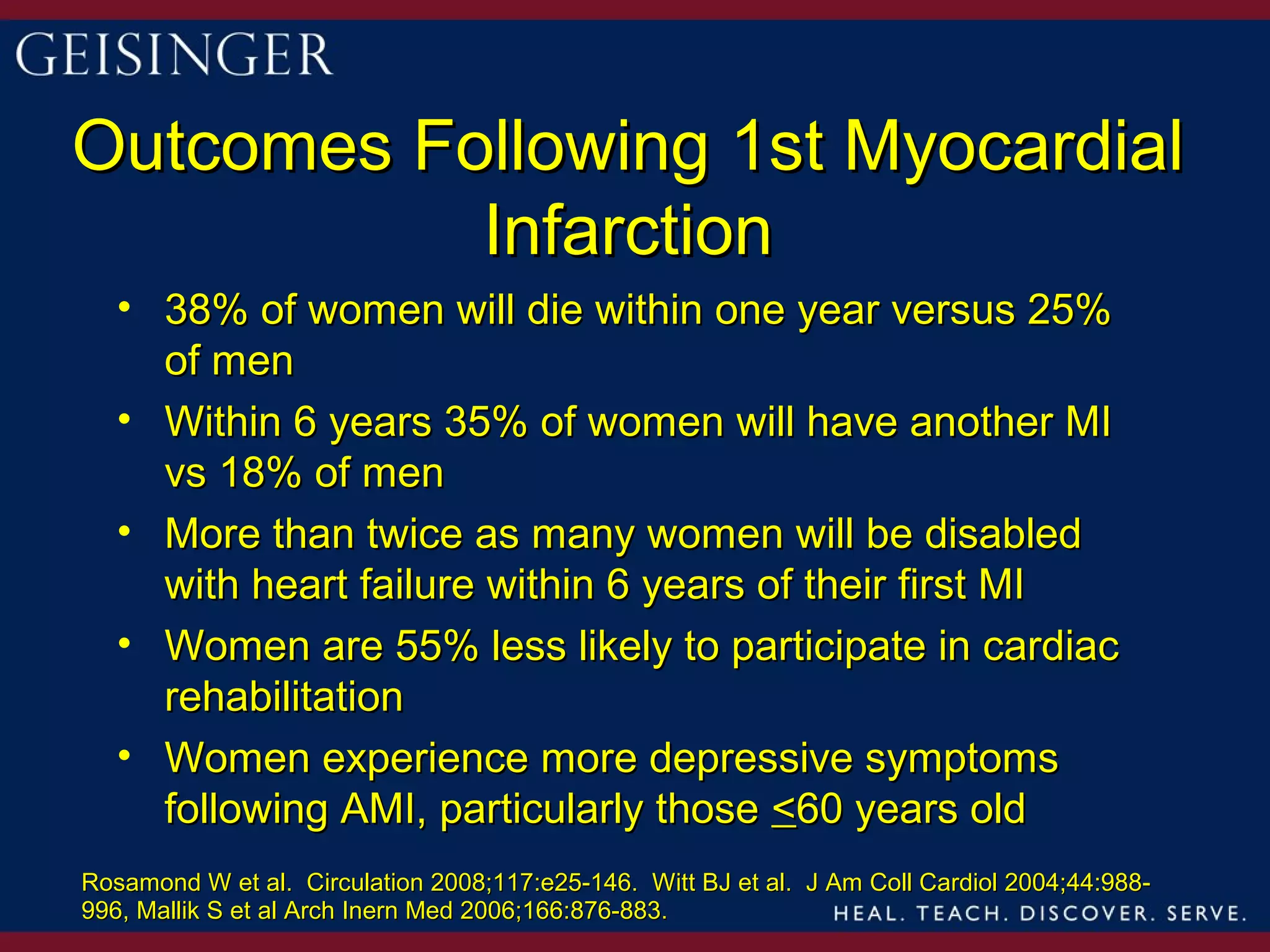
   • 38% of women will die within one year versus 25%
     of men
   • Within 6 years 35% of women will have another MI
     vs 18% of men
   • More than twice as many women will be disabled
     with heart failure within 6 years of their first MI
   • Women are 55% less likely to participate in cardiac
     rehabilitation
   • Women experience more depressive symptoms
     following AMI, particularly those <60 years old
Rosamond W et al. Circulation 2008;117:e25-146. Witt BJ et al. J Am Coll Cardiol 2004;44:988-
996, Mallik S et al Arch Inern Med 2006;166:876-883.
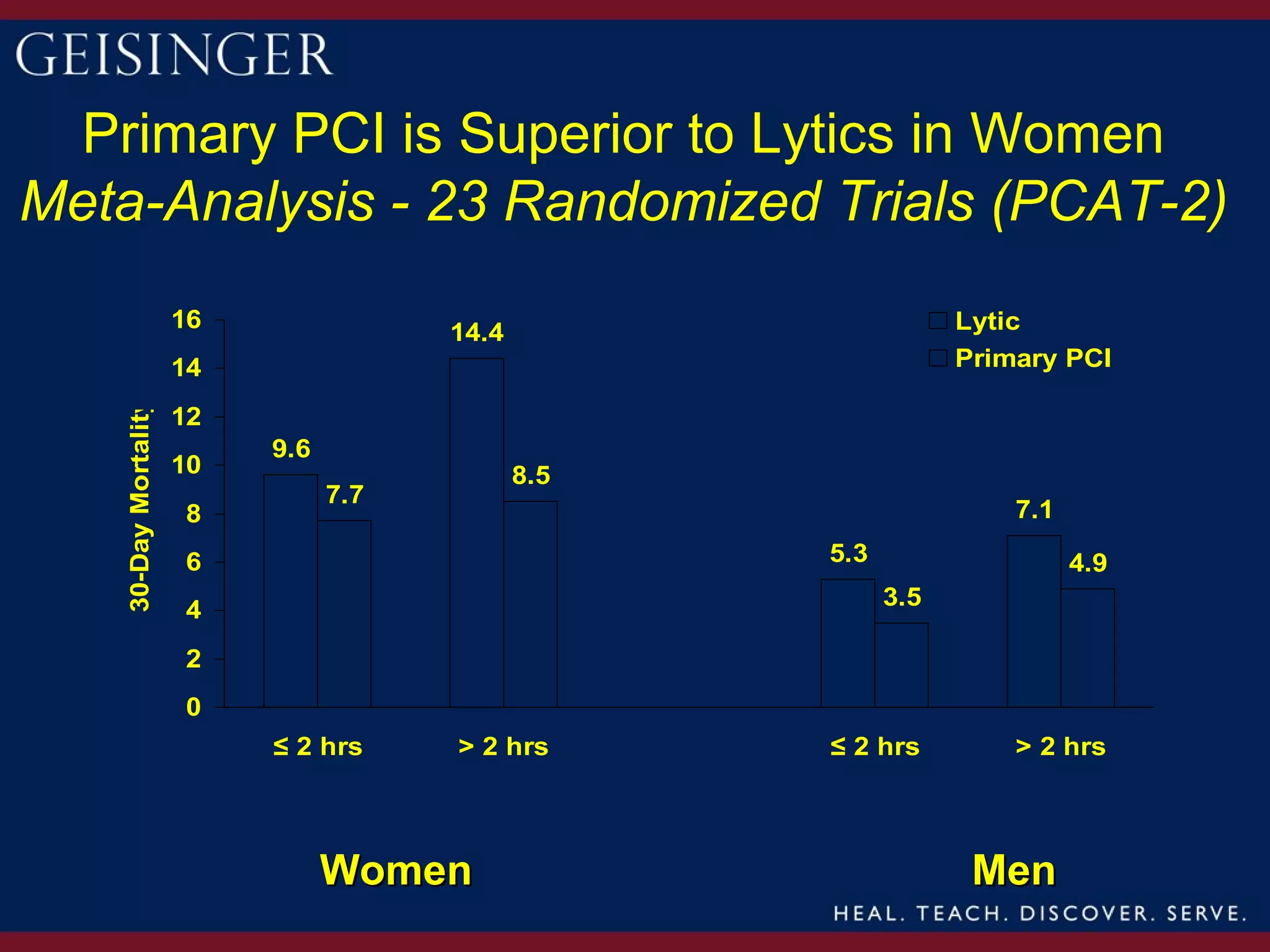
Primary PCI is Superior to Lytics in Women
Meta-Analysis - 23 Randomized Trials (PCAT-2)
                      16                                        Lytic
                                       14.4
                      14                                        Primary PCI
   30-Day Mortality


                      12
                           9.6
                      10                      8.5
                                 7.7
                      8                                             7.1

                      6                             5.3                   4.9
                                                          3.5
                      4
                      2
                      0
                           ≤ 2 hrs     > 2 hrs      ≤ 2 hrs         > 2 hrs


                                 Women                           Men
What if we Treat Irrespective
         of Gender?
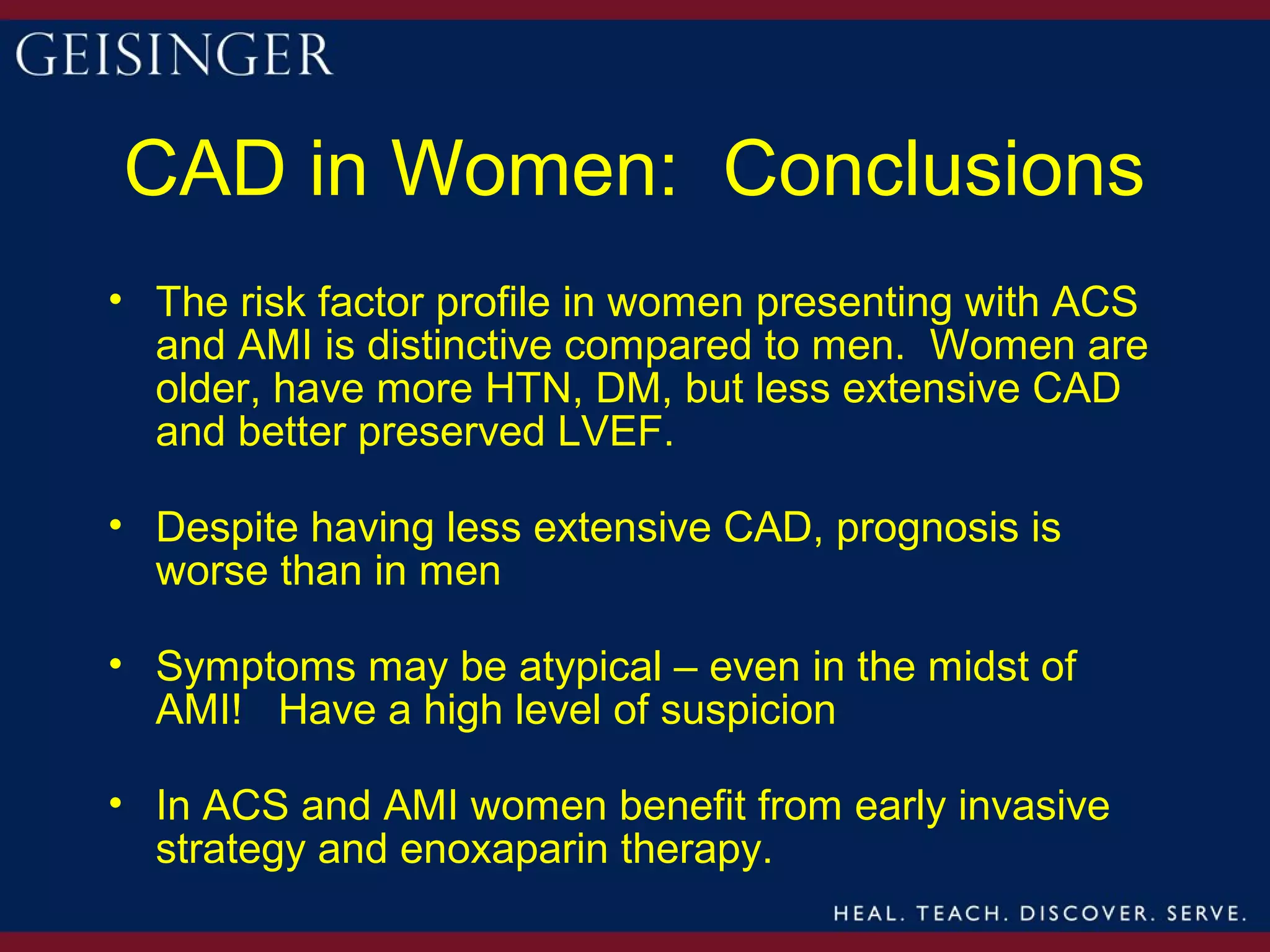
CAD in Women: Conclusions
• The risk factor profile in women presenting with ACS
  and AMI is distinctive compared to men. Women are
  older, have more HTN, DM, but less extensive CAD
  and better preserved LVEF.

• Despite having less extensive CAD, prognosis is
  worse than in men

• Symptoms may be atypical – even in the midst of
  AMI! Have a high level of suspicion

• In ACS and AMI women benefit from early invasive
  strategy and enoxaparin therapy.
Treat With Parity
• Use clinical judgement
• Be an advocate for women in your
  institution
• Look at your own local data
• Improve outcomes, improve your
  practice, improve enrollment in clinical
  trials

Acs ami update-win program - scai 2010

  • 1.
    ACS & AMIUpdate WIN Program - SCAI 2010 Kimberly A. Skelding MD FSCAI FACC FAHA Associate Interventional Cardiology Geisinger Health System Danville, Pennsylvania
  • 2.
    Disclosure Information ACS & AMI Update WIN Program - SCAI 2010 Kimberly A. Skelding. MD, FSCAI, FAHA, FACC Nothing to Disclose
  • 3.
    Gender Differences inTreatment • Late referrals - more advanced CAD - more urgent/emergent procedures - longer DTB times in STEMI cases • Lower rates of IMA grafts in women even after adjustment for age, extent of disease and urgent surgery • Similar benefits from GP IIb/IIIa agents and stents • Improved PCI mortality over time in both men and women ClinCardiol 2007;30:491-5
  • 4.
    Percutaneous Coronary Intervention • Only 33% of PCI are performed in women annually • Delayed treatment with PCI in women is common – Often >24 hours after presentation • Women continue to be underrepresented in clinical trials of percutaneous coronary intervention – They don’t meet inclusion criteria!!! • Get there late • More risk factors: older, worse renal function • Sicker on presentation Blomkalns AL et al. J Am Coll Cardiol 2005;45:832-37, Lee et al. JAMA. 2001;286:708-713, Harris DJ et al. N Engl J Med 2000;343(7):475-480, Simon V. Science 2005;308(5728):1517.
  • 5.
    Outcomes following PCI •Early data (1978-81) reported gender was independently predictive of mortality • Later data (1985-6), corrected for risk factors, decreased but did not remove the gender gap • More recent data suggests no difference in death, MI, and emergent CABG but continued increased risk of morbidity, particularly bleeding Cowley MJ et al. Circulation 1985;71(1):90-7, Kelsey SF. Circulation 1993;87(3):720-7, Argulian E et al. Am J Cardiol 2006;96:48-53, Abbott JD et al. Am J Cardiol 2007;99:626-631, Thompson CA et al Catheter Cardiovasc Interv 2006;67(1):25-31, Blomkalns AL et al. J Am Coll Cardiol 2005;45:832-37, Lansky AJ et al. Circulation 2005;111:940-953
  • 6.
    Outcomes following PCI • Contemporary subacute or late thrombosis rates are similar between genders, 1.3% vs 1.2%, p=NS • Women are 61% more likely to present with in- stent restenosis following drug eluting stents, particularly diffuse in-stent restenosis – Harder to treat – Worse prognosis • 1.9x more women will return to the ER within 30 days of their intervention  even after successful interventions Abbott JD et al. Am J Cardiol 2007;99:626-631, Trabattoni D et al. Ital Heart J 2005;6:138-142, Hubbard BL et al. Am J Cardiol 2007;99:197-201.
  • 7.
    Differences Between Menand Women Undergoing PTCA Clinical Observations Anatomy Explanation ↑ unstable angina Less MV disease Spasm Lower hemoglobin ↑ angina at f/u Similar rates of Higher heart rate incomplete revasc. Higher BP Fewer repeat PTCAs Similar restenosis rates Gender bias ↑ CHF Better EF Diastolic dysfunction
  • 8.
    Women Have HigherRate of Vascular Complications After PCI Circ 2005;III;940-953
  • 9.
    Vascular Complications are Decreasing JInvCardiol 2007;369:372
  • 10.
    Radial Approach isstill Associated with More Bleeding in Women • 1348 ACS patients pretreated with ASA, clopidogrel → radial PCI using 70 u/kg uFH and abciximab (EASY trial of early discharge) Women Men p value Sheath size – 5F 57% 44% 0.0003 – 6F 43% 55% Hb drop 1.7% 0.4% 0.059 Hematoma 22% 5.8% 0.001 Final ACT (sec) 322 308 0.003 AHJ 2009; 157:740
  • 11.
    Gender Differences inResponse to Anticoagulants • Among drug applications submitted to FDA between 1994 and 2000, 20% had gender differences in pharmacokinetics - gender differences in gastric emptying - more hepatic cytochrome CYP3A in women - more dietary supplements taken by women - more accumulation in fat - less renal excretion • Nine fold increase in HIT in women compared to men (Blood 2006;108:2937-410)
  • 13.
    Bivalirudin Reduces (butdoes not eliminate) PCI Related Bleeding Differences Between Men and Women (p<0.001) UFH+GPIIb/IIIa Bivalirudin (Non-CABG) Major Bleeding % 14.00% 11.80% 12.00% 10.00% (p<0.0001) 8.00% 6.30% 6.00% 4.90% 4.00% 2.50% 2.00% 0.00% (n=1401) (n=3779) Lancet 2007;369:;907 Women Men AJC 2009;103:1197
  • 14.
    Are we still discriminatingagainst women, or are we using good clinical judgment?
  • 15.
    Dilemma • Women haveatypical symptoms → physicians need high level of suspicion and aggressive diagnostic testing, however . . . . . • Women have higher rates of normal coronaries at the time of cath • How can one avoid overutilization of cath, but at the same time avoid misdiagnosis in women? – Noninvasive testing – Determine pre-test probability of CAD – CT angiography (avoid radiation exposure in younger women)
  • 16.
    Gender differences inCAD significance after diagnostic cath for ACS P<0.0001 90 Women ACS % with Significant CAD 80 Men 70 60 50 40 30 20 10 0 Black Hispanic N. Amer. Asian Caucasian N= 23,382 8,708 1,596 3,725 412,918 % 50.2 39.1 37.6 39.4 38 Female Circ 2008;117:1792 ACC/NCDR database
  • 17.
    Differences in ACSManagement • CURE trial data: 4,836 women and 7,726 men with ACS – Women older, more diabetes, more hypertension and hyperlipidemia. – Men more smoking, MI history, PAD and CVA. • Women had fewer invasive procedures with ACS, 47.6% vs 60.5%, p=0.0001, regardless of risk • No difference in CV death, MI or CVA if they presented with ACS. • Women more likely to develop refractory angina and be re-hospitalized, (16.6% vs 13.9%, p=0.0001) after their first episode of ACS Anand SS et al J Am Coll Cardiol 2005
  • 18.
    Treatment of Womenwith Acute Coronary Syndrome • Less likely to have an ECG done within 10 minutes of presentation • Less likely to be cared for by a cardiologist during their inpatient admission • Less likely to acutely be given appropriate pharmacotherapy such as heparin, aspirin, statins, ACE-I LESS OFTEN RECEIVE GUIDELINE RECOMMENDED THERAPY BUT WOULD SIGNIFICANTLY BENEFIT FROM AN EARLY AGGRESSIVE INVASIVE STRATEGY Blomkalns AL et al. J Am Coll Cardiol 2005;45:832-37, Lansky AJ et al. Circulation 2005;111:940-953, Braunwald E et al. J Am Coll Cardiol 2002;40:1366-1374
  • 19.
    Outcome Following Treatmentof Acute Coronary Syndrome • Young women, <55 years old, have >2 times the risk of having a dissection or artery occlusion during their procedure • All women have increased bleeding and vascular access site complications, those <55 years old have >5 times the risk compared to men • Following PCI, women with ACS have a 37% higher risk of death, MI or rehospitalization than men with ACS • Women <65 years old are at 46% higher risk of death, MI or rehospitalization Glaser R et al. Am J Cardiol 2006;98:1446-1450, Abbott JD et al. Am J Cardiol 2007;99:626-631, Chauhan MS et al. Am J Cardiol 2005;95:101-104, Argulian E et al Am J Cardiol 2006;98:48-53, Lansky AJ et al. Circulation 2005;111:940-953, Anand SS et al. J Am Coll Cardiol 2005;46:1845-51.
  • 21.
    Meta-Analysis of Invasivevs Conservative Rx for ACS • Eight trials (3075 women and 7075 men) • Women older, more comorbidites, but more likely to have insignificant (<50%) CAD at cath (24 vs 8% p<0.001) JAMA 2008;300:71
  • 22.
    Conclusions of ACSMeta-Analysis • Men - Both high and low risk benefit from invasive strategy • Women - High risk ACS women benefit from invasive approach - Low risk women may be treated conservatively (but invasive approach not harmful) JAMA 2008;300:71
  • 23.
    Gender Differences in Atherosclerosis • Plaque erosion as the etiology of coronary thrombosis and AMI A B occurs at a higher frequency in women than in men • In an autopsy study of 291 patients who died of AMI and had coronary thrombosis, C the prevalence of plaque D erosions was 37% in women and 18% in men Arbustini. Heart. 1999;82:269-272.
  • 24.
    Gender Differences inAMI Management Persist: Get with the Guidelines Database 2001-2006 Measure/Treatment Men (n=47 556) Women (n=30 698) P value Early medical therapy Aspirin within <24 h 93.3 91.0 <0.0001 β-Blockers within <24 h 87.2 84.7 <0.0001 Invasive procedures Cardiac catheterization 56.2 45.6 <0.0001 PCI 52.3 36.1 <0.0001 CABG 9.2 5.4 <0.0001 Revascularization 60.2 40.9 <0.0001 Any reperfusion therapy* 73.0 56.3 <0.0001 Primary PCI 61.1 47.3 <0.0001 Fibrinolytic Therapy 6.2 5.1 Fibrinolytic therapy + PCI 5.8 3.9 Timeliness of reperfusion* DTN time median (25th-75th) min 39.0 47.0 <0.0001 DTB time median (25th – 75th) min 95.0 103.0 <0.0001 Circ 2008;118:2803 *STEMI subpopulation (28.2% women, 35.1% men, p<0.0001)
  • 25.
    Mechanism of MIMay be Different in Women • Spontaneous coronary dissection: women > men • Takotsubo (high circulating levels of catecholamines): women > men • Spasm (migranes, Raynauds): women > men • Non-STEMI: women > men (subendocardial ischemia due to LVH, microvascular disease, endothelial dysfunction)
  • 26.
    Treatment of AcuteMyocardial Infarction • Women have longer door-to-balloon times • Women are less likely to undergo invasive evaluation on the index admission regardless of age • Contemporary in-hospital and late mortality rates are similar across genders when treated in randomized controlled trials ~ treated irrespective of gender Zahn R et al. Heart 2005;91(8):1041-6, Lansky AJ et al. Circulation 2005;111:940-953, Antman EM et al. Circulation. 2008 Jan 15;117(2):296-329, Reynolds HR et al. Arch Intern Med 2007; 167:2054-2060, Milcent C et al. Circulation 2007;115:833-839.
  • 27.
    AMI in Women: Later Presentation and Delay in Treatment - CADILLAC Primary PCI Trial- P Men Women Value N 1520 562 - Chest pain to ER (hrs) 2.6 ± 2.5 3.0 ± 2.6 < 0.001 ER to procedure (hrs) 1.9 ± 2.2 2.1 ± 2.3 < 0.001 Stent use 57% 57% NS Abciximab use 54% 51% NS
  • 28.
    Outcomes Following 1stMyocardial Infarction • 38% of women will die within one year versus 25% of men • Within 6 years 35% of women will have another MI vs 18% of men • More than twice as many women will be disabled with heart failure within 6 years of their first MI • Women are 55% less likely to participate in cardiac rehabilitation • Women experience more depressive symptoms following AMI, particularly those <60 years old Rosamond W et al. Circulation 2008;117:e25-146. Witt BJ et al. J Am Coll Cardiol 2004;44:988- 996, Mallik S et al Arch Inern Med 2006;166:876-883.
  • 29.
    Primary PCI isSuperior to Lytics in Women Meta-Analysis - 23 Randomized Trials (PCAT-2) 16 Lytic 14.4 14 Primary PCI 30-Day Mortality 12 9.6 10 8.5 7.7 8 7.1 6 5.3 4.9 3.5 4 2 0 ≤ 2 hrs > 2 hrs ≤ 2 hrs > 2 hrs Women Men
  • 30.
    What if weTreat Irrespective of Gender?
  • 31.
    CAD in Women:Conclusions • The risk factor profile in women presenting with ACS and AMI is distinctive compared to men. Women are older, have more HTN, DM, but less extensive CAD and better preserved LVEF. • Despite having less extensive CAD, prognosis is worse than in men • Symptoms may be atypical – even in the midst of AMI! Have a high level of suspicion • In ACS and AMI women benefit from early invasive strategy and enoxaparin therapy.
  • 32.
    Treat With Parity •Use clinical judgement • Be an advocate for women in your institution • Look at your own local data • Improve outcomes, improve your practice, improve enrollment in clinical trials

Editor's Notes

  • #24 Atherosclerotic plaque morphology differs in women and men. Acute coronary thrombosis results from 2 different types of plaque morphologies: plaque rupture and plaque erosion. Arbustini et al evaluated the prevalence of plaque erosion as a substrate for coronary thrombosis through a pathological study in patients with acute MI not treated with thrombolysis or coronary interventional procedures. This figure shows plaque erosion in 4 sections; the thrombus outlines the profile of the plaque, and there is no evidence of continuity between thrombus and plaque core. 34 Acute coronary thrombi were found in 291 hearts (98%); in 74 cases (25%)  40/107 women (37.4%) and 34/184 men (18.5%; P =.0004)  the plaque substrate for thrombosis was erosion. 34 Plaque erosion is an important substrate for coronary thrombosis in patients who die of acute MI, and its prevalence is significantly higher in women than in men. 34 34. Arbustini E, Dal Bello B, Morbini P, et al. Plaque erosion is a major substrate for coronary thrombosis in acute myocardial infarction. Heart . 1999;82:269-272.