PRIMARY
PREVENTION TRIALS
OF STATINS
Dr SAITEJ REDDY
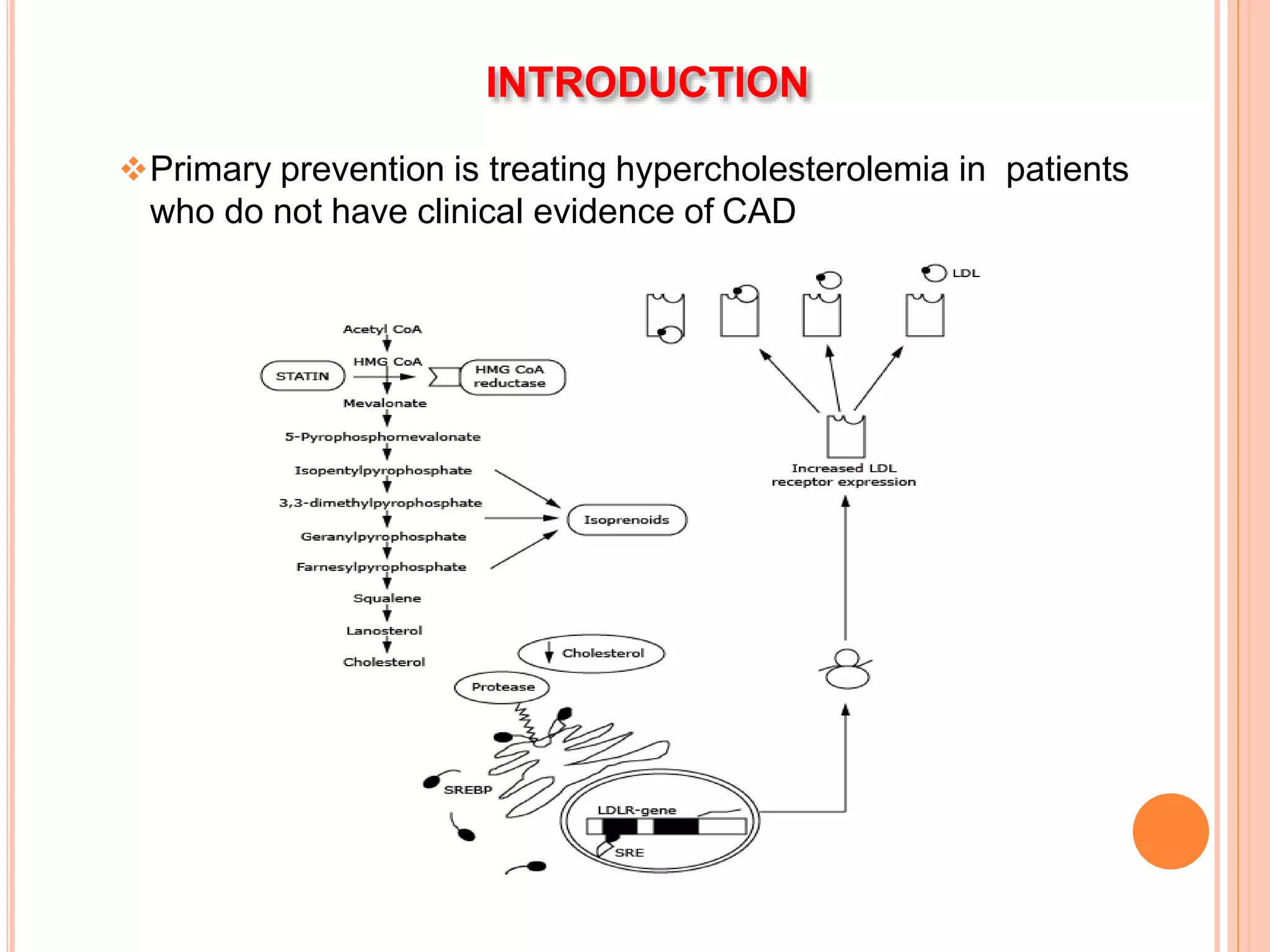
INTRODUCTION
Primary prevention is treating hypercholesterolemia in patients
who do not have clinical evidence of CAD
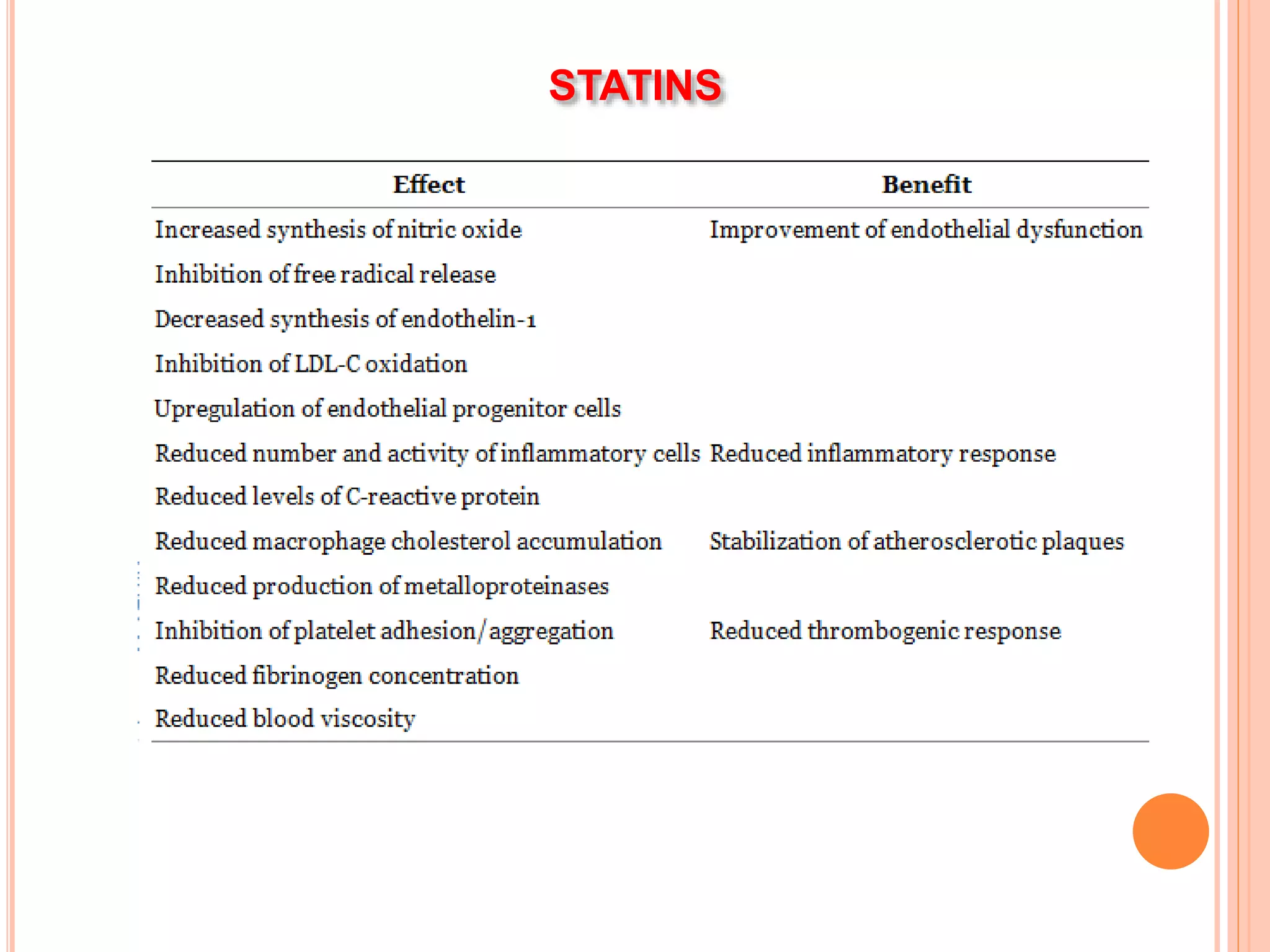
STATINS
Statin Pleiotropy
Primary prevention trials include…
• WOSCOPS
• MEGA
• ALLHAT- LLT
• PROSPER
• AFCAPS/ TexCAPS
• ASCOT- LLA
• CARDS
• METEOR
• JUPITER
WEST OF SCOTLAND
CORONARY PREVENTION STUDY
(WOSCOPS)
James Shepherd, et al, N Engl J Med 1995;333:1301-7
Designed to determine whether the administration
of pravastatin to men with hypercholesterolemia
and no history of myocardial infarction reduced the
combined incidence of nonfatal myocardial
infarction and death from coronary heart disease
WOSCOPS ENDPOINTS
Primary
Non-fatal MI or coronary heart disease death as a first
event
Secondary
Non-fatal MI
Coronary heart disease death
Other Endpoints
Cardiovascular mortality
Total mortality
Coronary revascularization procedures
STUDY GROUP
James Shepherd, et al, N Engl J Med 1995;333:1301-7
Randomized, double-blind, placebo
controlled
6595 men, 45 to 64 years of age
Average follow-up of 4.9 years (seen at 3
month intervals)
Pravastatin (40 mg each evening) vs.
placebo
 Men 45 to 64yrs
 Fasting LDL atleast 155mg/dl
 No serious ecg changes(pathological q waves, arrythmias)
 No h/o MI or other serious illness
 Stable angina not hospitalized within 12 months
BASELINE CHARACTERISTICS
WOSCOPS Reduction in Lipids
20% reduction in TC
26% reduction in LDL
12% reduction in Triglycerides
5% increase in HDL
NONFATAL MI OR CHD DEATH
(PRIMARY ENDPOINT)
12
10
0 1 2 4 5 63
Yearsin Study
8
Percent
with 6
Events
4
2
0
Pravastatin
Placebo 31%
Risk
Reduction
P=0.0001
James Shepherd, et al, N Engl J Med 1995;333:1301-7
NON-FATAL MI
(SECONDARY ENDPOINT)
0
2
4
6
8
10
0 1 2 4 5 63
Yearsin Study
Percent
with
Events
Pravastain Placebo
31%
Risk
Reduction
P=0.0005
James Shepherd, et al, N Engl J Med 1995;333:1301-7
CHD DEATH
(SECONDARY ENDPOINT)
0.5
1
2
2.5
Percent 1.5
with
Events
Pravastain Placebo
0
0 1 2 3
Yearsin Study
4 5 6
James Shepherd, et al, N Engl J Med 1995;333:1301-7
28%
Risk
Reduction
CARDIOVASCULAR DEATH
3.5
3
2.5
2Percent
with
Events 1.5
1
0.5
Pravastain Placebo
P=0.033
0
0 1 2 3
Yearsin Study
4 5 6
James Shepherd, et al, N Engl J Med 1995;333:1301-7
TOTAL MORTALITY
5
6
4
Percent
with 3
Events
2
1
Pravastain Placebo
P=0.051
22%
Risk
Reduction
0
0 1 2 3
Yearsin Study
4 5 6
James Shepherd, et al, N Engl J Med 1995;333:1301-7
CORONARY INTERVENTIONS
James Shepherd, et al, N Engl J Med 1995;333:1301-7
WOSCOPS
RESULTS/CLINICAL EVENTS
Event % Reduction p value
Nonfatal MI + CHD death 31% < 0.001
Definite nonfatal MI 31% < 0.001
Definite CHD death 28% 0.13 (NS)
Definite and suspected CHD
death
33% 0.042
All cardiovascular deaths 32% 0.033
Total mortality 22% 0.051 (NS)
CABG/PTCA 37% 0.029
James Shepherd, et al, N Engl J Med 1995;333:1301-7
WOSCOPS CONCLUSIONS
James Shepherd, et al, N Engl J Med 1995;333:1301-7
Treatment with pravastatin significantly reduced
the incidence of myocardial infarction and death
from cardiovascular causes without adversely
affecting the risk of death from noncardiovascular
causes in men with moderate
hypercholesterolemia and no history of myocardial
infarction
Pravastatin had no effect on noncardiovascular-
related hospital admissions
Pravastatin therapy also resulted in a 30 percent
reduction in the risk of developing diabetes
WOS PROJECTED BENEFITS
James Shepherd, et al, N Engl J Med 1995;333:1301-7
Treatment of 1000 hypercholesterolemic middle
aged men with pravastatin for five years will
avoid:
 14 coronary angiograms
 8 revascularization procedures
 20 nonfatal MIs
 7 CHD deaths
 2 additional deaths
MANAGEMENT OF ELEVATED CHOLESTEROL IN THE
PRIMARY PREVENTION GROUP OF ADULT
JAPANESE (MEGA) TRIAL
AIM: to assess whether evidence for treatment with statins derived from
western population can be applicable to Japanese population
Eishu Nango et al, lancet 2006;368:11555-63
MEGA TRIAL: CHOLESTEROL AND
TRIGLYCERIDE LEVELS
-11.5
-18.0
5.8
-3.1-2.1 -3.2
3.2
1.34
0
-4
-8
-12
-16
-20
mg/dL
Eishu Nango et al, lancet 2006;368:11555-63
MEGA TRIAL: PRIMARY COMPOSITE ENDPOINT
3.3
5.0
3
2
1
0
4
5 3.3 vs 5.0 per 1000 patient
years, hazard ratio 0.67,
p=0.01
Eishu Nango et al, lancet 2006;368:11555-63
MEGA TRIAL: SECONDARY ENDPOINTS
2.7
0.9
2.5
2.0
1.6
3.0
2.6
0
1
2
3
4
Eishu Nango et al, lancet 2006;368:11555-63
p=0.055
3.8
p=0.03
p=0.03
•Total mortality was non-significantly lower in the pravastatin group (2.7 vs 3.8,
HR 0.71, p=0.055)
•MI occurred less often in the pravastatin group (0.9 vs 1.6, p=0.03)
•No significant difference was observed in stroke (2.5 vs 3.0, p=0.33) or cerebral
infarction plus TIA (2.0 vs 2.6, p=0.23)
p=0.23
MEGA TRIAL: SAFETY DATA
5.5 5.76
5
4
3
2
1
0
2.8% 2.8%3.0%
2.5%
2.0%
1.5%
1.0%
0.5%
0.0%
t%
Eishu Nango et al, lancet 2006;368:11555-63
MEGA TRIAL: SUMMARY
Eishu Nango et al, lancet2006;368:11555-63
Among Japanese patients with hypercholesterolemia,
treatment with pravastatin was associated with a
reduction in the primary composite endpoint of
coronary heart disease
The cardiac morbidity and mortality in Japan is
much lower than in the U.S. and other western
countries where statin therapy has been
predominantly studied.
The present study demonstrated that even in this
lower risk population, primary prevention with low-
dose statin therapy can be effective in reducing
cardiac events, with a modest reduction in lipid
parameters.
Antihypertensive and Lipid-
Lowering Treatment to Prevent
Heart Attack Trial and ALLHAT–
Lipid- Lowering Trial (ALLHAT -
LLT)
To determinne whether Pravastatin compared with usual care reduces all
cause mortality in older, moderately hypercholesterolemic, hypertensive
participats with atleast 1 additional CHD risk factor.
 Randomized, open-label trial conducted from
February 1994 to March 2002 at 513 clinical sites.
Inclusion criteria
 Age >= 65yrs
 LDL-C 120 - 189mg/dl
 TG < 350mg/dl
Exclusion criteria
 Currently receiving
lipid-lowering
therapy
 Significant liver or
kidney disease
 Had a known secondary
cause of hyperlipidemia
Effects of statin or usual
care on outcomes
Cumulative
rate
(%)
651 2 3 4
Time to event (years)
0
9 9
6 6
3 3
0 0
0 1 2 3 4 5 6
Time to death (years)
12 12
15 15
CHD death + nonfatal MI
RR = 0.99
(95% CI, 0.89–1.11)
RR = 0.91
(95% CI, 0.79–1.04)
Pravastatin Usual care
At 4 yrs, LDL-C decreased by 28% (statin) and 11% (usual care)
All-cause mortality
18 18
ALLHAT: CLINICAL IMPLICATIONS
Statin, usual care equivalent in decreasing all-
cause mortality in age >65yrs.
 A nonsignificant trend toward increased all-
cause mortality with pravastatin was observed
among adults 75 years and older.
Limitations
 A post hoc secondary analysis of the ALLHAT-LLT of a
subgroup of participants.
 Exclusion criterion for enrollment was current use of lipid-
lowering therapy at baseline.
 Open-label design of this study, potentially increasing the
possibility of bias.
Prospective Study of Pravastatin in the
Elderly at Risk (PROSPER)
 To test the benefits of Pravastatin in elderly men and women
with or at high risk of developing CVD and stroke.
Shepherd J et al. Lancet 2002;360:1623–1630
5804 patients aged 70–82 years with a history of
vascular disease or with cardiovascular risk factors.
Randomized to pravastatin 40 mg/d or placebo
Baseline TC 155–348 mg/dL
Follow-up 3.2 years (mean)
Primary endpoint (composite): coronary death,
nonfatal MI, fatal or nonfatal stroke.
MAJOR ENDPOINTS: PROSPER
Shepherd J et al. Lancet 2002;360:1623–1630
MORTALITY BY CAUSE: PROSPER
Cause of death
Pravastatin
(%)
Placebo
(%)
Hazard
ratio p
CHD 3.3 4.2 0.76 0.043
Stroke 0.8 0.5 1.57 0.19
Vascular 4.7 5.4 0.85 0.16
Nonvascular 5.6 5.1 1.11 0.38
Cancer 4.0 3.1 1.28 0.082
Trauma/suicide 0.1 0.2 NA NA
All causes 10.3 10.5 0.97 0.74
Shepherd J et al. Lancet 2002;360:1623–1630
Pravastatin given for 3 years reduced the
risk of coronary disease in elderly
individuals.
PROSPER therefore extends to elderly
individuals the treatment strategy currently used
in middle aged people.
Shepherd J et al. Lancet 2002;360:1623–1630
PROSPER CONCLUSION
Air Force/Texas Coronary Atherosclerosis
Prevention Study (AFCAPS/TexCAPS)
To compare Lovastatin with placebo for prevention of first
MACE in men and women WITHOUT clinically evident ASCVD
with average total cholesterol and LDL levels.
Downs JR, et al, JAMA1998;279:1615-1622
Randomized, double-blind, placebo-controlled trial
6605 pts without CHD , 5608 men and 997 women
no prior h/o MI, angina, claudication, CVA
Average follow-up was 5.2 years
Lovastatin (20-40 mg daily) or placebo
AFCAPS/TEXCAPS ENDPOINTS
Downs JR, et al, JAMA1998;279:1615-1622
Primary
 First Acute Major Coronary Event (UA, Fatal or Non-fatal
MI ,Sudden Cardiac Death)
Secondary
 Fatal or Non-Fatal MI
 Unstable Angina
 Fatal or Non-Fatal Cardiovascular Events
 Fatal or Non-Fatal Coronary Events
Tertiary Endpoints
 Total Mortality, Non-Cardiovascular Mortality
 Fatal and Non-Fatal Cancer
 Discontinuation of Medication because of Adverse Effects
BASELINE CHARACTERISTICS(AFCAPS)
Downs JR, et al, JAMA1998;279:1615-1622
AFCAPS REDUCTION IN LIPIDS
Mean TC
Mean LDL-C
Mean HDL-C
Median TG
Ratios
Mean LDL-C/HDL-C
Mean TC/HDL-C
Placebo
228.1 + 27.7
156.4 + 24.5
37.5 + 7.9
162.8 + 82.1
4.3 + 1.1
6.3 + 2.5
Lovastatin
183.7 + 23.8
114.6 + 20.1
39.3 + 8.0
142.8 + 72.8
3.0 + 0.8
4.8 + 1.0
Downs JR, et al, JAMA1998;279:1615-1622
0.02
0.01
0.00
0.03
0.04
0.05
0.06
0 1 2 3 4 5 5+ Years
Downs JR, et al, JAMA1998;279:1615-1622
LOVASTATIN REDUCED THE RISK OF FIRST
ACUTE MAJOR CORONARY EVENTS
-
37
-
46
-
31
-
58
-
38 -
42
0
-10
-20
-30
-40
-50
-60
-70
PercentRisk
Reduction
Downs JR, et al, JAMA1998;279:1615-1622
52
77
37
33
46
90
80
70
60
50
40
30
20
10
0
<142,
n=2210
143-156,
n=2195
>157,
n=2199
NumberofEvents
Placebo
Lovastatin
54
Downs JR, et al, JAMA1998;279:1615-1622
71
68
44
40 41
35
80
70
60
50
40
30
20
10
0
<34 >40
NumberofEvents
Placebo
Lovastatin
35-39
Downs JR, et al, JAMA1998;279:1615-1622
SECONDARY ENDPOINT ANALYSES
0.00
0.01
0.02
0.03
0 1 2 3 4 5
Years of Follow-up
5+ years
Lovastatin
Placebo
CumulativeIncidence
CumulativeIncidence
0.00
0.02
0.01
0.03
0.04
0.05
0.06
0.07
0.08
Years of Follow-up
0 1 2 3 4 5 5+ years
Lovastatin
Placebo
Years of Follow-up
CumulativeIncidence
0.00
0.01
0.02
0.03
0 1 2 3 4 5 5+ years
Lovastatin
Placebo
CumulativeIncidence
0.01
0.00
0.02
0.03
0.04
0.05
0.06
0.07
0 1 2 3 4 5
Years of Follow-up
5+ years
Placebo
25% Risk
Reduction
(p = 0.006)
Downs JR, et al, JAMA1998;279:1615-1622
AFCAPS/TEXCAPS CORONARY REVASCULARIZATIONS
Lovastatin
Placebo
0.00
0.01
0.02
0.03
0.04
0.05
0 1 2 3 4
Years of Follow-up
5 5+ Years
CumulativeIncidence
Downs JR, et al, JAMA1998;279:1615-1622
AFCAPS/TEXCAPS SUMMARY OF RESULTS
Downs JR, et al, JAMA1998;279:1615-1622
Clinical benefit
 appeared within the first year of treatment
and
continued
 was apparent for all LDL-C tertiles
 Range 90-235 mg/dl
 was consistent for subgroups
 Women
 Risk Factors - Age, DM, HTN, Smokers
AFCAPS/TEXCAPS CONCLUSIONS
Downs JR, et al, JAMA1998;279:1615-1622
In conjunction with a prudent diet, regular
exercise and risk factor modification Lovastatin
20-40 mg/day could be used to lower the risk of
the first acute major coronary event for primary
prevention candidates -
 Men > 45 years, Women > 55 years
 HDL < 50 mg/dl
 LDL > 130 mg/dl
The Anglo-Scandinavian Cardiac
outcomes Trial (ASCOT )
To determine whether treatment with atorvastatin reduces CVD
events in HTN pts with relatively low cholesterol levels.
 Multicenter trial with 2 treatment comparison
A prospective, randomized, open, blinded end point
design comparing 2 antihypertensive regimen
A double blind placebo controlled trial of atorvastatin
10mg/day in the substrate of patients with total
cholesterol ≤250mg/dl
 Primary end point: nonfatal MI or CHD death
 Planned follow up average of 5yr
 EXCLUSION: previous MI, CVA within 3 months
TG>400mg/dl, heart failure, arrhythmias
Sever PS et al, Lancet 2003; 361:1149.
CONCLUSION
 The primary endpoint of non-fatal myocardial infarction, including silent
myocardial infarction, and fatal CHD was significantly lower by 36% in
the atorvastatin group than in the placebo group.
 27% reduction in stroke.
 All-cause mortality was non-significantly reduced by 13%.
 Heart failure or cardiovascular mortality, or any tertiary endpoint did not
differ significantly from those of placebo.
COLLABORATIVE ATORVASTATIN DIABETES
STUDY (CARDS)
• Type 2 diabetes mellitus
• Men and women 40–75
years of age
• LDL-C 160 mg/dL (4.14
mmol/L)
• TG 600 mg/dL
(6.78 mmol/L)
• 1 additional RF
– HTN (or on HTN
treatment)
– Retinopathy
– Albuminuria
_Current smoking
 Primary endpoint: time to first major CV
event (CHD death, nonfatal MI, unstable
angina, resuscitated cardiac arrest,
coronary revascularization, stroke
 Secondary endpoints: total mortality,
any CV endpoint, lipids, and lipoproteins
2838
patients
Colhoun HM et al. Lancet 2004;364:685-696.
Atorvastatin 10 mg
(n=1428)
Double-blind placebo
(n=1410)
CARDS: PATIENT BASELINE CHARACTERISTICS
Colhoun HM et al. Lancet 2004;364:685-696.
Placebo
(n = 1410)
Atorvastatin
(n = 1428)
Age
Mean (SD) years 61.8 (8.0) 61.5 (8.3)
<60 529 (38%) 558 (39%)
60–70 708 (50%) 703 (49%)
>70 173 (12%) 167 (12%)
Women 453 (32%) 456 (32%)
White ethnicity 1326 (94%) 1350 (95%)
BMI
Mean (SD), kg/m2 28.8 (3.5) 28.7 (3.6)
Obese (BMI >30 kg/m2) 538 (38%) 515 (36%)
CARDS: PATIENT BASELINE LIPIDS
Placebo
(n =
1410)
Mean (SD)
Atorvastat
in (n =
1428)
Mean (SD)
Total cholesterol (mg/dL) 207 (32) 207 (32)
(mmol/L) 5.35 (0.82) 5.36 (0.83)
LDL cholesterol (mg/dL) 117 (27) 118 (28)
(mmol/L) 3.02 (0.70) 3.04 (0.72)
HDL cholesterol (mg/dL) 55 (13) 54 (12)
(mmol/L) 1.42 (0.34) 1.39 (0.32)
Triglycerides* (mg/dL) 148 (104–212) 150 (106–212)
(mmol/L) 1.67 (1.17–2.40) 1.70 (1.20–2.40)
Colhoun HM et al. Lancet 2004;364:685-696.
CARDS: LIPID LEVELS BY TREATMENT
0
80
160
240
MedianTC(mg/dL)*
0 1 2 3
Years of Study
4 4.5
0
40
80
120
160
MedianLDL-C
(mg/dL)*
0 1 2 3
Years of Study
4 4.5
LDL Cholesterol (mg/dL)
Average difference 40%,
46 mg/dL; P<0.0001
Colhoun HM et al. Lancet 2004;364:685-696.
Atorvastatin
Atorvastatin
Placebo
Placebo
EFFECT OF ATORVASTATIN ON THE PRIMARY ENDPOINT:
MAJOR CV EVENTS INCLUDING STROKE
0
5
10
15
CumulativeHazard,(%)
Years
0 1 2 3 4 4.75
Relative Risk Reduction 37% (95% CI, 17–52)
P = 0.001
Placebo
127 events
Atorvastatin
83 events
Colhoun HM et al. Lancet 2004;364:685-696.
CARDS: ADVERSE AND SERIOUS ADVERSE EVENTS
Colhoun HM et al. Lancet 2004;364:685-696.
Type of Event
Patients (%) with Event
Placebo
(n = 1410)
Atorvastatin 10 mg
(n = 1428)
Serious adverse event
possibly associated
with study drug
20 (1.1%) 19 (1.1%)
Discontinued for AE 145 (10%) 122 (9%)
Rhabdomyolysis 0 0
Myopathy AE report 1 (0.1%) 1 (0.1%)
CPK 10  ULN 10 (0.7%) 2 (0.1%)
ALT 3  ULN 14 (1%) 17 (1%)
AST 3  ULN 4 (0.3%) 6 (0.4%)
In patients with Type 2 DM with lower LDL-C levels,
atorvastatin 10 mg daily was safe, well tolerated &
significantly efficacious in reducing the risk of first CHD
events.
CARDS supports recommendations that made by the ADA
that patients with Type 2 DM should be considered as
candidates for statin treatment—even at lower LDL-C
levels.
Colhoun HM et al. Lancet 2004;364:685-696.
CARDS IMPLICATIONS AND CLINICAL RELEVANCE
MEASURING EFFECTS OF INTIMA-MEDIA THICKNESS:
AN EVALUATION OF ROSUVASTATIN
METEOR TRIAL
Evaluated the effect of rosuvastatin compared with
placebo on carotid intima-media thickness (CIMT)
among asymptomatic patients at low risk for
cardiovascular disease.
Study period was two-years.
Randomized controlled trial.
Rosuvastatin 40 mg daily vs placebo.
Crouse JR 3rd, et al, JAMA 2007;297:1344.
METEOR TRIAL: STUDY DESIGN
 Primary Endpoint: Annualized rate of change in maximum CIMT
 Secondary Endpoint: Annualized rate of change in maximum CIMT derived
from the near and far walls of the right and left common carotid artery; the
right and left carotid bulb; the right and left internal carotid artery; and
annualized rate of change in mean CIMT for the near and far walls of the
right and left common carotid artery.
Rosuvastatin (40mg)
n=702
Placebo
n=282
984 asymptomatic patients with moderately elevated cholesterol and low risk of CVD
according to the National Cholesterol Education Program Adult Treatment Panel III guidelines criteria (0-1 risk factor
and LDL 120-190mg/dL or > 2 risk factors and LDL 120 to <160mg/dL with a 10-year coronary heart disease risk
<10%); HDL-C <60mg/dL; triglycerides <500mg/dL; evidence of thickening of the walls of the extracranial carotid
arteries as measured by B-mode ultrasound (max CIMT between 1.2 and <3.5mm)
5:2 Randomized. Double-blinded. Placebo-controlled.
Mean age = 57 years. 40% Female.
R
METEOR TRIAL: PRIMARY ENDPOINT
0.0131
-0.0014
-0.005
0.000
0.005
0.010
0.015
ChangeinCIMTfor12CarotidArterysites
(mm/year)
p < 0.001
Placebo
METEOR TRIAL: SECONDARY ENDPOINT
-0.0039
0.0084
-0.005
0.000
0.005
0.010
ChangeinCIMTforcommoncarotidsites(mm/year)
p < 0.001
Rosuvastatin
Placebo
METEOR TRIAL: LIMITATIONS & SUMMARY
Compared with placebo, subjects treated with
rosuvastatin had a marked reduction in LDL-
cholesterol (-49 versus -0.3 percent)
The study was not designed to evaluate clinical
events,
It is uncertain how well changes in CIMT predict
clinical events, particularly in this low risk
population.
This study does not convincingly support the use
of high dose statins (such as rosuvastatin 40 mg
daily) for primary prevention in patients at low
risk for CHD events
Justification for the Use of statins in
Primary prevention: an Intervention
Trial Evaluating Rosuvastatin
(JUPITER)
Ridker et al, NEJM 2008359:2195-07
JUPITER is the first large-scale, prospective study to
examine the role of statin therapy in individuals with low to
normal LDL-C levels, but with increased cardiovascular
risk identified by elevated CRP
Nearly half of all cardiovascular events occur in patients
who are apparently healthy and who have low or
normal levels of LDL-C
hsCRP predicts cardiovascular disease independent of
LDL-C levels
No Prior CVD or DM
Men >50, Women >60
LDL <130 mg/dL
hsCRP >2 mg/L
Baseline LDLC
Baseline HDLC
Baseline hsCRP
Ridker et al, NEJM 2008359:2195-07
104 mg/dL
49 mg/dL
4.2 mg/L
Women
Non-Caucasian
6,800
5,000
Ridker et al, NEJM 2008359:2195-07
Placebo 251 /
8901
Rosuvastatin 142 /
8901
HR 0.56, 95% CI 0.46-0.69
P < 0.00001
- 44 %
0 1 3 4
0.000.020.040.060.08
CumulativeIncidence
2
Follow-up (years)
PRIMARY TRIAL ENDPOINT : MI, STROKE, UA/REVASCULARIZATION, CV
DEATH
Grouped Components of the Primary Endpoint
HR 0.53, CI 0.40-0.70
P < 0.00001
Rosuvastatin
Placebo
Myocardial Infarction, Stroke, or
Cardiovascular Death
Arterial Revascularization or
Hospitalization for Unstable Angina
HR 0.53, CI 0.40-0.69
P < 0.00001
0 1 2 3 4
0.000.010.020.030.040.050.06
CumulativeIncidence
Follow-up (years)
0 1 2 3 4
0.000.010.020.030.040.05
CumulativeIncidence
Follow-up (years)
Placebo
Rosuvastatin
- 47 %
- 47 %
Ridker et al, NEJM 2008359:2195-07
INDIVIDUAL COMPONENTS OF THE PRIMARY ENDPOINT
*Nonfatal MI, nonfatal stroke, revascularization, unstable angina, CV death
Endpoint Rosuvastatin Placebo HR 95%CI P
Primary Endpoint* 142 251 0.56 0.46-0.69 <0.00001
Non-fatal MI 22 62 0.35 0.22-0.58 <0.00001
Any MI 31 68 0.46 0.30-0.70 <0.0002
Non-fatal Stroke 30 58 0.52 0.33-0.80 0.003
Any Stroke 33 64 0.52 0.34-0.79 0.002
Revascularization
or Unstable
Angina
76 143 0.53 0.40-0.70 <0.00001
MI, Stroke, CV
Death
83 157 0.53 0.40-0.69 <0.00001
Ridker et al, NEJM 2008359:2195-07
PRIMARY ENDPOINT – SUBGROUP ANALYSIS
0.25 1.0 4.00.5
Rosuvastatin Superior
Ridker et al, NEJM 2008359:2195-07
2.0
Rosuvastatin Inferior
Men
Women
Age< 65
Age > 65
Smoker
Non-Smoker
Caucasian
Non-Caucasian
USA/Canada
Rest of World
Hypertension
No Hypertension
All Participants
P for Interaction
0.80
N
11,001
6,801
0.328,541
9,261
0.632,820
14,975
0.5712,683
5,117
0.516,041
11,761
0.5310,208
7,586
17,802
PRIMARY ENDPOINT –SUBGROUP ANALYSIS
0.25 4.00.5 1.0
Rosuvastatin Superior
2.0
Rosuvastatin Inferior
Family HX of CHD
No Family HX of CHD
BMI < 25 kg/m
2
Metabolic Syndrome
No MetabolicSyndrome
Framingham Risk < 10%
Framingham Risk > 10%
All Participants
N P for Interaction
2,045 0.07
15,684
0.704,073
7,009
6,675
0.147,375
10,296
0.998,882
8,895
hsCRP > 2 mg/L Only 6,375
17,802
BMI 25-29.9kg/m2
BMI>30 kg/m2
hsCRP > 2 mg/LOnly 6,375
Ridker et al, NEJM 2008359:2195-07
ADVERSE EVENTS AND MEASURED SAFETY
PARAMETERSEvent Rosuvastatin Placebo P
Muscle weakness 1,421 (16.0) 1,375 (15.4) 0.34
Myopathy 10 (0.1) 9 (0.1) 0.82
Rhabdomyolysis 1 (0.01)* 0 (0.0) --
Incident Cancer 298 (3.4) 314 (3.5) 0.51
Cancer Deaths 35 (0.4) 58 (0.7) 0.02
Hemorrhagic stroke 6 (0.1) 9 (0.1) 0.44
GFR (ml/min/1.73m2 at 12 mth) 66.8 (59.1-76.5) 66.6 (58.8-76.2) 0.02
ALT > 3xULN 23 (0.3) 17 (0.2) 0.34
Fasting glucose (24 mth) 98 (91-107) 98 (90-106) 0.12
HbA1c (% at 24 mth) 5.9 (5.7-6.1) 5.8 (5.6-6.1) 0.01
Glucosuria (12 mth) 36 (0.5) 32 (0.4) 0.64
Incident Diabetes** 270 (3.0) 216 (2.4) 0.01
Ridker et al, NEJM 2008359:2195-07
SECONDARY ENDPOINT –ALL CAUSE MORTALITY
Placebo 247 /
8901
Rosuvastatin 198 / 8901
HR 0.80, 95%CI 0.67-0.97
P= 0.02
- 20 %
0 1 3 4
0.000.010.020.030.040.050.06
CumulativeIncidence
Number at Risk
Ridker et al, NEJM 2008359:2195-07
2
Follow-up(years)
CONCLUSIONS
Ridker et al, NEJM 2008359:2195-07
In this trial of low LDL/high hsCRP individuals
who do not currently qualify for statin therapy,
rosuvastatin significantly reduced
 All-cause mortality by 20 percent
 Incident myocardial infarction, stroke, and
cardiovascular death by 47 percent.
CONCLUDE
Statin trials in primary prevention, starting with the
landmark WOSCOPS trial, have found substantial
relative reductions in cardiovascular events without an
increase in noncardiovascular mortality.
In view of the evidence, statins should be seriously
considered in people with diabetes at least by age 50 in
men and 60 in women.
Also, men aged 55 years or above with multiple risk
factors, and women aged 65 years or above, should be
seriously considered for generic statin use.

Statin trials

  • 1.
  • 2.
    INTRODUCTION Primary prevention istreating hypercholesterolemia in patients who do not have clinical evidence of CAD
  • 3.
  • 4.
    Primary prevention trialsinclude… • WOSCOPS • MEGA • ALLHAT- LLT • PROSPER • AFCAPS/ TexCAPS • ASCOT- LLA • CARDS • METEOR • JUPITER
  • 6.
    WEST OF SCOTLAND CORONARYPREVENTION STUDY (WOSCOPS) James Shepherd, et al, N Engl J Med 1995;333:1301-7 Designed to determine whether the administration of pravastatin to men with hypercholesterolemia and no history of myocardial infarction reduced the combined incidence of nonfatal myocardial infarction and death from coronary heart disease
  • 7.
    WOSCOPS ENDPOINTS Primary Non-fatal MIor coronary heart disease death as a first event Secondary Non-fatal MI Coronary heart disease death Other Endpoints Cardiovascular mortality Total mortality Coronary revascularization procedures
  • 8.
    STUDY GROUP James Shepherd,et al, N Engl J Med 1995;333:1301-7 Randomized, double-blind, placebo controlled 6595 men, 45 to 64 years of age Average follow-up of 4.9 years (seen at 3 month intervals) Pravastatin (40 mg each evening) vs. placebo
  • 9.
     Men 45to 64yrs  Fasting LDL atleast 155mg/dl  No serious ecg changes(pathological q waves, arrythmias)  No h/o MI or other serious illness  Stable angina not hospitalized within 12 months
  • 10.
  • 11.
    WOSCOPS Reduction inLipids 20% reduction in TC 26% reduction in LDL 12% reduction in Triglycerides 5% increase in HDL
  • 12.
    NONFATAL MI ORCHD DEATH (PRIMARY ENDPOINT) 12 10 0 1 2 4 5 63 Yearsin Study 8 Percent with 6 Events 4 2 0 Pravastatin Placebo 31% Risk Reduction P=0.0001 James Shepherd, et al, N Engl J Med 1995;333:1301-7
  • 13.
    NON-FATAL MI (SECONDARY ENDPOINT) 0 2 4 6 8 10 01 2 4 5 63 Yearsin Study Percent with Events Pravastain Placebo 31% Risk Reduction P=0.0005 James Shepherd, et al, N Engl J Med 1995;333:1301-7
  • 14.
    CHD DEATH (SECONDARY ENDPOINT) 0.5 1 2 2.5 Percent1.5 with Events Pravastain Placebo 0 0 1 2 3 Yearsin Study 4 5 6 James Shepherd, et al, N Engl J Med 1995;333:1301-7 28% Risk Reduction
  • 15.
    CARDIOVASCULAR DEATH 3.5 3 2.5 2Percent with Events 1.5 1 0.5 PravastainPlacebo P=0.033 0 0 1 2 3 Yearsin Study 4 5 6 James Shepherd, et al, N Engl J Med 1995;333:1301-7
  • 16.
    TOTAL MORTALITY 5 6 4 Percent with 3 Events 2 1 PravastainPlacebo P=0.051 22% Risk Reduction 0 0 1 2 3 Yearsin Study 4 5 6 James Shepherd, et al, N Engl J Med 1995;333:1301-7
  • 17.
    CORONARY INTERVENTIONS James Shepherd,et al, N Engl J Med 1995;333:1301-7
  • 18.
    WOSCOPS RESULTS/CLINICAL EVENTS Event %Reduction p value Nonfatal MI + CHD death 31% < 0.001 Definite nonfatal MI 31% < 0.001 Definite CHD death 28% 0.13 (NS) Definite and suspected CHD death 33% 0.042 All cardiovascular deaths 32% 0.033 Total mortality 22% 0.051 (NS) CABG/PTCA 37% 0.029 James Shepherd, et al, N Engl J Med 1995;333:1301-7
  • 19.
    WOSCOPS CONCLUSIONS James Shepherd,et al, N Engl J Med 1995;333:1301-7 Treatment with pravastatin significantly reduced the incidence of myocardial infarction and death from cardiovascular causes without adversely affecting the risk of death from noncardiovascular causes in men with moderate hypercholesterolemia and no history of myocardial infarction Pravastatin had no effect on noncardiovascular- related hospital admissions Pravastatin therapy also resulted in a 30 percent reduction in the risk of developing diabetes
  • 20.
    WOS PROJECTED BENEFITS JamesShepherd, et al, N Engl J Med 1995;333:1301-7 Treatment of 1000 hypercholesterolemic middle aged men with pravastatin for five years will avoid:  14 coronary angiograms  8 revascularization procedures  20 nonfatal MIs  7 CHD deaths  2 additional deaths
  • 22.
    MANAGEMENT OF ELEVATEDCHOLESTEROL IN THE PRIMARY PREVENTION GROUP OF ADULT JAPANESE (MEGA) TRIAL AIM: to assess whether evidence for treatment with statins derived from western population can be applicable to Japanese population
  • 23.
    Eishu Nango etal, lancet 2006;368:11555-63
  • 24.
    MEGA TRIAL: CHOLESTEROLAND TRIGLYCERIDE LEVELS -11.5 -18.0 5.8 -3.1-2.1 -3.2 3.2 1.34 0 -4 -8 -12 -16 -20 mg/dL Eishu Nango et al, lancet 2006;368:11555-63
  • 25.
    MEGA TRIAL: PRIMARYCOMPOSITE ENDPOINT 3.3 5.0 3 2 1 0 4 5 3.3 vs 5.0 per 1000 patient years, hazard ratio 0.67, p=0.01 Eishu Nango et al, lancet 2006;368:11555-63
  • 26.
    MEGA TRIAL: SECONDARYENDPOINTS 2.7 0.9 2.5 2.0 1.6 3.0 2.6 0 1 2 3 4 Eishu Nango et al, lancet 2006;368:11555-63 p=0.055 3.8 p=0.03 p=0.03 •Total mortality was non-significantly lower in the pravastatin group (2.7 vs 3.8, HR 0.71, p=0.055) •MI occurred less often in the pravastatin group (0.9 vs 1.6, p=0.03) •No significant difference was observed in stroke (2.5 vs 3.0, p=0.33) or cerebral infarction plus TIA (2.0 vs 2.6, p=0.23) p=0.23
  • 27.
    MEGA TRIAL: SAFETYDATA 5.5 5.76 5 4 3 2 1 0 2.8% 2.8%3.0% 2.5% 2.0% 1.5% 1.0% 0.5% 0.0% t% Eishu Nango et al, lancet 2006;368:11555-63
  • 28.
    MEGA TRIAL: SUMMARY EishuNango et al, lancet2006;368:11555-63 Among Japanese patients with hypercholesterolemia, treatment with pravastatin was associated with a reduction in the primary composite endpoint of coronary heart disease The cardiac morbidity and mortality in Japan is much lower than in the U.S. and other western countries where statin therapy has been predominantly studied. The present study demonstrated that even in this lower risk population, primary prevention with low- dose statin therapy can be effective in reducing cardiac events, with a modest reduction in lipid parameters.
  • 30.
    Antihypertensive and Lipid- LoweringTreatment to Prevent Heart Attack Trial and ALLHAT– Lipid- Lowering Trial (ALLHAT - LLT) To determinne whether Pravastatin compared with usual care reduces all cause mortality in older, moderately hypercholesterolemic, hypertensive participats with atleast 1 additional CHD risk factor.  Randomized, open-label trial conducted from February 1994 to March 2002 at 513 clinical sites.
  • 31.
    Inclusion criteria  Age>= 65yrs  LDL-C 120 - 189mg/dl  TG < 350mg/dl Exclusion criteria  Currently receiving lipid-lowering therapy  Significant liver or kidney disease  Had a known secondary cause of hyperlipidemia
  • 32.
    Effects of statinor usual care on outcomes Cumulative rate (%) 651 2 3 4 Time to event (years) 0 9 9 6 6 3 3 0 0 0 1 2 3 4 5 6 Time to death (years) 12 12 15 15 CHD death + nonfatal MI RR = 0.99 (95% CI, 0.89–1.11) RR = 0.91 (95% CI, 0.79–1.04) Pravastatin Usual care At 4 yrs, LDL-C decreased by 28% (statin) and 11% (usual care) All-cause mortality 18 18
  • 33.
    ALLHAT: CLINICAL IMPLICATIONS Statin,usual care equivalent in decreasing all- cause mortality in age >65yrs.  A nonsignificant trend toward increased all- cause mortality with pravastatin was observed among adults 75 years and older.
  • 34.
    Limitations  A posthoc secondary analysis of the ALLHAT-LLT of a subgroup of participants.  Exclusion criterion for enrollment was current use of lipid- lowering therapy at baseline.  Open-label design of this study, potentially increasing the possibility of bias.
  • 36.
    Prospective Study ofPravastatin in the Elderly at Risk (PROSPER)  To test the benefits of Pravastatin in elderly men and women with or at high risk of developing CVD and stroke.
  • 37.
    Shepherd J etal. Lancet 2002;360:1623–1630 5804 patients aged 70–82 years with a history of vascular disease or with cardiovascular risk factors. Randomized to pravastatin 40 mg/d or placebo Baseline TC 155–348 mg/dL Follow-up 3.2 years (mean) Primary endpoint (composite): coronary death, nonfatal MI, fatal or nonfatal stroke.
  • 38.
    MAJOR ENDPOINTS: PROSPER ShepherdJ et al. Lancet 2002;360:1623–1630
  • 39.
    MORTALITY BY CAUSE:PROSPER Cause of death Pravastatin (%) Placebo (%) Hazard ratio p CHD 3.3 4.2 0.76 0.043 Stroke 0.8 0.5 1.57 0.19 Vascular 4.7 5.4 0.85 0.16 Nonvascular 5.6 5.1 1.11 0.38 Cancer 4.0 3.1 1.28 0.082 Trauma/suicide 0.1 0.2 NA NA All causes 10.3 10.5 0.97 0.74 Shepherd J et al. Lancet 2002;360:1623–1630
  • 40.
    Pravastatin given for3 years reduced the risk of coronary disease in elderly individuals. PROSPER therefore extends to elderly individuals the treatment strategy currently used in middle aged people. Shepherd J et al. Lancet 2002;360:1623–1630 PROSPER CONCLUSION
  • 42.
    Air Force/Texas CoronaryAtherosclerosis Prevention Study (AFCAPS/TexCAPS) To compare Lovastatin with placebo for prevention of first MACE in men and women WITHOUT clinically evident ASCVD with average total cholesterol and LDL levels.
  • 43.
    Downs JR, etal, JAMA1998;279:1615-1622 Randomized, double-blind, placebo-controlled trial 6605 pts without CHD , 5608 men and 997 women no prior h/o MI, angina, claudication, CVA Average follow-up was 5.2 years Lovastatin (20-40 mg daily) or placebo
  • 44.
    AFCAPS/TEXCAPS ENDPOINTS Downs JR,et al, JAMA1998;279:1615-1622 Primary  First Acute Major Coronary Event (UA, Fatal or Non-fatal MI ,Sudden Cardiac Death) Secondary  Fatal or Non-Fatal MI  Unstable Angina  Fatal or Non-Fatal Cardiovascular Events  Fatal or Non-Fatal Coronary Events Tertiary Endpoints  Total Mortality, Non-Cardiovascular Mortality  Fatal and Non-Fatal Cancer  Discontinuation of Medication because of Adverse Effects
  • 45.
    BASELINE CHARACTERISTICS(AFCAPS) Downs JR,et al, JAMA1998;279:1615-1622
  • 46.
    AFCAPS REDUCTION INLIPIDS Mean TC Mean LDL-C Mean HDL-C Median TG Ratios Mean LDL-C/HDL-C Mean TC/HDL-C Placebo 228.1 + 27.7 156.4 + 24.5 37.5 + 7.9 162.8 + 82.1 4.3 + 1.1 6.3 + 2.5 Lovastatin 183.7 + 23.8 114.6 + 20.1 39.3 + 8.0 142.8 + 72.8 3.0 + 0.8 4.8 + 1.0 Downs JR, et al, JAMA1998;279:1615-1622
  • 47.
    0.02 0.01 0.00 0.03 0.04 0.05 0.06 0 1 23 4 5 5+ Years Downs JR, et al, JAMA1998;279:1615-1622
  • 48.
    LOVASTATIN REDUCED THERISK OF FIRST ACUTE MAJOR CORONARY EVENTS - 37 - 46 - 31 - 58 - 38 - 42 0 -10 -20 -30 -40 -50 -60 -70 PercentRisk Reduction Downs JR, et al, JAMA1998;279:1615-1622
  • 49.
  • 50.
  • 51.
    SECONDARY ENDPOINT ANALYSES 0.00 0.01 0.02 0.03 01 2 3 4 5 Years of Follow-up 5+ years Lovastatin Placebo CumulativeIncidence CumulativeIncidence 0.00 0.02 0.01 0.03 0.04 0.05 0.06 0.07 0.08 Years of Follow-up 0 1 2 3 4 5 5+ years Lovastatin Placebo Years of Follow-up CumulativeIncidence 0.00 0.01 0.02 0.03 0 1 2 3 4 5 5+ years Lovastatin Placebo CumulativeIncidence 0.01 0.00 0.02 0.03 0.04 0.05 0.06 0.07 0 1 2 3 4 5 Years of Follow-up 5+ years Placebo 25% Risk Reduction (p = 0.006) Downs JR, et al, JAMA1998;279:1615-1622
  • 52.
    AFCAPS/TEXCAPS CORONARY REVASCULARIZATIONS Lovastatin Placebo 0.00 0.01 0.02 0.03 0.04 0.05 01 2 3 4 Years of Follow-up 5 5+ Years CumulativeIncidence Downs JR, et al, JAMA1998;279:1615-1622
  • 53.
    AFCAPS/TEXCAPS SUMMARY OFRESULTS Downs JR, et al, JAMA1998;279:1615-1622 Clinical benefit  appeared within the first year of treatment and continued  was apparent for all LDL-C tertiles  Range 90-235 mg/dl  was consistent for subgroups  Women  Risk Factors - Age, DM, HTN, Smokers
  • 54.
    AFCAPS/TEXCAPS CONCLUSIONS Downs JR,et al, JAMA1998;279:1615-1622 In conjunction with a prudent diet, regular exercise and risk factor modification Lovastatin 20-40 mg/day could be used to lower the risk of the first acute major coronary event for primary prevention candidates -  Men > 45 years, Women > 55 years  HDL < 50 mg/dl  LDL > 130 mg/dl
  • 56.
    The Anglo-Scandinavian Cardiac outcomesTrial (ASCOT ) To determine whether treatment with atorvastatin reduces CVD events in HTN pts with relatively low cholesterol levels.
  • 57.
     Multicenter trialwith 2 treatment comparison A prospective, randomized, open, blinded end point design comparing 2 antihypertensive regimen A double blind placebo controlled trial of atorvastatin 10mg/day in the substrate of patients with total cholesterol ≤250mg/dl  Primary end point: nonfatal MI or CHD death  Planned follow up average of 5yr  EXCLUSION: previous MI, CVA within 3 months TG>400mg/dl, heart failure, arrhythmias
  • 58.
    Sever PS etal, Lancet 2003; 361:1149.
  • 59.
    Sever PS etal, Lancet 2003; 361:1149.
  • 60.
    Sever PS etal, Lancet 2003; 361:1149.
  • 61.
    CONCLUSION  The primaryendpoint of non-fatal myocardial infarction, including silent myocardial infarction, and fatal CHD was significantly lower by 36% in the atorvastatin group than in the placebo group.  27% reduction in stroke.  All-cause mortality was non-significantly reduced by 13%.  Heart failure or cardiovascular mortality, or any tertiary endpoint did not differ significantly from those of placebo.
  • 63.
    COLLABORATIVE ATORVASTATIN DIABETES STUDY(CARDS) • Type 2 diabetes mellitus • Men and women 40–75 years of age • LDL-C 160 mg/dL (4.14 mmol/L) • TG 600 mg/dL (6.78 mmol/L) • 1 additional RF – HTN (or on HTN treatment) – Retinopathy – Albuminuria _Current smoking  Primary endpoint: time to first major CV event (CHD death, nonfatal MI, unstable angina, resuscitated cardiac arrest, coronary revascularization, stroke  Secondary endpoints: total mortality, any CV endpoint, lipids, and lipoproteins 2838 patients Colhoun HM et al. Lancet 2004;364:685-696. Atorvastatin 10 mg (n=1428) Double-blind placebo (n=1410)
  • 64.
    CARDS: PATIENT BASELINECHARACTERISTICS Colhoun HM et al. Lancet 2004;364:685-696. Placebo (n = 1410) Atorvastatin (n = 1428) Age Mean (SD) years 61.8 (8.0) 61.5 (8.3) <60 529 (38%) 558 (39%) 60–70 708 (50%) 703 (49%) >70 173 (12%) 167 (12%) Women 453 (32%) 456 (32%) White ethnicity 1326 (94%) 1350 (95%) BMI Mean (SD), kg/m2 28.8 (3.5) 28.7 (3.6) Obese (BMI >30 kg/m2) 538 (38%) 515 (36%)
  • 65.
    CARDS: PATIENT BASELINELIPIDS Placebo (n = 1410) Mean (SD) Atorvastat in (n = 1428) Mean (SD) Total cholesterol (mg/dL) 207 (32) 207 (32) (mmol/L) 5.35 (0.82) 5.36 (0.83) LDL cholesterol (mg/dL) 117 (27) 118 (28) (mmol/L) 3.02 (0.70) 3.04 (0.72) HDL cholesterol (mg/dL) 55 (13) 54 (12) (mmol/L) 1.42 (0.34) 1.39 (0.32) Triglycerides* (mg/dL) 148 (104–212) 150 (106–212) (mmol/L) 1.67 (1.17–2.40) 1.70 (1.20–2.40) Colhoun HM et al. Lancet 2004;364:685-696.
  • 66.
    CARDS: LIPID LEVELSBY TREATMENT 0 80 160 240 MedianTC(mg/dL)* 0 1 2 3 Years of Study 4 4.5 0 40 80 120 160 MedianLDL-C (mg/dL)* 0 1 2 3 Years of Study 4 4.5 LDL Cholesterol (mg/dL) Average difference 40%, 46 mg/dL; P<0.0001 Colhoun HM et al. Lancet 2004;364:685-696. Atorvastatin Atorvastatin Placebo Placebo
  • 67.
    EFFECT OF ATORVASTATINON THE PRIMARY ENDPOINT: MAJOR CV EVENTS INCLUDING STROKE 0 5 10 15 CumulativeHazard,(%) Years 0 1 2 3 4 4.75 Relative Risk Reduction 37% (95% CI, 17–52) P = 0.001 Placebo 127 events Atorvastatin 83 events Colhoun HM et al. Lancet 2004;364:685-696.
  • 68.
    CARDS: ADVERSE ANDSERIOUS ADVERSE EVENTS Colhoun HM et al. Lancet 2004;364:685-696. Type of Event Patients (%) with Event Placebo (n = 1410) Atorvastatin 10 mg (n = 1428) Serious adverse event possibly associated with study drug 20 (1.1%) 19 (1.1%) Discontinued for AE 145 (10%) 122 (9%) Rhabdomyolysis 0 0 Myopathy AE report 1 (0.1%) 1 (0.1%) CPK 10  ULN 10 (0.7%) 2 (0.1%) ALT 3  ULN 14 (1%) 17 (1%) AST 3  ULN 4 (0.3%) 6 (0.4%)
  • 69.
    In patients withType 2 DM with lower LDL-C levels, atorvastatin 10 mg daily was safe, well tolerated & significantly efficacious in reducing the risk of first CHD events. CARDS supports recommendations that made by the ADA that patients with Type 2 DM should be considered as candidates for statin treatment—even at lower LDL-C levels. Colhoun HM et al. Lancet 2004;364:685-696. CARDS IMPLICATIONS AND CLINICAL RELEVANCE
  • 71.
    MEASURING EFFECTS OFINTIMA-MEDIA THICKNESS: AN EVALUATION OF ROSUVASTATIN METEOR TRIAL Evaluated the effect of rosuvastatin compared with placebo on carotid intima-media thickness (CIMT) among asymptomatic patients at low risk for cardiovascular disease. Study period was two-years. Randomized controlled trial. Rosuvastatin 40 mg daily vs placebo. Crouse JR 3rd, et al, JAMA 2007;297:1344.
  • 72.
    METEOR TRIAL: STUDYDESIGN  Primary Endpoint: Annualized rate of change in maximum CIMT  Secondary Endpoint: Annualized rate of change in maximum CIMT derived from the near and far walls of the right and left common carotid artery; the right and left carotid bulb; the right and left internal carotid artery; and annualized rate of change in mean CIMT for the near and far walls of the right and left common carotid artery. Rosuvastatin (40mg) n=702 Placebo n=282 984 asymptomatic patients with moderately elevated cholesterol and low risk of CVD according to the National Cholesterol Education Program Adult Treatment Panel III guidelines criteria (0-1 risk factor and LDL 120-190mg/dL or > 2 risk factors and LDL 120 to <160mg/dL with a 10-year coronary heart disease risk <10%); HDL-C <60mg/dL; triglycerides <500mg/dL; evidence of thickening of the walls of the extracranial carotid arteries as measured by B-mode ultrasound (max CIMT between 1.2 and <3.5mm) 5:2 Randomized. Double-blinded. Placebo-controlled. Mean age = 57 years. 40% Female. R
  • 73.
    METEOR TRIAL: PRIMARYENDPOINT 0.0131 -0.0014 -0.005 0.000 0.005 0.010 0.015 ChangeinCIMTfor12CarotidArterysites (mm/year) p < 0.001 Placebo
  • 74.
    METEOR TRIAL: SECONDARYENDPOINT -0.0039 0.0084 -0.005 0.000 0.005 0.010 ChangeinCIMTforcommoncarotidsites(mm/year) p < 0.001 Rosuvastatin Placebo
  • 75.
    METEOR TRIAL: LIMITATIONS& SUMMARY Compared with placebo, subjects treated with rosuvastatin had a marked reduction in LDL- cholesterol (-49 versus -0.3 percent) The study was not designed to evaluate clinical events, It is uncertain how well changes in CIMT predict clinical events, particularly in this low risk population. This study does not convincingly support the use of high dose statins (such as rosuvastatin 40 mg daily) for primary prevention in patients at low risk for CHD events
  • 77.
    Justification for theUse of statins in Primary prevention: an Intervention Trial Evaluating Rosuvastatin (JUPITER) Ridker et al, NEJM 2008359:2195-07 JUPITER is the first large-scale, prospective study to examine the role of statin therapy in individuals with low to normal LDL-C levels, but with increased cardiovascular risk identified by elevated CRP Nearly half of all cardiovascular events occur in patients who are apparently healthy and who have low or normal levels of LDL-C hsCRP predicts cardiovascular disease independent of LDL-C levels
  • 78.
    No Prior CVDor DM Men >50, Women >60 LDL <130 mg/dL hsCRP >2 mg/L Baseline LDLC Baseline HDLC Baseline hsCRP Ridker et al, NEJM 2008359:2195-07 104 mg/dL 49 mg/dL 4.2 mg/L Women Non-Caucasian 6,800 5,000
  • 79.
    Ridker et al,NEJM 2008359:2195-07 Placebo 251 / 8901 Rosuvastatin 142 / 8901 HR 0.56, 95% CI 0.46-0.69 P < 0.00001 - 44 % 0 1 3 4 0.000.020.040.060.08 CumulativeIncidence 2 Follow-up (years) PRIMARY TRIAL ENDPOINT : MI, STROKE, UA/REVASCULARIZATION, CV DEATH
  • 80.
    Grouped Components ofthe Primary Endpoint HR 0.53, CI 0.40-0.70 P < 0.00001 Rosuvastatin Placebo Myocardial Infarction, Stroke, or Cardiovascular Death Arterial Revascularization or Hospitalization for Unstable Angina HR 0.53, CI 0.40-0.69 P < 0.00001 0 1 2 3 4 0.000.010.020.030.040.050.06 CumulativeIncidence Follow-up (years) 0 1 2 3 4 0.000.010.020.030.040.05 CumulativeIncidence Follow-up (years) Placebo Rosuvastatin - 47 % - 47 % Ridker et al, NEJM 2008359:2195-07
  • 81.
    INDIVIDUAL COMPONENTS OFTHE PRIMARY ENDPOINT *Nonfatal MI, nonfatal stroke, revascularization, unstable angina, CV death Endpoint Rosuvastatin Placebo HR 95%CI P Primary Endpoint* 142 251 0.56 0.46-0.69 <0.00001 Non-fatal MI 22 62 0.35 0.22-0.58 <0.00001 Any MI 31 68 0.46 0.30-0.70 <0.0002 Non-fatal Stroke 30 58 0.52 0.33-0.80 0.003 Any Stroke 33 64 0.52 0.34-0.79 0.002 Revascularization or Unstable Angina 76 143 0.53 0.40-0.70 <0.00001 MI, Stroke, CV Death 83 157 0.53 0.40-0.69 <0.00001 Ridker et al, NEJM 2008359:2195-07
  • 82.
    PRIMARY ENDPOINT –SUBGROUP ANALYSIS 0.25 1.0 4.00.5 Rosuvastatin Superior Ridker et al, NEJM 2008359:2195-07 2.0 Rosuvastatin Inferior Men Women Age< 65 Age > 65 Smoker Non-Smoker Caucasian Non-Caucasian USA/Canada Rest of World Hypertension No Hypertension All Participants P for Interaction 0.80 N 11,001 6,801 0.328,541 9,261 0.632,820 14,975 0.5712,683 5,117 0.516,041 11,761 0.5310,208 7,586 17,802
  • 83.
    PRIMARY ENDPOINT –SUBGROUPANALYSIS 0.25 4.00.5 1.0 Rosuvastatin Superior 2.0 Rosuvastatin Inferior Family HX of CHD No Family HX of CHD BMI < 25 kg/m 2 Metabolic Syndrome No MetabolicSyndrome Framingham Risk < 10% Framingham Risk > 10% All Participants N P for Interaction 2,045 0.07 15,684 0.704,073 7,009 6,675 0.147,375 10,296 0.998,882 8,895 hsCRP > 2 mg/L Only 6,375 17,802 BMI 25-29.9kg/m2 BMI>30 kg/m2 hsCRP > 2 mg/LOnly 6,375 Ridker et al, NEJM 2008359:2195-07
  • 84.
    ADVERSE EVENTS ANDMEASURED SAFETY PARAMETERSEvent Rosuvastatin Placebo P Muscle weakness 1,421 (16.0) 1,375 (15.4) 0.34 Myopathy 10 (0.1) 9 (0.1) 0.82 Rhabdomyolysis 1 (0.01)* 0 (0.0) -- Incident Cancer 298 (3.4) 314 (3.5) 0.51 Cancer Deaths 35 (0.4) 58 (0.7) 0.02 Hemorrhagic stroke 6 (0.1) 9 (0.1) 0.44 GFR (ml/min/1.73m2 at 12 mth) 66.8 (59.1-76.5) 66.6 (58.8-76.2) 0.02 ALT > 3xULN 23 (0.3) 17 (0.2) 0.34 Fasting glucose (24 mth) 98 (91-107) 98 (90-106) 0.12 HbA1c (% at 24 mth) 5.9 (5.7-6.1) 5.8 (5.6-6.1) 0.01 Glucosuria (12 mth) 36 (0.5) 32 (0.4) 0.64 Incident Diabetes** 270 (3.0) 216 (2.4) 0.01 Ridker et al, NEJM 2008359:2195-07
  • 85.
    SECONDARY ENDPOINT –ALLCAUSE MORTALITY Placebo 247 / 8901 Rosuvastatin 198 / 8901 HR 0.80, 95%CI 0.67-0.97 P= 0.02 - 20 % 0 1 3 4 0.000.010.020.030.040.050.06 CumulativeIncidence Number at Risk Ridker et al, NEJM 2008359:2195-07 2 Follow-up(years)
  • 86.
    CONCLUSIONS Ridker et al,NEJM 2008359:2195-07 In this trial of low LDL/high hsCRP individuals who do not currently qualify for statin therapy, rosuvastatin significantly reduced  All-cause mortality by 20 percent  Incident myocardial infarction, stroke, and cardiovascular death by 47 percent.
  • 87.
    CONCLUDE Statin trials inprimary prevention, starting with the landmark WOSCOPS trial, have found substantial relative reductions in cardiovascular events without an increase in noncardiovascular mortality. In view of the evidence, statins should be seriously considered in people with diabetes at least by age 50 in men and 60 in women. Also, men aged 55 years or above with multiple risk factors, and women aged 65 years or above, should be seriously considered for generic statin use.