Engaging Patients in New Ways:
From OpenNotes to Social Media
Bradley H Crotty, MD, MPH, FACP
Division of Clinical Informatics
Beth Israel Deaconess Medical Center
AMDIS Fall Symposium
9/30/2013
Current Challenges
• Information Asymmetry
• Integration
• Reinforcement
Two Possibilities
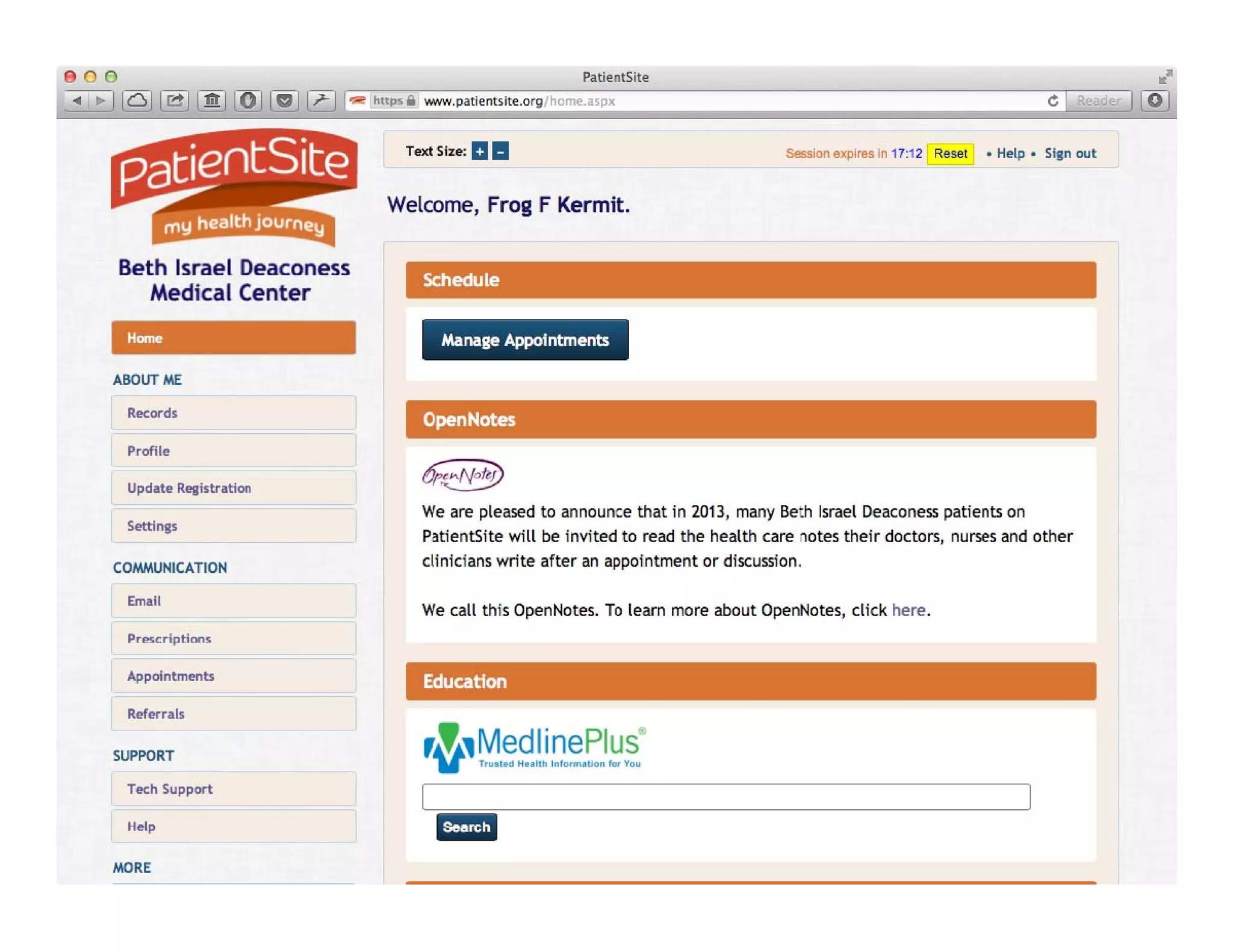
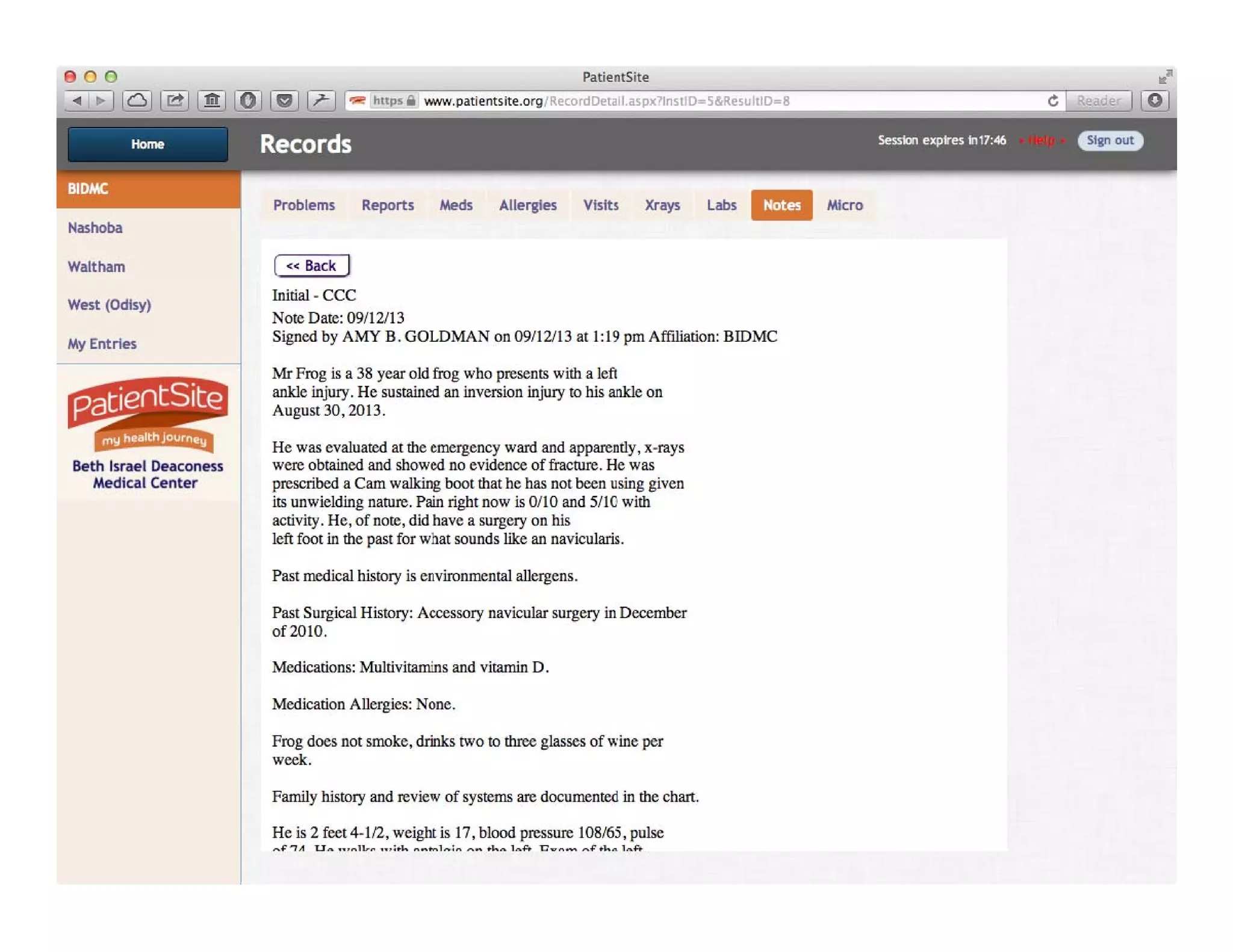
• OpenNotes – Sharing Clinicians’ Notes With Patients
• Social Media – Connecting with Patients
• Does OpenNotes help patients become more engaged in their care?
• Is OpenNotes the straw that breaks the doctor’s back?
• After 1 year, will patients and doctors want to continue?
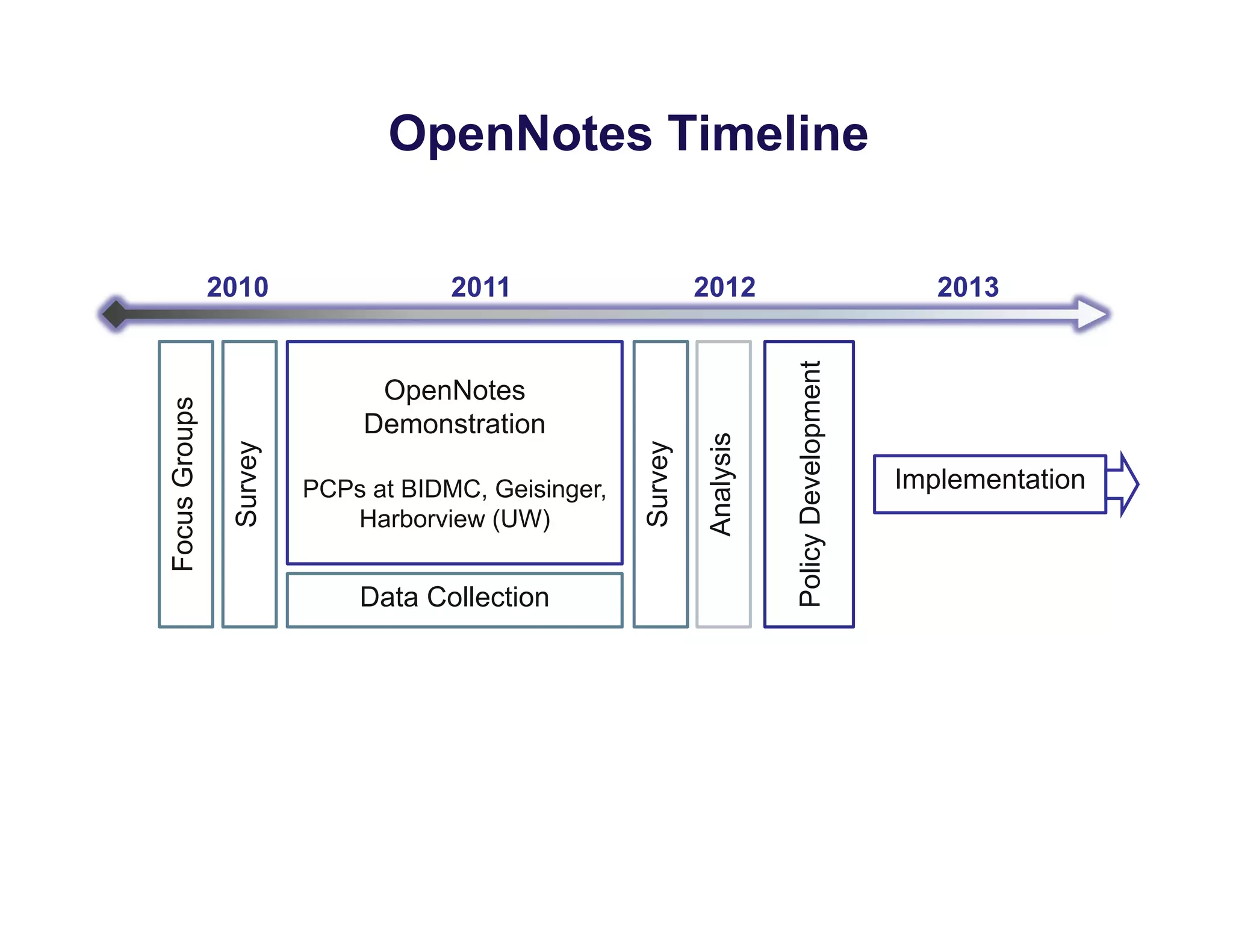
OpenNotes Timeline
2010 2011 2012 2013
OpenNotes
Demonstration
PCPs at BIDMC, Geisinger,
Harborview (UW)
Implementation
Survey
Survey
FocusGroups
Analysis
Data Collection
PolicyDevelopment
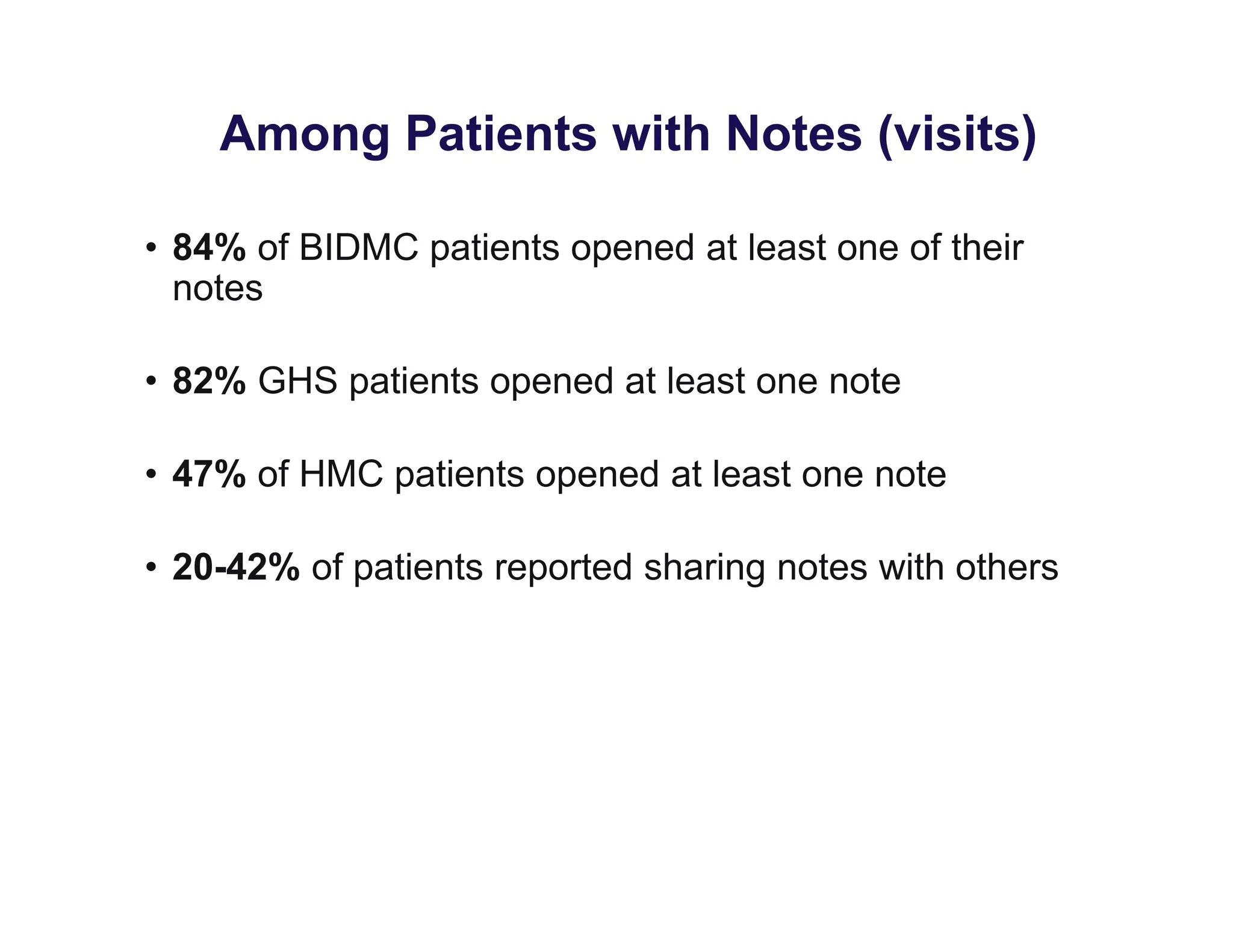
Among Patients with Notes (visits)
• 84% of BIDMC patients opened at least one of their
notes
• 82% GHS patients opened at least one note
• 47% of HMC patients opened at least one note
• 20-42% of patients reported sharing notes with others
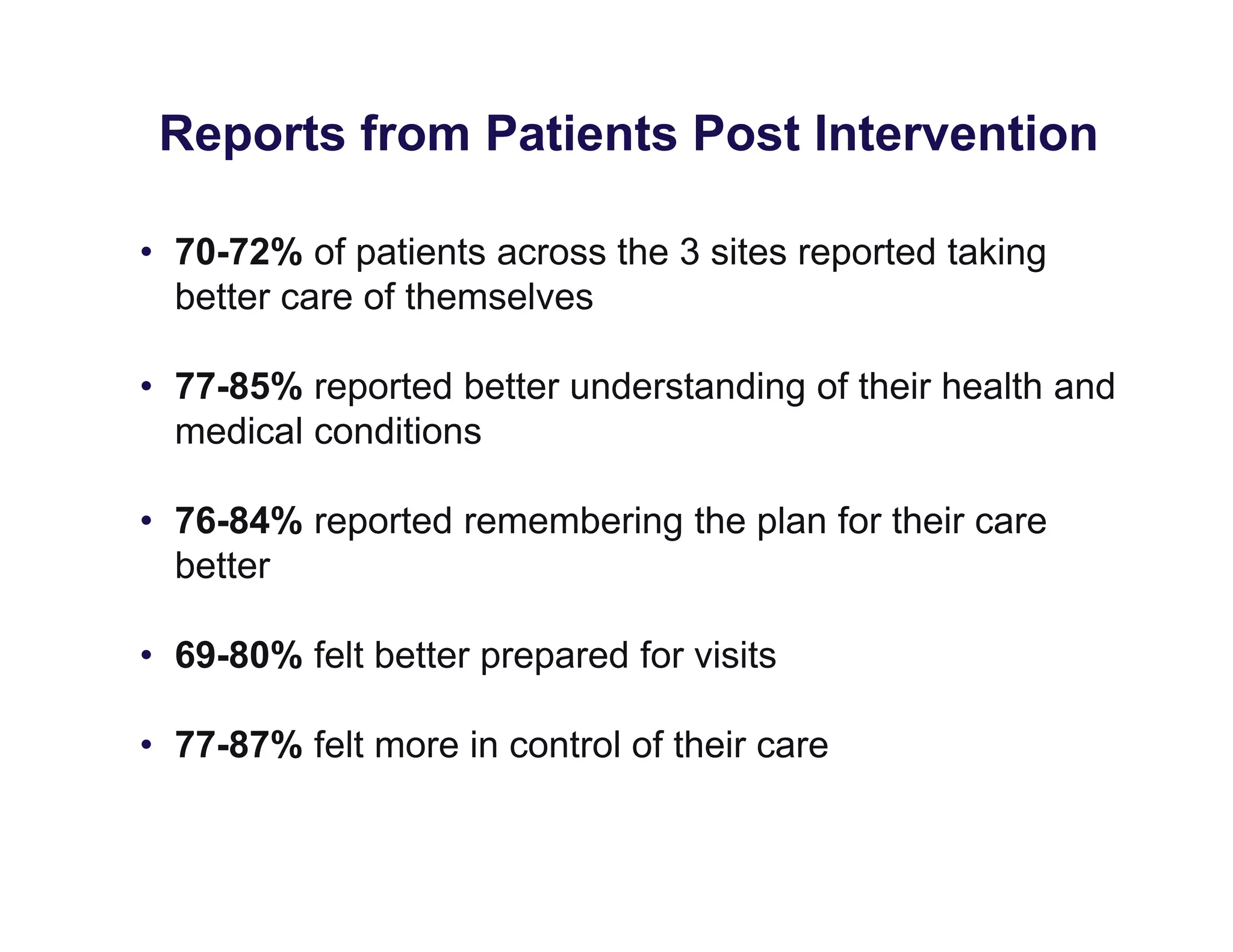
Reports from Patients Post Intervention
• 70-72% of patients across the 3 sites reported taking
better care of themselves
• 77-85% reported better understanding of their health and
medical conditions
• 76-84% reported remembering the plan for their care
better
• 69-80% felt better prepared for visits
• 77-87% felt more in control of their care
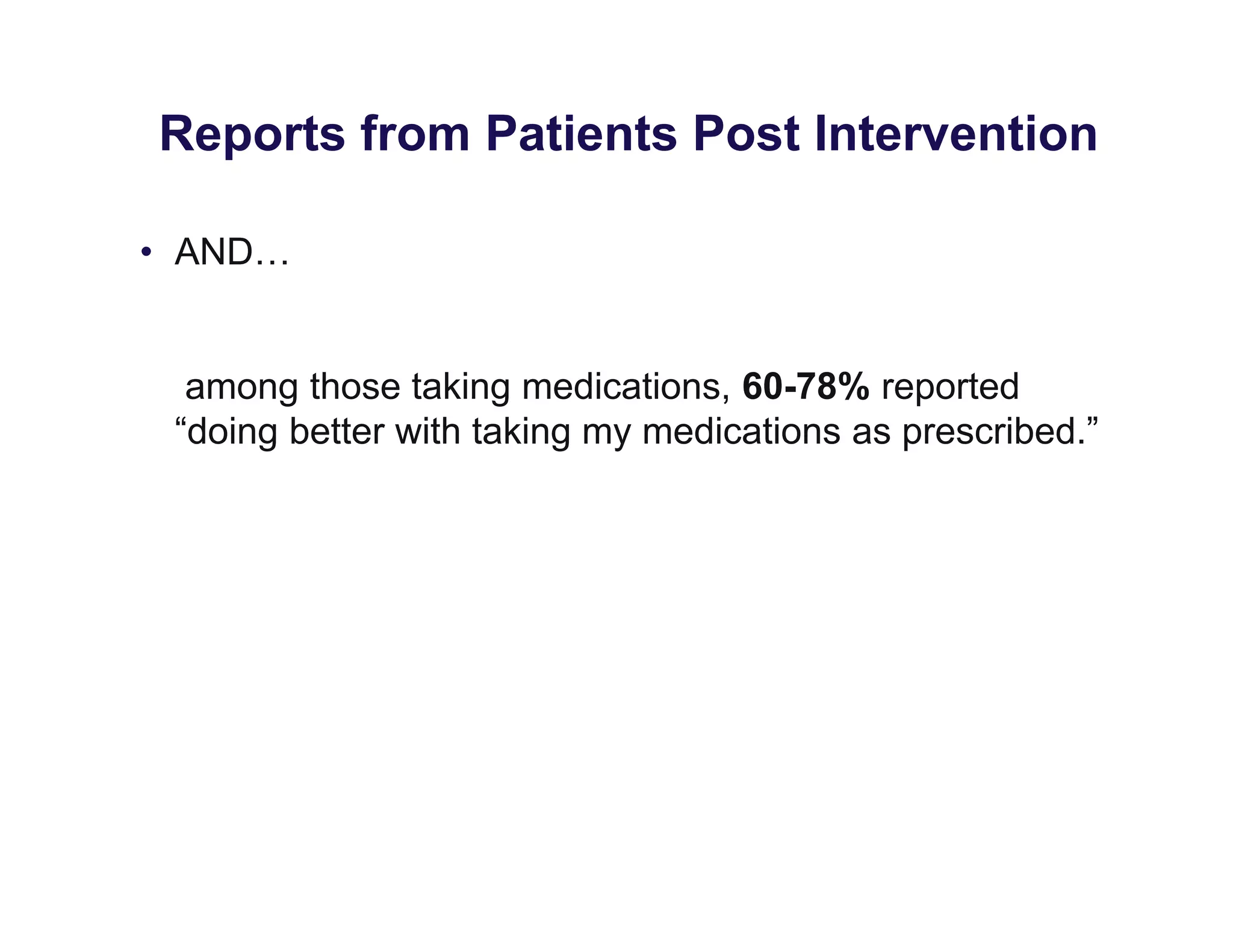
Reports from Patients Post Intervention
• AND…
among those taking medications, 60-78% reported
“doing better with taking my medications as prescribed.”
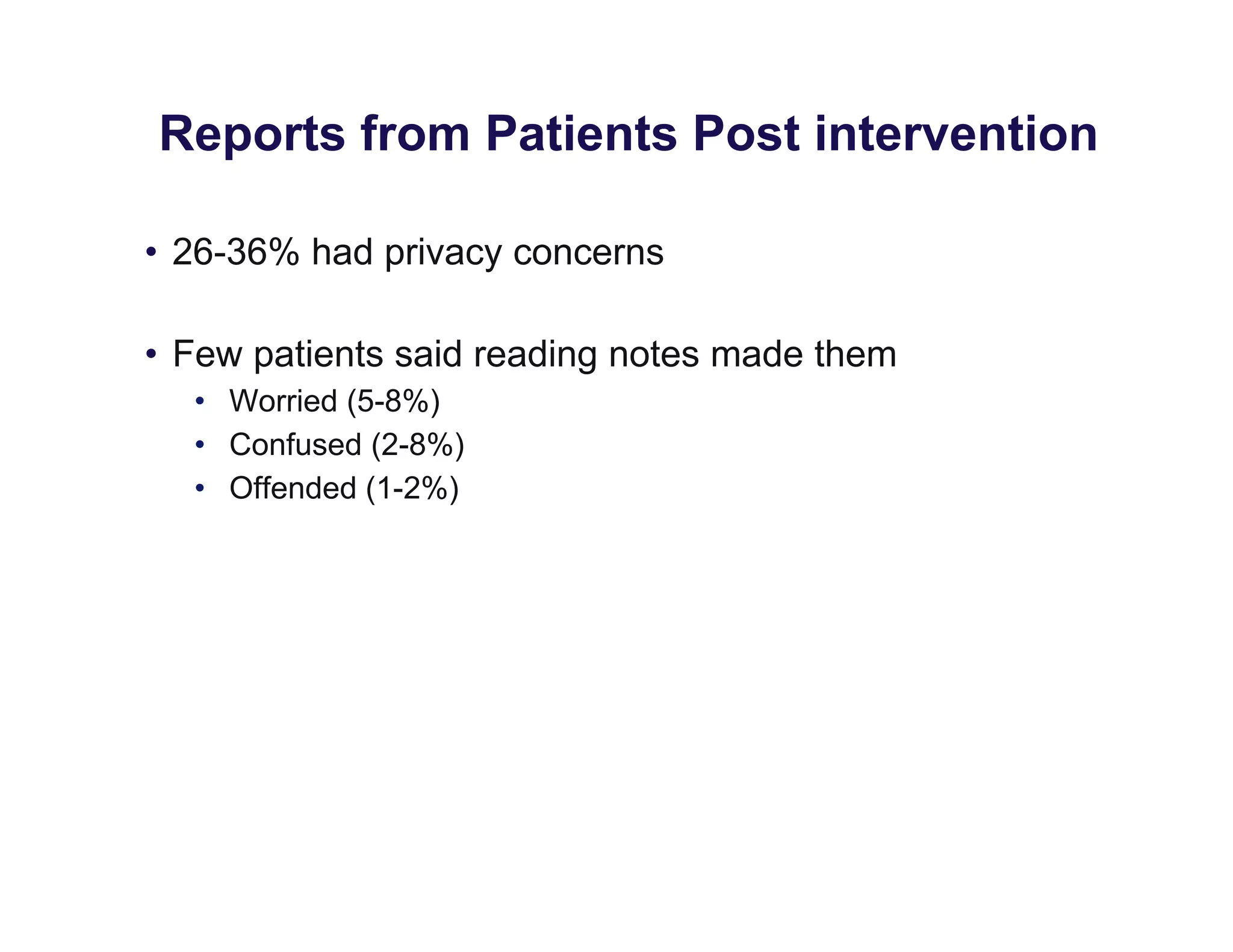
Reports from Patients Post intervention
• 26-36% had privacy concerns
• Few patients said reading notes made them
• Worried (5-8%)
• Confused (2-8%)
• Offended (1-2%)
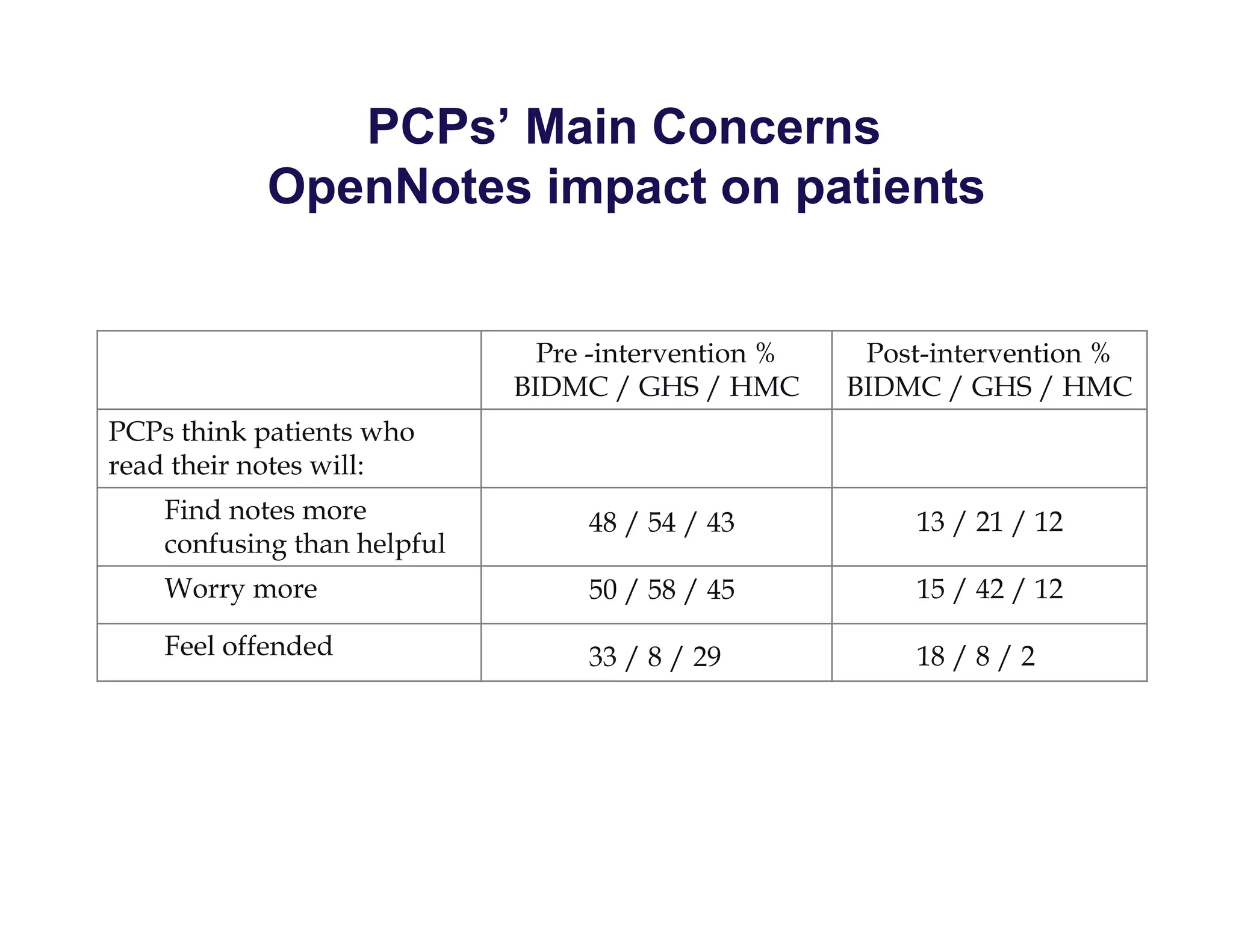
PCPs’ Main Concerns
OpenNotes impact on patients
Pre -intervention %
BIDMC / GHS / HMC
Post-intervention %
BIDMC / GHS / HMC
PCPs think patients who
read their notes will:
Find notes more
confusing than helpful
Worry more
Feel offended
48 / 54 / 43
50 / 58 / 45
33 / 8 / 29
13 / 21 / 12
15 / 42 / 12
18 / 8 / 2
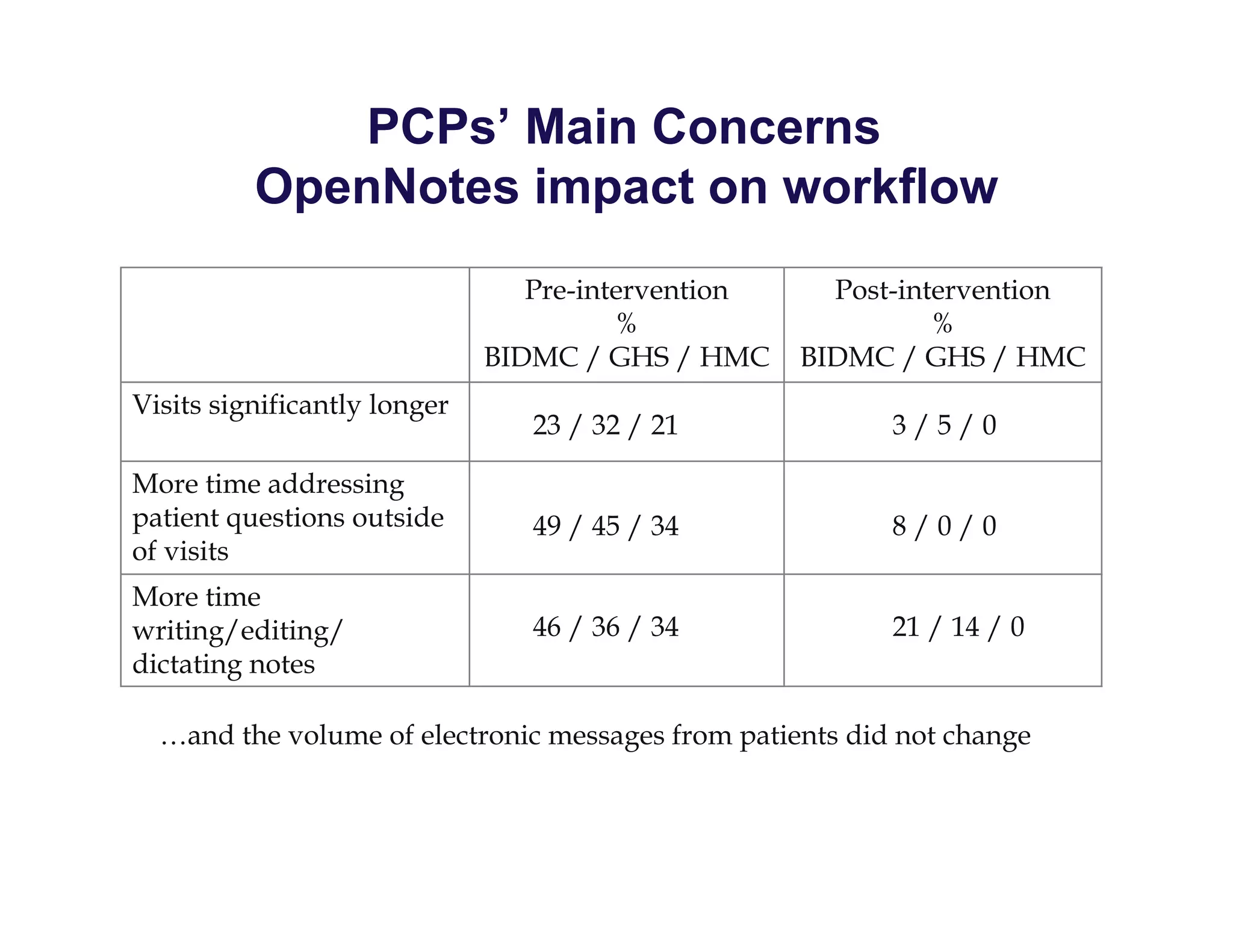
PCPs’ Main Concerns
OpenNotes impact on workflow
Pre-intervention
%
BIDMC / GHS / HMC
Post-intervention
%
BIDMC / GHS / HMC
Visits significantly longer
More time addressing
patient questions outside
of visits
More time
writing/editing/
dictating notes
…and the volume of electronic messages from patients did not change
23 / 32 / 21
49 / 45 / 34
46 / 36 / 34
3 / 5 / 0
8 / 0 / 0
21 / 14 / 0
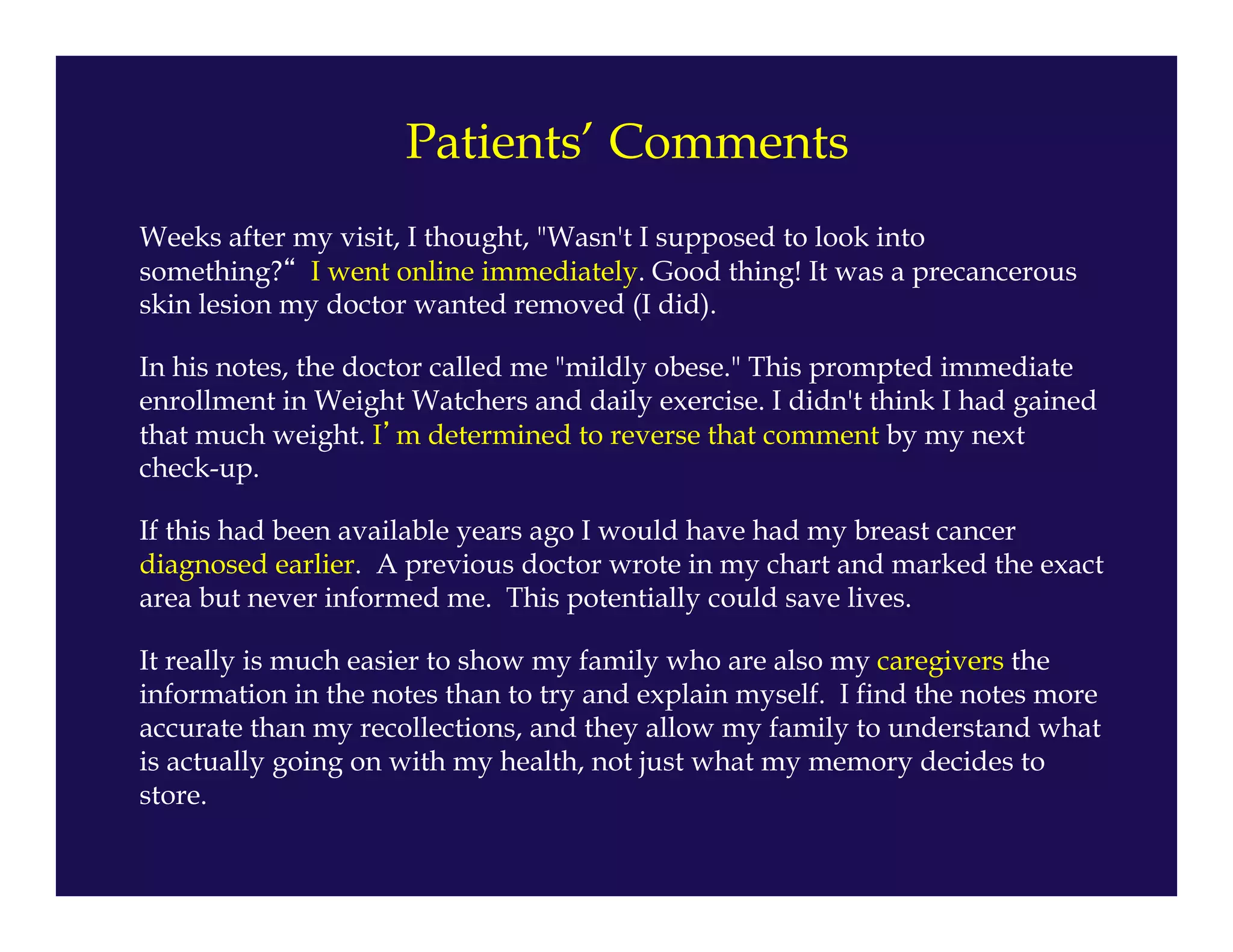
Weeks after my visit, I thought, "Wasn't I supposed to look into
something?“ I went online immediately. Good thing! It was a precancerous
skin lesion my doctor wanted removed (I did).
In his notes, the doctor called me "mildly obese." This prompted immediate
enrollment in Weight Watchers and daily exercise. I didn't think I had gained
that much weight. I’m determined to reverse that comment by my next
check-up.
If this had been available years ago I would have had my breast cancer
diagnosed earlier. A previous doctor wrote in my chart and marked the exact
area but never informed me. This potentially could save lives.
It really is much easier to show my family who are also my caregivers the
information in the notes than to try and explain myself. I find the notes more
accurate than my recollections, and they allow my family to understand what
is actually going on with my health, not just what my memory decides to
store.
Patients’ Comments
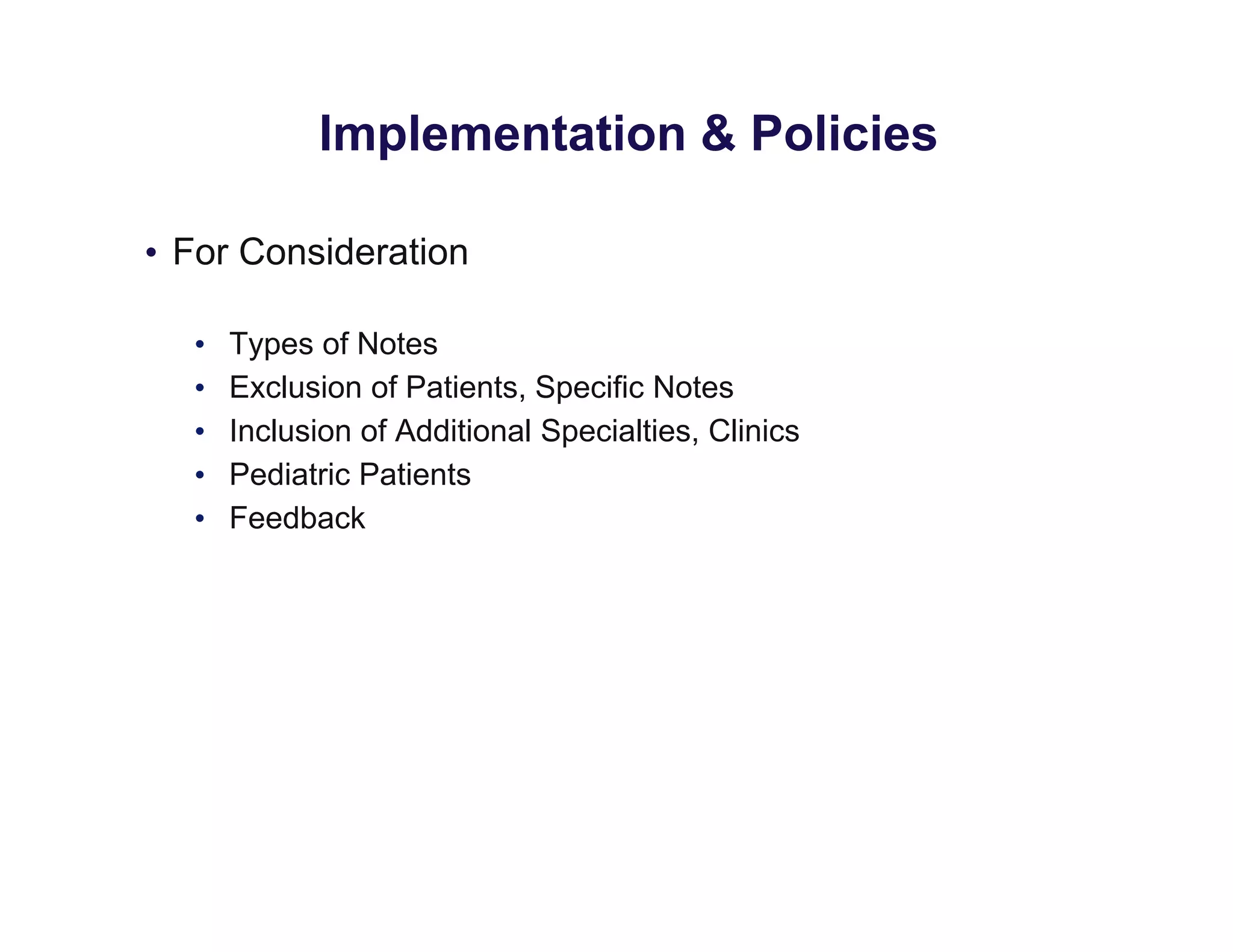
Implementation & Policies
• For Consideration
• Types of Notes
• Exclusion of Patients, Specific Notes
• Inclusion of Additional Specialties, Clinics
• Pediatric Patients
• Feedback
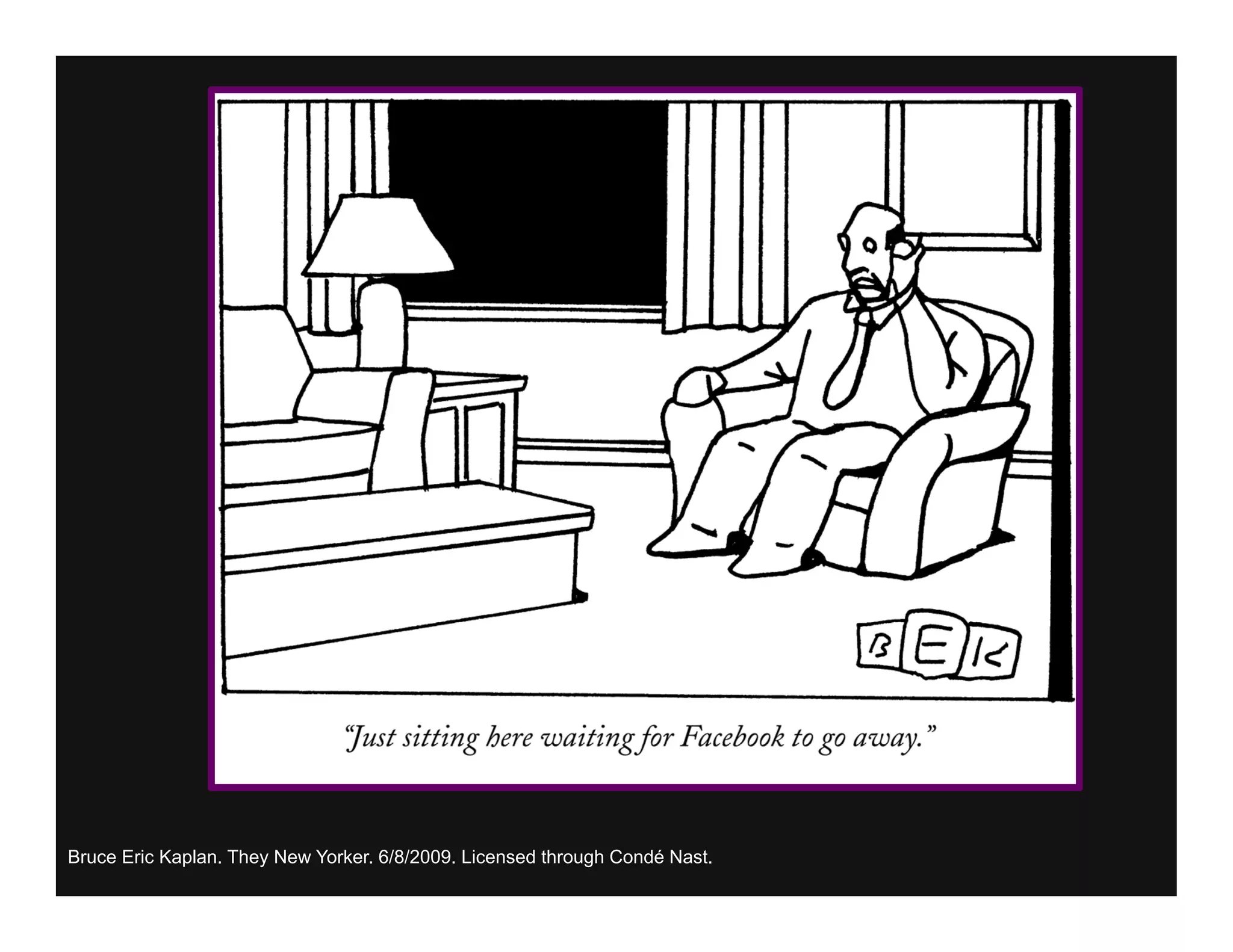
Bruce Eric Kaplan. They New Yorker. 6/8/2009. Licensed through Condé Nast.
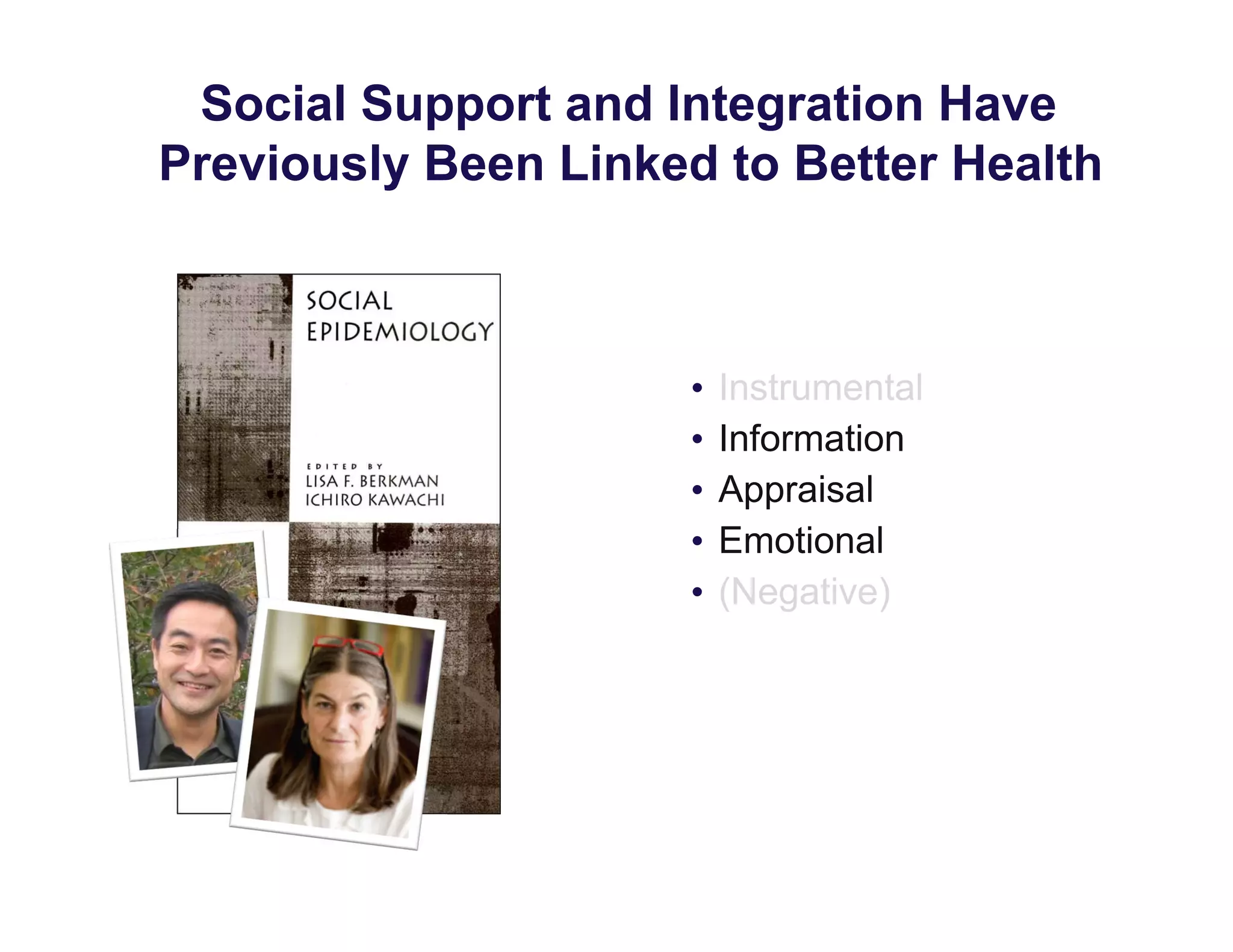
Social Support and Integration Have
Previously Been Linked to Better Health
• Instrumental
• Information
• Appraisal
• Emotional
• (Negative)
Patients Use Social Media to Find Health
Information
•80% of internet users look online for health information
Fox, Samantha. The Social Life of Health Information. Pew Research Center, 2011.
Patients Use Social Media to Find Health
Information
•80% of internet users look online for health information
•34% have read individual commentary or experience
about health or medical issues on a website or blog
Fox, Samantha. The Social Life of Health Information. Pew Research Center, 2011.
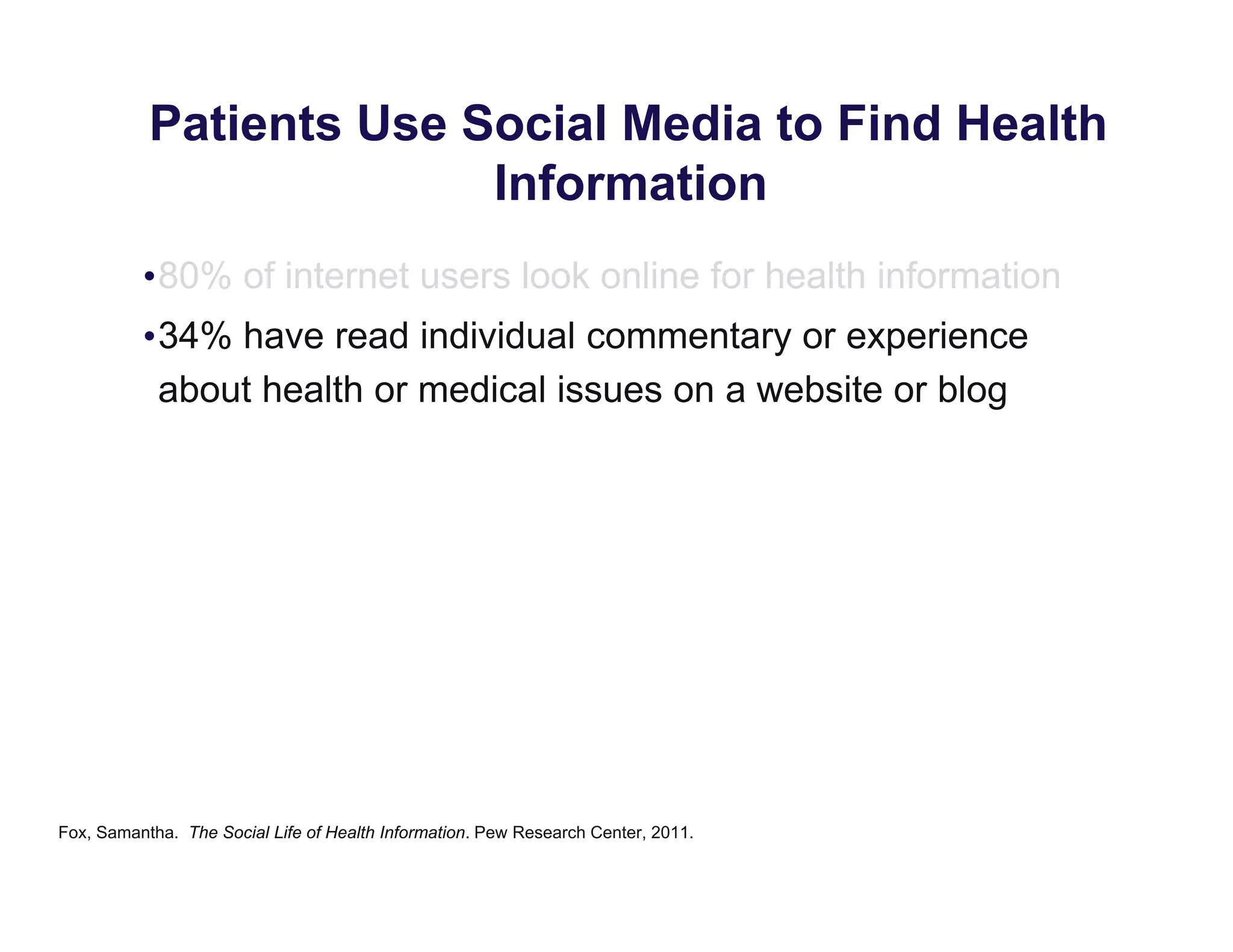
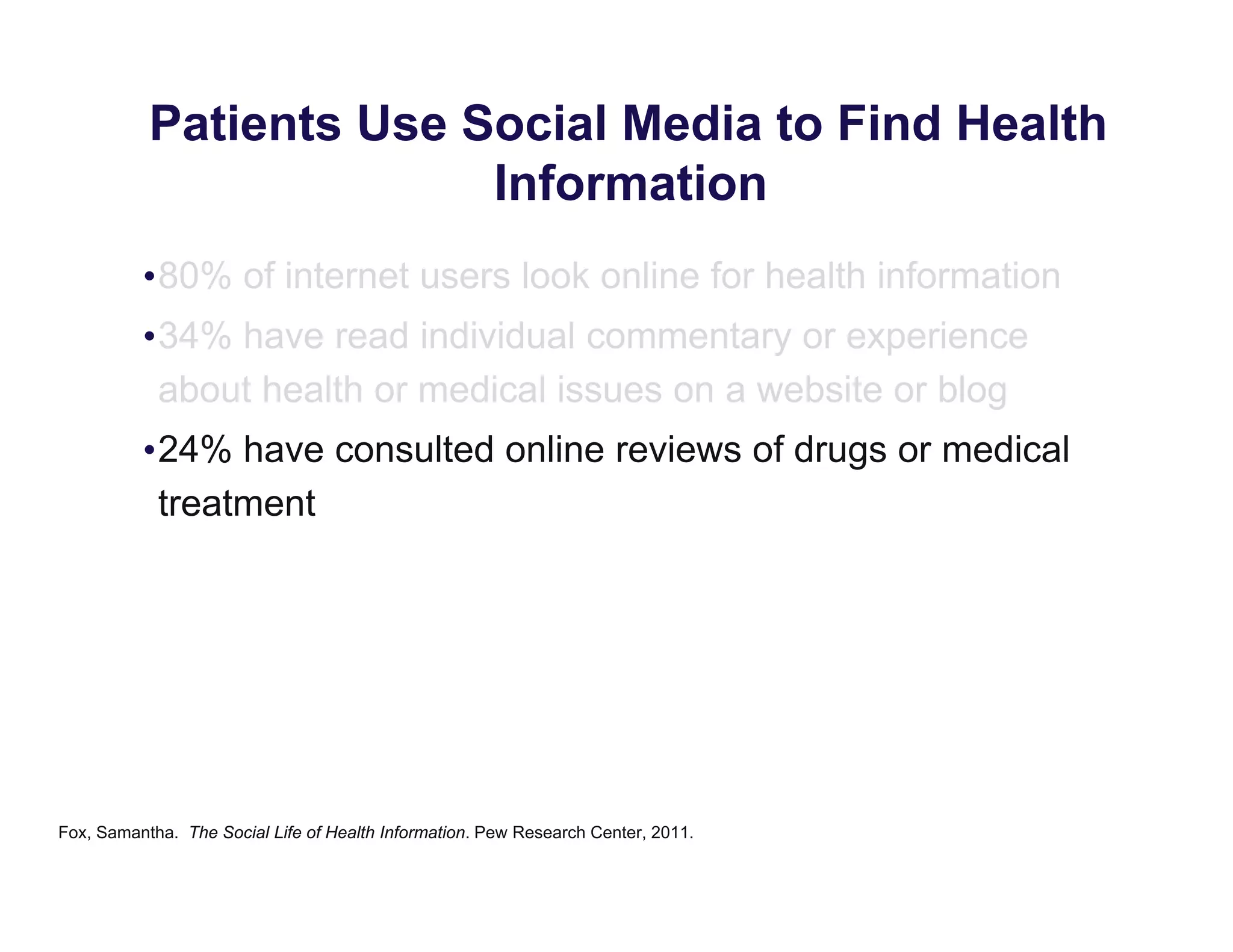
Patients Use Social Media to Find Health
Information
•80% of internet users look online for health information
•34% have read individual commentary or experience
about health or medical issues on a website or blog
•24% have consulted online reviews of drugs or medical
treatment
Fox, Samantha. The Social Life of Health Information. Pew Research Center, 2011.
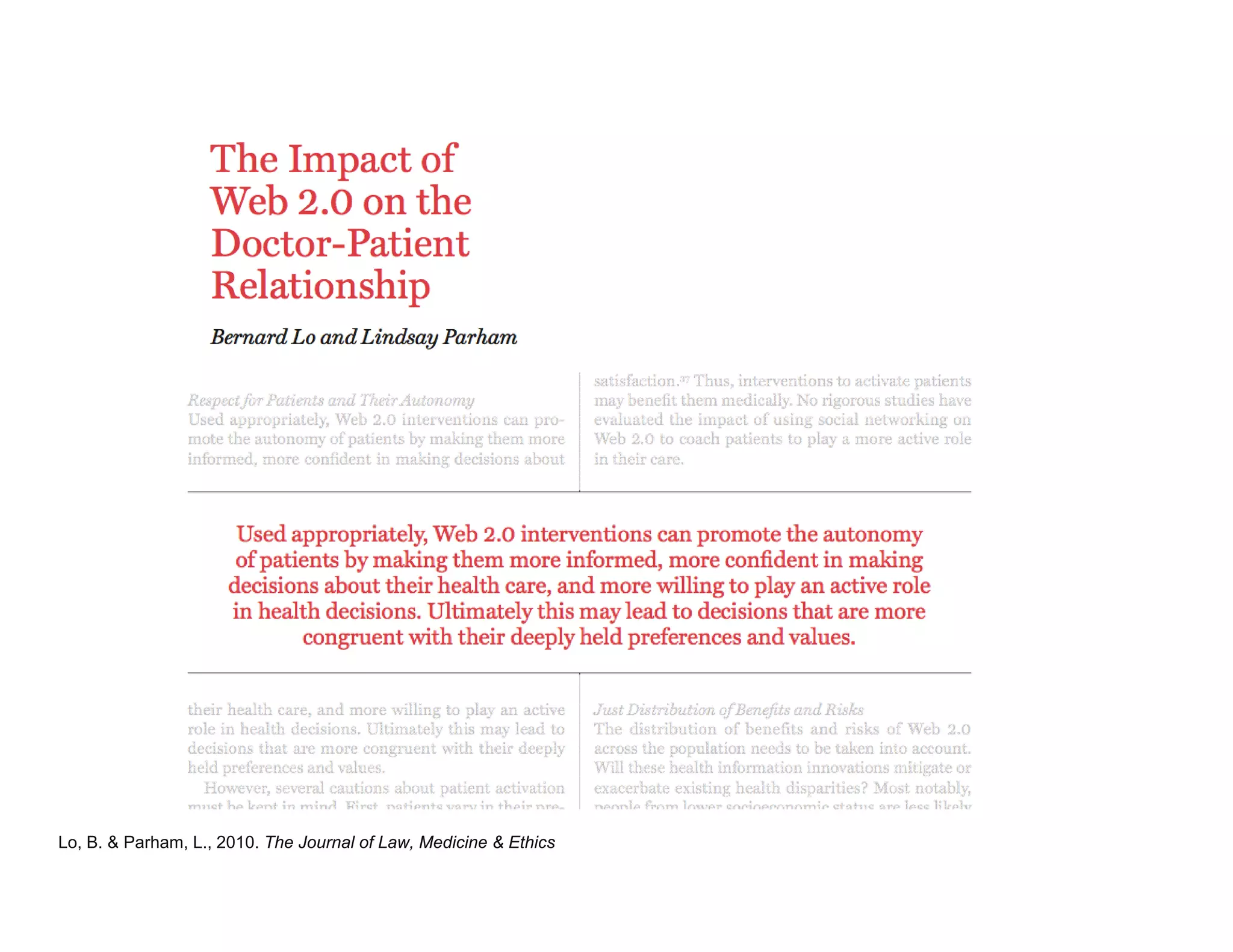
Lo, B. & Parham, L., 2010. The Journal of Law, Medicine & Ethics
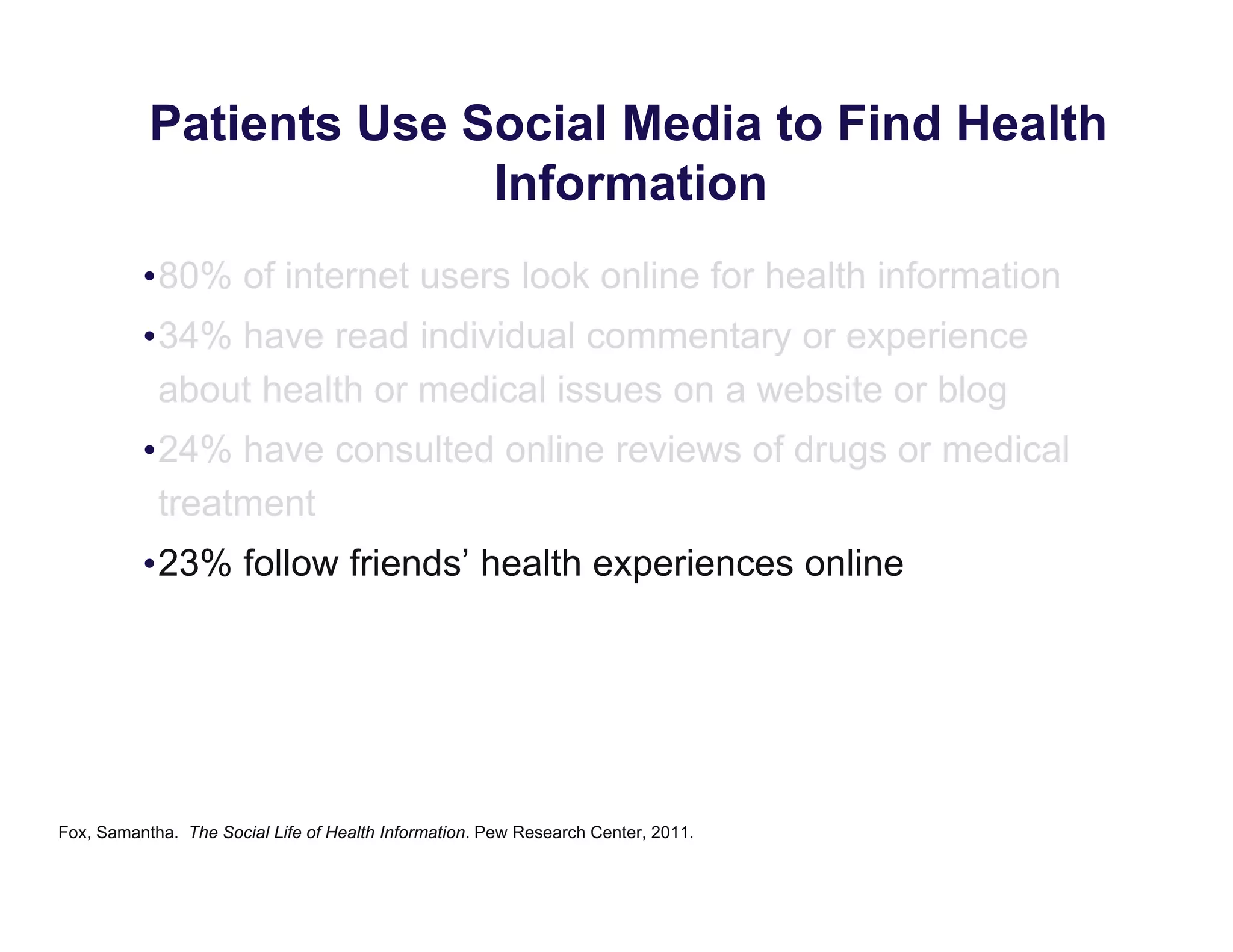
Patients Use Social Media to Find Health
Information
•80% of internet users look online for health information
•34% have read individual commentary or experience
about health or medical issues on a website or blog
•24% have consulted online reviews of drugs or medical
treatment
•23% follow friends’ health experiences online
Fox, Samantha. The Social Life of Health Information. Pew Research Center, 2011.
Patients Use Social Media to Find Health
Information
•80% of internet users look online for health information
•34% have read individual commentary or experience
about health or medical issues on a website or blog
•24% have consulted online reviews of drugs or medical
treatment
•23% follow friends’ health experiences online
•18% have gone online to find others with similar health
concerns
Fox, Samantha. The Social Life of Health Information. Pew Research Center, 2011.
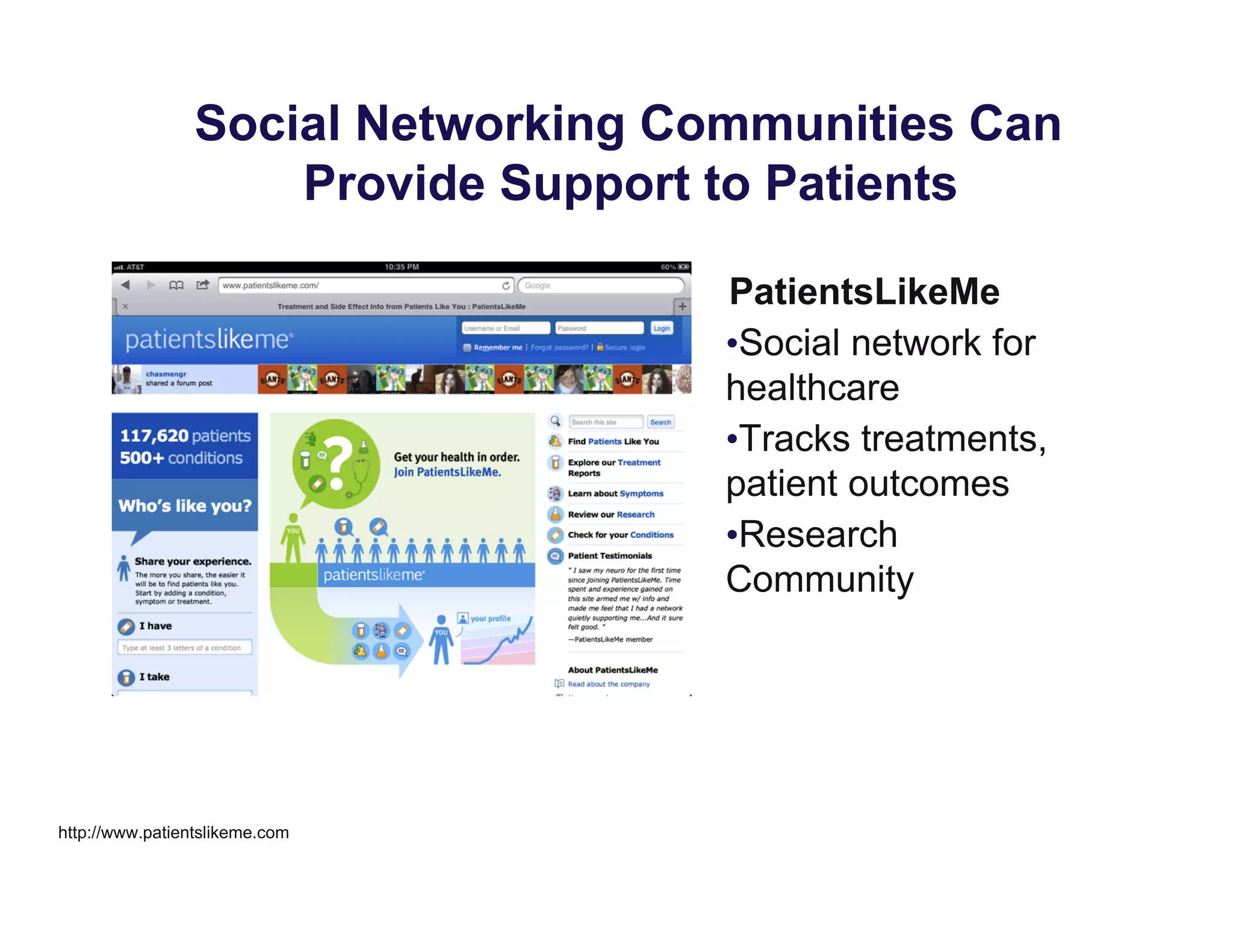
Social Networking Communities Can
Provide Support to Patients
PatientsLikeMe
•Social network for
healthcare
•Tracks treatments,
patient outcomes
•Research
Community
http://www.patientslikeme.com
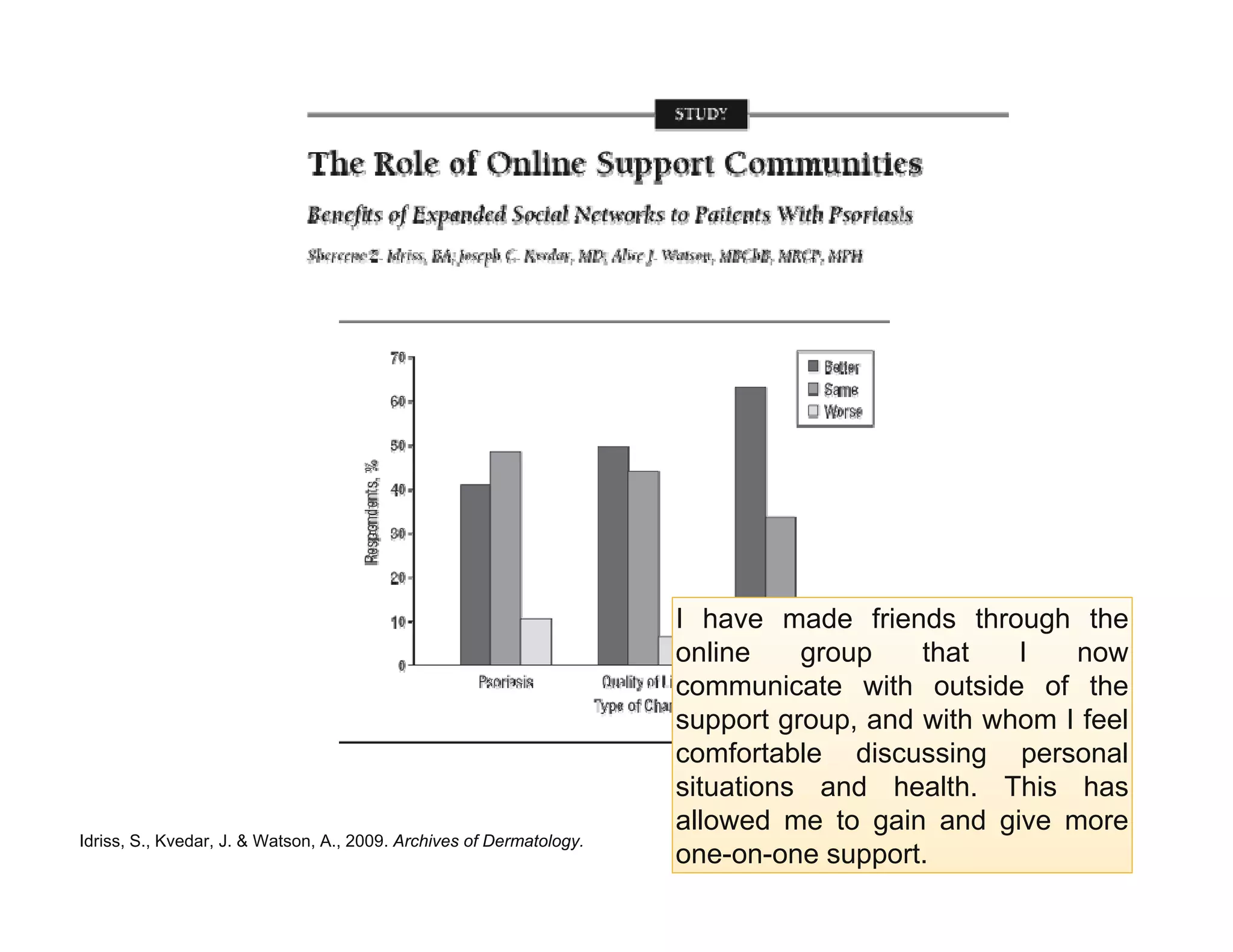
Idriss, S., Kvedar, J. & Watson, A., 2009. Archives of Dermatology.
I have made friends through the
online group that I now
communicate with outside of the
support group, and with whom I feel
comfortable discussing personal
situations and health. This has
allowed me to gain and give more
one-on-one support.
Patients Use Social Media to Find Health
Information
•80% of internet users look online for health information
•34% have read individual commentary or experience
about health or medical issues on a website or blog
•24% have consulted online reviews of drugs or medical
treatment
•23% follow friends’ health experiences online
•18% have gone online to find others with similar health
concerns
•9% have started or joined a health-related group
Fox, Samantha. The Social Life of Health Information. Pew Research Center, 2011.
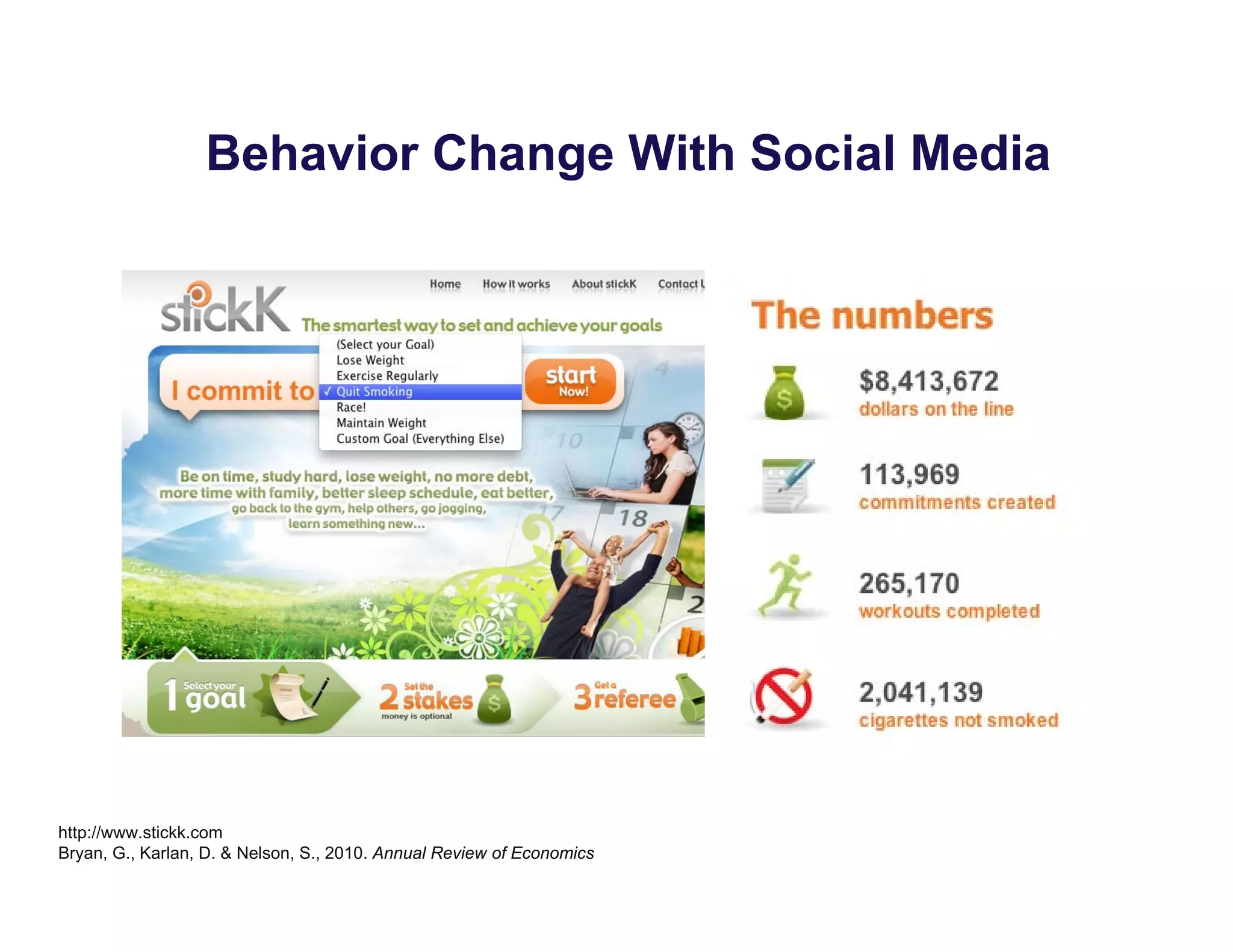
Behavior Change With Social Media
http://www.stickk.com
Bryan, G., Karlan, D. & Nelson, S., 2010. Annual Review of Economics
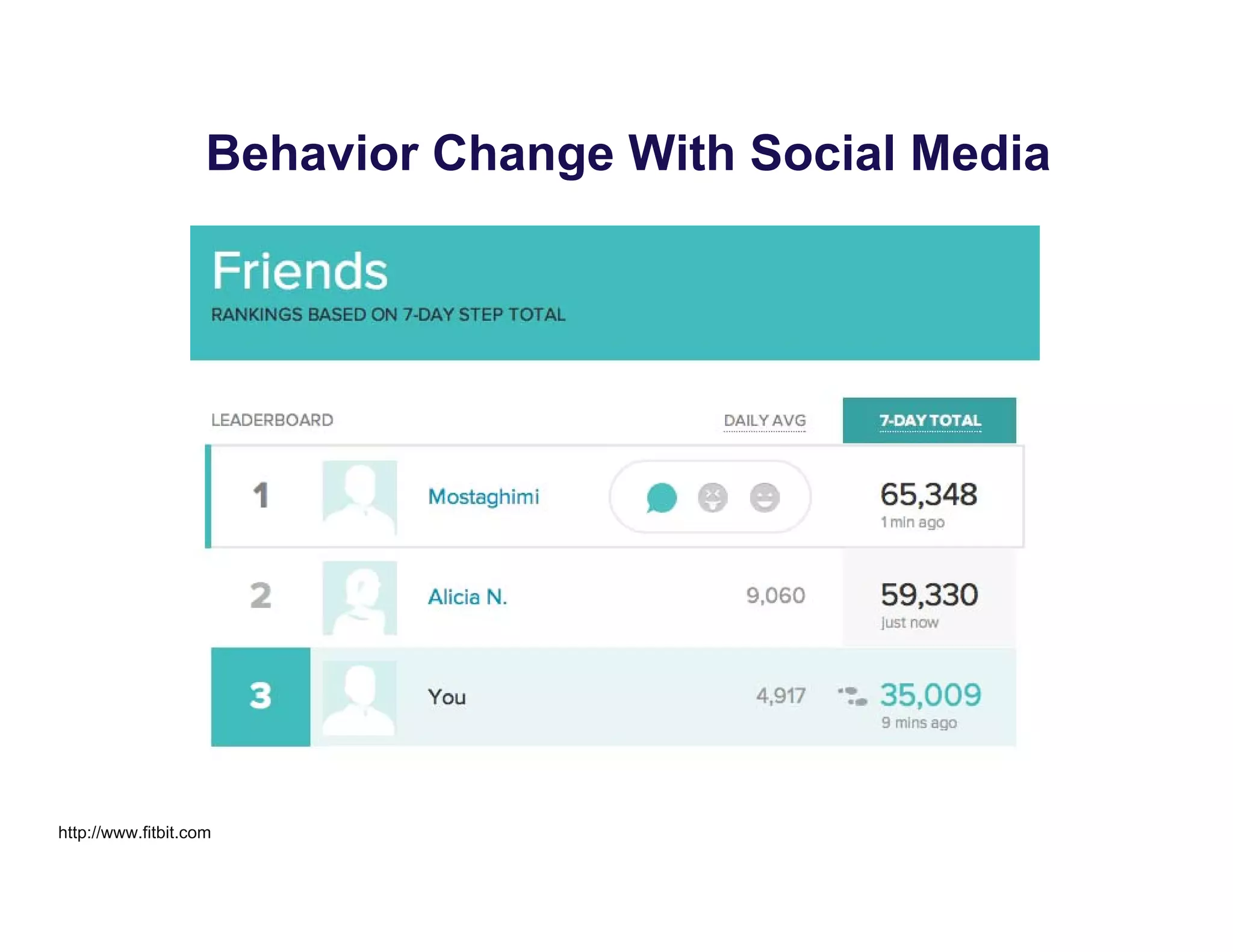
Behavior Change With Social Media
http://www.fitbit.com
Health Teams Are Engaging With Patients
•Share and/or spread reliable information
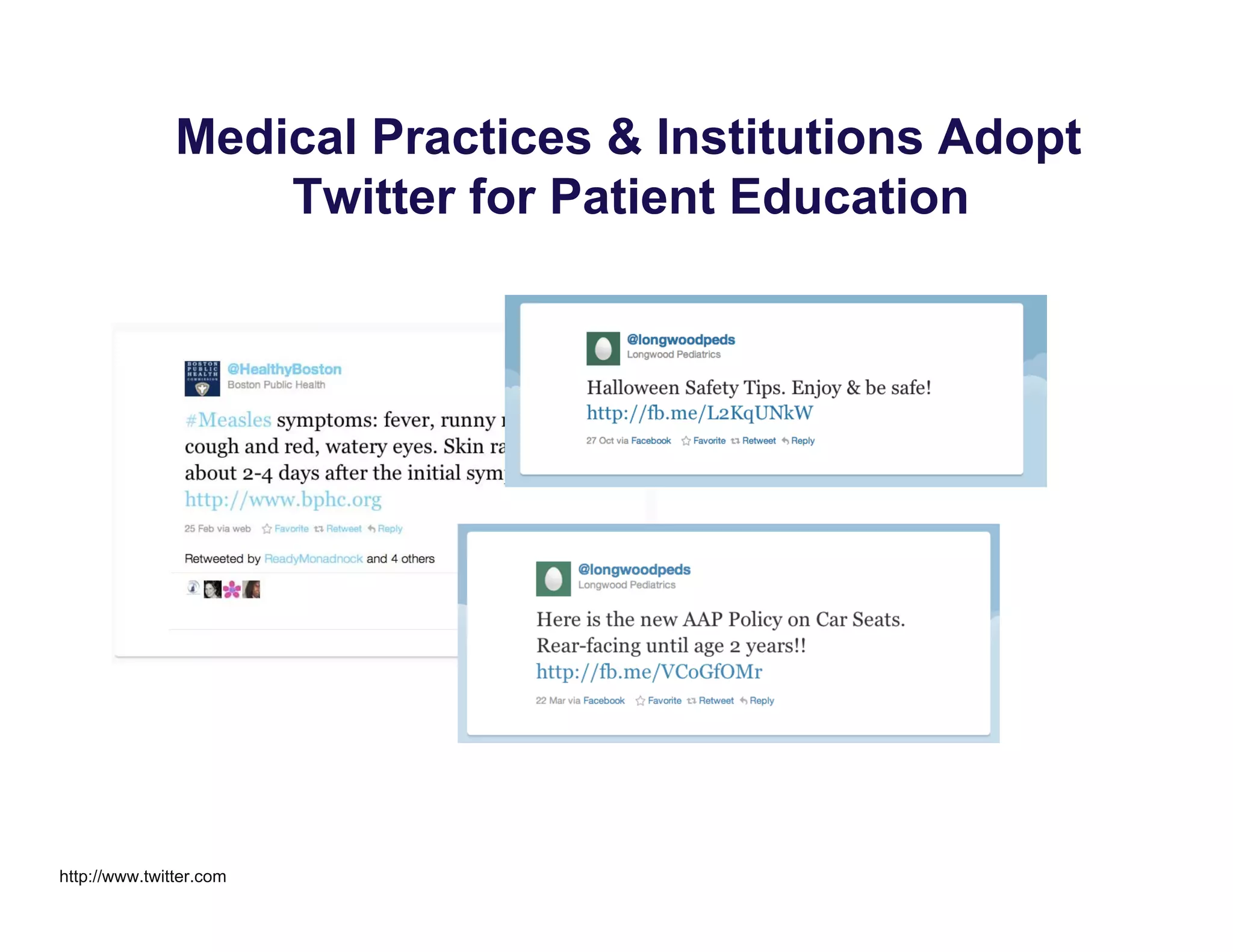
Medical Practices & Institutions Adopt
Twitter for Patient Education
http://www.twitter.com
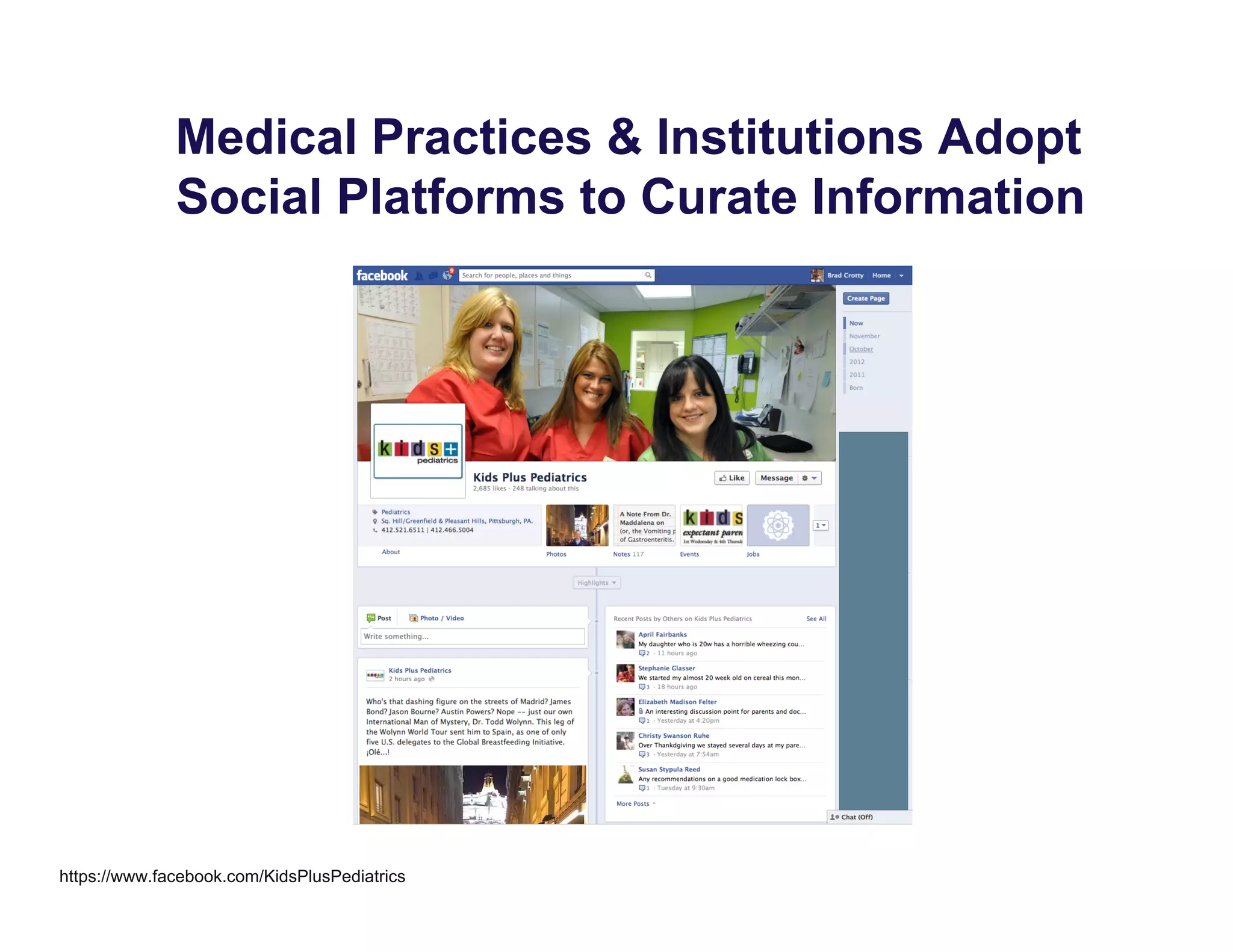
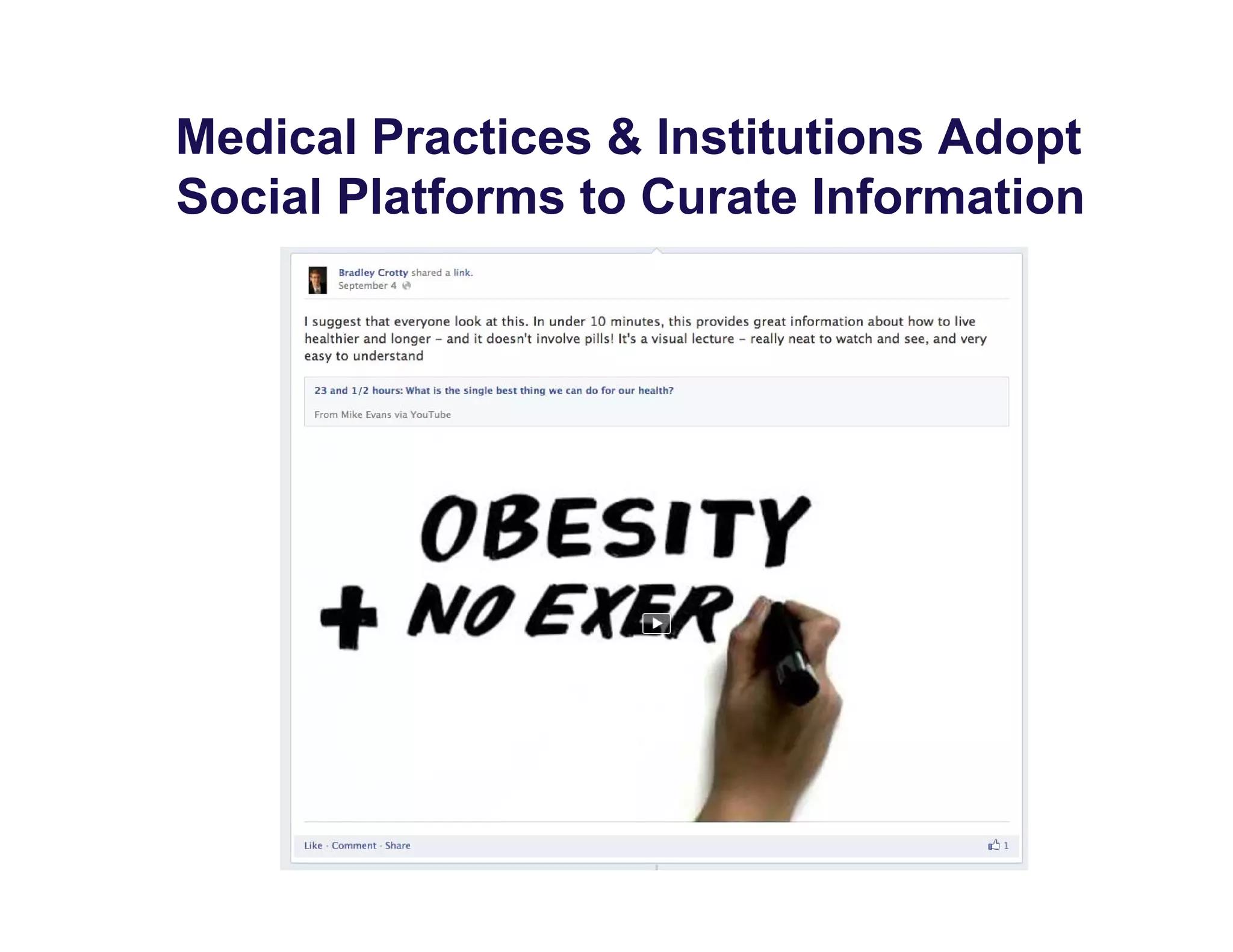
Medical Practices & Institutions Adopt
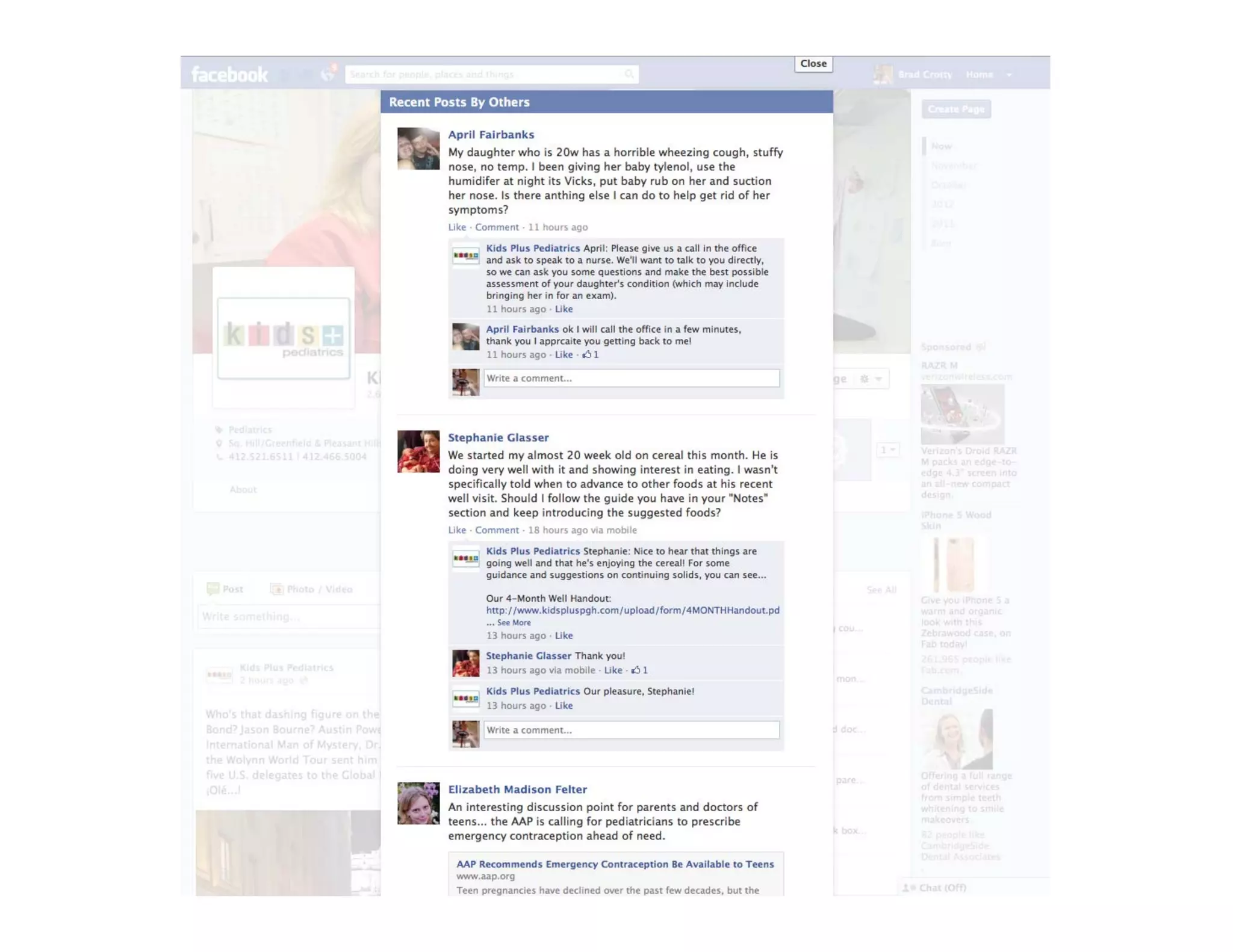
Social Platforms to Curate Information
https://www.facebook.com/KidsPlusPediatrics
Medical Practices & Institutions Adopt
Social Platforms to Curate Information
•Share and/or spread reliable information
•Advertising
Health Teams Are Engaging With Patients
We Also Can ‘Advertise’…
•Share and/or spread reliable information
•Advertising
•Learning from patients
Health Teams Are Engaging With Patients
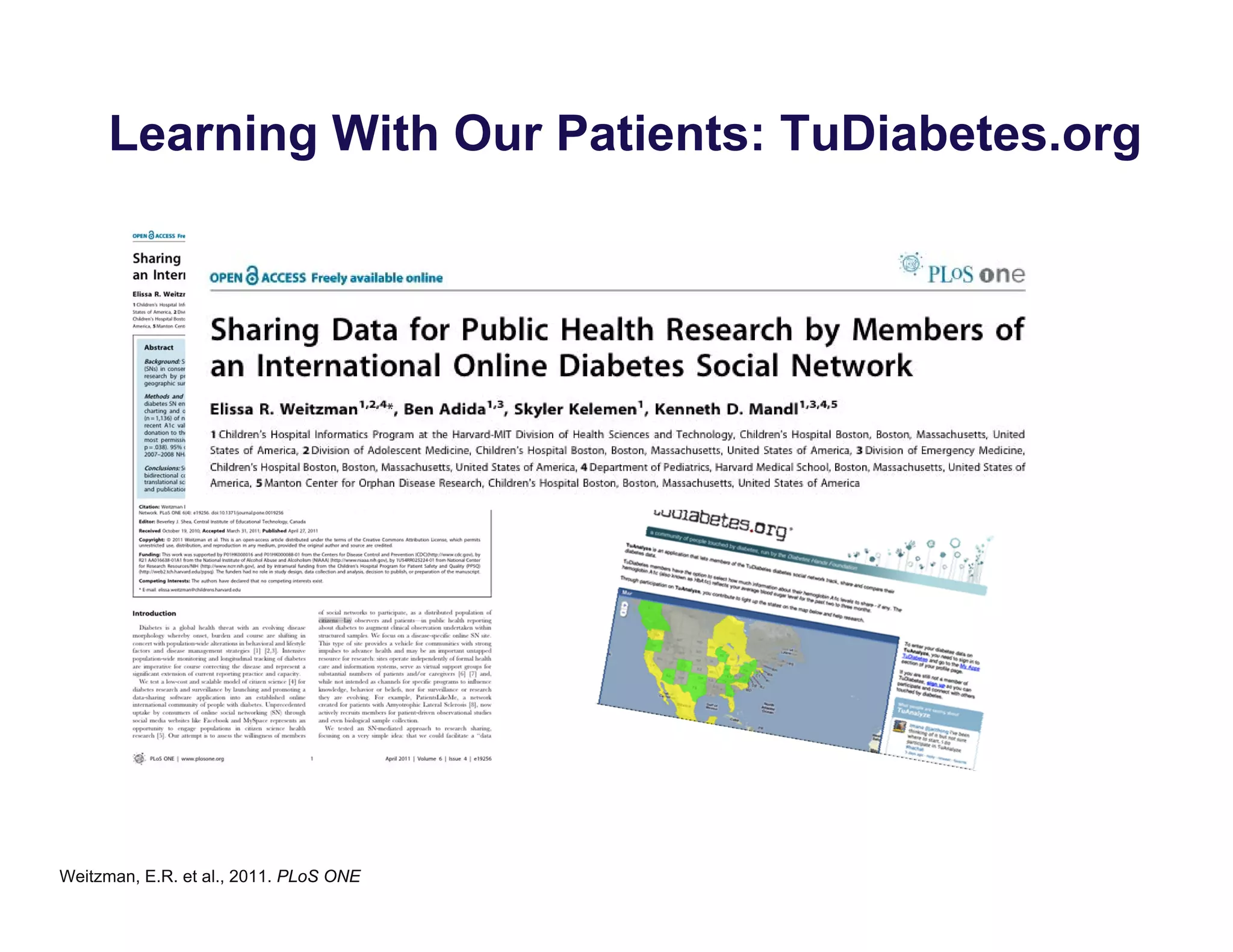
Weitzman, E.R. et al., 2011. PLoS ONE
Learning With Our Patients: TuDiabetes.org
•Share and/or spread reliable information
•Advertising
•Learning from patients
•Connecting with patients
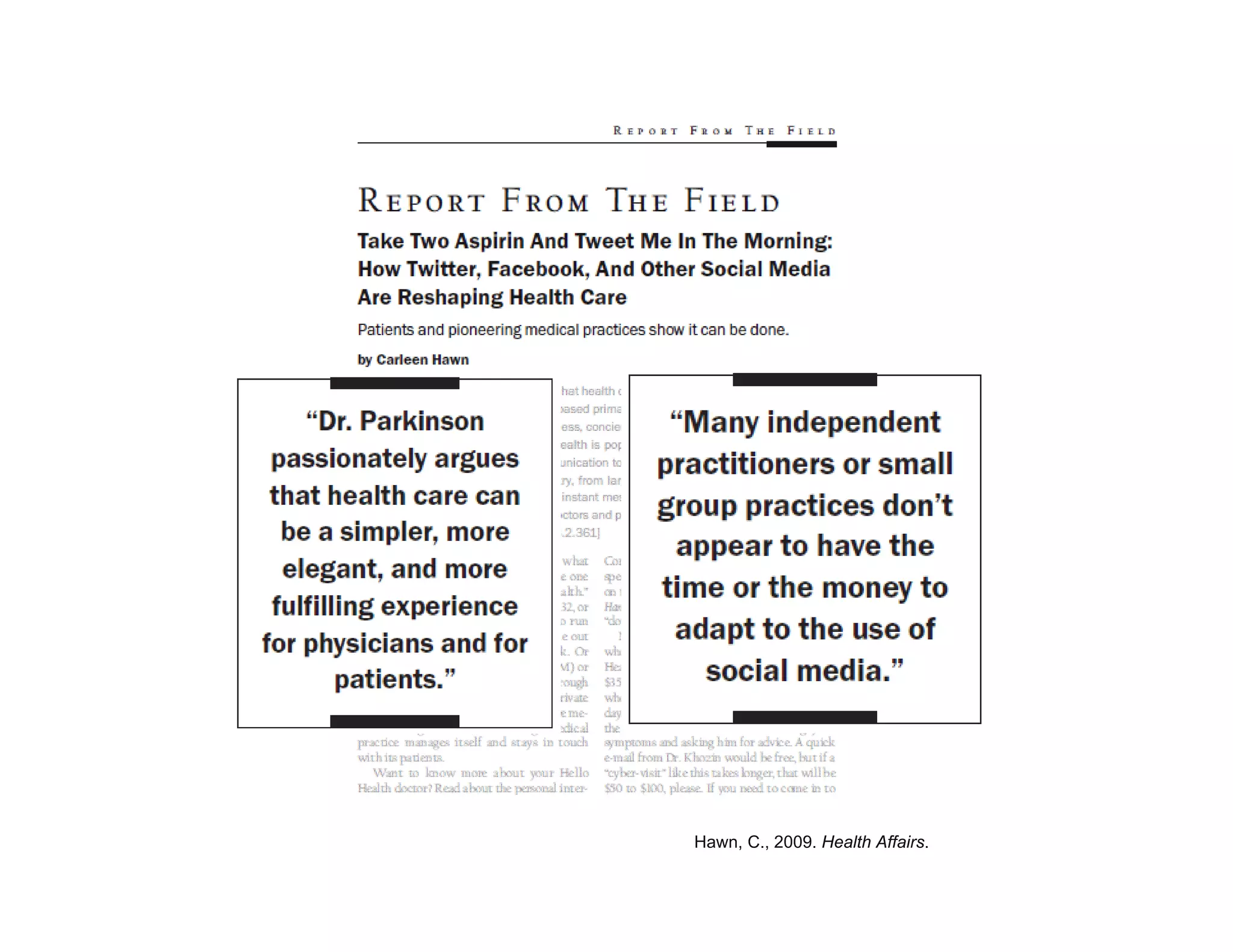
Health Teams Are Engaging With Patients
Hawn, C., 2009. Health Affairs.
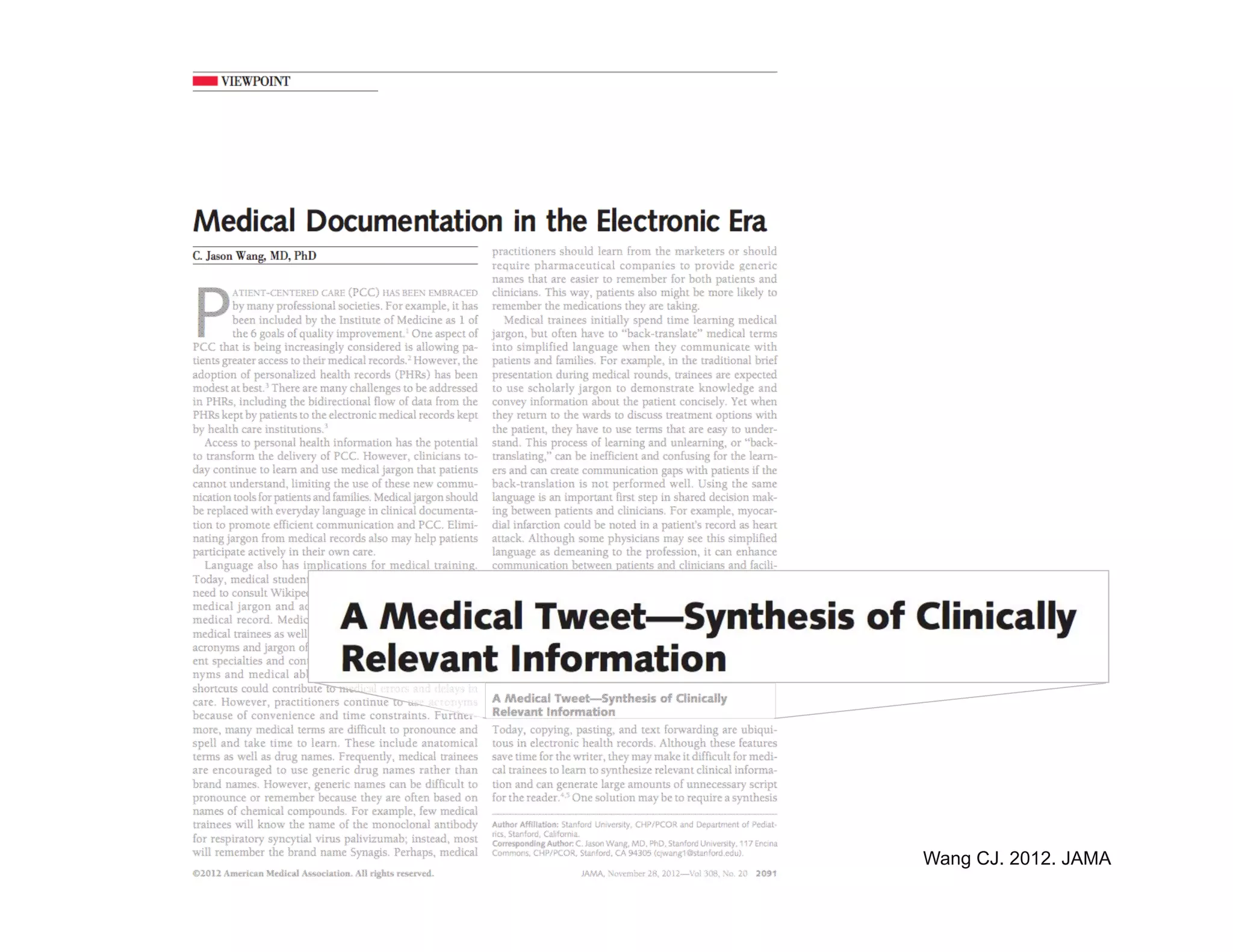
Wang CJ. 2012. JAMA
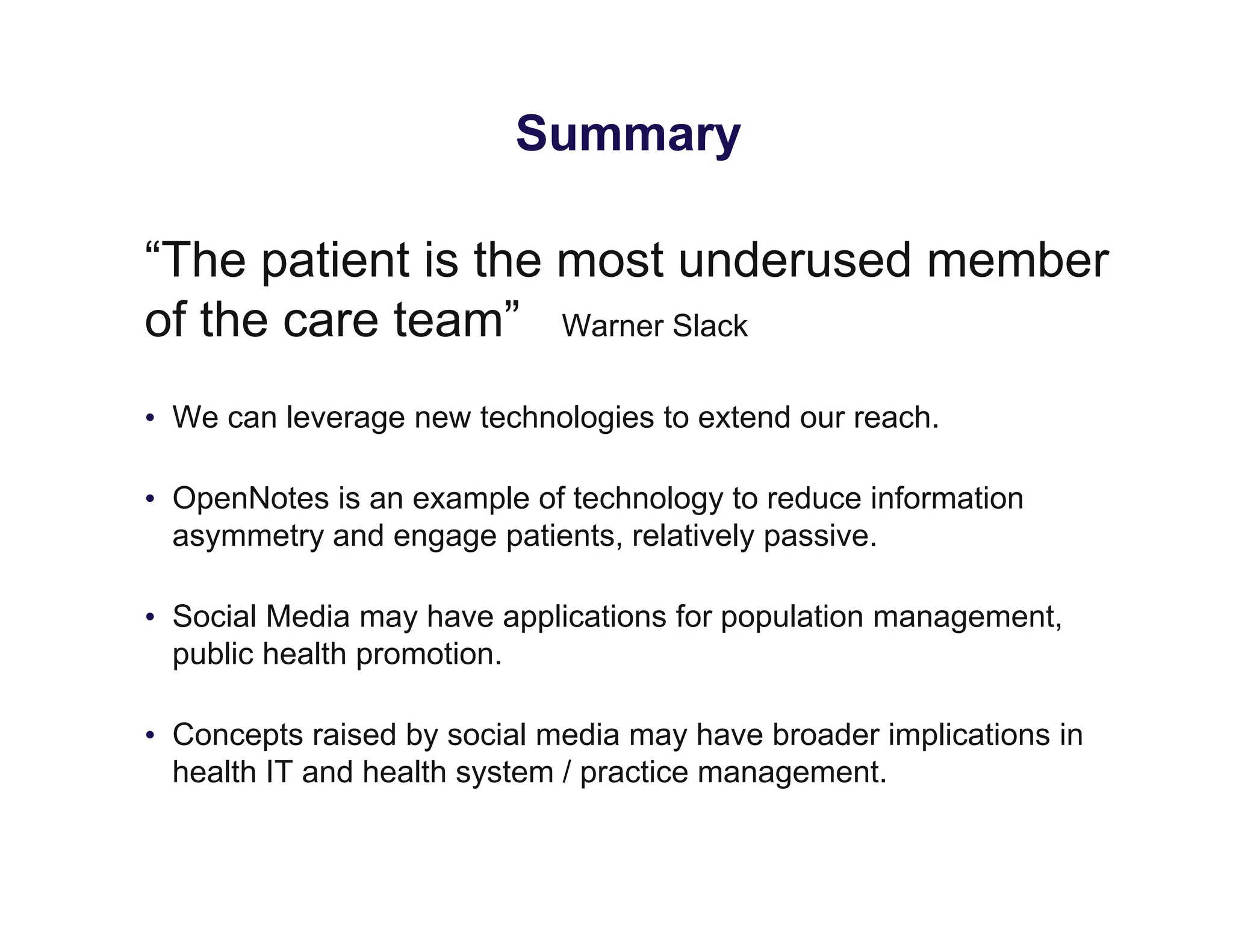
Summary
“The patient is the most underused member
of the care team” Warner Slack
• We can leverage new technologies to extend our reach.
• OpenNotes is an example of technology to reduce information
asymmetry and engage patients, relatively passive.
• Social Media may have applications for population management,
public health promotion.
• Concepts raised by social media may have broader implications in
health IT and health system / practice management.
Bradley Crotty MD MPH
330 Brookline Avenue
Boston, MA 02215
617-278-8170; bcrotty@bidmc.harvard.edu
Bradley Crotty MD MPH
330 Brookline Avenue
Boston, MA 02215
617-278-8170; bcrotty@bidmc.harvard.edu

Crotty engaging patients in new ways from open notes to social media

  • 1.
    Engaging Patients inNew Ways: From OpenNotes to Social Media Bradley H Crotty, MD, MPH, FACP Division of Clinical Informatics Beth Israel Deaconess Medical Center AMDIS Fall Symposium 9/30/2013
  • 3.
    Current Challenges • InformationAsymmetry • Integration • Reinforcement
  • 4.
    Two Possibilities • OpenNotes– Sharing Clinicians’ Notes With Patients • Social Media – Connecting with Patients
  • 5.
    • Does OpenNoteshelp patients become more engaged in their care? • Is OpenNotes the straw that breaks the doctor’s back? • After 1 year, will patients and doctors want to continue?
  • 8.
    OpenNotes Timeline 2010 20112012 2013 OpenNotes Demonstration PCPs at BIDMC, Geisinger, Harborview (UW) Implementation Survey Survey FocusGroups Analysis Data Collection PolicyDevelopment
  • 9.
    Among Patients withNotes (visits) • 84% of BIDMC patients opened at least one of their notes • 82% GHS patients opened at least one note • 47% of HMC patients opened at least one note • 20-42% of patients reported sharing notes with others
  • 10.
    Reports from PatientsPost Intervention • 70-72% of patients across the 3 sites reported taking better care of themselves • 77-85% reported better understanding of their health and medical conditions • 76-84% reported remembering the plan for their care better • 69-80% felt better prepared for visits • 77-87% felt more in control of their care
  • 11.
    Reports from PatientsPost Intervention • AND… among those taking medications, 60-78% reported “doing better with taking my medications as prescribed.”
  • 12.
    Reports from PatientsPost intervention • 26-36% had privacy concerns • Few patients said reading notes made them • Worried (5-8%) • Confused (2-8%) • Offended (1-2%)
  • 13.
    PCPs’ Main Concerns OpenNotesimpact on patients Pre -intervention % BIDMC / GHS / HMC Post-intervention % BIDMC / GHS / HMC PCPs think patients who read their notes will: Find notes more confusing than helpful Worry more Feel offended 48 / 54 / 43 50 / 58 / 45 33 / 8 / 29 13 / 21 / 12 15 / 42 / 12 18 / 8 / 2
  • 14.
    PCPs’ Main Concerns OpenNotesimpact on workflow Pre-intervention % BIDMC / GHS / HMC Post-intervention % BIDMC / GHS / HMC Visits significantly longer More time addressing patient questions outside of visits More time writing/editing/ dictating notes …and the volume of electronic messages from patients did not change 23 / 32 / 21 49 / 45 / 34 46 / 36 / 34 3 / 5 / 0 8 / 0 / 0 21 / 14 / 0
  • 15.
    Weeks after myvisit, I thought, "Wasn't I supposed to look into something?“ I went online immediately. Good thing! It was a precancerous skin lesion my doctor wanted removed (I did). In his notes, the doctor called me "mildly obese." This prompted immediate enrollment in Weight Watchers and daily exercise. I didn't think I had gained that much weight. I’m determined to reverse that comment by my next check-up. If this had been available years ago I would have had my breast cancer diagnosed earlier. A previous doctor wrote in my chart and marked the exact area but never informed me. This potentially could save lives. It really is much easier to show my family who are also my caregivers the information in the notes than to try and explain myself. I find the notes more accurate than my recollections, and they allow my family to understand what is actually going on with my health, not just what my memory decides to store. Patients’ Comments
  • 16.
    Implementation & Policies •For Consideration • Types of Notes • Exclusion of Patients, Specific Notes • Inclusion of Additional Specialties, Clinics • Pediatric Patients • Feedback
  • 17.
    Bruce Eric Kaplan.They New Yorker. 6/8/2009. Licensed through Condé Nast.
  • 18.
    Social Support andIntegration Have Previously Been Linked to Better Health • Instrumental • Information • Appraisal • Emotional • (Negative)
  • 19.
    Patients Use SocialMedia to Find Health Information •80% of internet users look online for health information Fox, Samantha. The Social Life of Health Information. Pew Research Center, 2011.
  • 21.
    Patients Use SocialMedia to Find Health Information •80% of internet users look online for health information •34% have read individual commentary or experience about health or medical issues on a website or blog Fox, Samantha. The Social Life of Health Information. Pew Research Center, 2011.
  • 22.
    Patients Use SocialMedia to Find Health Information •80% of internet users look online for health information •34% have read individual commentary or experience about health or medical issues on a website or blog •24% have consulted online reviews of drugs or medical treatment Fox, Samantha. The Social Life of Health Information. Pew Research Center, 2011.
  • 23.
    Lo, B. &Parham, L., 2010. The Journal of Law, Medicine & Ethics
  • 24.
    Patients Use SocialMedia to Find Health Information •80% of internet users look online for health information •34% have read individual commentary or experience about health or medical issues on a website or blog •24% have consulted online reviews of drugs or medical treatment •23% follow friends’ health experiences online Fox, Samantha. The Social Life of Health Information. Pew Research Center, 2011.
  • 25.
    Patients Use SocialMedia to Find Health Information •80% of internet users look online for health information •34% have read individual commentary or experience about health or medical issues on a website or blog •24% have consulted online reviews of drugs or medical treatment •23% follow friends’ health experiences online •18% have gone online to find others with similar health concerns Fox, Samantha. The Social Life of Health Information. Pew Research Center, 2011.
  • 26.
    Social Networking CommunitiesCan Provide Support to Patients PatientsLikeMe •Social network for healthcare •Tracks treatments, patient outcomes •Research Community http://www.patientslikeme.com
  • 27.
    Idriss, S., Kvedar,J. & Watson, A., 2009. Archives of Dermatology. I have made friends through the online group that I now communicate with outside of the support group, and with whom I feel comfortable discussing personal situations and health. This has allowed me to gain and give more one-on-one support.
  • 28.
    Patients Use SocialMedia to Find Health Information •80% of internet users look online for health information •34% have read individual commentary or experience about health or medical issues on a website or blog •24% have consulted online reviews of drugs or medical treatment •23% follow friends’ health experiences online •18% have gone online to find others with similar health concerns •9% have started or joined a health-related group Fox, Samantha. The Social Life of Health Information. Pew Research Center, 2011.
  • 29.
    Behavior Change WithSocial Media http://www.stickk.com Bryan, G., Karlan, D. & Nelson, S., 2010. Annual Review of Economics
  • 30.
    Behavior Change WithSocial Media http://www.fitbit.com
  • 31.
    Health Teams AreEngaging With Patients •Share and/or spread reliable information
  • 32.
    Medical Practices &Institutions Adopt Twitter for Patient Education http://www.twitter.com
  • 33.
    Medical Practices &Institutions Adopt Social Platforms to Curate Information https://www.facebook.com/KidsPlusPediatrics
  • 34.
    Medical Practices &Institutions Adopt Social Platforms to Curate Information
  • 35.
    •Share and/or spreadreliable information •Advertising Health Teams Are Engaging With Patients
  • 36.
    We Also Can‘Advertise’…
  • 37.
    •Share and/or spreadreliable information •Advertising •Learning from patients Health Teams Are Engaging With Patients
  • 38.
    Weitzman, E.R. etal., 2011. PLoS ONE Learning With Our Patients: TuDiabetes.org
  • 39.
    •Share and/or spreadreliable information •Advertising •Learning from patients •Connecting with patients Health Teams Are Engaging With Patients
  • 40.
    Hawn, C., 2009.Health Affairs.
  • 42.
  • 43.
    Summary “The patient isthe most underused member of the care team” Warner Slack • We can leverage new technologies to extend our reach. • OpenNotes is an example of technology to reduce information asymmetry and engage patients, relatively passive. • Social Media may have applications for population management, public health promotion. • Concepts raised by social media may have broader implications in health IT and health system / practice management.
  • 44.
    Bradley Crotty MDMPH 330 Brookline Avenue Boston, MA 02215 617-278-8170; bcrotty@bidmc.harvard.edu Bradley Crotty MD MPH 330 Brookline Avenue Boston, MA 02215 617-278-8170; bcrotty@bidmc.harvard.edu