Clavicular & shoulder
joints
Dr. Diana Eid
Lecturer of anatomy & embryology
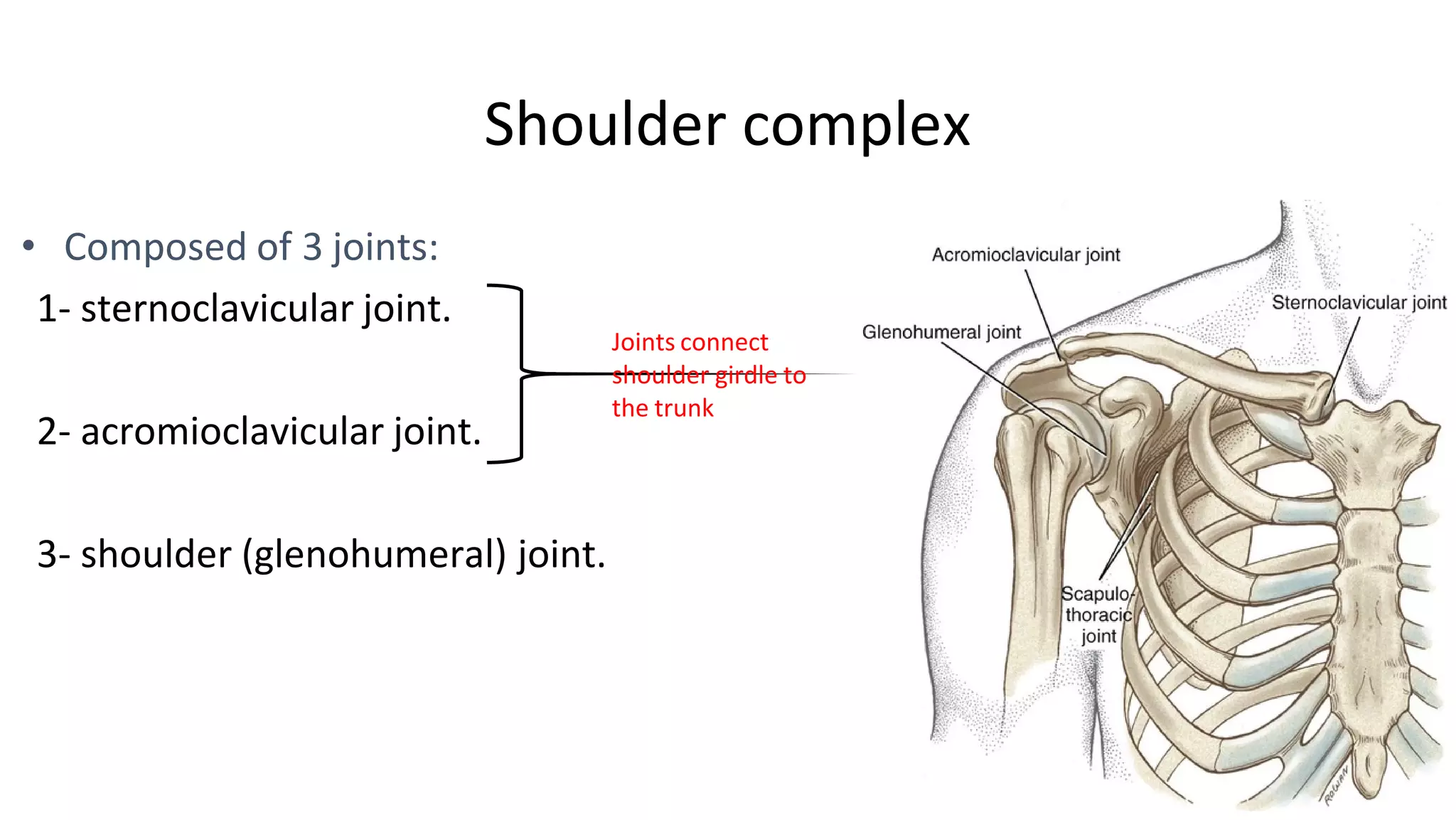
Shoulder complex
• Composed of 3 joints:
1- sternoclavicular joint.
2- acromioclavicular joint.
3- shoulder (glenohumeral) joint.
Joints connect
shoulder girdle to
the trunk
1- Sternoclavicular joint:
• Type: saddle synovial joint
• Articulating bones: medial (sternal) end of clavicle
+
clavicular notch of manubrium
& sup. Surface of costal cartilage
• Fibrous capsule
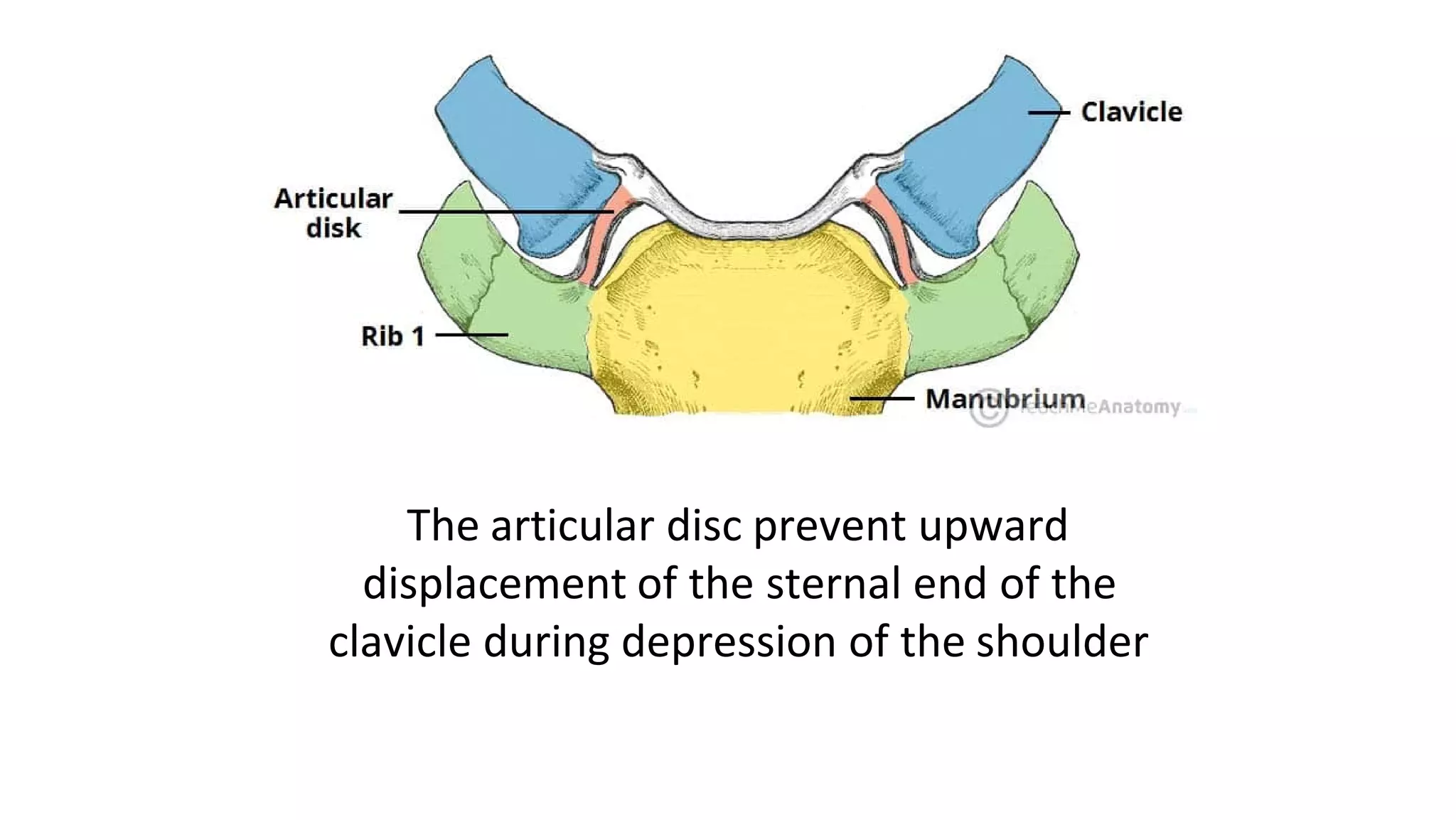
• Synovial membrane: has articular disc
The articular disc prevent upward
displacement of the sternal end of the
clavicle during depression of the shoulder
• Supporting ligaments:
1- anterior sternoclavicular ligament.
2- posterior sternoclavicular ligament.
3- interclavicular ligament.
4- costoclavicular ligament (main stabilizing factor).
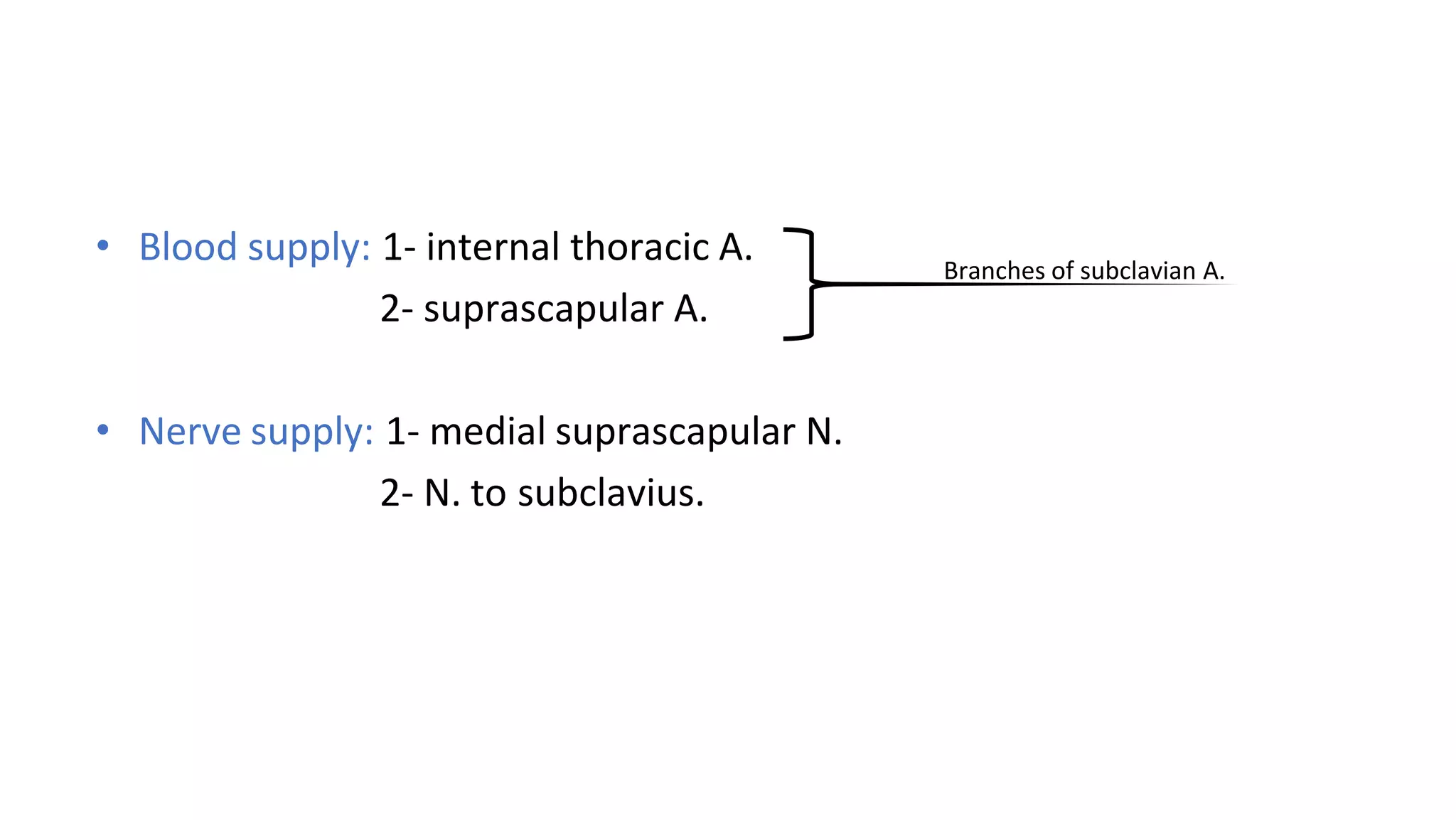
• Blood supply: 1- internal thoracic A.
2- suprascapular A.
• Nerve supply: 1- medial suprascapular N.
2- N. to subclavius.
Branches of subclavian A.
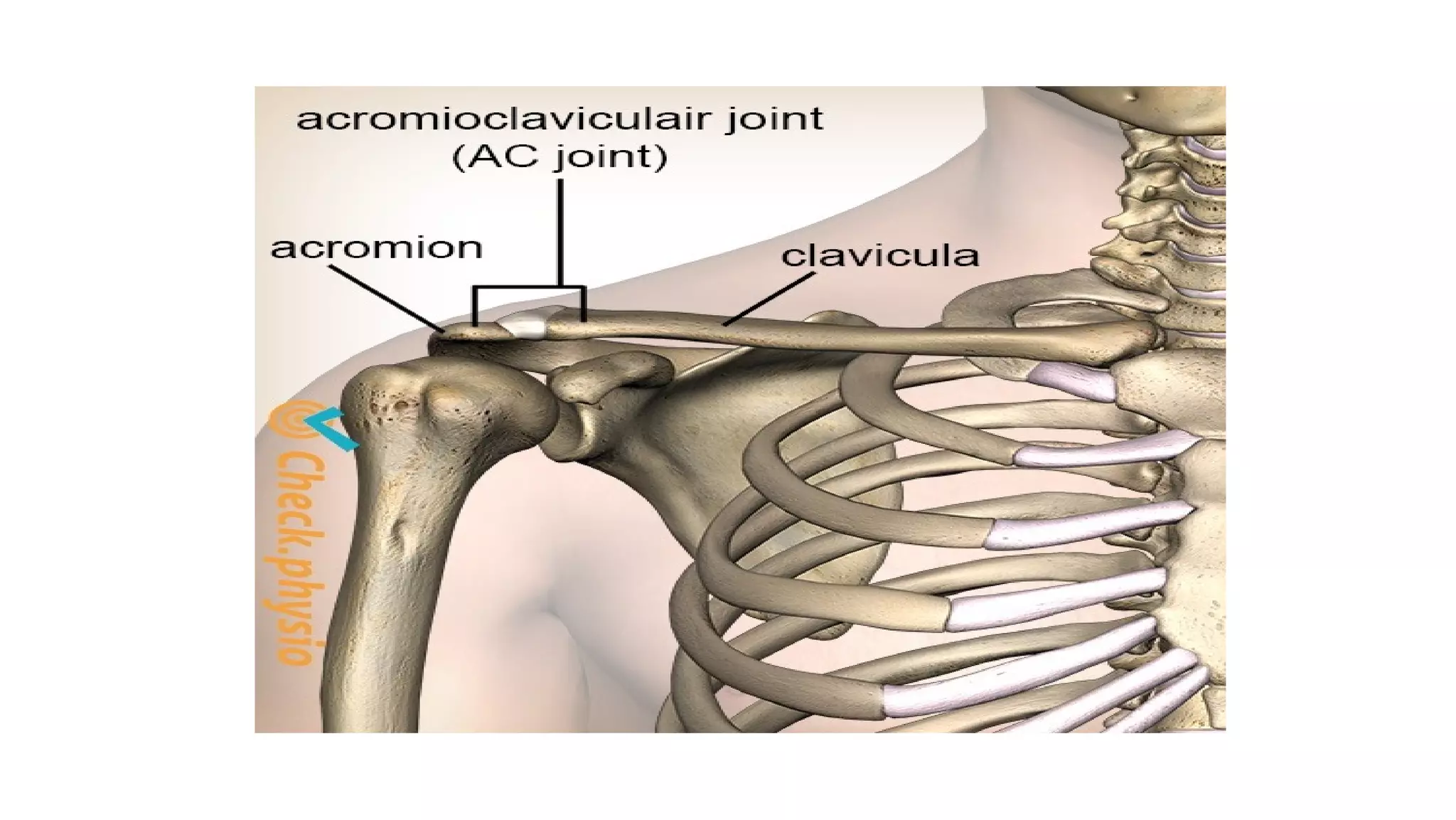
2- Acromioclavicular joint:
• Type: plane synovial joint.
• Articulating bones: lateral (acromial) end of clavicle
+
clavicular facet of acromion process
• Fibrous capsule
• Synovial membrane: articular disc frequently present
• Supporting ligaments:
1- Acromioclavicular ligament.
2- coracoclavicular ligament: it
has 2 parts
✔ Trapezoid part (quadrangular)
✔ Conoid part (cone shaped)
• Arterial blood supply: 1- suprascapular A.
2- Acromial br. Of thoracoacromial A.
• Nerve supply: 1- suprascapular N.
2- lateral pectoral N.
• Clavicle fracture: Most common site of fracture is the middle third.
• Acromial dislocation: leads to tear in the conoid & trapezoid lig.
Leads to elevation of the clavicle & shoulder drop.
• Sternal end dislocation: may be anterior or posterior (may compress
great vessels).
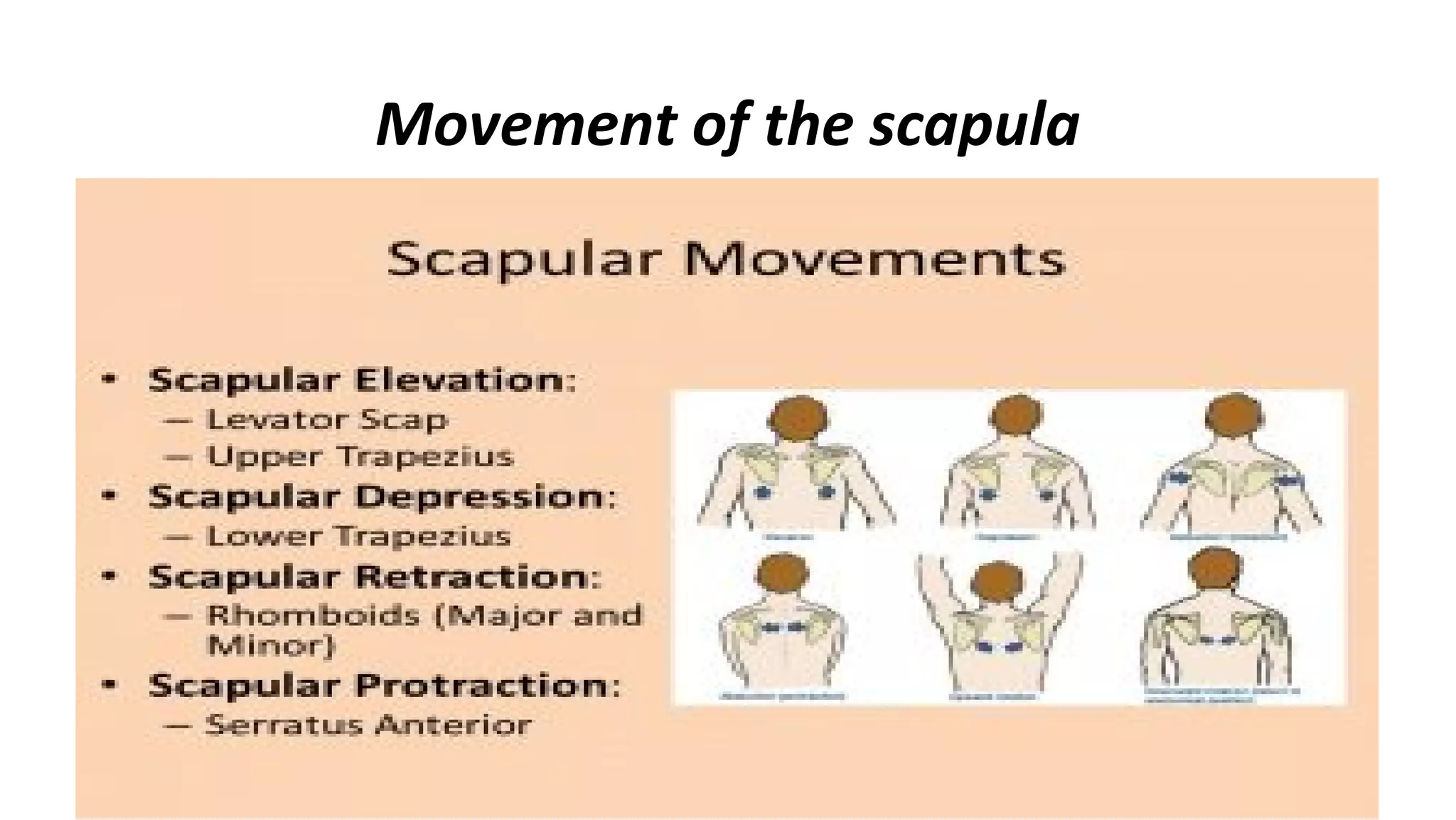
Movement of the scapula
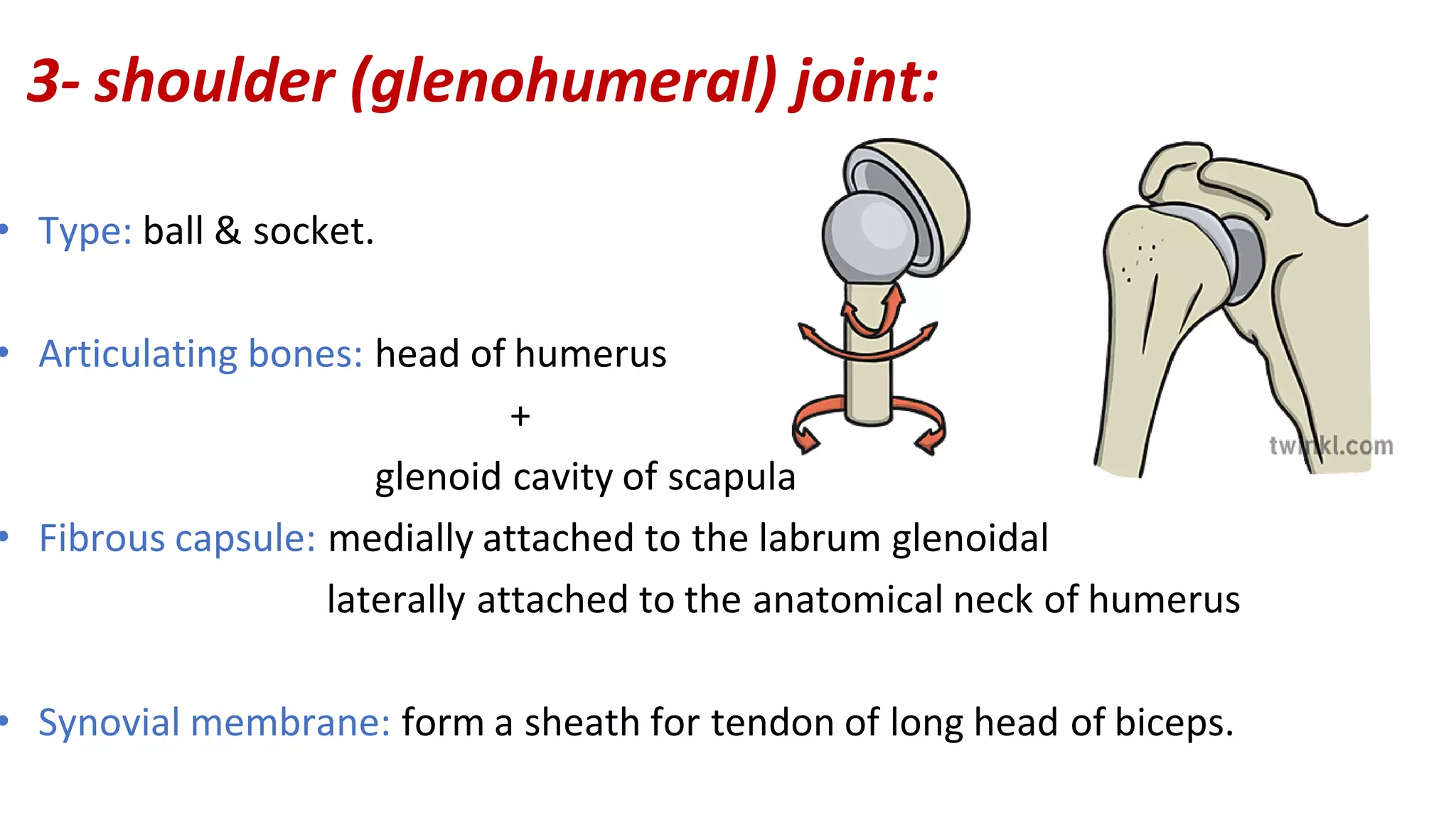
3- shoulder (glenohumeral) joint:
• Type: ball & socket.
• Articulating bones: head of humerus
+
glenoid cavity of scapula
• Fibrous capsule: medially attached to the labrum glenoidal
laterally attached to the anatomical neck of humerus
• Synovial membrane: form a sheath for tendon of long head of biceps.
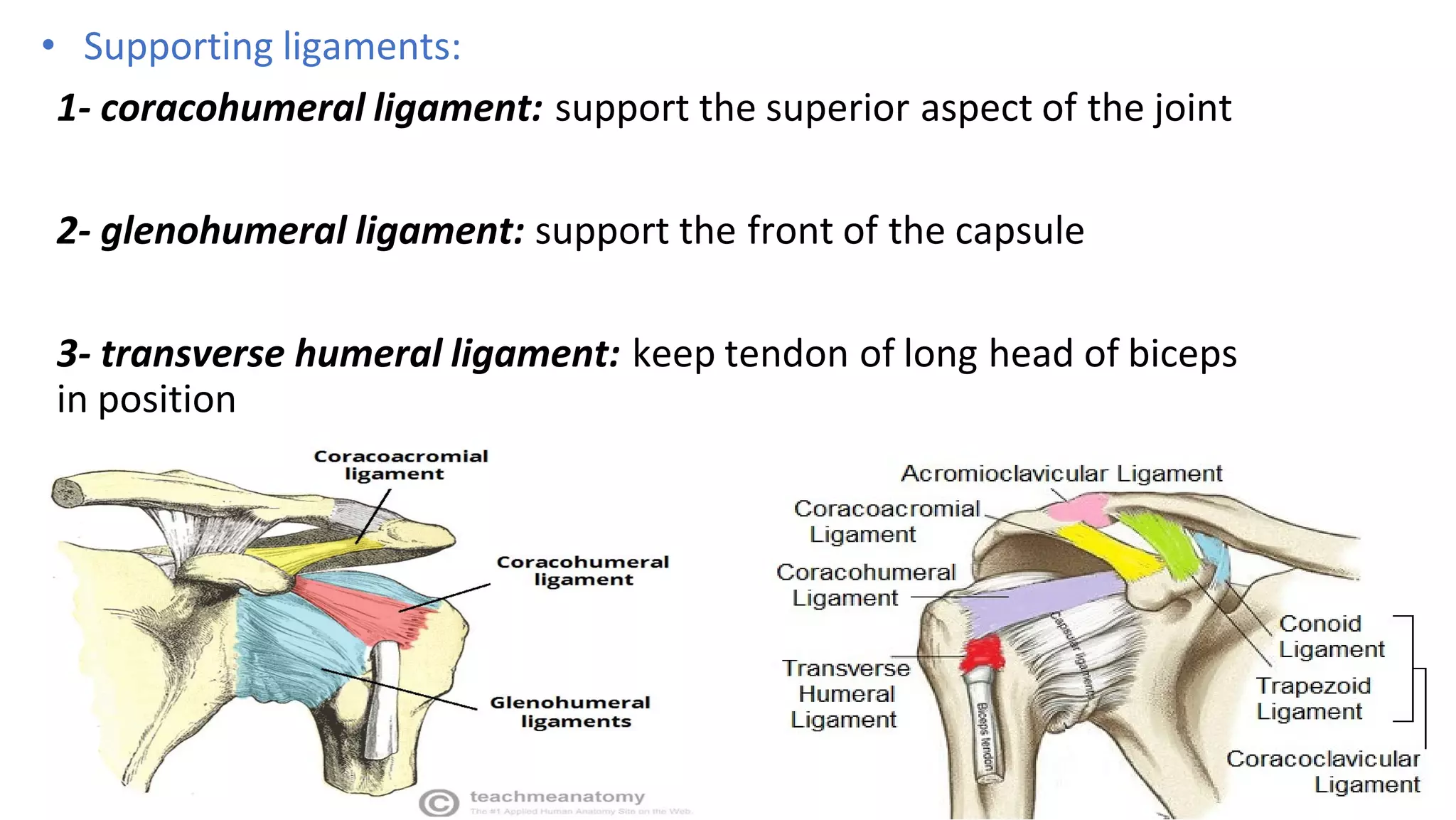
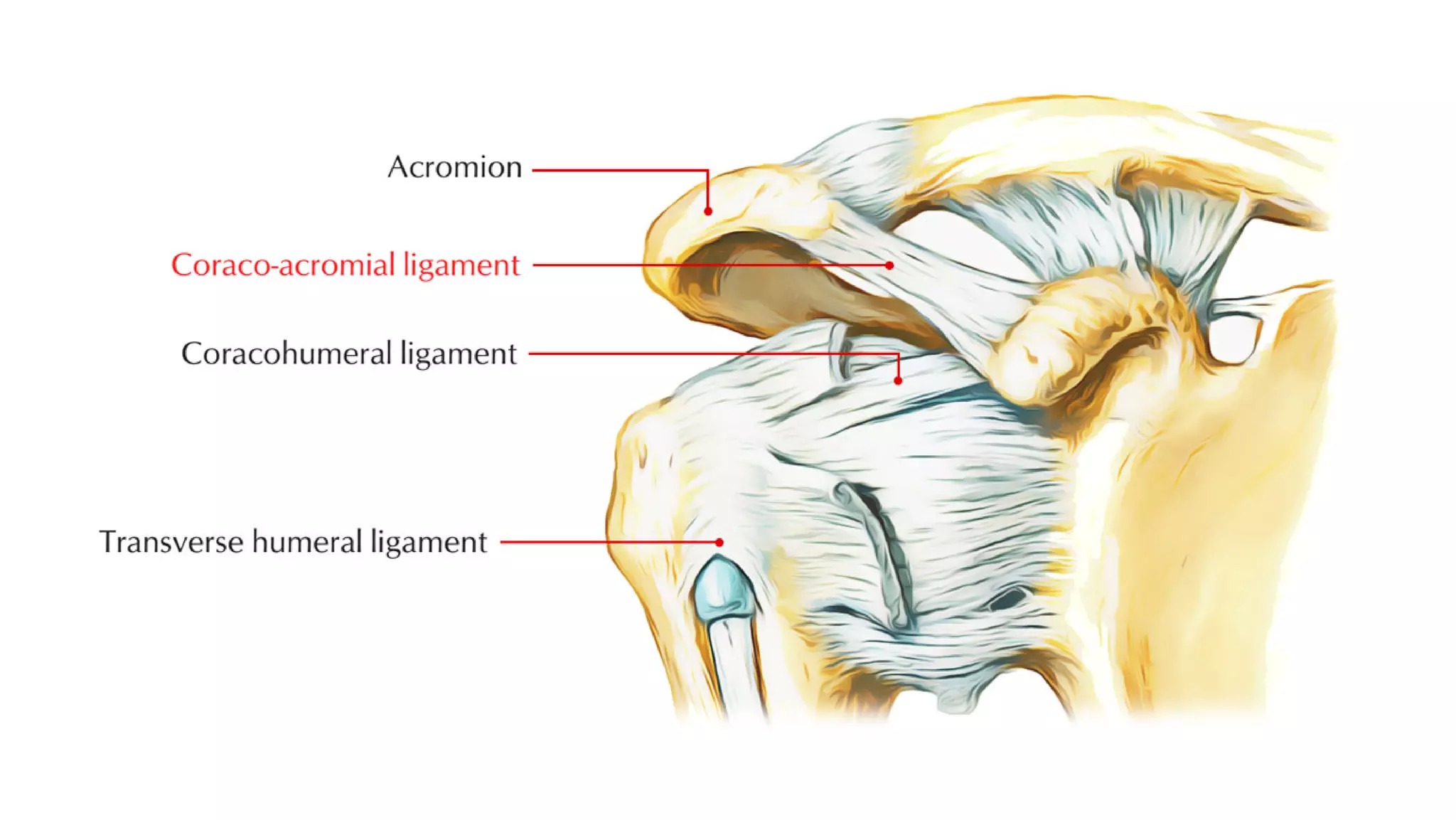
• Supporting ligaments:
1- coracohumeral ligament: support the superior aspect of the joint
2- glenohumeral ligament: support the front of the capsule
3- transverse humeral ligament: keep tendon of long head of biceps
in position
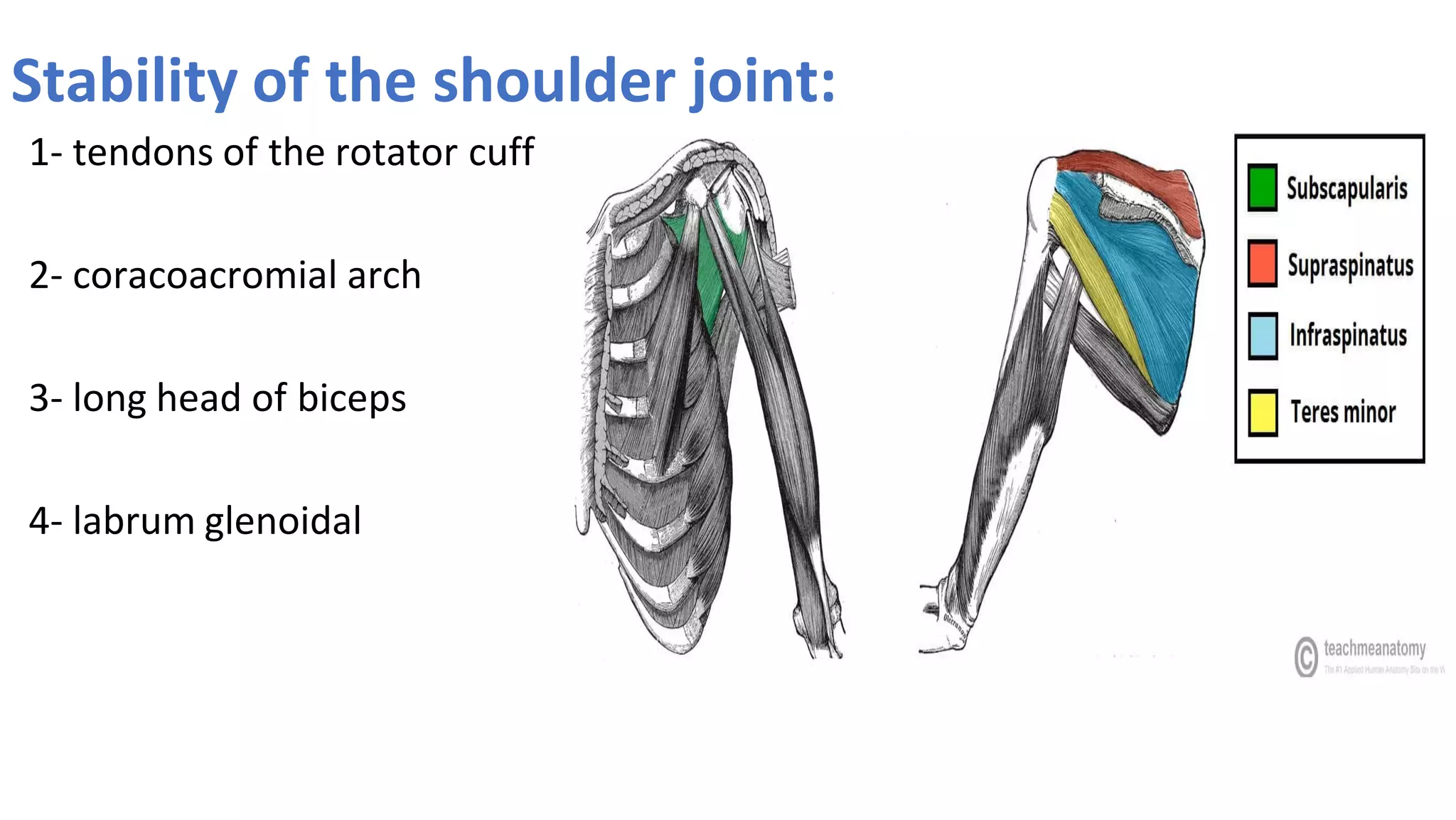
Stability of the shoulder joint:
1- tendons of the rotator cuff
2- coracoacromial arch
3- long head of biceps
4- labrum glenoidal
Bursae related to shoulder joint:
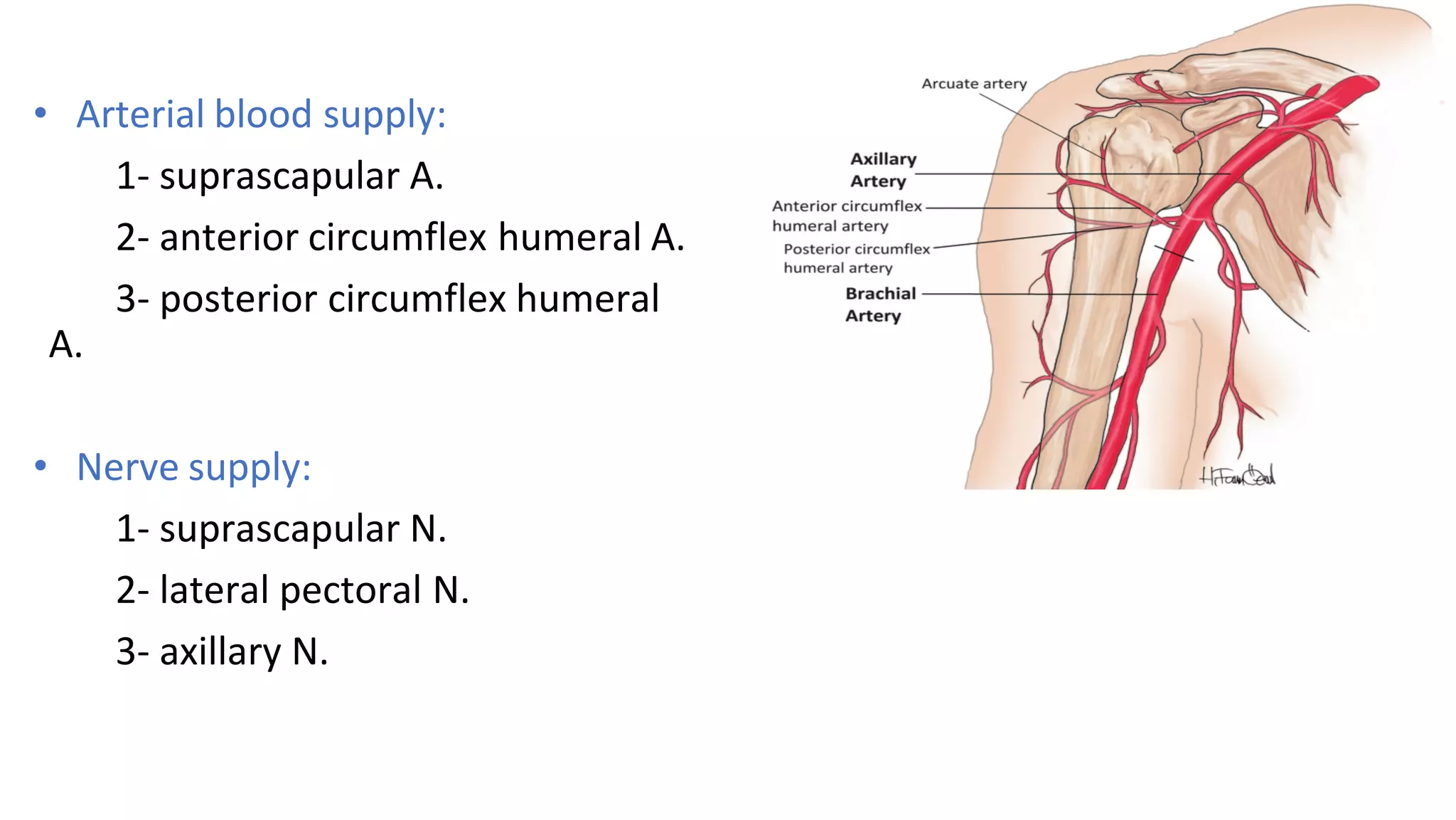
• Arterial blood supply:
1- suprascapular A.
2- anterior circumflex humeral A.
3- posterior circumflex humeral
A.
• Nerve supply:
1- suprascapular N.
2- lateral pectoral N.
3- axillary N.
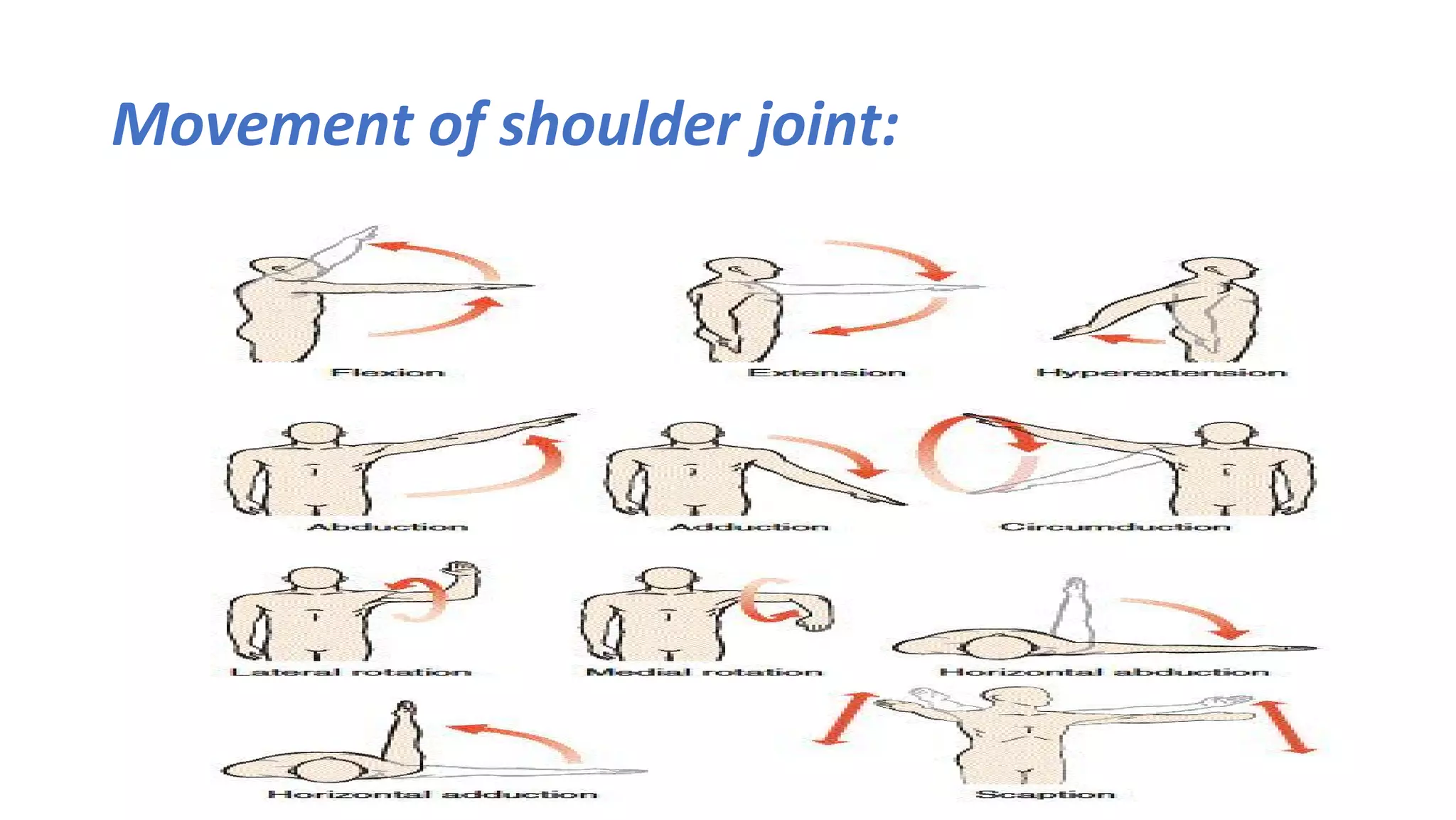
Movement of shoulder joint:
- sternoclavicular ,
acromioclavicular ,shoulder joint ----->
suprascapular nerve and artery
sternoclavicular ----> internal thoracic artery
N. to sub scapularis
acromioclavicular ----> branch from thoracoacromial A
lateral pectoral nerve
shoulder joint -----> ant and post circumflex humaral A
- lateral pectoral N
- Axillary N

acromioclavicular joint , shoulder joint , sternoclavicular joint

  • 1.
    Clavicular & shoulder joints Dr.Diana Eid Lecturer of anatomy & embryology
  • 2.
    Shoulder complex • Composedof 3 joints: 1- sternoclavicular joint. 2- acromioclavicular joint. 3- shoulder (glenohumeral) joint. Joints connect shoulder girdle to the trunk
  • 3.
    1- Sternoclavicular joint: •Type: saddle synovial joint • Articulating bones: medial (sternal) end of clavicle + clavicular notch of manubrium & sup. Surface of costal cartilage • Fibrous capsule • Synovial membrane: has articular disc
  • 4.
    The articular discprevent upward displacement of the sternal end of the clavicle during depression of the shoulder
  • 5.
    • Supporting ligaments: 1-anterior sternoclavicular ligament. 2- posterior sternoclavicular ligament. 3- interclavicular ligament. 4- costoclavicular ligament (main stabilizing factor).
  • 6.
    • Blood supply:1- internal thoracic A. 2- suprascapular A. • Nerve supply: 1- medial suprascapular N. 2- N. to subclavius. Branches of subclavian A.
  • 7.
    2- Acromioclavicular joint: •Type: plane synovial joint. • Articulating bones: lateral (acromial) end of clavicle + clavicular facet of acromion process • Fibrous capsule • Synovial membrane: articular disc frequently present
  • 9.
    • Supporting ligaments: 1-Acromioclavicular ligament. 2- coracoclavicular ligament: it has 2 parts ✔ Trapezoid part (quadrangular) ✔ Conoid part (cone shaped)
  • 10.
    • Arterial bloodsupply: 1- suprascapular A. 2- Acromial br. Of thoracoacromial A. • Nerve supply: 1- suprascapular N. 2- lateral pectoral N.
  • 11.
    • Clavicle fracture:Most common site of fracture is the middle third. • Acromial dislocation: leads to tear in the conoid & trapezoid lig. Leads to elevation of the clavicle & shoulder drop. • Sternal end dislocation: may be anterior or posterior (may compress great vessels).
  • 12.
  • 14.
    3- shoulder (glenohumeral)joint: • Type: ball & socket. • Articulating bones: head of humerus + glenoid cavity of scapula • Fibrous capsule: medially attached to the labrum glenoidal laterally attached to the anatomical neck of humerus • Synovial membrane: form a sheath for tendon of long head of biceps.
  • 16.
    • Supporting ligaments: 1-coracohumeral ligament: support the superior aspect of the joint 2- glenohumeral ligament: support the front of the capsule 3- transverse humeral ligament: keep tendon of long head of biceps in position
  • 17.
    Stability of theshoulder joint: 1- tendons of the rotator cuff 2- coracoacromial arch 3- long head of biceps 4- labrum glenoidal
  • 20.
    Bursae related toshoulder joint:
  • 21.
    • Arterial bloodsupply: 1- suprascapular A. 2- anterior circumflex humeral A. 3- posterior circumflex humeral A. • Nerve supply: 1- suprascapular N. 2- lateral pectoral N. 3- axillary N.
  • 22.
  • 24.
    - sternoclavicular , acromioclavicular,shoulder joint -----> suprascapular nerve and artery sternoclavicular ----> internal thoracic artery N. to sub scapularis acromioclavicular ----> branch from thoracoacromial A lateral pectoral nerve shoulder joint -----> ant and post circumflex humaral A - lateral pectoral N - Axillary N