A narrative of learning for a world without boundaries eLearning Africa May 29, 2008 George Siemens
Innovation Blended learning Teacher development ICT Mobile learning Development Networking Collaboration Partnership Innovation Resource constraints Diffusion Adoption Learner success OERs Web 2.0 Pedagogy Infrastructure Open source Digitization eLibraries Empowering women ICT in health care Copyright Quality management Policy Inclusivity Research
 
 
History of educational technology
Perez, C. 2004 Technological revolution Year Industrial from 1771 Steam/Railways from 1829 Steel/Electricity from 1875 Oil/Automobile/Mass production from 1908 Information/telecommunications from 1971
Looking within Humanity
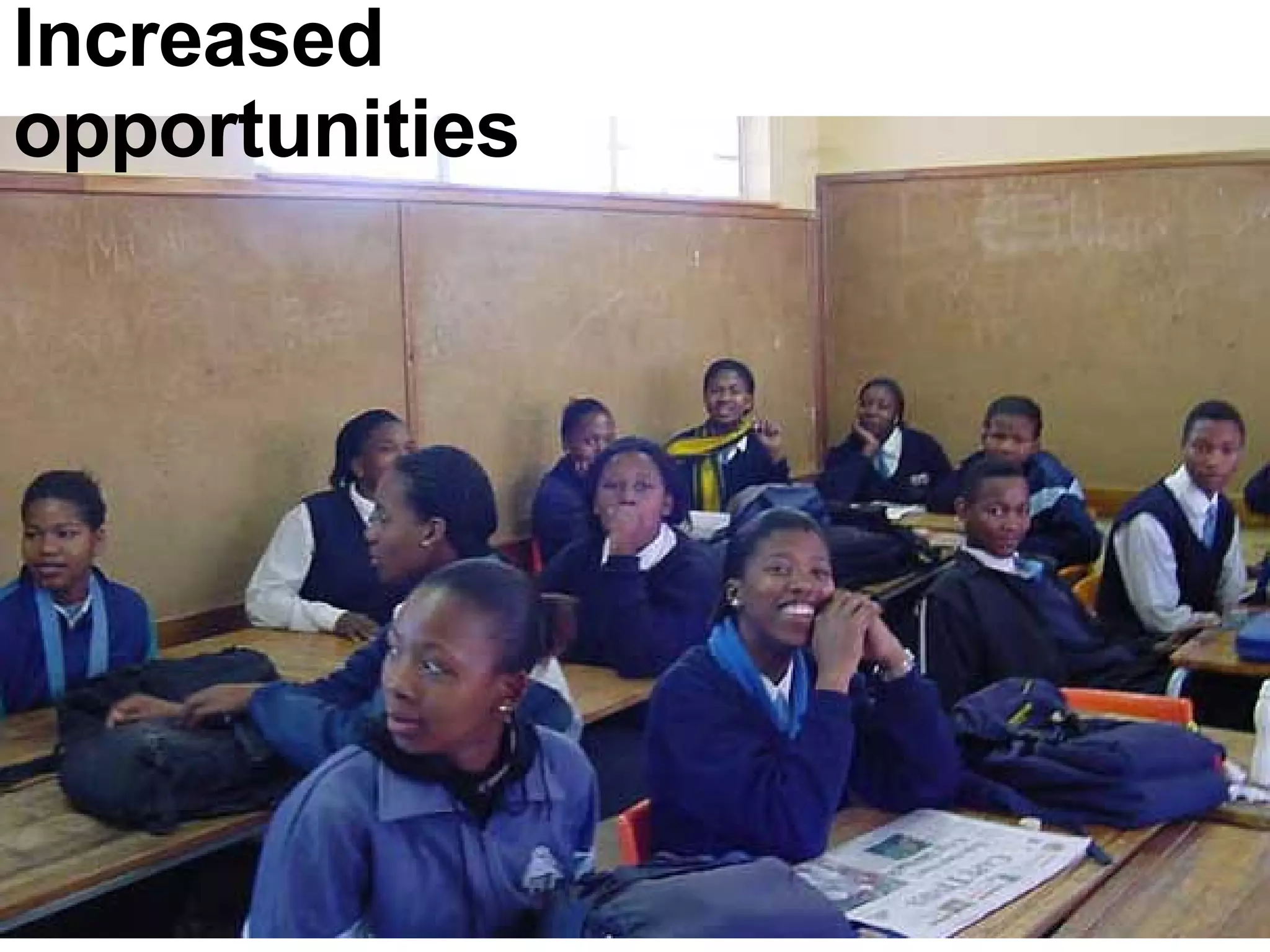
Increased opportunities
Goals of learners Life of learners
Changing societal needs
Not content, but interaction, connections, socialization
Principles of openness To people, to places, to methods, to ideas Lord Geoffrey Crowther, 1969
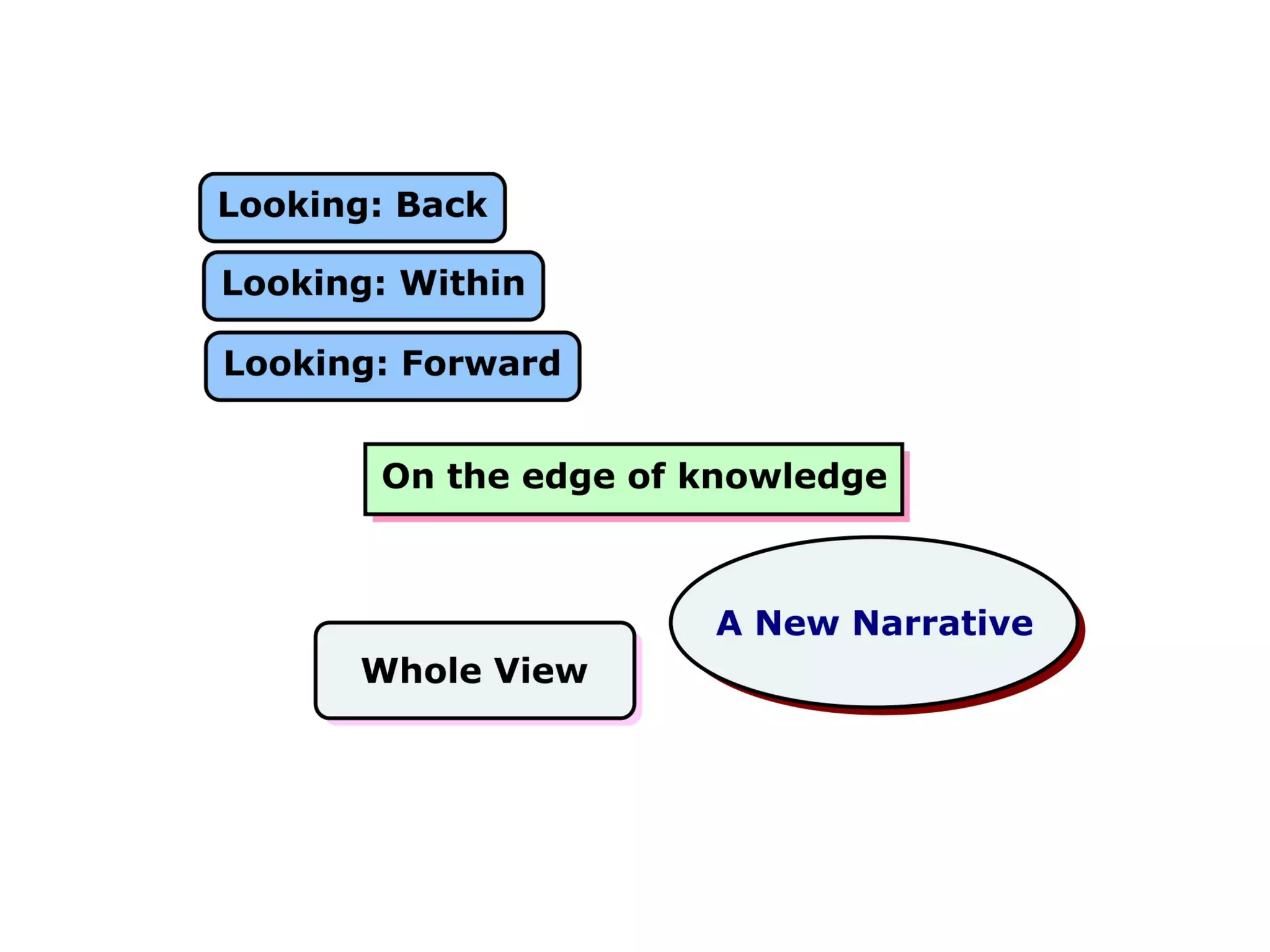
Looking forward Respect of history Mobile technologies OERs Socialization  A narrative of inclusion Resolution (acknowledgement) of tension points
 
 
Not knowing in advance Complicated vs Complex
“ New technologies take hold only in the context of accompanying cultural innovation as their latent possibilities are explored.” Joe Karaganis in  Structures of Participation in Digital Culture
What is learning in a world without boundaries?
 
Belonging
A new narrative? On returning… On participating…
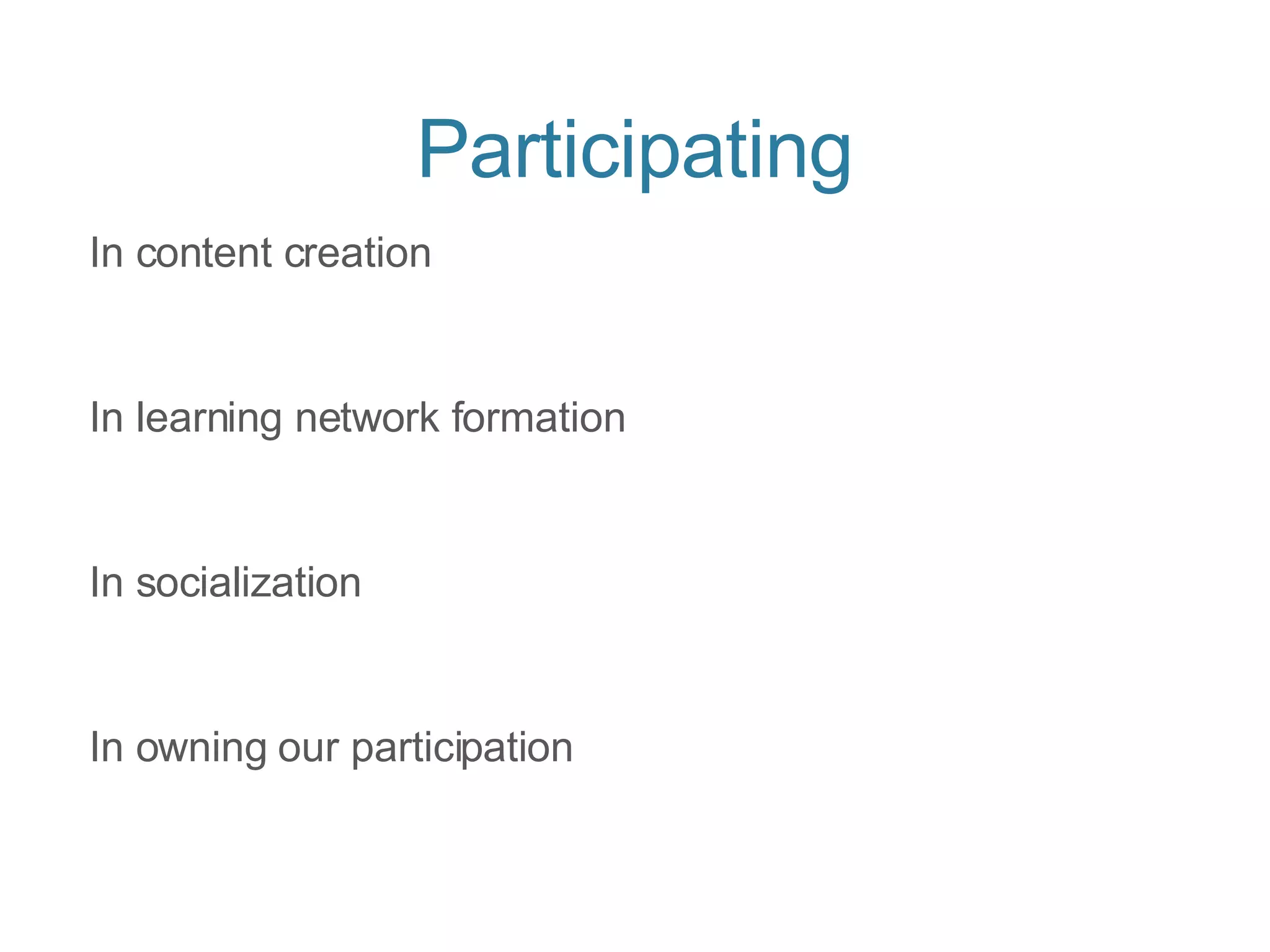
Participating In content creation In learning network formation In socialization In owning our participation
 
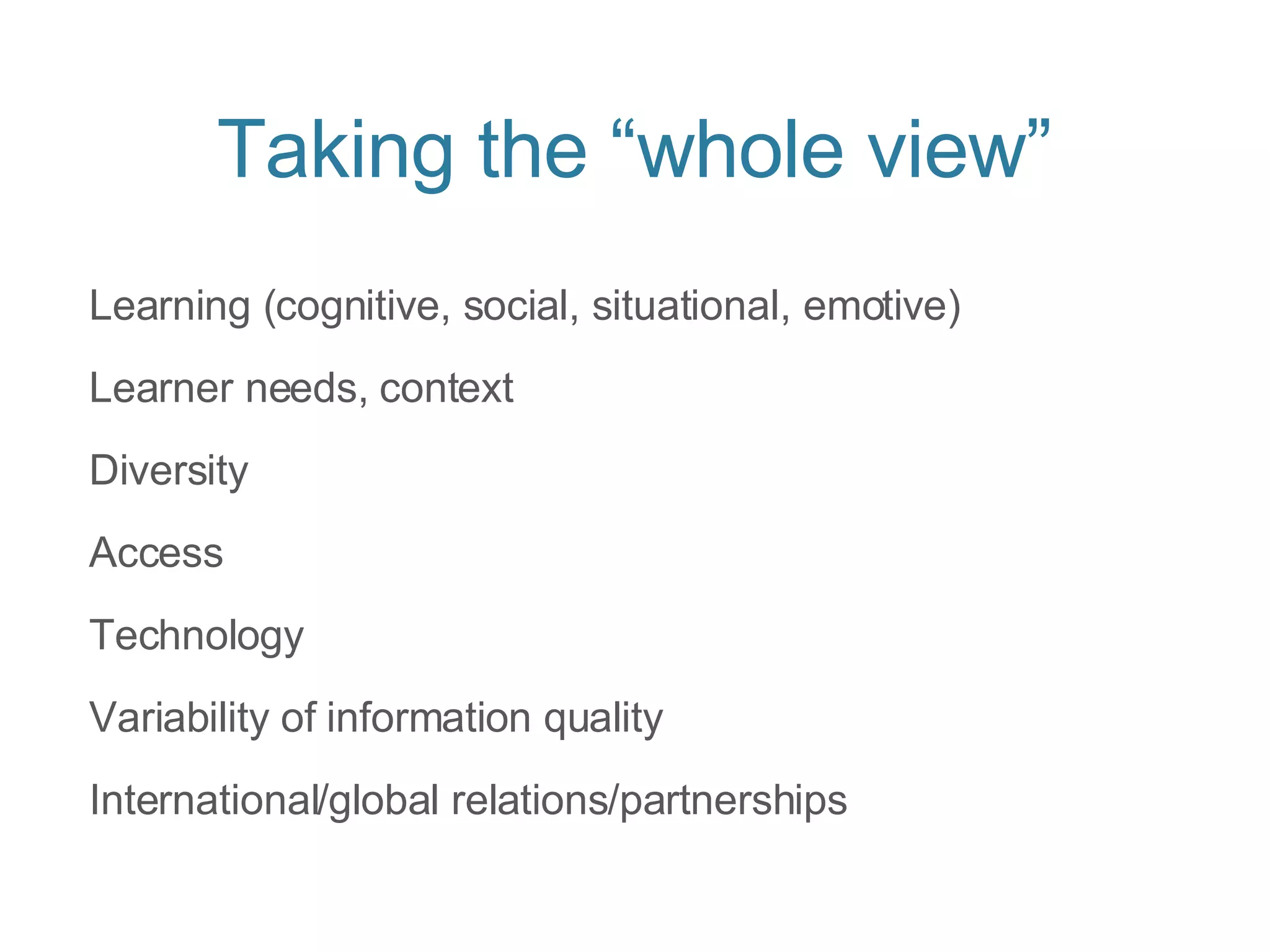
Taking the “whole view” Learning (cognitive, social, situational, emotive) Learner needs, context Diversity Access Technology Variability of information quality International/global relations/partnerships
STAKEHOLDERS
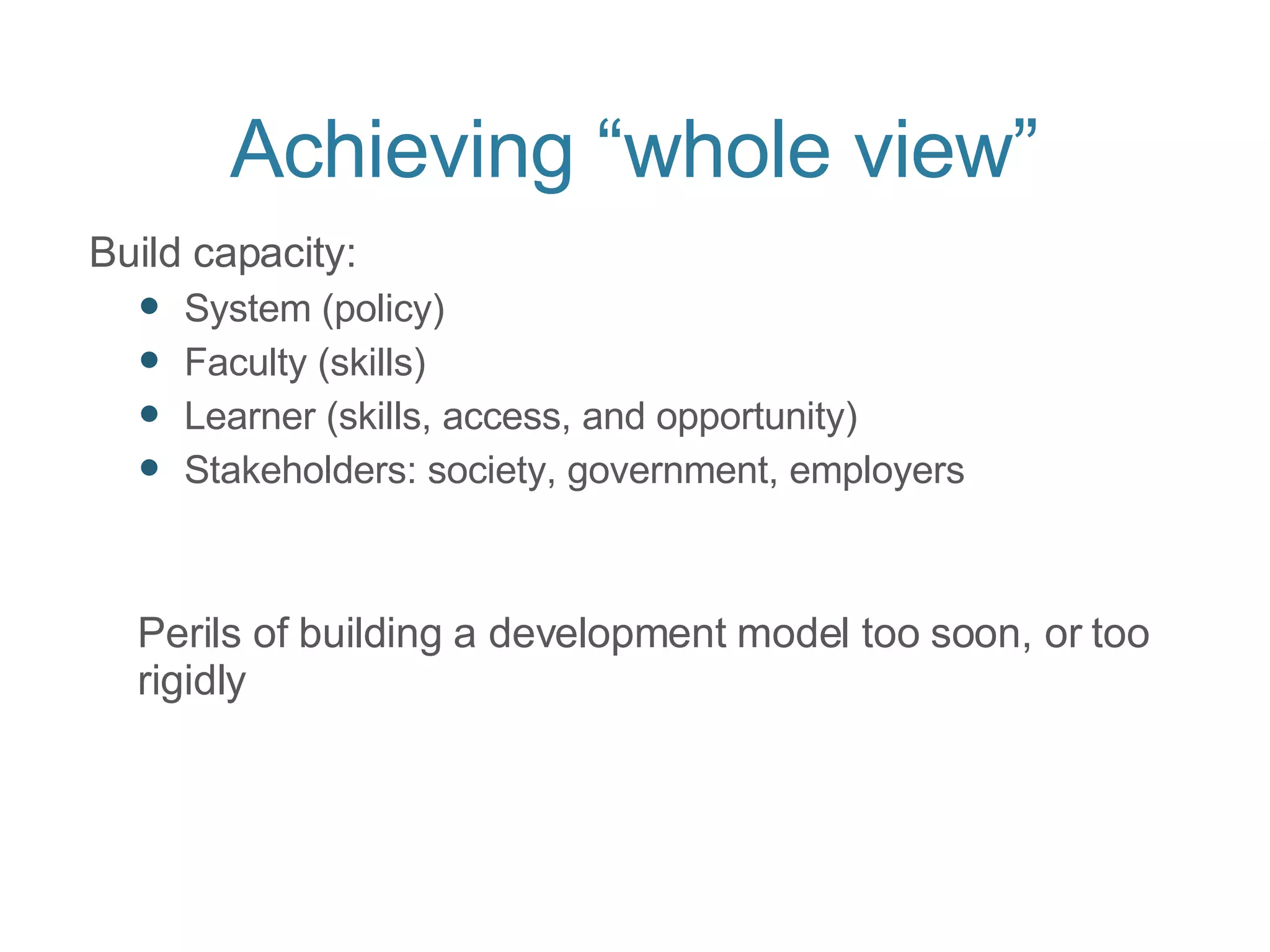
Achieving “whole view” Build capacity: System (policy) Faculty (skills) Learner (skills, access, and opportunity) Stakeholders: society, government, employers Perils of building a development model too soon, or too rigidly
Websites and Newsletters www.elearnspace.org www.knowingknowledge.com www.connectivism.ca http://ltc.umanitoba.ca/wordpress/   [email_address]

Accra

  • 1.
    A narrative oflearning for a world without boundaries eLearning Africa May 29, 2008 George Siemens
  • 2.
    Innovation Blended learningTeacher development ICT Mobile learning Development Networking Collaboration Partnership Innovation Resource constraints Diffusion Adoption Learner success OERs Web 2.0 Pedagogy Infrastructure Open source Digitization eLibraries Empowering women ICT in health care Copyright Quality management Policy Inclusivity Research
  • 3.
  • 4.
  • 5.
  • 6.
    Perez, C. 2004Technological revolution Year Industrial from 1771 Steam/Railways from 1829 Steel/Electricity from 1875 Oil/Automobile/Mass production from 1908 Information/telecommunications from 1971
  • 7.
  • 8.
  • 9.
    Goals of learnersLife of learners
  • 10.
  • 11.
    Not content, butinteraction, connections, socialization
  • 12.
    Principles of opennessTo people, to places, to methods, to ideas Lord Geoffrey Crowther, 1969
  • 13.
    Looking forward Respectof history Mobile technologies OERs Socialization A narrative of inclusion Resolution (acknowledgement) of tension points
  • 14.
  • 15.
  • 16.
    Not knowing inadvance Complicated vs Complex
  • 17.
    “ New technologiestake hold only in the context of accompanying cultural innovation as their latent possibilities are explored.” Joe Karaganis in Structures of Participation in Digital Culture
  • 18.
    What is learningin a world without boundaries?
  • 19.
  • 20.
  • 21.
    A new narrative?On returning… On participating…
  • 22.
    Participating In contentcreation In learning network formation In socialization In owning our participation
  • 23.
  • 24.
    Taking the “wholeview” Learning (cognitive, social, situational, emotive) Learner needs, context Diversity Access Technology Variability of information quality International/global relations/partnerships
  • 25.
  • 26.
    Achieving “whole view”Build capacity: System (policy) Faculty (skills) Learner (skills, access, and opportunity) Stakeholders: society, government, employers Perils of building a development model too soon, or too rigidly
  • 27.
    Websites and Newsletterswww.elearnspace.org www.knowingknowledge.com www.connectivism.ca http://ltc.umanitoba.ca/wordpress/ [email_address]