OPEN KNOWLEDGE ACROSS BOUNDARIES
–
A CASE-STUDY ON CONTROVERSIES
ANNE ALGERS, SENIOR LECTURER
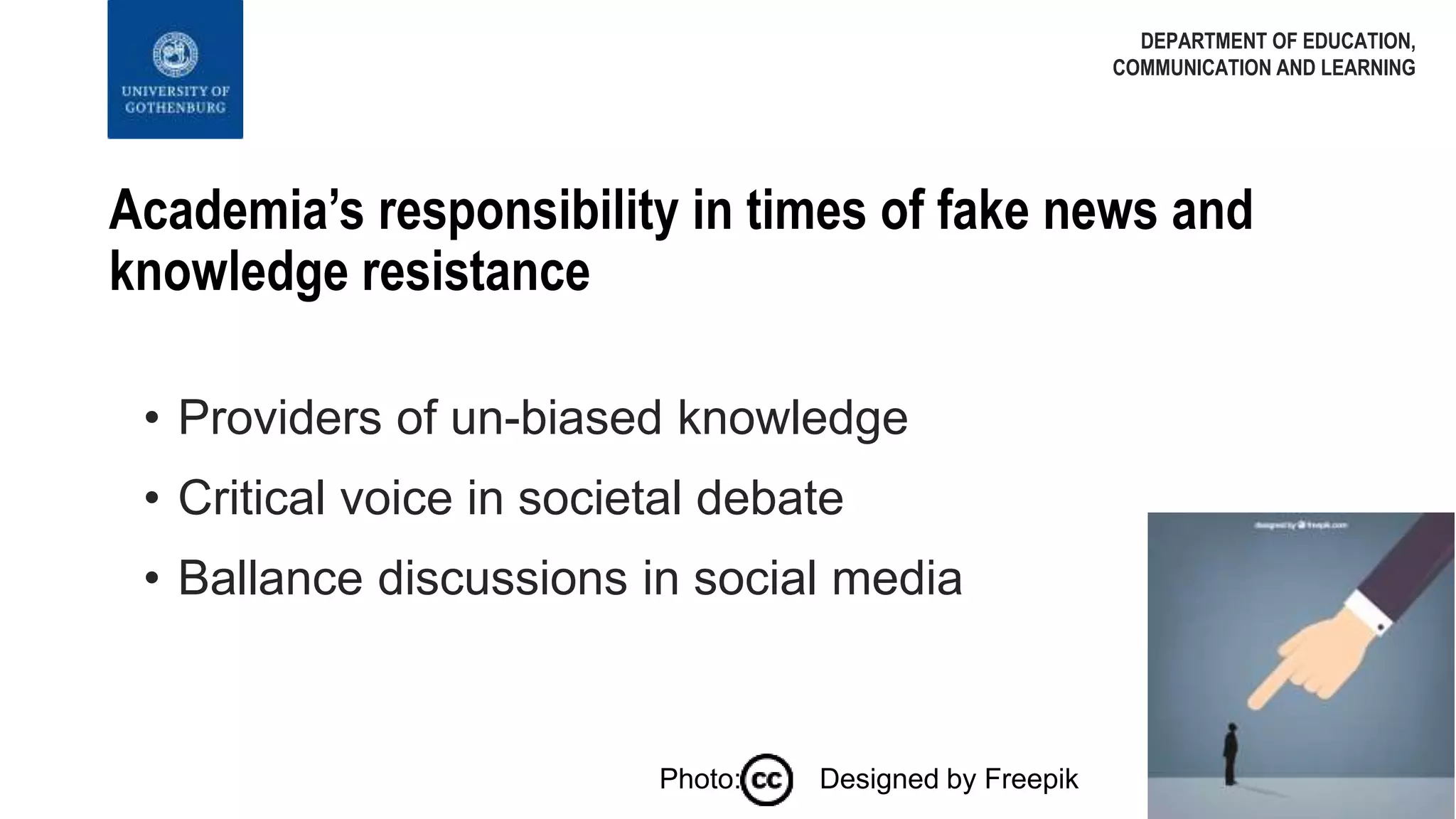
Academia’s responsibility in times of fake news and
knowledge resistance
DEPARTMENT OF EDUCATION,
COMMUNICATION AND LEARNING
• Providers of un-biased knowledge
• Critical voice in societal debate
• Ballance discussions in social media
Photo: Designed by Freepik
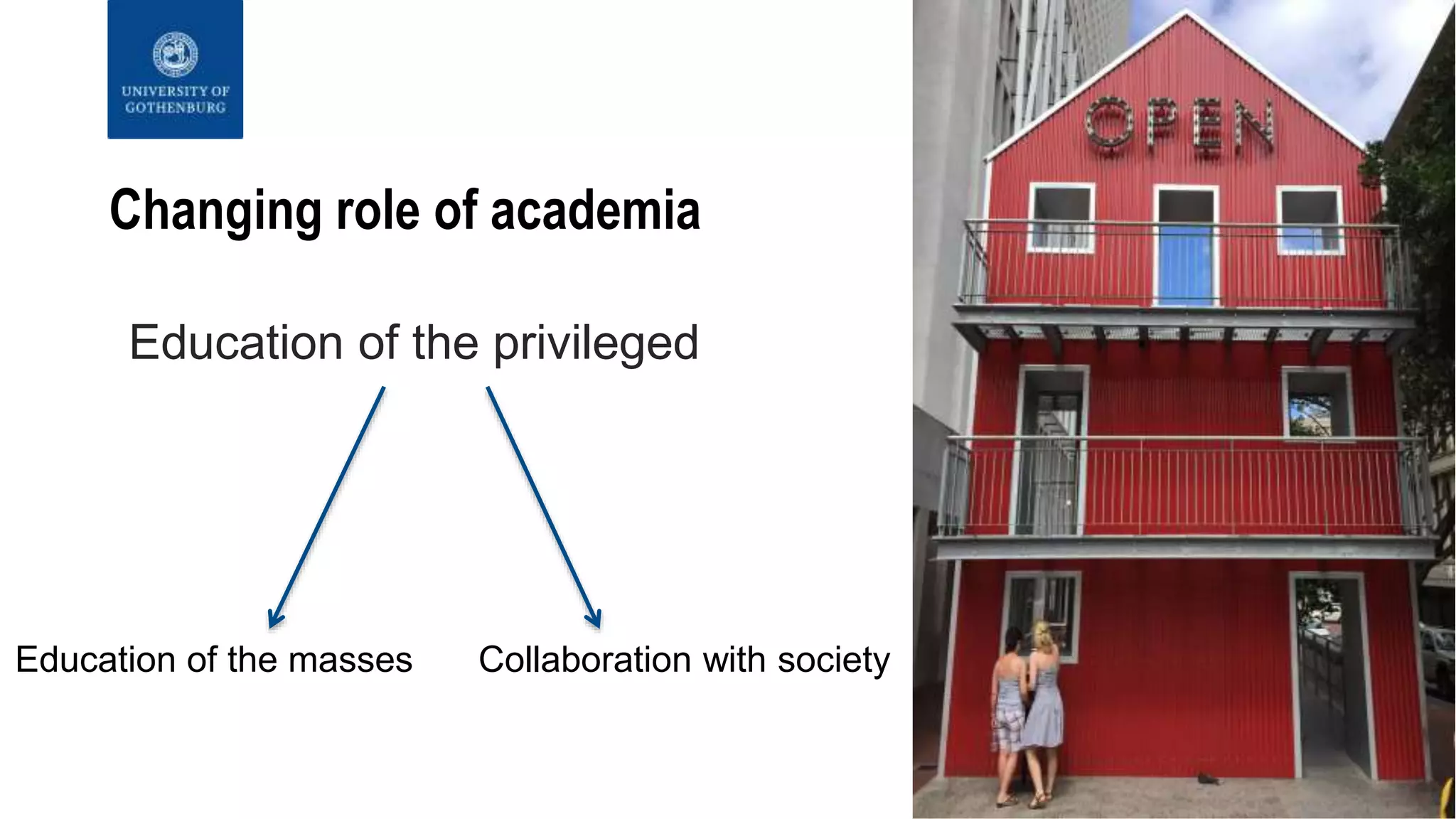
Changing role of academia
Education of the privileged
Education of the masses Collaboration with society
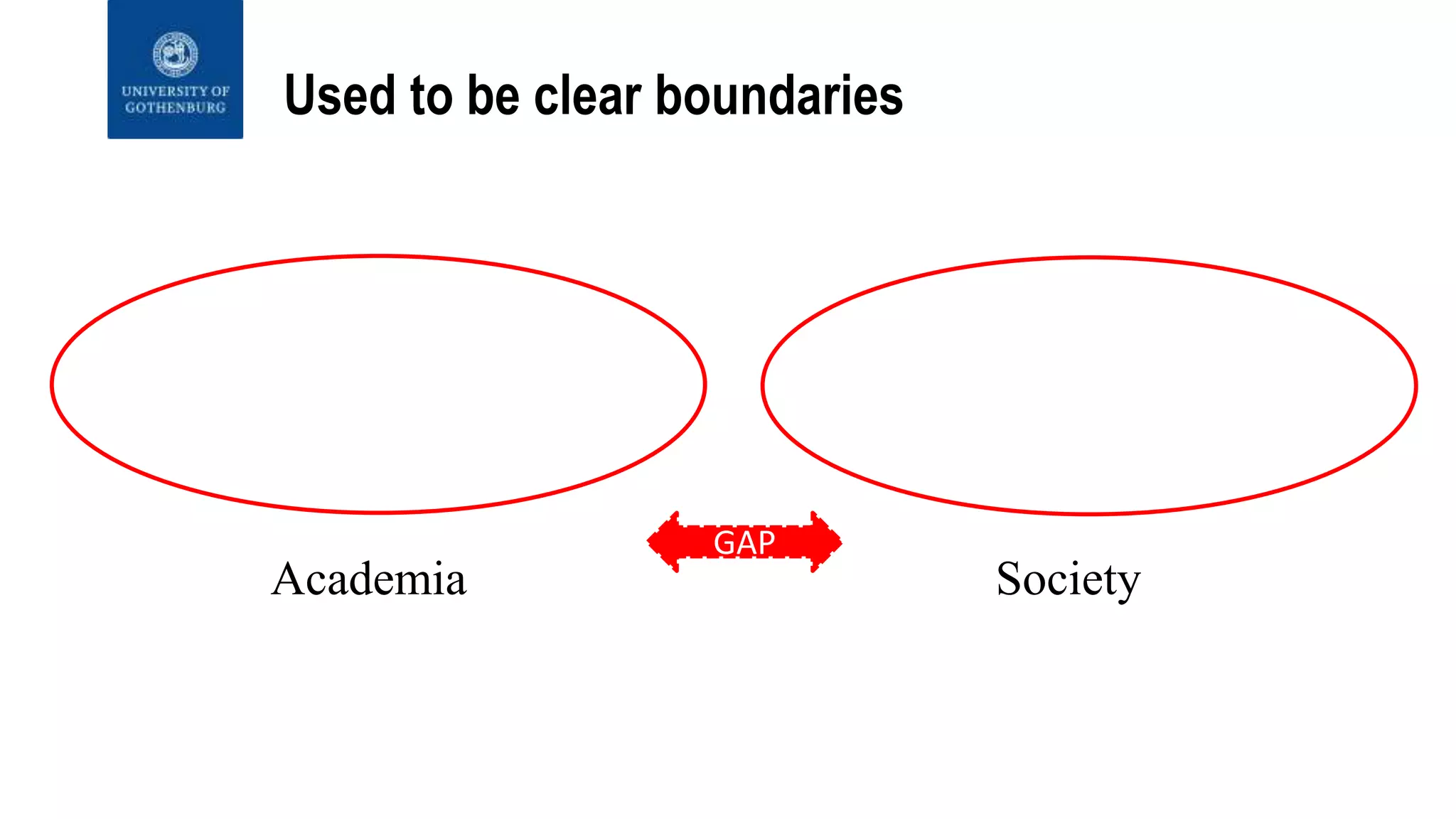
Used to be clear boundaries
GAP
Academia Society
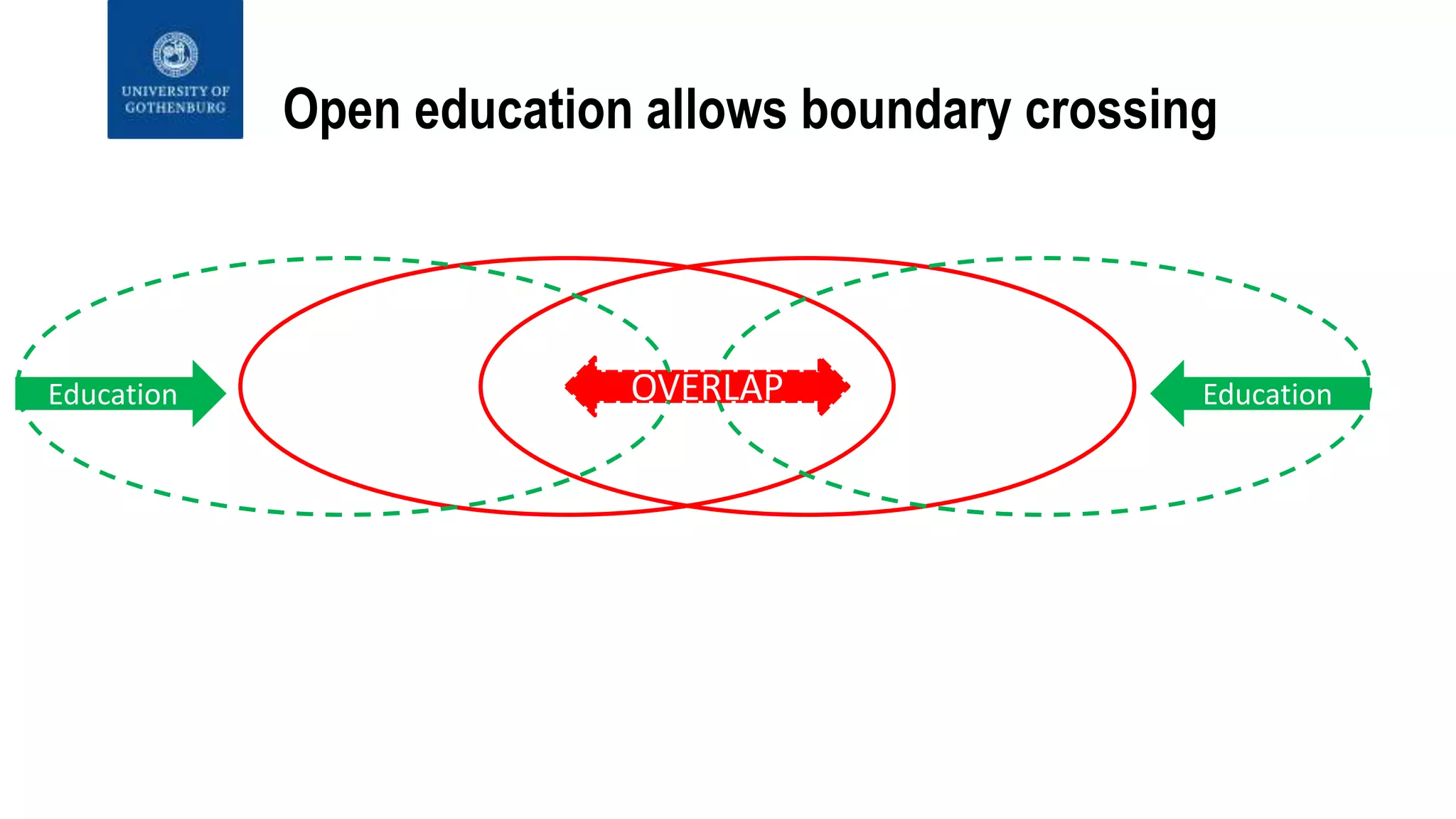
Education EducationOVERLAP
Open education allows boundary crossing
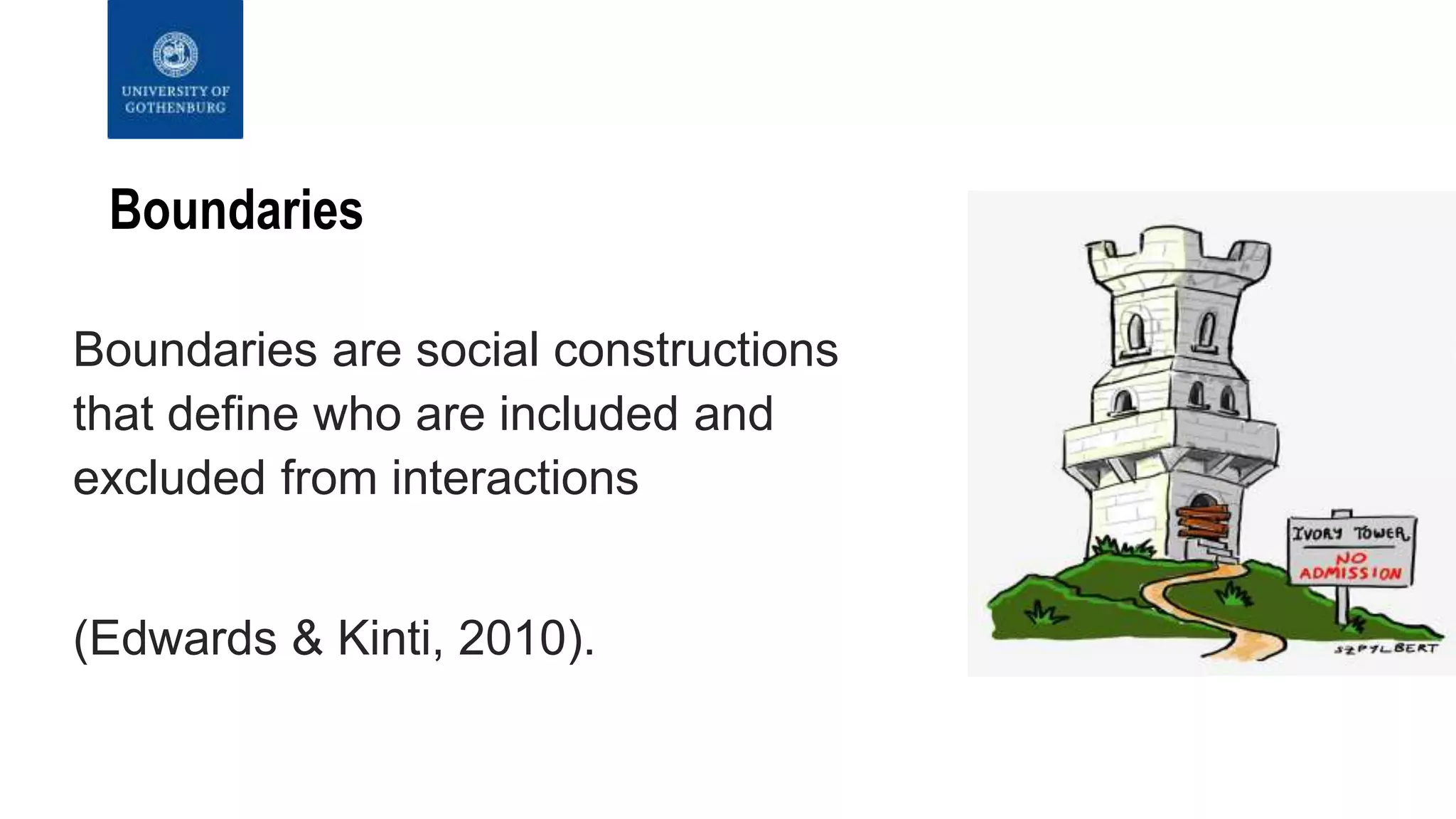
Boundaries
Boundaries are social constructions
that define who are included and
excluded from interactions
(Edwards & Kinti, 2010).
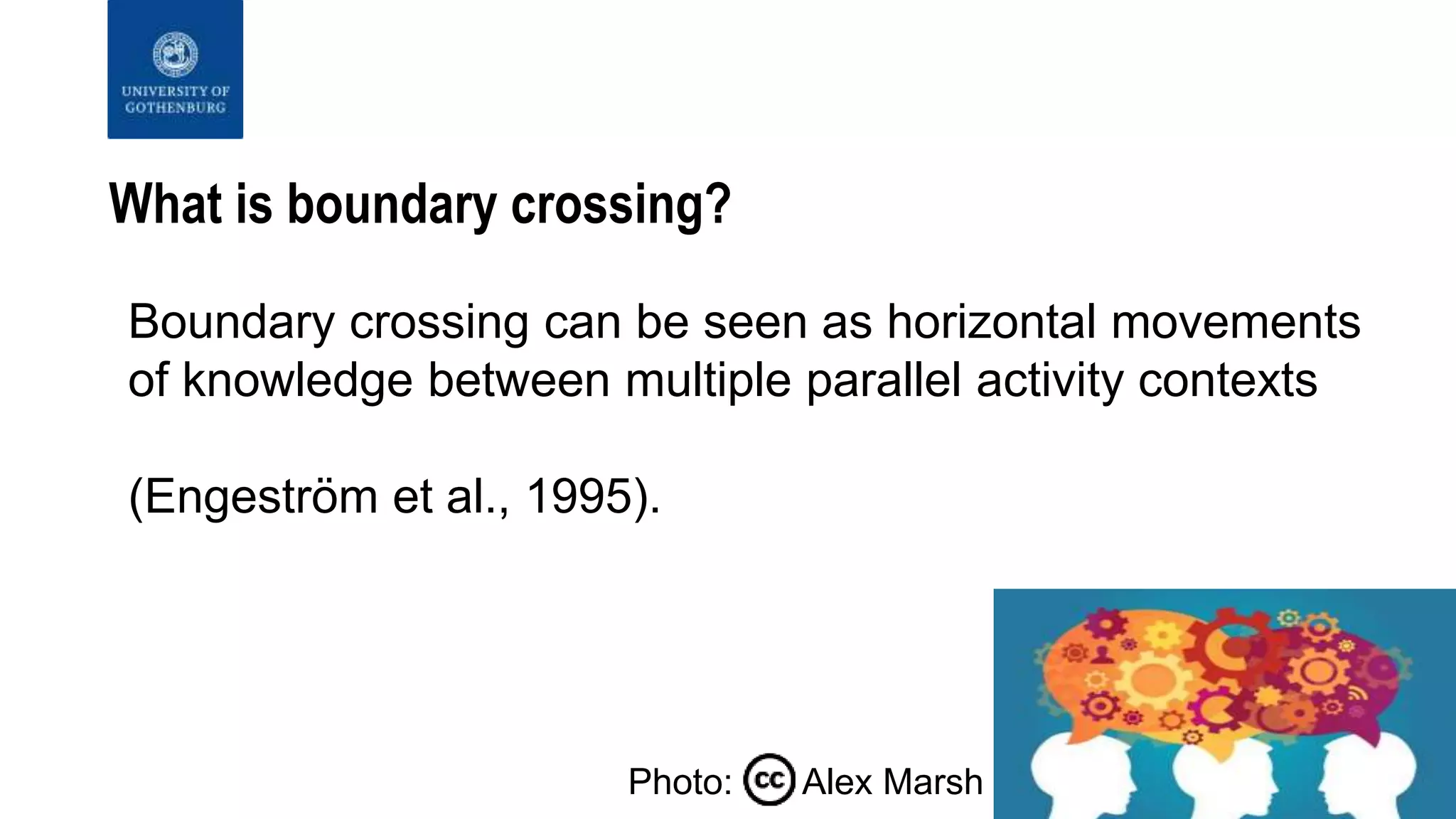
What is boundary crossing?
Boundary crossing can be seen as horizontal movements
of knowledge between multiple parallel activity contexts
(Engeström et al., 1995).
Photo: Alex Marsh
What is a boundary object?
• An object that is introduced to achieve boundary
activities and to connect actors from different worlds
(Star & Griesemer, 1989)
• An object that is generated through a process of
boundary activities (Engeström et al., 1995)
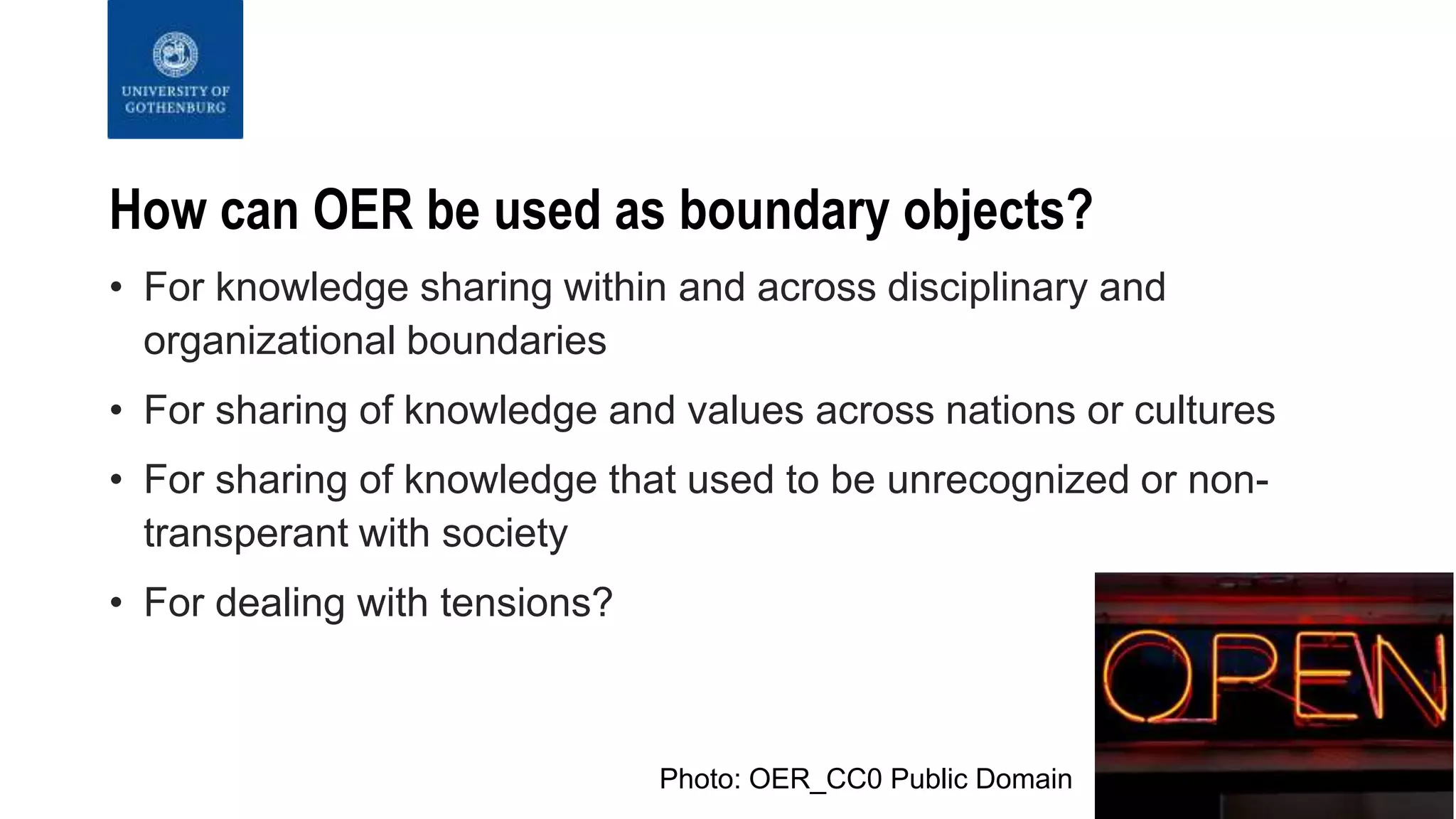
Photo: Baruch
How can OER be used as boundary objects?
• For knowledge sharing within and across disciplinary and
organizational boundaries
• For sharing of knowledge and values across nations or cultures
• For sharing of knowledge that used to be unrecognized or non-
transperant with society
• For dealing with tensions?
Photo: OER_CC0 Public Domain
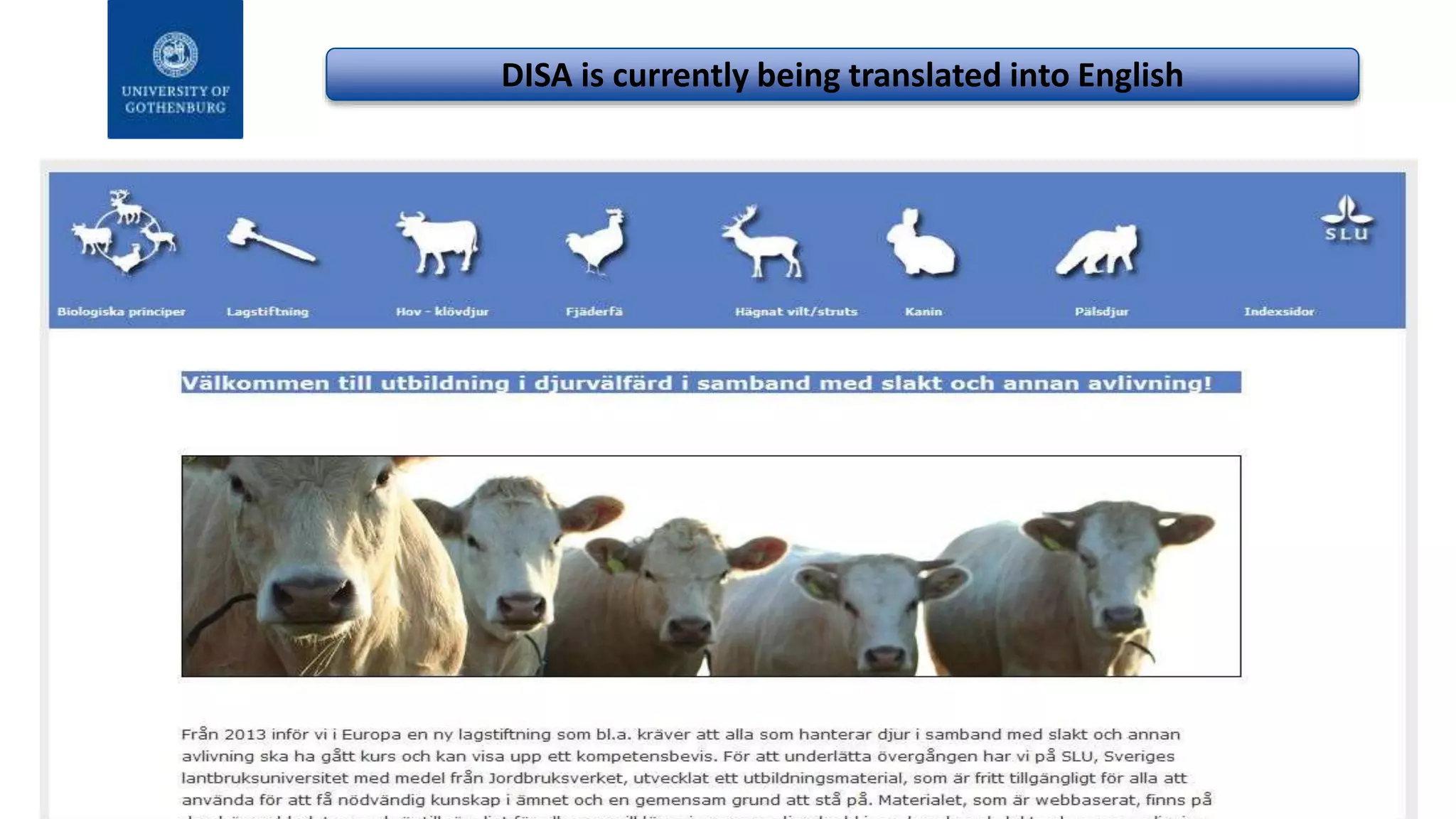
DISA is currently being translated into English
Controversial aspects
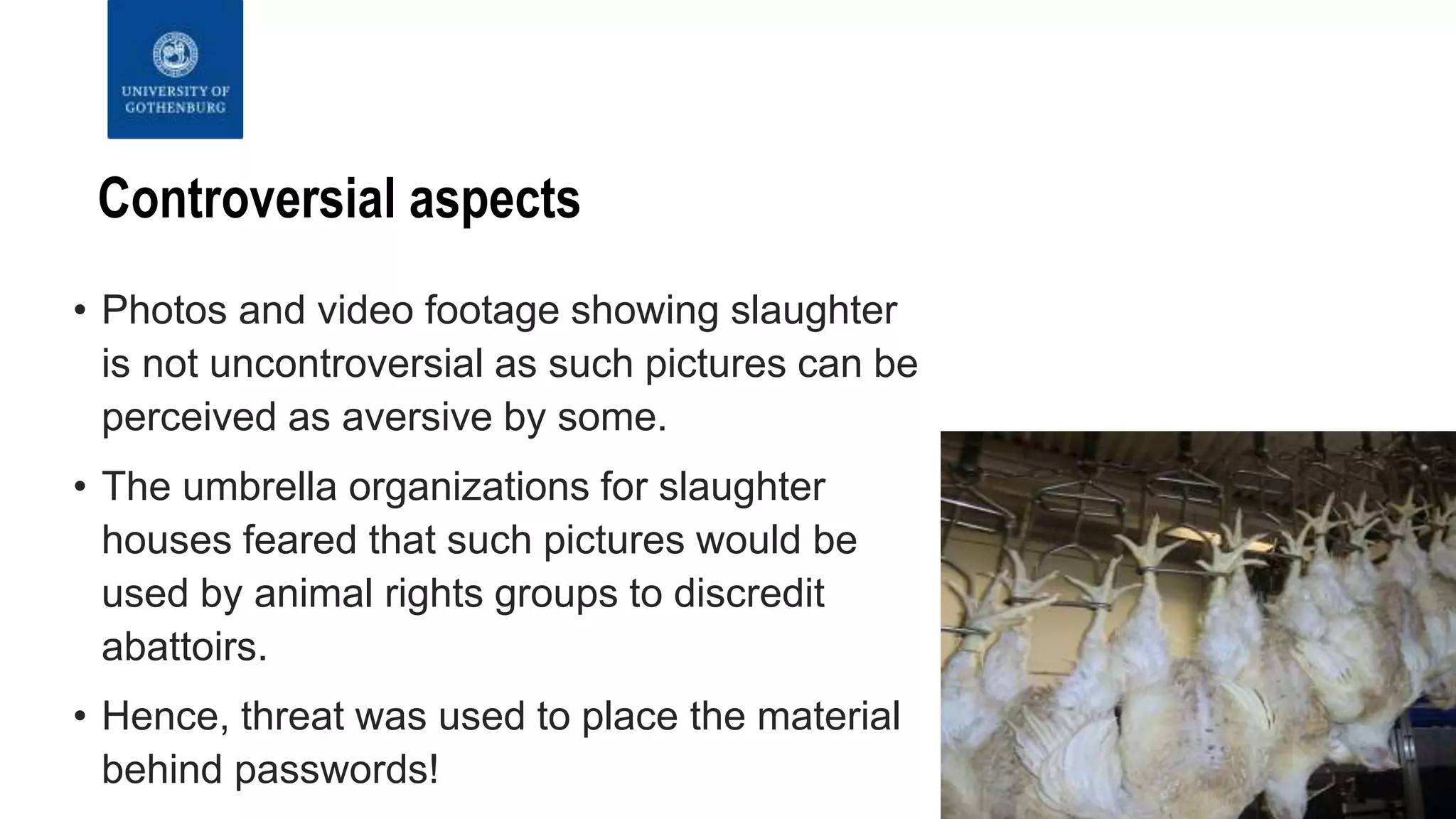
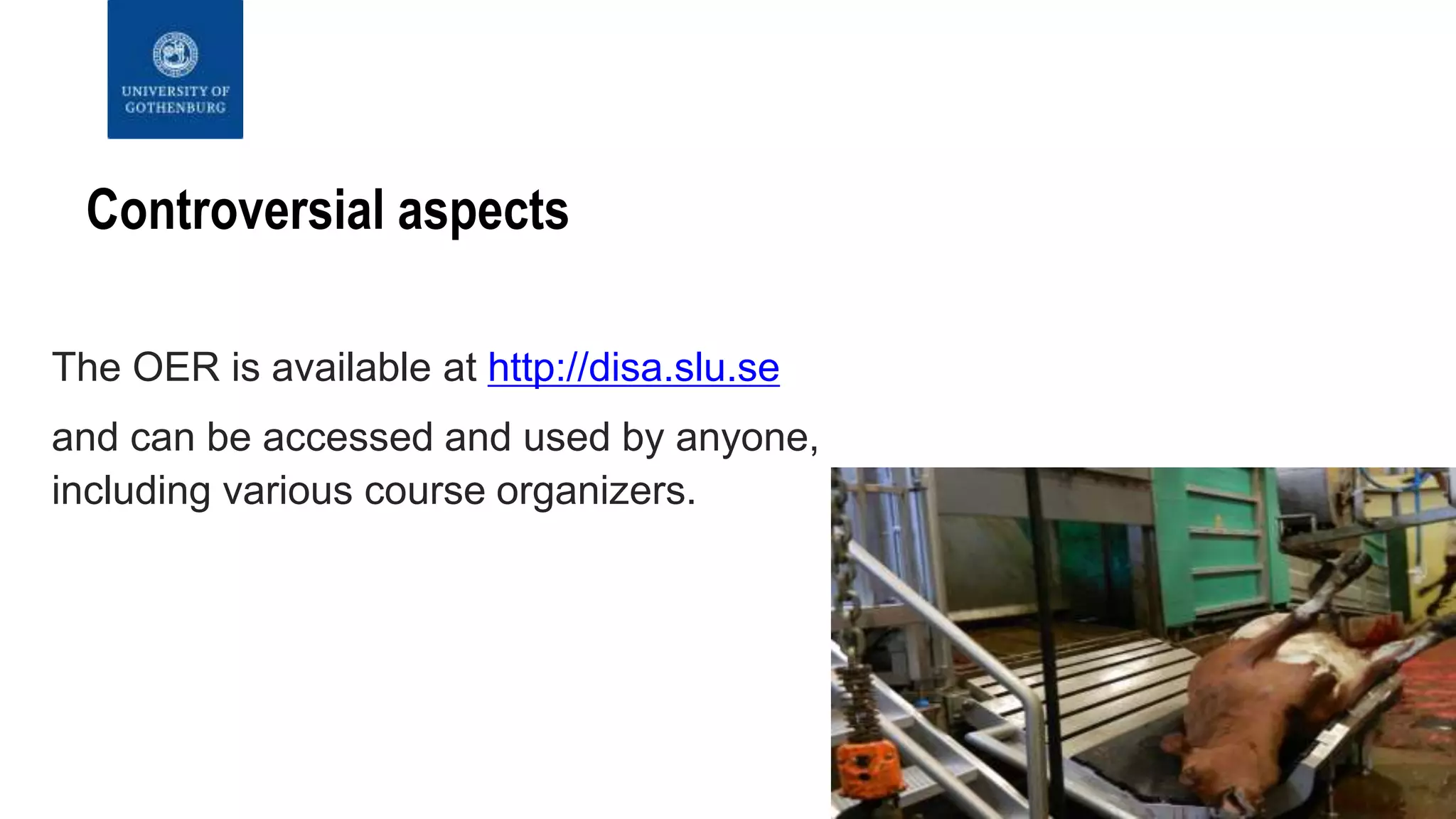
• Photos and video footage showing slaughter
is not uncontroversial as such pictures can be
perceived as aversive by some.
• The umbrella organizations for slaughter
houses feared that such pictures would be
used by animal rights groups to discredit
abattoirs.
• Hence, threat was used to place the material
behind passwords!
Controversial aspects
The OER is available at http://disa.slu.se
and can be accessed and used by anyone,
including various course organizers.
A focus group study about boundary practices
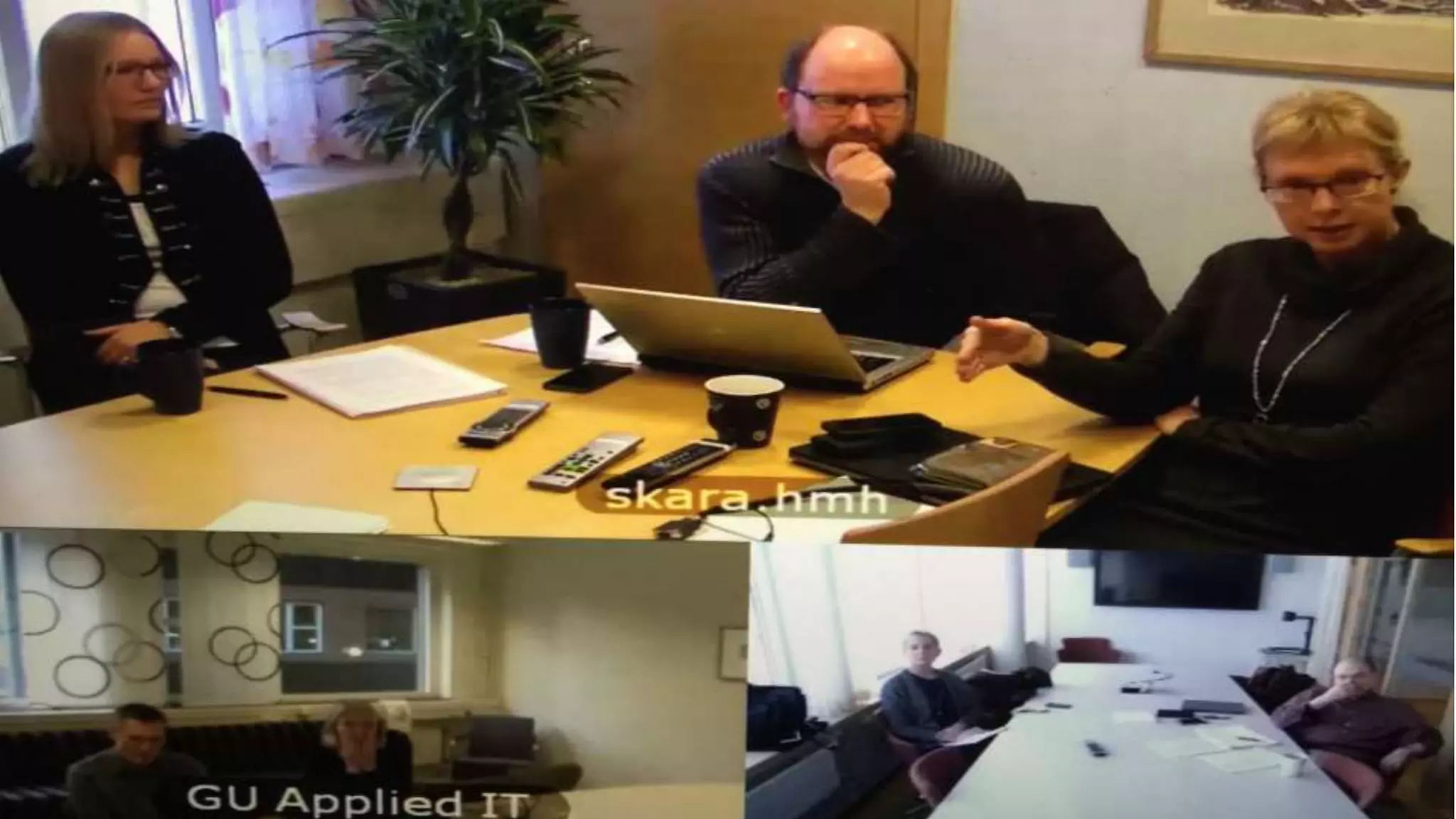
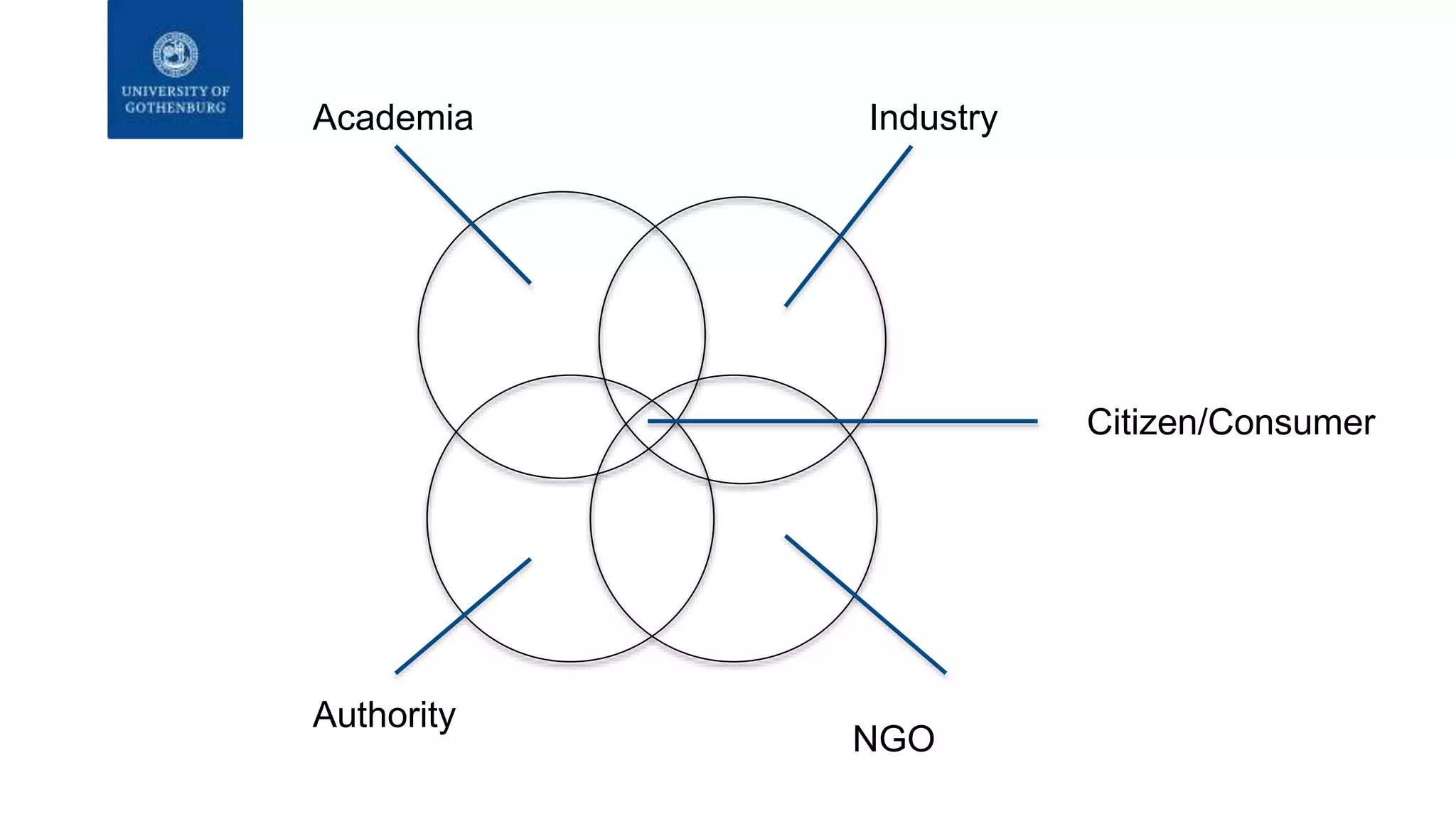
• Two focus groups (even gender distribution; representatives from academia,
NGO:s, authorities, and industry, 50% users of OER 50% non-users)
• Two hours discussions about OER and OEP in the subject area
• Video recorded discussions, transcribed in their fully length and analysed
• A scientific paper will be submitted for publication
Photo: Ivan Malkin, CC BY-NC-ND 2.0
Academia Industry
Authority
NGO
Citizen/Consumer
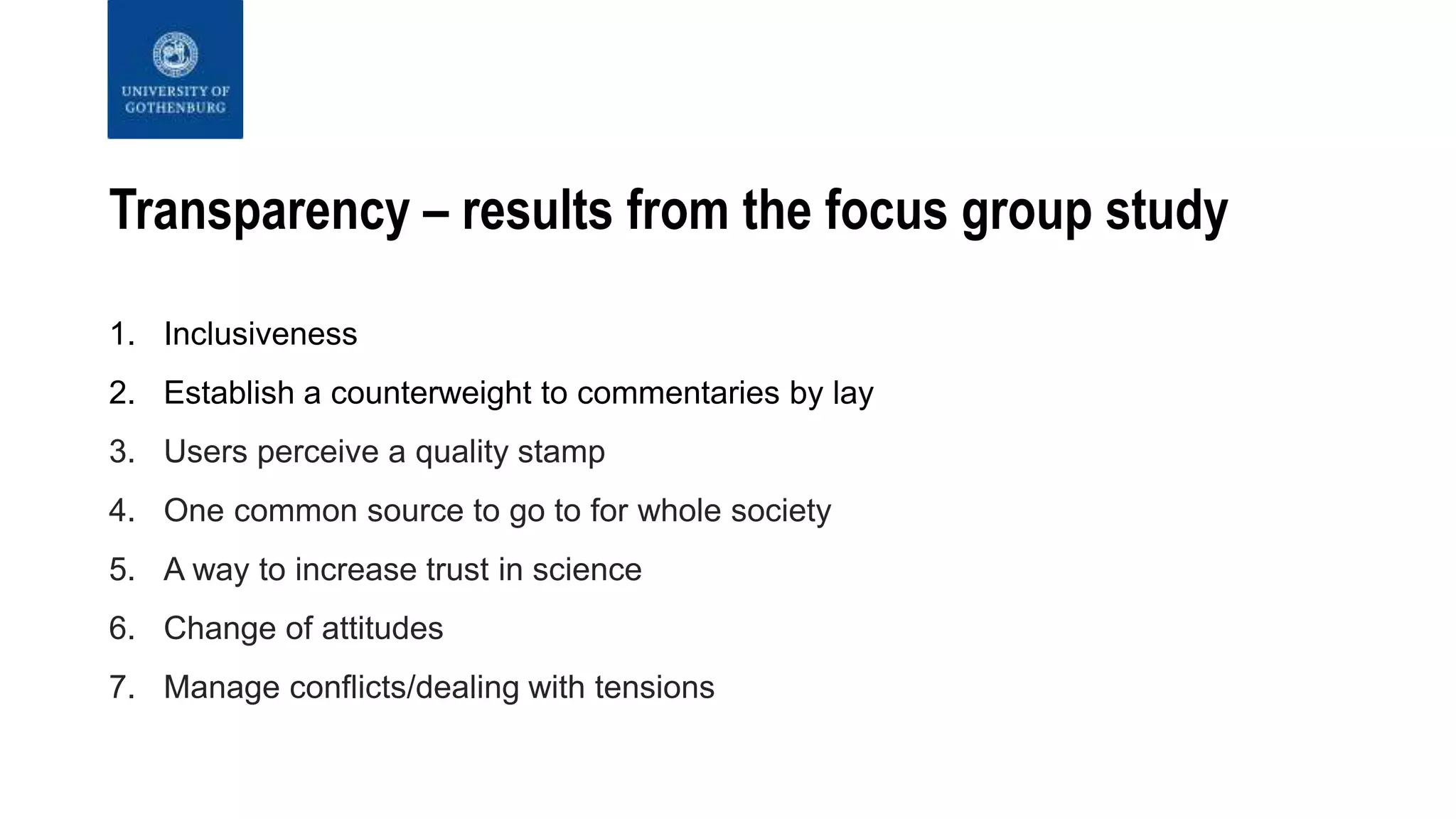
• Transparency
• Participatory culture
Openness – focus group discussions mainly about
Transparency – results from the focus group study
1. Inclusiveness
2. Establish a counterweight to commentaries by lay
3. Users perceive a quality stamp
4. One common source to go to for whole society
5. A way to increase trust in science
6. Change of attitudes
7. Manage conflicts/dealing with tensions
Transparency – some excerpts
-”Because this OER is very detailed it requires constant updating. We want to
have only one proper source to go to in case of conflict, and therefore it is
important that this OER is constantly updated and of high quality”
-”What a lot of people see online – they don’t think that what they see is legal.
When they get to know that this [handling of animals] is legal and that there is
science behind it, it can create conflicts”
-“How should one handle [the culture] dimension in a material like this?...
digging in a Swedish context is already a handful”
Participatory - results from the focus group study
1. The disputed nature of the knowledge produced
2. Creation of conflicts
3. Risk of mis-interpretations
4. Scarcity / small community
5. Time consuming to moderate polarised discussions
Participatory – some excerpts
-“It is important to have both citizens and scientist to inform each other
what is fair and what is cruel”
-”Since [the specific OER] only has few users we cannot rely on this
material to be self-repairing”
-”It is generally fairly difficult to achieve consensus with such an emotional
topic…and often that is what hampers a constructive discussion”
-”we do not actively guide the public to [the OER], since we do not want to
create conflict”.
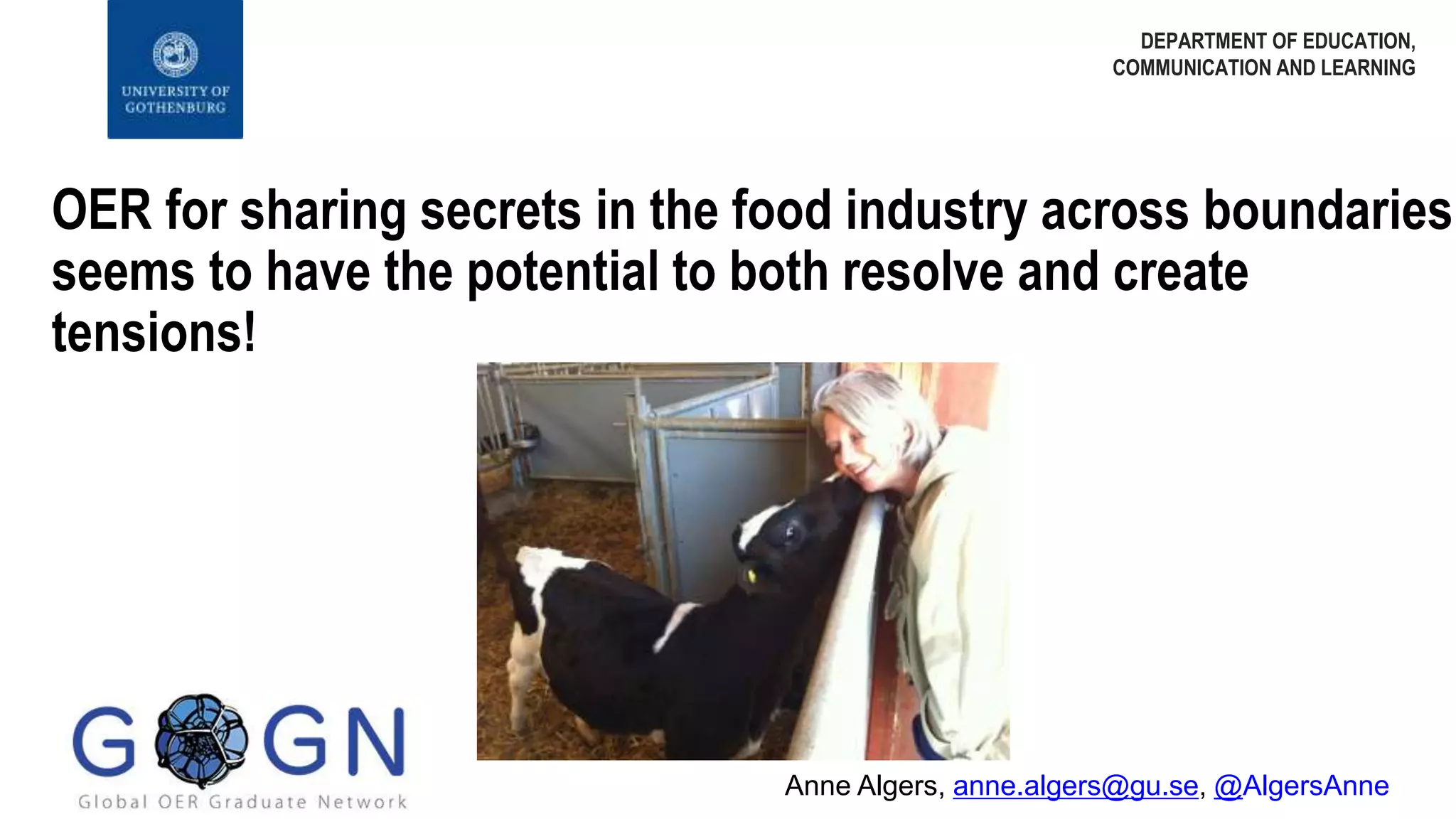
OER for sharing secrets in the food industry across boundaries
seems to have the potential to both resolve and create
tensions!
DEPARTMENT OF EDUCATION,
COMMUNICATION AND LEARNING
Anne Algers, anne.algers@gu.se, @AlgersAnne

Open knowledge across boundaries– a case-study on controversies

  • 1.
    OPEN KNOWLEDGE ACROSSBOUNDARIES – A CASE-STUDY ON CONTROVERSIES ANNE ALGERS, SENIOR LECTURER
  • 2.
    Academia’s responsibility intimes of fake news and knowledge resistance DEPARTMENT OF EDUCATION, COMMUNICATION AND LEARNING • Providers of un-biased knowledge • Critical voice in societal debate • Ballance discussions in social media Photo: Designed by Freepik
  • 3.
    Changing role ofacademia Education of the privileged Education of the masses Collaboration with society
  • 6.
    Used to beclear boundaries GAP Academia Society
  • 7.
  • 8.
    Boundaries Boundaries are socialconstructions that define who are included and excluded from interactions (Edwards & Kinti, 2010).
  • 9.
    What is boundarycrossing? Boundary crossing can be seen as horizontal movements of knowledge between multiple parallel activity contexts (Engeström et al., 1995). Photo: Alex Marsh
  • 10.
    What is aboundary object? • An object that is introduced to achieve boundary activities and to connect actors from different worlds (Star & Griesemer, 1989) • An object that is generated through a process of boundary activities (Engeström et al., 1995) Photo: Baruch
  • 11.
    How can OERbe used as boundary objects? • For knowledge sharing within and across disciplinary and organizational boundaries • For sharing of knowledge and values across nations or cultures • For sharing of knowledge that used to be unrecognized or non- transperant with society • For dealing with tensions? Photo: OER_CC0 Public Domain
  • 12.
    DISA is currentlybeing translated into English
  • 13.
    Controversial aspects • Photosand video footage showing slaughter is not uncontroversial as such pictures can be perceived as aversive by some. • The umbrella organizations for slaughter houses feared that such pictures would be used by animal rights groups to discredit abattoirs. • Hence, threat was used to place the material behind passwords!
  • 14.
    Controversial aspects The OERis available at http://disa.slu.se and can be accessed and used by anyone, including various course organizers.
  • 15.
    A focus groupstudy about boundary practices • Two focus groups (even gender distribution; representatives from academia, NGO:s, authorities, and industry, 50% users of OER 50% non-users) • Two hours discussions about OER and OEP in the subject area • Video recorded discussions, transcribed in their fully length and analysed • A scientific paper will be submitted for publication Photo: Ivan Malkin, CC BY-NC-ND 2.0
  • 17.
  • 18.
    • Transparency • Participatoryculture Openness – focus group discussions mainly about
  • 19.
    Transparency – resultsfrom the focus group study 1. Inclusiveness 2. Establish a counterweight to commentaries by lay 3. Users perceive a quality stamp 4. One common source to go to for whole society 5. A way to increase trust in science 6. Change of attitudes 7. Manage conflicts/dealing with tensions
  • 20.
    Transparency – someexcerpts -”Because this OER is very detailed it requires constant updating. We want to have only one proper source to go to in case of conflict, and therefore it is important that this OER is constantly updated and of high quality” -”What a lot of people see online – they don’t think that what they see is legal. When they get to know that this [handling of animals] is legal and that there is science behind it, it can create conflicts” -“How should one handle [the culture] dimension in a material like this?... digging in a Swedish context is already a handful”
  • 21.
    Participatory - resultsfrom the focus group study 1. The disputed nature of the knowledge produced 2. Creation of conflicts 3. Risk of mis-interpretations 4. Scarcity / small community 5. Time consuming to moderate polarised discussions
  • 22.
    Participatory – someexcerpts -“It is important to have both citizens and scientist to inform each other what is fair and what is cruel” -”Since [the specific OER] only has few users we cannot rely on this material to be self-repairing” -”It is generally fairly difficult to achieve consensus with such an emotional topic…and often that is what hampers a constructive discussion” -”we do not actively guide the public to [the OER], since we do not want to create conflict”.
  • 23.
    OER for sharingsecrets in the food industry across boundaries seems to have the potential to both resolve and create tensions! DEPARTMENT OF EDUCATION, COMMUNICATION AND LEARNING Anne Algers, anne.algers@gu.se, @AlgersAnne

Editor's Notes

  • #2 - challenges and responsibilities for academia
  • #4 A large number of people access higher education and most universities – double helix
  • #5 I say collaboration and not dissemination, because I argue that academia and the general public need to inform each other. Some areas are specially in need of this dialogue – Food Ethics
  • #6 The recent sugar scandal shows that scientists have been biased and almost exclusively published research in favour of the sugar industry (Mandrioli et al., 2016). Effect of sugar on conronary heat diseases has been turned down and researchers have been paid by the industry to only blame the fat (so that they could sell more low fat products)!
  • #7 In the academy, boundary crossing is not only of importance for researchers when making their results relevant to society but also for teachers using OER to cross boundaries to other academic institutions and to society.
  • #8 Develop this further
  • #11 Boundary between two worlds that are relevant for each other are particularly important
  • #13 It is an open and creative common licenced website with information about how farm animals are slaughtered in commercial slaughterhouses and how this handling influence the welfare of the animals before they lose consciousness. An English translation nearly finished and Chinese translation planned. Both the Jewish and the muslim community in Sweden have been involved in the creation.
  • #14 Industry wanted to keep the information hidden behind passwords and tried to stop the openness by contacting the project leader, the vice chancellor at the university, the Swedish Board of Agriculture and the Ministry of Agriculture. After put under pressure by the industry the funder, the Swedish Board of Agriculture, suggested to disregard a signed contract and hide the information about how our farm animals are slaughtered behinds passwords. The lawyers at our university answered the scientific integrity always should be prioritised from commercial interests.
  • #15 access to everybody to the knowledge we have today about animal welfare in relation to handling of animals at slaughter and killing and to support local efforts in improving animal welfare.
  • #17 Bild på video
  • #19 We suggest that open and social learning approaches are necessary in contested subject areas such as animal welfare at slaughter and killing.
  • #20 1 Society feel included – also for vets (in many countries they are not allowed in slaughter houses so how should they learn?) 2 Establish a counterweight to commentaries by lay in social media and commercial interests 3 When academia is behind and information about different collaborators is shown Give access to research-based information to the whole society (legislation and best practice) And robustness of science Create common understanding/knowledge in contested areas (dont show anything which is against the law)
  • #21 Scarcity New situation when the material is translated
  • #22 1. Inform academia about the views in society learners have difficulties to differentiate between reliable and innacurate, biased or unsubstantiated information, academia need to argue 2+ 3. As we have just seen when people are given new information in such a controversial issue it can create conflicts, 4. How can the quality be guaranteed in such a controversial issue when the number if users is rather small? 5. The question is still if OER are good enough to deal with tensions…time consuming to moderate
  • #24 I believe that the research on OER need to be strongly contextualised in order to be interesting. This is why I want to share with you the use OER as boundary objects about the secrets in the food industry.