INSTITUTE OF TECHNOLOGY
     & MANAGEMENT

 MR. VIJAY BALU RASKAR
    BATCH-SMBA-02

      17-01-2011
MY GROUP MEMEBRS
             Presents
• Ms Shruti Kannan = Introduction of
  CR
• Ms Pramada Dhanawade = Factors
  of CR
• Ms Kusum Rawat = Scope, Tool &
  Technique of CR
• Mr Newymathews = Intoduction of
  Material & Inventory valuation
Mr Vijay Raskar
Presenting on…..

•OVERHEAD
OVERHEAD
    Overheads comprise of indirect
materials, indirect employee costs and
   indirect expenses which are not
 directly identifiable or allocable to a
cost object in an economically feasible
                   way.
COSTS
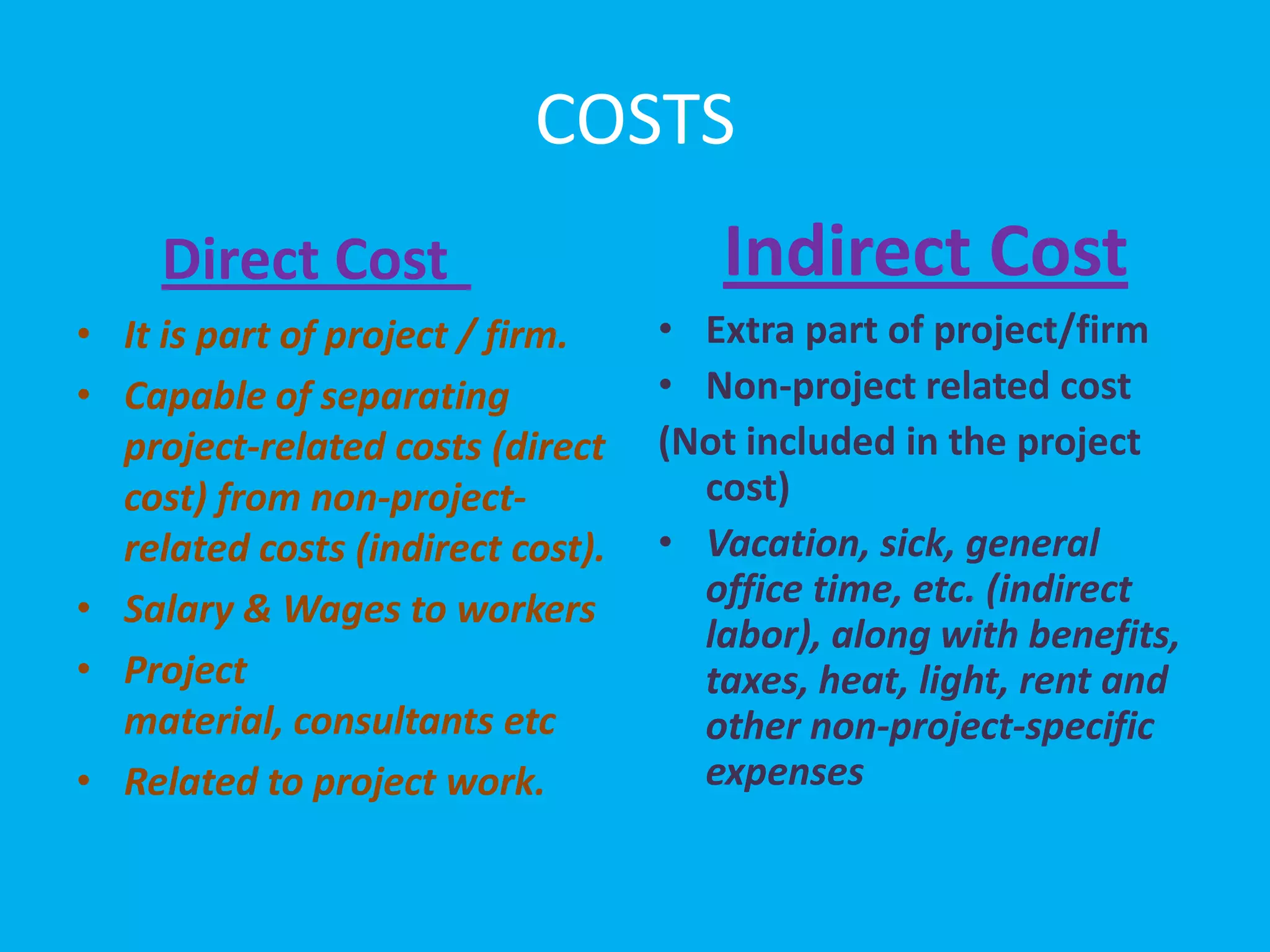
     Direct Cost                      Indirect Cost
• It is part of project / firm.    • Extra part of project/firm
• Capable of separating            • Non-project related cost
  project-related costs (direct    (Not included in the project
  cost) from non-project-            cost)
  related costs (indirect cost).   • Vacation, sick, general
• Salary & Wages to workers          office time, etc. (indirect
                                     labor), along with benefits,
• Project                            taxes, heat, light, rent and
  material, consultants etc          other non-project-specific
• Related to project work.           expenses
EXAMPLE of Costs
A unit manufactures two products-
Leather Shoes & Leather wallets.
Material used for both the products is
traceable to them individually but
expenditure of common machine is
not traceable.

Therefore, Material would be direct
cost and ‘Machine Expenses’ would
be indirect cost.
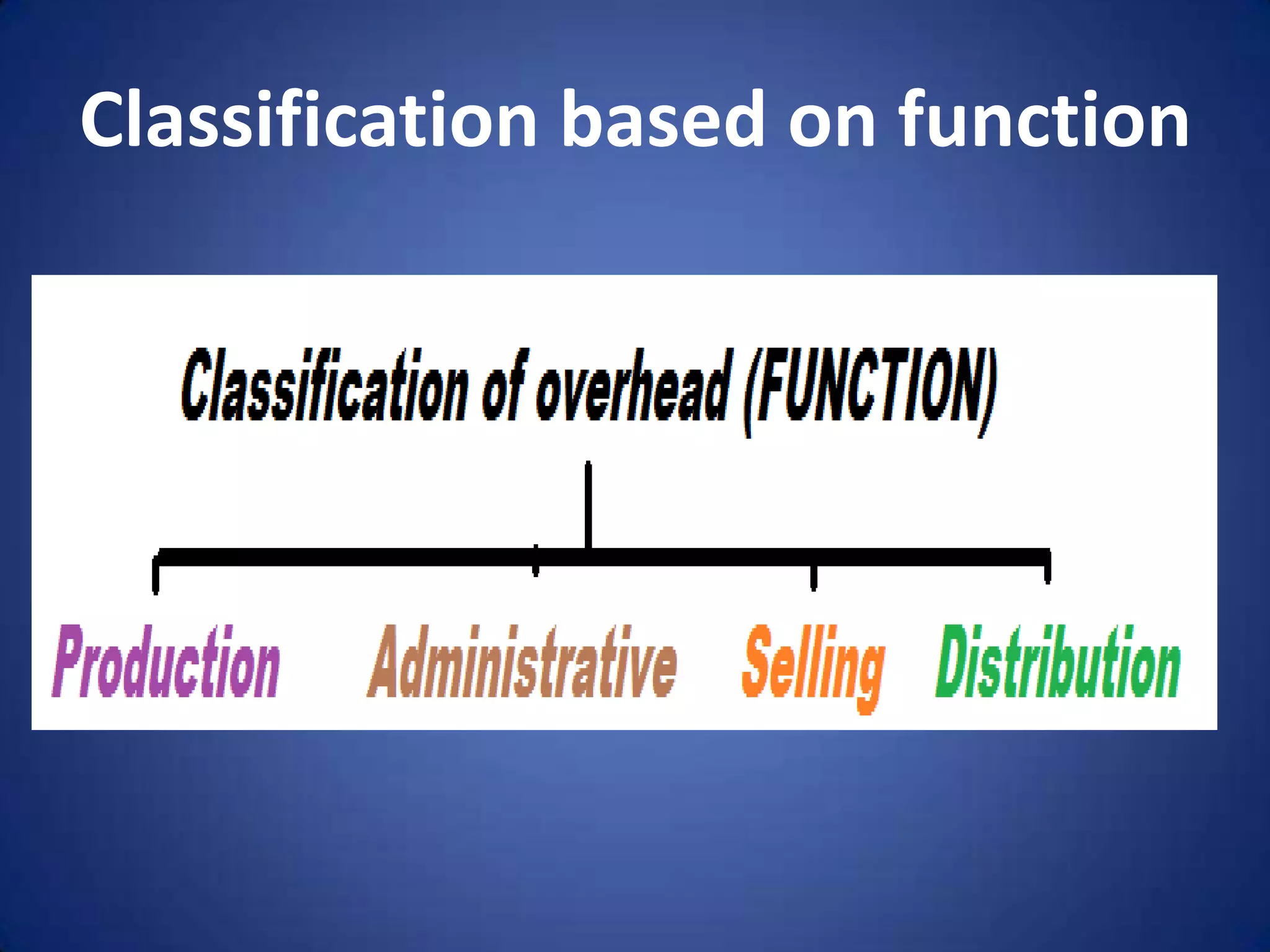
Classification based on function
Production Overheads:- All the cost
incurred for production of Goods are
known as production overheads.


Administration Overhead:- Indirect
expenses incurred for running the
administration are known as
Administration Overhead.
Selling overheads:- Overhead incurred
Getting order from customers is called
as selling overheads.

Distribution Overhead:- Overhead
incurred for execution of order is called
as distribution overhead.
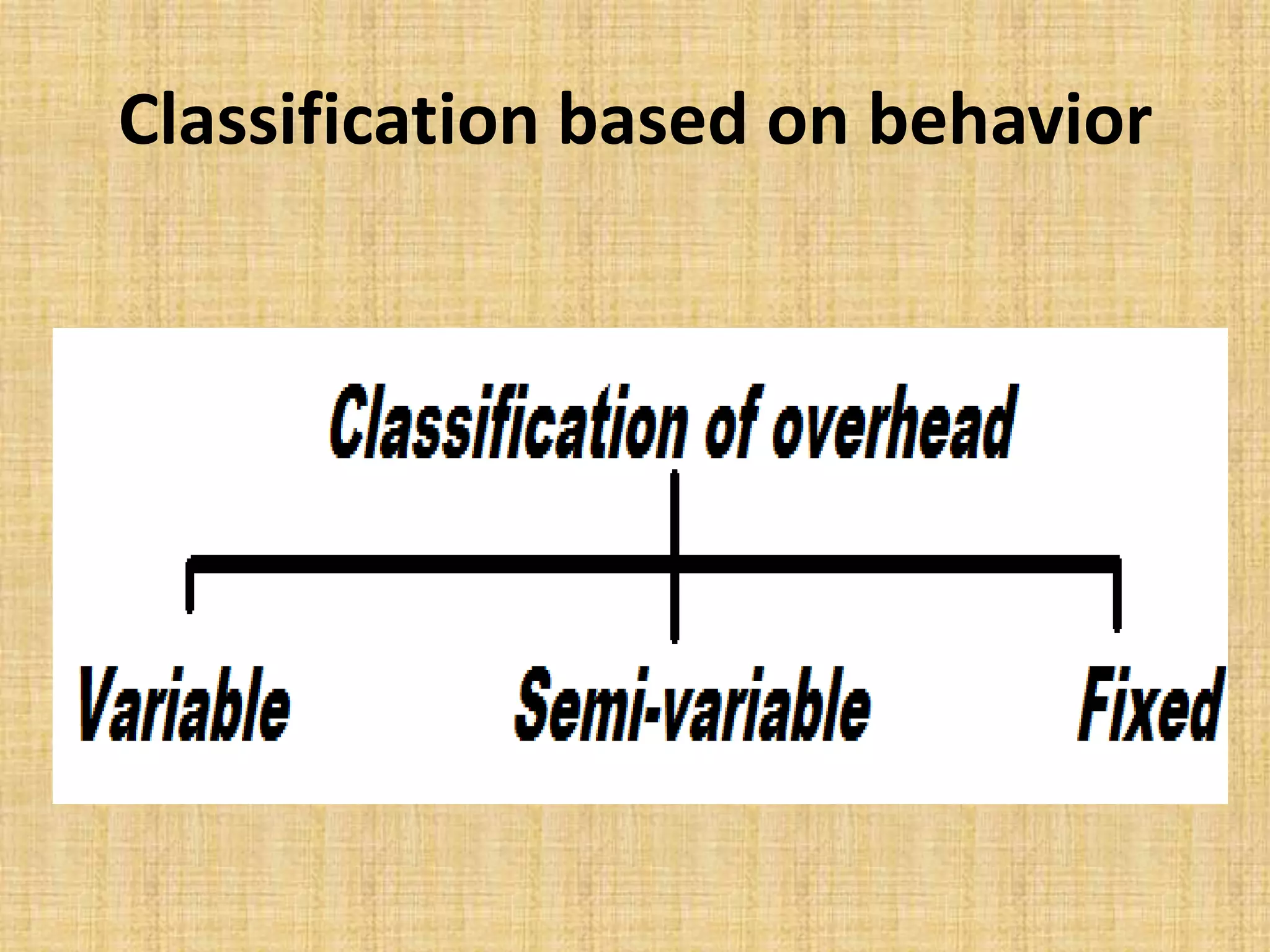
Classification based on behavior
Variable overheads:- It comprise of
expenses which vary in proportion to
the change of volume of production.
  For example, cost of utilities etc.

  Fixed overheads:- It comprise of
expenses whose value do not change
    with the change in volume of
production such as salaries, rent etc.
Semi-variable overheads:- They are
  partly affected by change in the
production volume. They are further
segregated into variable overheads
        and fixed overheads.
ALLOCATE AND APPORTIONMENT
we collect all overhead, and then
          we classify it.
1st Step : Collection of Different
Overhead Expenses
All overhead expenses cannot be
collected from one source.
1) Store:- Keeps all raw material and
use it as per requirements.
2) Wages analysis book:- All indirect
labor cost.
3) Invoices of other indirect
expenses:- Cash book and other
expenses.
2nd Step : Departmentalization of
               overhead

There may be repair department,
power department, tool department
and many more.
3rd Step : Allocation and
Apportionment of overhead expenses

 a) Allocation of overhead expenses
  Expense for particular department
         Like overtime salary.
b) Apportionment of overhead
            expenses

   Rent for plant for two different
            departments.
Let A plant using 70% area then 70%
           rent from total.
Let B plant using 30% area then 30%
           rent from total.
RESULT:-
        Cost reduction increases
productivity and reducing cost per
unit.
        Material is the prime part of
the total cost of production of
manufacturing firm.
        Overhead plays very important
role in accounting. They are charging
each unit of a product with an
equitable share of overhead expenses.
Thank
 You

Accounts cr-material-overhead-presentation-1

  • 1.
    INSTITUTE OF TECHNOLOGY & MANAGEMENT MR. VIJAY BALU RASKAR BATCH-SMBA-02 17-01-2011
  • 2.
    MY GROUP MEMEBRS Presents • Ms Shruti Kannan = Introduction of CR • Ms Pramada Dhanawade = Factors of CR • Ms Kusum Rawat = Scope, Tool & Technique of CR • Mr Newymathews = Intoduction of Material & Inventory valuation
  • 3.
    Mr Vijay Raskar Presentingon….. •OVERHEAD
  • 4.
    OVERHEAD Overheads comprise of indirect materials, indirect employee costs and indirect expenses which are not directly identifiable or allocable to a cost object in an economically feasible way.
  • 5.
    COSTS Direct Cost Indirect Cost • It is part of project / firm. • Extra part of project/firm • Capable of separating • Non-project related cost project-related costs (direct (Not included in the project cost) from non-project- cost) related costs (indirect cost). • Vacation, sick, general • Salary & Wages to workers office time, etc. (indirect labor), along with benefits, • Project taxes, heat, light, rent and material, consultants etc other non-project-specific • Related to project work. expenses
  • 6.
    EXAMPLE of Costs Aunit manufactures two products- Leather Shoes & Leather wallets. Material used for both the products is traceable to them individually but expenditure of common machine is not traceable. Therefore, Material would be direct cost and ‘Machine Expenses’ would be indirect cost.
  • 7.
  • 8.
    Production Overheads:- Allthe cost incurred for production of Goods are known as production overheads. Administration Overhead:- Indirect expenses incurred for running the administration are known as Administration Overhead.
  • 9.
    Selling overheads:- Overheadincurred Getting order from customers is called as selling overheads. Distribution Overhead:- Overhead incurred for execution of order is called as distribution overhead.
  • 10.
  • 11.
    Variable overheads:- Itcomprise of expenses which vary in proportion to the change of volume of production. For example, cost of utilities etc. Fixed overheads:- It comprise of expenses whose value do not change with the change in volume of production such as salaries, rent etc.
  • 12.
    Semi-variable overheads:- Theyare partly affected by change in the production volume. They are further segregated into variable overheads and fixed overheads.
  • 13.
    ALLOCATE AND APPORTIONMENT wecollect all overhead, and then we classify it.
  • 14.
    1st Step :Collection of Different Overhead Expenses All overhead expenses cannot be collected from one source. 1) Store:- Keeps all raw material and use it as per requirements. 2) Wages analysis book:- All indirect labor cost. 3) Invoices of other indirect expenses:- Cash book and other expenses.
  • 15.
    2nd Step :Departmentalization of overhead There may be repair department, power department, tool department and many more.
  • 16.
    3rd Step :Allocation and Apportionment of overhead expenses a) Allocation of overhead expenses Expense for particular department Like overtime salary.
  • 17.
    b) Apportionment ofoverhead expenses Rent for plant for two different departments. Let A plant using 70% area then 70% rent from total. Let B plant using 30% area then 30% rent from total.
  • 18.
    RESULT:- Cost reduction increases productivity and reducing cost per unit. Material is the prime part of the total cost of production of manufacturing firm. Overhead plays very important role in accounting. They are charging each unit of a product with an equitable share of overhead expenses.
  • 19.