A defined area, machine or person to whom
direct and indirect cost are allocated. Also
known as Cost pool and Expense Centre.
It is a department within a company that does
not produce direct profit and adds to the
cost of running a company.
The manager and employers of a cost centre
are responsible for its costs but not
responsible for revenues or investment
decisions.
 Process Cost Centre
 Product Cost Centre
 Service Cost Centre
 Impersonal and Personal Cost Centre
 Operation Cost Centre
While preparing cost accounts, it becomes
necessary to select a unit with which
expenditure may be identified.
The quantity upon which cost can be
conveniently allocated is known as a unit of
cost or cost unit.
E.g. per person, per piece , per kg etc.
The elements can be classified in following
three parts:
 Material
 Labour
 Overheads
The substance or substances out of which a
thing is made.
It is principle substance or equipment that is
used in production for making the products.
It is the basic raw material for finished
goods. E.g. Cotton.
It is of 2 types:
 Direct material
 Indirect material
It is physical and mental effort used in
production. It is active factor. It is of two
types:
 Direct Labour
 Indirect Labour
Overheads means the expenses. It includes the
direct expenses and indirect expenses as
well. Its types are:
 Factory Overheads
 Administrative Overheads
 Selling and Distributive Overheads
The Total Cost is the sum of following
components:
 Prime cost
 Factory cost
 Office cost
 Total cost
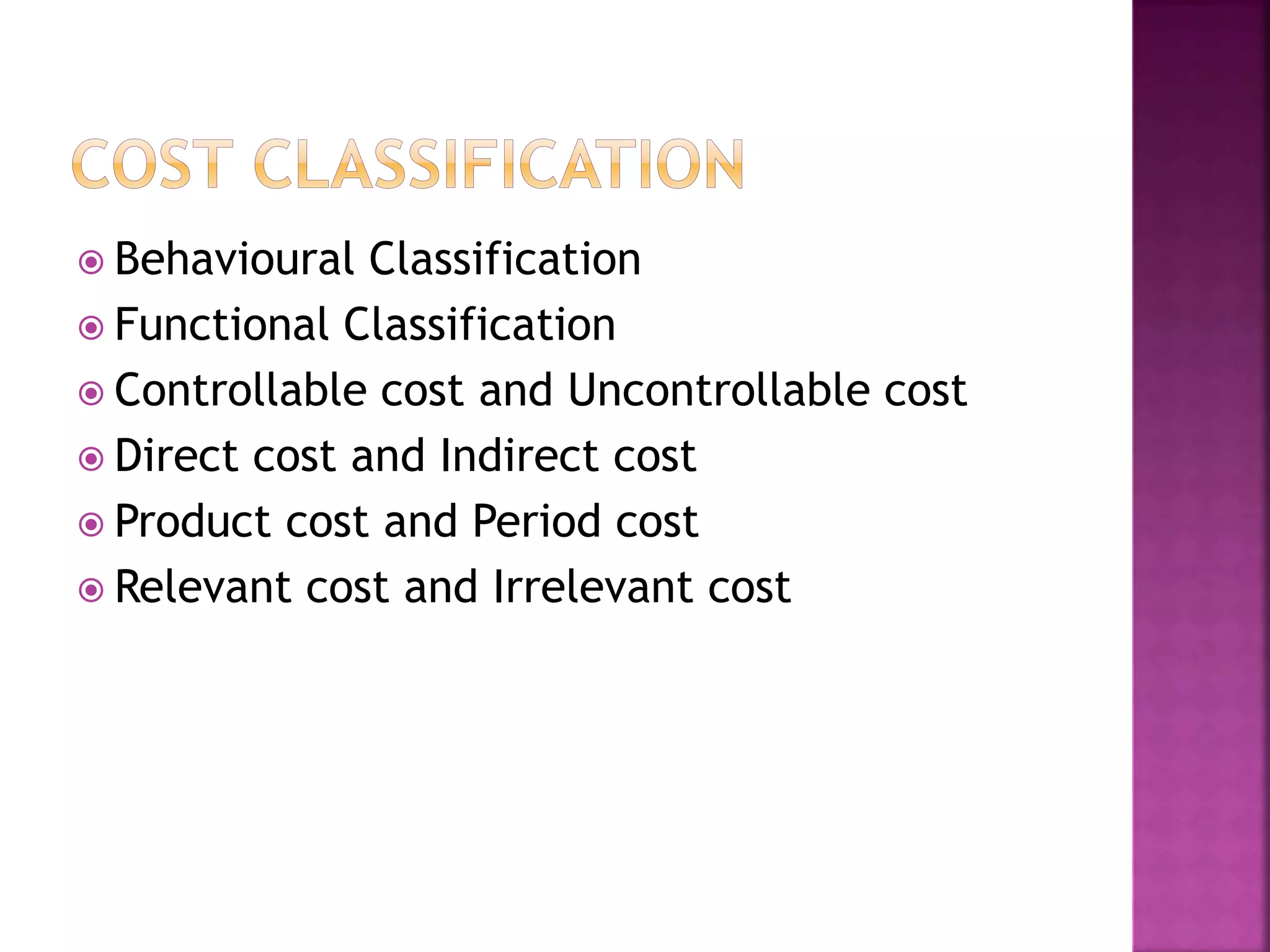
 Behavioural Classification
 Functional Classification
 Controllable cost and Uncontrollable cost
 Direct cost and Indirect cost
 Product cost and Period cost
 Relevant cost and Irrelevant cost
Cost centre and cost unit

Cost centre and cost unit

  • 2.
    A defined area,machine or person to whom direct and indirect cost are allocated. Also known as Cost pool and Expense Centre. It is a department within a company that does not produce direct profit and adds to the cost of running a company. The manager and employers of a cost centre are responsible for its costs but not responsible for revenues or investment decisions.
  • 3.
     Process CostCentre  Product Cost Centre  Service Cost Centre  Impersonal and Personal Cost Centre  Operation Cost Centre
  • 4.
    While preparing costaccounts, it becomes necessary to select a unit with which expenditure may be identified. The quantity upon which cost can be conveniently allocated is known as a unit of cost or cost unit. E.g. per person, per piece , per kg etc.
  • 5.
    The elements canbe classified in following three parts:  Material  Labour  Overheads
  • 6.
    The substance orsubstances out of which a thing is made. It is principle substance or equipment that is used in production for making the products. It is the basic raw material for finished goods. E.g. Cotton. It is of 2 types:  Direct material  Indirect material
  • 7.
    It is physicaland mental effort used in production. It is active factor. It is of two types:  Direct Labour  Indirect Labour
  • 8.
    Overheads means theexpenses. It includes the direct expenses and indirect expenses as well. Its types are:  Factory Overheads  Administrative Overheads  Selling and Distributive Overheads
  • 9.
    The Total Costis the sum of following components:  Prime cost  Factory cost  Office cost  Total cost
  • 10.
     Behavioural Classification Functional Classification  Controllable cost and Uncontrollable cost  Direct cost and Indirect cost  Product cost and Period cost  Relevant cost and Irrelevant cost