J.N. GOVT. ENGG. COLLEGE
SUNDERNAGAR
Presentation
Mill Management and
Maintenance
TE-704
ABHISHEK RANA
10BTD5090001
Textile Engineering
Costing
Cost
It may be defined as the monetary value of all sacrifices made to
achieve an objective (i.e., to produce goods and services)
The Meaning of “Cost”
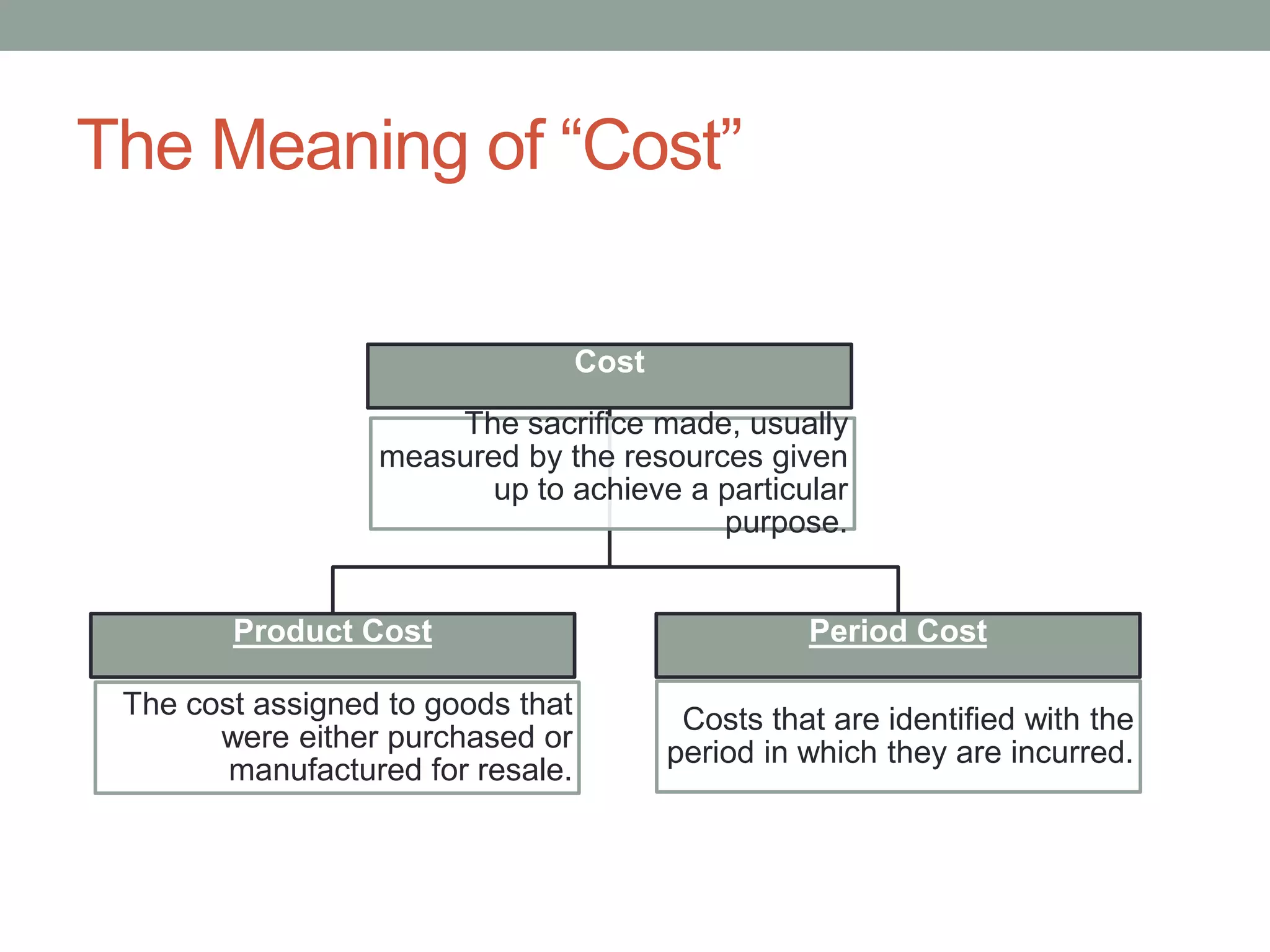
Cost
The sacrifice made, usually
measured by the resources given
up to achieve a particular
purpose.
Product Cost
The cost assigned to goods that
were either purchased or
manufactured for resale.
Period Cost
Costs that are identified with the
period in which they are incurred.
Costing
 Costing is simply cost finding.
 It may be defined as “the technique and processes of ascertaining
costs.”
 Costing is classifying, recording and appropriate allocation of
expenditure for the cost determination of the product or services.
Elements of Cost
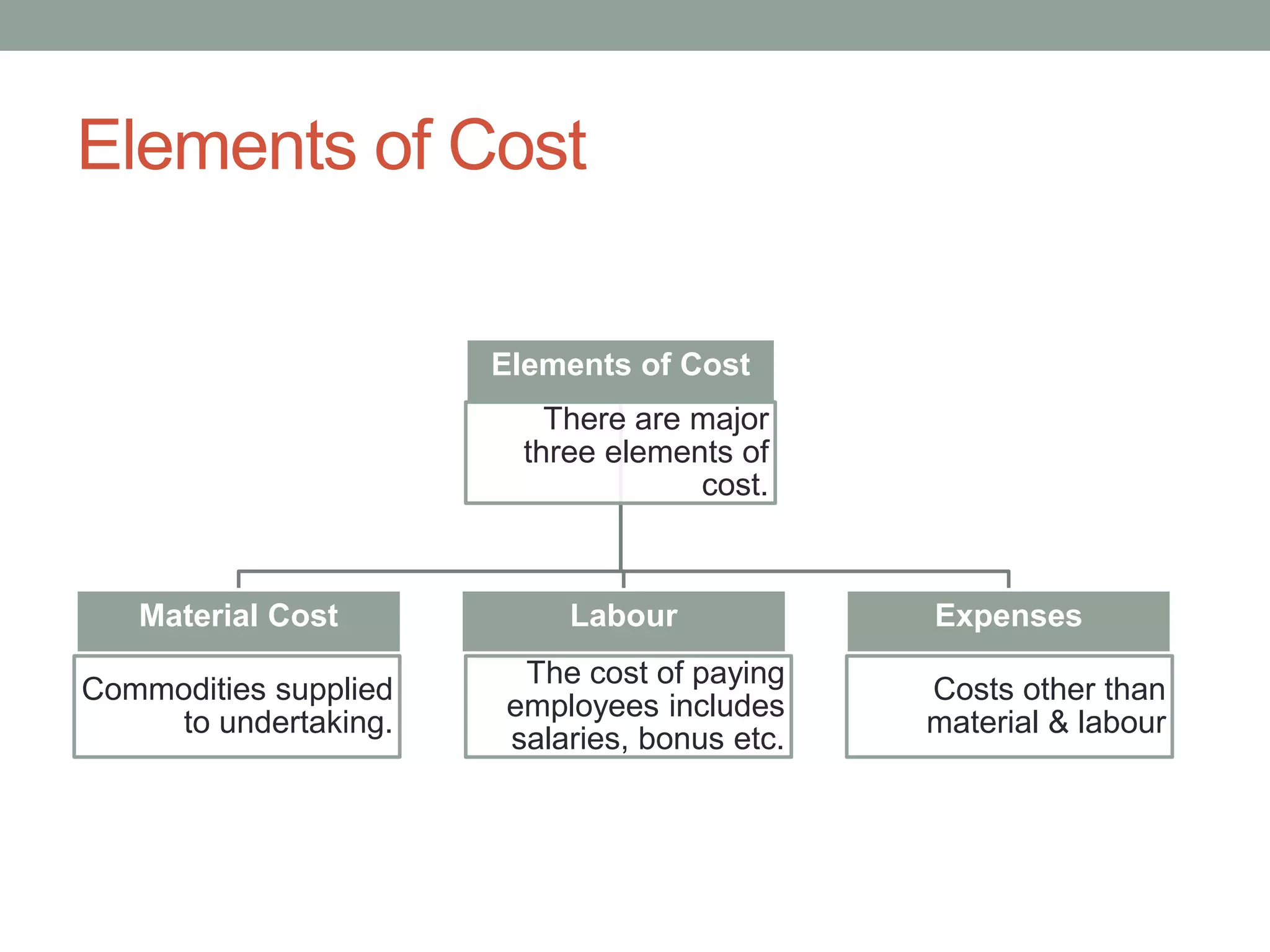
Elements of Cost
There are major
three elements of
cost.
Material Cost
Commodities supplied
to undertaking.
Labour
The cost of paying
employees includes
salaries, bonus etc.
Expenses
Costs other than
material & labour
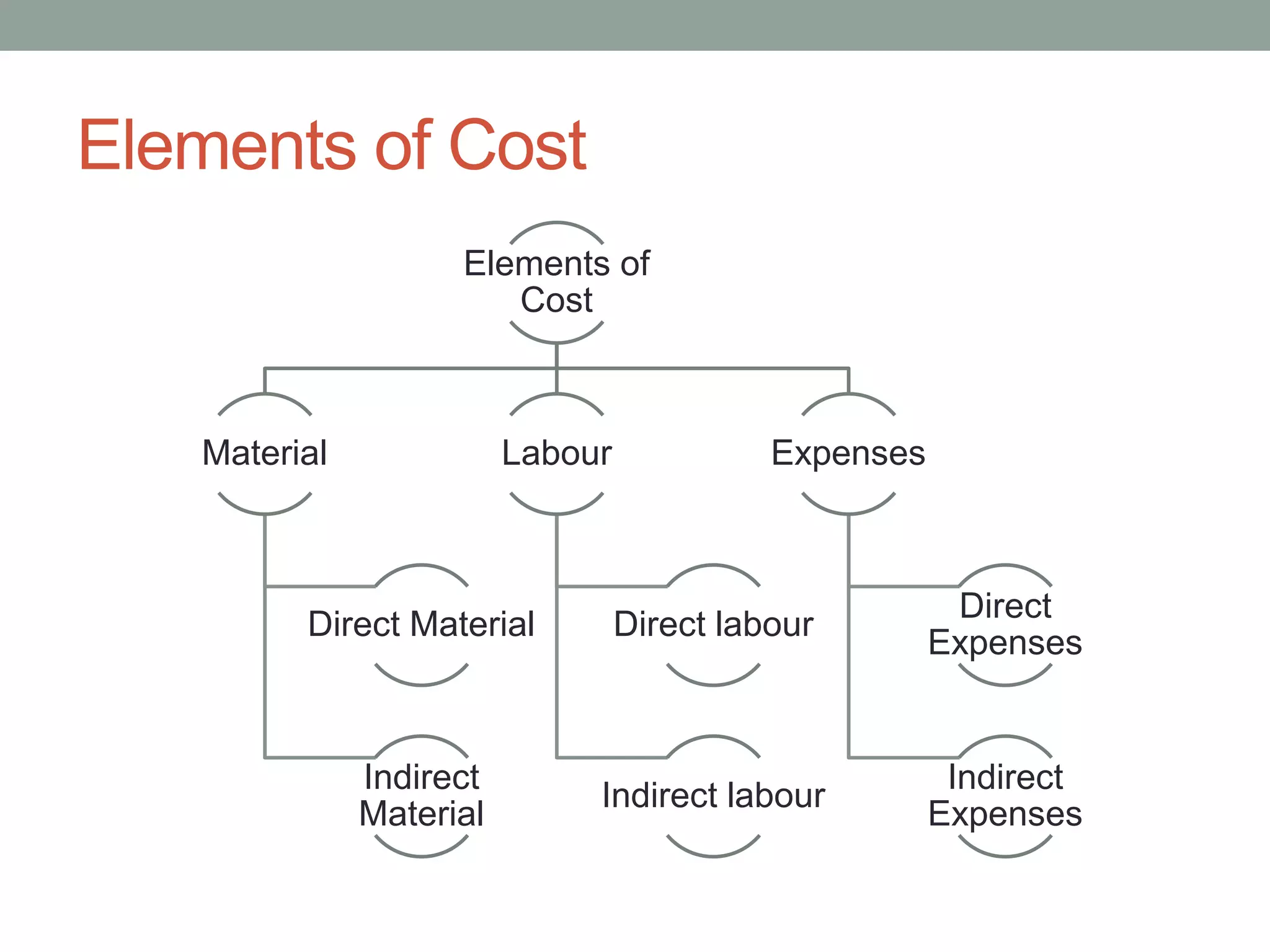
Elements of Cost
Elements of
Cost
Material
Direct Material
Indirect
Material
Labour
Direct labour
Indirect labour
Expenses
Direct
Expenses
Indirect
Expenses
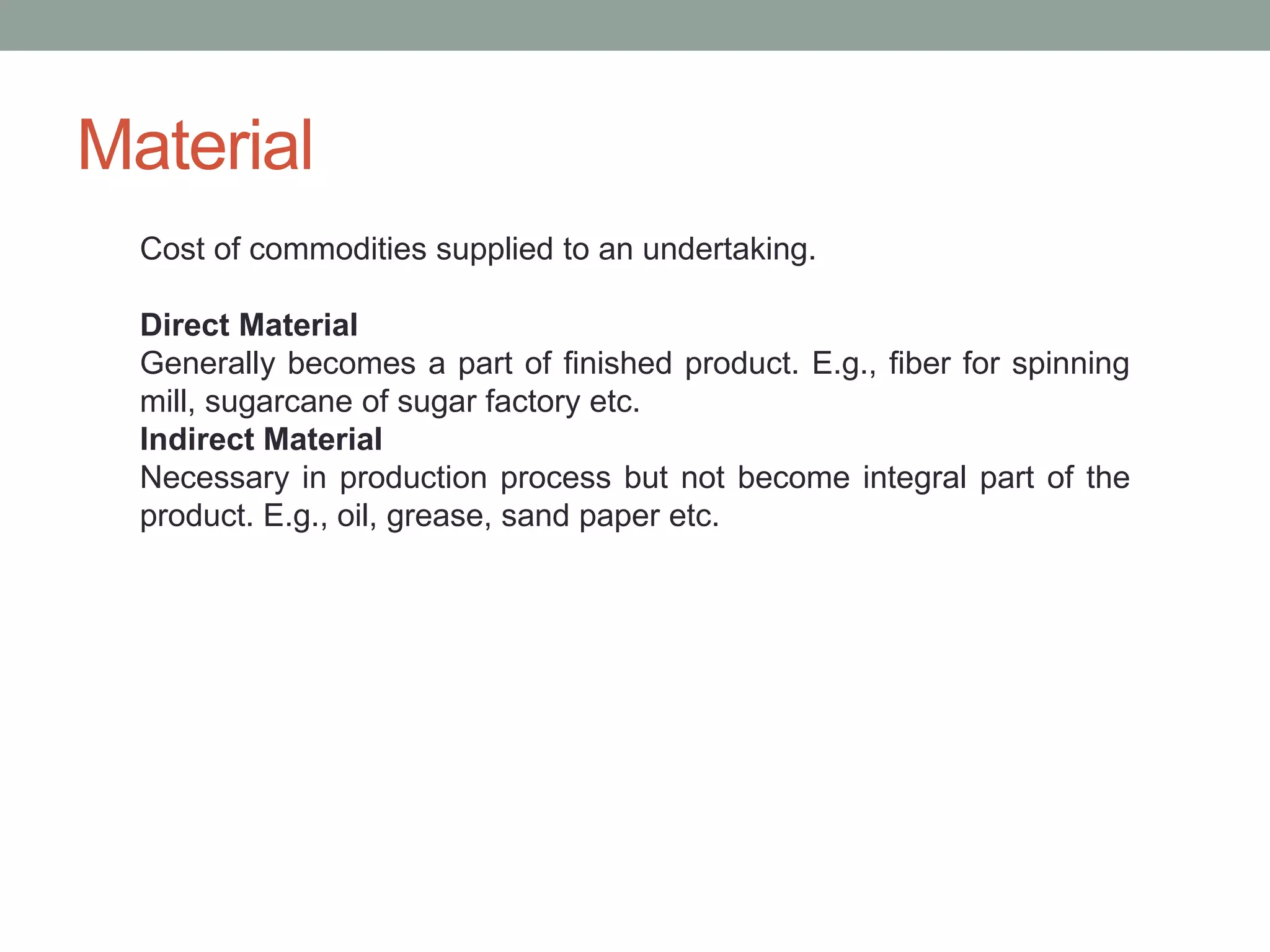
Material
Cost of commodities supplied to an undertaking.
Direct Material
Generally becomes a part of finished product. E.g., fiber for spinning
mill, sugarcane of sugar factory etc.
Indirect Material
Necessary in production process but not become integral part of the
product. E.g., oil, grease, sand paper etc.
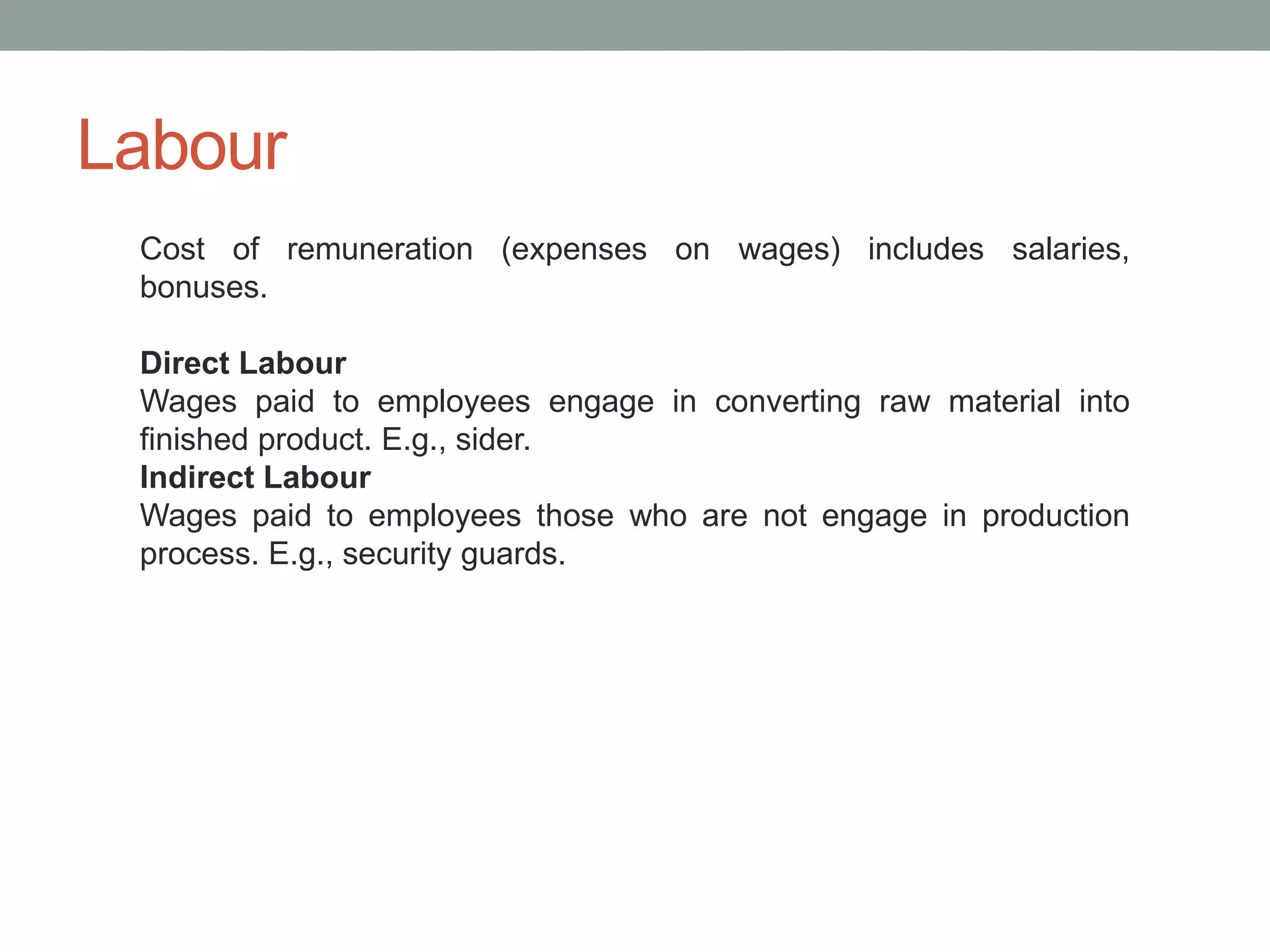
Labour
Cost of remuneration (expenses on wages) includes salaries,
bonuses.
Direct Labour
Wages paid to employees engage in converting raw material into
finished product. E.g., sider.
Indirect Labour
Wages paid to employees those who are not engage in production
process. E.g., security guards.
Expenses
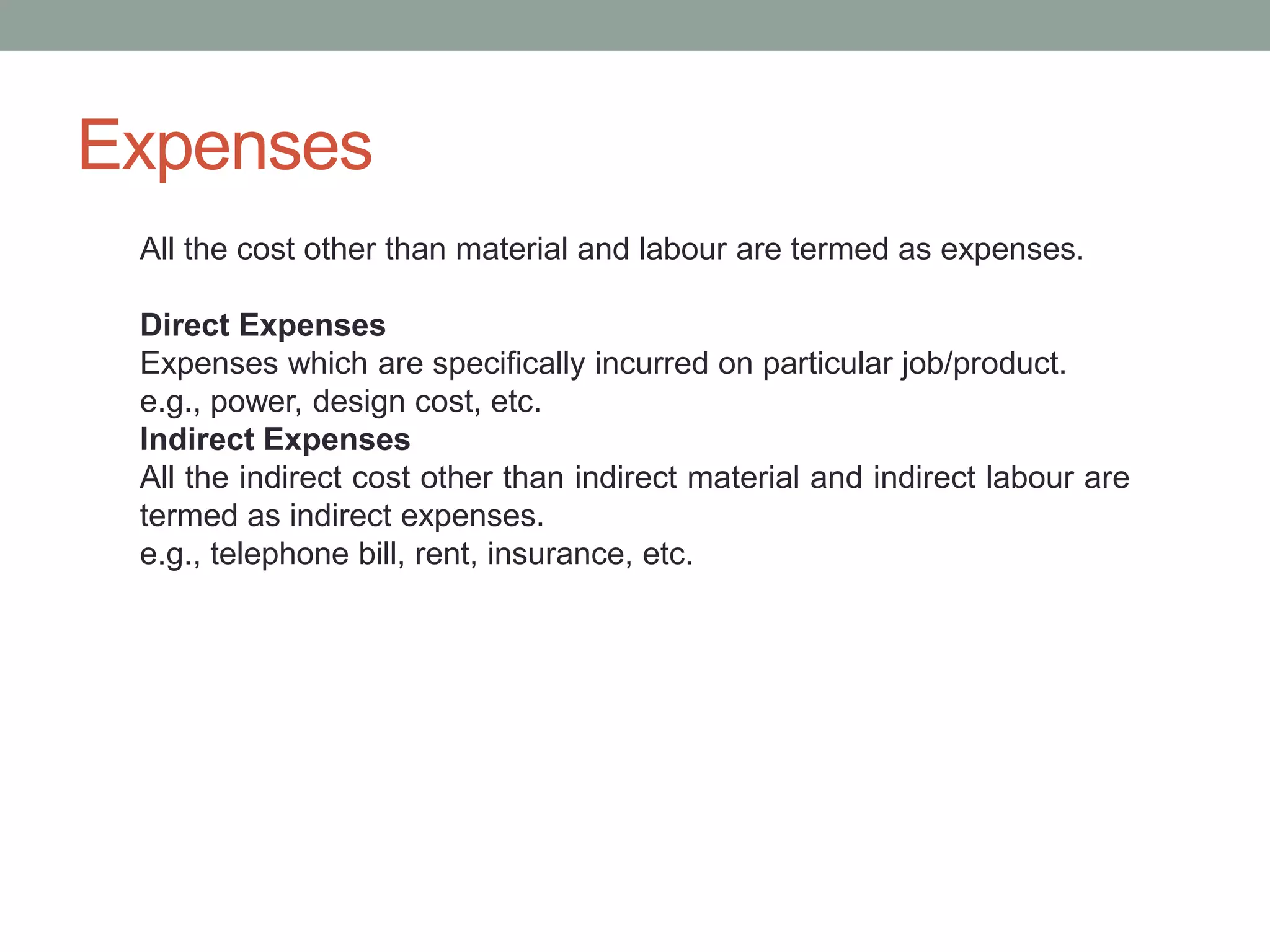
All the cost other than material and labour are termed as expenses.
Direct Expenses
Expenses which are specifically incurred on particular job/product.
e.g., power, design cost, etc.
Indirect Expenses
All the indirect cost other than indirect material and indirect labour are
termed as indirect expenses.
e.g., telephone bill, rent, insurance, etc.
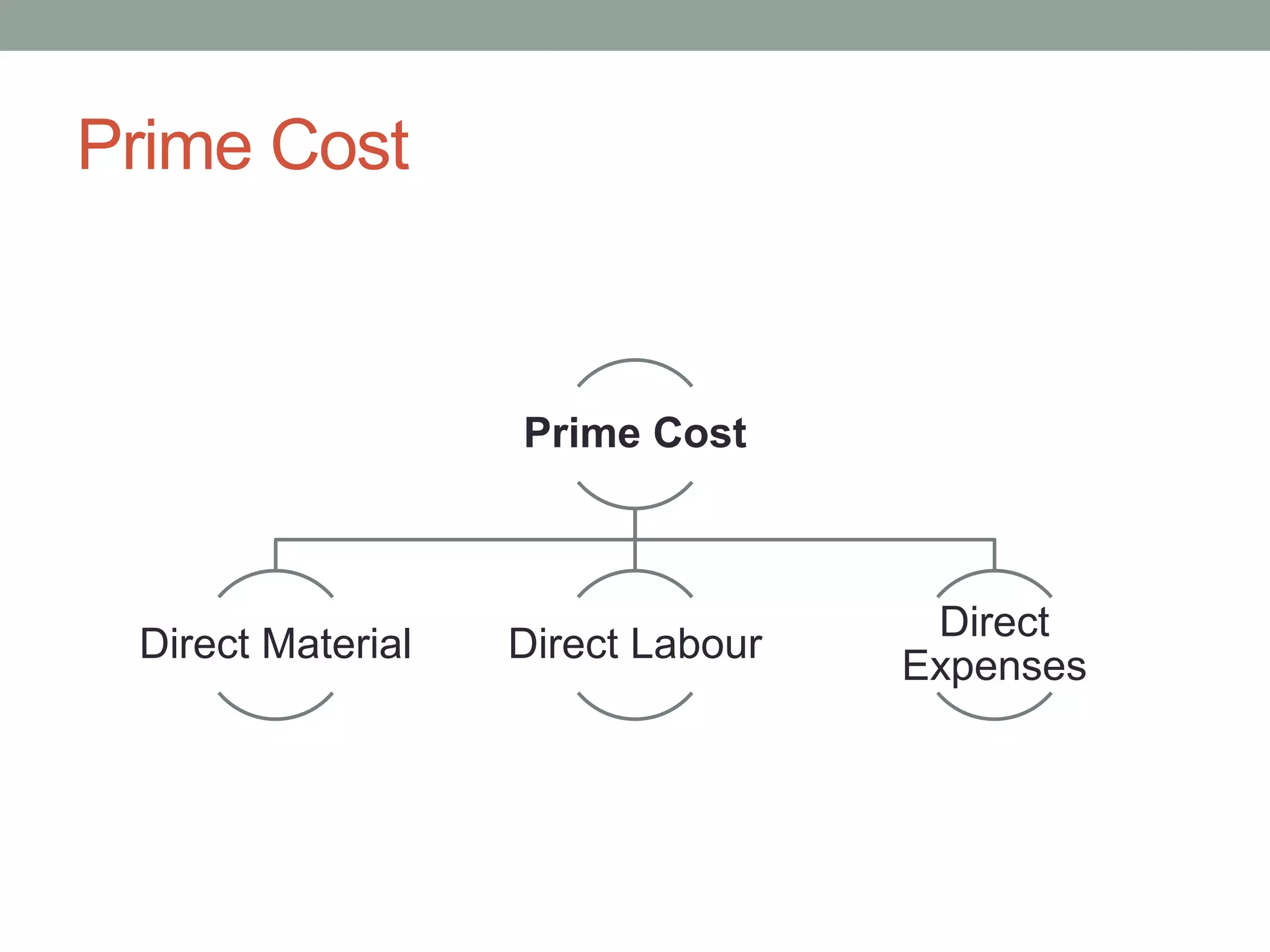
Prime Cost
Prime Cost
Direct Material Direct Labour
Direct
Expenses
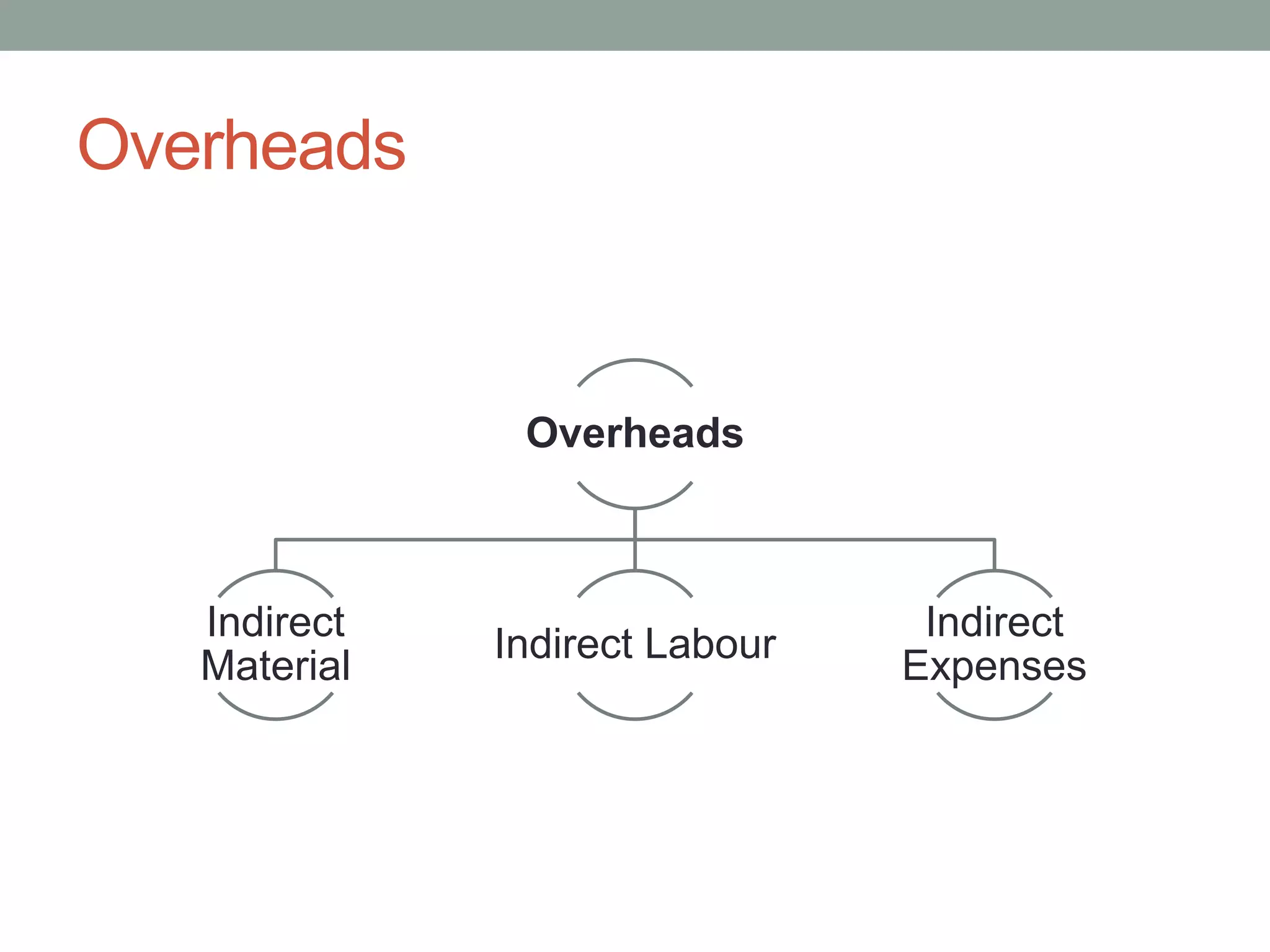
Overheads
Overheads
Indirect
Material
Indirect Labour
Indirect
Expenses
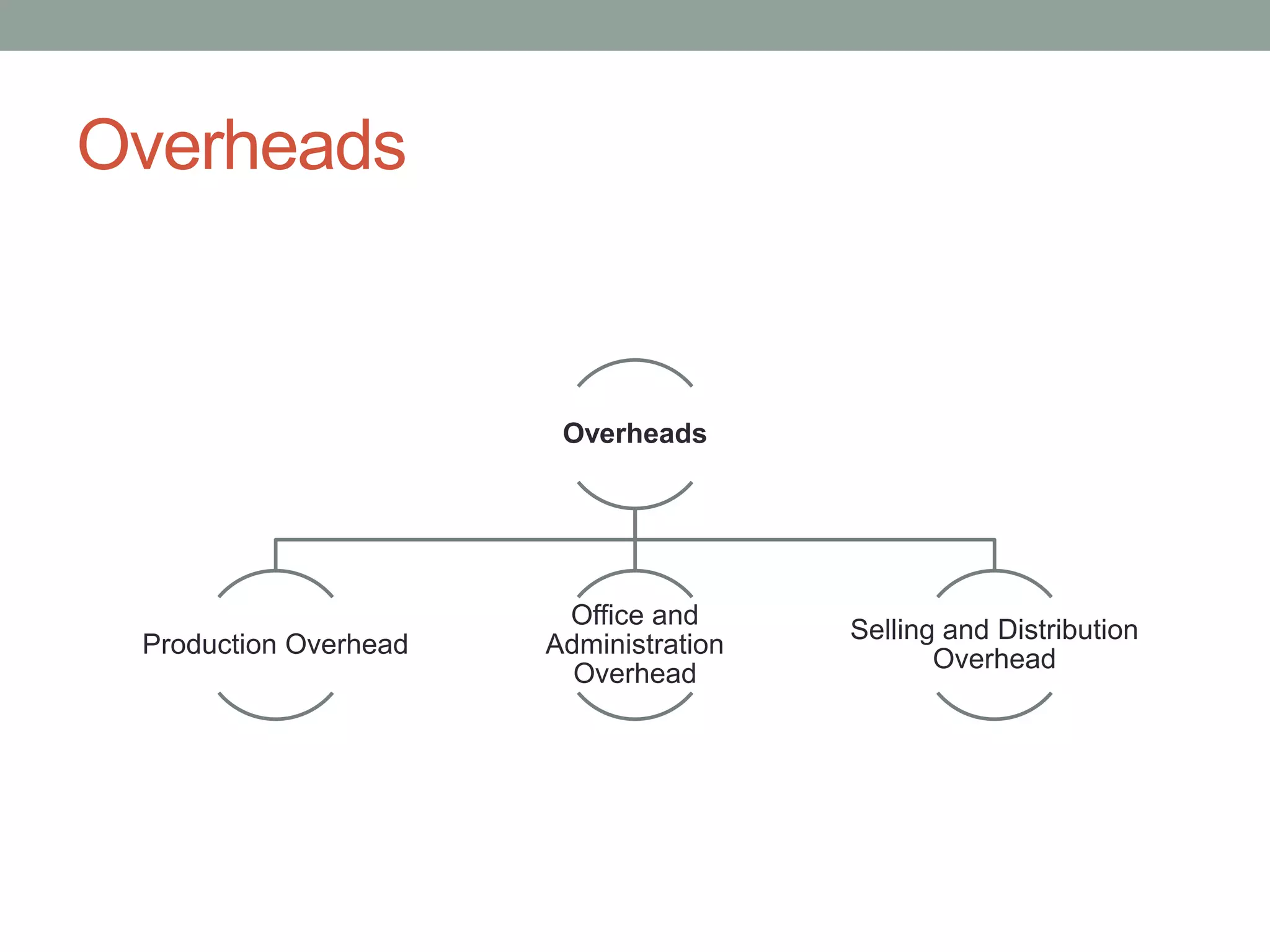
Overheads
Overheads
Production Overhead
Office and
Administration
Overhead
Selling and Distribution
Overhead
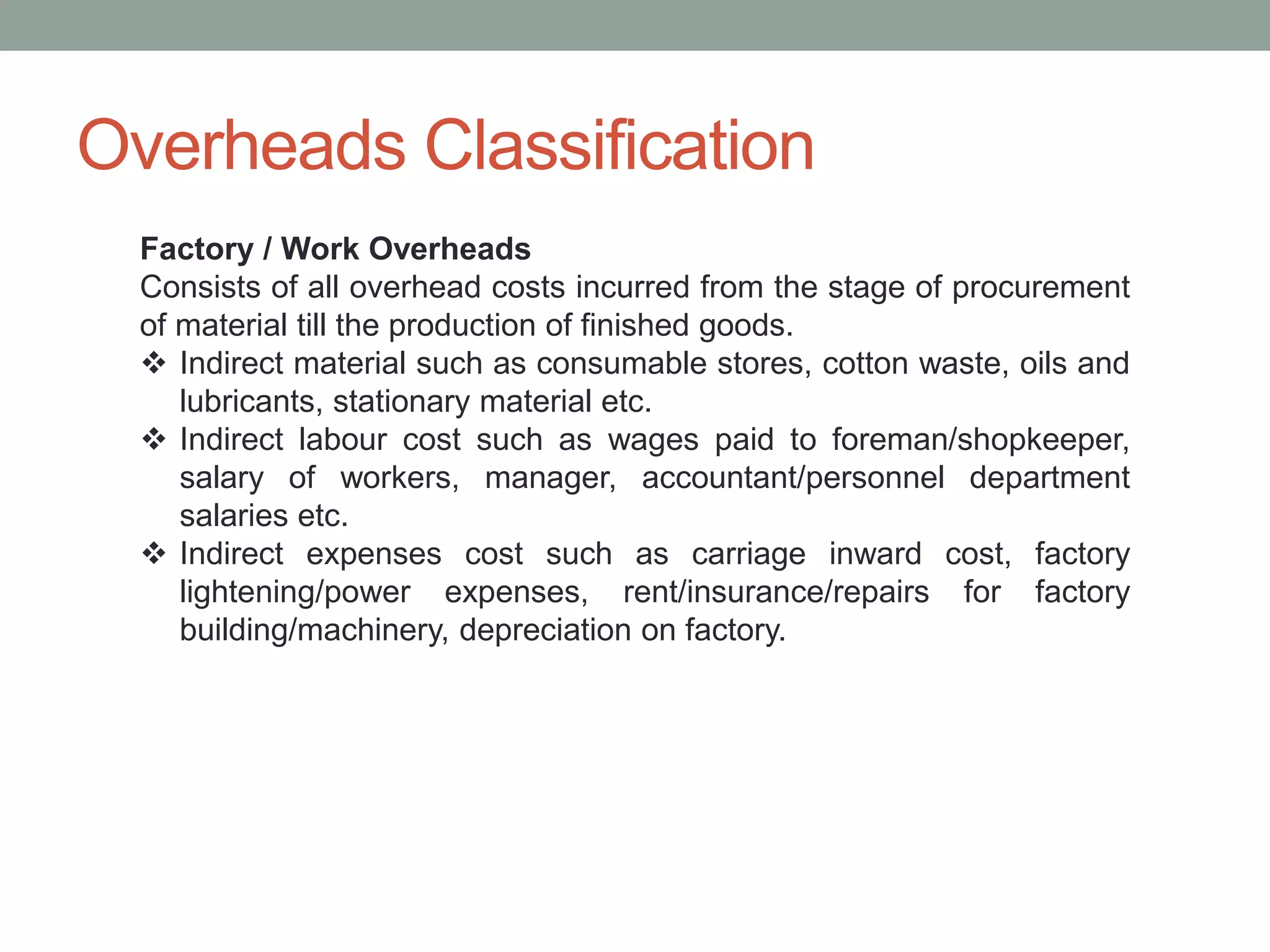
Overheads Classification
Factory / Work Overheads
Consists of all overhead costs incurred from the stage of procurement
of material till the production of finished goods.
 Indirect material such as consumable stores, cotton waste, oils and
lubricants, stationary material etc.
 Indirect labour cost such as wages paid to foreman/shopkeeper,
salary of workers, manager, accountant/personnel department
salaries etc.
 Indirect expenses cost such as carriage inward cost, factory
lightening/power expenses, rent/insurance/repairs for factory
building/machinery, depreciation on factory.
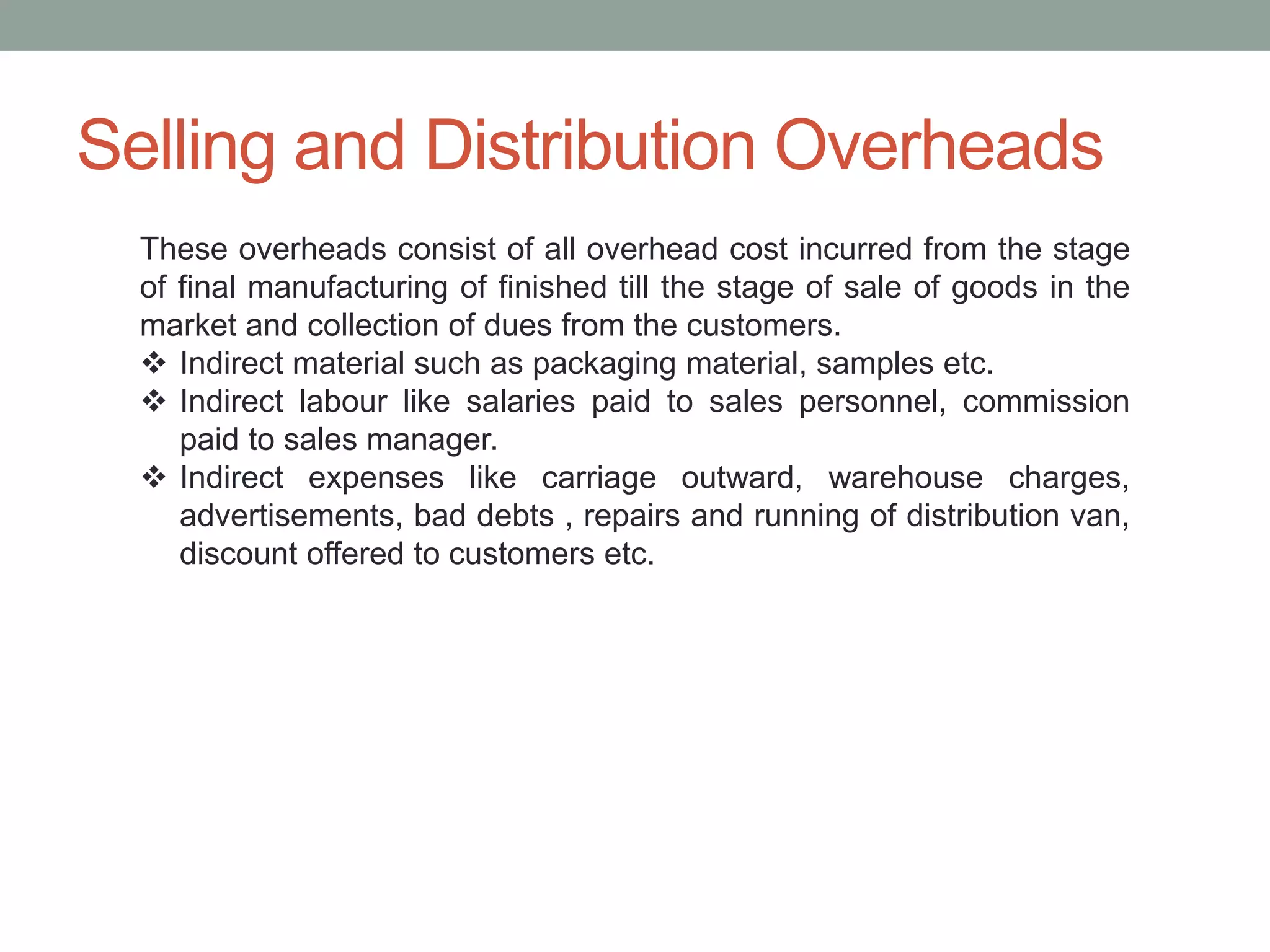
Selling and Distribution Overheads
These overheads consist of all overhead cost incurred from the stage
of final manufacturing of finished till the stage of sale of goods in the
market and collection of dues from the customers.
 Indirect material such as packaging material, samples etc.
 Indirect labour like salaries paid to sales personnel, commission
paid to sales manager.
 Indirect expenses like carriage outward, warehouse charges,
advertisements, bad debts , repairs and running of distribution van,
discount offered to customers etc.
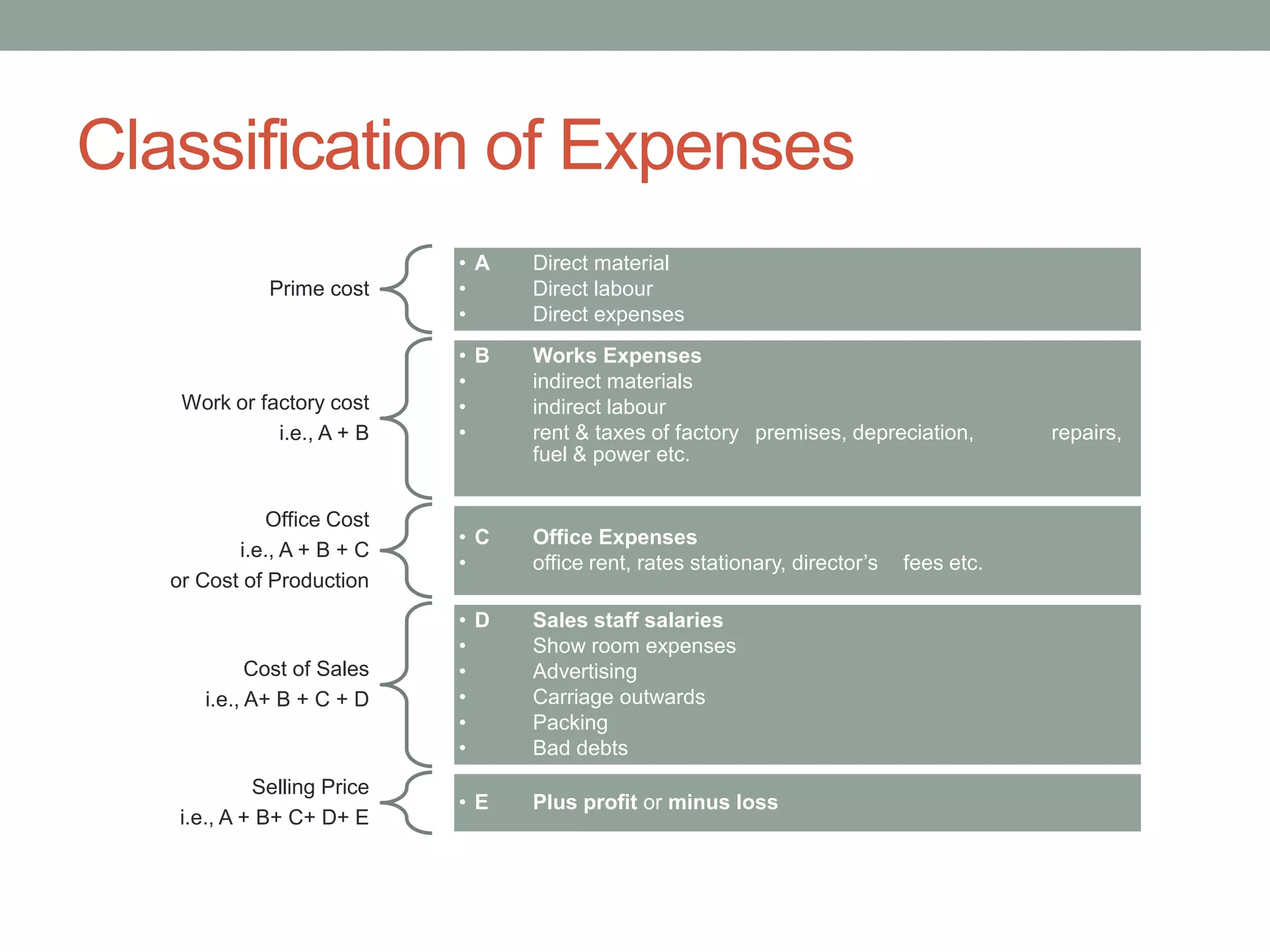
Classification of Expenses
Prime cost
• A Direct material
• Direct labour
• Direct expenses
Work or factory cost
i.e., A + B
• B Works Expenses
• indirect materials
• indirect labour
• rent & taxes of factory premises, depreciation, repairs,
fuel & power etc.
Office Cost
i.e., A + B + C
or Cost of Production
• C Office Expenses
• office rent, rates stationary, director’s fees etc.
Cost of Sales
i.e., A+ B + C + D
• D Sales staff salaries
• Show room expenses
• Advertising
• Carriage outwards
• Packing
• Bad debts
Selling Price
i.e., A + B+ C+ D+ E
• E Plus profit or minus loss
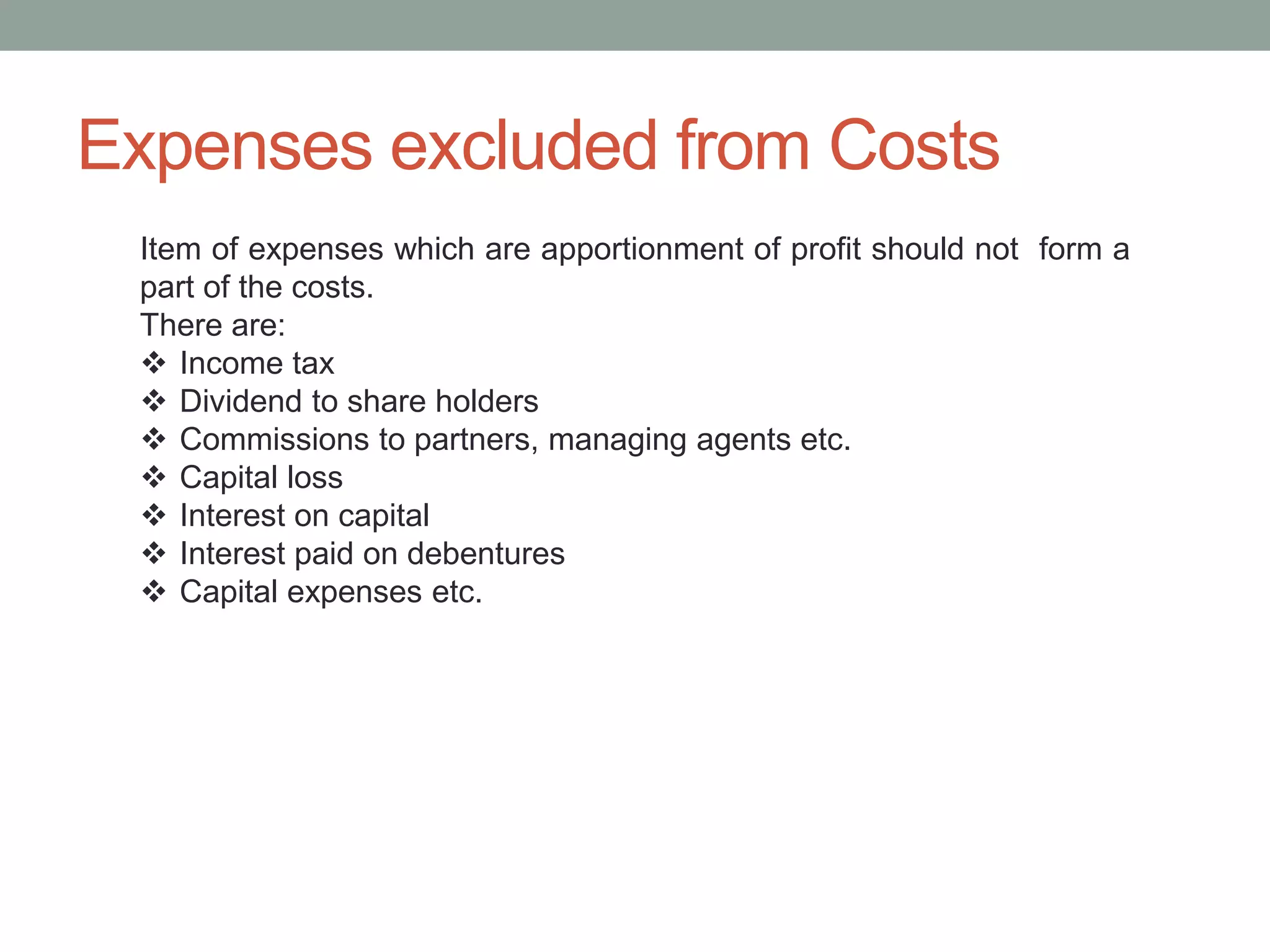
Expenses excluded from Costs
Item of expenses which are apportionment of profit should not form a
part of the costs.
There are:
 Income tax
 Dividend to share holders
 Commissions to partners, managing agents etc.
 Capital loss
 Interest on capital
 Interest paid on debentures
 Capital expenses etc.
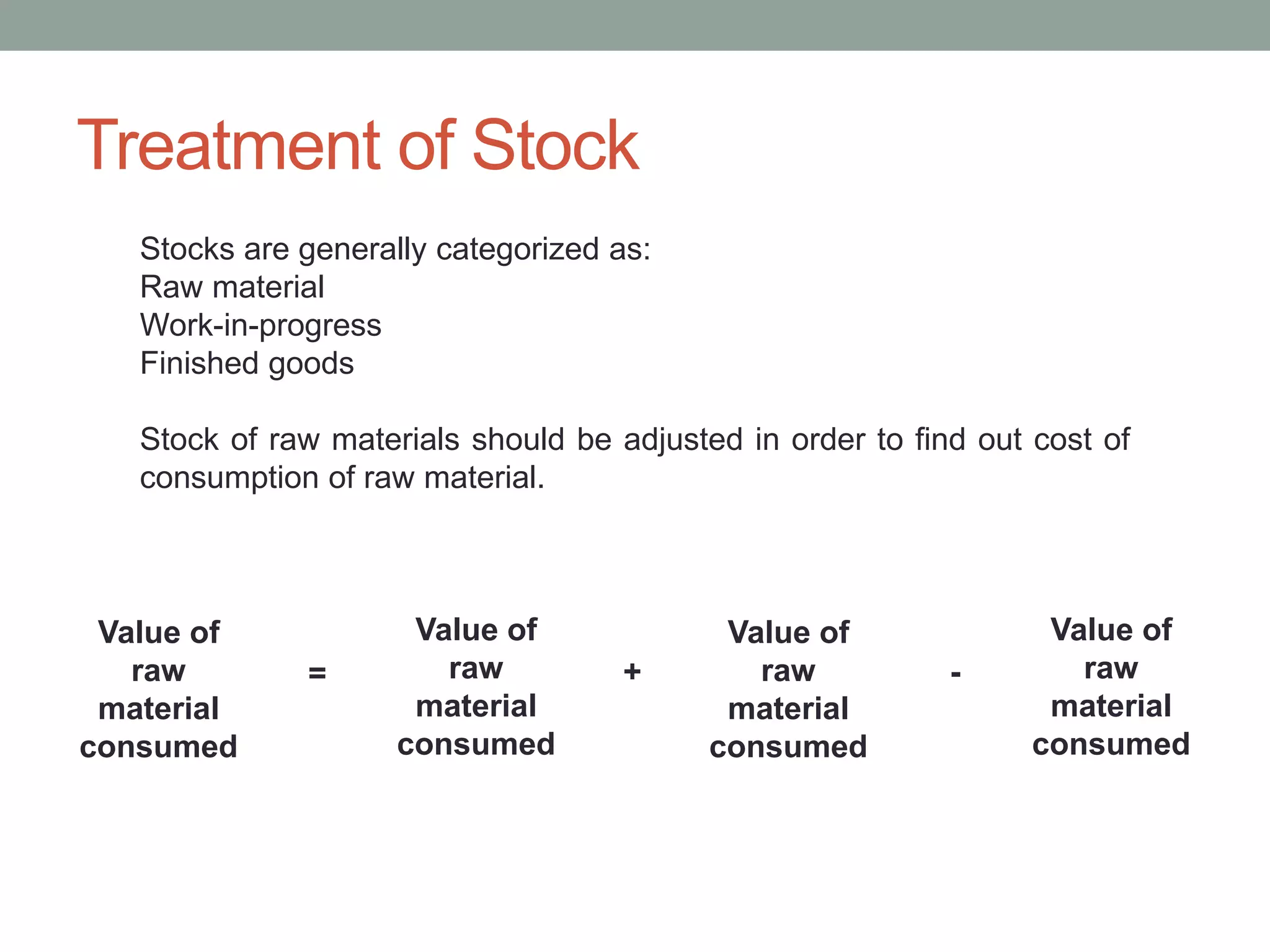
Treatment of Stock
Stocks are generally categorized as:
Raw material
Work-in-progress
Finished goods
Stock of raw materials should be adjusted in order to find out cost of
consumption of raw material.
Value of
raw
material
consumed
Value of
raw
material
consumed
Value of
raw
material
consumed
Value of
raw
material
consumed
= + -
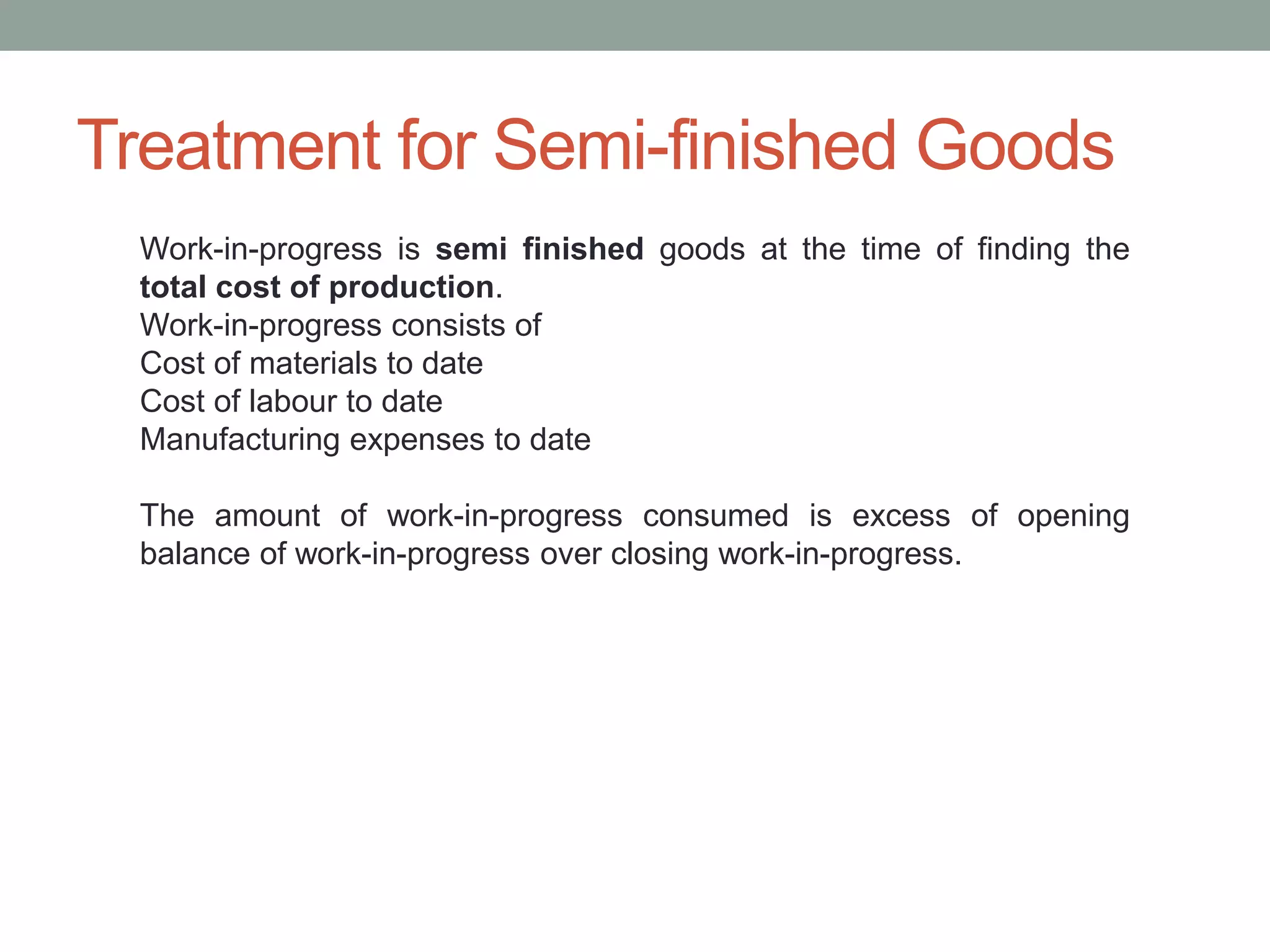
Treatment for Semi-finished Goods
Work-in-progress is semi finished goods at the time of finding the
total cost of production.
Work-in-progress consists of
Cost of materials to date
Cost of labour to date
Manufacturing expenses to date
The amount of work-in-progress consumed is excess of opening
balance of work-in-progress over closing work-in-progress.

Abhi rana)2. elements of cost and costing

  • 1.
    J.N. GOVT. ENGG.COLLEGE SUNDERNAGAR Presentation Mill Management and Maintenance TE-704 ABHISHEK RANA 10BTD5090001 Textile Engineering Costing
  • 2.
    Cost It may bedefined as the monetary value of all sacrifices made to achieve an objective (i.e., to produce goods and services)
  • 3.
    The Meaning of“Cost” Cost The sacrifice made, usually measured by the resources given up to achieve a particular purpose. Product Cost The cost assigned to goods that were either purchased or manufactured for resale. Period Cost Costs that are identified with the period in which they are incurred.
  • 4.
    Costing  Costing issimply cost finding.  It may be defined as “the technique and processes of ascertaining costs.”  Costing is classifying, recording and appropriate allocation of expenditure for the cost determination of the product or services.
  • 5.
    Elements of Cost Elementsof Cost There are major three elements of cost. Material Cost Commodities supplied to undertaking. Labour The cost of paying employees includes salaries, bonus etc. Expenses Costs other than material & labour
  • 6.
    Elements of Cost Elementsof Cost Material Direct Material Indirect Material Labour Direct labour Indirect labour Expenses Direct Expenses Indirect Expenses
  • 7.
    Material Cost of commoditiessupplied to an undertaking. Direct Material Generally becomes a part of finished product. E.g., fiber for spinning mill, sugarcane of sugar factory etc. Indirect Material Necessary in production process but not become integral part of the product. E.g., oil, grease, sand paper etc.
  • 8.
    Labour Cost of remuneration(expenses on wages) includes salaries, bonuses. Direct Labour Wages paid to employees engage in converting raw material into finished product. E.g., sider. Indirect Labour Wages paid to employees those who are not engage in production process. E.g., security guards.
  • 9.
    Expenses All the costother than material and labour are termed as expenses. Direct Expenses Expenses which are specifically incurred on particular job/product. e.g., power, design cost, etc. Indirect Expenses All the indirect cost other than indirect material and indirect labour are termed as indirect expenses. e.g., telephone bill, rent, insurance, etc.
  • 10.
    Prime Cost Prime Cost DirectMaterial Direct Labour Direct Expenses
  • 11.
  • 12.
  • 13.
    Overheads Classification Factory /Work Overheads Consists of all overhead costs incurred from the stage of procurement of material till the production of finished goods.  Indirect material such as consumable stores, cotton waste, oils and lubricants, stationary material etc.  Indirect labour cost such as wages paid to foreman/shopkeeper, salary of workers, manager, accountant/personnel department salaries etc.  Indirect expenses cost such as carriage inward cost, factory lightening/power expenses, rent/insurance/repairs for factory building/machinery, depreciation on factory.
  • 14.
    Selling and DistributionOverheads These overheads consist of all overhead cost incurred from the stage of final manufacturing of finished till the stage of sale of goods in the market and collection of dues from the customers.  Indirect material such as packaging material, samples etc.  Indirect labour like salaries paid to sales personnel, commission paid to sales manager.  Indirect expenses like carriage outward, warehouse charges, advertisements, bad debts , repairs and running of distribution van, discount offered to customers etc.
  • 15.
    Classification of Expenses Primecost • A Direct material • Direct labour • Direct expenses Work or factory cost i.e., A + B • B Works Expenses • indirect materials • indirect labour • rent & taxes of factory premises, depreciation, repairs, fuel & power etc. Office Cost i.e., A + B + C or Cost of Production • C Office Expenses • office rent, rates stationary, director’s fees etc. Cost of Sales i.e., A+ B + C + D • D Sales staff salaries • Show room expenses • Advertising • Carriage outwards • Packing • Bad debts Selling Price i.e., A + B+ C+ D+ E • E Plus profit or minus loss
  • 16.
    Expenses excluded fromCosts Item of expenses which are apportionment of profit should not form a part of the costs. There are:  Income tax  Dividend to share holders  Commissions to partners, managing agents etc.  Capital loss  Interest on capital  Interest paid on debentures  Capital expenses etc.
  • 17.
    Treatment of Stock Stocksare generally categorized as: Raw material Work-in-progress Finished goods Stock of raw materials should be adjusted in order to find out cost of consumption of raw material. Value of raw material consumed Value of raw material consumed Value of raw material consumed Value of raw material consumed = + -
  • 18.
    Treatment for Semi-finishedGoods Work-in-progress is semi finished goods at the time of finding the total cost of production. Work-in-progress consists of Cost of materials to date Cost of labour to date Manufacturing expenses to date The amount of work-in-progress consumed is excess of opening balance of work-in-progress over closing work-in-progress.