
ACCOUNTING FOR MANAGEMENT 
PRINCIPLES, CONCEPTS AND 
ACCOUNTING EQUATION 
JITHIN K THOMAS 
BIMS
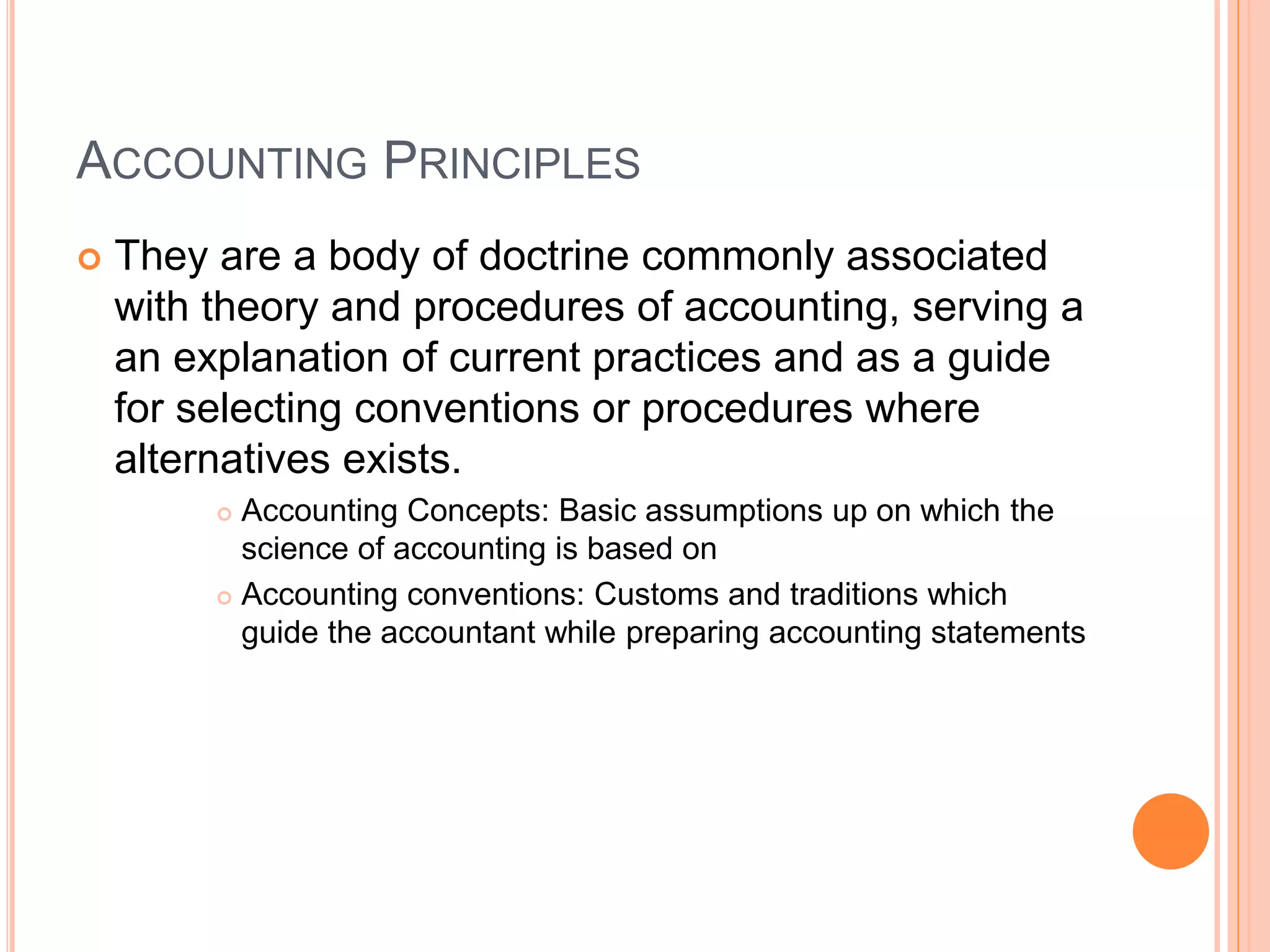
ACCOUNTING PRINCIPLES 
 They are a body of doctrine commonly associated 
with theory and procedures of accounting, serving a 
an explanation of current practices and as a guide 
for selecting conventions or procedures where 
alternatives exists. 
 Accounting Concepts: Basic assumptions up on which the 
science of accounting is based on 
 Accounting conventions: Customs and traditions which 
guide the accountant while preparing accounting statements
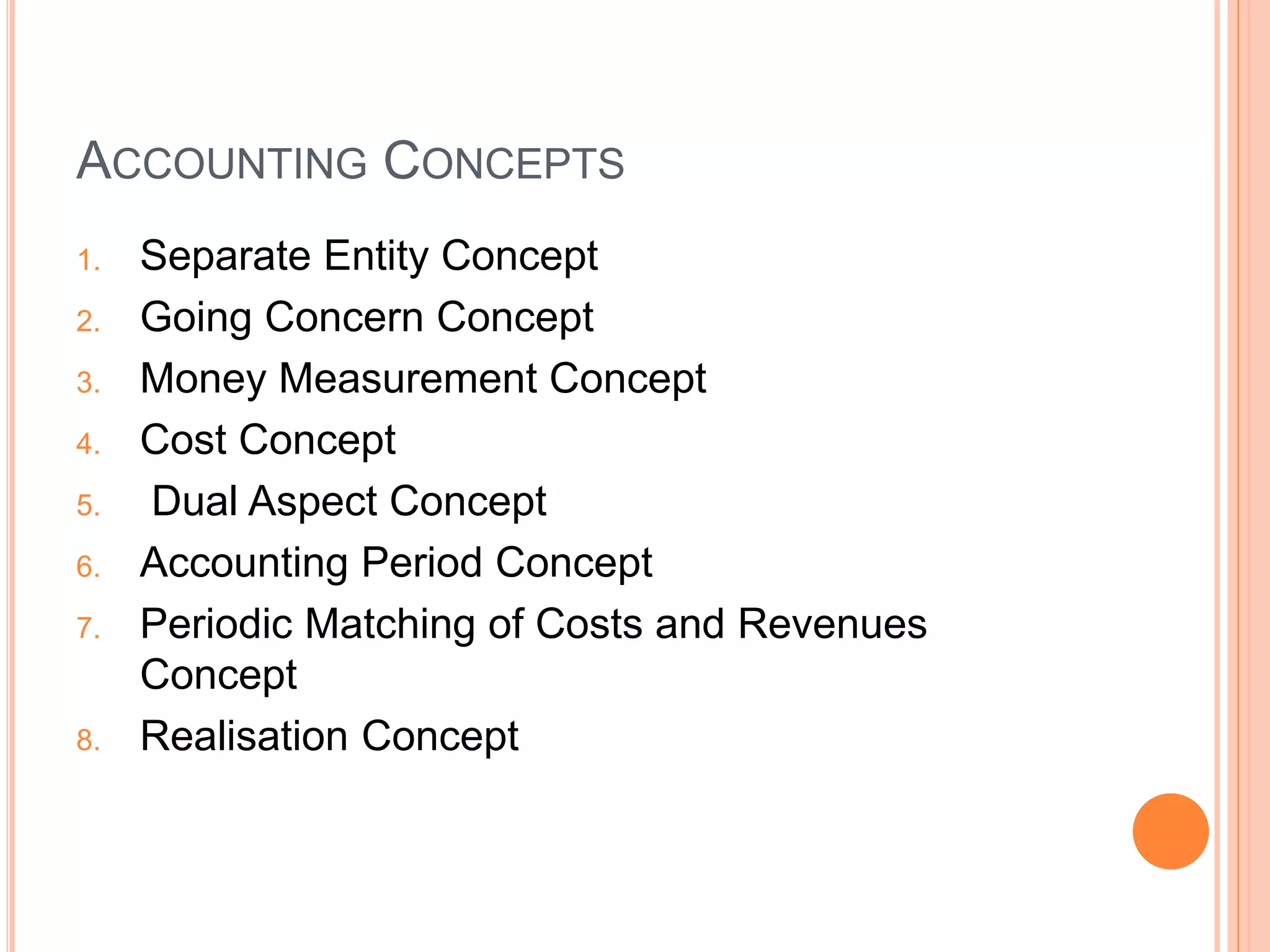
ACCOUNTING CONCEPTS 
1. Separate Entity Concept 
2. Going Concern Concept 
3. Money Measurement Concept 
4. Cost Concept 
5. Dual Aspect Concept 
6. Accounting Period Concept 
7. Periodic Matching of Costs and Revenues 
Concept 
8. Realisation Concept
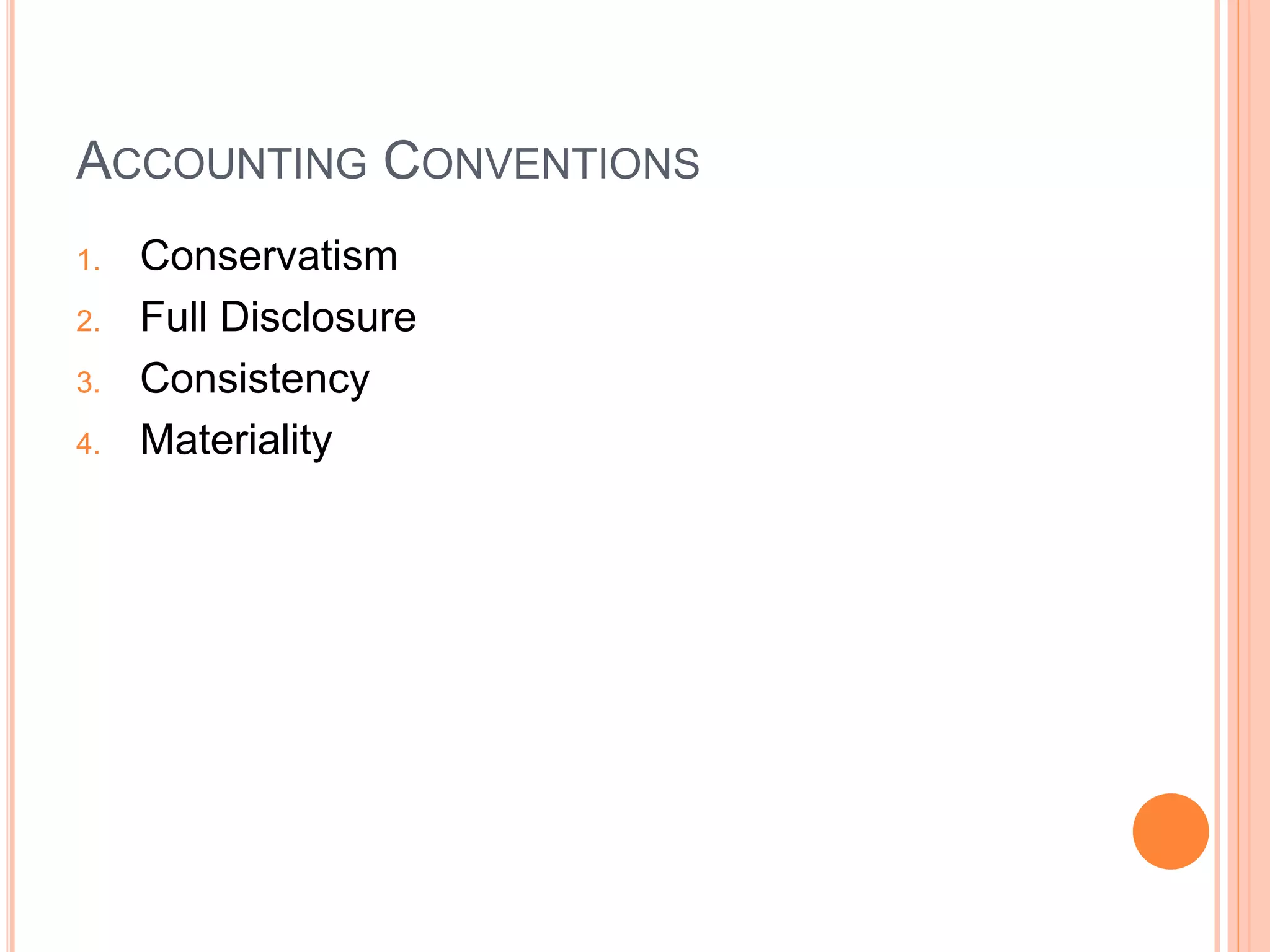
ACCOUNTING CONVENTIONS 
1. Conservatism 
2. Full Disclosure 
3. Consistency 
4. Materiality
SYSTEM OF BOOK KEEPING 
 Single entry system 
 Double entry system
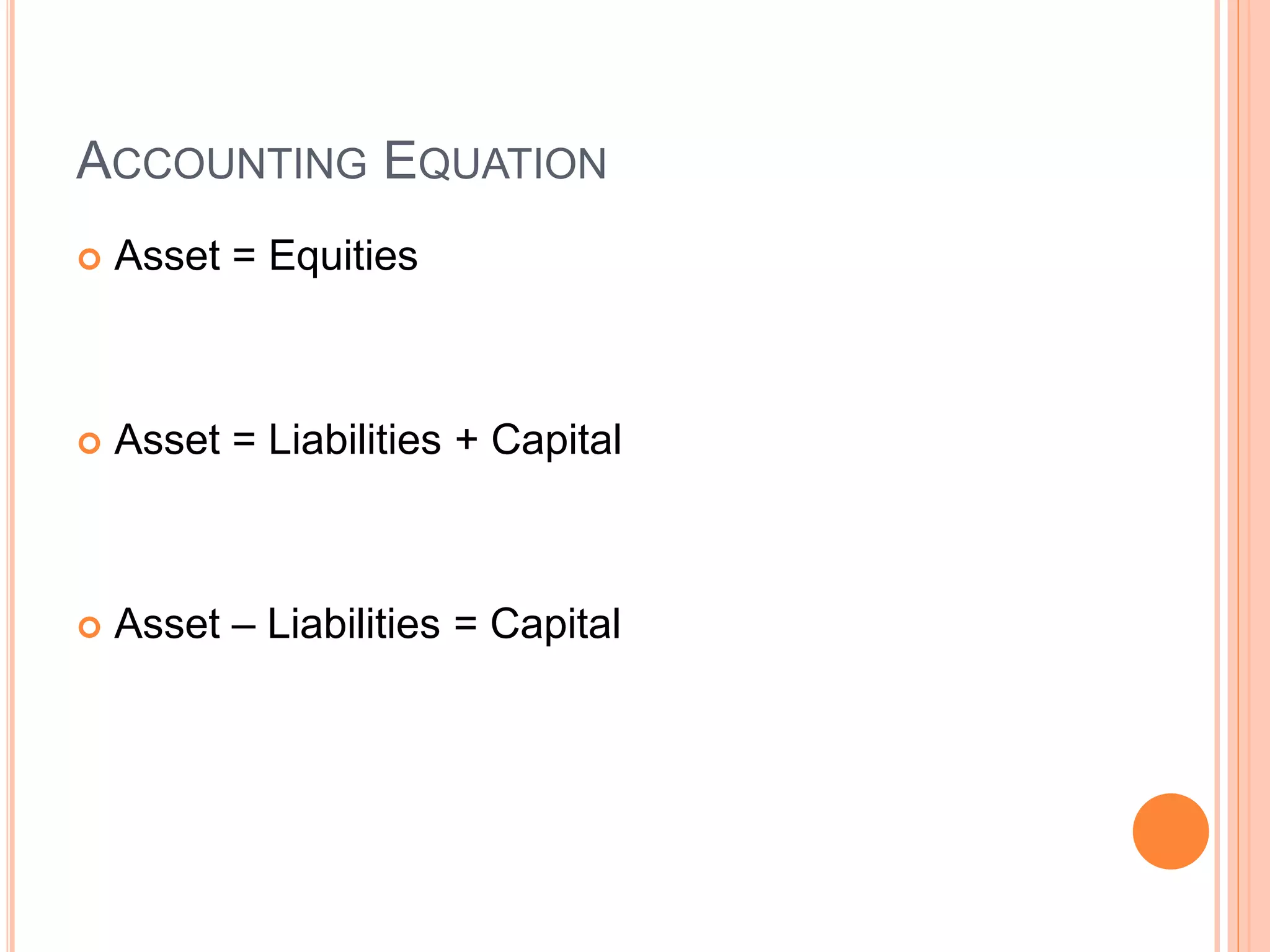
ACCOUNTING EQUATION 
 Asset = Equities 
 Asset = Liabilities + Capital 
 Asset – Liabilities = Capital
ACCOUNTING EQUITATION 
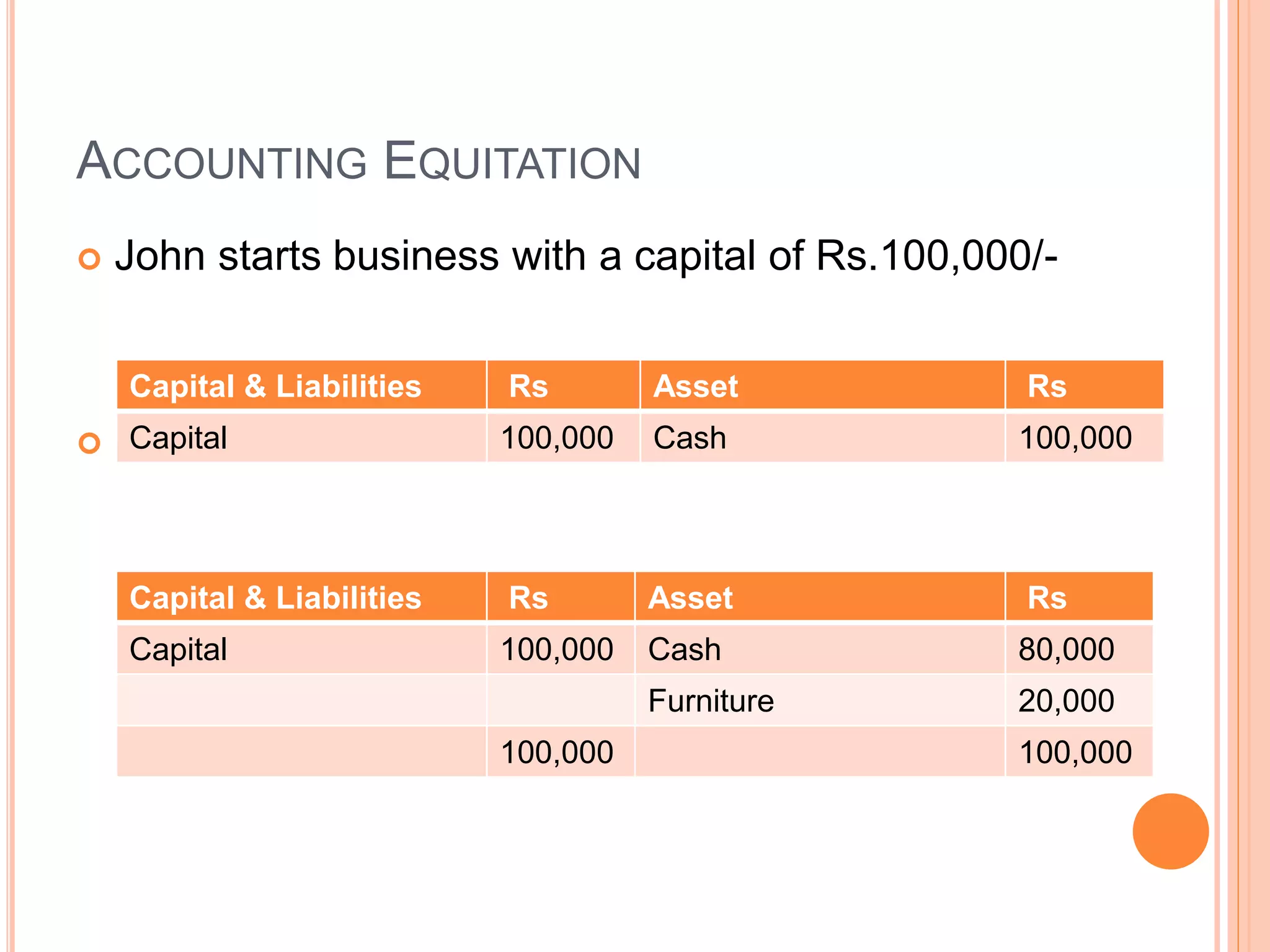
 John starts business with a capital of Rs.100,000/- 
Capital & Liabilities Rs Asset Rs 
Capital 100,000 Cash 100,000 
 John purchases furniture for cash worth Rs.20000. 
Capital & Liabilities Rs Asset Rs 
Capital 100,000 Cash 80,000 
Furniture 20,000 
100,000 100,000
ACCOUNTING EQUITATION 
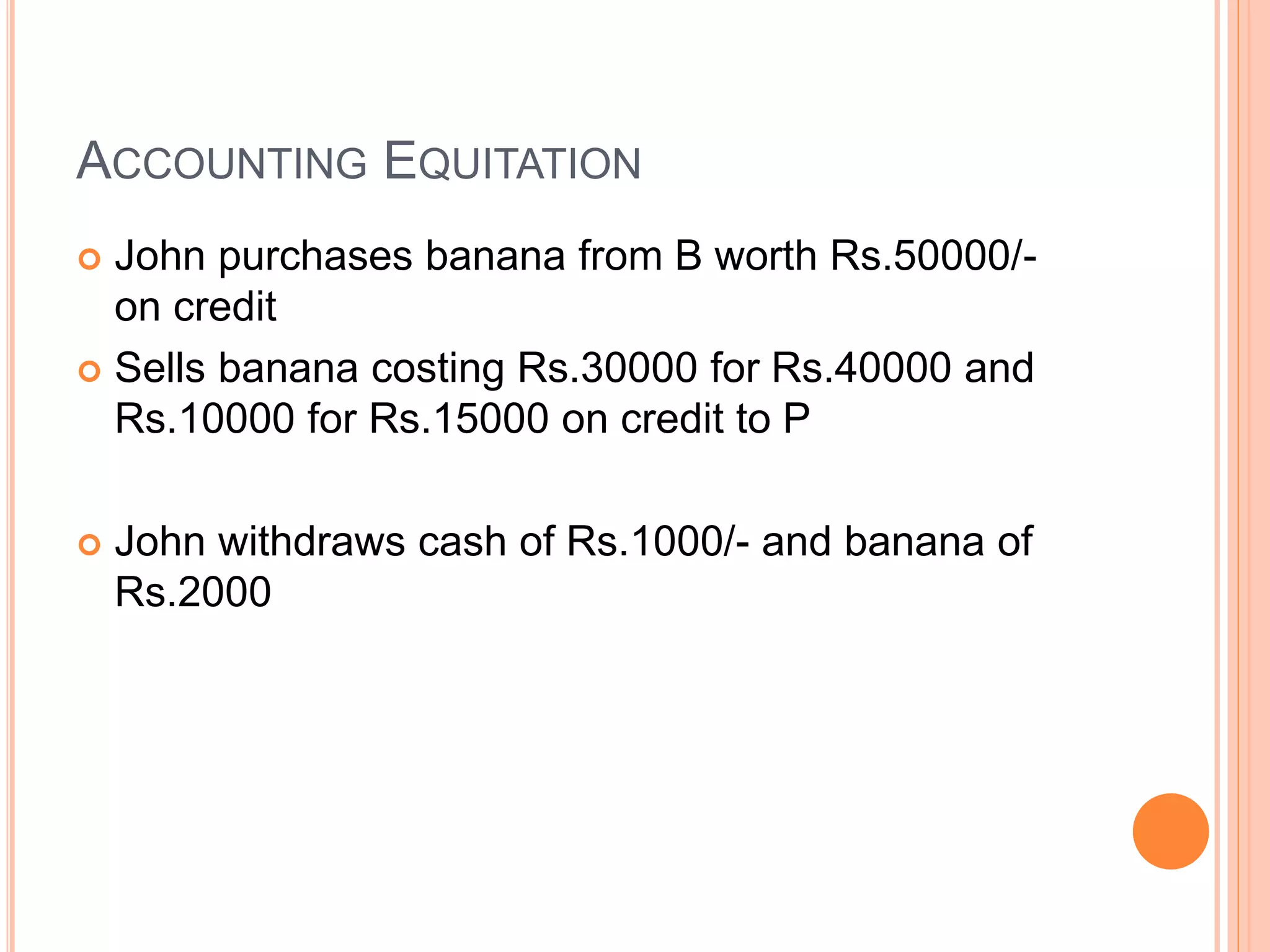
 John purchases banana from B worth Rs.50000/- 
on credit 
 Sells banana costing Rs.30000 for Rs.40000 and 
Rs.10000 for Rs.15000 on credit to P 
 John withdraws cash of Rs.1000/- and banana of 
Rs.2000
Accounting Principles, Concepts and Accounting Equation

Accounting Principles, Concepts and Accounting Equation

  • 1.
    ACCOUNTING FOR MANAGEMENT PRINCIPLES, CONCEPTS AND ACCOUNTING EQUATION JITHIN K THOMAS BIMS
  • 2.
    ACCOUNTING PRINCIPLES They are a body of doctrine commonly associated with theory and procedures of accounting, serving a an explanation of current practices and as a guide for selecting conventions or procedures where alternatives exists.  Accounting Concepts: Basic assumptions up on which the science of accounting is based on  Accounting conventions: Customs and traditions which guide the accountant while preparing accounting statements
  • 3.
    ACCOUNTING CONCEPTS 1.Separate Entity Concept 2. Going Concern Concept 3. Money Measurement Concept 4. Cost Concept 5. Dual Aspect Concept 6. Accounting Period Concept 7. Periodic Matching of Costs and Revenues Concept 8. Realisation Concept
  • 4.
    ACCOUNTING CONVENTIONS 1.Conservatism 2. Full Disclosure 3. Consistency 4. Materiality
  • 5.
    SYSTEM OF BOOKKEEPING  Single entry system  Double entry system
  • 6.
    ACCOUNTING EQUATION Asset = Equities  Asset = Liabilities + Capital  Asset – Liabilities = Capital
  • 7.
    ACCOUNTING EQUITATION John starts business with a capital of Rs.100,000/- Capital & Liabilities Rs Asset Rs Capital 100,000 Cash 100,000  John purchases furniture for cash worth Rs.20000. Capital & Liabilities Rs Asset Rs Capital 100,000 Cash 80,000 Furniture 20,000 100,000 100,000
  • 8.
    ACCOUNTING EQUITATION John purchases banana from B worth Rs.50000/- on credit  Sells banana costing Rs.30000 for Rs.40000 and Rs.10000 for Rs.15000 on credit to P  John withdraws cash of Rs.1000/- and banana of Rs.2000