SESSION - 1
Accounting terminology and Review of Basics
CA Aishwarya Krishnaswamy
We are going to refresh
• General Accounting Concepts
• Accounting Conventions
• Accounting Principles
• Accounting Equation
• Preparation of Journal Entries
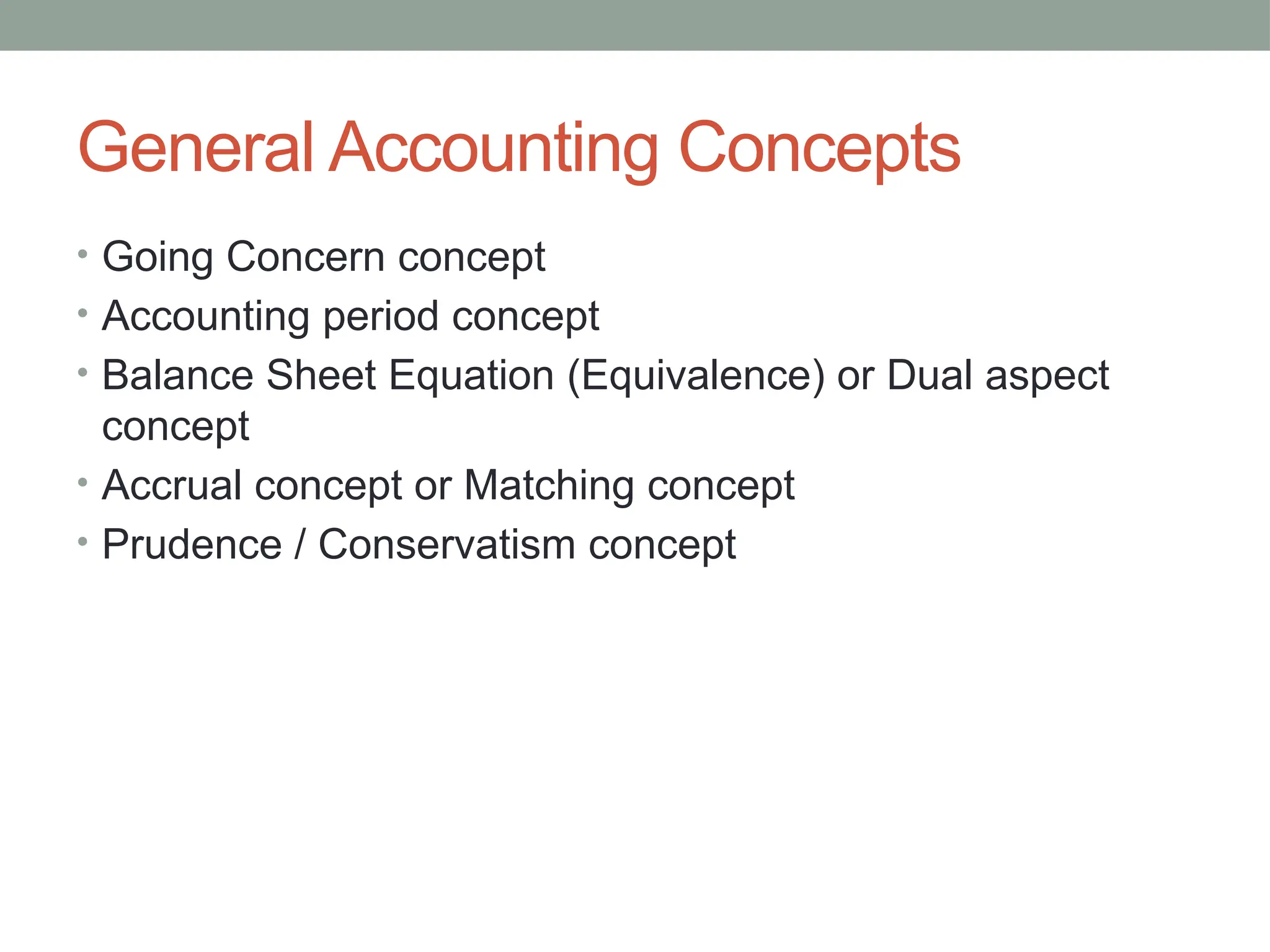
General Accounting Concepts
• Going Concern concept
• Accounting period concept
• Balance Sheet Equation (Equivalence) or Dual aspect
concept
• Accrual concept or Matching concept
• Prudence / Conservatism concept
Going concern Concept
• The business will continue to operate for the
foreseeable future
• Financial statements to be prepared on a going concern
basis unless management either intends to liquidate the
enterprise or to cease trading, or has no realistic
alternative but to do so
• All transactions of the business are recorded from this
standpoint
• Exercise: Look at Spice Jet Annual Report for 2013-
2014 (Auditor’s report)
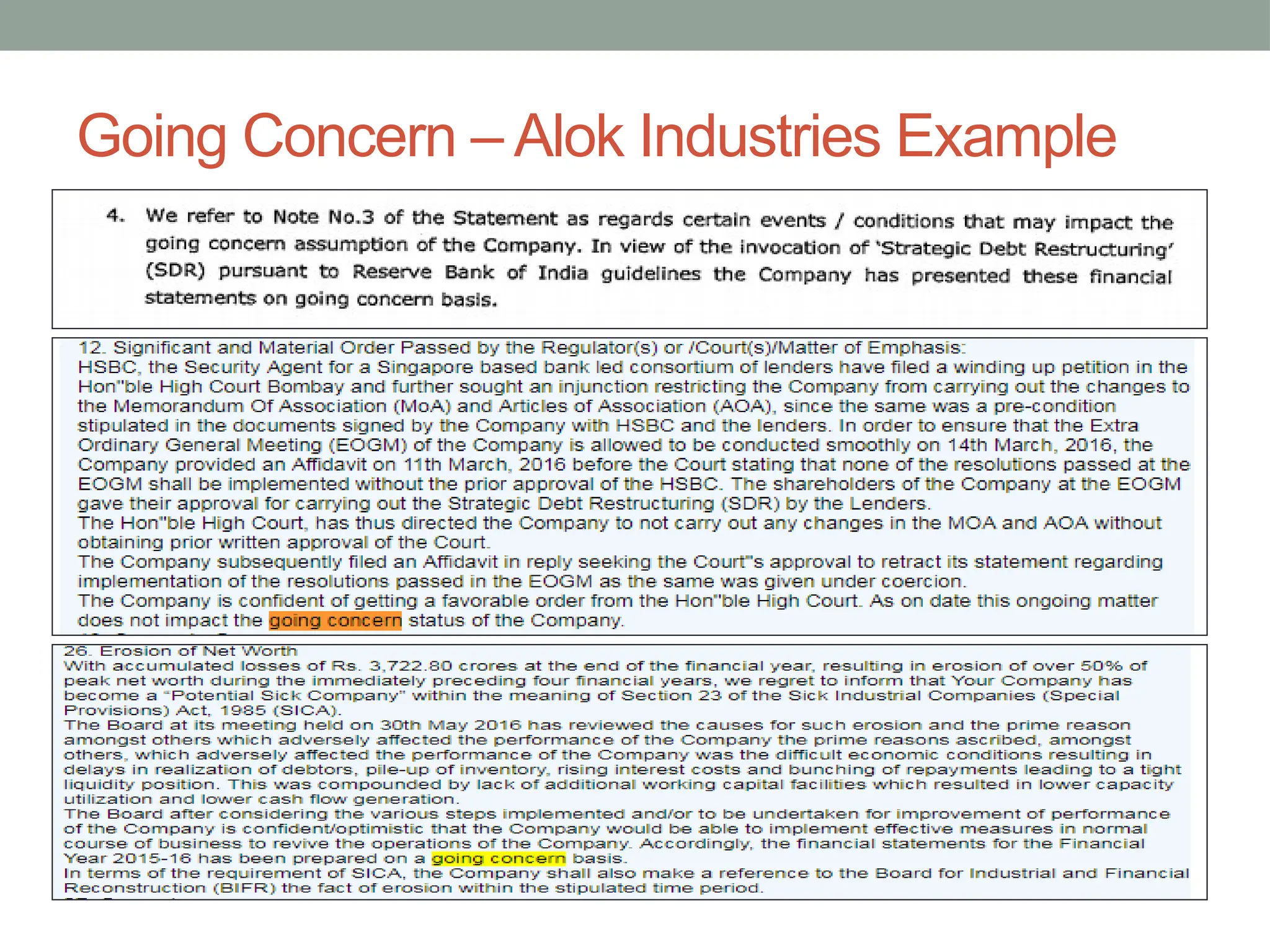
Going Concern – Alok Industries Example
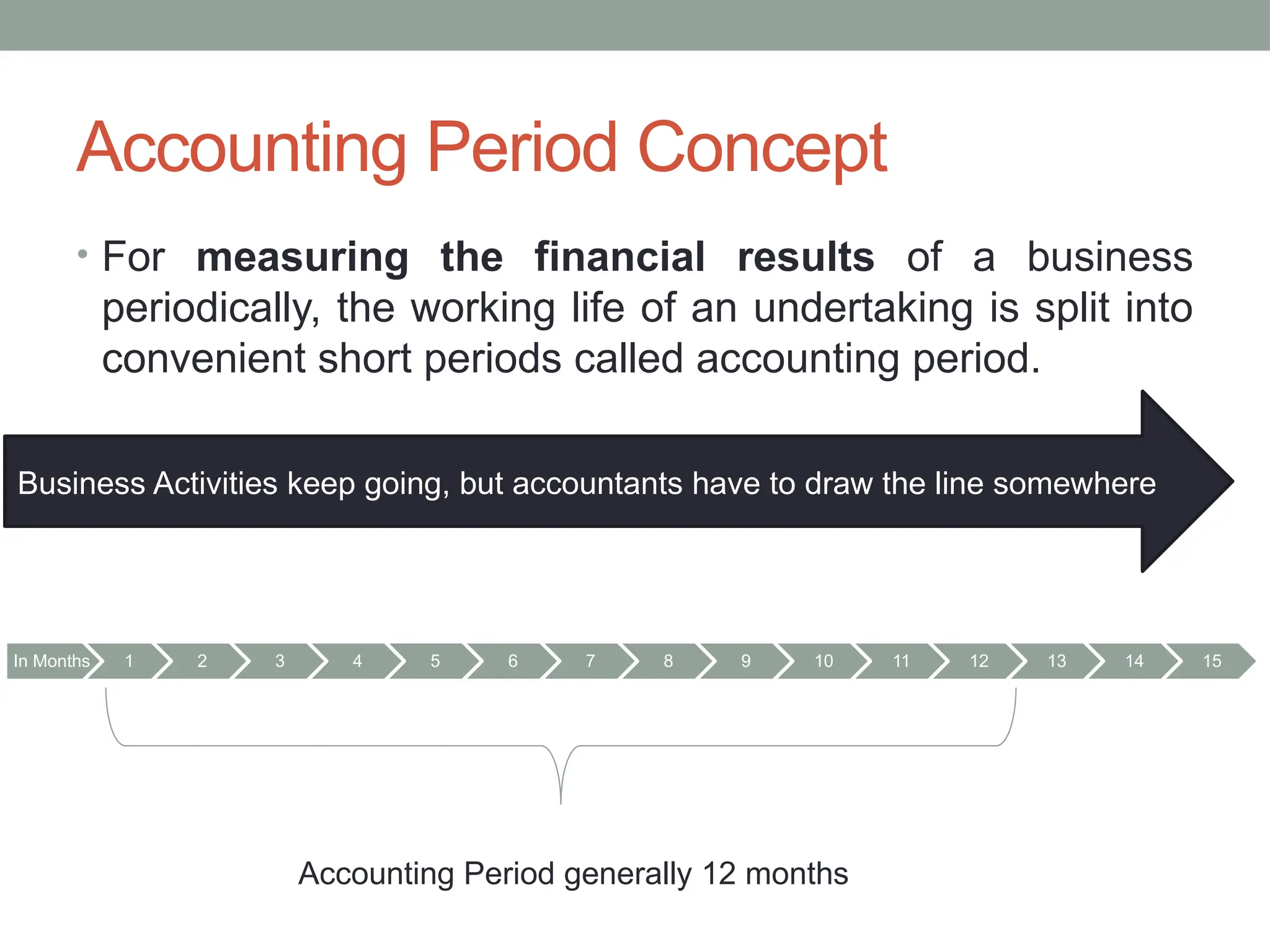
Accounting Period Concept
• For measuring the financial results of a business
periodically, the working life of an undertaking is split into
convenient short periods called accounting period.
Business Activities keep going, but accountants have to draw the line somewhere
In Months 1 2 3 4 5 6 7 8 9 10 11 12 13 14 15
Accounting Period generally 12 months
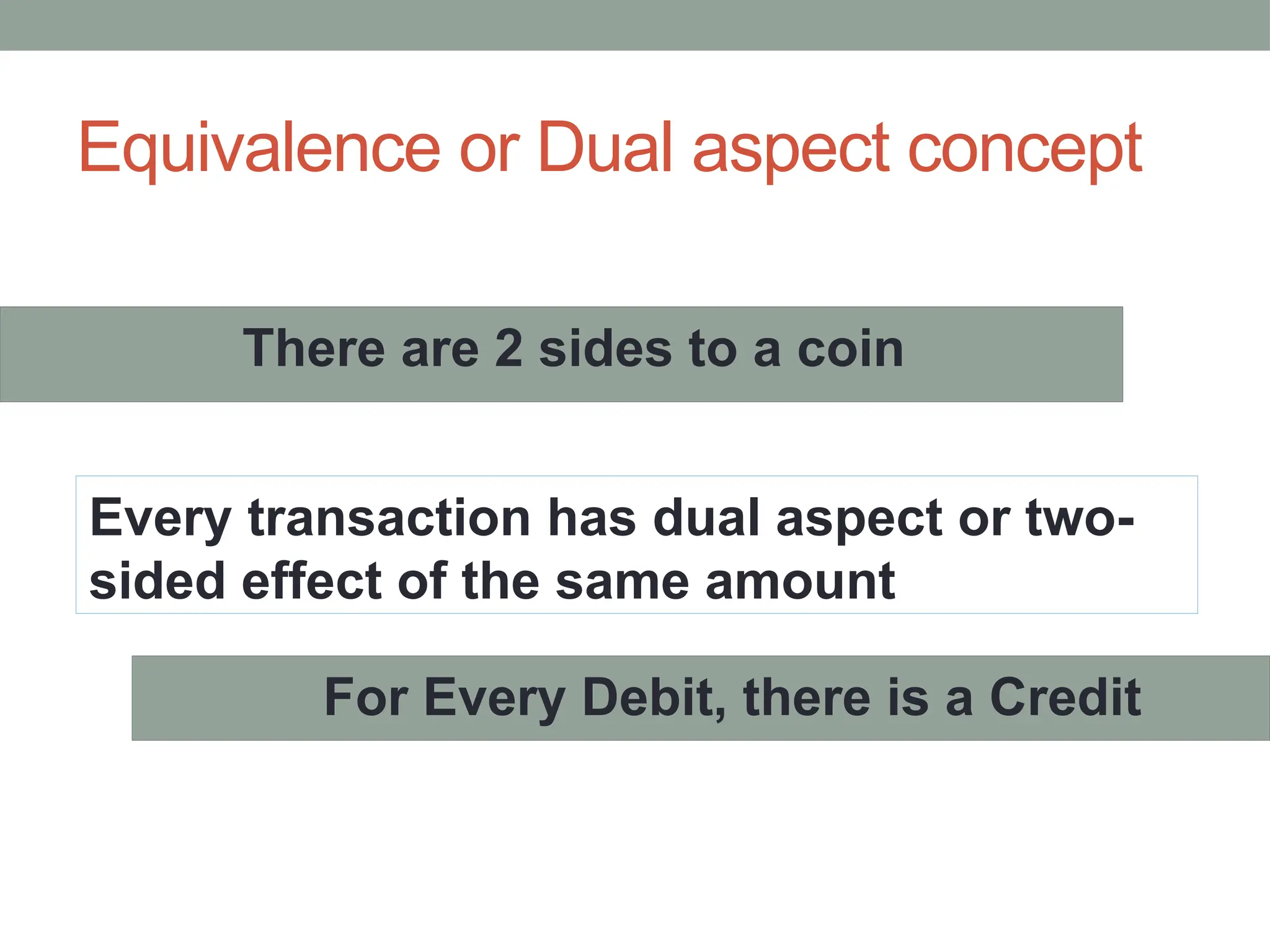
Equivalence or Dual aspect concept
• For Every Debit, there is a Credit
• There are 2 sides to a coin
Every transaction has dual aspect or two-
sided effect of the same amount
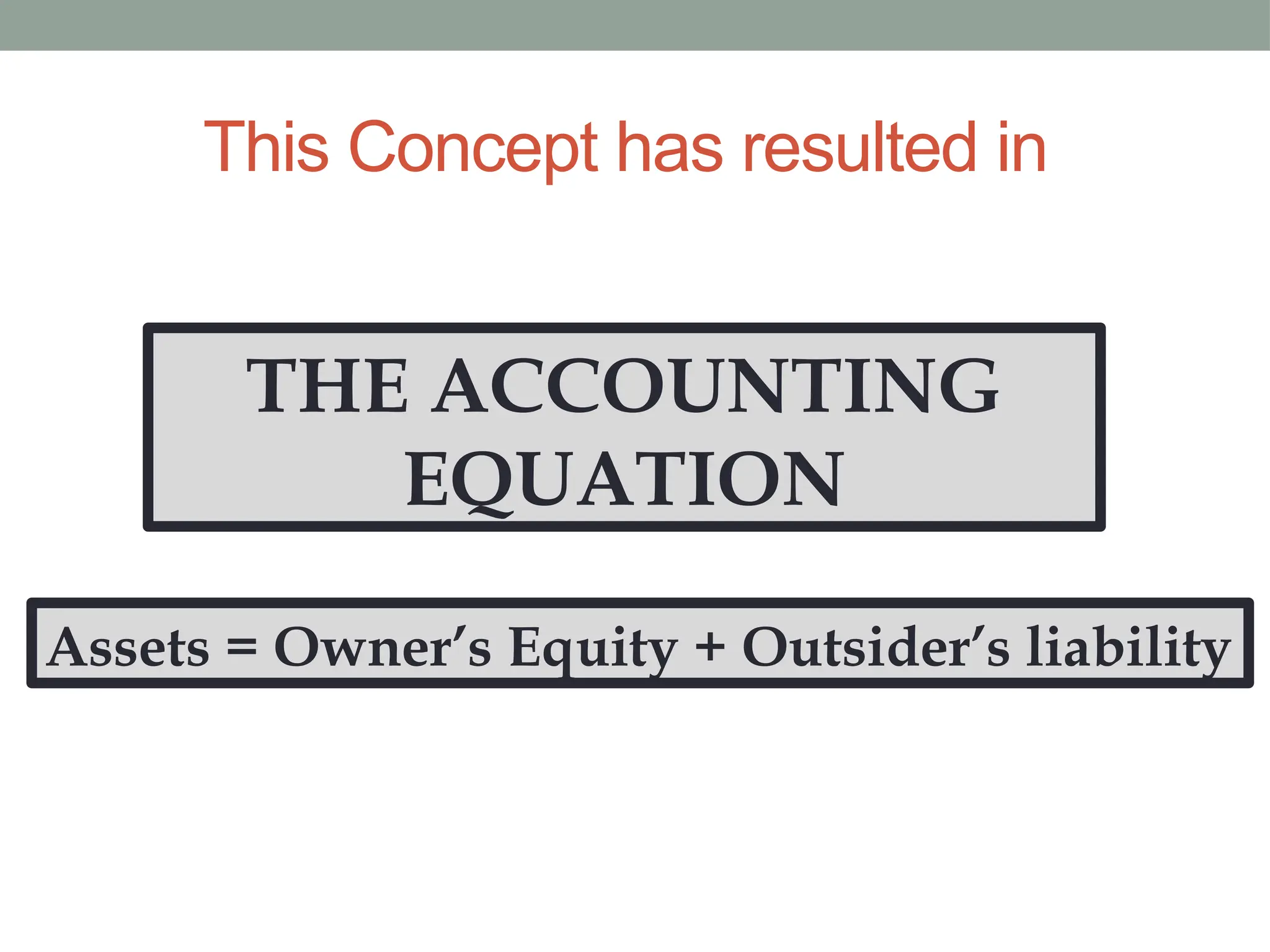
This Concept has resulted in
THE ACCOUNTING
EQUATION
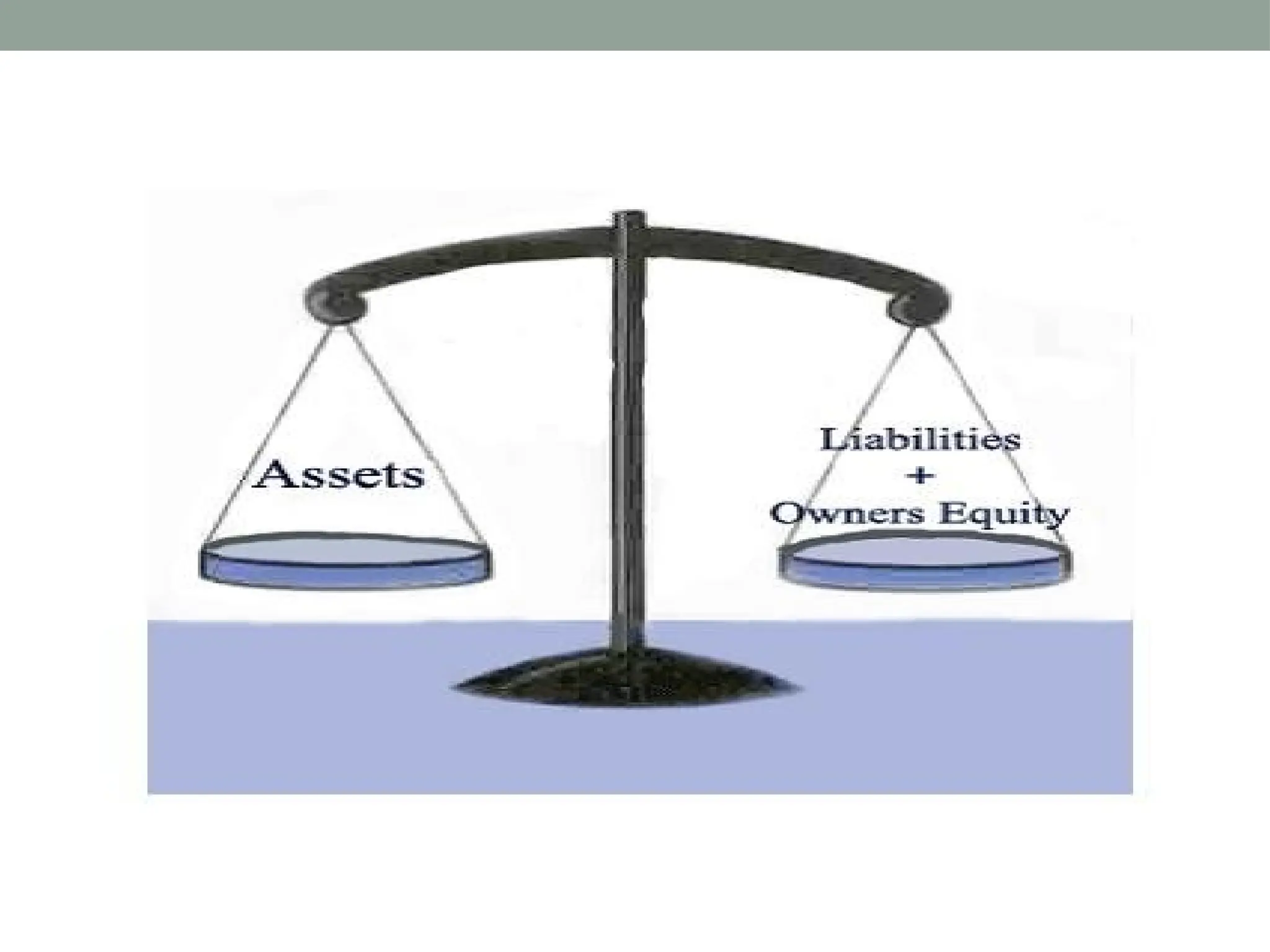
Assets = Owner’s Equity + Outsider’s liability
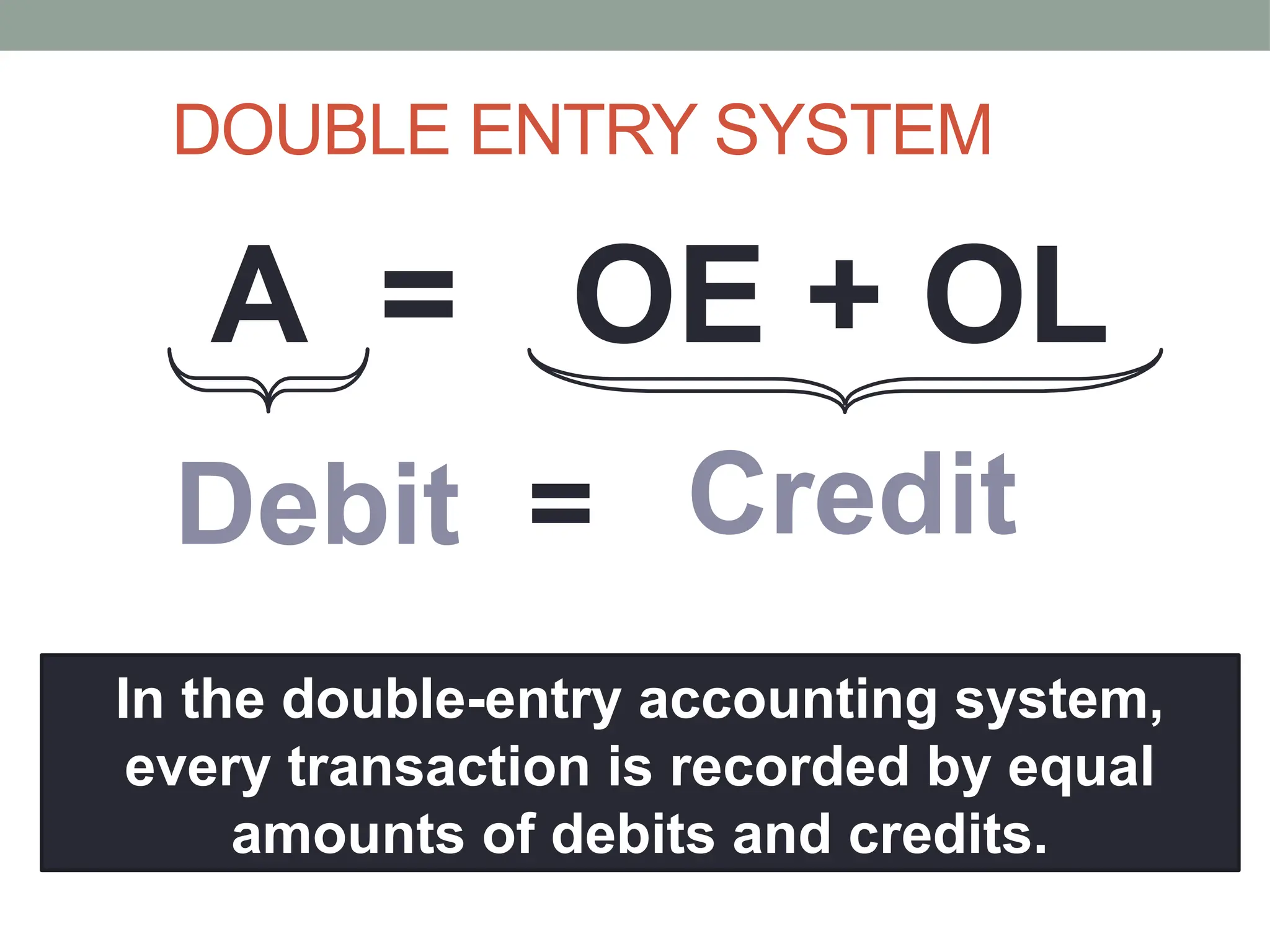
DOUBLE ENTRY SYSTEM
A = OE + OL
In the double-entry accounting system,
every transaction is recorded by equal
amounts of debits and credits.
Debit = Credit
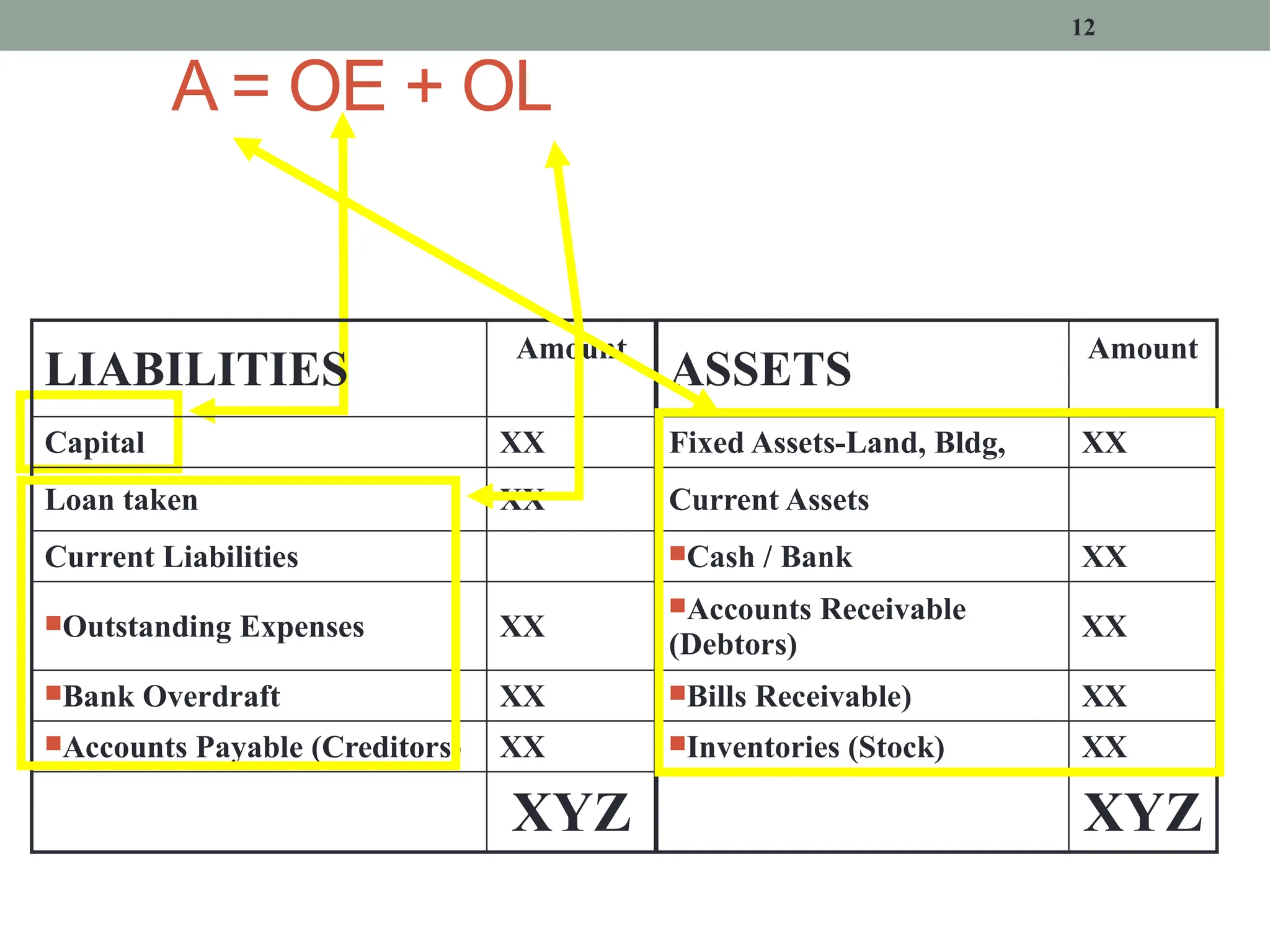
A = OE + OL
12
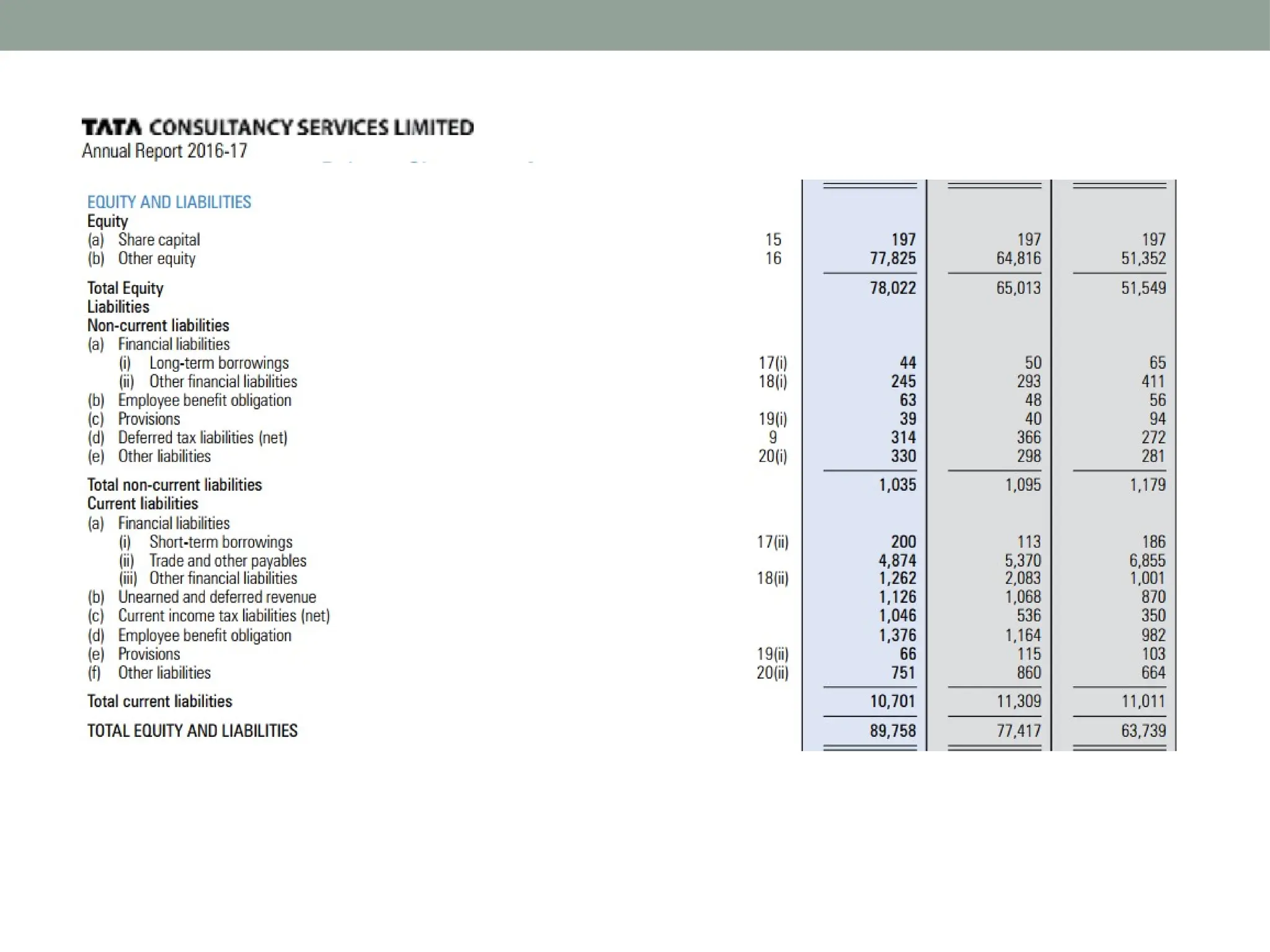
LIABILITIES
Amount
ASSETS
Amount
Capital XX Fixed Assets-Land, Bldg, XX
Loan taken XX Current Assets
Current Liabilities Cash / Bank XX
Outstanding Expenses XX
Accounts Receivable
(Debtors)
XX
Bank Overdraft XX Bills Receivable) XX
Accounts Payable (Creditors) XX Inventories (Stock) XX
XYZ XYZ
Accounting Equation - Examples
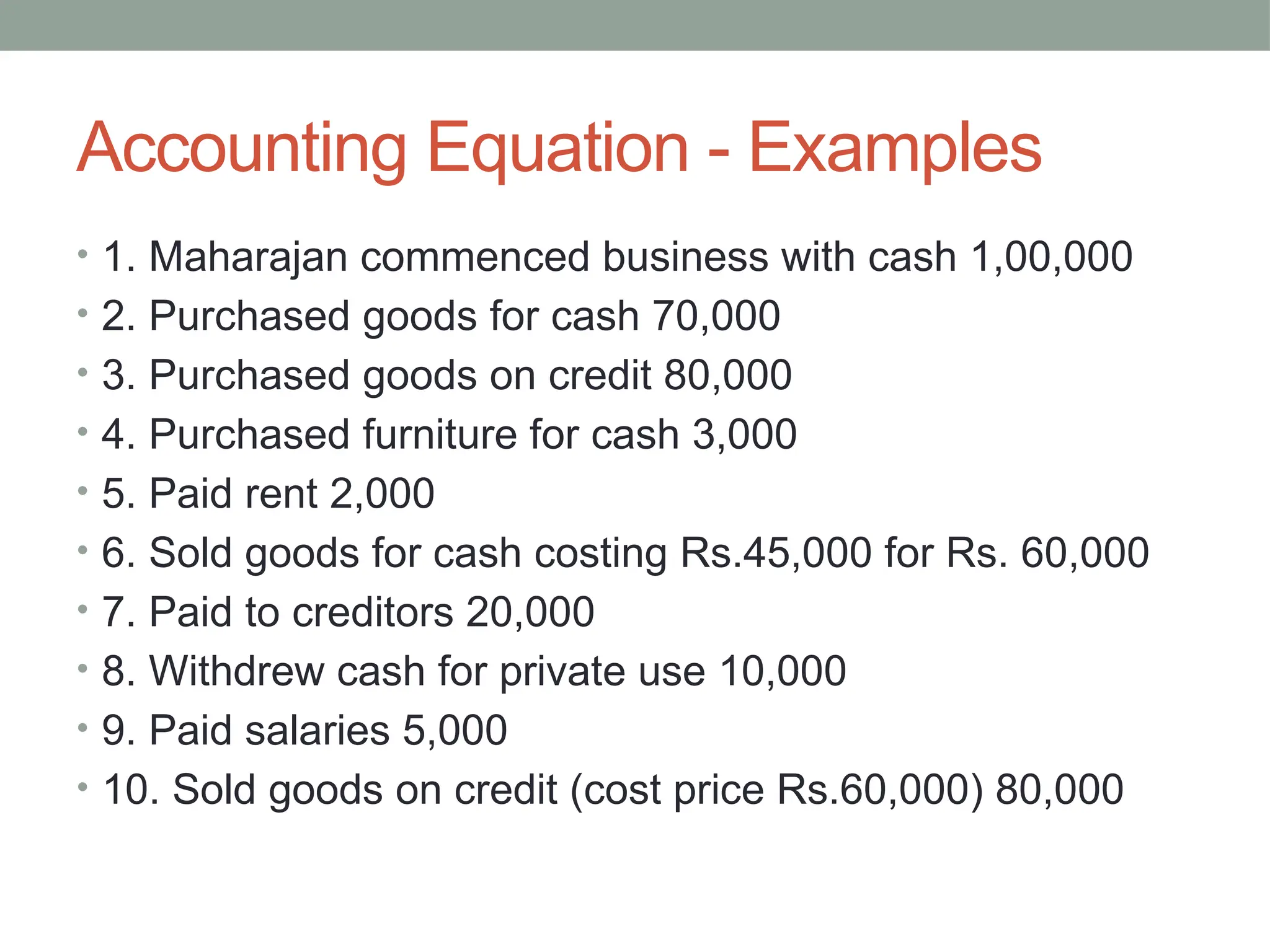
• 1. Maharajan commenced business with cash 1,00,000
• 2. Purchased goods for cash 70,000
• 3. Purchased goods on credit 80,000
• 4. Purchased furniture for cash 3,000
• 5. Paid rent 2,000
• 6. Sold goods for cash costing Rs.45,000 for Rs. 60,000
• 7. Paid to creditors 20,000
• 8. Withdrew cash for private use 10,000
• 9. Paid salaries 5,000
• 10. Sold goods on credit (cost price Rs.60,000) 80,000
Modern Rules of Accounting
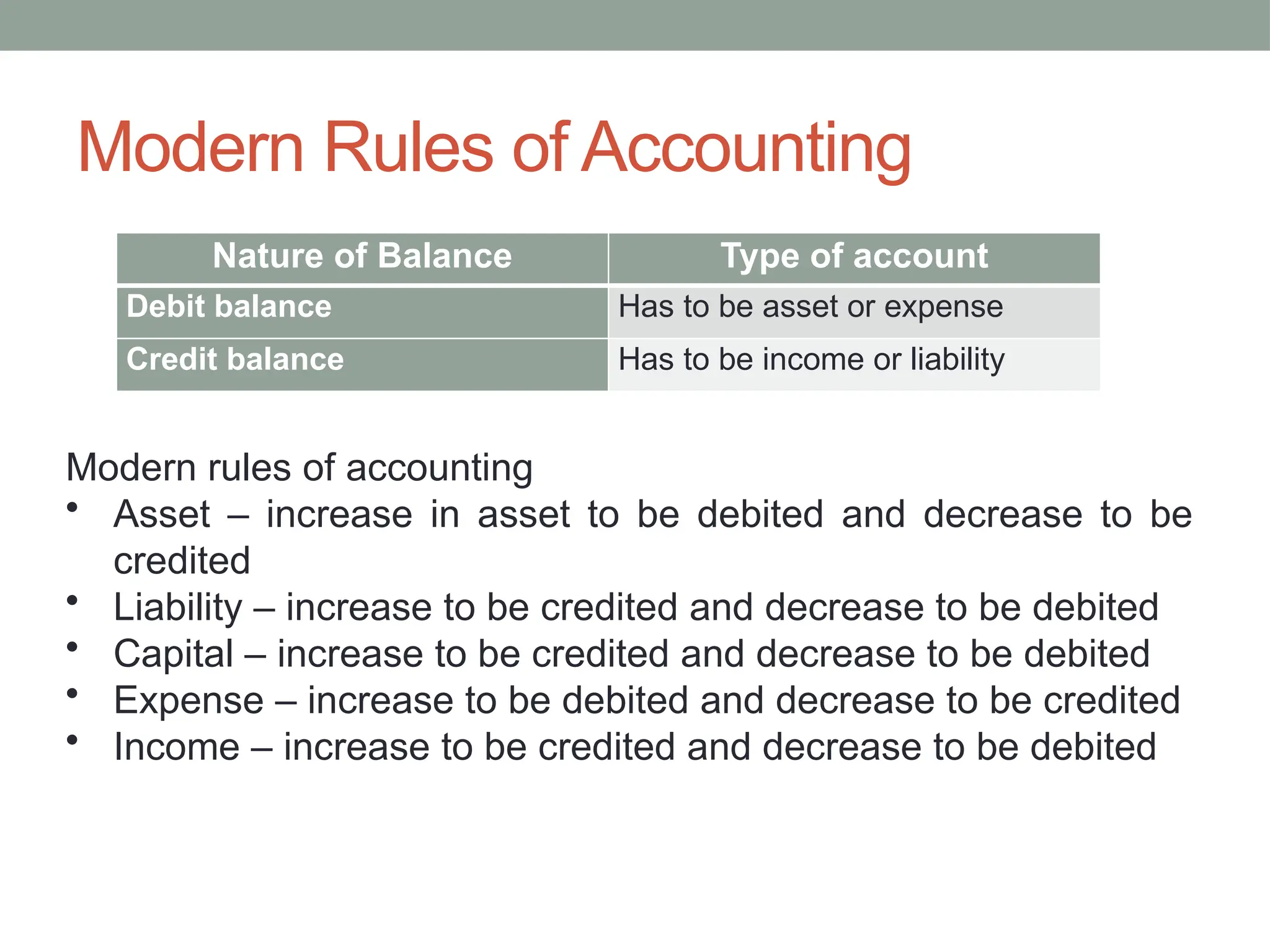
Nature of Balance Type of account
Debit balance Has to be asset or expense
Credit balance Has to be income or liability
Modern rules of accounting
• Asset – increase in asset to be debited and decrease to be
credited
• Liability – increase to be credited and decrease to be debited
• Capital – increase to be credited and decrease to be debited
• Expense – increase to be debited and decrease to be credited
• Income – increase to be credited and decrease to be debited
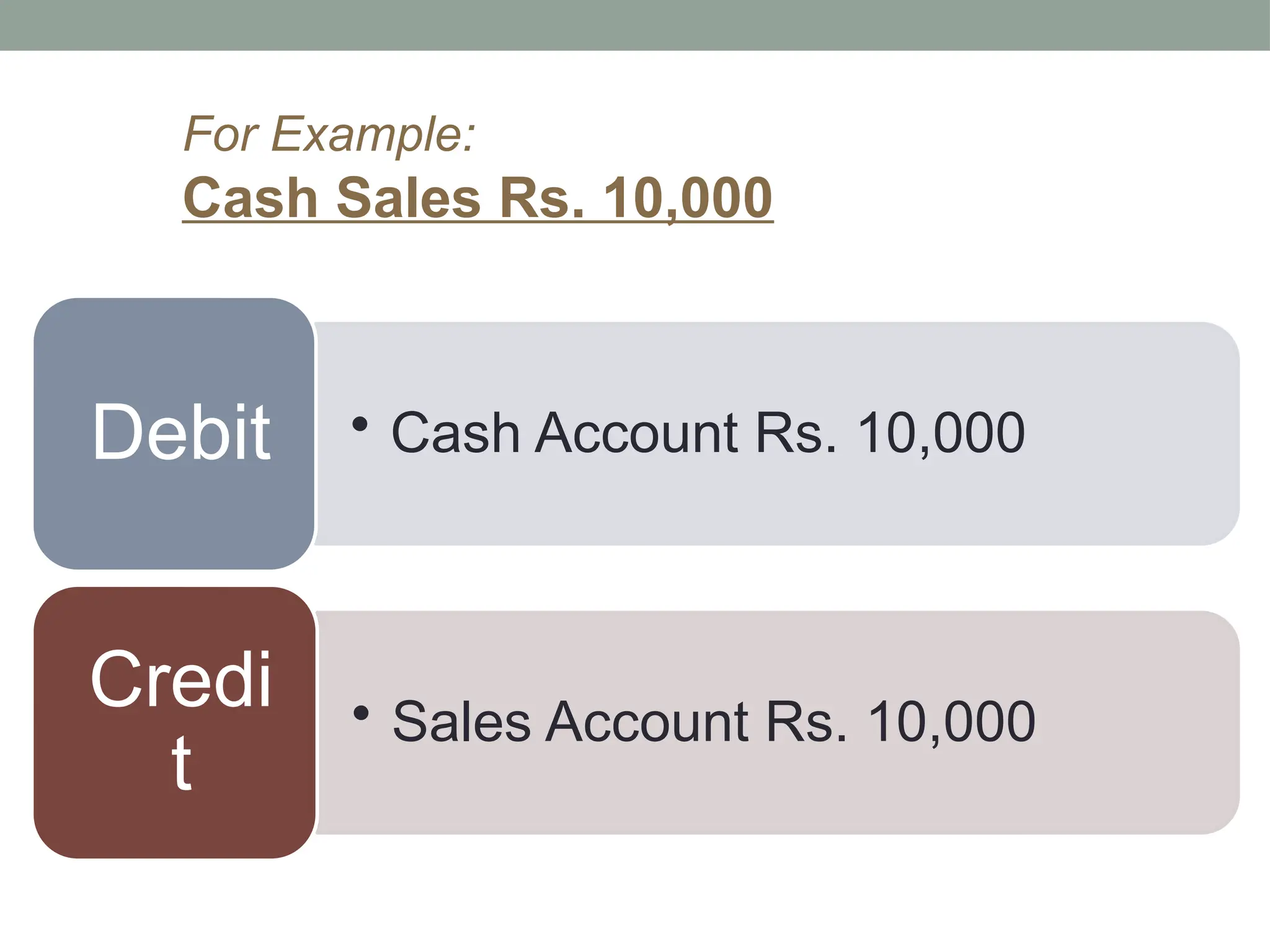
• Cash Account Rs. 10,000
Debit
• Sales Account Rs. 10,000
Credi
t
For Example:
Cash Sales Rs. 10,000
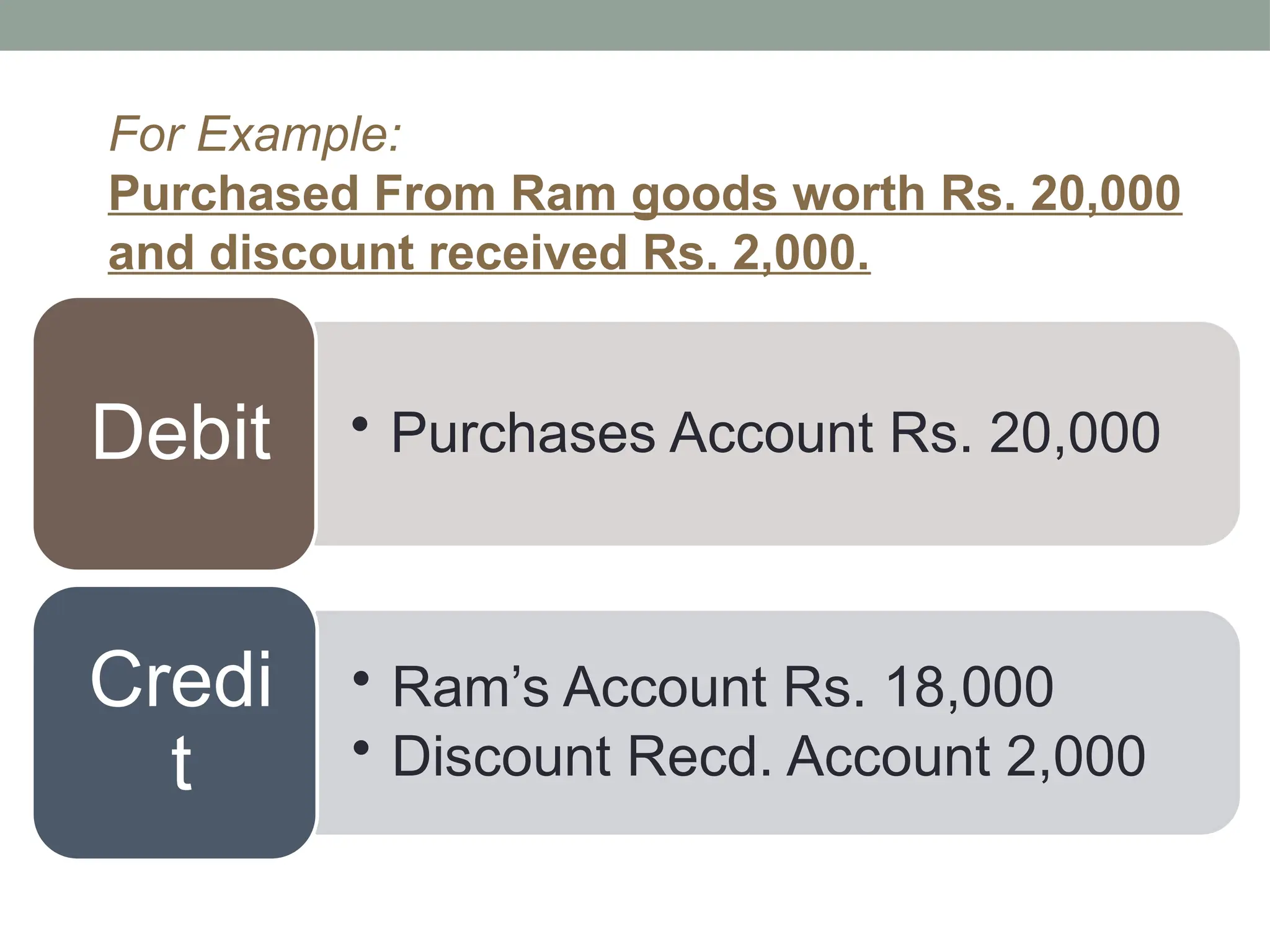
• Purchases Account Rs. 20,000
Debit
• Ram’s Account Rs. 18,000
• Discount Recd. Account 2,000
Credi
t
For Example:
Purchased From Ram goods worth Rs. 20,000
and discount received Rs. 2,000.
Matching or accrual concept
• The matching principle ensures that revenues and all
their associated expenses are recorded in the same
accounting period.
The matching principle is the basis on which the
accrual accounting method of book- keeping is built.
Matching or accrual concept
• Salary paid in 2016-17 relating to 2017-18
• Such salary is treated as Expenditure for 2017-18 and
not treated as the salary for the year 2016-17 but
under Prepaid Salaries Account.
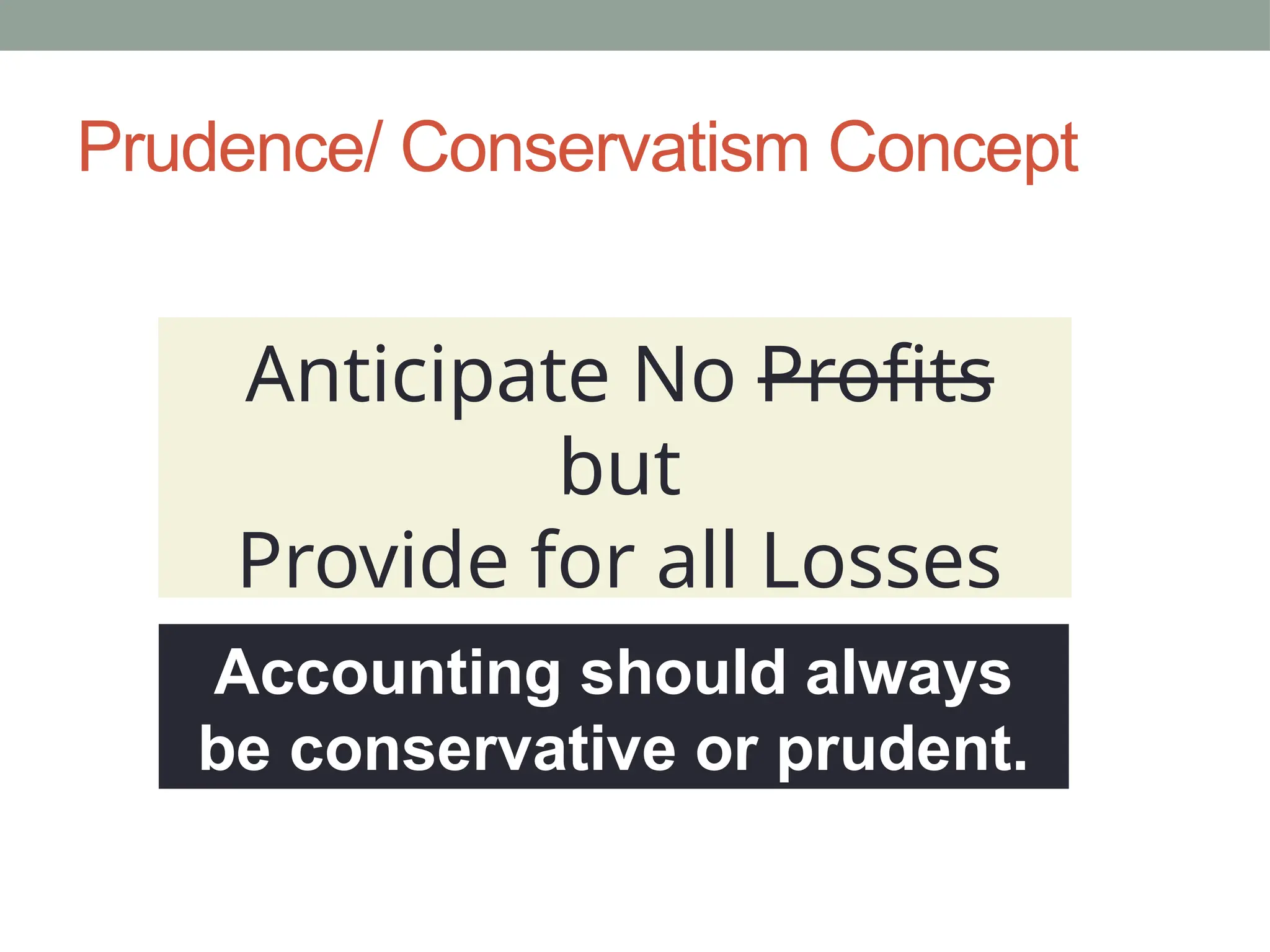
Prudence/ Conservatism Concept
Anticipate No Profits
but
Provide for all Losses
Accounting should always
be conservative or prudent.
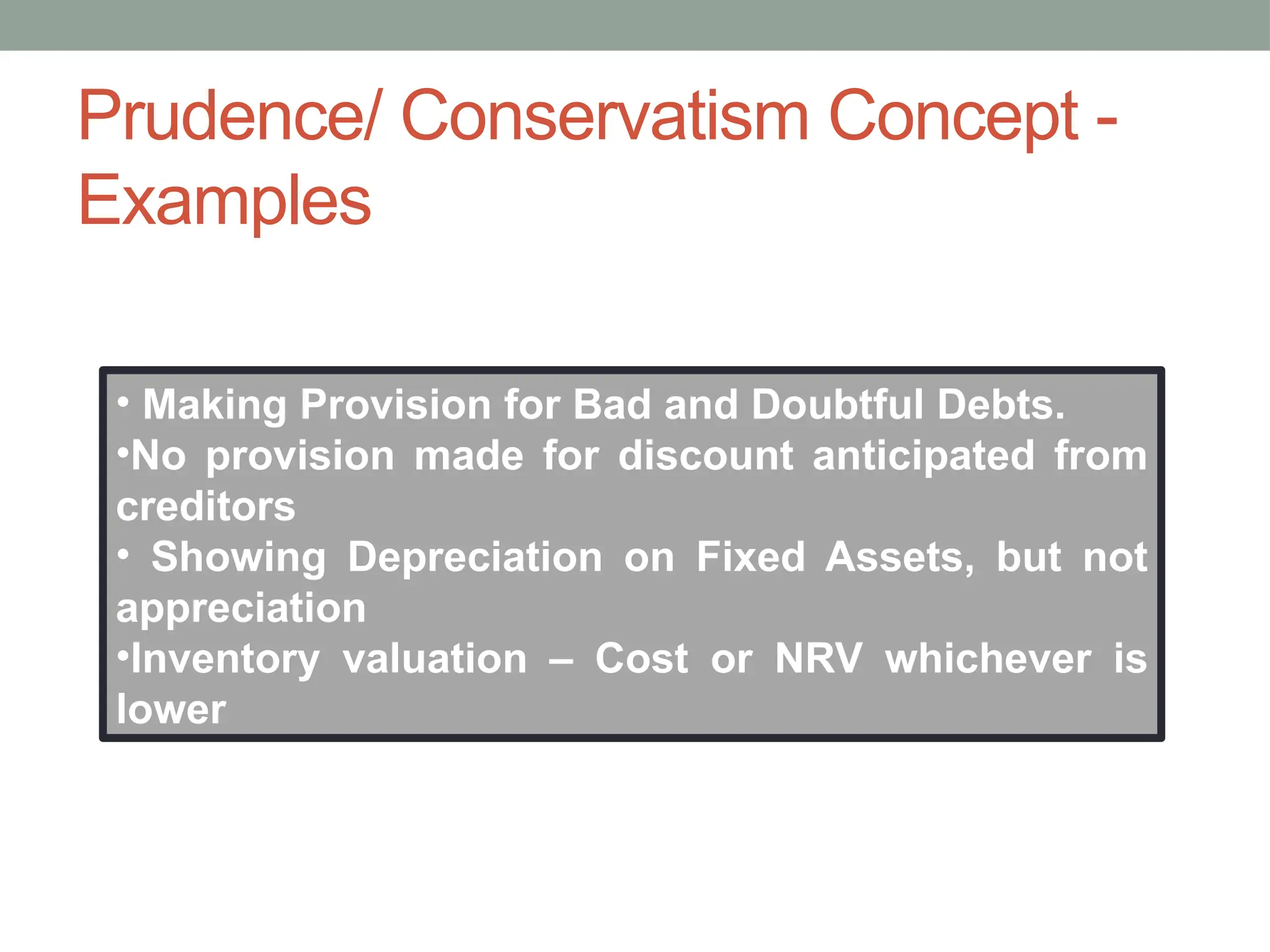
• Making Provision for Bad and Doubtful Debts.
•No provision made for discount anticipated from
creditors
• Showing Depreciation on Fixed Assets, but not
appreciation
•Inventory valuation – Cost or NRV whichever is
lower
Prudence/ Conservatism Concept -
Examples
Accounting Conventions
• Historical Cost
• Business Entity
• Money measurement
• Realisation
• Materiality
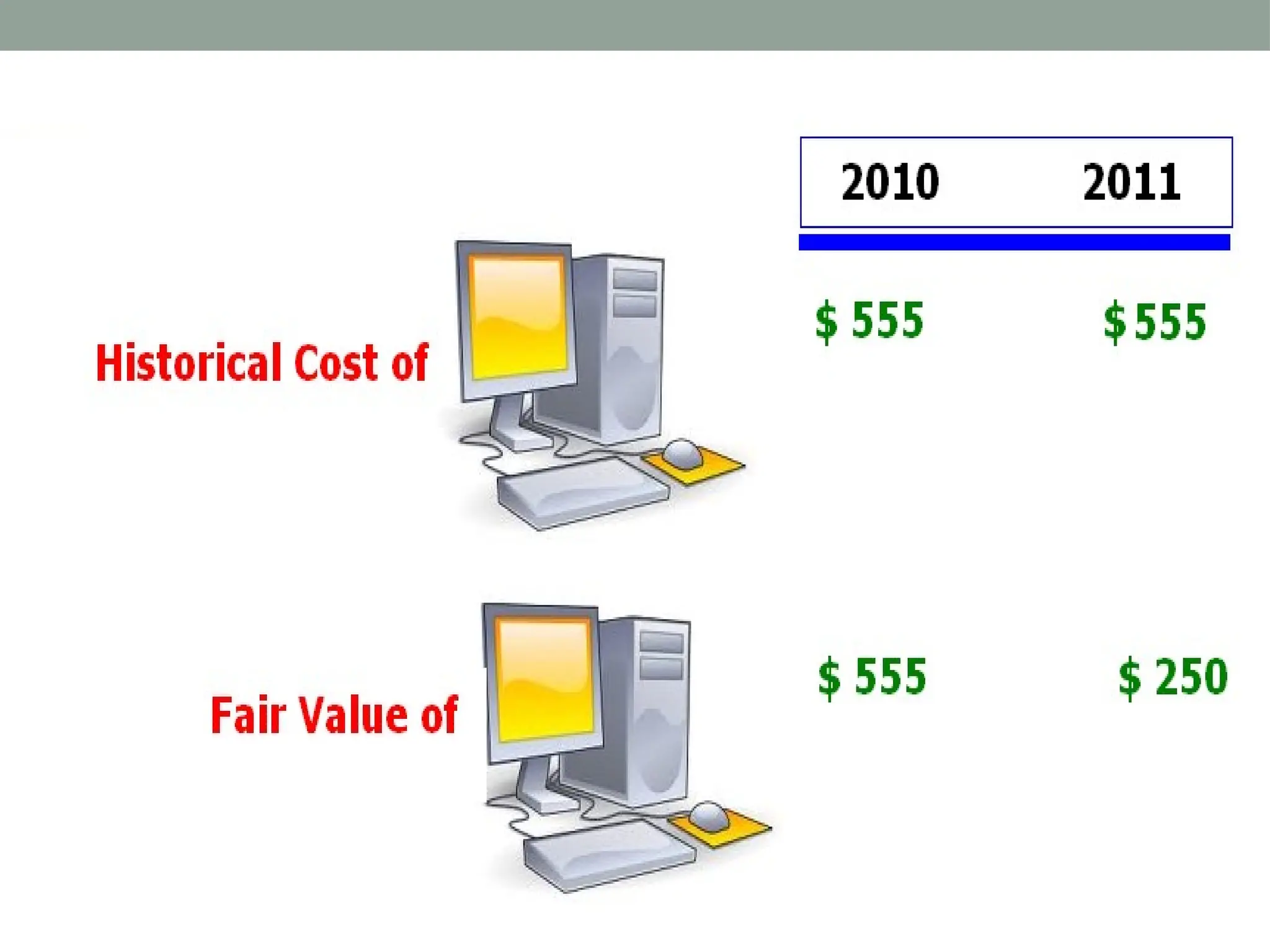
Historical Cost concept
• An asset acquired by a concern is recorded in the books
of accounts at historical cost (i.e., at the price actually
paid for acquiring the asset). The market price of the
asset is ignored.
Business entity Concept
• Business and its owner(s) are two separate entities
• Personal Transactions of the Owner are not recorded.
Example:
• Insurance premiums for the owner’s personal car should be
excluded from the expense of the business
• The owner’s property should not be included in the premises
account of the business
• A Car purchased by the owner for personal use is not Recorded in
the Books Of Account Of the Business.
• Any payments for the owner’s personal expenses by the business
will be treated as drawings and reduced the owner’s capital
contribution in the business
Money Measurement Concept
• In accounting, a record is made only of those transactions
or events which can be measured and expressed in terms
of money.
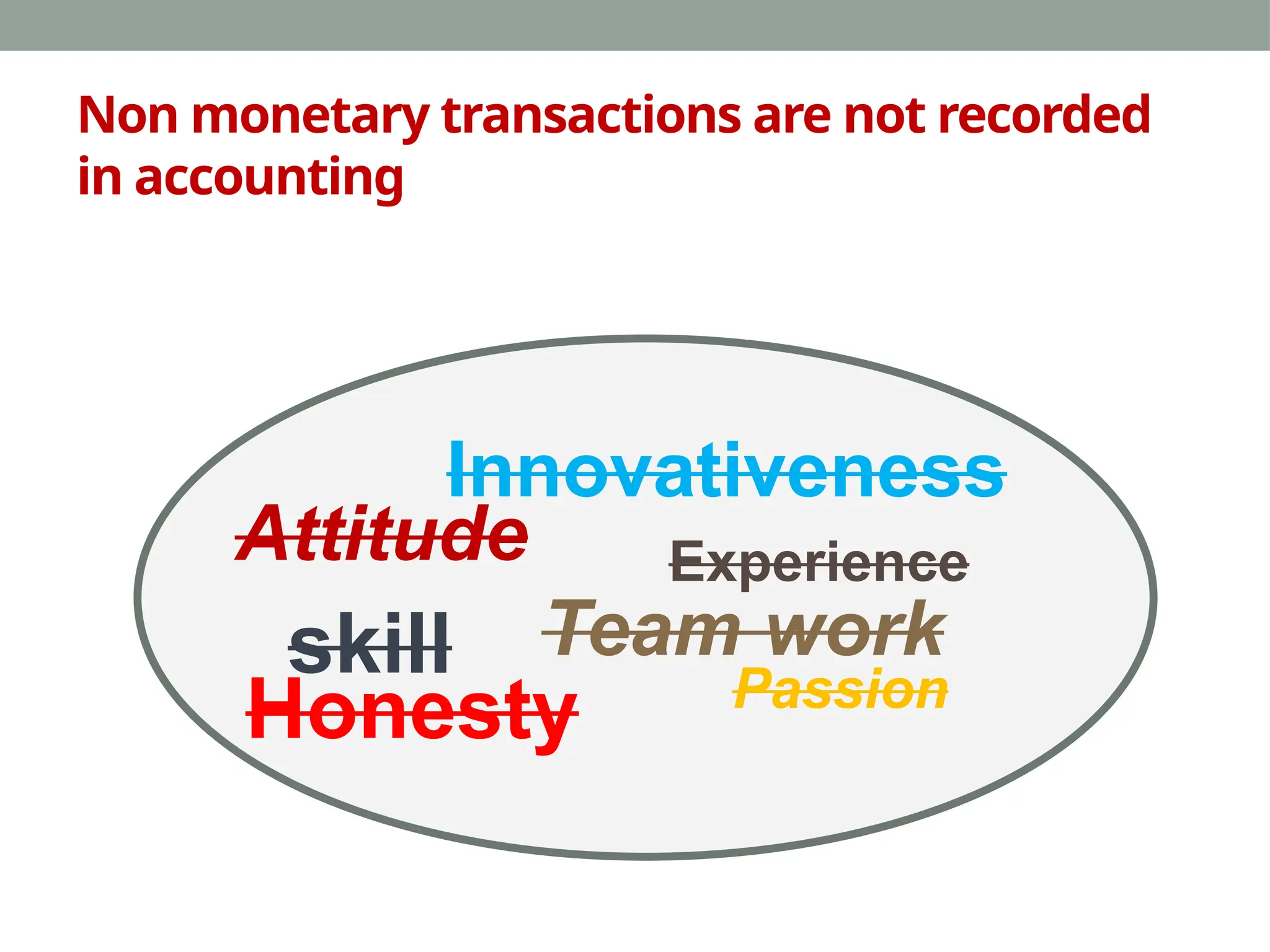
Non monetary transactions are not recorded
in accounting
Innovativeness
Attitude Experience
skill Team work
Passion
Honesty
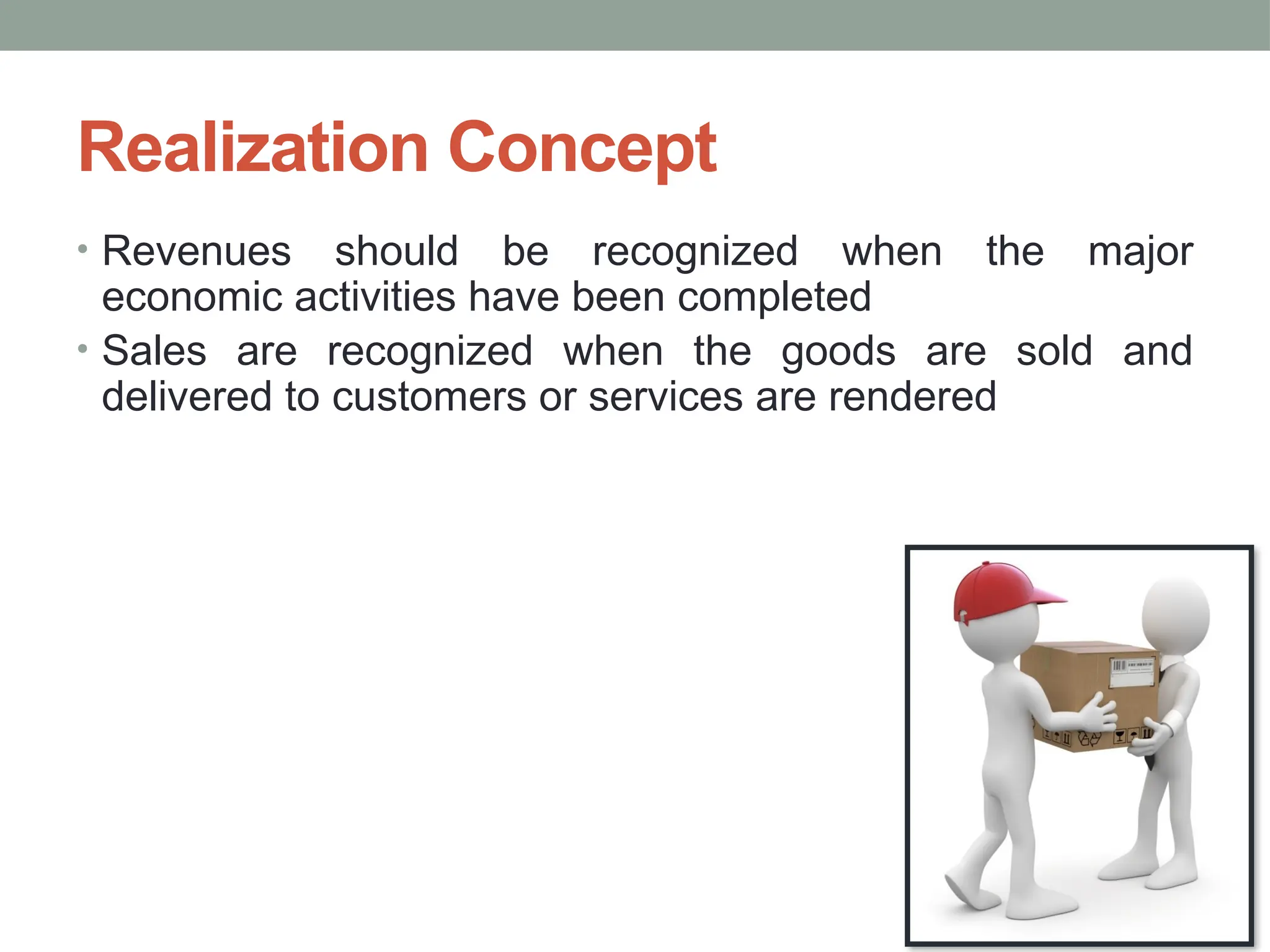
Realization Concept
• Revenues should be recognized when the major
economic activities have been completed
• Sales are recognized when the goods are sold and
delivered to customers or services are rendered
Materiality Concept
- Immaterial amounts may be
aggregated with the amounts of a
similar nature or function and
need not be presented separately
- Materiality depends on the size
and nature of the item
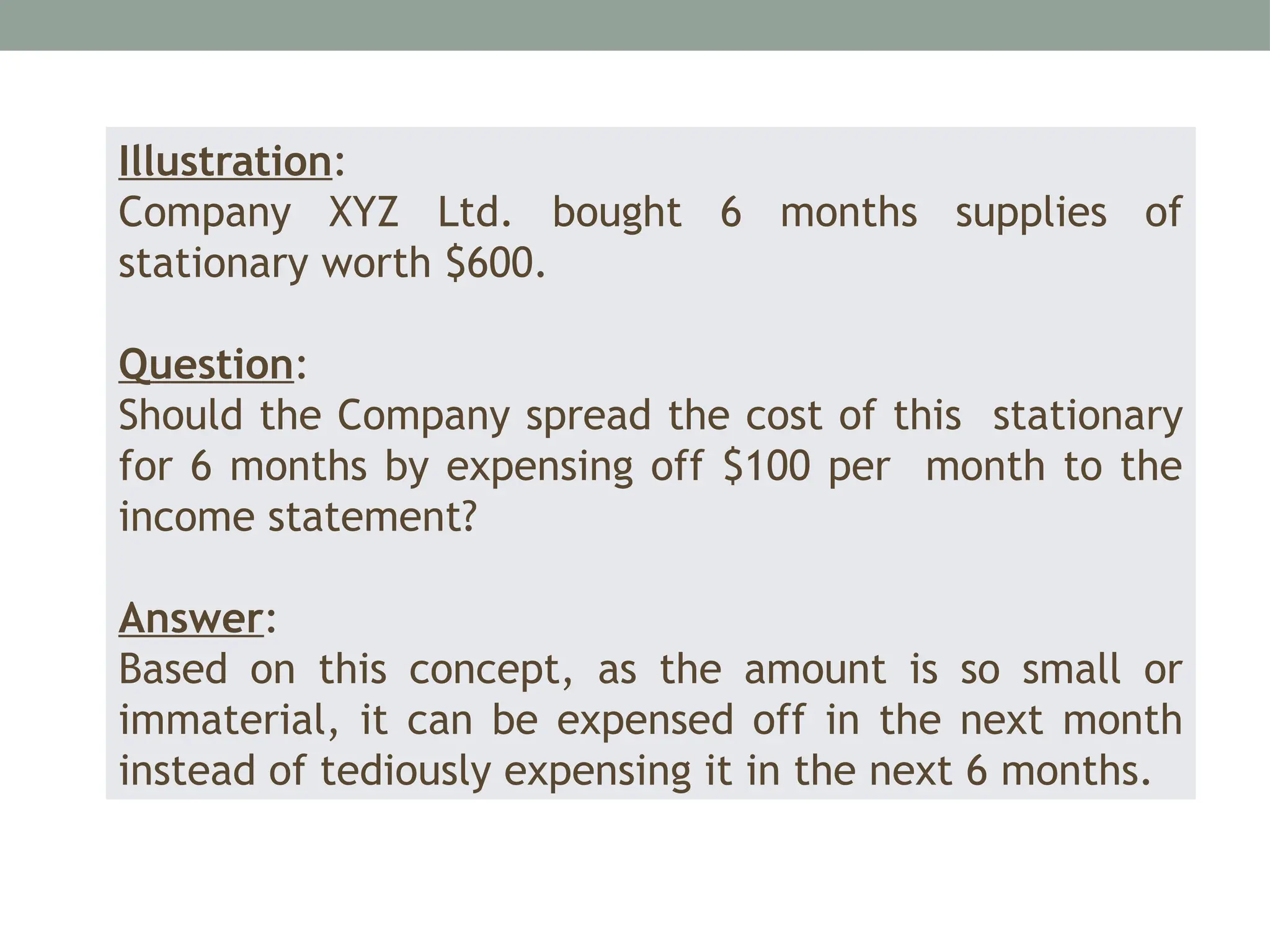
Illustration:
Company XYZ Ltd. bought 6 months supplies of
stationary worth $600.
Question:
Should the Company spread the cost of this stationary
for 6 months by expensing off $100 per month to the
income statement?
Answer:
Based on this concept, as the amount is so small or
immaterial, it can be expensed off in the next month
instead of tediously expensing it in the next 6 months.
Accounting Principles
• Full dislcosure
• Understandability
• Substance over Form
• Relevance
• Consistency
• Comparability
• Reliability
• Objectivity
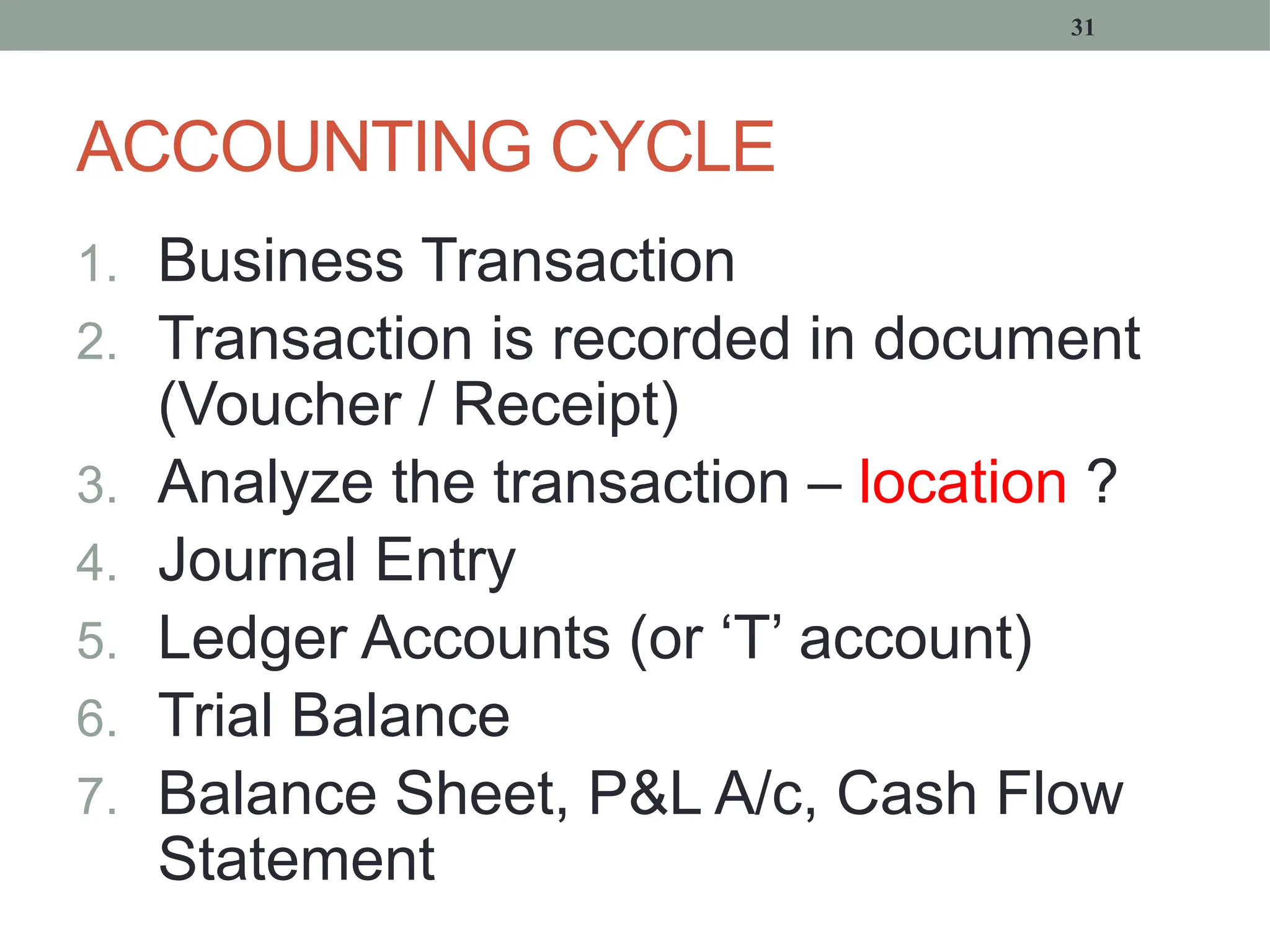
ACCOUNTING CYCLE
1. Business Transaction
2. Transaction is recorded in document
(Voucher / Receipt)
3. Analyze the transaction – location ?
4. Journal Entry
5. Ledger Accounts (or ‘T’ account)
6. Trial Balance
7. Balance Sheet, P&L A/c, Cash Flow
Statement
31
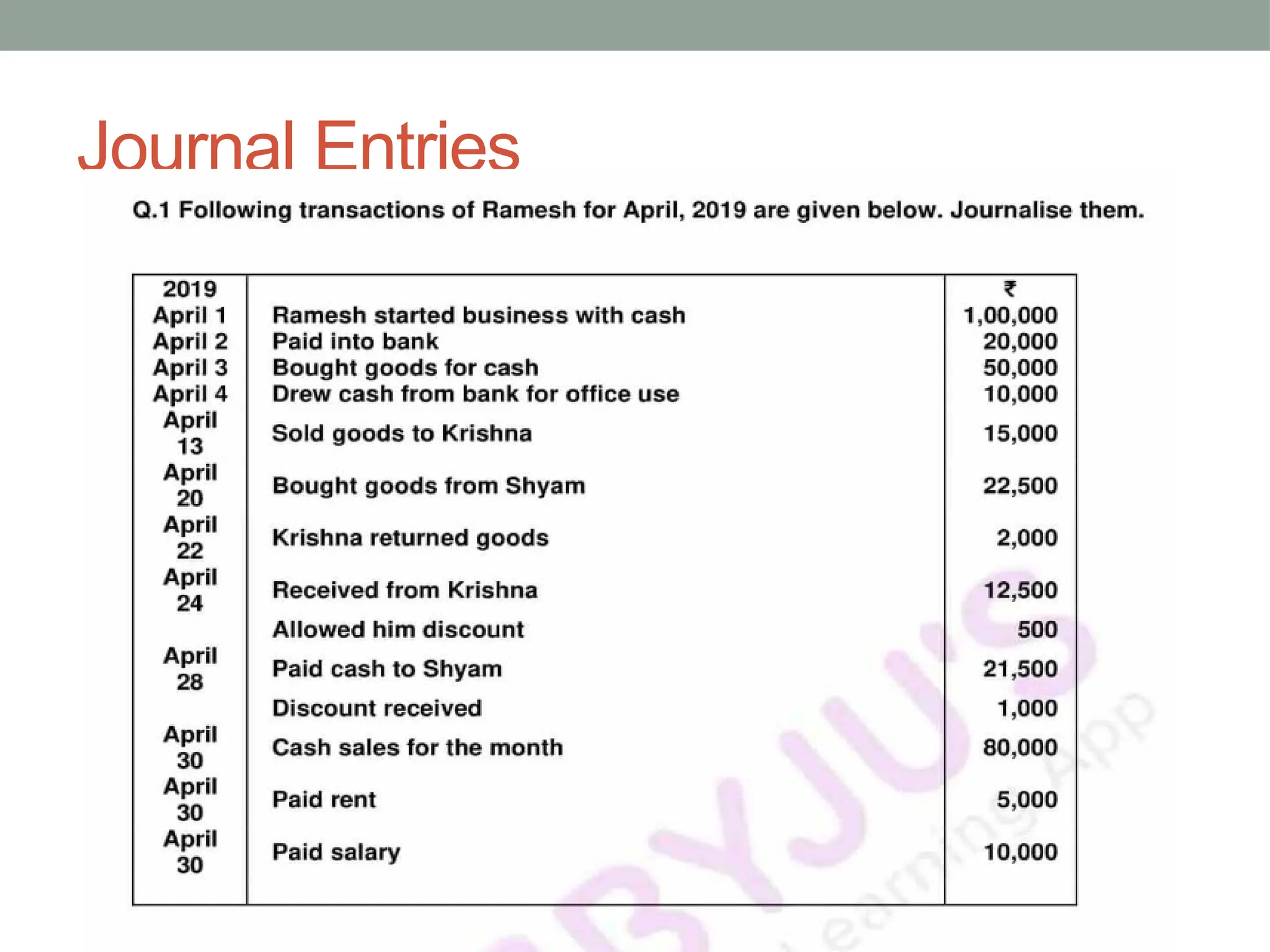
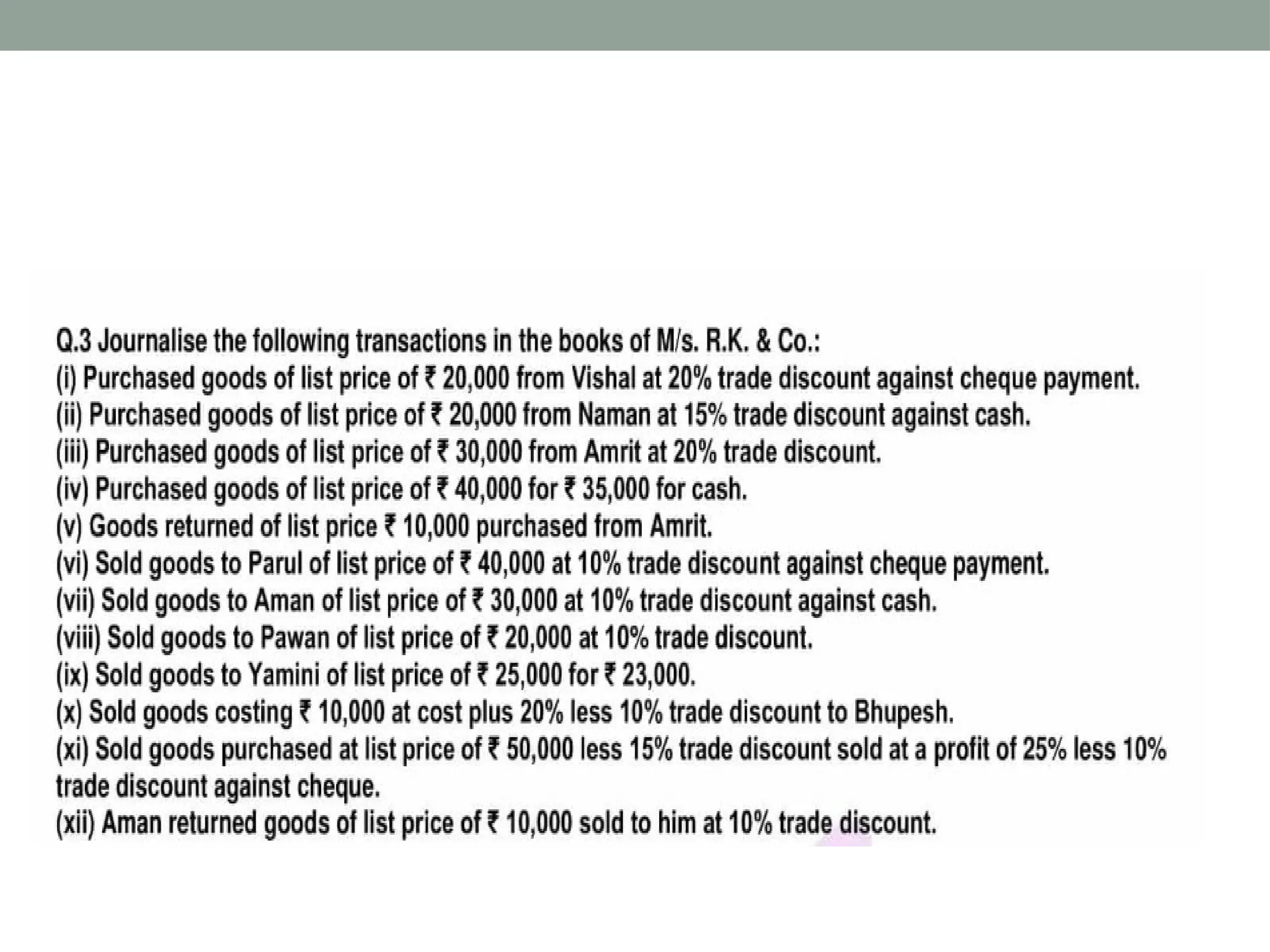
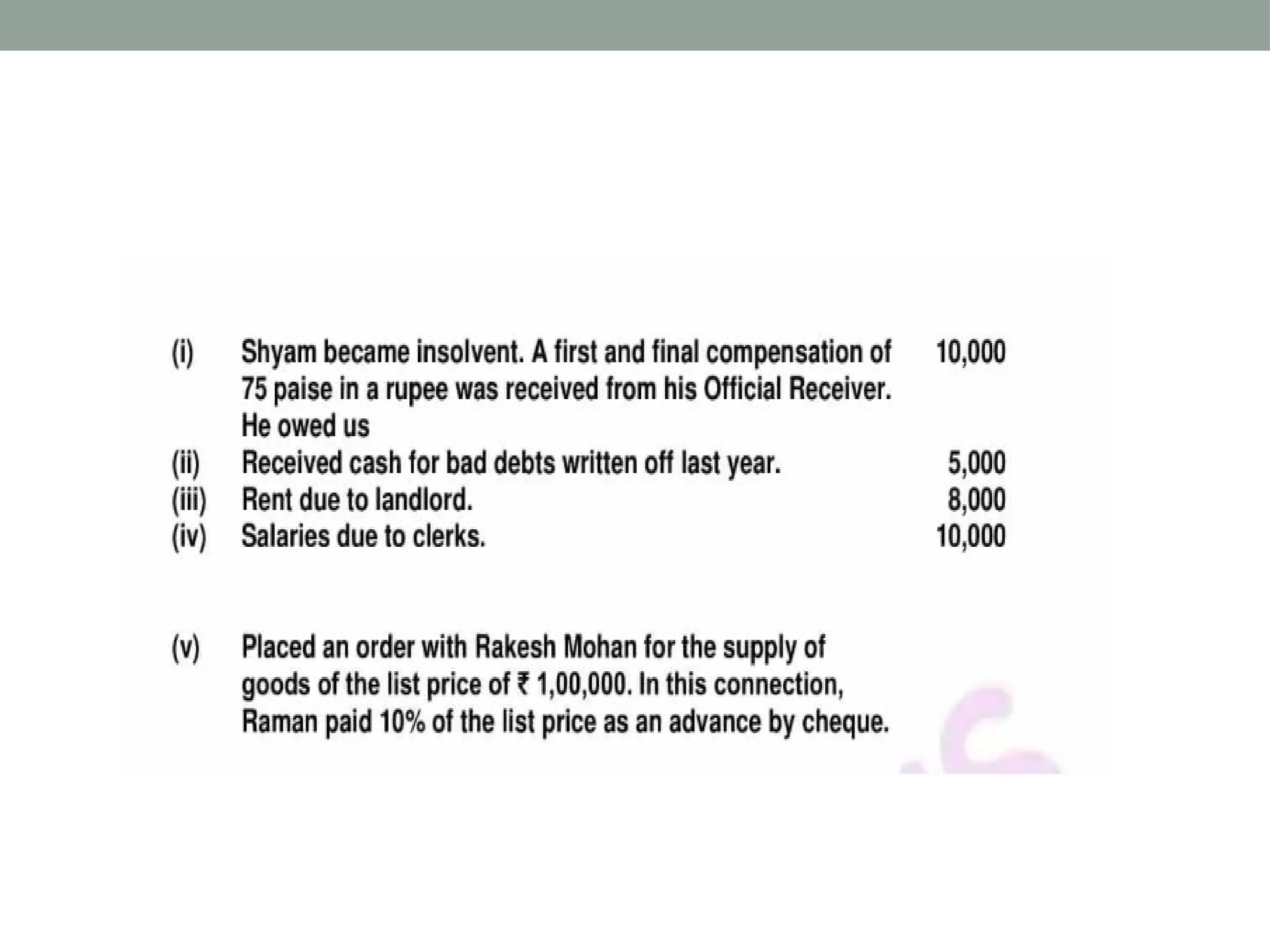
Journal Entries
Accounting basics and concepts in Business Scenarios

Accounting basics and concepts in Business Scenarios

  • 1.
    SESSION - 1 Accountingterminology and Review of Basics CA Aishwarya Krishnaswamy
  • 3.
    We are goingto refresh • General Accounting Concepts • Accounting Conventions • Accounting Principles • Accounting Equation • Preparation of Journal Entries
  • 4.
    General Accounting Concepts •Going Concern concept • Accounting period concept • Balance Sheet Equation (Equivalence) or Dual aspect concept • Accrual concept or Matching concept • Prudence / Conservatism concept
  • 5.
    Going concern Concept •The business will continue to operate for the foreseeable future • Financial statements to be prepared on a going concern basis unless management either intends to liquidate the enterprise or to cease trading, or has no realistic alternative but to do so • All transactions of the business are recorded from this standpoint • Exercise: Look at Spice Jet Annual Report for 2013- 2014 (Auditor’s report)
  • 6.
    Going Concern –Alok Industries Example
  • 7.
    Accounting Period Concept •For measuring the financial results of a business periodically, the working life of an undertaking is split into convenient short periods called accounting period. Business Activities keep going, but accountants have to draw the line somewhere In Months 1 2 3 4 5 6 7 8 9 10 11 12 13 14 15 Accounting Period generally 12 months
  • 8.
    Equivalence or Dualaspect concept • For Every Debit, there is a Credit • There are 2 sides to a coin Every transaction has dual aspect or two- sided effect of the same amount
  • 9.
    This Concept hasresulted in THE ACCOUNTING EQUATION Assets = Owner’s Equity + Outsider’s liability
  • 10.
    DOUBLE ENTRY SYSTEM A= OE + OL In the double-entry accounting system, every transaction is recorded by equal amounts of debits and credits. Debit = Credit
  • 12.
    A = OE+ OL 12 LIABILITIES Amount ASSETS Amount Capital XX Fixed Assets-Land, Bldg, XX Loan taken XX Current Assets Current Liabilities Cash / Bank XX Outstanding Expenses XX Accounts Receivable (Debtors) XX Bank Overdraft XX Bills Receivable) XX Accounts Payable (Creditors) XX Inventories (Stock) XX XYZ XYZ
  • 13.
    Accounting Equation -Examples • 1. Maharajan commenced business with cash 1,00,000 • 2. Purchased goods for cash 70,000 • 3. Purchased goods on credit 80,000 • 4. Purchased furniture for cash 3,000 • 5. Paid rent 2,000 • 6. Sold goods for cash costing Rs.45,000 for Rs. 60,000 • 7. Paid to creditors 20,000 • 8. Withdrew cash for private use 10,000 • 9. Paid salaries 5,000 • 10. Sold goods on credit (cost price Rs.60,000) 80,000
  • 14.
    Modern Rules ofAccounting Nature of Balance Type of account Debit balance Has to be asset or expense Credit balance Has to be income or liability Modern rules of accounting • Asset – increase in asset to be debited and decrease to be credited • Liability – increase to be credited and decrease to be debited • Capital – increase to be credited and decrease to be debited • Expense – increase to be debited and decrease to be credited • Income – increase to be credited and decrease to be debited
  • 15.
    • Cash AccountRs. 10,000 Debit • Sales Account Rs. 10,000 Credi t For Example: Cash Sales Rs. 10,000
  • 16.
    • Purchases AccountRs. 20,000 Debit • Ram’s Account Rs. 18,000 • Discount Recd. Account 2,000 Credi t For Example: Purchased From Ram goods worth Rs. 20,000 and discount received Rs. 2,000.
  • 17.
    Matching or accrualconcept • The matching principle ensures that revenues and all their associated expenses are recorded in the same accounting period. The matching principle is the basis on which the accrual accounting method of book- keeping is built.
  • 18.
    Matching or accrualconcept • Salary paid in 2016-17 relating to 2017-18 • Such salary is treated as Expenditure for 2017-18 and not treated as the salary for the year 2016-17 but under Prepaid Salaries Account.
  • 19.
    Prudence/ Conservatism Concept AnticipateNo Profits but Provide for all Losses Accounting should always be conservative or prudent.
  • 20.
    • Making Provisionfor Bad and Doubtful Debts. •No provision made for discount anticipated from creditors • Showing Depreciation on Fixed Assets, but not appreciation •Inventory valuation – Cost or NRV whichever is lower Prudence/ Conservatism Concept - Examples
  • 21.
    Accounting Conventions • HistoricalCost • Business Entity • Money measurement • Realisation • Materiality
  • 22.
    Historical Cost concept •An asset acquired by a concern is recorded in the books of accounts at historical cost (i.e., at the price actually paid for acquiring the asset). The market price of the asset is ignored.
  • 24.
    Business entity Concept •Business and its owner(s) are two separate entities • Personal Transactions of the Owner are not recorded. Example: • Insurance premiums for the owner’s personal car should be excluded from the expense of the business • The owner’s property should not be included in the premises account of the business • A Car purchased by the owner for personal use is not Recorded in the Books Of Account Of the Business. • Any payments for the owner’s personal expenses by the business will be treated as drawings and reduced the owner’s capital contribution in the business
  • 25.
    Money Measurement Concept •In accounting, a record is made only of those transactions or events which can be measured and expressed in terms of money.
  • 26.
    Non monetary transactionsare not recorded in accounting Innovativeness Attitude Experience skill Team work Passion Honesty
  • 27.
    Realization Concept • Revenuesshould be recognized when the major economic activities have been completed • Sales are recognized when the goods are sold and delivered to customers or services are rendered
  • 28.
    Materiality Concept - Immaterialamounts may be aggregated with the amounts of a similar nature or function and need not be presented separately - Materiality depends on the size and nature of the item
  • 29.
    Illustration: Company XYZ Ltd.bought 6 months supplies of stationary worth $600. Question: Should the Company spread the cost of this stationary for 6 months by expensing off $100 per month to the income statement? Answer: Based on this concept, as the amount is so small or immaterial, it can be expensed off in the next month instead of tediously expensing it in the next 6 months.
  • 30.
    Accounting Principles • Fulldislcosure • Understandability • Substance over Form • Relevance • Consistency • Comparability • Reliability • Objectivity
  • 31.
    ACCOUNTING CYCLE 1. BusinessTransaction 2. Transaction is recorded in document (Voucher / Receipt) 3. Analyze the transaction – location ? 4. Journal Entry 5. Ledger Accounts (or ‘T’ account) 6. Trial Balance 7. Balance Sheet, P&L A/c, Cash Flow Statement 31
  • 34.

Editor's Notes

  • #4 AS- 1 , Fundamental accounting assumptions - Going concern, consistency, Accrual Section 209(3)(b) of the Companies Act makes it mandatory for companies to maintain accounts on accrual basis only. It is not necessary to expressly state that accrual basis of accounting has been followed in preparation of a financial statement. In case, any income/expense is recognised on cash basis, the fact should be stated
  • #5 Pg No. – Note 2(a)
  • #6 Also, to see JSW annual report for going concern
  • #30 Full disclosure – Law suit eg: Vodafone – Note 30 – Pg 164 Substance over form – content more important than the legal format Consistency – FIFO v.s WAC Comparibility - GAAP Reliable and objective – investment in stock v.s Land