Adjusting Entries
Presentation
PrinciplesofAccounting
Our topic
Group Member
 What is Adjusting Entries ?
 Which Accounts Need Adjustment?
 Reason for Adjustments
 Adjusting Entries Method
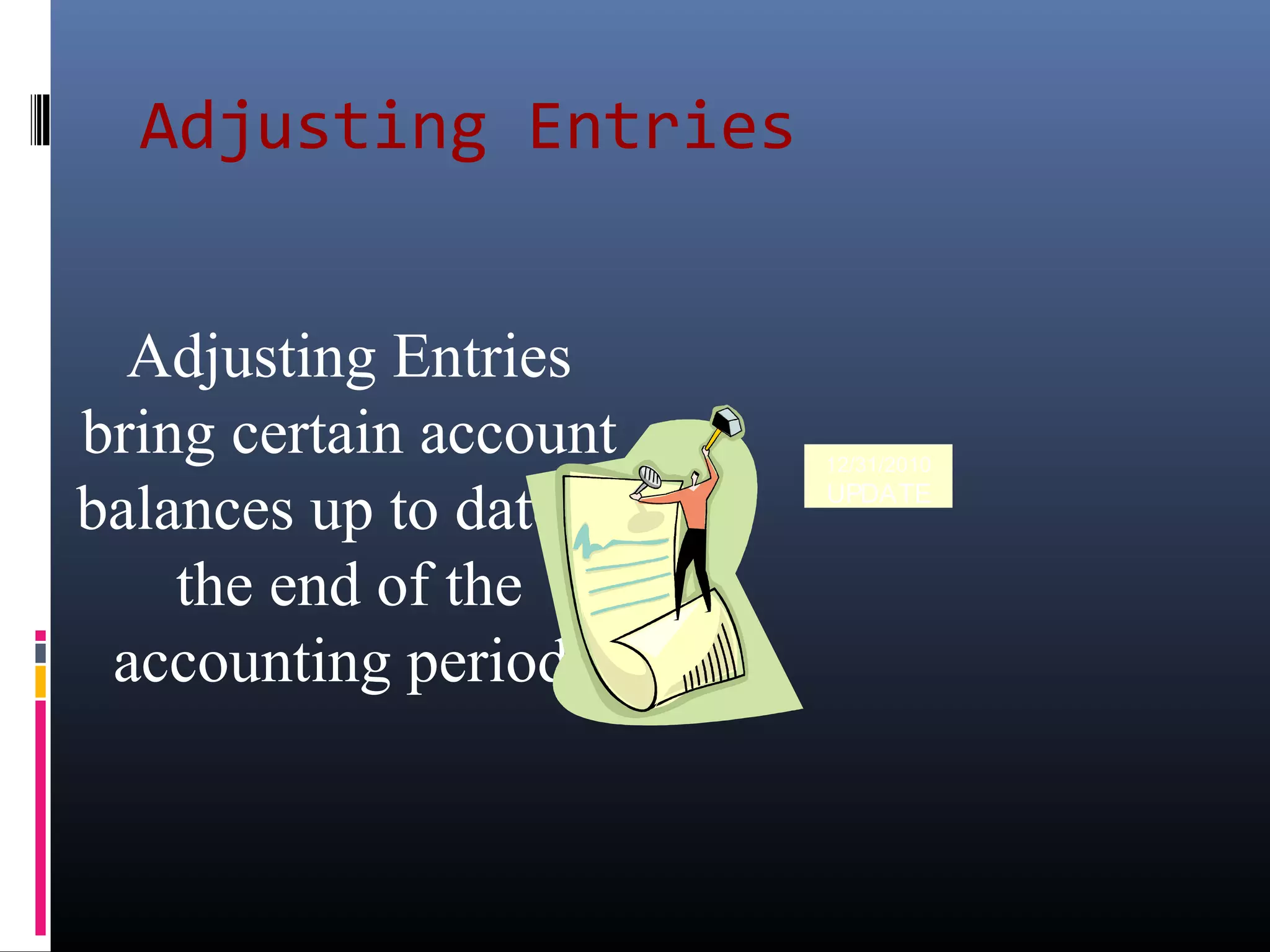
Adjusting Entries
bring certain account
balances up to date at
the end of the
accounting period.
Adjusting Entries
12/31/2010
UPDATE
Adjustments
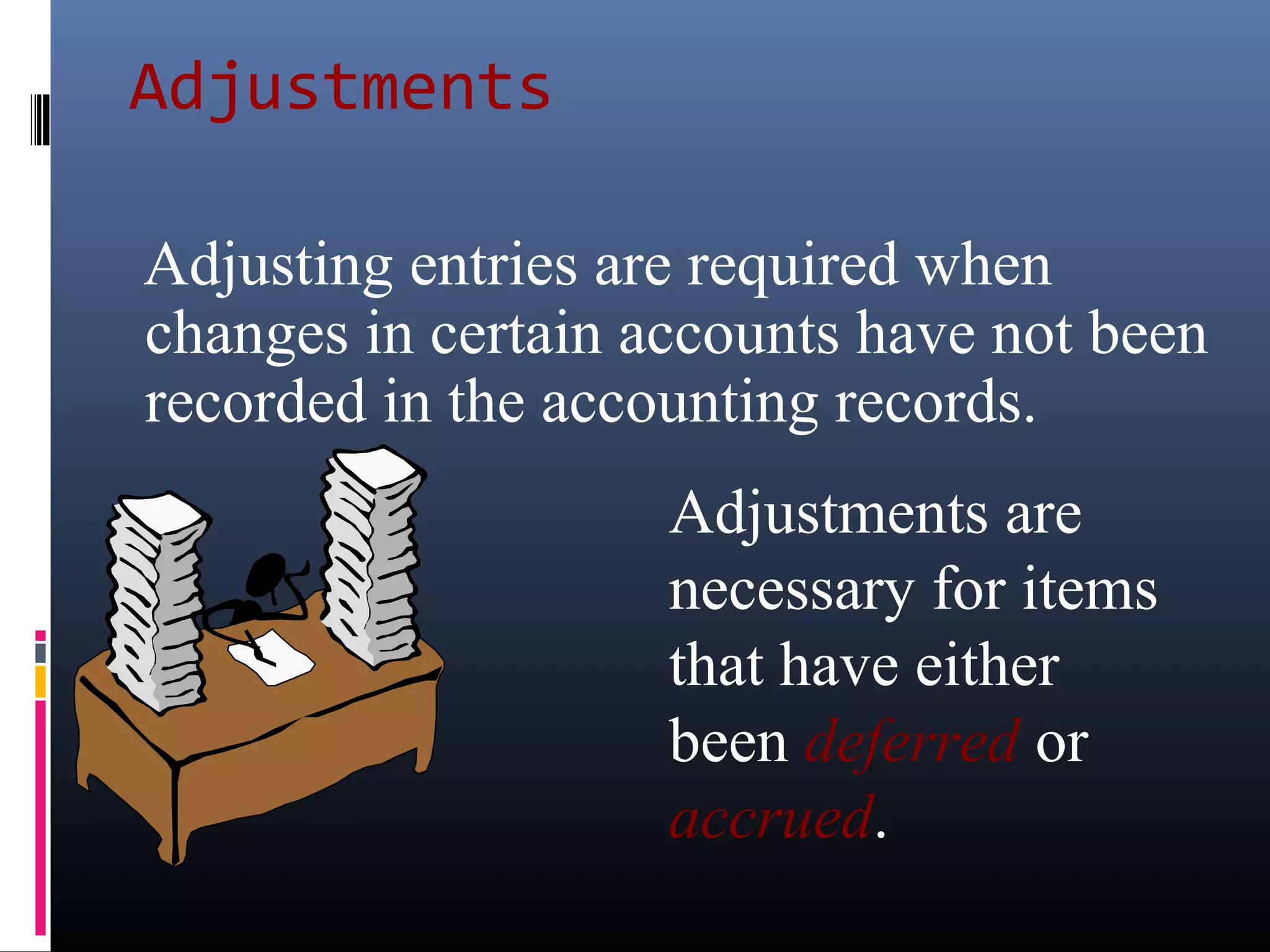
Adjusting entries are required when
changes in certain accounts have not been
recorded in the accounting records.
Adjustments are
necessary for items
that have either
been deferred or
accrued.
Reason for Adjustments
It can be inefficient and costly to
account for certain types of
transactions on a daily basis.
Method
 Cash Basis of Accounting
 Accrual Basis of Accounting
Cash Basis of Accounting
 Under the cash basis for the accounting period
concept, revenues and expenses are reported in
the income statement in the period in which cash
is received or paid
Accrual Basis of Accounting
 Under the accrual basis for the accounting period
concept, revenues are reported in the income
statement the period in which they are earned.
Revenue reported when earned
Expense reported when incurred
Properly matches revenues and
expenses in determining net income
Requires adjusting entries at end of
period
Accrual Basis of Accounting
Types of Adjusting Entries
 Prepaid Expenses
 Unearned Revenue
 Accrued Revenue
 Accrued Expenses
The Basics of Adjusting
Entries
 Adjusting entries make it possible to
report correct amounts on the
balance sheet and on the income
statement.
 A company must make adjusting
entries every time it prepares
financial statements.
The Basics of Adjusting
Entries
 Revenues - recorded in the period in
which they are earned.
 Expenses - recognized in the period
in which they are incurred.
 Adjusting entries - needed to ensure
that the revenue recognition and
matching principles are followed.
Net Solutions
Trial Balance
December 31, 2005
1.Cash 2 065 00
2.Accounts Receivable 2 220 00
3.Supplies 2 000 00
4.Prepaid Insurance 2 400 00
5.Land 20 000 00
6.Office Equipment 1 800 00
7.Accounts Payable
900 00
8.Unearned Rent
360 00
9.Chris Clark, Capital
25 000 00
10.Chris Clark, Drawing 4 000 00
11.Fees Earned
16 340 00
12.Wages Expense 4 275 00
13.Rent Expense 1 600 00
14.Utilities Expense 985 00
15.Supplies Expense 800 00
16.Miscellaneous Expense 455 00
Unadjusted
trial balance
Unadjusted
trial balance
Net Solutions
Chart of Accounts
1. Assets
Cash
Accounts Receivable
Supplies
Prepaid Insurance
Land
Office Equipment
Accumulated Depreciation
2. Liabilities
Accounts Payable
Wages Payable
Unearned Rent
3. Owner’s Equity
Chris Clark, Capital
Chris Clark, Drawing
4. Revenue
Fees Earned
Rent Revenue
5. Expenses
Wages Expense
Rent Expense
Depreciation Expense
Utilities Expense
Supplies Expense
Insurance Expense
Miscellaneous Expense
Adjusting Entries
Adjusting Entries

Adjusting Entries

  • 1.
  • 2.
  • 3.
     What isAdjusting Entries ?  Which Accounts Need Adjustment?  Reason for Adjustments  Adjusting Entries Method
  • 4.
    Adjusting Entries bring certainaccount balances up to date at the end of the accounting period. Adjusting Entries 12/31/2010 UPDATE
  • 5.
    Adjustments Adjusting entries arerequired when changes in certain accounts have not been recorded in the accounting records. Adjustments are necessary for items that have either been deferred or accrued.
  • 6.
    Reason for Adjustments Itcan be inefficient and costly to account for certain types of transactions on a daily basis.
  • 7.
    Method  Cash Basisof Accounting  Accrual Basis of Accounting
  • 8.
    Cash Basis ofAccounting  Under the cash basis for the accounting period concept, revenues and expenses are reported in the income statement in the period in which cash is received or paid
  • 9.
    Accrual Basis ofAccounting  Under the accrual basis for the accounting period concept, revenues are reported in the income statement the period in which they are earned.
  • 10.
    Revenue reported whenearned Expense reported when incurred Properly matches revenues and expenses in determining net income Requires adjusting entries at end of period Accrual Basis of Accounting
  • 11.
    Types of AdjustingEntries  Prepaid Expenses  Unearned Revenue  Accrued Revenue  Accrued Expenses
  • 12.
    The Basics ofAdjusting Entries  Adjusting entries make it possible to report correct amounts on the balance sheet and on the income statement.  A company must make adjusting entries every time it prepares financial statements.
  • 13.
    The Basics ofAdjusting Entries  Revenues - recorded in the period in which they are earned.  Expenses - recognized in the period in which they are incurred.  Adjusting entries - needed to ensure that the revenue recognition and matching principles are followed.
  • 14.
    Net Solutions Trial Balance December31, 2005 1.Cash 2 065 00 2.Accounts Receivable 2 220 00 3.Supplies 2 000 00 4.Prepaid Insurance 2 400 00 5.Land 20 000 00 6.Office Equipment 1 800 00 7.Accounts Payable 900 00 8.Unearned Rent 360 00 9.Chris Clark, Capital 25 000 00 10.Chris Clark, Drawing 4 000 00 11.Fees Earned 16 340 00 12.Wages Expense 4 275 00 13.Rent Expense 1 600 00 14.Utilities Expense 985 00 15.Supplies Expense 800 00 16.Miscellaneous Expense 455 00 Unadjusted trial balance Unadjusted trial balance
  • 15.
    Net Solutions Chart ofAccounts 1. Assets Cash Accounts Receivable Supplies Prepaid Insurance Land Office Equipment Accumulated Depreciation 2. Liabilities Accounts Payable Wages Payable Unearned Rent 3. Owner’s Equity Chris Clark, Capital Chris Clark, Drawing 4. Revenue Fees Earned Rent Revenue 5. Expenses Wages Expense Rent Expense Depreciation Expense Utilities Expense Supplies Expense Insurance Expense Miscellaneous Expense