Members:
Ramsha Ghaffar --- 3135-2016
Syed Hassan Ali Hashmi --- 1986-2016
Accountability
And
Auditing
Accountability01
Pillar Of Accountability02
Example Of Accountability03
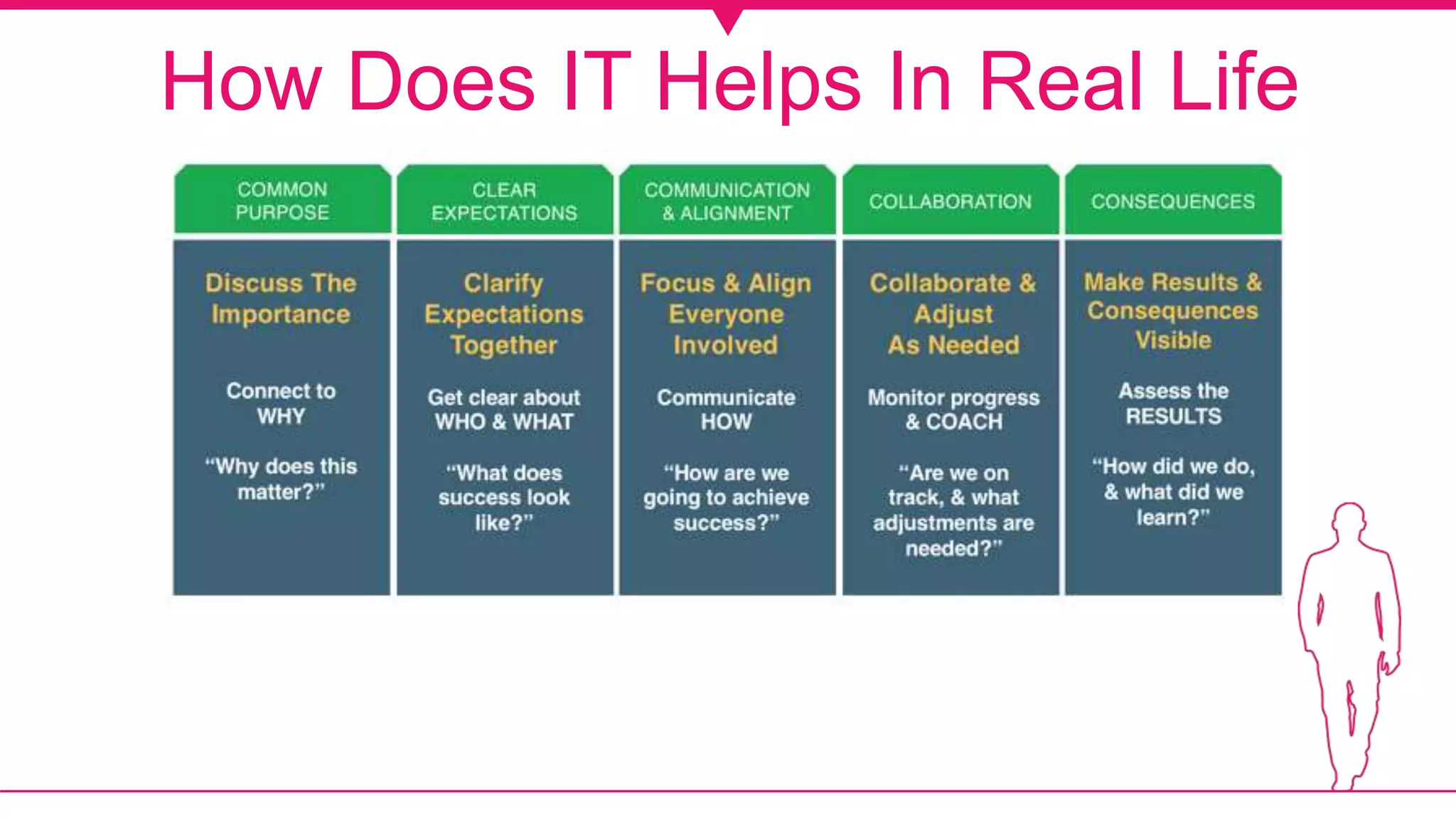
How Does It Help In Real Life04
Content
Auditing05
Types of Auditing06
Purpose Of Auditing07
Pros/Cons Of Auditing08
Accountability
Accountability
Accountability is the obligation of an organization
or individual to account for activities and accept
blame for failures. A person who is accountable
may be called upon to answer and account for
outcomes.
Introduction
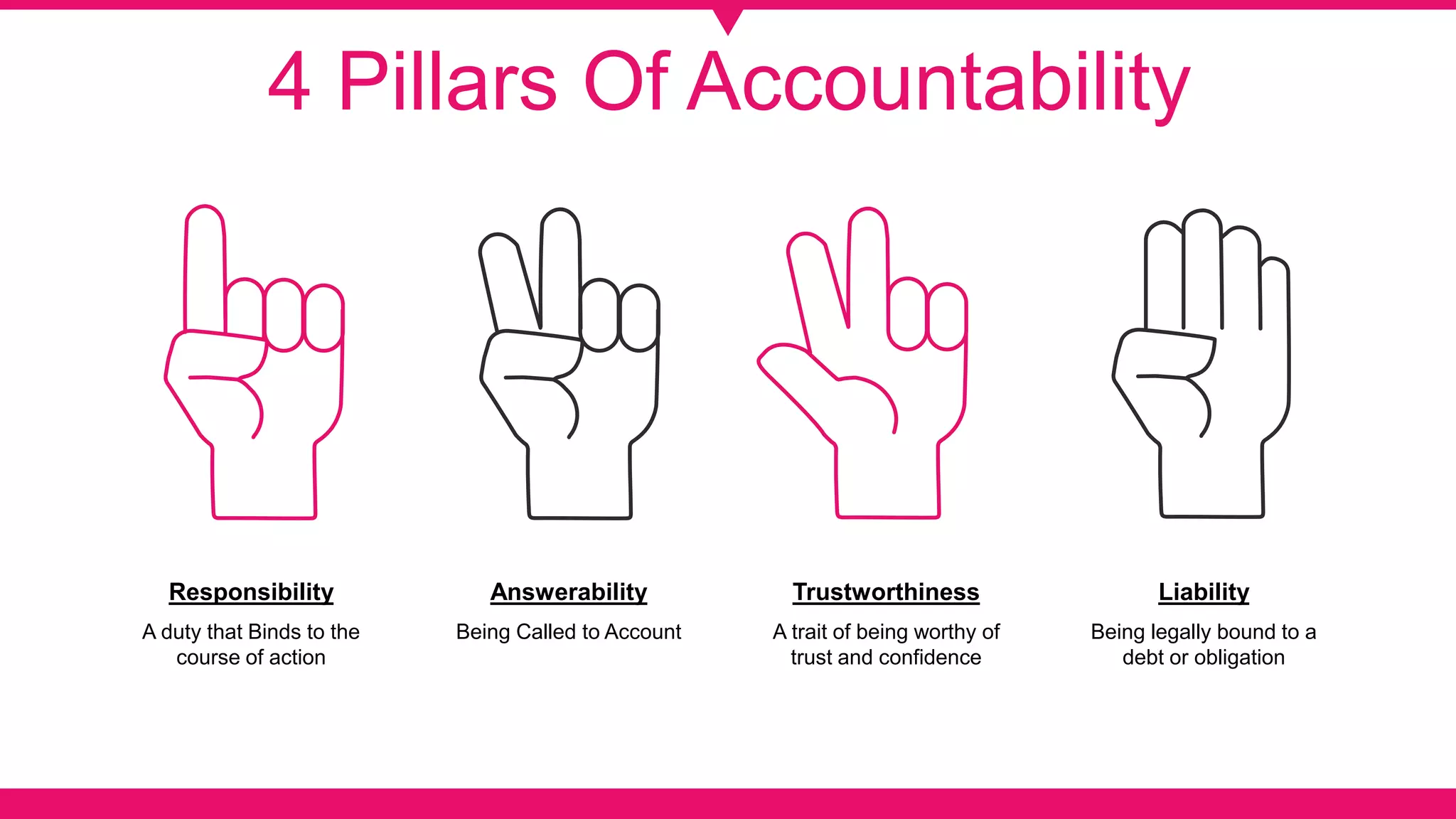
4 Pillars Of Accountability
A duty that Binds to the
course of action
Responsibility
Being Called to Account
Answerability
A trait of being worthy of
trust and confidence
Trustworthiness
Being legally bound to a
debt or obligation
Liability
Example
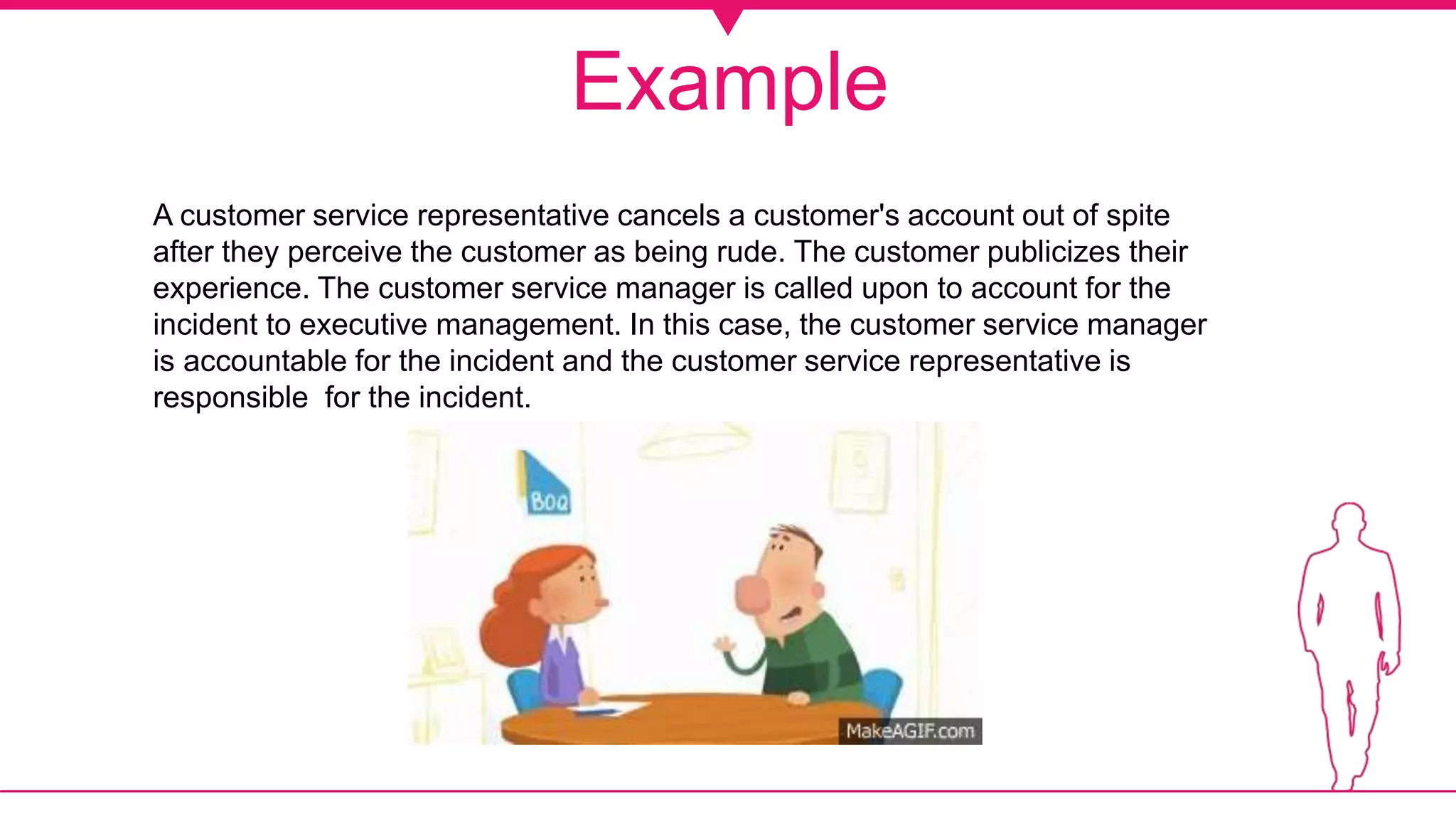
A customer service representative cancels a customer's account out of spite
after they perceive the customer as being rude. The customer publicizes their
experience. The customer service manager is called upon to account for the
incident to executive management. In this case, the customer service manager
is accountable for the incident and the customer service representative is
responsible for the incident.
How Does IT Helps In Real Life
Auditing
Auditing
The term audit usually refers to a financial statement
audit. A financial audit is an objective examination and
evaluation of the financial statements of an organization
to make sure that the financial records are a fair and
accurate.
Public companies are subject to provisions of the
Securities Act of 1933 and the Securities
Exchange Act of 1934 that make an annual external
audit a legal obligation
Auditing Can Be Done by Two Different Auditors.
• Internal Auditor
• External Auditor
Introduction
Internal Auditing
• Internal auditors work for the
organization as internal
employees to examine records
and help improve internal
processes such as
• operations
• internal controls
• It will held on daily . Weekly or
monthly
• It provide operational efficiency
External Auditing
• External auditors come in from
outside the organization to
examine accounting and
financial records and provide
an independent opinion on
these records.
• The report generate by
external audit is provided to
stakeholders
• It will held on Yearly
• It provide accuracy and validity
of financial Statement
The Main Purpose Of Auditing Is
Purpose Of Auditing
Examination
Detection
Prevention
Detailed examination of the financial reports of
an organization.
Detection Of Errors In Financial Statement
Prevent Organization From Fraud like stealing
cash before or after it has been recorded
Types Of Errors During Auditing
• Error Of Principle
• When the accounting principle are violated
• Error of Clerical
• Human Errors
• Writing Error
• Error Of Omission
• Completely excluded
• Partial excluded
• Error OF Commission
• Casting Error -> error during Sum
• Posting Error -> post in different account
• Recording Error -> Sales Transaction into Purchase
• Error Of Duplication
• Duplication Entry
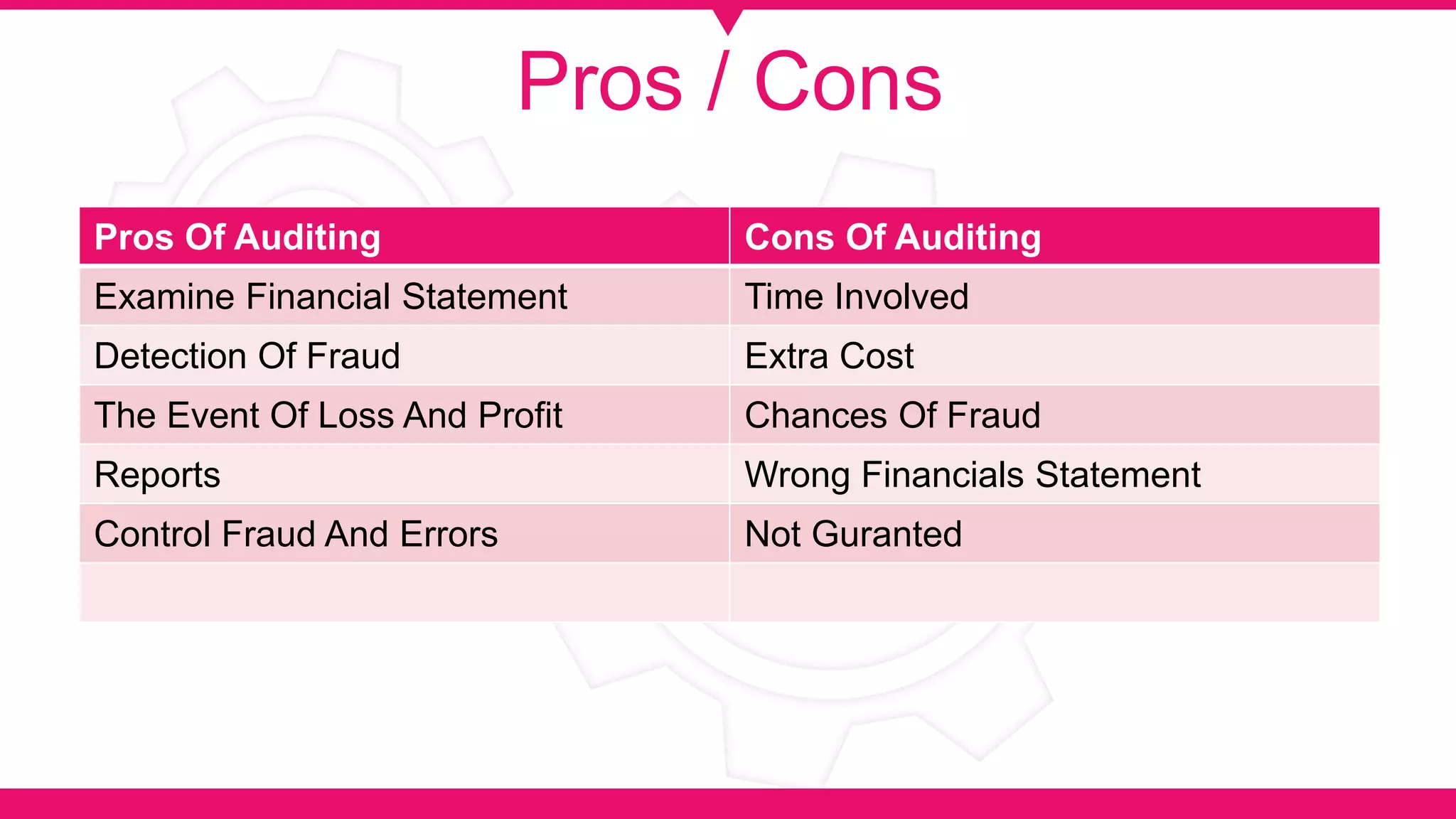
Pros / Cons
Pros Of Auditing Cons Of Auditing
Examine Financial Statement Time Involved
Detection Of Fraud Extra Cost
The Event Of Loss And Profit Chances Of Fraud
Reports Wrong Financials Statement
Control Fraud And Errors Not Guranted
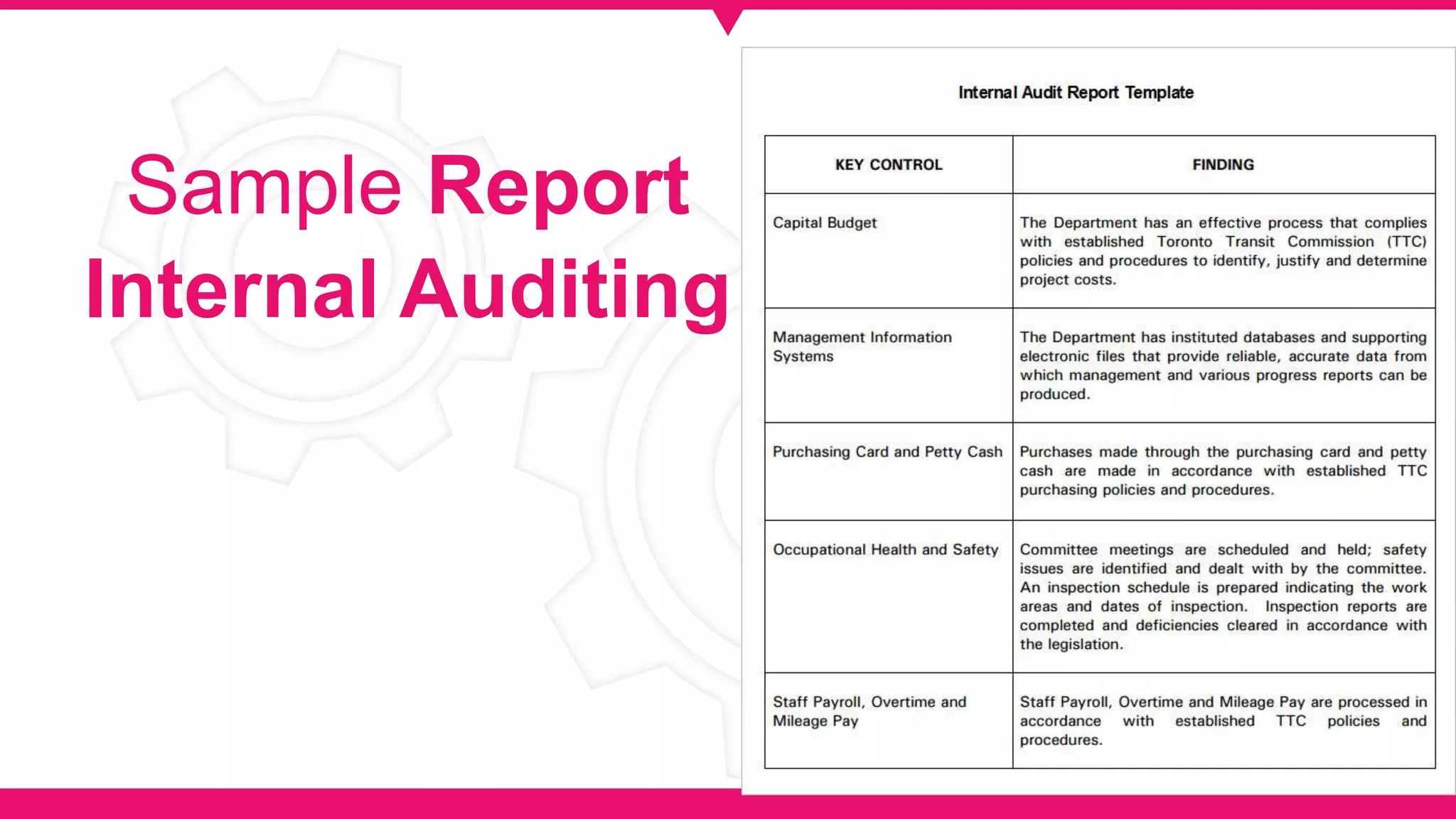
Sample Report
Internal Auditing
Thank You

Accountability And Auditing In Professional Practice

  • 1.
    Members: Ramsha Ghaffar ---3135-2016 Syed Hassan Ali Hashmi --- 1986-2016 Accountability And Auditing
  • 2.
    Accountability01 Pillar Of Accountability02 ExampleOf Accountability03 How Does It Help In Real Life04 Content Auditing05 Types of Auditing06 Purpose Of Auditing07 Pros/Cons Of Auditing08
  • 3.
  • 4.
    Accountability Accountability is theobligation of an organization or individual to account for activities and accept blame for failures. A person who is accountable may be called upon to answer and account for outcomes. Introduction
  • 5.
    4 Pillars OfAccountability A duty that Binds to the course of action Responsibility Being Called to Account Answerability A trait of being worthy of trust and confidence Trustworthiness Being legally bound to a debt or obligation Liability
  • 6.
    Example A customer servicerepresentative cancels a customer's account out of spite after they perceive the customer as being rude. The customer publicizes their experience. The customer service manager is called upon to account for the incident to executive management. In this case, the customer service manager is accountable for the incident and the customer service representative is responsible for the incident.
  • 7.
    How Does ITHelps In Real Life
  • 8.
  • 9.
    Auditing The term auditusually refers to a financial statement audit. A financial audit is an objective examination and evaluation of the financial statements of an organization to make sure that the financial records are a fair and accurate. Public companies are subject to provisions of the Securities Act of 1933 and the Securities Exchange Act of 1934 that make an annual external audit a legal obligation Auditing Can Be Done by Two Different Auditors. • Internal Auditor • External Auditor Introduction
  • 10.
    Internal Auditing • Internalauditors work for the organization as internal employees to examine records and help improve internal processes such as • operations • internal controls • It will held on daily . Weekly or monthly • It provide operational efficiency
  • 11.
    External Auditing • Externalauditors come in from outside the organization to examine accounting and financial records and provide an independent opinion on these records. • The report generate by external audit is provided to stakeholders • It will held on Yearly • It provide accuracy and validity of financial Statement
  • 12.
    The Main PurposeOf Auditing Is Purpose Of Auditing Examination Detection Prevention Detailed examination of the financial reports of an organization. Detection Of Errors In Financial Statement Prevent Organization From Fraud like stealing cash before or after it has been recorded
  • 13.
    Types Of ErrorsDuring Auditing • Error Of Principle • When the accounting principle are violated • Error of Clerical • Human Errors • Writing Error • Error Of Omission • Completely excluded • Partial excluded • Error OF Commission • Casting Error -> error during Sum • Posting Error -> post in different account • Recording Error -> Sales Transaction into Purchase • Error Of Duplication • Duplication Entry
  • 14.
    Pros / Cons ProsOf Auditing Cons Of Auditing Examine Financial Statement Time Involved Detection Of Fraud Extra Cost The Event Of Loss And Profit Chances Of Fraud Reports Wrong Financials Statement Control Fraud And Errors Not Guranted
  • 15.
  • 16.