Accident
Investigation
Objectives
 Explain the meaning and impact of
accidents
 Identify different types of accident causes
 Know the purpose of accident investigation
 Explain how to conduct an accident
investigation
 Know how to document accident
investigations.
What is an Accident?
 Unplanned event results in mishap
(personal injury or property damage).
 Accidents are the result of the failure of
people, equipment, materials, or
environment to react as expected.
 All accidents have consequences or
outcomes.
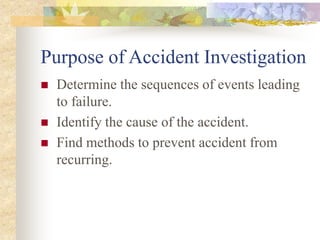
Purpose of Accident Investigation
 Determine the sequences of events leading
to failure.
 Identify the cause of the accident.
 Find methods to prevent accident from
recurring.
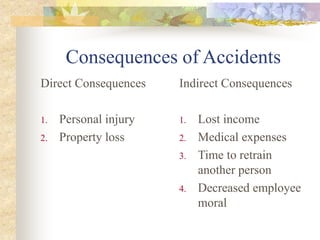
Consequences of Accidents
Direct Consequences
1. Personal injury
2. Property loss
Indirect Consequences
1. Lost income
2. Medical expenses
3. Time to retrain
another person
4. Decreased employee
moral
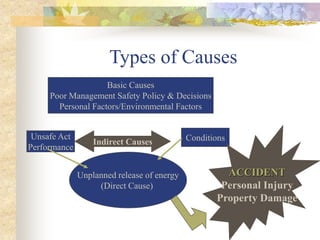
Types of Causes
Basic Causes
Poor Management Safety Policy & Decisions
Personal Factors/Environmental Factors
Unsafe Act
Performance
Conditions
Unplanned release of energy
(Direct Cause)
Indirect Causes
ACCIDENT
Personal Injury
Property Damage
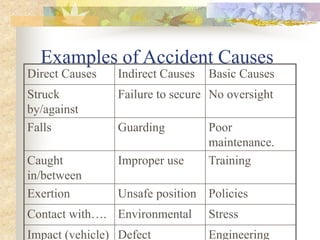
Examples of Accident Causes
Direct Causes Indirect Causes Basic Causes
Struck
by/against
Failure to secure No oversight
Falls Guarding Poor
maintenance.
Caught
in/between
Improper use Training
Exertion Unsafe position Policies
Contact with…. Environmental Stress
Impact (vehicle) Defect Engineering
Be Prepared
 Develop a policy for accident investigation
 Routinely audit your policy to:
- ensure personnel understand their role
- system is driving corrective actions
Assign responsibilities to personnel:
- employee must be trained to investigate
- investigator should know process
Conducting the Investigation
 Interview witnesses.
 Document the accident scene before any
changes are made.
 Review all information (procedures,
equipment manuals).
Conducting the Investigation
 Make documented observations on:
 Pre-accident conditions
 Accident sequence
 Post-accident conditions
 Document the facts (i.e.: location, witness
remarks, and contributing factors).
 Determine sequence of events leading to
accident
Common Problem Solving
Methods
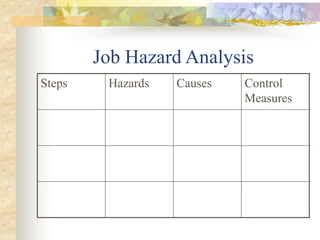
 Job Hazard analysis
 Sequence diagrams
 Change analysis
Job Hazard Analysis
Steps Hazards Causes Control
Measures
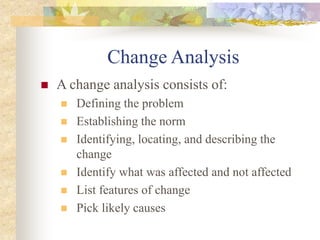
Change Analysis
 A change analysis consists of:
 Defining the problem
 Establishing the norm
 Identifying, locating, and describing the
change
 Identify what was affected and not affected
 List features of change
 Pick likely causes
Witness Interviews
 Interview promptly.
 Establish rapport with witness (treat as
equal).
 Get the facts.
 Write down the witness’s statement
Documentation
 Complete an accident investigation form to
collect:
 Personnel information
 Accident information (location, events
leading to accident, machines involved)
 Causes of the accident
 Recommendation to prevent accident
 Follow up information
Documentation
 From the accident investigation form and
witness statements write an accident
investigation report. The report should
include:
 Background information (where, who)
 Summary (sequence, extent, type, source)
 Analysis (causes)
 Recommendations
Steps to Accident Investigation
 Survey the scene
 Secure the scene (initiate interim controls)
 Get help for the injured
 Collect evidence
 Analyze data
 Determine causes (scientific methods)
 Follow up (eliminate hazards)
Thank You
 Safety Course in Chennai
Safety Professionals
www.safetyengineeringcourseinchennai.in

Accident Investigation safety study Guide

  • 1.
  • 2.
    Objectives  Explain themeaning and impact of accidents  Identify different types of accident causes  Know the purpose of accident investigation  Explain how to conduct an accident investigation  Know how to document accident investigations.
  • 3.
    What is anAccident?  Unplanned event results in mishap (personal injury or property damage).  Accidents are the result of the failure of people, equipment, materials, or environment to react as expected.  All accidents have consequences or outcomes.
  • 4.
    Purpose of AccidentInvestigation  Determine the sequences of events leading to failure.  Identify the cause of the accident.  Find methods to prevent accident from recurring.
  • 5.
    Consequences of Accidents DirectConsequences 1. Personal injury 2. Property loss Indirect Consequences 1. Lost income 2. Medical expenses 3. Time to retrain another person 4. Decreased employee moral
  • 6.
    Types of Causes BasicCauses Poor Management Safety Policy & Decisions Personal Factors/Environmental Factors Unsafe Act Performance Conditions Unplanned release of energy (Direct Cause) Indirect Causes ACCIDENT Personal Injury Property Damage
  • 7.
    Examples of AccidentCauses Direct Causes Indirect Causes Basic Causes Struck by/against Failure to secure No oversight Falls Guarding Poor maintenance. Caught in/between Improper use Training Exertion Unsafe position Policies Contact with…. Environmental Stress Impact (vehicle) Defect Engineering
  • 8.
    Be Prepared  Developa policy for accident investigation  Routinely audit your policy to: - ensure personnel understand their role - system is driving corrective actions Assign responsibilities to personnel: - employee must be trained to investigate - investigator should know process
  • 9.
    Conducting the Investigation Interview witnesses.  Document the accident scene before any changes are made.  Review all information (procedures, equipment manuals).
  • 10.
    Conducting the Investigation Make documented observations on:  Pre-accident conditions  Accident sequence  Post-accident conditions  Document the facts (i.e.: location, witness remarks, and contributing factors).  Determine sequence of events leading to accident
  • 11.
    Common Problem Solving Methods Job Hazard analysis  Sequence diagrams  Change analysis
  • 12.
    Job Hazard Analysis StepsHazards Causes Control Measures
  • 13.
    Change Analysis  Achange analysis consists of:  Defining the problem  Establishing the norm  Identifying, locating, and describing the change  Identify what was affected and not affected  List features of change  Pick likely causes
  • 14.
    Witness Interviews  Interviewpromptly.  Establish rapport with witness (treat as equal).  Get the facts.  Write down the witness’s statement
  • 15.
    Documentation  Complete anaccident investigation form to collect:  Personnel information  Accident information (location, events leading to accident, machines involved)  Causes of the accident  Recommendation to prevent accident  Follow up information
  • 16.
    Documentation  From theaccident investigation form and witness statements write an accident investigation report. The report should include:  Background information (where, who)  Summary (sequence, extent, type, source)  Analysis (causes)  Recommendations
  • 17.
    Steps to AccidentInvestigation  Survey the scene  Secure the scene (initiate interim controls)  Get help for the injured  Collect evidence  Analyze data  Determine causes (scientific methods)  Follow up (eliminate hazards)
  • 18.
    Thank You  SafetyCourse in Chennai Safety Professionals www.safetyengineeringcourseinchennai.in