Downloaded 28 times
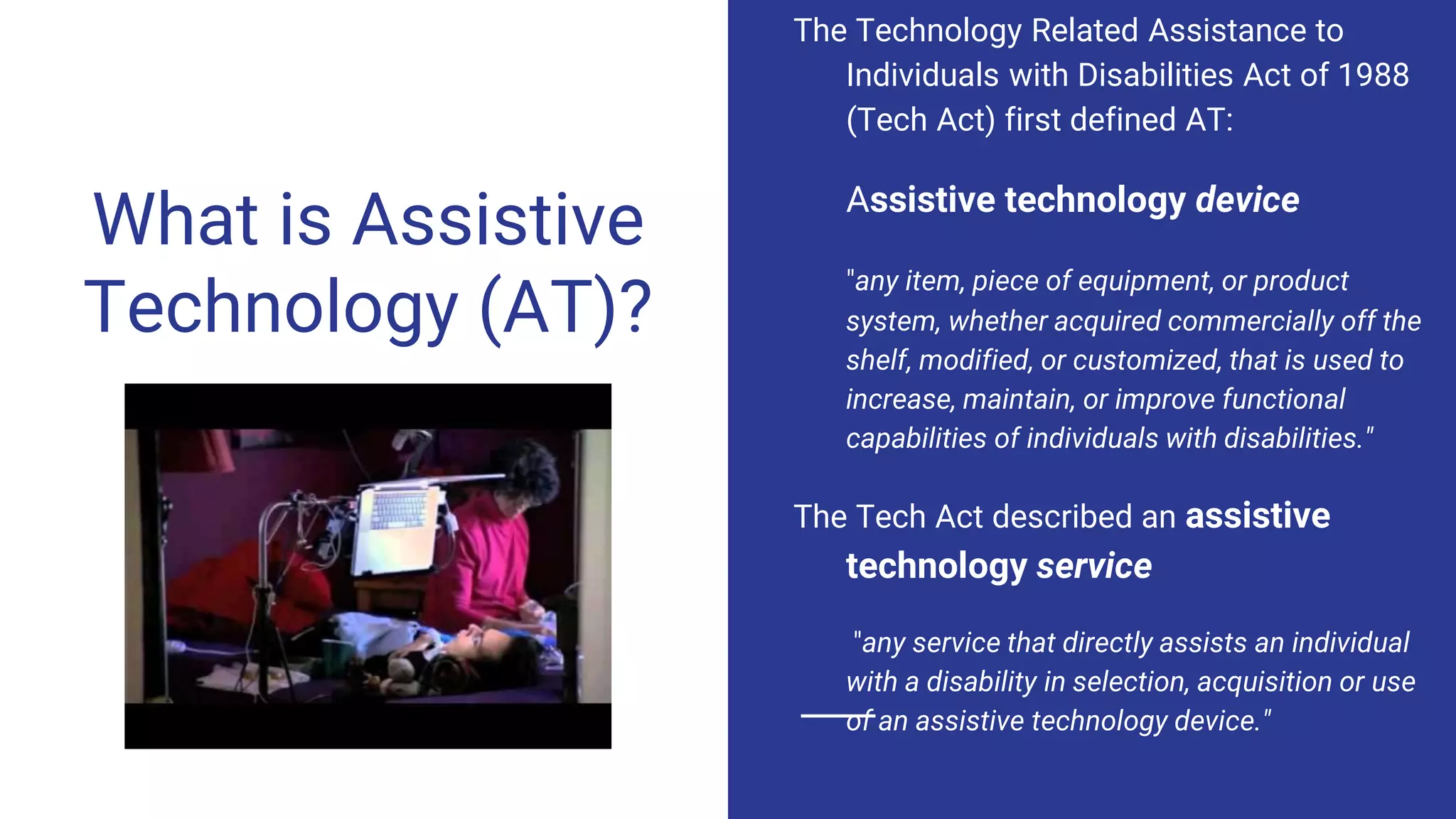
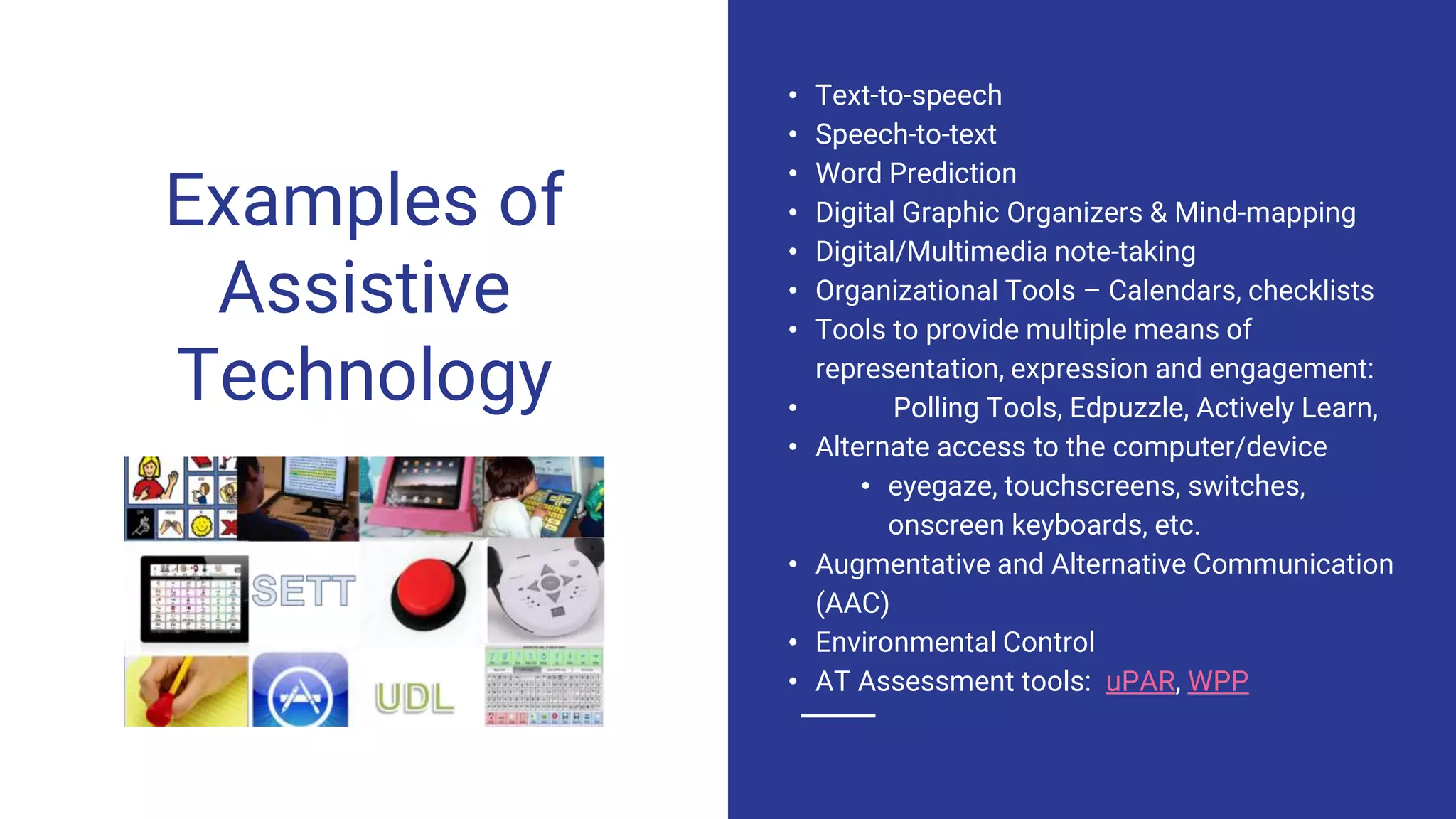
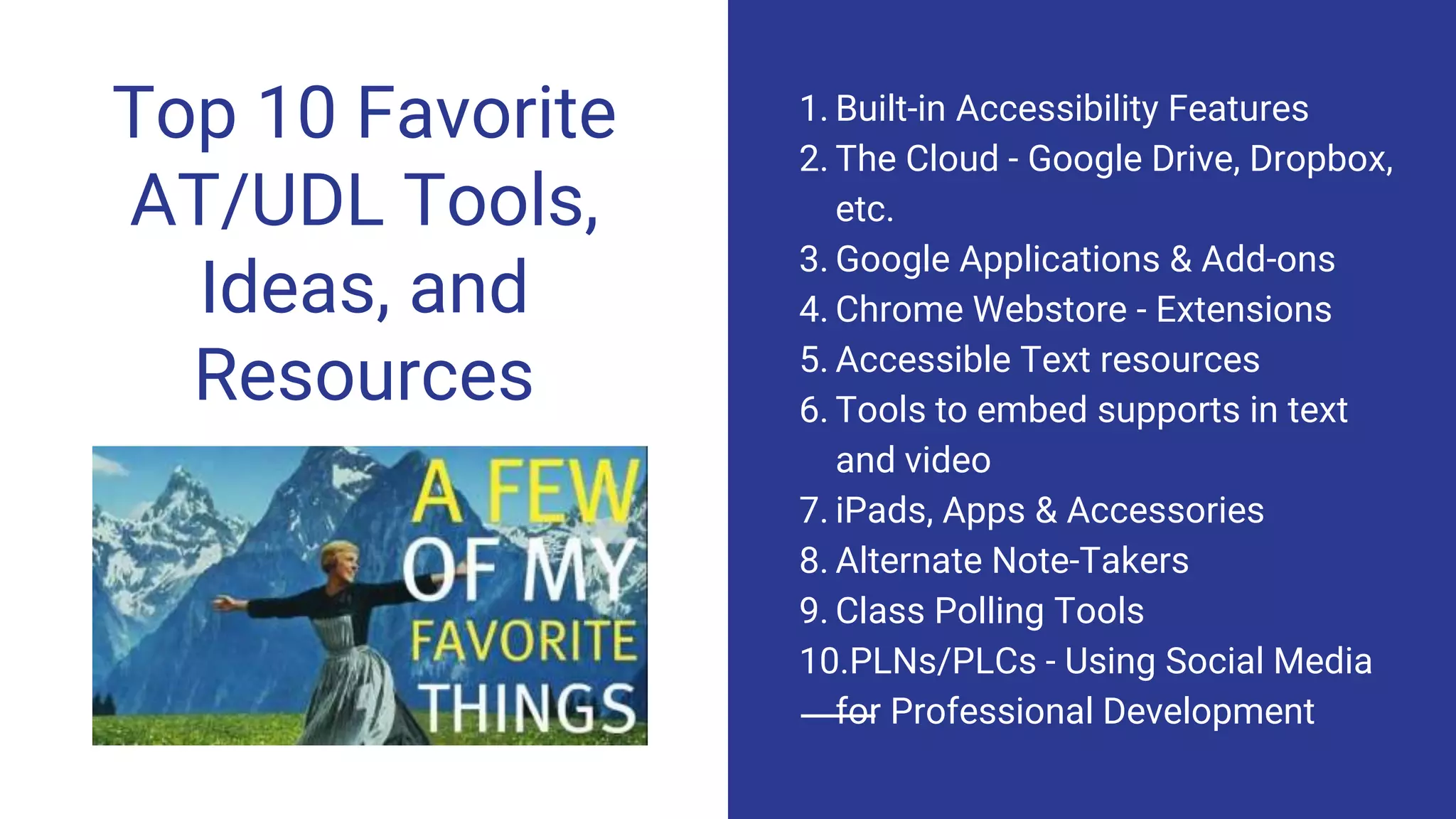

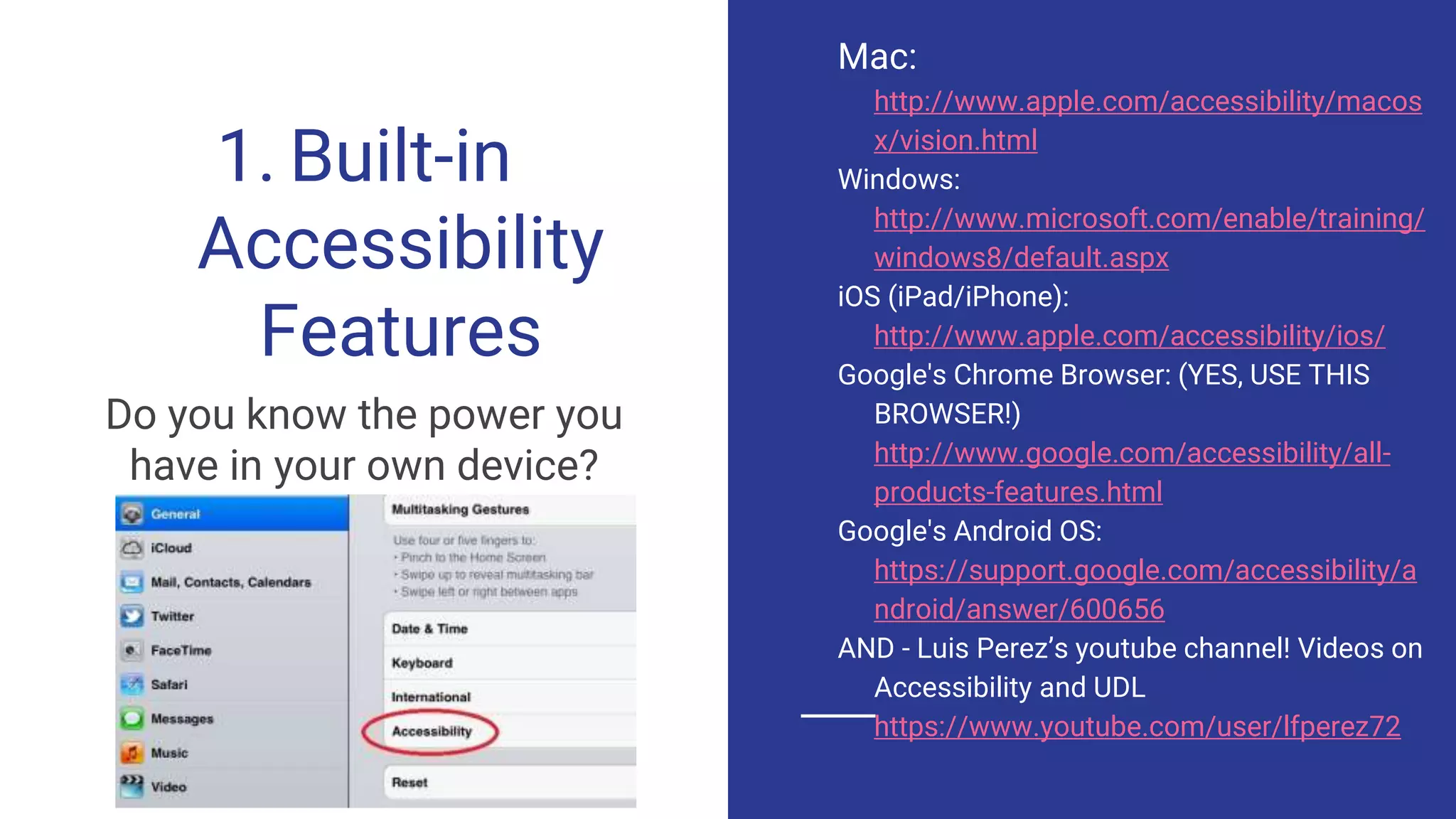
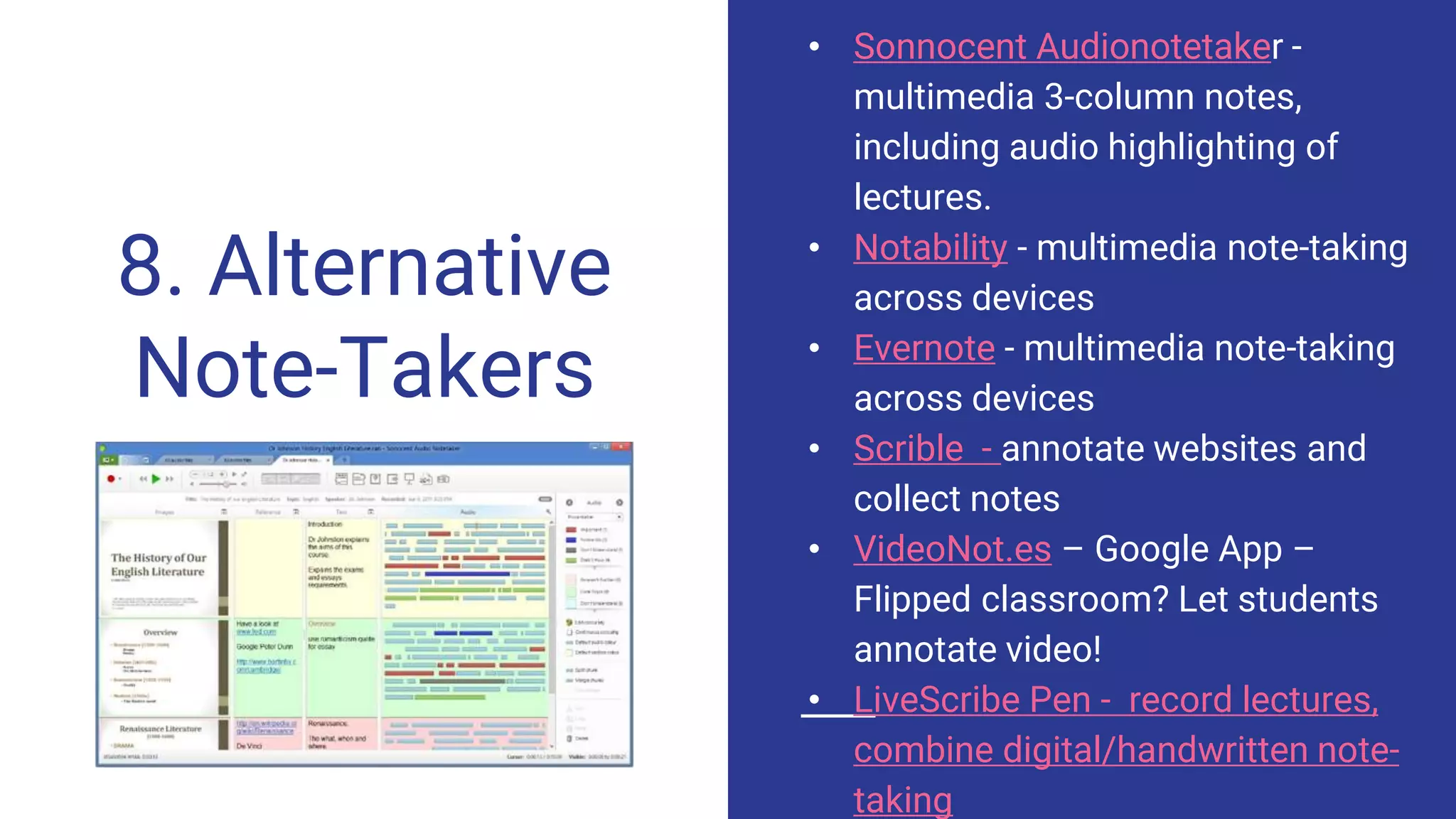
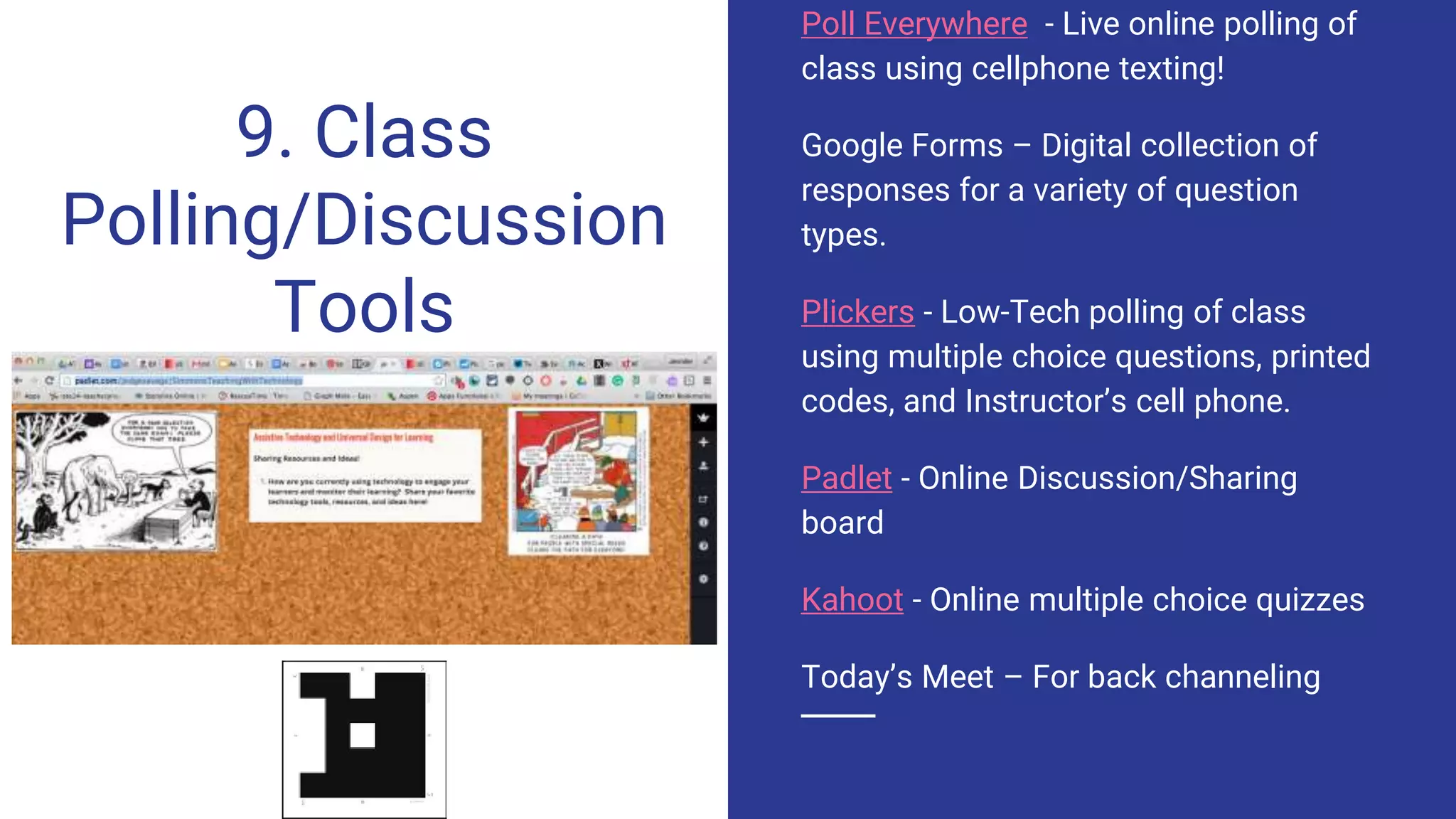
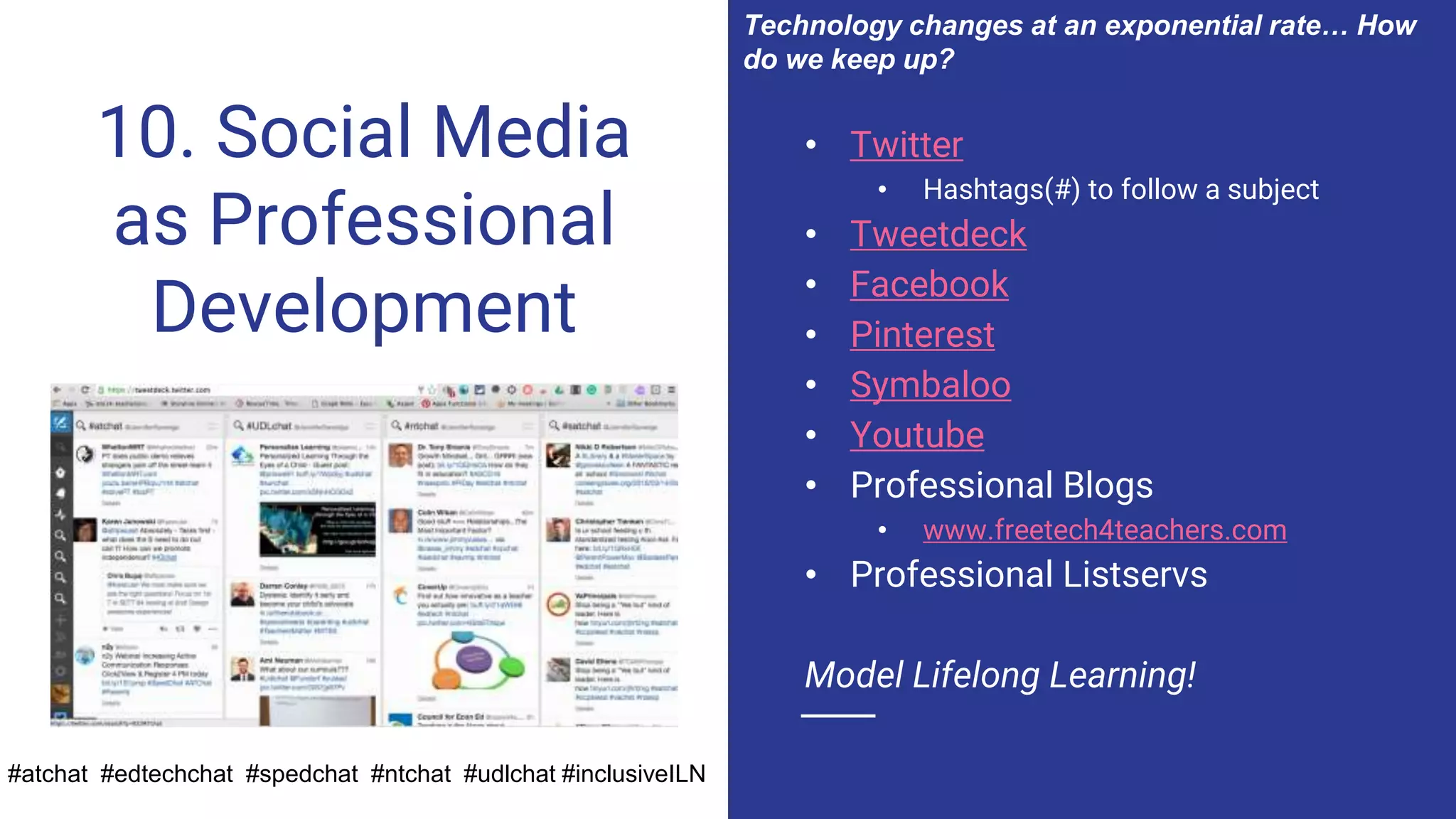
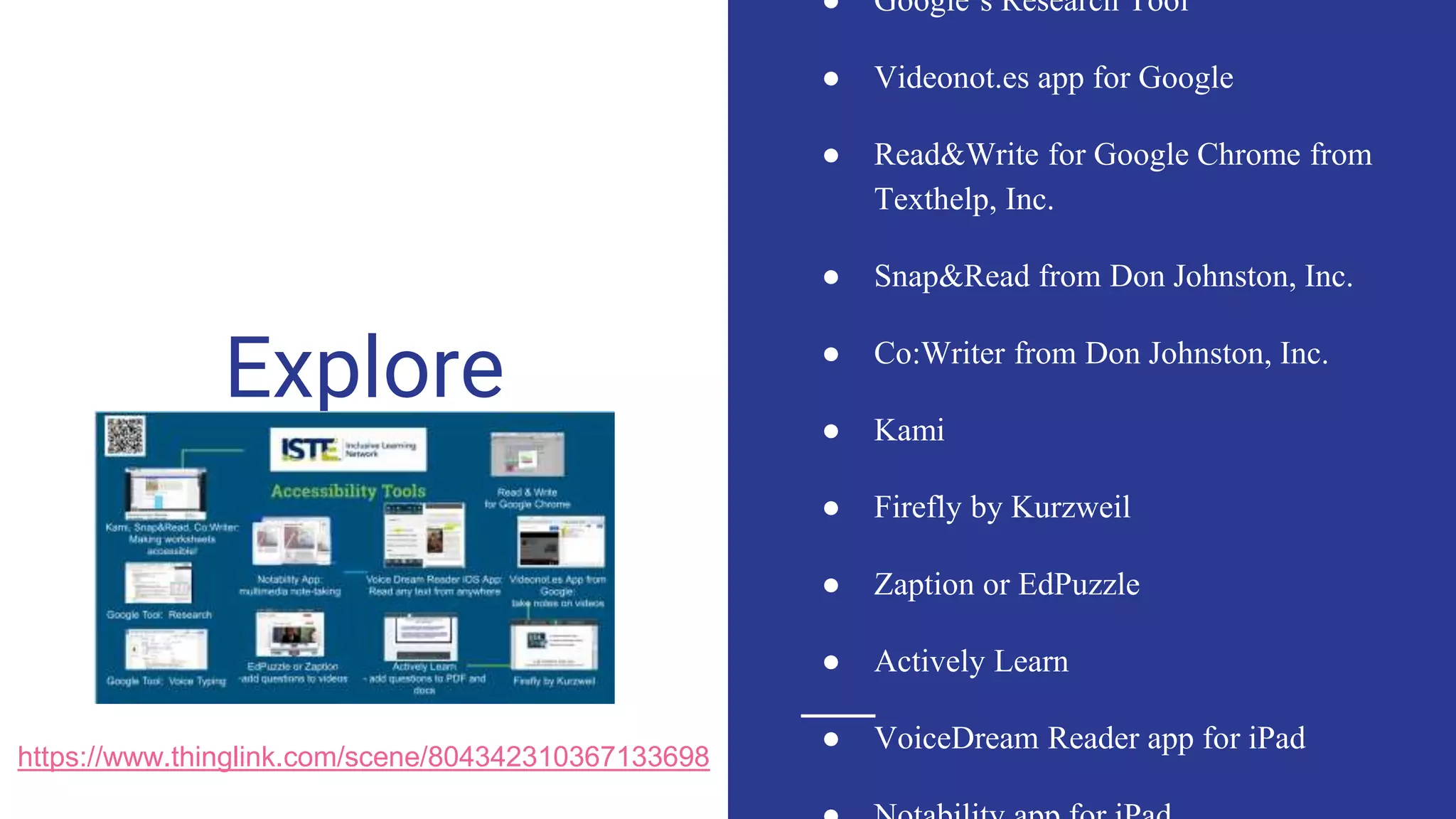

The document discusses assistive technology (AT) tools that can help ensure all learners have access to digital content and engagement. It defines AT and provides examples, such as text-to-speech, speech-to-text, and tools that allow for multiple means of representation, expression, and engagement. The document emphasizes that both AT and universal design for learning (UDL) are needed to support individual students' needs and make learning accessible and flexible for all. It concludes by listing top AT/UDL tools and resources for further exploration.


