Accessibility Analysis and Modeling in Public Transport Networks - A Raster based Approach Morten Fuglsang 1,2 , Henning Sten Hansen 2   & Bern Münier 1 1 Aarhus University – National Environmental research institute 2 Aalborg University Copenhagen
Structure of presentation Prensentation of topic Introduction to the case region The applied definition of accessibility The conducted modeling Results  Evaluation
Project topic For the Pashmina project, CA based land use change modelling is to be conducted using the LUCIA Cellular autometa model. The project outlines policy scenarios for paradigme shifts in transportation for the next 40 year period. Modeling is to be conducted in Denmark and in up to two other European cases.
Project topic One of the ongoing tasks is to create a indicator of accessibility to jobs through public transportation. In order for it to be transferable, the data requirements was to be as simple as possible, to facilitate easy transfere to the other European regions.
Introduction ‘ Outskirt Denmark’ is a popular theme in Danish politics, describing regions with : Declining population Poor number og jobs Low service level in terms of schools, hospital services and public transportation
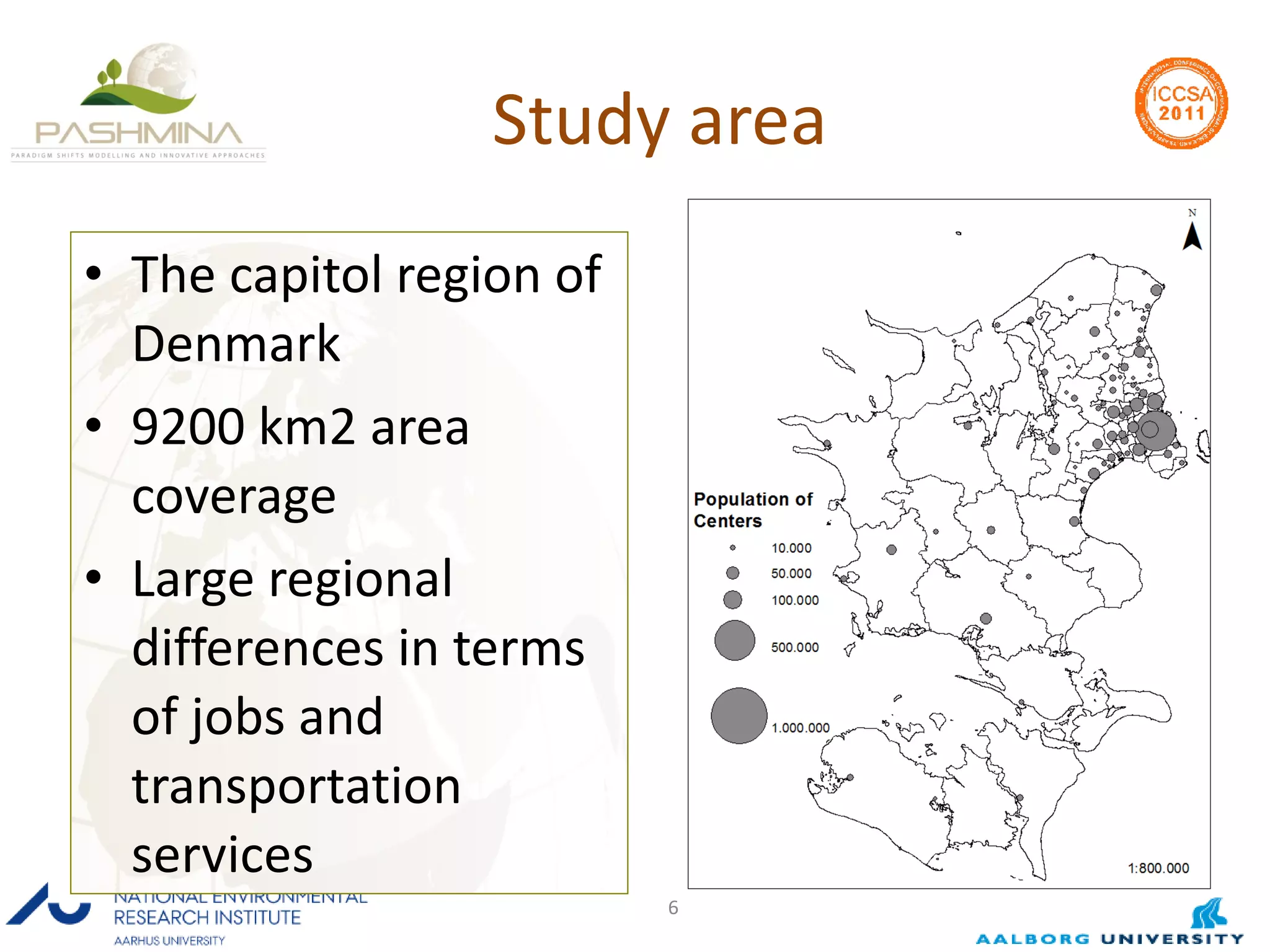
Study area The capitol region of Denmark 9200 km2 area coverage Large regional differences in terms of jobs and transportation services
Defining accessibility Components of accessibility: Land use component Transportation component Temporal component Individual component (Geurs, K. T & van Wee, B. 2004) We use three of the four components, and a gravity based accessibility measurement.
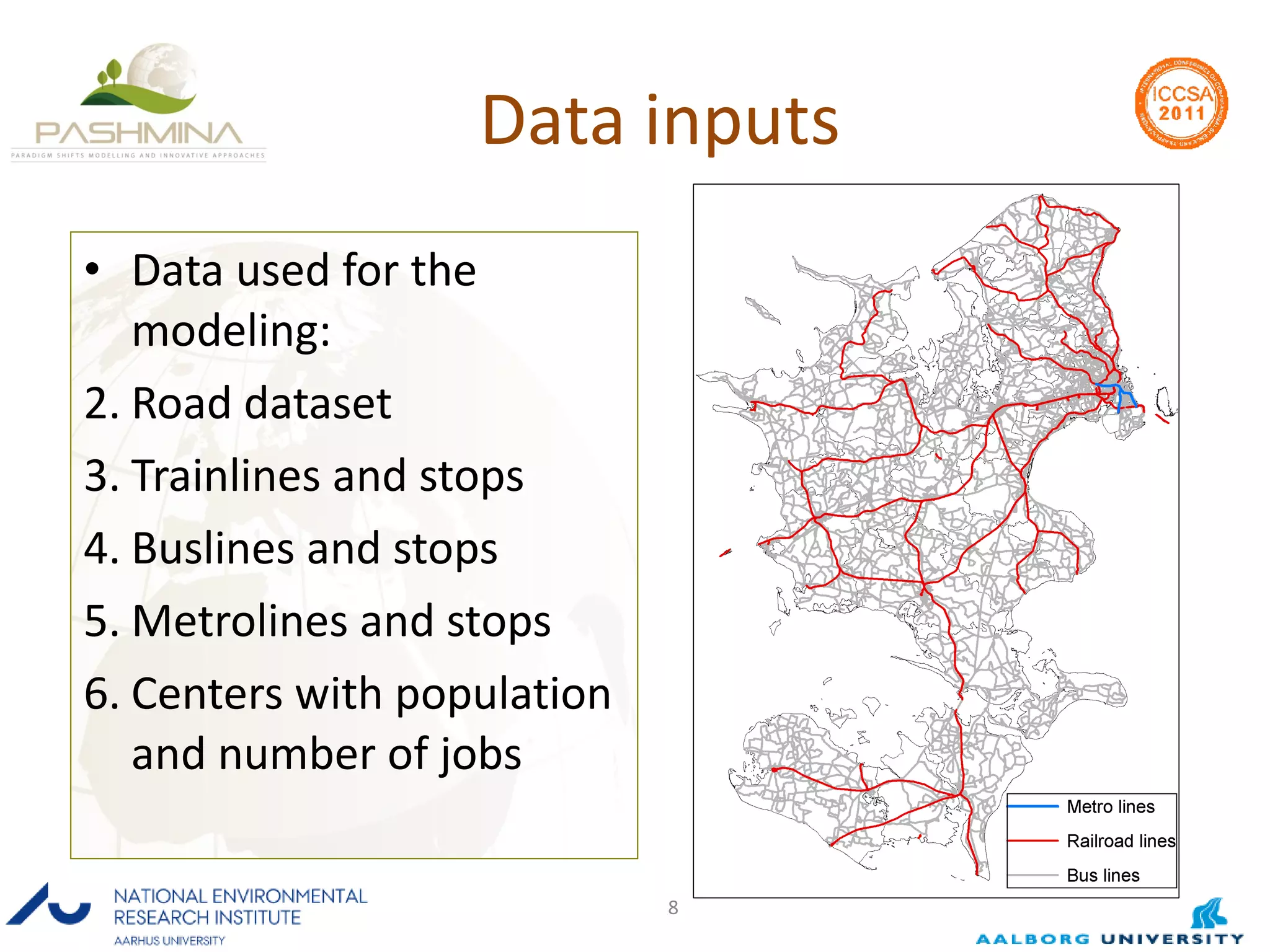
Data inputs Data used for the modeling: Road dataset  Trainlines and stops Buslines and stops Metrolines and stops Centers with population and number of jobs
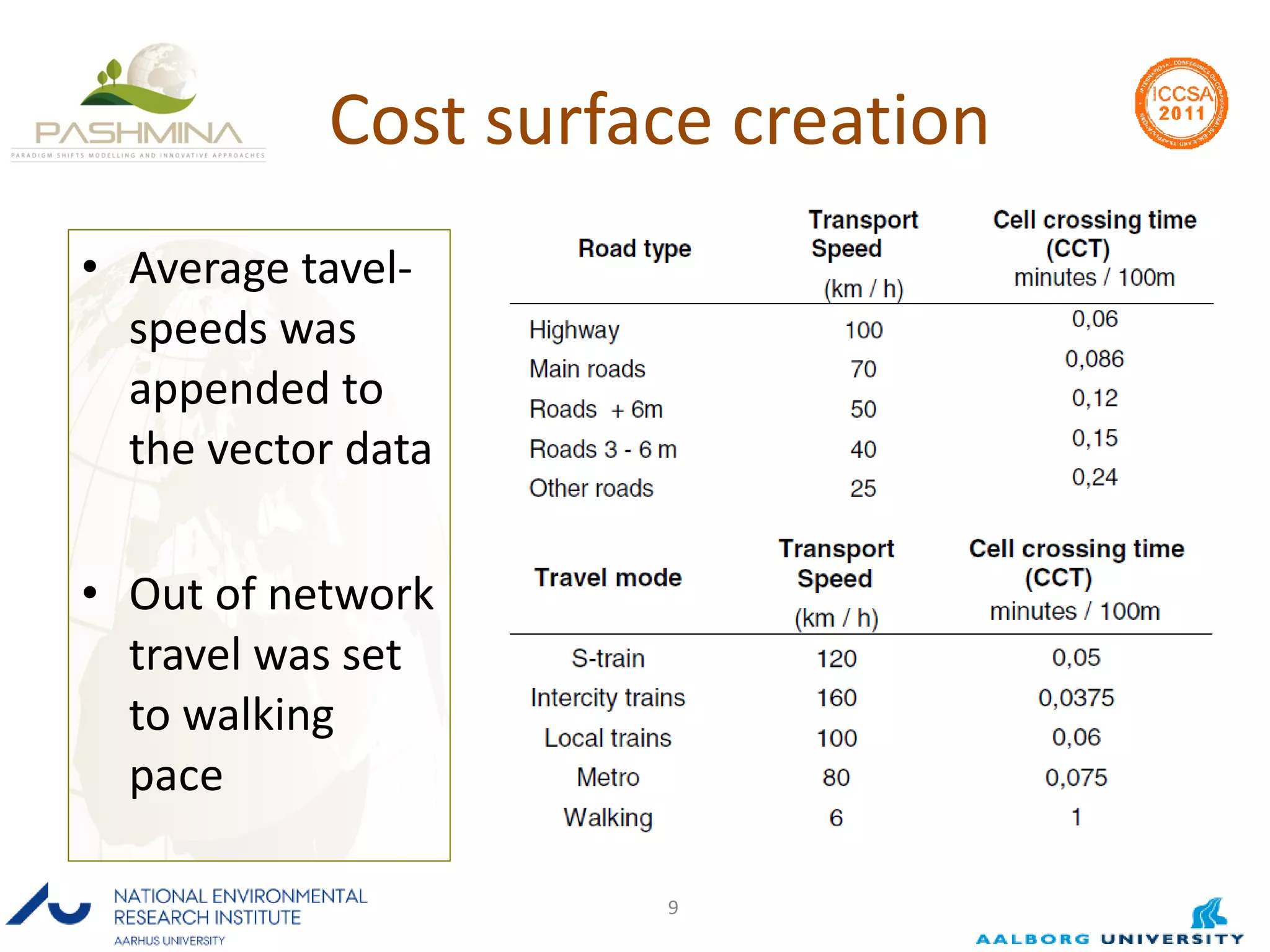
Cost surface creation Average tavel-speeds was appended to the vector data  Out of network travel was set to walking pace
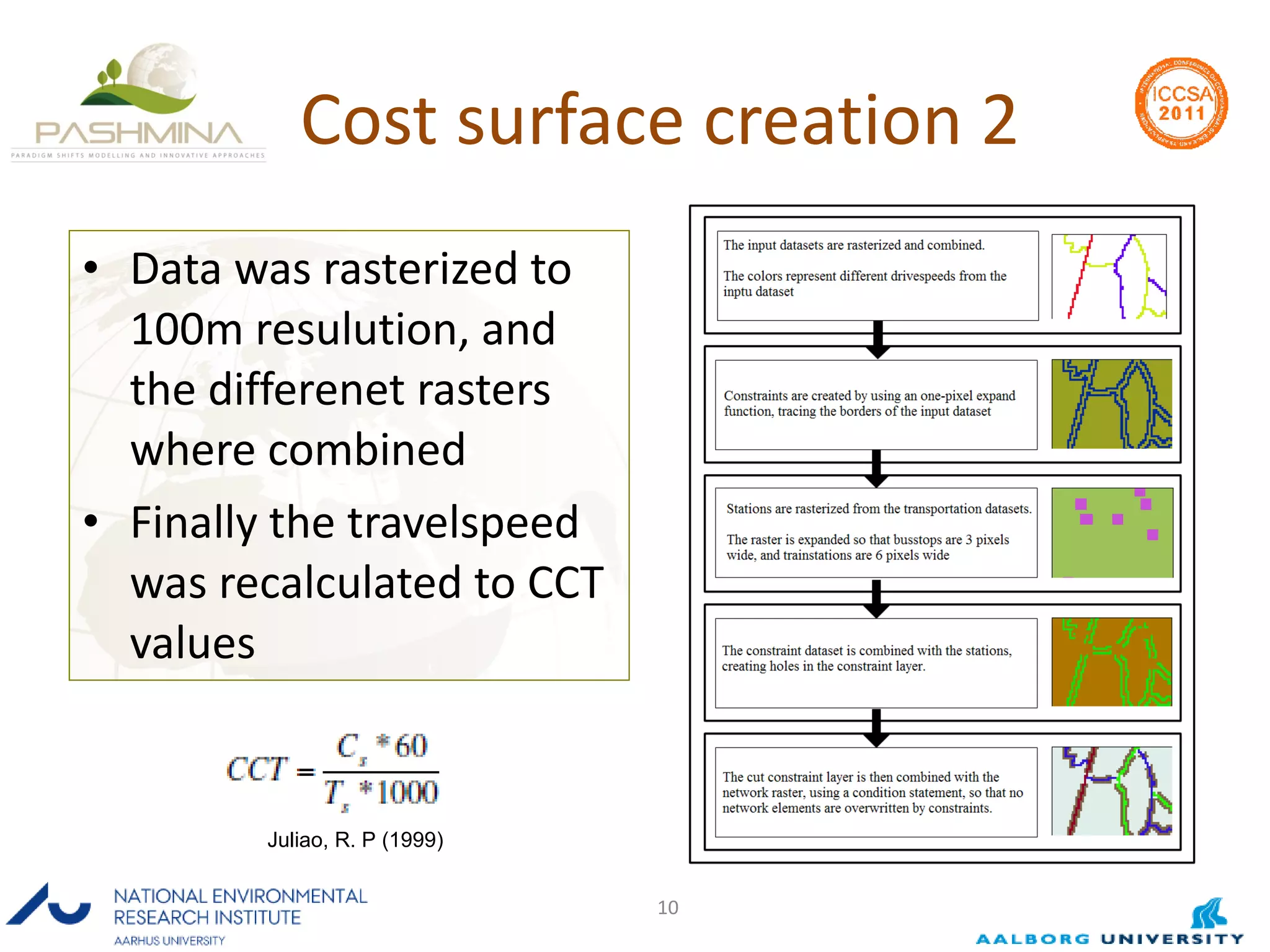
Cost surface creation 2 Data was rasterized to 100m resulution, and the differenet rasters where combined Finally the travelspeed was recalculated to CCT values Juliao, R. P (1999)
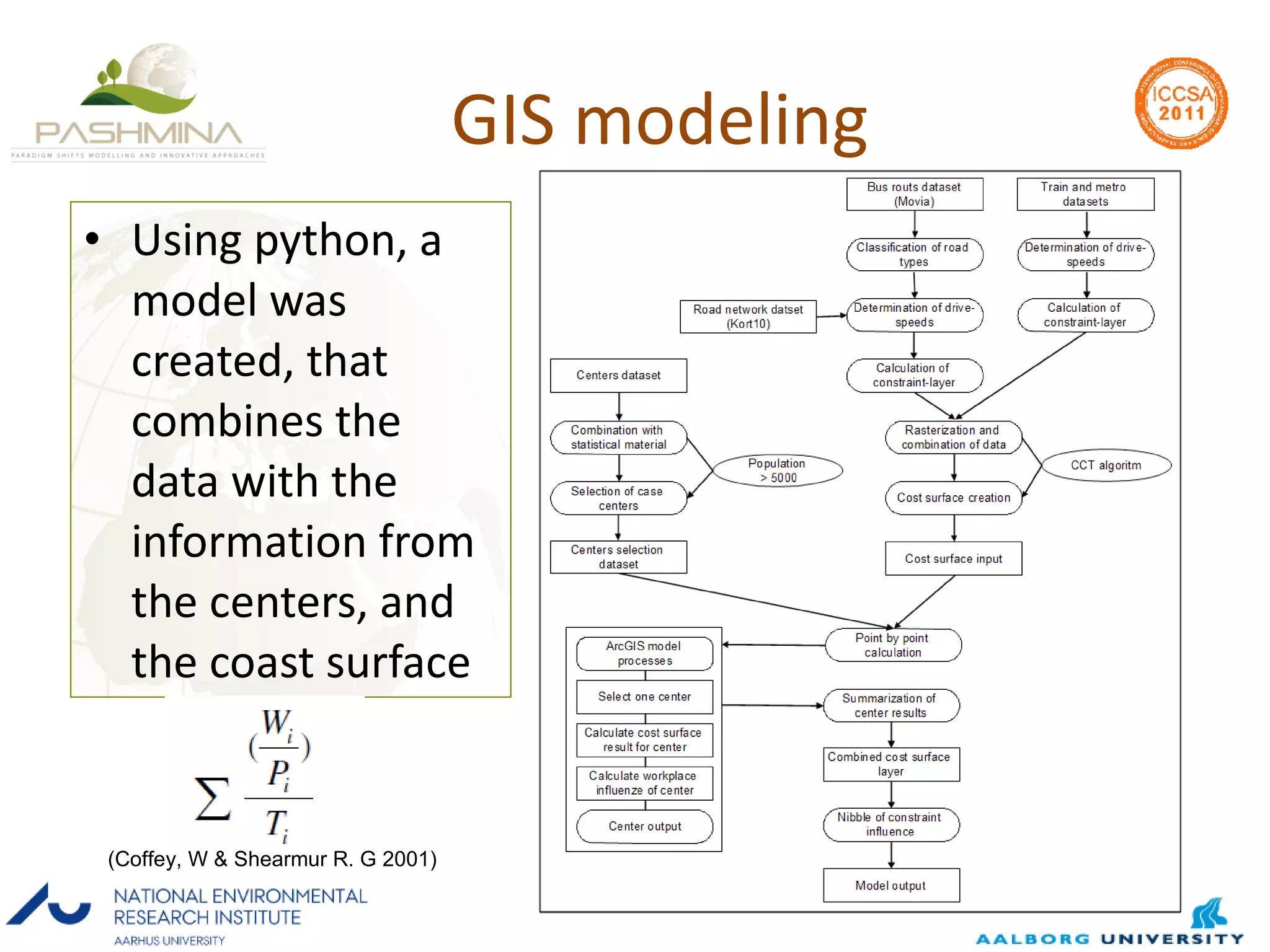
GIS modeling Using python, a model was created, that combines the data with the information from the centers, and the coast surface (Coffey, W & Shearmur R. G 2001)
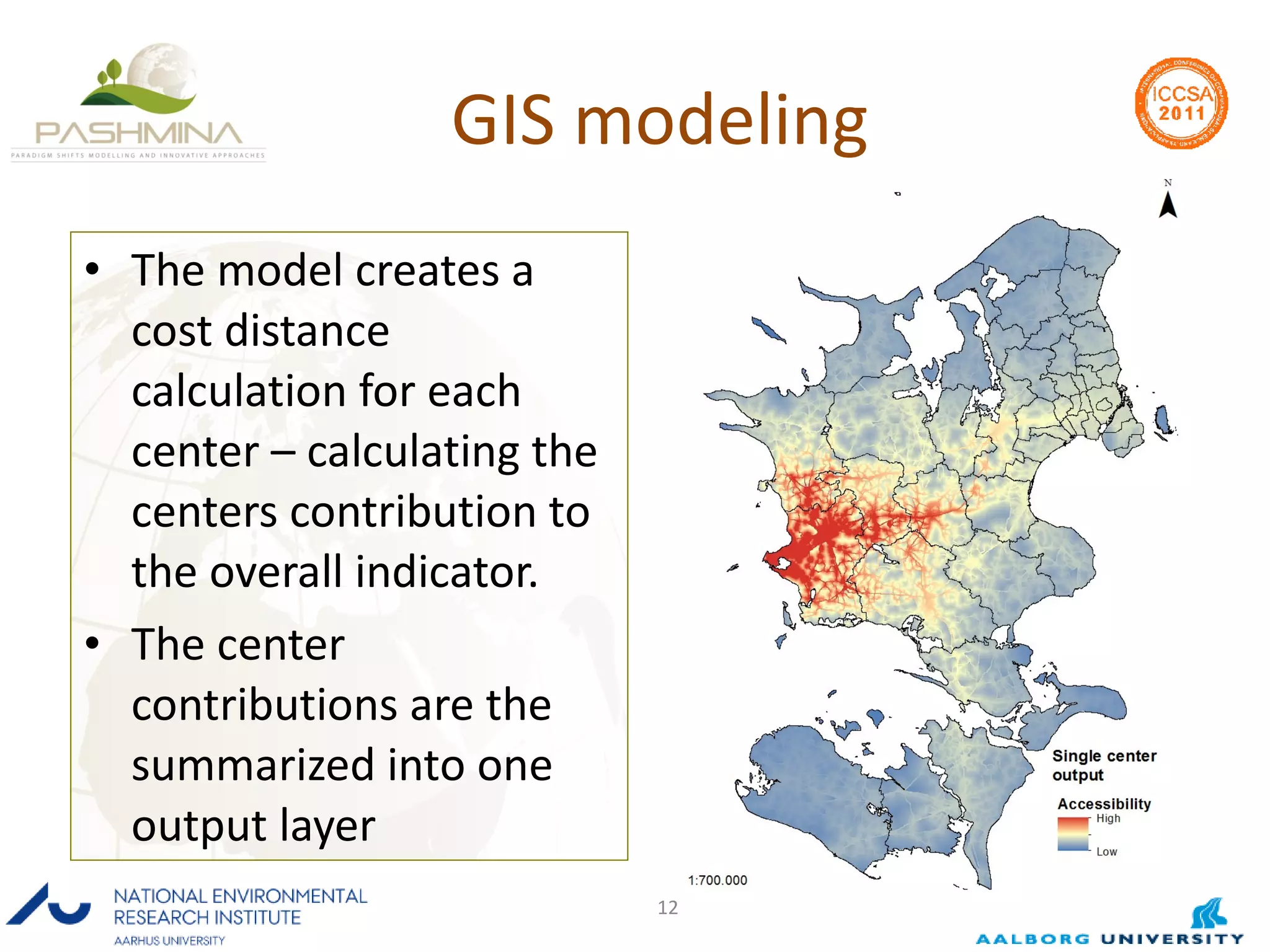
GIS modeling The model creates a cost distance calculation for each center – calculating the centers contribution to the overall indicator. The center contributions are the summarized into one output layer
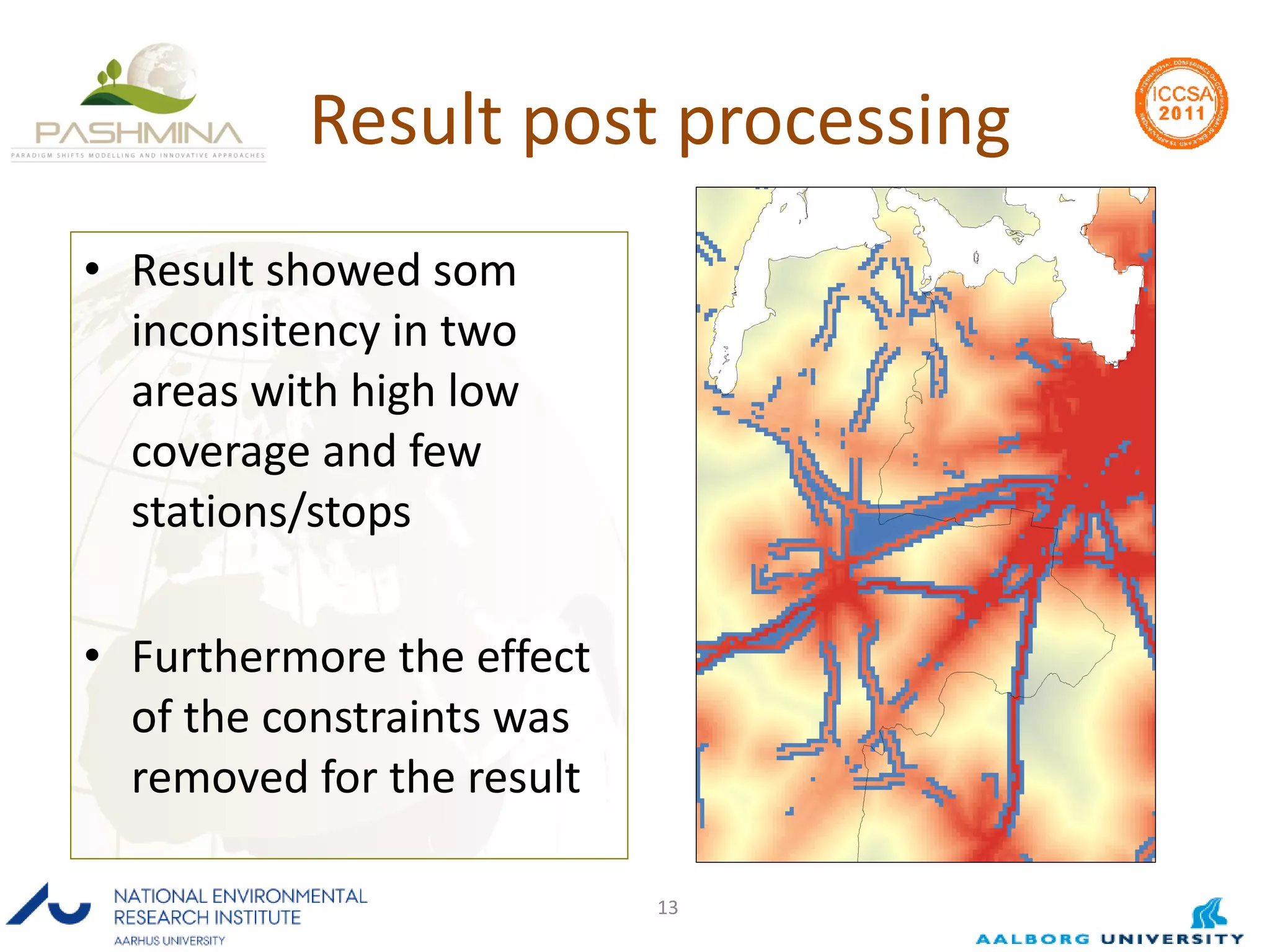
Result post processing Result showed som inconsitency in two areas with high low coverage and few stations/stops Furthermore the effect of the constraints was removed for the result
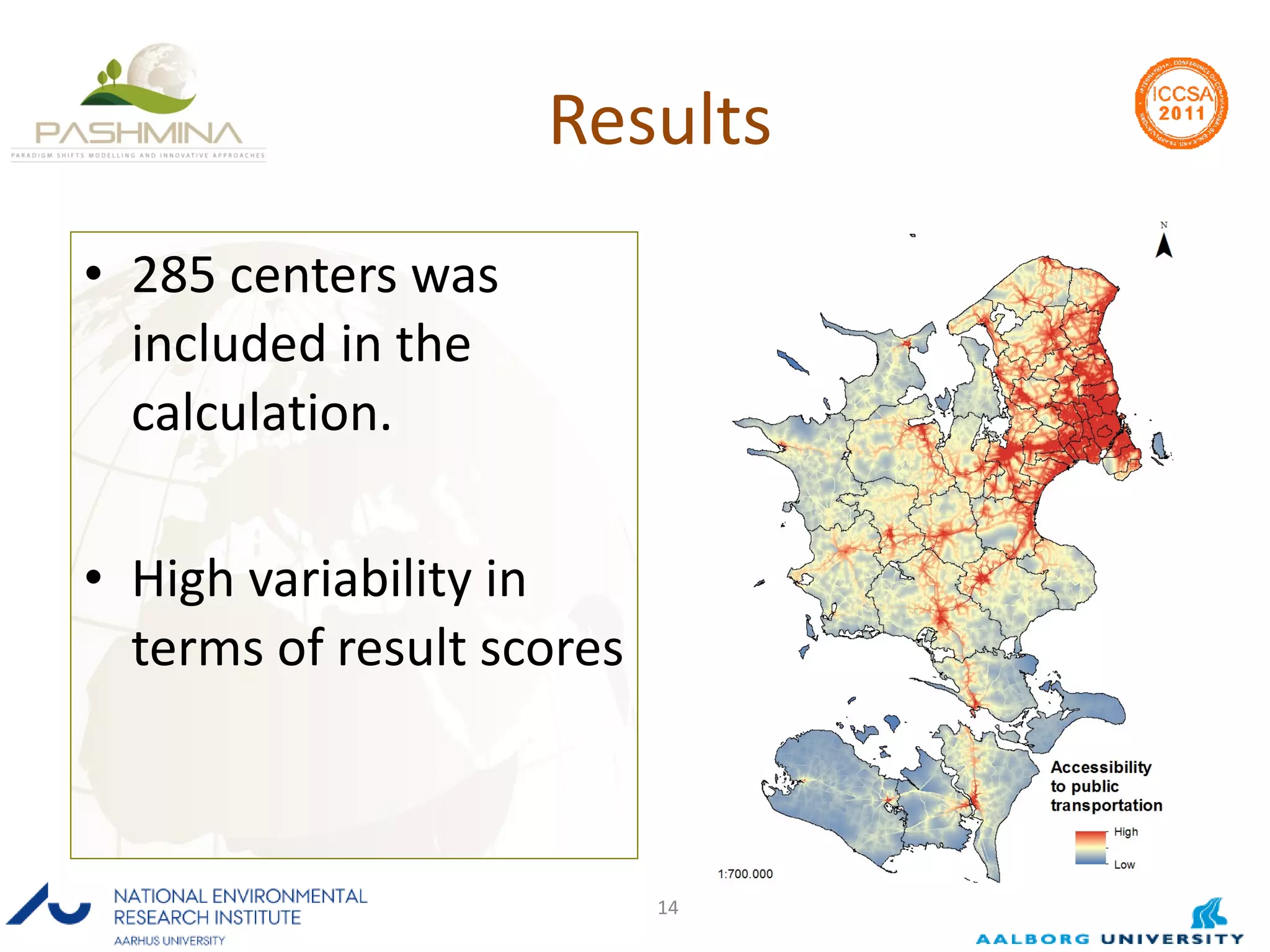
Results 285 centers was included in the calculation. High variability in terms of result scores
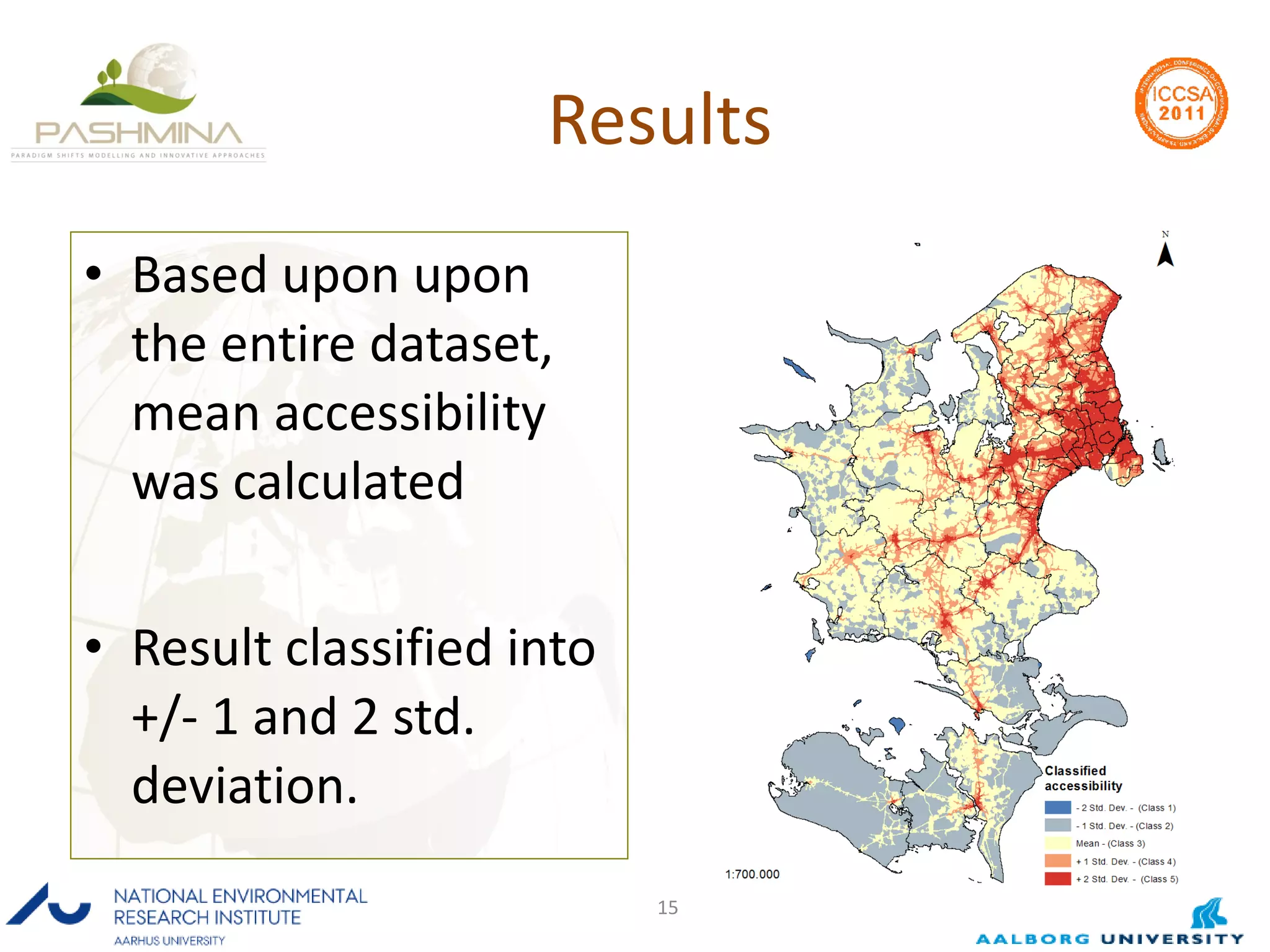
Results Based upon upon the entire dataset, mean accessibility was calculated Result classified into +/- 1 and 2 std. deviation.
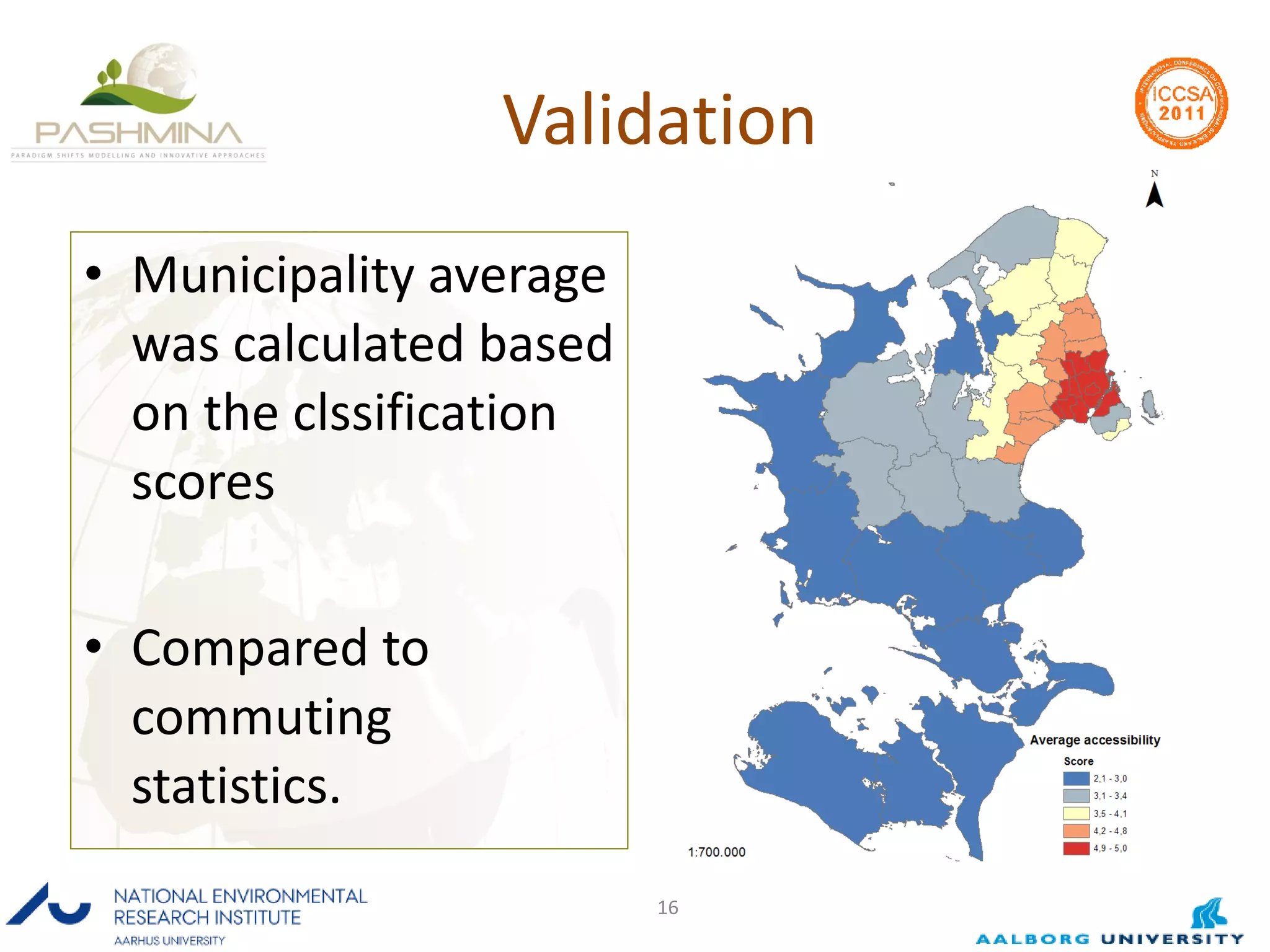
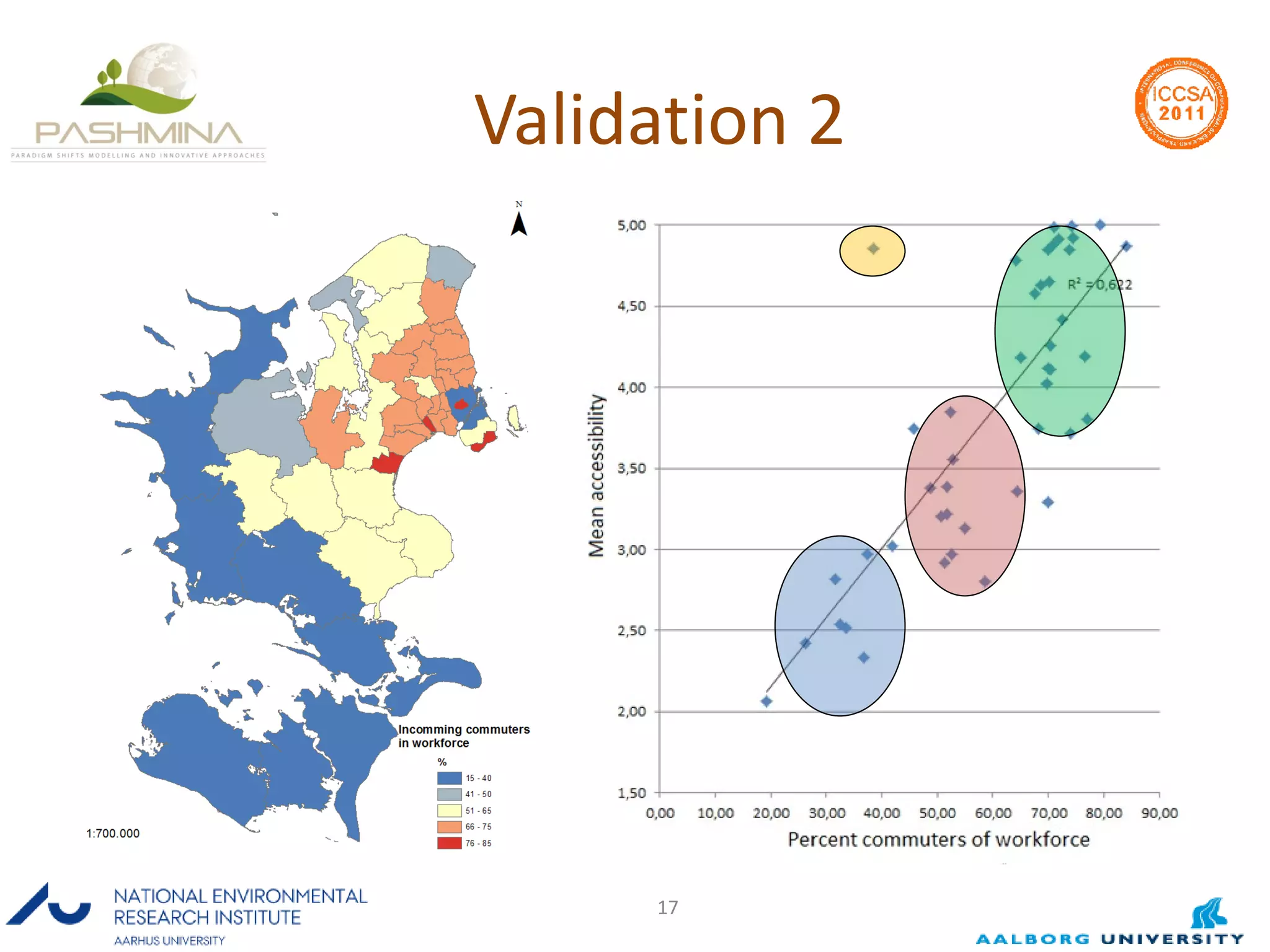
Validation Municipality average was calculated based on the clssification scores Compared to commuting statistics.
Validation 2
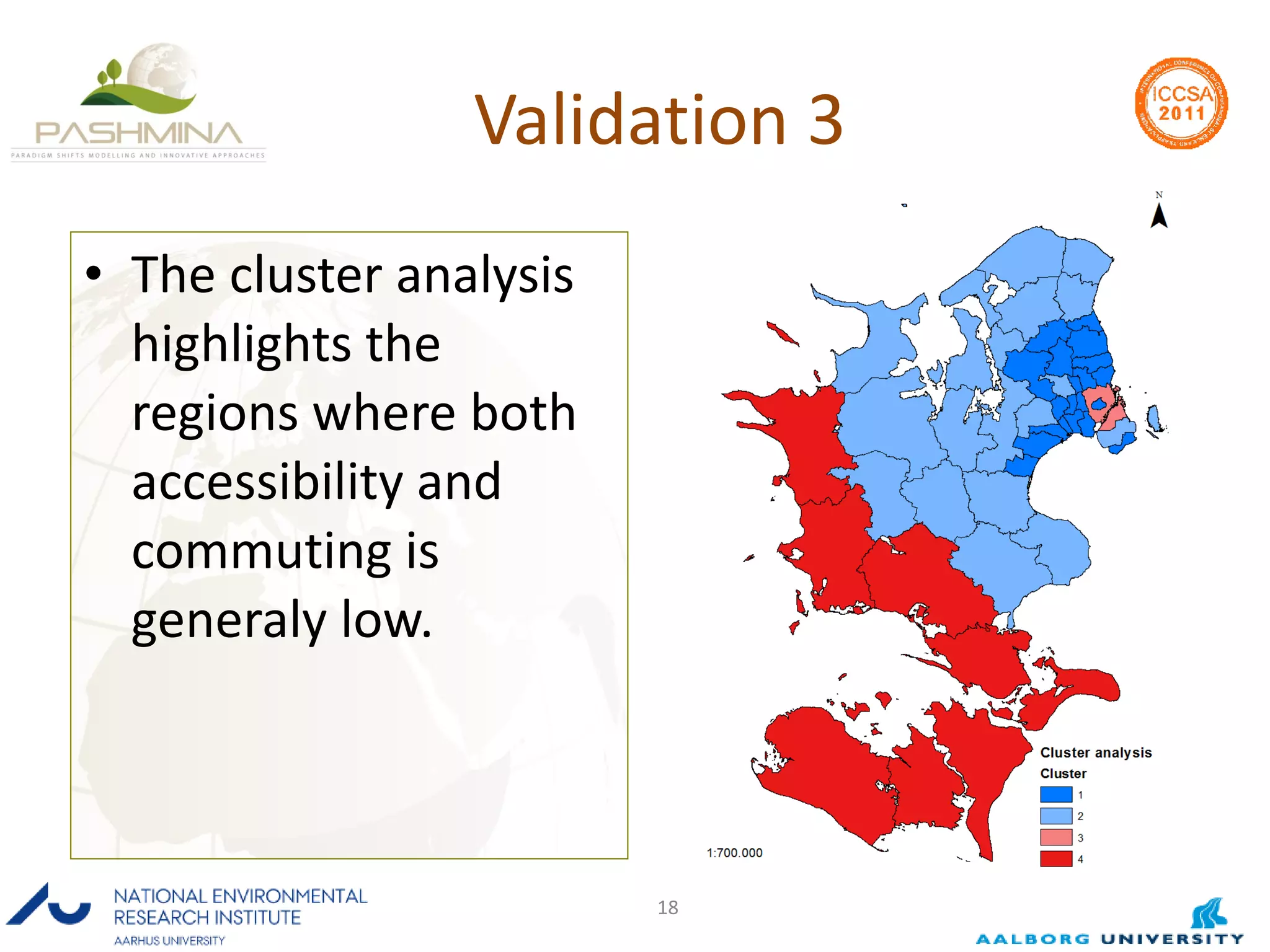
Validation 3 The cluster analysis highlights the regions where both accessibility and commuting is generaly low.
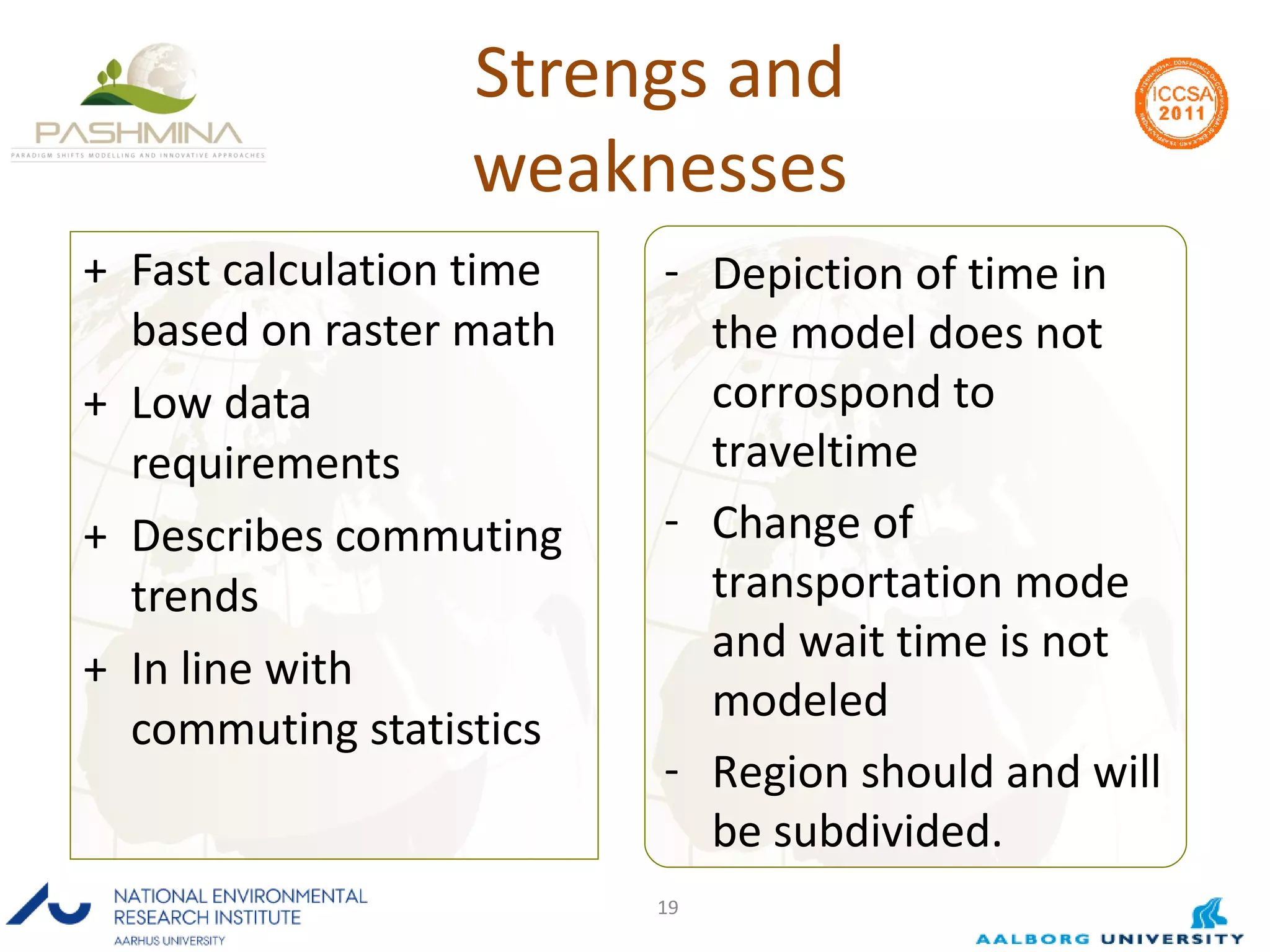
Strengs and weaknesses Fast calculation time based on raster math Low data requirements Describes commuting trends  In line with commuting statistics Depiction of time in the model does not corrospond to traveltime Change of transportation mode and wait time is not modeled Region should and will be subdivided.
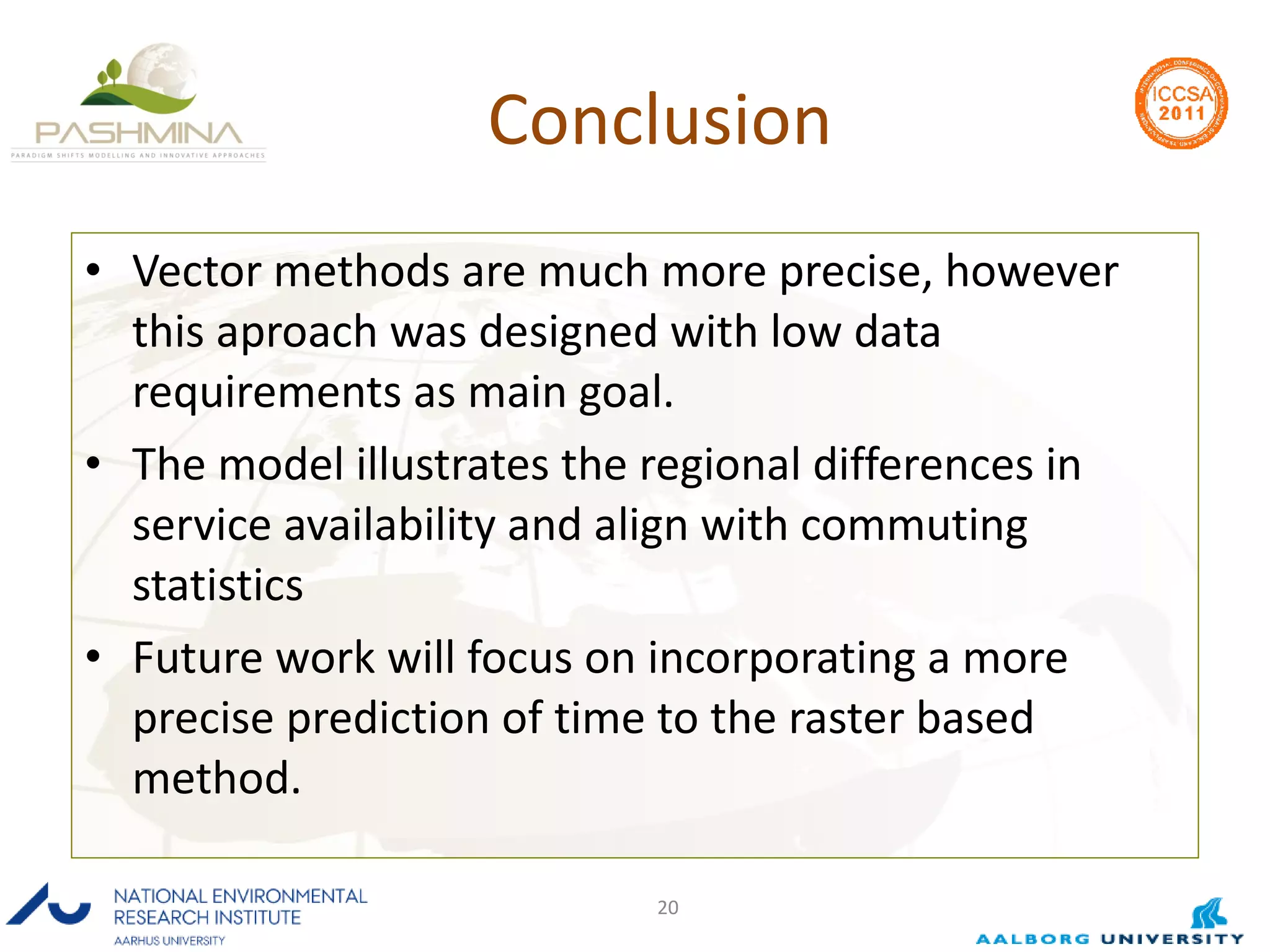
Conclusion Vector methods are much more precise, however this aproach was designed with low data requirements as main goal. The model illustrates the regional differences in service availability and align with commuting statistics Future work will focus on incorporating a more precise prediction of time to the raster based method.
Thank you for your attention… [email_address]

Accessibility Analysis and Modeling in Public Transport Networks - A Raster based Approach

  • 1.
    Accessibility Analysis andModeling in Public Transport Networks - A Raster based Approach Morten Fuglsang 1,2 , Henning Sten Hansen 2 & Bern Münier 1 1 Aarhus University – National Environmental research institute 2 Aalborg University Copenhagen
  • 2.
    Structure of presentationPrensentation of topic Introduction to the case region The applied definition of accessibility The conducted modeling Results Evaluation
  • 3.
    Project topic Forthe Pashmina project, CA based land use change modelling is to be conducted using the LUCIA Cellular autometa model. The project outlines policy scenarios for paradigme shifts in transportation for the next 40 year period. Modeling is to be conducted in Denmark and in up to two other European cases.
  • 4.
    Project topic Oneof the ongoing tasks is to create a indicator of accessibility to jobs through public transportation. In order for it to be transferable, the data requirements was to be as simple as possible, to facilitate easy transfere to the other European regions.
  • 5.
    Introduction ‘ OutskirtDenmark’ is a popular theme in Danish politics, describing regions with : Declining population Poor number og jobs Low service level in terms of schools, hospital services and public transportation
  • 6.
    Study area Thecapitol region of Denmark 9200 km2 area coverage Large regional differences in terms of jobs and transportation services
  • 7.
    Defining accessibility Componentsof accessibility: Land use component Transportation component Temporal component Individual component (Geurs, K. T & van Wee, B. 2004) We use three of the four components, and a gravity based accessibility measurement.
  • 8.
    Data inputs Dataused for the modeling: Road dataset Trainlines and stops Buslines and stops Metrolines and stops Centers with population and number of jobs
  • 9.
    Cost surface creationAverage tavel-speeds was appended to the vector data Out of network travel was set to walking pace
  • 10.
    Cost surface creation2 Data was rasterized to 100m resulution, and the differenet rasters where combined Finally the travelspeed was recalculated to CCT values Juliao, R. P (1999)
  • 11.
    GIS modeling Usingpython, a model was created, that combines the data with the information from the centers, and the coast surface (Coffey, W & Shearmur R. G 2001)
  • 12.
    GIS modeling Themodel creates a cost distance calculation for each center – calculating the centers contribution to the overall indicator. The center contributions are the summarized into one output layer
  • 13.
    Result post processingResult showed som inconsitency in two areas with high low coverage and few stations/stops Furthermore the effect of the constraints was removed for the result
  • 14.
    Results 285 centerswas included in the calculation. High variability in terms of result scores
  • 15.
    Results Based uponupon the entire dataset, mean accessibility was calculated Result classified into +/- 1 and 2 std. deviation.
  • 16.
    Validation Municipality averagewas calculated based on the clssification scores Compared to commuting statistics.
  • 17.
  • 18.
    Validation 3 Thecluster analysis highlights the regions where both accessibility and commuting is generaly low.
  • 19.
    Strengs and weaknessesFast calculation time based on raster math Low data requirements Describes commuting trends In line with commuting statistics Depiction of time in the model does not corrospond to traveltime Change of transportation mode and wait time is not modeled Region should and will be subdivided.
  • 20.
    Conclusion Vector methodsare much more precise, however this aproach was designed with low data requirements as main goal. The model illustrates the regional differences in service availability and align with commuting statistics Future work will focus on incorporating a more precise prediction of time to the raster based method.
  • 21.
    Thank you foryour attention… [email_address]