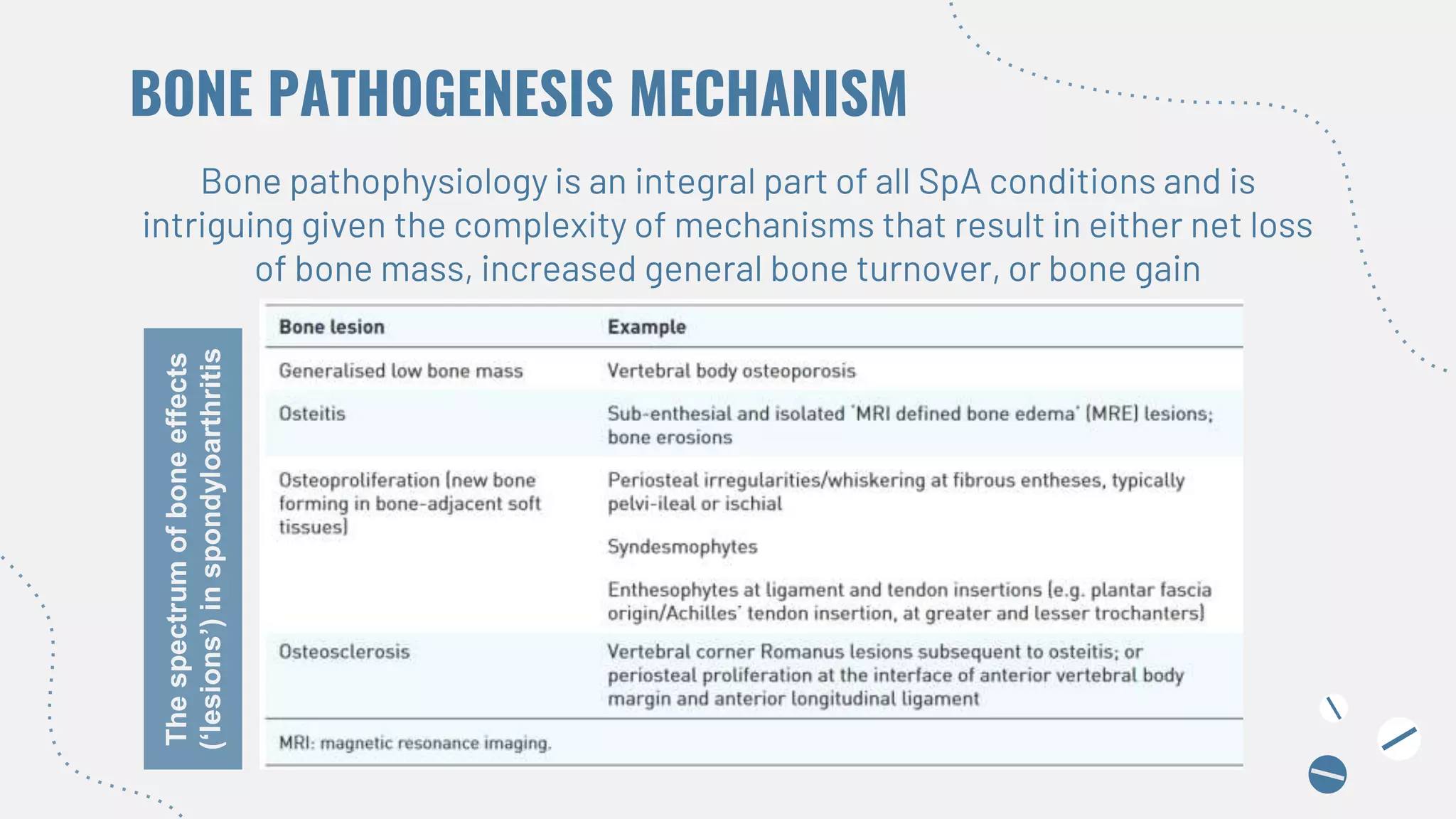
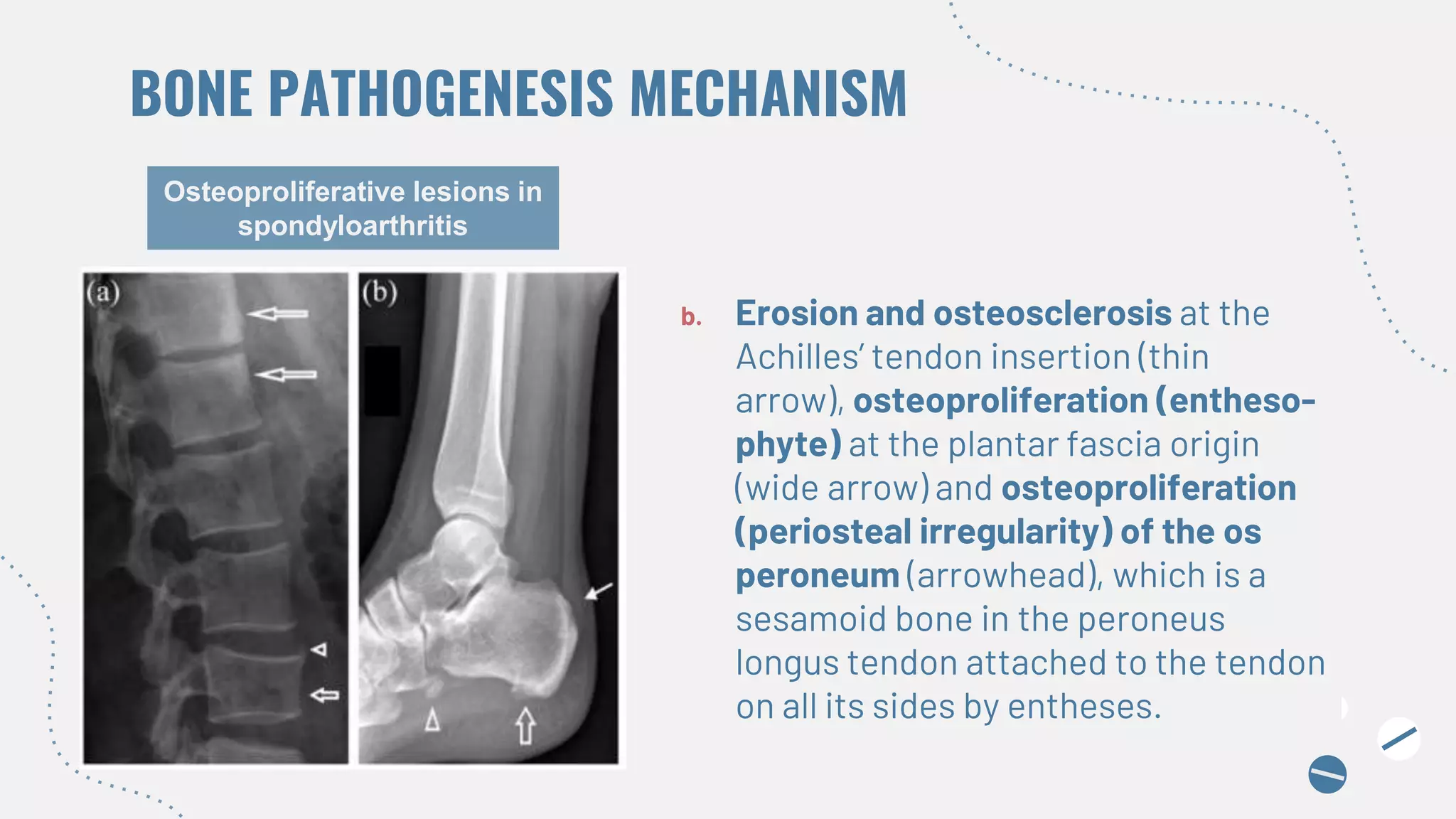
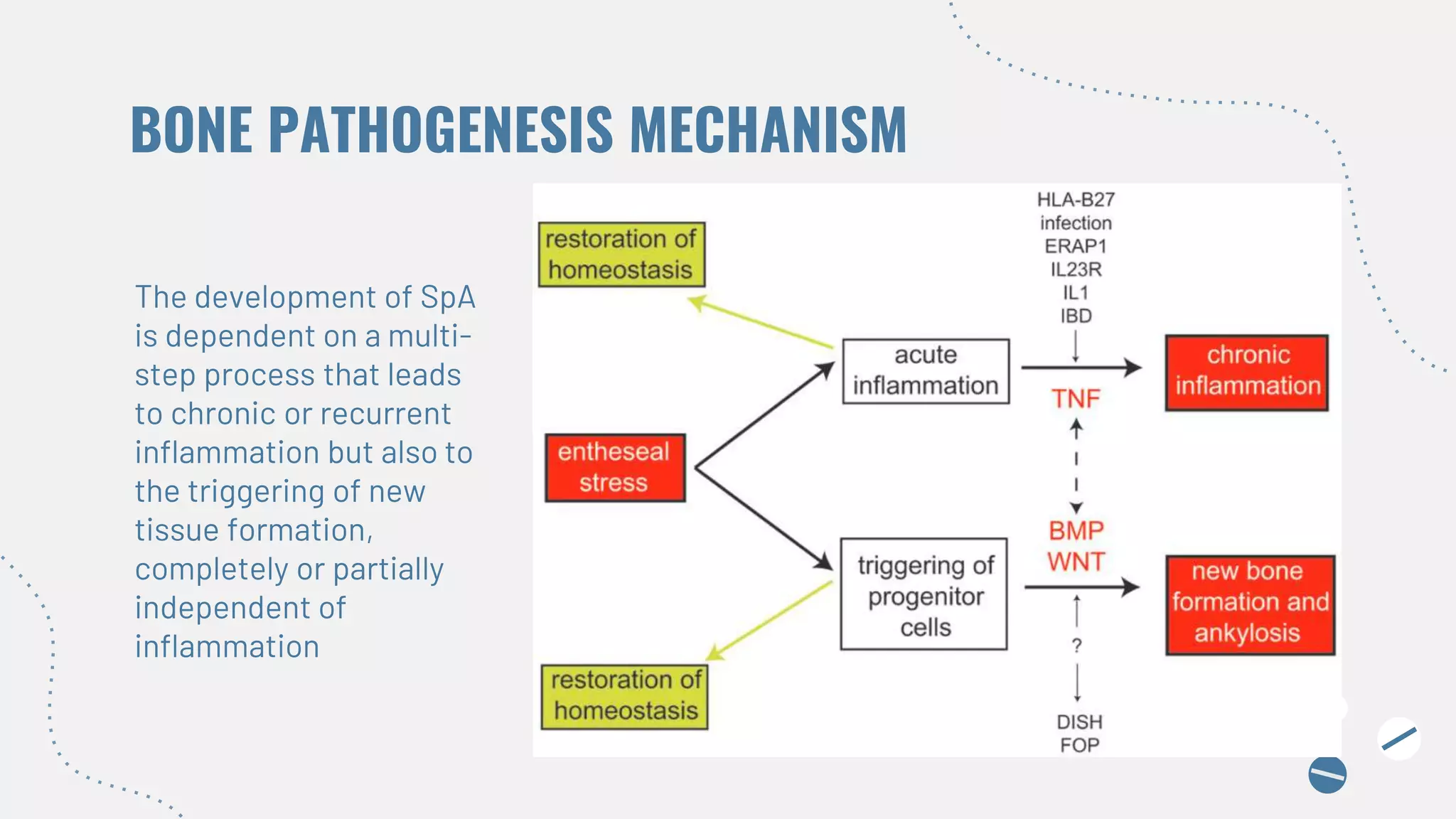
This document discusses the pathomechanism of bone abnormalities in spondyloarthritis. It proposes that factors like genetic susceptibility, infection, and intestinal dysbiosis contribute to the pathogenesis of spondyloarthritis. The pathomechanism involves abnormal bone remodeling mediated by osteoclasts, osteoblasts, and other cells. This can result in a variety of bone effects like ankylosing spondylitis, fragility fractures, osteitis, osteoproliferation in entheses and ligaments, and osteosclerosis. Understanding the bone pathogenesis is important for treating spondyloarthritis and preventing long-term disability.