6    The McKinsey Quarterly 2004 Number 1


         A halo
    for angel
           investors
                                                                                      Kevin Curry

                 Steven D. Carden and
                 Olive Darragh


    A portfolio of investments in socially responsible companies can generate
    returns similar to those of the S&P 500.


    Socially responsible businesses                 Since Investors’ Circle doesn’t manage
    sacrifice financial returns to pursue social    the investments centrally, its members
    or environmental objectives; that much          were keen to know whether the aggregate
    is known. Just how much of a trade-off they     returns from such a portfolio of companies
    make has always been unclear, however,          were competitive with those from other
    and evidence from the capital markets is        angel-investment opportunities. In a survey,
    inconclusive. A recent study has produced       77 percent of the group’s members said
    some surprising results: over the ten-year      that they expected returns of at least
    period we examined, a portfolio of invest-      10 percent, but the majority would accept
    ments defined as socially responsible           a “social discount” in exchange for social or
    generated returns of 8 to 14 percent. That is   environmental benefits derived from
    lower than the rate typically earned            a company’s business.
    by “angel” investors—wealthy people
    who make direct equity investments in           To determine how large a discount, we
    entrepreneurial ventures, usually at an         gathered information on 110 of the 128
    early stage—but comparable to capital-          companies financed since the organization’s
    market returns.                                 founding, in 1992. We then used the data
                                                    to build a portfolio that covered the ten-year
    We studied investments made by mem-             period from 1992 until the end of 2001.
    bers of Investors’ Circle, a US-based           Instead of analyzing the actual returns
    network of angel investors who put their        of individual investors, we used standard
    money into companies they view as socially      investment and current-valuation data.2
    responsible.1 Representative investments        Our portfolio simulated investments of
    include Earth’s Best, an organic baby-food      $72 million—the aggregate amount that the
    manufacturer recently acquired by HJ Heinz,     organization’s members had invested—
    and Sonic Innovations, a manufacturer of        in 95 operating companies as well as 15
    low-cost hearing aids. The latter company       venture capital funds, all of which had
    went public in 2000.                            social missions as part of their charters.3

                                                    Next, we tested our portfolio under two
                                                    investment strategies. The tests for the
                                                    first—buy and hold—looked at the perfor-
                                                    mance of a single initial investment in each
�� ����                                                                                               Current Research       7
������� ��������� ���
������� � �� �


 ������� �
                                                                         company in the portfolio and assumed that
 ���� ��� ����
                                                                         these investments were being held for
 ������������ �� ������� ��� �������� ����������� ��� �������� ����� �   the long term. The holdings were valued
                                                                         at the IPO price of the company (if it
                                                                         went public), at its acquisition price, or at
                                         ��          ��                  its annual revenue (if it was still privately
           �������� �������     ��                                       held). The tests for the second investment
                                                                         strategy, called six-month liquidation,
                                                     ��
                                         ��                              modeled the initial investments plus partici-
                    ���� ��
                                ��
           �������� �������                                              pation in each additional funding round
                                                     ��                  before an initial public offering or acquisition,
                  ��������      ��       ��
                                                                         as well as an exit six months following
                                                                         the IPO or acquisition.4 The buy-and-hold
                              ������ ���������� �������
                                     �������    �������                  and the six-month-liquidation strategies
                                                                         generated returns of 8 and 14 percent,
                                                                         respectively. Two things explain the perfor-
 ������ ���� ����� ���������� �� ������ �������� �� ����
  ������������� ���������� �� �������� �������� ��� �������              mance advantage of the latter approach.
 �������� ���� ����������� �� ��� �� ��� ��������� �������� �����
                                                                         First, since investors can participate in
�� ���� ������������� �� �����
 �������� ��
 ������� ����� �� ����� ��� ������� �� ��������� ��� �� �����            subsequent rounds of funding, their initial
������� ��������� ���
 ��� ��� ����� �� ������ ���� �������� ������� ������� �������������
 ������� �� �������� ���������� ����� �������� ��������
                                                                         equity position isn’t significantly diluted.
������� � �� �                                                           Also, the IPO or acquisition allows them to
                                                                         realize higher returns than the natural
                                                                         rate of appreciation generated through the
 ������� �
                                                                         buy-and-hold strategy.
 ����� ���� ���� ����

 ������� ��� �������� ����������� ��� �������� ����� �
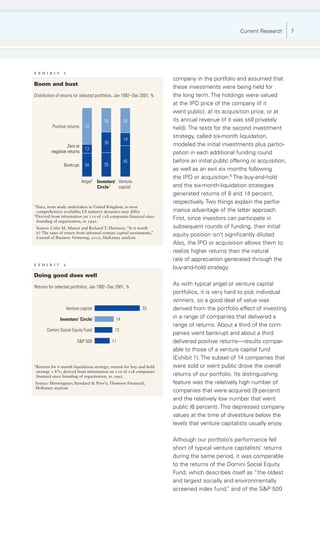
                                                                         As with typical angel or venture capital
                                                                         portfolios, it is very hard to pick individual
                                                                         winners, so a good deal of value was
                   ������� �������                             ��        derived from the portfolio effect of investing
               ����������     �������           ��                       in a range of companies that delivered a
                                                                         range of returns. About a third of the com-
        ������ ������ ������ ����              ��
                                                                         panies went bankrupt and about a third
                         ��� ���              ��                         delivered positive returns—results compar-
                                                                         able to those of a venture capital fund
                                                                         (Exhibit 1). The subset of 14 companies that
 �������� ��� ������� ����������� ��������� ������� ��� ������������     were sold or went public drove the overall
  �������� � ��� ������� ���� ����������� �� ��� �� ��� ���������
  �������� ����� �������� �� ������������� �� �����                      returns of our portfolio. Its distinguishing
  ������� ������������ �������� � ������� ������� ����������             feature was the relatively high number of
  �������� ��������
                                                                         companies that were acquired (9 percent)
                                                                         and the relatively low number that went
                                                                         public (6 percent). This depressed company
                                                                         values at the time of divestiture below the
                                                                         levels that venture capitalists usually enjoy.

                                                                         Although our portfolio’s performance fell
                                                                         short of typical venture capitalists’ returns
                                                                         during the same period, it was comparable
                                                                         to the returns of the Domini Social Equity
                                                                         Fund, which describes itself as “the oldest
                                                                         and largest socially and environmentally
                                                                         screened index fund, and of the S&P 500
                                                                                               ”
8    The McKinsey Quarterly 2004 Number 1


    (Exhibit 2, on the previous page). Returns         1
                                                         Unlike venture capital or private equity firms, which
    for angel investments are difficult to               raise money from individuals and institutions
    quantify because of the individual nature of         and then invest directly in portfolios of companies,
    the investment activity, but interviews              Investors’ Circle serves as a matchmaker for
                                                         individual investors and promising companies with
    with industry experts suggested that angels          social missions.
    generally expect returns better than               2
                                                         Several factors influenced this approach. For one
    capital markets offer but worse than those           thing, we wanted to focus on evaluating companies
                                                         and not on the skill of investors. Moreover, the
    of venture capitalists. Most angel investors         results could have been skewed by a handful of big
    never achieve venture capital returns,               investments, and the availability of data on specific
    because angels have lower levels of                  investment terms was a challenge.
                                                       3
                                                         Our data covered 142 people who made 444
    diversification and not enough capital to            investments, with an average initial investment
    participate in follow-on rounds, so their            of $174,000 and an average of $114,000 in
    equity is diluted.                                   follow-on investments. The data represent the average
                                                         investments modeled rather than the specific
                                                         investments these individuals actually made.
    The track record of the 110 Investors’             4
                                                         After an IPO, during what is called the “lockup
    Circle companies we studied is a promising           period,” employees and other early investors usually
                                                         can’t exercise their stock options.
    indication that social-purpose ventures
    can generate financial returns that meet
    investors’ expectations. Although our
    study is too small to make sweeping claims
    about early-stage social investing, it
    does present a methodology and a set
    of results that can aid others looking
    for both a financial and a social return on
    their investments.
                       Q
    Steven Carden is a consultant in McKinsey’s
    New York office, and Olive Darragh is a director
    in the Boston office. Copyright © 2004 McKinsey
    & Company. All rights reserved.

A%20 halo

  • 1.
    6 The McKinsey Quarterly 2004 Number 1 A halo for angel investors Kevin Curry Steven D. Carden and Olive Darragh A portfolio of investments in socially responsible companies can generate returns similar to those of the S&P 500. Socially responsible businesses Since Investors’ Circle doesn’t manage sacrifice financial returns to pursue social the investments centrally, its members or environmental objectives; that much were keen to know whether the aggregate is known. Just how much of a trade-off they returns from such a portfolio of companies make has always been unclear, however, were competitive with those from other and evidence from the capital markets is angel-investment opportunities. In a survey, inconclusive. A recent study has produced 77 percent of the group’s members said some surprising results: over the ten-year that they expected returns of at least period we examined, a portfolio of invest- 10 percent, but the majority would accept ments defined as socially responsible a “social discount” in exchange for social or generated returns of 8 to 14 percent. That is environmental benefits derived from lower than the rate typically earned a company’s business. by “angel” investors—wealthy people who make direct equity investments in To determine how large a discount, we entrepreneurial ventures, usually at an gathered information on 110 of the 128 early stage—but comparable to capital- companies financed since the organization’s market returns. founding, in 1992. We then used the data to build a portfolio that covered the ten-year We studied investments made by mem- period from 1992 until the end of 2001. bers of Investors’ Circle, a US-based Instead of analyzing the actual returns network of angel investors who put their of individual investors, we used standard money into companies they view as socially investment and current-valuation data.2 responsible.1 Representative investments Our portfolio simulated investments of include Earth’s Best, an organic baby-food $72 million—the aggregate amount that the manufacturer recently acquired by HJ Heinz, organization’s members had invested— and Sonic Innovations, a manufacturer of in 95 operating companies as well as 15 low-cost hearing aids. The latter company venture capital funds, all of which had went public in 2000. social missions as part of their charters.3 Next, we tested our portfolio under two investment strategies. The tests for the first—buy and hold—looked at the perfor- mance of a single initial investment in each
  • 2.
    �� ���� Current Research 7 ������� ��������� ��� ������� � �� � ������� � company in the portfolio and assumed that ���� ��� ���� these investments were being held for ������������ �� ������� ��� �������� ����������� ��� �������� ����� � the long term. The holdings were valued at the IPO price of the company (if it went public), at its acquisition price, or at �� �� its annual revenue (if it was still privately �������� ������� �� held). The tests for the second investment strategy, called six-month liquidation, �� �� modeled the initial investments plus partici- ���� �� �� �������� ������� pation in each additional funding round �� before an initial public offering or acquisition, �������� �� �� as well as an exit six months following the IPO or acquisition.4 The buy-and-hold ������ ���������� ������� ������� ������� and the six-month-liquidation strategies generated returns of 8 and 14 percent, respectively. Two things explain the perfor- ������ ���� ����� ���������� �� ������ �������� �� ���� ������������� ���������� �� �������� �������� ��� ������� mance advantage of the latter approach. �������� ���� ����������� �� ��� �� ��� ��������� �������� ����� First, since investors can participate in �� ���� ������������� �� ����� �������� �� ������� ����� �� ����� ��� ������� �� ��������� ��� �� ����� subsequent rounds of funding, their initial ������� ��������� ��� ��� ��� ����� �� ������ ���� �������� ������� ������� ������������� ������� �� �������� ���������� ����� �������� �������� equity position isn’t significantly diluted. ������� � �� � Also, the IPO or acquisition allows them to realize higher returns than the natural rate of appreciation generated through the ������� � buy-and-hold strategy. ����� ���� ���� ���� ������� ��� �������� ����������� ��� �������� ����� � As with typical angel or venture capital portfolios, it is very hard to pick individual winners, so a good deal of value was ������� ������� �� derived from the portfolio effect of investing ���������� ������� �� in a range of companies that delivered a range of returns. About a third of the com- ������ ������ ������ ���� �� panies went bankrupt and about a third ��� ��� �� delivered positive returns—results compar- able to those of a venture capital fund (Exhibit 1). The subset of 14 companies that �������� ��� ������� ����������� ��������� ������� ��� ������������ were sold or went public drove the overall �������� � ��� ������� ���� ����������� �� ��� �� ��� ��������� �������� ����� �������� �� ������������� �� ����� returns of our portfolio. Its distinguishing ������� ������������ �������� � ������� ������� ���������� feature was the relatively high number of �������� �������� companies that were acquired (9 percent) and the relatively low number that went public (6 percent). This depressed company values at the time of divestiture below the levels that venture capitalists usually enjoy. Although our portfolio’s performance fell short of typical venture capitalists’ returns during the same period, it was comparable to the returns of the Domini Social Equity Fund, which describes itself as “the oldest and largest socially and environmentally screened index fund, and of the S&P 500 ”
  • 3.
    8 The McKinsey Quarterly 2004 Number 1 (Exhibit 2, on the previous page). Returns 1 Unlike venture capital or private equity firms, which for angel investments are difficult to raise money from individuals and institutions quantify because of the individual nature of and then invest directly in portfolios of companies, the investment activity, but interviews Investors’ Circle serves as a matchmaker for individual investors and promising companies with with industry experts suggested that angels social missions. generally expect returns better than 2 Several factors influenced this approach. For one capital markets offer but worse than those thing, we wanted to focus on evaluating companies and not on the skill of investors. Moreover, the of venture capitalists. Most angel investors results could have been skewed by a handful of big never achieve venture capital returns, investments, and the availability of data on specific because angels have lower levels of investment terms was a challenge. 3 Our data covered 142 people who made 444 diversification and not enough capital to investments, with an average initial investment participate in follow-on rounds, so their of $174,000 and an average of $114,000 in equity is diluted. follow-on investments. The data represent the average investments modeled rather than the specific investments these individuals actually made. The track record of the 110 Investors’ 4 After an IPO, during what is called the “lockup Circle companies we studied is a promising period,” employees and other early investors usually can’t exercise their stock options. indication that social-purpose ventures can generate financial returns that meet investors’ expectations. Although our study is too small to make sweeping claims about early-stage social investing, it does present a methodology and a set of results that can aid others looking for both a financial and a social return on their investments. Q Steven Carden is a consultant in McKinsey’s New York office, and Olive Darragh is a director in the Boston office. Copyright © 2004 McKinsey & Company. All rights reserved.