1.4 Inflation
Unit 4 part 1
• The economic cycle and economic
growth
• Use of national income data to assess
living standards
• Inflation and deflation
• Unemployment
Objectives
• Revise key inflation terms
• Understand the CPI and
‘weighted price’ indexes
• Analyse the limitations of
the CPI
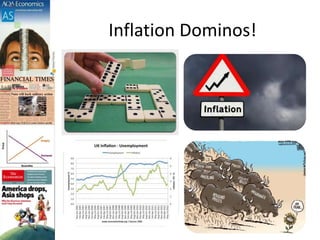
Inflation Dominos!
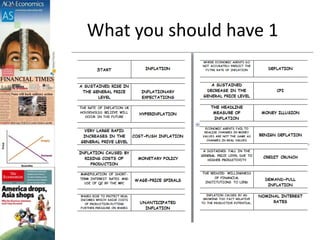
What you should have 1
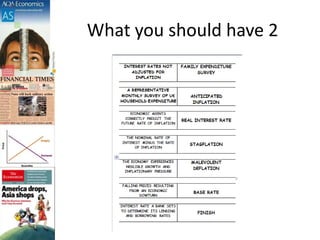
What you should have 2
Objectives
• Revise key inflation terms
• Understand the CPI and
‘weighted price’ indexes
• Analyse the limitations of
the CPI
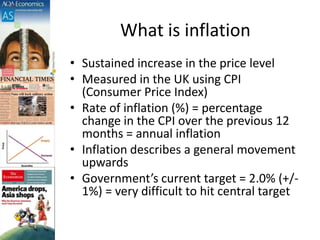
What is inflation
• Sustained increase in the price level
• Measured in the UK using CPI
(Consumer Price Index)
• Rate of inflation (%) = percentage
change in the CPI over the previous 12
months = annual inflation
• Inflation describes a general movement
upwards
• Government’s current target = 2.0% (+/-
1%) = very difficult to hit central target
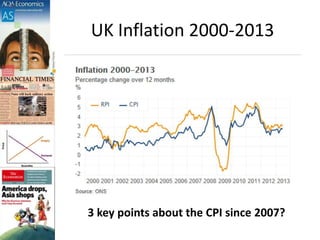
UK Inflation 2000-2013
3 key points about the CPI since 2007?
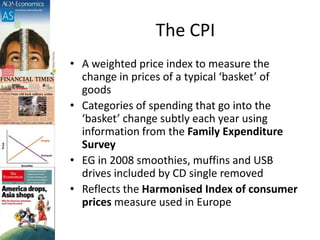
The CPI
• A weighted price index to measure the
change in prices of a typical ‘basket’ of
goods
• Categories of spending that go into the
‘basket’ change subtly each year using
information from the Family Expenditure
Survey
• EG in 2008 smoothies, muffins and USB
drives included by CD single removed
• Reflects the Harmonised Index of consumer
prices measure used in Europe
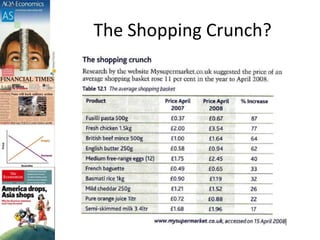
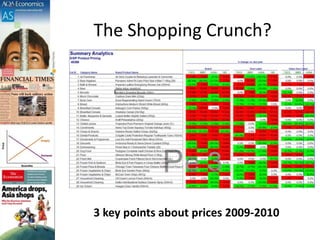
The Shopping Crunch?
3 key points about prices 2009-2010
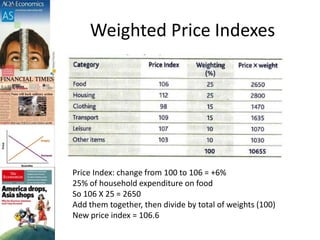
Weighted Price Indexes
Price Index: change from 100 to 106 = +6%
25% of household expenditure on food
So 106 X 25 = 2650
Add them together, then divide by total of weights (100)
New price index = 106.6
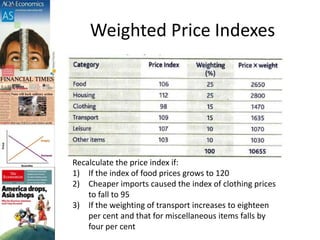
Weighted Price Indexes
Recalculate the price index if:
1) If the index of food prices grows to 120
2) Cheaper imports caused the index of clothing prices
to fall to 95
3) If the weighting of transport increases to eighteen
per cent and that for miscellaneous items falls by
four per cent
Objectives
• Revise key inflation terms
• Understand the CPI and
‘weighted price’ indexes
• Analyse the limitations of
the CPI
Limitations of the CPI?
Population
Groups vary
•CPI = average household
•But different groups have different spending and therefore different inflation
•EG weighting for cars and tobacco will be irrelevant for non-smokers and
those without a car
No house
prices
•Mortgage payments represent high proportion of spending of younger
house buyers
•Older house owners have paid off mortgages
Over-estimate
inflation
•Price rises may hide real improvements in quality
•Prices of many cars and electrical goods have fallen over the last 30 years,
but innovations have made them significantly better
Objectives
• Revise key inflation terms
• Understand the CPI and
‘weighted price’ indexes
• Analyse the limitations of
the CPI
• Understand the causes of
inflation
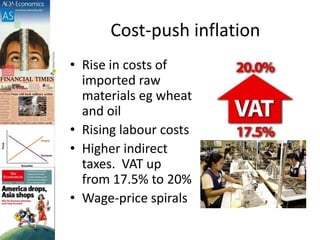
Cost-push inflation
• Rise in costs of
imported raw
materials eg wheat
and oil
• Rising labour costs
• Higher indirect
taxes. VAT up
from 17.5% to 20%
• Wage-price spirals
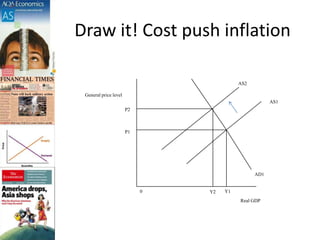
Draw it! Cost push inflation
AD1
AS1
AS2
0
General price level
P1
Y1
Real GDP
Y2
P2
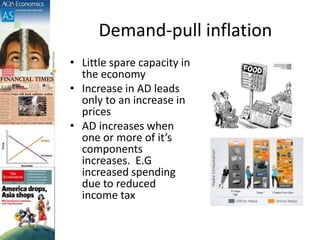
Demand-pull inflation
• Little spare capacity in
the economy
• Increase in AD leads
only to an increase in
prices
• AD increases when
one or more of it’s
components
increases. E.G
increased spending
due to reduced
income tax
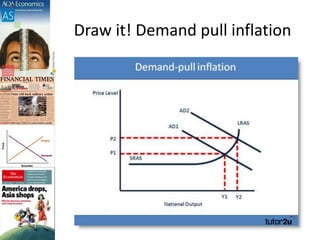
Draw it! Demand pull inflation
Objectives
• Revise key inflation terms
• Understand the CPI and
‘weighted price’ indexes
• Analyse the limitations of
the CPI
• Understand the causes of
inflation
Homework: for Weds 2nd
October
• Read and make notes on pages 140-
143
• Read the extracts on pages 144 and
145, and then answer questions 1(a)
and 2(a)
• All info on firefly

A2 Inflation

  • 1.
  • 2.
    Unit 4 part1 • The economic cycle and economic growth • Use of national income data to assess living standards • Inflation and deflation • Unemployment
  • 3.
    Objectives • Revise keyinflation terms • Understand the CPI and ‘weighted price’ indexes • Analyse the limitations of the CPI
  • 4.
  • 5.
  • 6.
  • 7.
    Objectives • Revise keyinflation terms • Understand the CPI and ‘weighted price’ indexes • Analyse the limitations of the CPI
  • 8.
    What is inflation •Sustained increase in the price level • Measured in the UK using CPI (Consumer Price Index) • Rate of inflation (%) = percentage change in the CPI over the previous 12 months = annual inflation • Inflation describes a general movement upwards • Government’s current target = 2.0% (+/- 1%) = very difficult to hit central target
  • 9.
    UK Inflation 2000-2013 3key points about the CPI since 2007?
  • 10.
    The CPI • Aweighted price index to measure the change in prices of a typical ‘basket’ of goods • Categories of spending that go into the ‘basket’ change subtly each year using information from the Family Expenditure Survey • EG in 2008 smoothies, muffins and USB drives included by CD single removed • Reflects the Harmonised Index of consumer prices measure used in Europe
  • 11.
  • 12.
    The Shopping Crunch? 3key points about prices 2009-2010
  • 13.
    Weighted Price Indexes PriceIndex: change from 100 to 106 = +6% 25% of household expenditure on food So 106 X 25 = 2650 Add them together, then divide by total of weights (100) New price index = 106.6
  • 14.
    Weighted Price Indexes Recalculatethe price index if: 1) If the index of food prices grows to 120 2) Cheaper imports caused the index of clothing prices to fall to 95 3) If the weighting of transport increases to eighteen per cent and that for miscellaneous items falls by four per cent
  • 15.
    Objectives • Revise keyinflation terms • Understand the CPI and ‘weighted price’ indexes • Analyse the limitations of the CPI
  • 16.
    Limitations of theCPI? Population Groups vary •CPI = average household •But different groups have different spending and therefore different inflation •EG weighting for cars and tobacco will be irrelevant for non-smokers and those without a car No house prices •Mortgage payments represent high proportion of spending of younger house buyers •Older house owners have paid off mortgages Over-estimate inflation •Price rises may hide real improvements in quality •Prices of many cars and electrical goods have fallen over the last 30 years, but innovations have made them significantly better
  • 17.
    Objectives • Revise keyinflation terms • Understand the CPI and ‘weighted price’ indexes • Analyse the limitations of the CPI • Understand the causes of inflation
  • 18.
    Cost-push inflation • Risein costs of imported raw materials eg wheat and oil • Rising labour costs • Higher indirect taxes. VAT up from 17.5% to 20% • Wage-price spirals
  • 19.
    Draw it! Costpush inflation AD1 AS1 AS2 0 General price level P1 Y1 Real GDP Y2 P2
  • 20.
    Demand-pull inflation • Littlespare capacity in the economy • Increase in AD leads only to an increase in prices • AD increases when one or more of it’s components increases. E.G increased spending due to reduced income tax
  • 21.
    Draw it! Demandpull inflation
  • 22.
    Objectives • Revise keyinflation terms • Understand the CPI and ‘weighted price’ indexes • Analyse the limitations of the CPI • Understand the causes of inflation
  • 23.
    Homework: for Weds2nd October • Read and make notes on pages 140- 143 • Read the extracts on pages 144 and 145, and then answer questions 1(a) and 2(a) • All info on firefly