CAN WE LEARN HOW TO
LEAD?
EDWARD KELLOW
REBECCA NESTOR
WORKSHOP FOCUS AND AIMS
Focus on learning how to lead rather than looking at leadership
principles and practice
• To explore how we can learn to be leaders, and why learning is
key not only to becoming a leader, but also to helping us to
keep in touch with the world we work in
• To give you an opportunity to reflect on how you learn to lead,
and how you can help others become learning leaders too
WORKSHOP OBJECTIVES
By the end of the session we hope you will be able to:
• Describe how you learn best to lead
• List 3 ways to help yourself become an even better learning
leader
• Reflect on how you can help yourself and other people to learn
how learn to lead
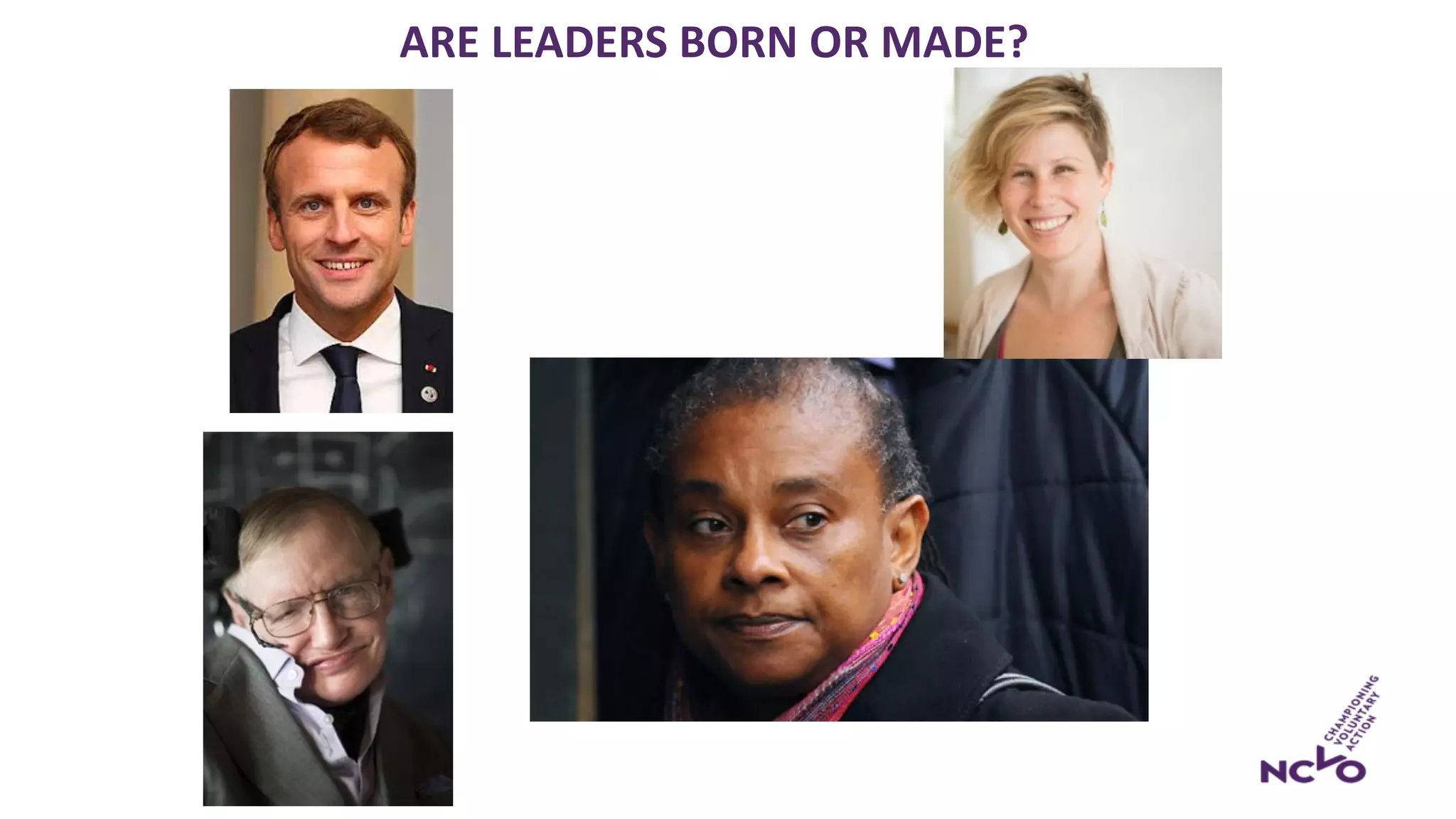
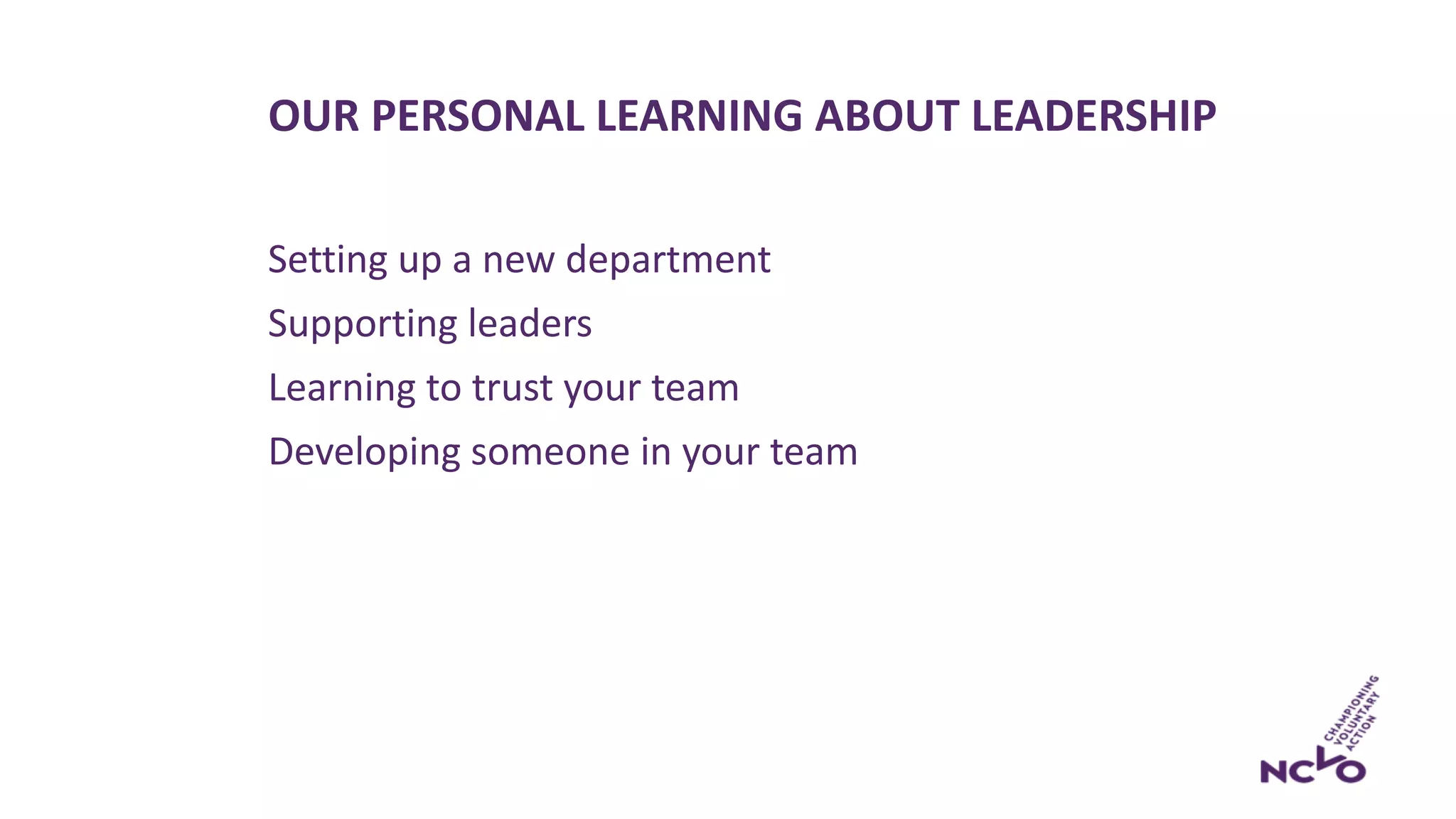
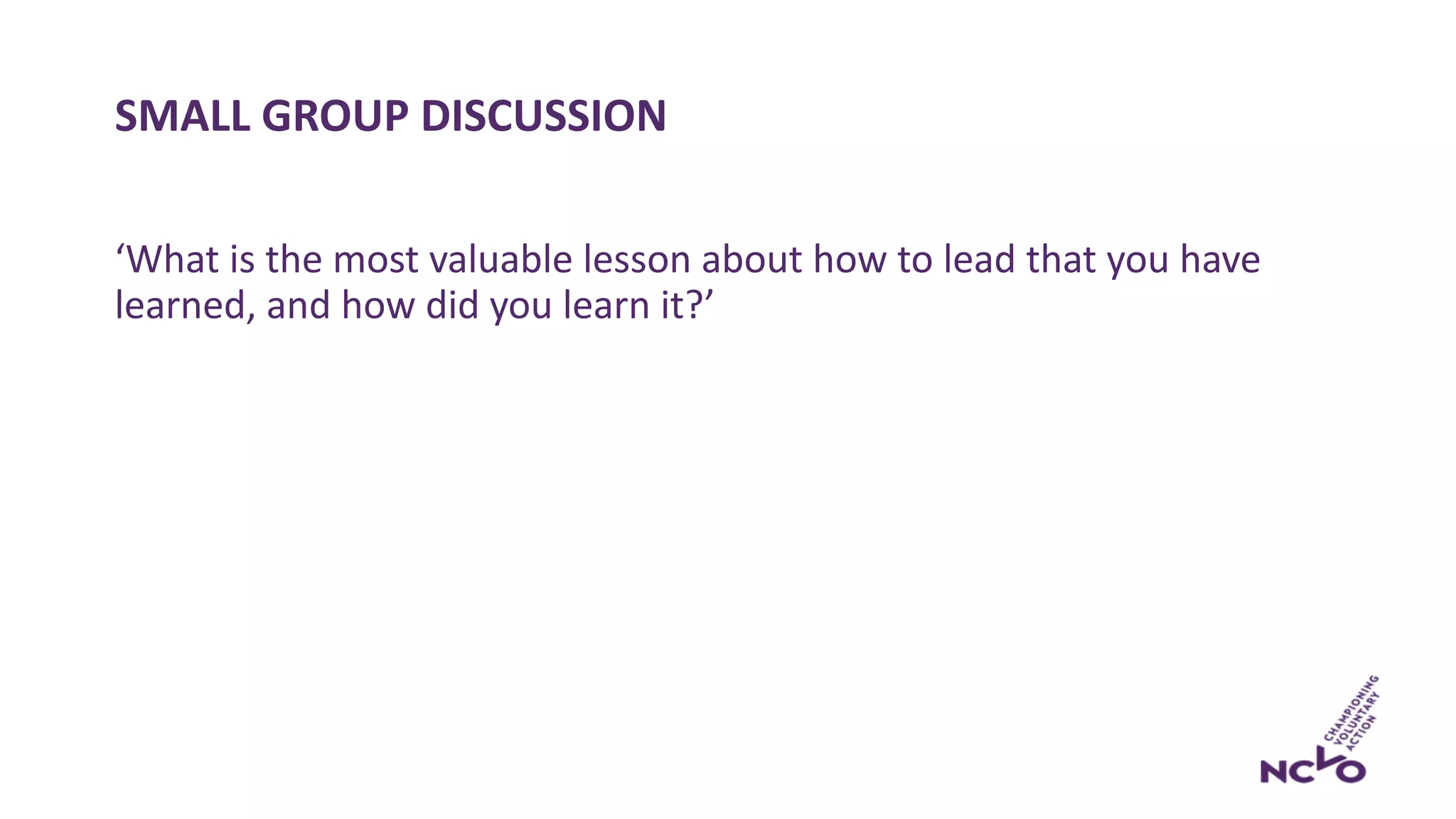
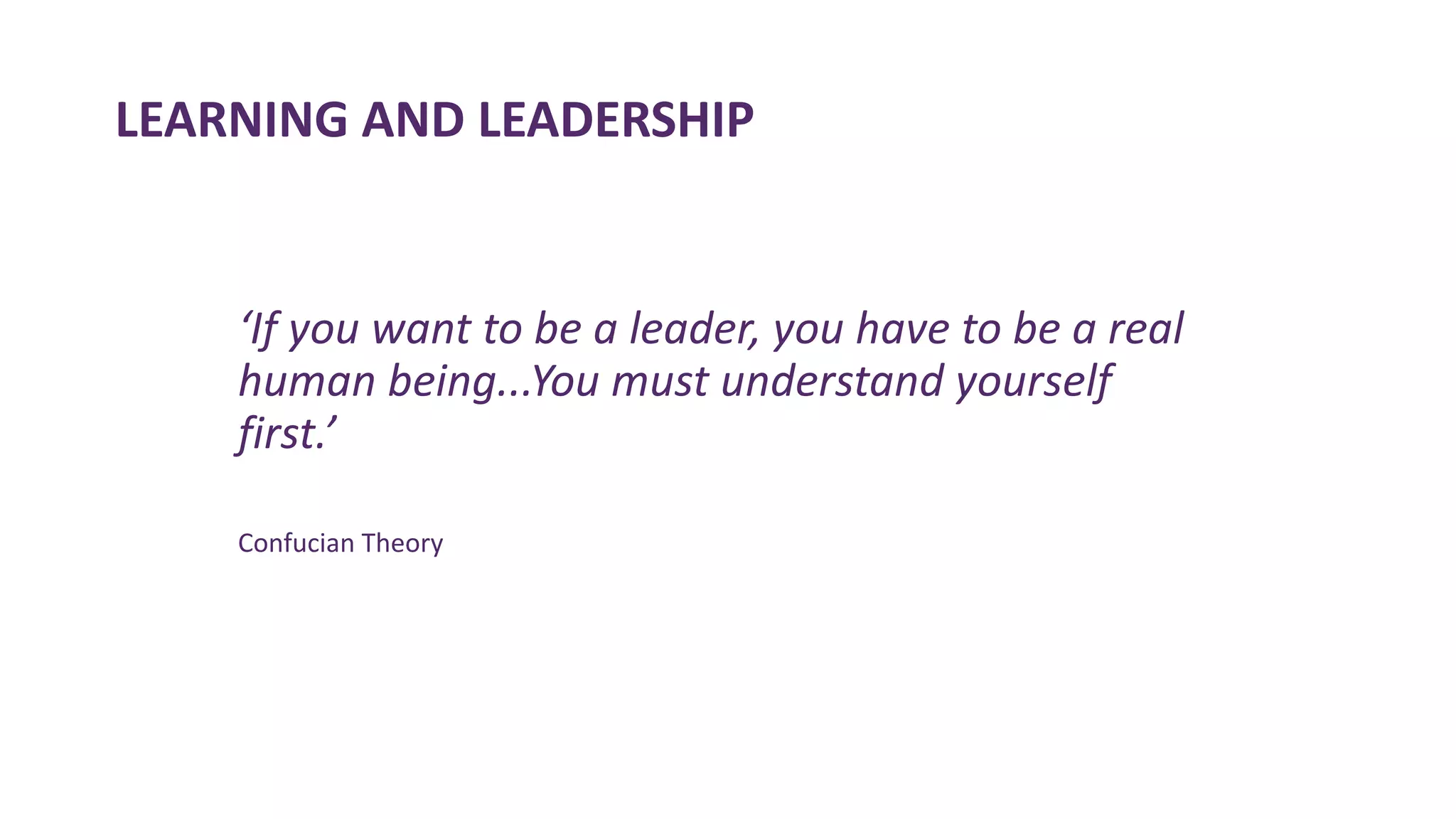
ARE LEADERS BORN OR MADE?
WHO’S GOT A LEADERSHIP
QUALIFICATION?
WHO’S BEEN ON A LEADERSHIP COURSE?
ANYONE SUFFER FROM IMPOSTER
SYNDROME?
ARE LEADERS BORN OR MADE?
OUR PERSONAL LEARNING ABOUT LEADERSHIP
Setting up a new department
Supporting leaders
Learning to trust your team
Developing someone in your team
SMALL GROUP DISCUSSION
‘What is the most valuable lesson about how to lead that you have
learned, and how did you learn it?’
LEARNING AND LEADERSHIP
‘If you want to be a leader, you have to be a real
human being...You must understand yourself
first.’
Confucian Theory
LEARNING AND LEADERSHIP
§ Learning is a choice for individuals and
organisations – learning how to deal with
challenges and opportunities
§ Learning is different for all of us
§ Learning can be found all around us
§ It’s not easy
PROCESS + CONTENT = LEARNING
LEARNING AND LEADERSHIP
§ Learning to lead is NOT about becoming a different
person
§ Rather, learning how to be a leader is about:
§ Getting better at what we already do well
§ Developing a toolkit of models and frameworks
that can help us to make sense of a complex world
§ Holding knowledge and experience lightly (beware
of experts!)
§ Learning is never done (like most worthwhile
endeavours)
PROCESS + CONTENT = LEARNING
THE LEARNING CAROUSEL
Around the room we have signposted some of the many ways we
can learn to lead
You have 20 minutes or so to explore 2 or 3 ways to learn to lead
Go to the signs that energise you most and have a conversation
with the other people who have chosen the same learning method
Ask people what works for them and why. Be specific and be
curious
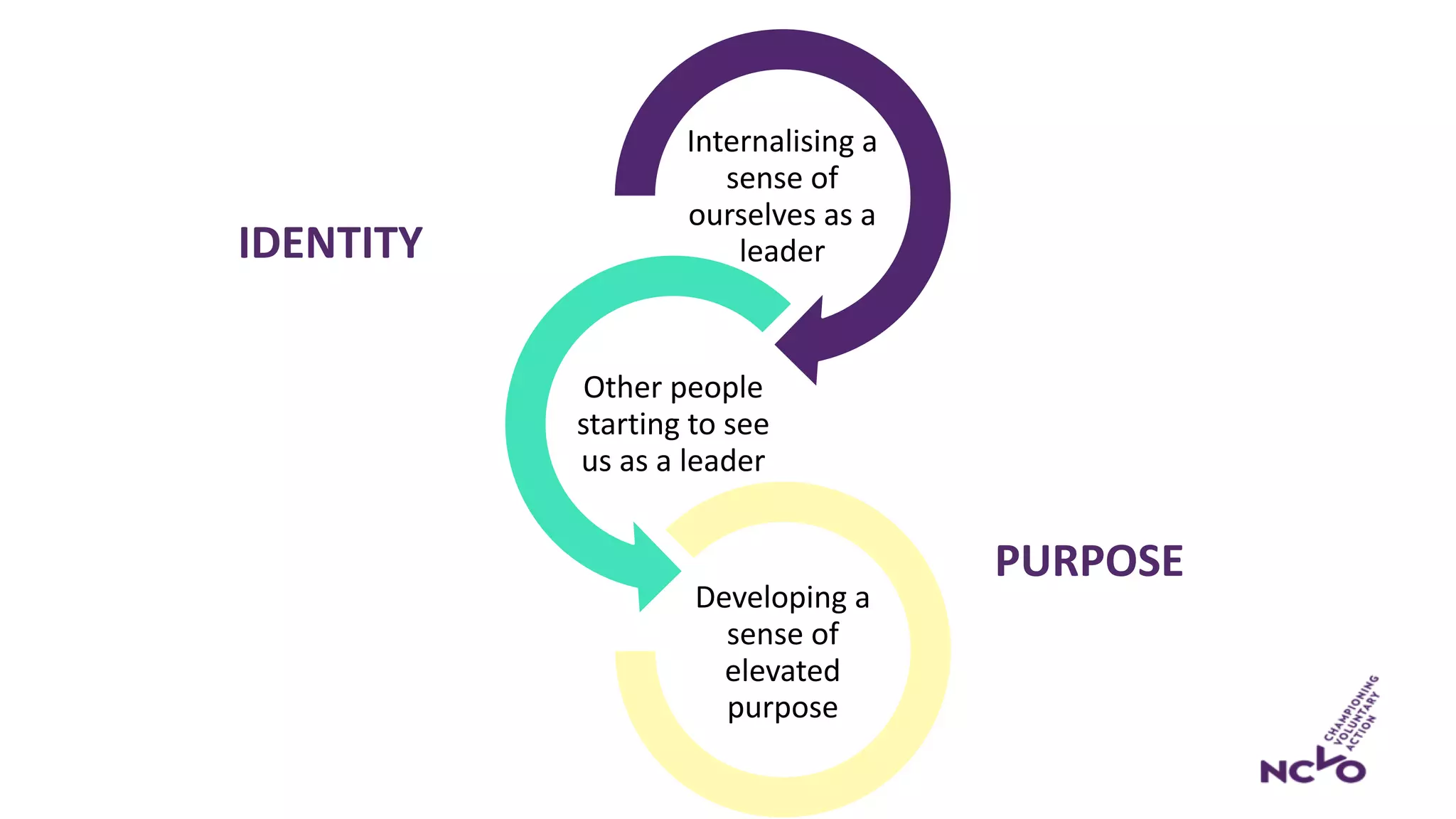
Internalising a
sense of
ourselves as a
leader
Other people
starting to see
us as a leader
Developing a
sense of
elevated
purpose
IDENTITY
PURPOSE
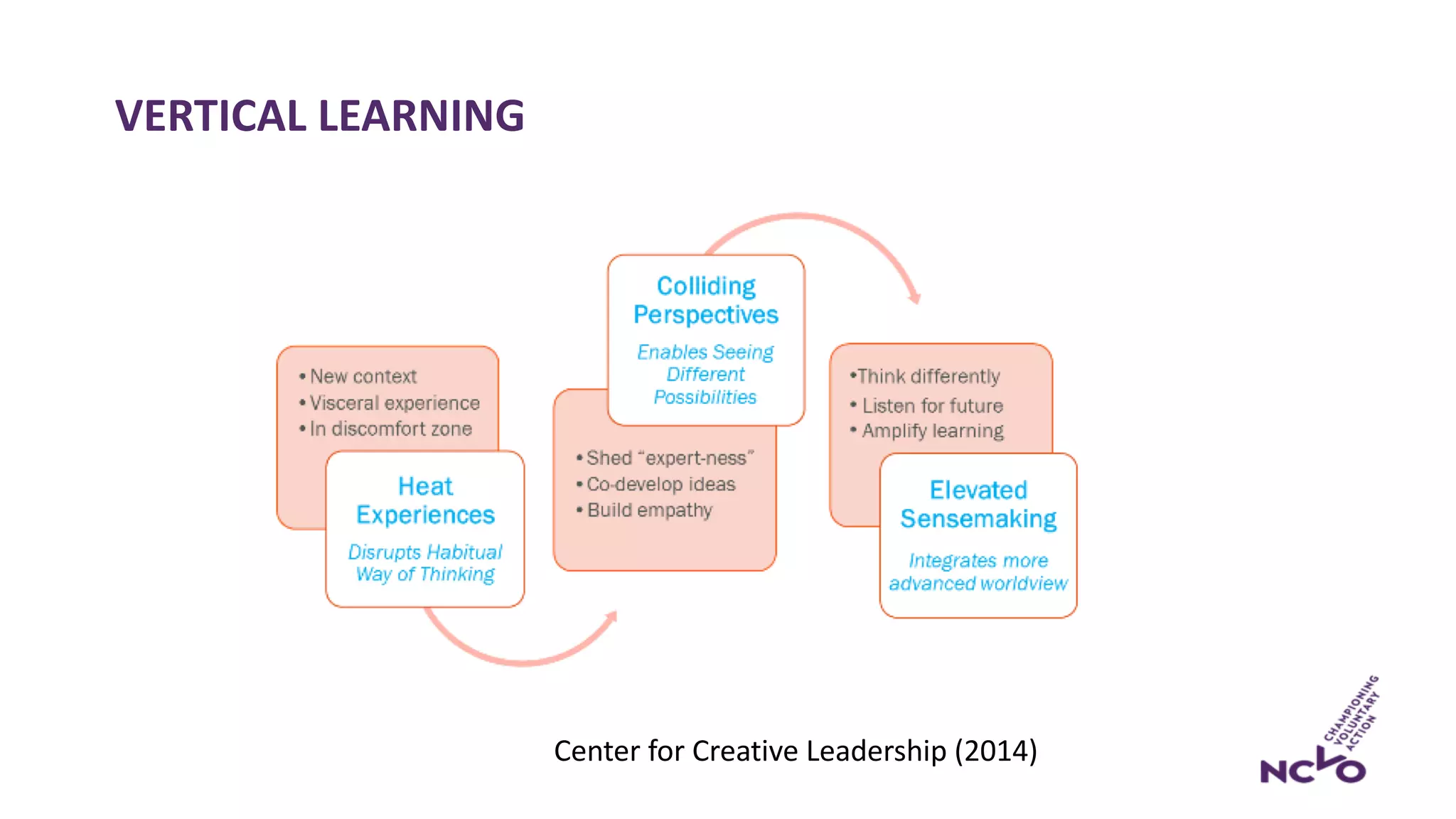
VERTICAL LEARNING
Center for Creative Leadership (2014)
If you do what you’ve always done you’ll get
what you’ve always got.
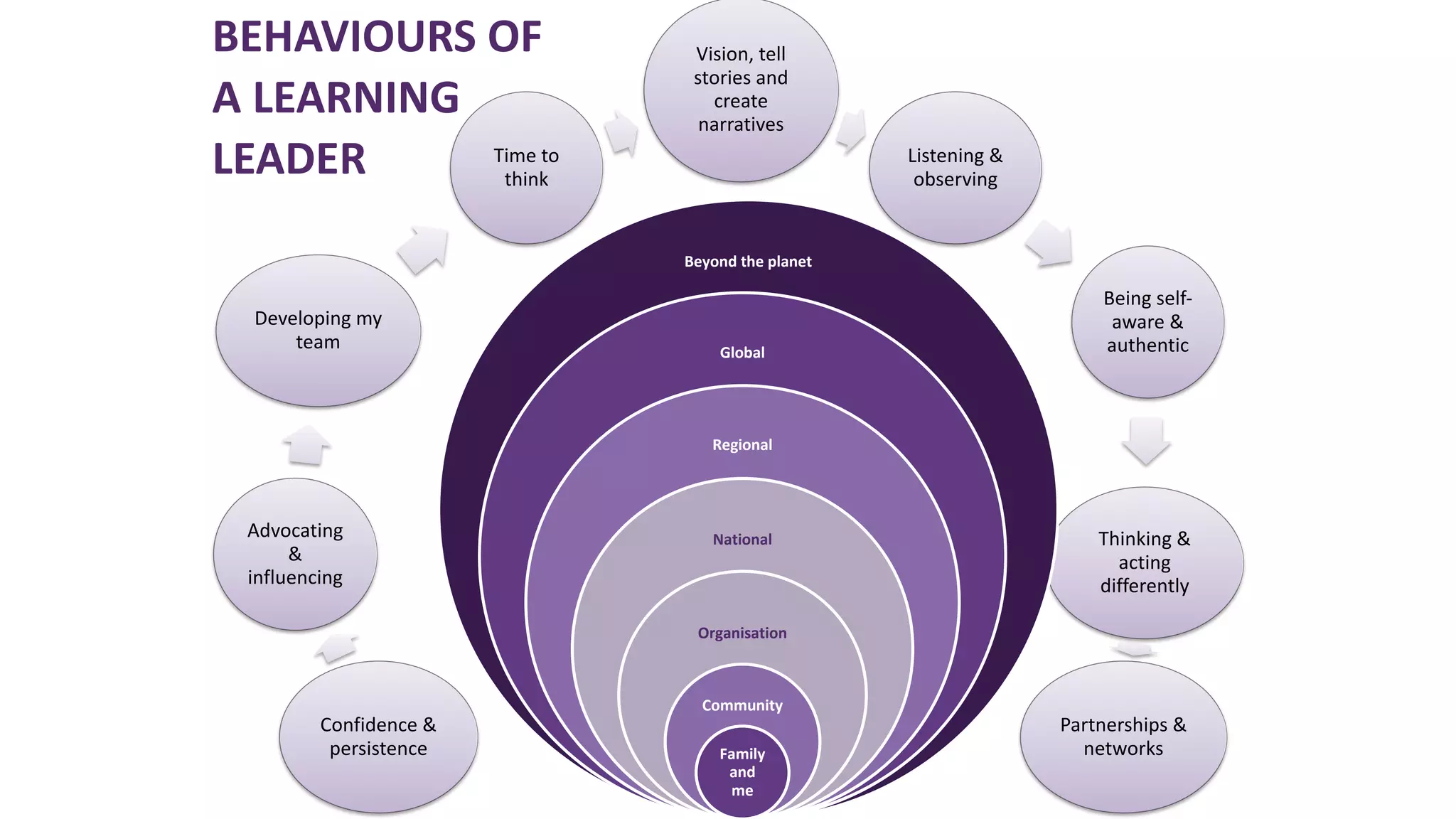
Vision, tell
stories and
create
narratives
Listening &
observing
Being self-
aware &
authentic
Thinking &
acting
differently
Partnerships &
networks
Confidence &
persistence
Advocating
&
influencing
Developing my
team
Time to
think
BEHAVIOURS OF
A LEARNING
LEADER
Beyond the planet
Global
Regional
National
Organisation
Community
Family
and
me
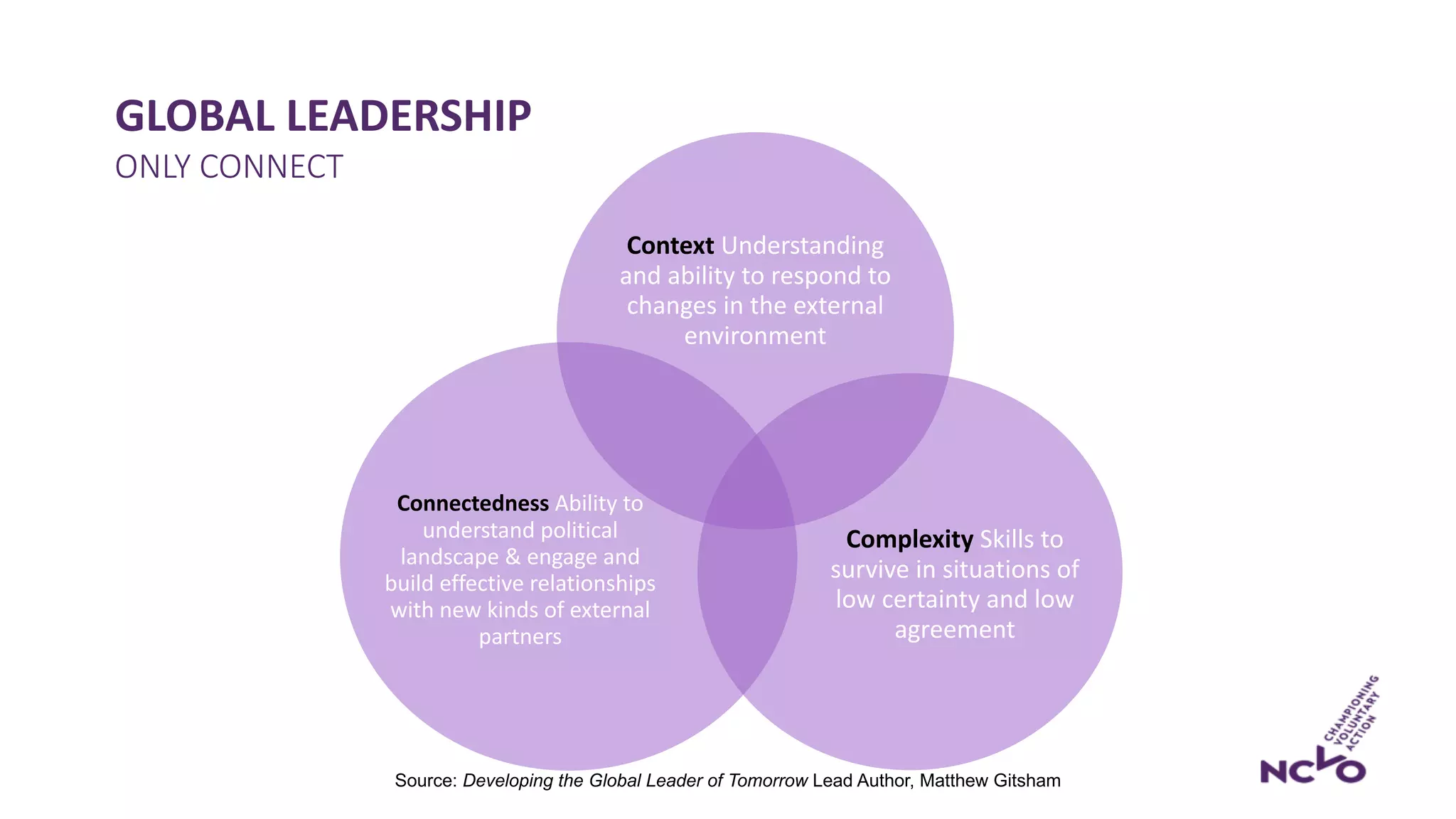
GLOBAL LEADERSHIP
Context Understanding
and ability to respond to
changes in the external
environment
Complexity Skills to
survive in situations of
low certainty and low
agreement
Connectedness Ability to
understand political
landscape & engage and
build effective relationships
with new kinds of external
partners
ONLY CONNECT
Source: Developing the Global Leader of Tomorrow Lead Author, Matthew Gitsham
LEARNING LEADERS
§ Get to know your organisation and the context you work in
§ Have purpose, work out what matters to you
§ Build alliances and networks (knowledge sharing)
§ Invest time in developing yourself and your team (coaching, mentoring,
reading, journaling, have a new experience, go on a retreat)
§ Gather ideas about leadership (theories, models, frameworks), what
works
§ Be open to other ideas - It’s OK to self doubt!
§ Learn to live with complexity and uncertainty
HOW TO ACT LIKE ONE
LEARNING LEADERS
• Encourage dialogue & involve people in decision-making
• Ask killer questions, listen and observe constantly
• Suspend judgement, gather information from multiple sources before you
decide
• Experiment and innovate
• If you don’t know what to do, ask for help
• Take responsibility for whatever happens
• Learn as much from failures as successes
• Be a role model: ask for and give feedback
HOW TO ACT LIKE ONE
THANK YOU
Our leadership programme, Charity Leadership in the 2020s:
cohort 4 starts October 2018 https://www.ncvo.org.uk/training-
and-events/charity-leadership-in-the-2020s
rebecca.nestor@learning-for-good.co.uk
@learninggood
edward@kellowlearning.com
@edwardkellow

A1: Can we learn to be leaders?

  • 1.
    CAN WE LEARNHOW TO LEAD? EDWARD KELLOW REBECCA NESTOR
  • 2.
    WORKSHOP FOCUS ANDAIMS Focus on learning how to lead rather than looking at leadership principles and practice • To explore how we can learn to be leaders, and why learning is key not only to becoming a leader, but also to helping us to keep in touch with the world we work in • To give you an opportunity to reflect on how you learn to lead, and how you can help others become learning leaders too
  • 3.
    WORKSHOP OBJECTIVES By theend of the session we hope you will be able to: • Describe how you learn best to lead • List 3 ways to help yourself become an even better learning leader • Reflect on how you can help yourself and other people to learn how learn to lead
  • 4.
    ARE LEADERS BORNOR MADE? WHO’S GOT A LEADERSHIP QUALIFICATION? WHO’S BEEN ON A LEADERSHIP COURSE? ANYONE SUFFER FROM IMPOSTER SYNDROME?
  • 5.
  • 6.
    OUR PERSONAL LEARNINGABOUT LEADERSHIP Setting up a new department Supporting leaders Learning to trust your team Developing someone in your team
  • 7.
    SMALL GROUP DISCUSSION ‘Whatis the most valuable lesson about how to lead that you have learned, and how did you learn it?’
  • 8.
    LEARNING AND LEADERSHIP ‘Ifyou want to be a leader, you have to be a real human being...You must understand yourself first.’ Confucian Theory
  • 9.
    LEARNING AND LEADERSHIP §Learning is a choice for individuals and organisations – learning how to deal with challenges and opportunities § Learning is different for all of us § Learning can be found all around us § It’s not easy PROCESS + CONTENT = LEARNING
  • 10.
    LEARNING AND LEADERSHIP §Learning to lead is NOT about becoming a different person § Rather, learning how to be a leader is about: § Getting better at what we already do well § Developing a toolkit of models and frameworks that can help us to make sense of a complex world § Holding knowledge and experience lightly (beware of experts!) § Learning is never done (like most worthwhile endeavours) PROCESS + CONTENT = LEARNING
  • 11.
    THE LEARNING CAROUSEL Aroundthe room we have signposted some of the many ways we can learn to lead You have 20 minutes or so to explore 2 or 3 ways to learn to lead Go to the signs that energise you most and have a conversation with the other people who have chosen the same learning method Ask people what works for them and why. Be specific and be curious
  • 12.
    Internalising a sense of ourselvesas a leader Other people starting to see us as a leader Developing a sense of elevated purpose IDENTITY PURPOSE
  • 13.
    VERTICAL LEARNING Center forCreative Leadership (2014)
  • 14.
    If you dowhat you’ve always done you’ll get what you’ve always got.
  • 15.
    Vision, tell stories and create narratives Listening& observing Being self- aware & authentic Thinking & acting differently Partnerships & networks Confidence & persistence Advocating & influencing Developing my team Time to think BEHAVIOURS OF A LEARNING LEADER Beyond the planet Global Regional National Organisation Community Family and me
  • 16.
    GLOBAL LEADERSHIP Context Understanding andability to respond to changes in the external environment Complexity Skills to survive in situations of low certainty and low agreement Connectedness Ability to understand political landscape & engage and build effective relationships with new kinds of external partners ONLY CONNECT Source: Developing the Global Leader of Tomorrow Lead Author, Matthew Gitsham
  • 18.
    LEARNING LEADERS § Getto know your organisation and the context you work in § Have purpose, work out what matters to you § Build alliances and networks (knowledge sharing) § Invest time in developing yourself and your team (coaching, mentoring, reading, journaling, have a new experience, go on a retreat) § Gather ideas about leadership (theories, models, frameworks), what works § Be open to other ideas - It’s OK to self doubt! § Learn to live with complexity and uncertainty HOW TO ACT LIKE ONE
  • 19.
    LEARNING LEADERS • Encouragedialogue & involve people in decision-making • Ask killer questions, listen and observe constantly • Suspend judgement, gather information from multiple sources before you decide • Experiment and innovate • If you don’t know what to do, ask for help • Take responsibility for whatever happens • Learn as much from failures as successes • Be a role model: ask for and give feedback HOW TO ACT LIKE ONE
  • 20.
    THANK YOU Our leadershipprogramme, Charity Leadership in the 2020s: cohort 4 starts October 2018 https://www.ncvo.org.uk/training- and-events/charity-leadership-in-the-2020s rebecca.nestor@learning-for-good.co.uk @learninggood edward@kellowlearning.com @edwardkellow