UNDERTAKING A GOVERNANCE
EFFECTIVENESS REVIEW
TRUSTEES WEEK
NOVEMBER 2020
DAN FRANCIS
LEAD CONSULTANT
• Why review governance?
• Different approaches to review
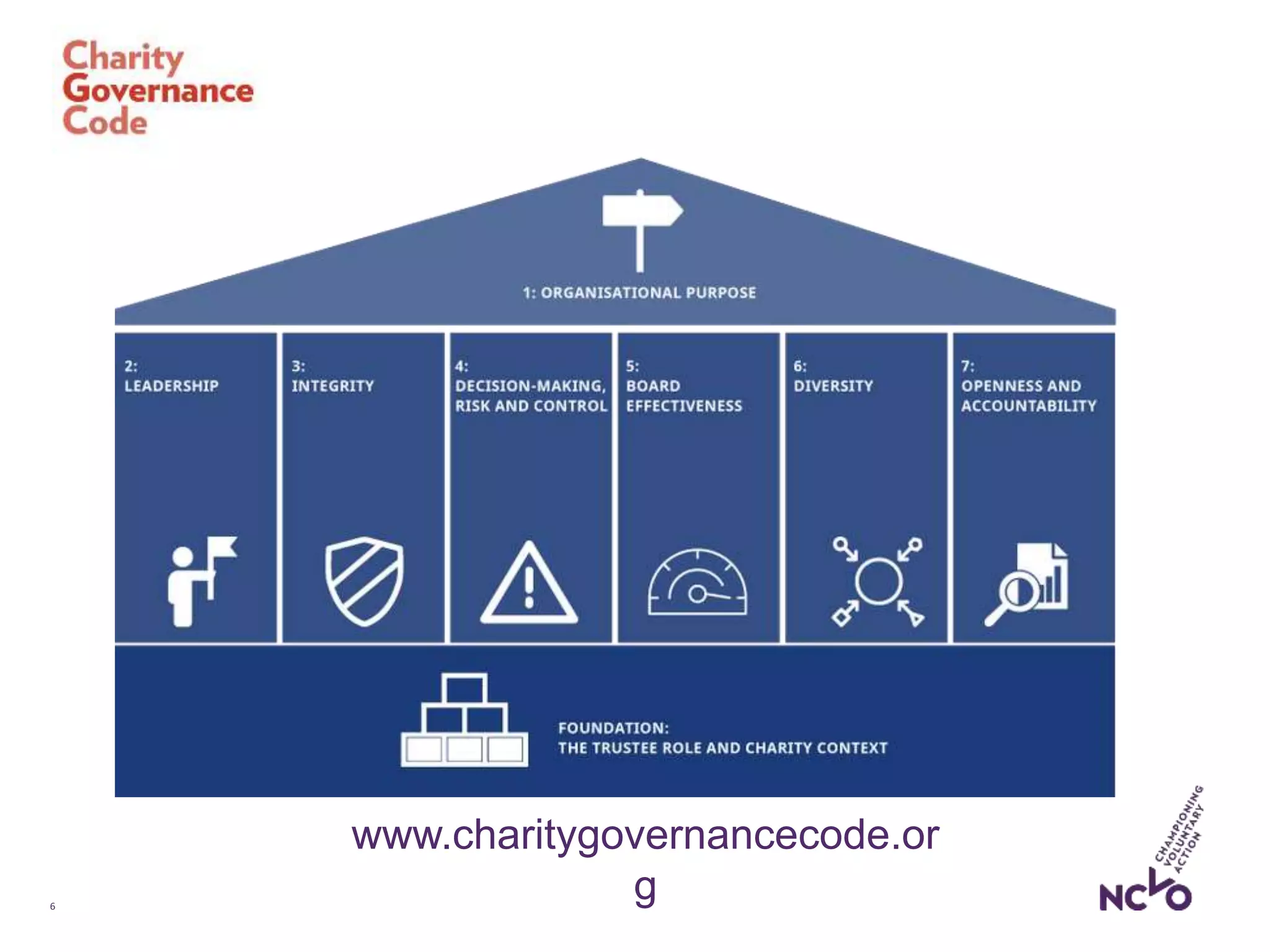
• The Charity Governance Code as a framework
• Using the NCVO governance wheel tool
• Tips for using the results and developing an action plan
• Further resources and guidance
For this workshop you will need access to the NCVO
governance wheel tool. We recommend downloading this in
this in advance of listening to this session.
WHAT WE WILL COVER
‘Feedback is the breakfast
of champions.’
Ken Blanchard
• Assurance to the board on compliance and practice.
• Confidence for regulators, funders, supporters and
beneficiaries that the charity is well run.
• Helps ensure to implement best practice and expected
standards.
• Opportunity to pause, reflect and raise concerns in a
controlled way.
• Effective governance means better decisions, improved
scrutiny and enhanced leadership. All of which help a
charity achieve its objects.
WHY REVIEW GOVERNANCE?
GOVERNANCE IMPROVEMENT
5
Trustee
training
Skills and
diversity
audit
Coaching or
mentoring
Individual
trustee
reviews
Board
effectiveness
review
External
review or
audit
Quality
Standards
6
www.charitygovernancecode.or
g
NCVO GOVERNANCE WHEEL
7
• A resource which is available free to NCVO members
• Designed to reflect the Charity Governance Code
• Helps boards quickly get a sense of how well they are
functioning
• Gives a visual impression of the shape that a board is in
• Focus is on the board effectiveness
NCVO GOVERNANCE WHEEL
8
CONSIDERATIONS BEFORE STARTING:
9
• A light touch exercise which is focused on the board
• What is the underlining health of the trustee relationships?
• Requires a level of transparency and honesty
• A willingness to surface and discuss areas for improvement
• Based on perceptions and without assurance and/or
verification
IS THE GOVERNANCE WHEEL THE RIGHT
TOOL?
HOW WILL YOU RUN THE EXERCISE?
10
• Who will facilitate the exercise and discussion?
• What level of anonymity do trustees want, and what degree
of anonymity is appropriate?
• Do you need to combine the exercise with other review work,
for example, a skills or diversity audit?
• How do you want to involve other stakeholders and in
particular senior managers in the review?
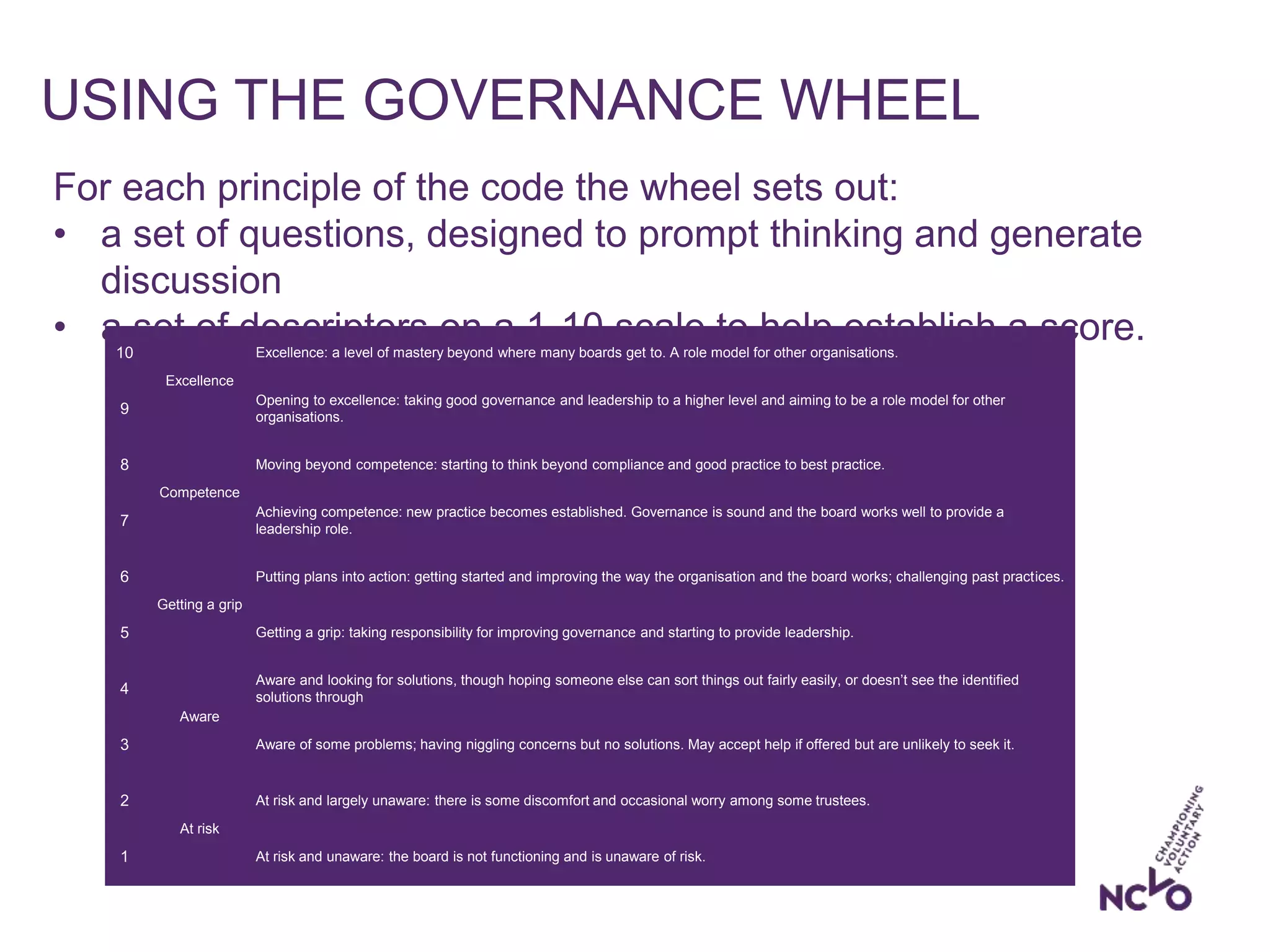
USING THE GOVERNANCE WHEEL
10
Excellence
Excellence: a level of mastery beyond where many boards get to. A role model for other organisations.
9
Opening to excellence: taking good governance and leadership to a higher level and aiming to be a role model for other
organisations.
8
Competence
Moving beyond competence: starting to think beyond compliance and good practice to best practice.
7
Achieving competence: new practice becomes established. Governance is sound and the board works well to provide a
leadership role.
6
Getting a grip
Putting plans into action: getting started and improving the way the organisation and the board works; challenging past practices.
5 Getting a grip: taking responsibility for improving governance and starting to provide leadership.
4
Aware
Aware and looking for solutions, though hoping someone else can sort things out fairly easily, or doesn’t see the identified
solutions through
3 Aware of some problems; having niggling concerns but no solutions. May accept help if offered but are unlikely to seek it.
2
At risk
At risk and largely unaware: there is some discomfort and occasional worry among some trustees.
1 At risk and unaware: the board is not functioning and is unaware of risk.
For each principle of the code the wheel sets out:
• a set of questions, designed to prompt thinking and generate
discussion
• a set of descriptors on a 1-10 scale to help establish a score.
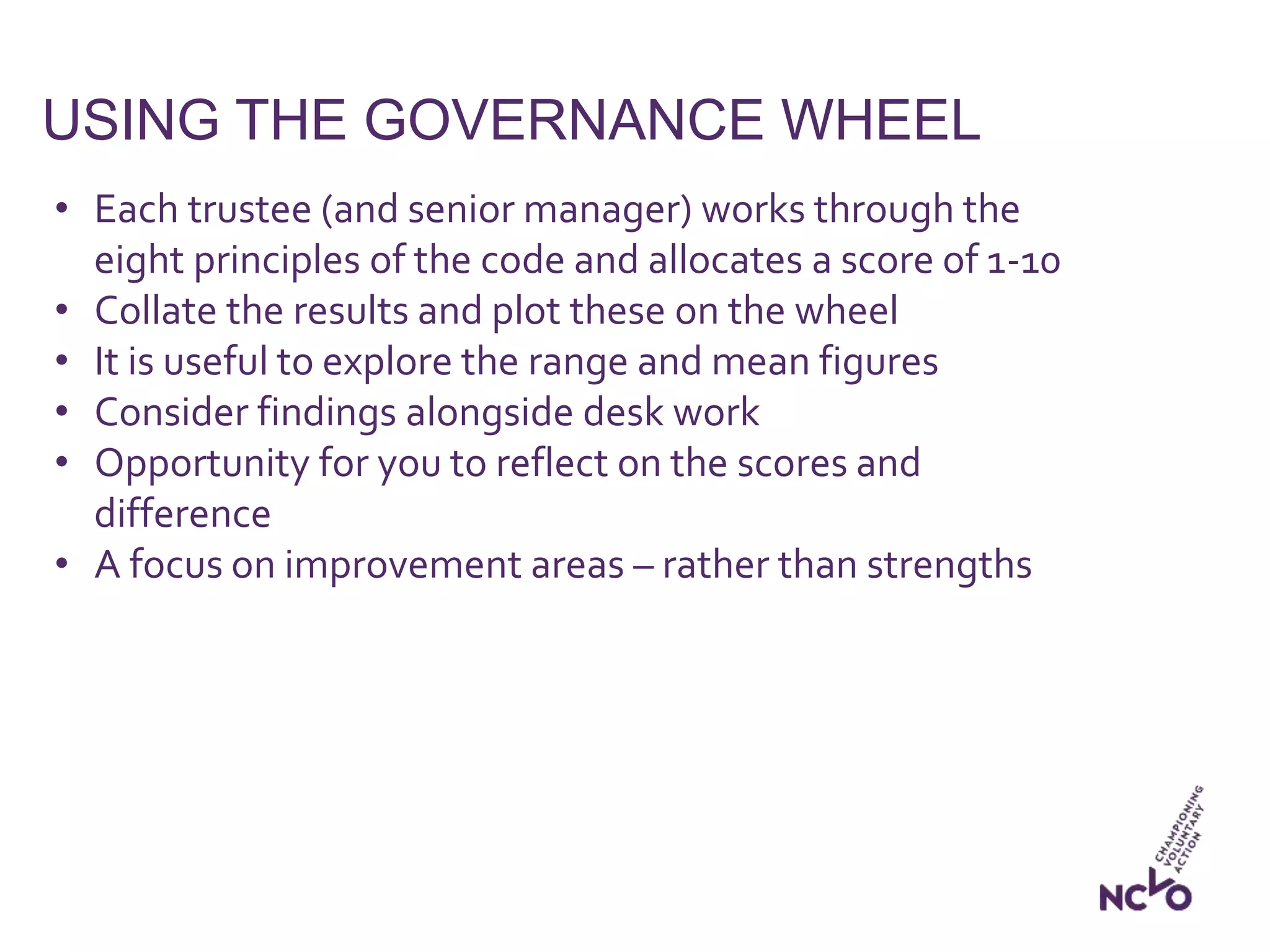
USING THE GOVERNANCE WHEEL
• Each trustee (and senior manager) works through the
eight principles of the code and allocates a score of 1-10
• Collate the results and plot these on the wheel
• It is useful to explore the range and mean figures
• Consider findings alongside desk work
• Opportunity for you to reflect on the scores and
difference
• A focus on improvement areas – rather than strengths
A COMPLETED WHEEL
Area Range Average
Foundation 1 6
Organisational purpose 6 7
Leadership 1 4
Integrity 2 8
Decision making risk and
control 4 6
Board effectiveness 3 4
Diversity 6 7
Openness and accountability 3 6
USEFUL RESOURCES
• Charity Governance Code
• GovernanceWheel tool
• Template skills audit
• Guidance on board diversity
• Guidance on individual trustee performance review
• NCVO good trustee guide
THANK YOU
dan.francis@ncvo.org.uk
@mynameisdanfran
LinkedIn
15

Undertaking a governance effectiveness review

  • 1.
    UNDERTAKING A GOVERNANCE EFFECTIVENESSREVIEW TRUSTEES WEEK NOVEMBER 2020 DAN FRANCIS LEAD CONSULTANT
  • 2.
    • Why reviewgovernance? • Different approaches to review • The Charity Governance Code as a framework • Using the NCVO governance wheel tool • Tips for using the results and developing an action plan • Further resources and guidance For this workshop you will need access to the NCVO governance wheel tool. We recommend downloading this in this in advance of listening to this session. WHAT WE WILL COVER
  • 3.
    ‘Feedback is thebreakfast of champions.’ Ken Blanchard
  • 4.
    • Assurance tothe board on compliance and practice. • Confidence for regulators, funders, supporters and beneficiaries that the charity is well run. • Helps ensure to implement best practice and expected standards. • Opportunity to pause, reflect and raise concerns in a controlled way. • Effective governance means better decisions, improved scrutiny and enhanced leadership. All of which help a charity achieve its objects. WHY REVIEW GOVERNANCE?
  • 5.
    GOVERNANCE IMPROVEMENT 5 Trustee training Skills and diversity audit Coachingor mentoring Individual trustee reviews Board effectiveness review External review or audit Quality Standards
  • 6.
  • 7.
    NCVO GOVERNANCE WHEEL 7 •A resource which is available free to NCVO members • Designed to reflect the Charity Governance Code • Helps boards quickly get a sense of how well they are functioning • Gives a visual impression of the shape that a board is in • Focus is on the board effectiveness
  • 8.
  • 9.
    CONSIDERATIONS BEFORE STARTING: 9 •A light touch exercise which is focused on the board • What is the underlining health of the trustee relationships? • Requires a level of transparency and honesty • A willingness to surface and discuss areas for improvement • Based on perceptions and without assurance and/or verification IS THE GOVERNANCE WHEEL THE RIGHT TOOL?
  • 10.
    HOW WILL YOURUN THE EXERCISE? 10 • Who will facilitate the exercise and discussion? • What level of anonymity do trustees want, and what degree of anonymity is appropriate? • Do you need to combine the exercise with other review work, for example, a skills or diversity audit? • How do you want to involve other stakeholders and in particular senior managers in the review?
  • 11.
    USING THE GOVERNANCEWHEEL 10 Excellence Excellence: a level of mastery beyond where many boards get to. A role model for other organisations. 9 Opening to excellence: taking good governance and leadership to a higher level and aiming to be a role model for other organisations. 8 Competence Moving beyond competence: starting to think beyond compliance and good practice to best practice. 7 Achieving competence: new practice becomes established. Governance is sound and the board works well to provide a leadership role. 6 Getting a grip Putting plans into action: getting started and improving the way the organisation and the board works; challenging past practices. 5 Getting a grip: taking responsibility for improving governance and starting to provide leadership. 4 Aware Aware and looking for solutions, though hoping someone else can sort things out fairly easily, or doesn’t see the identified solutions through 3 Aware of some problems; having niggling concerns but no solutions. May accept help if offered but are unlikely to seek it. 2 At risk At risk and largely unaware: there is some discomfort and occasional worry among some trustees. 1 At risk and unaware: the board is not functioning and is unaware of risk. For each principle of the code the wheel sets out: • a set of questions, designed to prompt thinking and generate discussion • a set of descriptors on a 1-10 scale to help establish a score.
  • 12.
    USING THE GOVERNANCEWHEEL • Each trustee (and senior manager) works through the eight principles of the code and allocates a score of 1-10 • Collate the results and plot these on the wheel • It is useful to explore the range and mean figures • Consider findings alongside desk work • Opportunity for you to reflect on the scores and difference • A focus on improvement areas – rather than strengths
  • 13.
    A COMPLETED WHEEL AreaRange Average Foundation 1 6 Organisational purpose 6 7 Leadership 1 4 Integrity 2 8 Decision making risk and control 4 6 Board effectiveness 3 4 Diversity 6 7 Openness and accountability 3 6
  • 14.
    USEFUL RESOURCES • CharityGovernance Code • GovernanceWheel tool • Template skills audit • Guidance on board diversity • Guidance on individual trustee performance review • NCVO good trustee guide
  • 15.